Author Archives: hostmerchantservices

visa 22456825

Visa Looks to Make Plastic Cards Sustainable

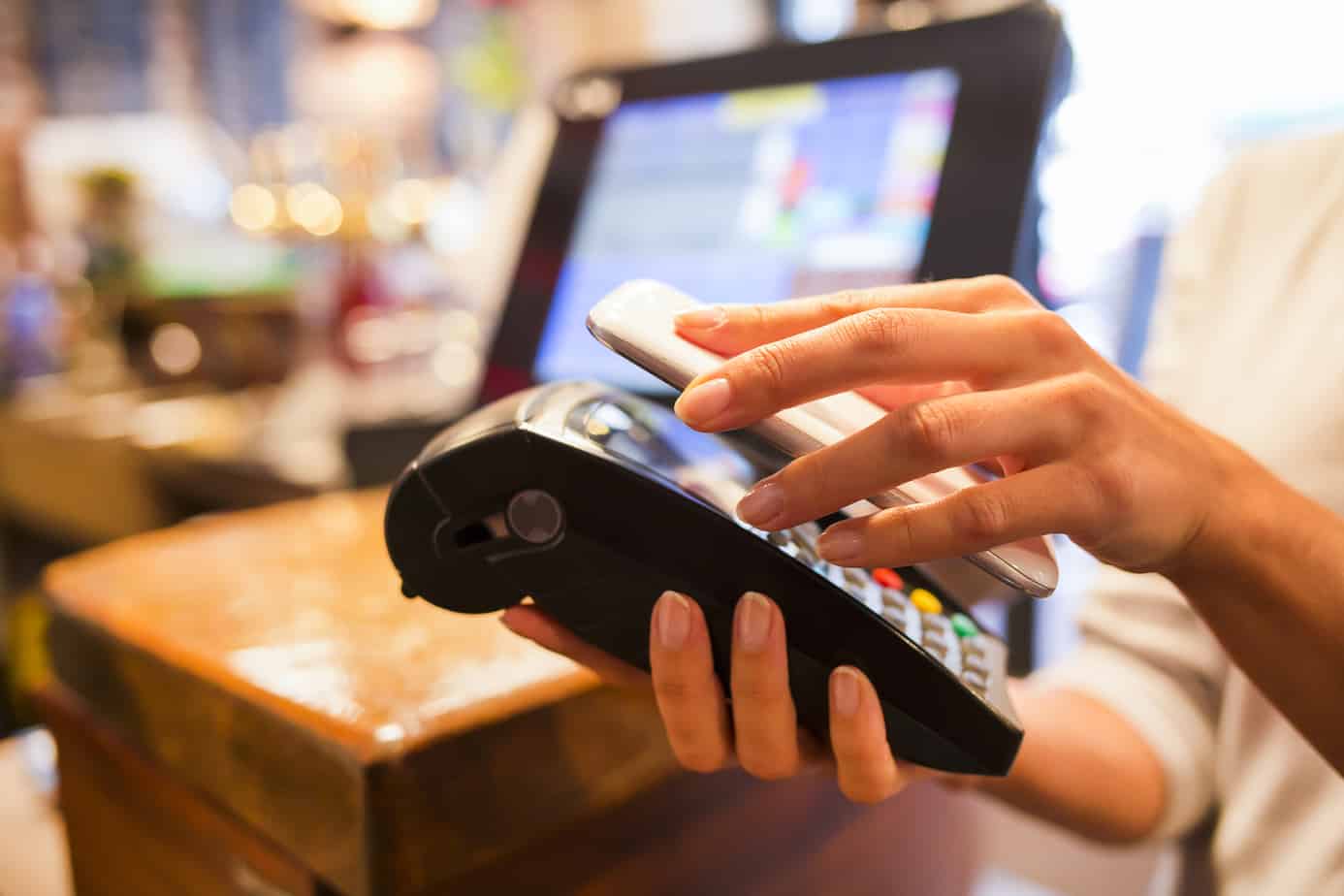
Visa has an ambition to improve the world and minimize its environmental impact. Thus, they are collaborating with the CPI Card Group to produce ‘Earthwise High Content Card’ for Visa cardholders. The credit card, made of 98% upcycled plastic, would enable both contactless and contact payments. Besides this, the aim is to make cards EMV compliant with dual-interface capability.

Contactless Credit Card Payments

A closer look at the credit card’s composition details shows that it comprises a post-industrial upcycled plastic, rPETG. This step makes eliminating plastic waste possible. The material does not come from scrapped plastic. The upcycled approach involves using plastic derived from existing materials or used packaging. An example could be that of the industrial products detracted from the landfills.

Moreover, the company understands the negative impact of issuing more credit cards. Despite the fact that they want more customers, they are taking this step to reduce the damage to the environment. Hence, they took it as their responsibility to make efforts for a sustainable future.

Due to recent guidelines, the use of plastic is under great scrutiny. The rampant disposal of plastics cast a significant impact on the oceans and landfills. This issue requires an immediate solution.

Douglas Sabo, a leading figure at Visa, said that the company does not produce credit cards. However, they realize their responsibility and are collaborating with companies that make cards.

It marks a significant milestone in our pursuit of minimizing the negative impact on the environment. Additionally, he pointed out that the offering will protect the environment and prove beneficial to the payment industry.

The announcement about the introduction of the Earthwise High Content credit card came with a CPI survey. The survey showed that 73% of the participants want financial institutions to operate sustainably. On the other hand, 57% of them said that they are interested in and looking forward to new cards made of recycled materials.

The Other Side of the Coin: Issuers’ Take on the Collaboration

The card’s “life cycle” is the fulcrum of the collaboration between Visa and CPI Card Group as they make it available to numerous FI issuers. The company aims to produce a card with EMV technology while being sustainable. The process will impact the material used as well as distribution of the cards.

The initial feedback has been positive and encouraging from the issuers’ side, and consumers are more than willing to embrace the development owing to its environmental-friendliness.
walmart store exterior 107850615

Walmart and Shopify Team Up On E-commerce Marketplace

The collaboration between Walmart and Shopify is all set to conquer the e-commerce industry. They will provide fierce competition for Amazon, as around 1200 companies selling on Shopify will now be able to sell on Walmart U.S by the end of this year.

shopify payment processing

Shopify’s vice president of product, Satish Kanwar, considers Walmart of size and scale that only a few companies manage to match. He sees the deal as lucrative and fruitful for small and medium-sized businesses that will provide easy access to a whopping 12 million customers visiting Walmart every month.

The partnership between the world’s largest retailer, Walmart, and the e-commerce giant, Shopify, is an attempt to diversify the range of products and expand profitability. Other than this, it is a calculative move by both the companies to have a firm grip on the surge in online shopping because of the COVID-19 pandemic. According to a blog post by Satish Kanwar, their expertise in multi-channel commerce, coupled with Walmart’s reach, will storm the e-commerce industry. Furthermore, the alliance will lead to a better online shopping experience, both for merchants and consumers.

Walmart is No.2 to Amazon in U.S e-commerce space, but it has still suffered losses on occasion. The collaboration will boost both the scale and size of the business and generate more revenue.

Previously, Walmart CEO Doug McMillon expressed dissatisfaction with the way the marketplace was performing and appointed a new executive, Jeff Shotts. He also believed that the company had not done enough to support the marketplace sellers. The restructuring is an attempt to give the marketplace business a sound direction and provide sellers with all the necessary tools and services. In addition to this, he deemed it essential to successfully integrate the online business with its physical stores.

walmart apps online ordering

Both of the companies have been discussing this idea on and off, but only for the past six months have the talks intensified allowing for the plan to finally come to its fruition. They conducted a pilot test before the announcement with numerous Shopify sellers. The experiment turned out well, and Jeff Clementz saw potential in terms of thousands of sellers making their way to Walmart.

The partnership comes with its fair share of risk, but is likely to prove successful considering that Walmart is invite-only. This means it can vet the sellers to avoid any suspicious sellers. In addition to this, it also uses keyword recognition technology and uses machine learning to spot fraudulent sellers.

The Shopify merchants in the U.S will send out their application to Walmart to seek approval of selling. Once approved, their Shopify store will connect to their Walmart Seller Account. This will tie their product catalogs there and create product listings on Walmart. This way, it will be easier to track, monitor, and upgrade the inventory. Moreover, order and inventory management, in addition to the listings, will be in complete harmony.

man paying with nfc technology on mobile phone in restaurant b 35345885

Accepting Contactless Payments. What You Need to Know.

Your customers don’t want to touch your credit card machine.

It’s nothing personal, they don’t really want to touch anything that they don’t have to these days. Luckily for those of us that still use hand held or counter top credit card machines to either swipe or dip the chip to accept payment, contactless solutions are easy and inexpensive to implement. Chances are, the machine you currently have already has the hardware required to do this, so it might just be a matter of calling your merchant services provider to get instruction on how to enable it and allow your customers to utilize their contactless payment methods on it.

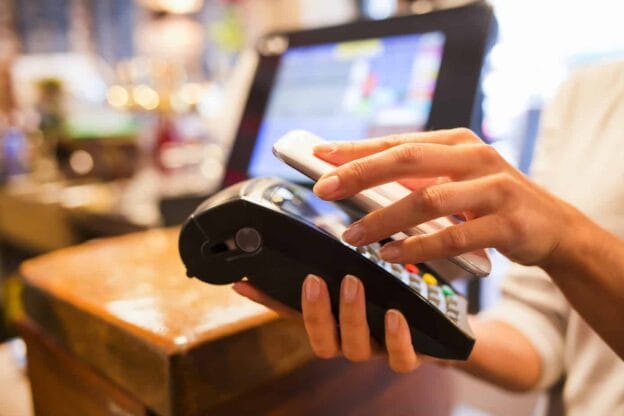
Contactless payment methods come in three common forms. Your customers will either have a smart phone, a smart watch, or an NFC enabled credit card. All of these use NFC, short for Near Field Communication, as the underlying way to perform the transaction. How exactly NFC works is beyond the scope of this article, suffice it to say, it allows your device or card to talk to a properly configured credit card terminal so long as it is within about 1 inch of the reader. It’s easy, it works reliably and it’s reasonably secure.

You might be wondering, ‘if all you need to be is an inch away from a reader, isn’t it possible for someone to get close to my customer and steal their card information?’ Yes and no. While it is technically possible to intercept the signal, the hacker wouldn’t be able to do much with the information. Smart pay devices like Apple Pay do not directly transmit sensitive card holder data in the transaction. Instead, they submit a unique one-time pass code to the credit card reader, which then sends that pass code to a very secure data center operated by your bank. The bank is then able to communicate with Apple to retrieve the actual card information. A process that happens within a fraction of a second and is completely out of scope of the interaction of the customer with the payment device itself.

To start allowing your customers to use contactless payments, start by checking if you’re already setup with it. The best way to check is to read the wording of the credit card machine when it comes time for the customer to give their payment. If it only says “swipe, dip or enter card” when it is ready to accept payment, it might not be setup for contactless. If you see the word “tap” anywhere, you’re already good to go. Find a customer that wants to use their phone, watch or NFC enabled credit card and try it out. It’s nothing more than holding the device within an inch of the face of the credit card machine.

If you don’t see the word “tap” and holding an NFC enabled payment method near the machine does nothing, you still likely do not need to buy a new machine. Now is the time to call your merchant services provider. Either you have a machine made in the last 5 years and it’s just a matter of asking customer service to help you get it enabled, or you’re due for a new machine. Most providers will provide a free terminal replacement. If they don’t, get a new merchant services provider. They fight fiercely to acquire and retain customers, so the relatively small cost of replacing your terminal for free is worth it to them to keep you as a customer. If not, there are plenty of providers out there that will happily give you a modern terminal if you switch to them.

As consumer sensitivity to sanitary habits in the retail environment continue, NFC is a great way for you as a retailer to make sure your customers continue to feel safe making purchases. The security of the payment itself, coupled with the fact that any would-be coronavirus’s can’t make the 1 inch jump through thin air, make NFC the go-to choice for payment acceptance. It’s either already ready to go, or you have a couple of free options to get it setup, you’ve got nothing to lose.

woman paying with nfc technology on mobile phone restaurant ca 34959179 1

Contactless Payment Trends in 2020 – Apple Pay, Google Pay, NFC, and More

Amidst the global pandemic, many countries are resuming the routine life and easing the lockdown. However, recent studies have shown that around half of the US population is still worried about their health and how shopping, eating, and social interaction can affect it. Therefore, many businesses and shoppers are more inclined to make contactless payments, which has shown a 40% jump in the first quarter of 2020. As the payment trend has grown prominence, NFC-enabled payments across the world can exceed $130 billion within 2020.

What are Contactless Payments and Their Global Outreach?

Contactless payment is a well-encrypted, secure payment mode to buy products or services using NFC (near field communications) enabled devices or cards. When the reader and payment device are near, it activates NFC chips to exchange encrypted data for money transfer. In simple terms, you wave your device in front of an NFC powered payment terminal to make purchases, contact free. But you also require NFC-encrypted payment apps such as Apple Pay, Google Pay, Fitbit Pay, or Samsung Pay on your mobile device to make the contactless payment happen.  Some credit and debit cards also have contactless capability embedded in chips that you can then wave or tap to pay on an NFC enabled reader.

Before the Coronavirus outbreak, this global trend wasn’t prevalent in the US, as only 10% of the consumers were using the technology. Europe however had the largest share in the contactless payment terminal market, due to an increase in smartcard rollouts and technological advancement. According to UK Finance, around 1/3rd of all the card-based payments happened through contactless methods in Q1, 2019. However, the Asian region has been slower to adopt NFC based technologies due to its efficient QR code system that doesn’t require select apps, or POS systems.

Coronavirus – The Driving Force for Contactless Payment in the US

The number of digital wallet users worldwide has doubled in 2020, with Apple Pay and its 227 million users becoming the most prominent, according to the Wall Street Journal.

apple pay google pay samsung pay

https://www.statista.com/chart/19972/digital-wallet-users-double-2020/

The pandemic has redefined consumer priorities, making no-touch payments a necessity. New York Transit Authority laid the groundwork in May 2019, when it announced contactless payments for select subway lines. Being early adopters, they were still pretty late in the global market in relation to other significant metropolises, including London Underground System which adopted the technology in 2014. It is not only public transport, but the worldwide financial industry that relies on contactless payments today. In the Netherlands, every store allows no-touch payment methods, whereas the US didn’t have major adoption for NFC until 2019 when contactless payments increased by 150%.

Meanwhile, food services brands such as Starbucks, McDonald’s, and Dunkin’ led the way with their contactless payment apps. The wearable market also accelerated the adoption rate in the US with the popularity of smart watches and similar devices. The tech-giant, Apple, teamed up with many different brands to improve mobile payment experience. Scooter rental company Bird and clothing retailer Bonobos some notable partners offering NFC-enabled payment to Apple users, without the need for any third-party apps. Small businesses have also reported a 27% growth in the contactless payment made through smart cards and mobile phones.

Nevertheless, card issuers control the widespread adoption of contactless payment in the US. Analysts believe NFC-enabled technology can coexist with traditional card systems and mobile wallets as depicted by tech-savvy nation worldwide.

covid 19 coronavirus white background isolate 176915203 scaled 1

How Is COVID-19 Transforming E-Commerce Merchants?

How Is COVID-19 Transforming E-Commerce Merchants?

There is no doubt COVID-19 has redefined our life, and its impact could, presumably, last for years. The way we socialize, work, and function has rapidly changed, and so has our buying behavior. Online shopping has become the new norm as consumers are finding it safer and more reliable. Even local businesses are turning to online platforms for sales and services, but the non-essential industry has suffered dramatically. Grocery, medical supplies, healthcare items have experienced a sudden boom while the tourism industry has collapsed. Meanwhile, beauty items, fitness products, and tech retail have seen slow but steady growth.

Many big brands have restructured to meet the changing demands and increase their endurance during the pandemic. Here are a few practical ways to transform in the wake of COVID-19.

1.   Entering New Markets

Corporations such as commercial airlines have entered new avenues to ascertain stable earnings. The unprecedented drop in commercial flights has led to large airlines like Virgin Atlantic, Lufthansa, and many others to switch to cargo flights. Passenger cabins are available for the transportation of grocery and healthcare items.

merchant covid19 e-commerce buying

COVID-19 is rapidly transforming e-commerce by affecting consumer buying patterns.

2.   Switching to Online Platforms

Grocery e-commerce soared during the pandemic as 72% shoppers used their mobile phones to buy household items. Due to this, many retailers and brands have launched user-driven apps and revamped their online stores to improve the online shopping experience. Encryption of personal details has become stringent to support safe and secure payment methods.

3.   Offering Sales and Other Incentives

Many beauty and skincare brands are offering sales and discounts. Around 72% of the top online retailers are running promotional activities to attract consumers. Many luxury brands, including exquisite jewelers, have slashed prices to recoup sales. At departmental stores, markdowns are even steeper for steady revenue.

4.   Setting Up Curbside Pick-ups:

Amidst the COVID-19 outbreak, many businesses have switched to BOPIS (buy online pick-up in-store) and curbside delivery methods. Since early January, around 55% of the consumers placed online orders and opted for BOPIS for convenience and safety. However, the industry is still in its developing stages as we can often see long queues at pick-up points. Digital check-ins and scheduled pick-up times could be a few ways to enhance the experience.

5.   Strengthening Customer Relationships

To strengthen their brand image, many companies are supporting front-line fighters by providing them various incentives. Many cosmetic and alcohol brands have distributed hand sanitizers and protective gear among front-liners such as healthcare providers, law enforcement agents, and other essential workers. It is to show gratitude to those who are putting their lives at risk for our safety.

However, it is still too early to predict the implications as the circumstances are uncertain. The shopping behavior of millions of consumers has changed within just a few months. Besides, time-saving and convenience has put considerable strain on e-commerce merchants. Many are striving to remove friction in online shopping to build a loyal customer base. Nevertheless, there is a consensus among buyers and retailers that old shopping habits will resume once the lockdown ends. This would slow down the growth rate of e-commerce sales, thus giving them ample time to adapt to the new retailing landscape.

contactless card payment 74484201 1

Should my Business Adopt Contactless Payments? [2023 Update]

A Guide To Contactless Payments

What are contactless payments, and how do they work? Are they completely safe, and should you opt for the convenience of contactless payments? Over the years, technology has changed, and it has brought innovations in the way we conduct business and also in the way we many things. One of the innovations in technology is contactless payments and the tap and go form of payments. This article will talk about how you can use contactless payments, and it will also help you differentiate between contactless and cashless payments.

Contactless Vs. Cashless Payments

Contactless payments are two terms that are often used interchangeably, but these two terms are very different. Cashless payments are payments that are made without using cash and bank transfers, credit card payments, etc. are all categorized under cashless payments. Contactless payments are the form of payments that use radio frequency identification technology to make payments. Some examples include Apple Pay, Google Pay, and Samsung Pay. Instead of swiping your card, you simply wave your card to make payments, and you don’t require any signature or any pin number entered on the payment terminal. All you need to do is wave your card or smartphone near the payment terminal, and your payment is made. With smart phones, authentication may be required in the form of a pin, facial recognition, or a fingerprint scan.

What Are The Problems With Contactless Payments?

nfc apple pay google pay

Many customers are using contactless payments with their smartphones.

Like every form of payment, contactless payments are not that perfect, and they come in with their own share of problems. With contactless payments, many customers worry about fraud and whether or not their financial information will be safe. The perpetrator needs to gain access to your card to make contactless payments, and in most cases, you are notified by your bank about unusual transactions taking place, and you can easily block that card. Over time, in-person fraud has become more and more challenging to carry out, and most forms of contactless payments are PCI compliant, which protects consumers.

Why Should Businesses Adopt Contactless Payments?

Contactless payments are easy to carry out, and they are also convenient for your customers. Customer convenience is the topmost priority for businesses, and therefore companies should work on adapting measures that help make things easier for their clients. Your clients will think that you have an upgraded and futuristic approach towards the way you do business, and it will leave an overall positive impression. With the advent of technology, there are many more payment options available like Apple Pay and NFC, and many people don’t merely rely on their credit and debit cards for payments. Some customers also use their fitness watches and their wristbands for contactless payments. If you’re thinking about accepting contactless payments, then you should also consider the type of customers your business attracts. If your business attracts people that are more technologically oriented, then installing contactless payment systems can be a good option for your business, but even if not, most contactless payment terminals still allow more traditional payments like EMV chip cards. At Host Merchant Services, most solutions we offer are enabled for NFC and contactless payments at no extra cost, so our merchants are ready when their customers begin adopting these technologies.

Frequently Asked Questions

  1. Why should my business adopt contactless payments?

    Contactless payments offer numerous benefits for businesses. They provide a convenient and hygienic payment option, especially in the current landscape where people are increasingly concerned about germ transmission. Contactless payments also enable faster transactions, reducing checkout times and improving overall customer satisfaction. u003cbru003eu003cbru003eAdditionally, by embracing this technology, your business can stay ahead of the competition, attract tech-savvy customers, and align with the growing trend of digital payment solutions. Overall, adopting contactless payments can enhance customer experience, streamline operations, and position your business as modern and customer-centric.

  2. How do contactless payments work?

    Contactless payments utilize near-field communication (NFC) technology, allowing customers to make transactions by simply tapping their contactless-enabled cards, smartphones, or wearables on a compatible payment terminal. These devices exchange encrypted payment information over a short-range wireless connection, enabling quick and secure transactions. Contactless payments usually have a transaction limit, typically around $100, to ensure security. u003cbru003eu003cbru003eFor higher-value transactions, customers may need to enter a PIN or use an alternative payment method. With the widespread acceptance of contactless payments, customers can enjoy a hassle-free and swift payment experience.

  3. Are contactless payments secure?

    Yes, contactless payments are secure and provide robust protection against fraud. Contactless payment transactions use advanced encryption and tokenization methods to safeguard sensitive customer information. Each transaction generates a unique token that replaces the customer’s actual card details, ensuring that sensitive data is never transmitted or stored by the merchant. u003cbru003eu003cbru003eMoreover, contactless payments offer an added layer of security by leveraging the use of biometric authentication, such as fingerprint or facial recognition, on mobile devices. Businesses need to choose reputable payment processors and follow recommended security protocols to maintain a secure payment environment.

  4. What equipment do I need to accept contactless payments?

    To accept contactless payments, you’ll need a payment terminal that supports NFC technology. Many modern payment terminals already come equipped with contactless payment capabilities. If your existing terminal doesn’t support contactless payments, you may need to upgrade to a new one. Contact your payment processor or merchant service provider to inquire about compatible terminals. Additionally, it’s advisable to display contactless payment acceptance signs at your point of sale to inform customers that this payment option is available, helping to encourage its usage.

  5. Can I track and reconcile contactless payments?

    Yes, contactless payments can be easily tracked and reconciled like any other payment method. Most payment processors and merchant service providers offer robust reporting tools that allow you to monitor and analyze your contactless payment transactions. u003cbru003eu003cbru003eThese reports provide valuable insights into sales trends, customer behavior, and transaction volumes. Additionally, integrating your payment system with your point-of-sale or accounting software can streamline the reconciliation process and ensure accurate record-keeping. By leveraging these tools, you can effectively manage your contactless payments and gain valuable business intelligence to drive decision-making.

ppp paycheck protection program as sba loan written on the mask 181147250 1

PPP Funds Still Available yet Applications Slowing Down [2023 Update]

PPP funds disappeared in as little as 2 weeks when first released. The relaunch occurred on May 11, allowing more small merchants to take advantage. But, today the funds still exist and applications for the help are slowing down.

What are PPP Funds?

If you haven’t heard, PPP funds or the Paycheck Protection Program is a Small Business Administration Program providing small businesses with financial relief. The program gives employers an incentive to keep employees on payroll rather than letting them go.

With PPP, employers must keep employees on payroll for 8 weeks during the pandemic. The employer must also use the funds for payroll and other important bills, such as rent, mortgage, or utilities. The PPP funds should help keep the business running and employees off unemployment. In other words, it’s an attempt to keep your business open.

Why are Applications Down?

Many small merchants figured out their plan by now. They had their moment of panic when the PPP emptied within 2 weeks, leaving millions of businesses wondering ‘what now?’ That moment is gone. Businesses have done one of two things:

• Closing up shop and cutting their losses
• Created a plan to adapt to the current economy, change their offerings, and move forward

Many businesses think the Paycheck Protection Program has too many ‘unknowns’ and/or requirements. Yes, the loan may be forgiven, but only if you meet strict requirements. Many small business owners wonder if they met those requirements. What if things change?

ppp merchants loan covid-19 coronavirus

PPP is a program designed to assist merchants with maintaining payrolls through COVID-19

Worse yet, if you don’t apply for forgiveness, you must repay the loan. Many small business owners don’t want this extra load on their shoulders right now.

Are Small Merchants Coming Back?

As economies open up, with Georgia one of the first, business owners wonder if they should come back too. Is the largest worry over? Are consumers ready to spend money again?

All small merchants agree on one thing – we have to start somewhere. This may be why PPP applications are down. Business owners don’t want a bailout – they want to get back to doing what they love and that’s serving customers. If they delay things, take PPP and take their time planning, they may miss the boat.

The businesses that put their neck out there and tried it may succeed, leaving those that took the PPP in the dust. Is that where you want to be? Would you rather test the waters and slowly make a comeback on your own? Do you want government regulations breathing down your neck or do you want to reopen your business at your pace, doing what you’re comfortable doing?

PPP is a great opportunity for those that need it, but the numbers show that’s not a lot anymore. Small merchants want their business back. They don’t want another potential debt on their back that they can’t repay. It’s time for businesses to make a plan and see where they go.

nonproft merchant services

The Best Solution for Nonprofits to Accept Credit Card Payments

Are you the owner or manager of a non-profit organization? If so, you may be eligible for lower credit card processing rates than regular businesses. This article will discuss the best solution for non-profits to accept credit card payments: let’s take a look!  As a non-profit, your goal should be to make it easy for people to donate money to your organization. Unfortunately, if you have not taken advantage of non-profit credit card processing rates, you are throwing money away that could otherwise be used towards your cause.

When a credit card payment is processed, one of the main costs is something that is known as interchange. Depending on the type of transaction, there will be a specific rate that goes with it. For instance, if a credit card is a rewards card or a debit card, there are specific interchange categories and fees associated. These costs are collected by the card networks then paid to the credit card’s issuing bank. Another and additional cost involved in credit card processing is a concept by the name of assessments, which are fees that are paid to the various credit card institutions (e.g., Visa, Discover, etc).

accept donations by credit card

Non-profits can benefit from special rates with Host Merchant Services

In addition to this, mark-ups are paid to the credit card processor and these are usually a small portion of the overall processing bill. When it comes to nonprofit payment processing, some fees are unavoidable. However, Host Merchant Services can help you to obtain the lowest possible costs so that more money goes directly to your cause. This is because there are specific interchange categories for nonprofits and you can take advantage of nonprofit interchange rates if your business is registered as a nonprofit.

Every business (whether a for profit or nonprofit business) is given a Merchant Category Code (MCC) when they start accepting payments via credit card. This code can determine  your interchange rates and the good news is that nonprofits can be assigned a special MCC that will allow them to receive very low interchange fees on their transactions.

We can help you to obtain favorable rates for your nonprofit merchant services and this is done using pass through pricing which is essentially the cost plus pricing (or interchange plus). You will therefore pay for only assessments and basic interchange fees on your credit card transactions plus a small fixed markup. This can save you a lot of money in the long run, especially if you receive a lot of credit donations.

With the world moving towards in-person and online payments mostly via credit card and away from cash, if nonprofits can take advantage of low transaction processing rates, they will be in a much better place financially and will have more funds to spend their causes. Host Merchant Services has an excellent reputation and vast experience in assisting nonprofit companies achieving the best possible rates. Our clients often state that working with us is a pleasure and we strive to make the process easy and painless for you.

We will not rest until we are 100% sure that we have the most competitive rates for your nonprofit and we will explain every aspect of the payment structure to you in simple terms. The ultimate goal of a nonprofit company is to have the highest possible portion of every donation go directly to their cause and lower credit card processing rates definitely contributes to this in a big way!

We keep our nonprofit payment articles together in Nonprofit Payment Resources; see it for more on accepting credit card donations.

Restaurant Merchants Reopen for Dining as Recovery Gets Underway

Recovery Underway as Restaurant Merchants Reopen for Dining

As the pandemic slows down, restaurant merchants may heat up. It’s a day they’ve been waiting for over the last few months. When the economy shut down and restaurants shut their doors, it was a mad scramble to figure things out. Some restaurants survived on curbside service and delivery, but many had to remain closed.

What’s next now that restaurants reopen for dining?

There will be Smaller Crowds

restaurant merchant services re-open

Restaurant merchants are beginning to reopen amidst strict COVID-19 regulations.

Restaurants opening their doors can’t do so at full capacity. Many can’t even do it at half capacity. It depends on your state’s legislation. The goal is to offer a sense of ‘normalcy’ while maintaining a safe distance. Many states allow only 10 people in a certain amount of square space. All states require at least a 6-foot distance between tables per the CDC guidelines. But many limit their maximum capacity to 20 – 30 percent of normal allowances.

Outdoor Seating will be Popular

The warm summer months give restaurant merchants an advantage. Many offer outdoor seating even if they don’t have designated areas for it. Some states allow the use of the parking lots and other common areas for this purpose. It gives customers a way to ‘get out’ without risks. Customers can enjoy full-service dining in the fresh air and away from others.

Bars Remain Closed

In many states, bars remain closed. The only exception is those bars that can operate outdoors and with a 6-foot distance between tables. No states predict when bars will reopen as it’s harder to social distance in such a close environment.

Curbside Delivery Remains Popular

As restaurants open their doors, to limited numbers of diners, many customers still want the contactless service they’ve enjoyed throughout the pandemic. Curbside delivery was a luxury that only a few restaurants offered pre-pandemic. Now, it’s the norm. Customers don’t want to come in if they don’t have to. This gives restaurant merchants more to think about. Their business model may change from primarily dine-in customers to a heavy curbside delivery demand. With a lower dine-in presence, finding new ways to be profitable is crucial.

Table Barriers may be a Thing

Many restaurant merchants are thinking outside of the box. They know keeping a 6-foot distance between tables won’t keep them profitable. Small areas don’t allow for many tables. Rather than removing tables, these restaurant owners are installing barriers, such as plastic shower curtains. Staff can disinfect the curtains in between tables and run them through the dishwasher each night. All restaurant owners must be creative. If they want to survive, it’s about changing the structure. The restaurants we knew and loved may look different but still offer the same delicious food. Those that adapt to the times and give customers what they want and need will survive. It felt like a never-end cycle, but we’re seeing the other side.

How it looks and who comes out on top is yet to be determined. In the meantime, we can all work together to save our restaurants.

Our other restaurant payment articles are collected in Restaurant Payment Resources.

Lenders Dealing with Emerging PPP Loan Fraud

PPP paycheck protection programLast month, a bank in Rhode Island bank was given an application for a $144,050 loan through the Paycheck Protection Program (PPP). PPP is an enormous federal effort that is designated to assist many small businesses that are severely affected by the Coronavirus pandemic. This PPP loan application was made on behalf of a restaurant located in Warwick, R.I. with about 18 staffs boasting an average monthly payroll of a $46,000.

Many suspicions arose after a bank official drove past the building, indicating that the restaurant had been closed before the pandemic. Many dumpsters were seen on the property, and notices ordering the halting of business were seen posted on the door and windows. This formerly popular restaurant had been shut down two years ago and federal prosecutors recently charged two men with conspiracy to commit bank fraud.

The case was the first criminal fraud prosecution related to the Paycheck Protection Program. Industry officials caution that it will likely be one of many charges related to this program. Banks are working hard to tackle misconduct in the $660 billion program, one former official calculated that fraud rates may be as high as 10% to 12%. Derek Cohen, a former federal prosecutor who currently represents white-collar defendants at Goodwin Procter, stated that the rate of fraud increases when government relief programs are assembled rapidly in response to any disaster.

A few weeks ago, many banks started accepting applications from new small business customers. Towards the end of March 2020, the Coronavirus relief law (CARES act) was enacted as the economic destruction caused by the pandemic spread. This law requires the SBA to register loans with the use of Taxpayer Identification Numbers (TINs) in order to stop the same borrower from receiving more than one SBA loan, an issue known as loan stacking.

Immediately after the loan has been submitted, the SBA’s E-Tran system gives a specific application number to the lender that is assumed to reduce most of the dangers of duplicate applications. Meanwhile, questions have arisen about the SBA’s system for examining taxpayer ID numbers. It is theorized that it is possible for fraudsters to manipulate the system and engage in loan stacking.

Recently, the Office of the Comptroller of the Currency held a feedback session with bankers concerning fraud in PPP. Most participants talked on condition of anonymity and stated that there remained a host of problems, such as fraudulent documents and payroll verification. In the course of securing Paycheck Protection Program (PPP) funds, small businesses have encountered difficulty, distress, and an absence of clarity on the rules of the program. The procedure was chaotic for lenders too, leaving the program exposed to fraud amidst an unprecedented SMB stimulus struggle. The urgency with which these lenders were expected to get applications and provide funding created opportunities for fraudsters to take advantage.  Time will tell how many fraudulent applications are caught and prosecuted, but while not perfect, the PPP has provided much needed relief to many small businesses.