
Author Archives: hostmerchantservices

merchant services and payments

Merchant Services and Payments Impacted by COVID19 [2023 Update]

The COVID-19 pandemic and the resulting stay-at-home orders across the globe and country during the past few months has led to a significant reduction in both the number of merchant services transactions and dollar sales in our country. With predictions of a global decline in GDP, there are few bright spots in the economic fallout. One concrete result of the pandemic is a move to touchless transactions in efforts to reduce the spread of the virus.

Cashless Society
merchant cash discount covid19

COVID19 Pandemic Has Merchants Looking for Solutions

After the World Health Organization warned that banknotes may spread coronavirus, they recommended using contactless payments to mitigate the spread. Not to mention, microorganisms can transfer to credit cards at point-of-sale terminals during credit card processing, and PIN pads carry similar health risks. And because retailers had to shut down and sell online exclusively, the use of cash is disrupted due to the shutdown.

Global Scale

Depending on the spread of the virus, the public health response, and the effectiveness of the fiscal, monetary, and broader public response, the global GDP would potentially decline by 1.5% in 2020 after two to three months of economic lockdown in Europe and the United but would decline by 4.7% after a resurgence of the virus in China and continued spread in the United States and Europe.

A slowing global payment-revenue growth is expected to cost the payment industry $165 billion to  $210 billion in 2020 revenue. The net interest-margin component, which is the source of 60% of payments revenues, accounts for 20% of the decline. The transaction component, which is the source of 40% of payments revenues, is responsible for 80% of the decline. A 1.5% economic contraction would lead to an 8-12% reduction in payment volumes.

Local Scale

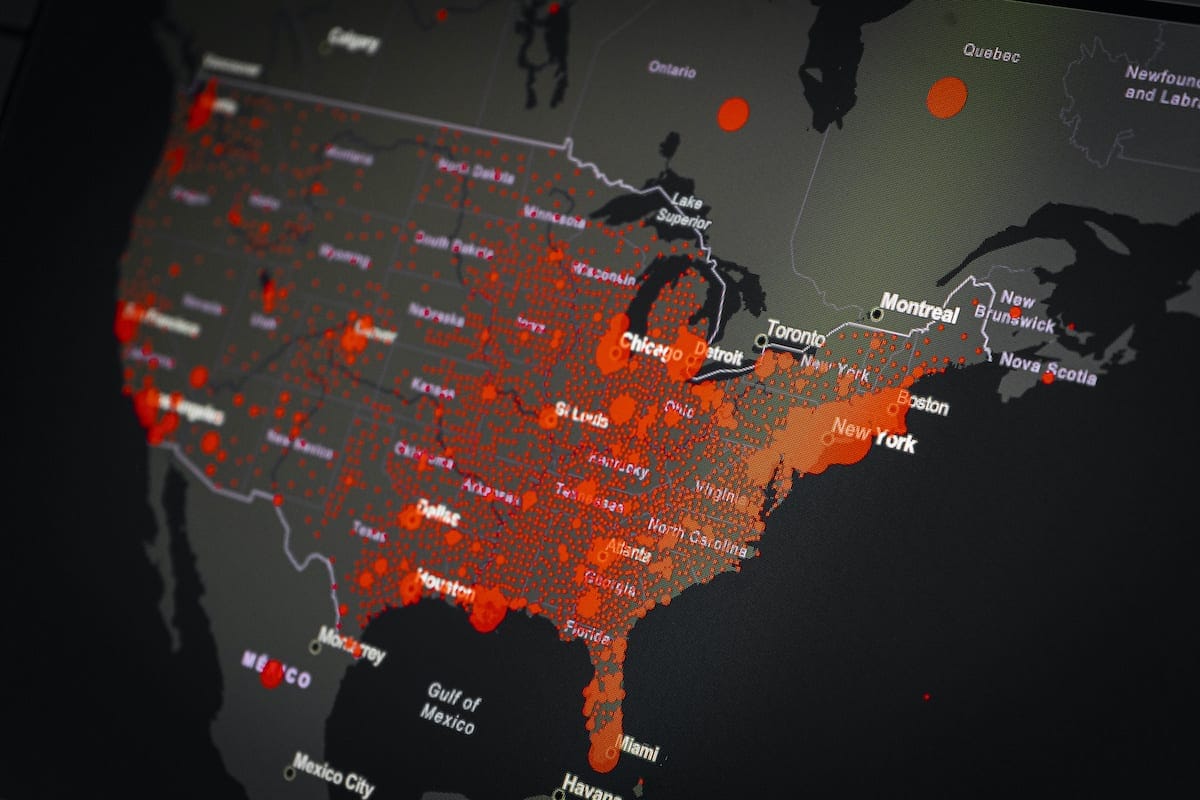
Due to stay-at-home orders and the close of non-essential businesses, total transactions and dollar sales fell nearly 50% and more than 25% respectively in the weeks following shutdown orders. Active merchants dropped by 25% with more than a quarter of merchants posting no transactions at all. Urban areas showed sales decreasing by 22.5% since the first week of March while medium-sized cities have decreased 26.5%, small cities 26.5%, and rural areas 31.1%.

Despite the drop in card-present sales (nearly 50% drop in March), card-not-present sales only decreased by 15.2%. Sales for on-site technical services such as plumbing, heating, and contractors remains steady perhaps due to stay-at-home restrictions. Also sales between 5 am and 11 am are increasing, accounting for the special hours for seniors and high-risk shoppers, as well as for customers looking to shop outside of traditionally busy hours.

Host Merchant Services

During these turbulent economic times, depend on a stable and reliable payment processor to partner with your business to minimize the impact of worldwide instability. Payment processing should be the least of your concerns. Delivering personalized service and clarity, Host Merchant Services takes the time to explain your payment processing. We want you to understand your monthly statement, and we will ensure that your statement matches our promises during our sales presentation. If you do have questions, you can reach a live representative any time, any day. HMS offers wonderful customer service, as well as great rates.

Host Merchant Services even explains where our profit lies in the pricing structure to be fully transparent in all directions. Pricing fairness and transparency is our strategy in helping our customers find success with their businesses.

E-Commerce Booming Amid COVID-19 Concerns

There has been a lot of talk amongst the business community about the effects of the coronavirus pandemic on the economy. While there has been a downward trend for brick and mortar businesses due to social distancing, e-commerce has seen a rise. While it’s not too surprising considering many people are shopping online for their basic needs, it’s gone far beyond that. It would appear there is an uptick in online sales across the board. This includes essential items just as much as non-essential. People miss shopping and they’ve turned to online merchants to do it. Is it just the pandemic causing the rise in e-commerce? Experts don’t think so and we’ll tell you why below.

Online Shopping is Overtaking Retail Sales

merchant services online ordering

Online sales are booming amid COVID19

If you tell someone that online shopping has gone up during the COVID-19 pandemic, you might be met with knowing glances. It makes logical sense that people are buying online now more than ever. However, this trend actually started before the lockdown orders began. In fact, the initial report from the U.S. Department of Commerce came out in April 2019 and noted that in February 2019, for the first time ever, that the total market share of e-commerce sales was higher than general merchandise. This is a massive indicator that online shopping is not just a fad or only used for convenience, it’s here to stay.

When this report came out, there was a slight increase in e-commerce with a lead over retail stores of less than 1%. Fast forward a year later and the Quarterly Retail E-Commerce Sales Report for the first quarter of 2020 shows e-commerce has increased by 2.4% since the last quarter of 2019 and 14.8% since their initial report last year. That is massive growth and shows that e-commerce is booming amid COVID-19 concerns. However, since this uptrend was already happening long before the pandemic, experts believe it won’t be changing anytime soon.

E-Commerce is Still the Wave of the Future

Online shopping has been around for decades now but it continues to grow and expand at a rapid pace. There are always new products and new ways to sell them. Technology is always evolving and the e-commerce community is both creative and innovative which allows it to keep growing. Recently, Facebook introduced Shops, which will allow businesses to sell their products more easily on the social media platform.

Forbes also recently reported that e-commerce’s share of overall retail sales has now moved past 25%. In this article, Laura Hyland, vice president of e-commerce at Henkel, explains, “Previously, brands pushed customers to purchase these kinds of products in the store. They refused to give Click & Collect as an option. The days of pushing people into stores are over.”

If you’re curious about what specific categories in sales have been booming during the coronavirus pandemic, Forbes reports that bread makers, computer monitors, and even ping pong tables have all seen a huge boost. If you’ve been thinking about starting your own e-commerce business, there has never been a better time to get started. Many online businesses are enjoying a big bump in sales and interest and you could, too! Check out the most popular e-commerce merchants as well as some of our merchant services.

Walmart Combines Shopping and Grocery Apps

Do you grocery shop either in-store or online with Walmart? If you do, chances are you probably make use of their mobile grocery app. If you haven’t already heard, there is an important change that will be taking place if you regularly use the iconic Walmart grocery app.

Loyal Walmart e-commerce customers know that up until now, there was a separate app for groceries and another one for all other products. The standalone Walmart grocery app will begin to be phased out in favor of integration with the store’s main app. This essentially means that both of Walmart’s apps will be combined into a single more effective shopping application. If you use the Walmart grocery app on a regular basis, don’t despair because you will now be able to find everything you need on the main app. This has all been done in order to streamline and simplify processes and you will now no longer have to constantly switch between the apps when conducting your online ordering with Walmart.

Walmart

Walmart is streamlining their shopping app experience.

Users need not worry about creating new accounts or saving their personal details again on the main Walmart app because if you already have an account with Walmart for your groceries, these details will all be available on the main app. Obviously, the main Walmart app looks a bit different from their grocery app but the functionality is basically the same and it will continue to accept payments for groceries, toiletries and much more. The main thing to remember is that Walmart is not trying to make life more difficult for customers but is, in fact, attempting to do the exact opposite.

The Walmart grocery app will be a thing of the past in early June. Therefore, whether you use your Walmart grocery app for grocery deliveries or pick up at the store, you should make sure that you have also downloaded the main app so that you will not be affected. Due to the Coronavirus and people self-isolating as much as they can in the past 2 months, downloads of the Walmart app have reached an all-time high. In fact, Walmart has even overtaken Amazon recently as the most popular shopping app and it shows no signs of slowing down.

Although the number of people downloading an app doesn’t mean that much in the greater scheme of things, if you consider that Walmart sells far more than just groceries, this is really a good sign of great things to come for the retail giant. Research articles have indicated that mobile e-commerce ordering has grown dramatically over the past decade. Unfortunately, some consumers feel that ordering via an app can be a complicated and frustrating process. Walmart has taken these concerns to heart and has tried to make online ordering as easy as possible with the integration of its two apps. Retail experts believe that Walmart has made an excellent decision by deciding to integrate its apps into a single, unified interface. Not only does it benefit the customer, but it also has many advantages for Walmart itself. This is because when Walmart customers do their regular online grocery shopping on the new platform, they will be more likely to see other, non-grocery products that they may be interested in purchasing.

Regardless of whether consumers prefer to support Walmart, Amazon or another supermarket for their grocery needs, experts have predicted that the two main players will continue to be Walmart and Amazon, who will continue to vie for the top position. With online ordering becoming the “new normal” as folks practice social distancing, it is likely that Walmart will see even more growth in this space.

A NEW PROGRAM FOR SMALL FLEETS: WEX EDGE BUSINESS SAVINGS NETWORK

What is WEX?  WEX is a global financial technology solutions company. They streamline payment systems across the world and industries—including Fleet, Corporate Payments, and Health.

The WEX EDGE savings network offers exclusive discounts on things that keep small business moving—like fuel, tires, wireless, and more. However, there is more to EDGE than great discounts. WEX, which provides financial services for companies in industries like fleet, travel, and healthcare, has a new business savings network called WEX EDGE to help smaller companies get a leg up in doing business, according to a press release. The program will use pre-negotiated savings and an eCommerce interface to allow smaller fleets and businesses to purchase products and services they need to run their businesses. The release states that users will be able to access “discounted prices” with WEX EDGE and use their WEX fuel account to make payments.

Auto Mechanic Fixing Engine

WEX EDGE offers savings on repairs and maintenance.

“We’re excited about the opportunity this platform brings to expand our merchant community and deliver a win-win for both our merchants and customers with access to highly curated offers and the expanded payment functionality for non-fuel purchases,” she said, according to the release.

Due to the pandemic, WEX has modified its financial forecast for this year, saying the impact on travel and related industries will likely result in a 2 percent to 3 percent drop from its February forecast. WEX has also recently restructured its corporate payment solutions team, with Mark Aquilina taking the helm as senior vice president of product and strategy of corporate payment solutions. The WEX EDGE service is designed to aid those looking to purchase tires and book installation appointments on vehicles. The press release states that EDGE will allow clients to buy tires online, using a partnership with thousands of Bridgestone Retail Operations locations, including Firestone Complete Auto Care and Tires Plus. What’s more, users will be able to make the purchases, book appointments, and pay all with the EDGE application.

The program also gives access to savings on wireless solutions and other services like Electronic Logging Devices (ELDs) and analytics tools. Erin Knight, vice president of fleet product and innovation at WEX, said in the release that the current pandemic and global situation has seen customers looking for ways to cut costs and save, which WEX EDGE could help with.

WEX EDGE Savings on fuel

Fuel Rebates

Users can earn valuable rebates in the growing EDGE network, with participating locations at TA/Petro, Casey’s, Yesway, GetGo, Kum & Go, QuikTrip, and more.

WEX EDGE Savings on tires

Tire Discounts

Businesses can enjoy competitive tire pricing at over 2,200 Bridgestone Retail Operations locations in the U.S. — plus, WEX customers save 6% off retail for additional parts and service.

WEX EDGE Savings on wireless

Wireless Discounts

Businesses can save on Sprint Business wireless solutions and accessories, including top-tier plans, additional lines, and more.

WEX EDGE Savings on fleet expenses

Fleet Management Discounts

Explore deals on data analytics and reporting, GPS tracking, and other tools to help you get more from your vehicles.

Business owners can access the WEX EDGE dashboard to see how much they’re saving on fuel and how they can save even more. Entrepreneurs can use their WEX account to pay for goods and services beyond fuel. Users can consolidate and control their business spending in a single, seamless application. EDGE can help any business get more for every dollar, and more for every mile. It is that powerful!

Amazon Asks Congress to Enact National Price Gouging Law

Amazon Asks Congress to Enact National Price Gouging Law

Whenever you think of online order, Amazon is the first place you go. Amazon is a trusted name however they are also home to many third party sellers and it is not new to see entrepreneurs trying to take advantage of a major event. Whenever the demand for basic needs increases, some will try to exploit the conditions by marking up goods in a way that goes beyond the laws of supply and demand.

Amazon, an online retailer, has been criticized for not acting quickly enough to limit sellers who have charged hundreds of dollars for hand sanitizer, which is in high demand due to the coronavirus epidemic. As coronavirus spread, it led to an increase nationally in complaints about price increases. Many states have laws for price-gouging, but these laws vary. About 12 states do not have laws prohibiting price increases, although some of the state councils have introduced bills.

In the month of March, 32 government attorneys general insisted on the online giants Facebook, Amazon, eBay, Craigslist, and Walmart to closely monitor the price-raising practices of the third-party sellers dealing in online orders. This included examples of price increases in March, highlighting a 2-liter hand sanitizer bottle sold on Craigslist for $250, an eight-ounce hand sanitizer on the Facebook market listed for $40, and face mask packs on eBay sold for more than $50.  Similarly, Reuters e commerce trends 2020 banner imagereported that in March, some of the Amazon sellers charged $400 or more for a pack of small bottles of Purell hand sanitizers. In April, California buyers filed a federal claim against Amazon for allegedly overcharging.

The lawsuit claimed that high demand products such as cold remedies and face masks showed an illegal increase in prices. Responding to criticism, a spokesperson said that Amazon had deleted more than 500,000 products and suspended around 4,000 accounts in the United States. Amazon has also provided information to government attorneys and federal lawyers on sellers suspected of placing high prices on products in high demand due to the coronavirus pandemic.

Amazon urged Congress on May 13th to pass laws prohibiting price increases in the event of a national emergency. The public policy vice president for Amazon said that each state has different laws regarding price increases. Establishing standards is a significant challenge for retailers who want to help law enforcement, protect consumers, and obey the law.

Amazon says that it can do a lot on its own and the inconsistent standards of the states bound its ability to suppress price hikes, while laws against price hikes in times of crisis are currently in about two-thirds of the United States. Not surprisingly, the legislation proposed by Amazon guarantees that only the party that sets the price, such as the third-party Amazon retailer, is responsible for the increase in prices, not Amazon that is facilitating online shopping. While the actions being taken might be a few months late, they can ultimately help consumers and prevent unscrupulous businesses from taking advantage of bad situations.

Malls Reopening Amidst Coronavirus Pandemic

As the spike in COVID19 cases around the world has been observed in the past few months, the authorities of many countries have implemented nationwide lockdowns to lower the number of cases in the coming days. This strategy to cope with COVID19 has been effective in some countries but many affected people have grown restless.

As the lockdowns have continued, many businesses have incurred losses and faced severe financial hardship. One such example is the Simon Property Group, the biggest mall retailer in the U.S. This retail business has seen losses of 20.2 percent in the last quarter of March as the closure of their malls became a reality to minimize the COVID19 spread.

malls reopen during covid19

Malls are counting on visitors to return when they reopen.

The company’s U.S. properties were closed on March 18 as the concerns regarding the COVID19 pandemic grew. This closure was causing Simon Property Group financial difficulties, so it has been planning to reopen some of its properties as local governments have eased restrictions. They have already reopened 77 malls in the first week of May. The retailers are considering implementing restrictions to contain the COVID19 spread, such as six-feet social distancing, enforcing reduced capacity, limiting open hours, and handing out masks to visitors.

After the decision to reopen its malls, Simon Property Group’s shares increased dramatically by more than 9%. As the market closed on the Monday after the announcement (May 11), Simon Group reported quarterly revenue of $1.35 billion, beating the estimated figure of $1.33 billion.

David Simon, the chief executive of the Simon Property Group, said that he had been satisfied by the outcome from other malls that were reopened. But people, according to a PYMNTS survey, are as eager as expected for the malls reopening because the fear persists that they might contract COVID19.

Simon has been advocating the reopening as a move to help people and local governments, “because frankly, they depend on our sales taxes,” he said, according to CNBC. But the reopening of the malls is seen as a way to tackle Simon’s own financial problems. Retail tenants have resisted paying rents to the mall owners. Only 15% of the rents were paid in April, and May is looking worse.

Gap, the largest inline retail tenant in Simon malls, recently announced that it was suspending paying the rents to save $115 million a month. Gap’s rent comprises 3.5% of the total base minimum rent. Other large tenants have also contributed to declining in rents paid, including retailers like Victoria’s Secret owner L Brands, PVH, the owner of Calvin Klein, and Coach parent Tapestry. It seems that opening the malls again is necessary to enable tenants to restart paying their rents.

Retail malls like Simon’s are facing a difficult situation with the COVID19 outbreak. The mall owners have reduced staffing, frozen hiring, and cut operating expenses and corporate spending in order to reduce their expenses. But as the reopening of malls continues, the shares of the company have recovered and prospects for the future look brighter.

The Rise of Contactless Payments and NFC Amidst the COVID19 Pandemic

Payment Processing TerminalHow has COVID-19 Changed the Way Consumers Spend Money?

So much has changed in the face of COVID-19, including how consumers pay. Already, small businesses have seen a 27% increase in the use of contactless payment versus prior to COVID-19. Businesses that didn’t accept payments like Apple Pay before are also quickly adapting to keep up with the increased popularity of the payment system. In fact, the total usage of contactless payments in the United States is expected to be eight times higher than before.

Increased Use of Contactless Payments

Ingenico Mobile NFC Payments

ApplePay, GooglePay, and other contactless payments are gaining acceptance.

Even before COVID-19, money had a reputation for being ‘dirty.’ While the World Health Organization hasn’t necessarily banned the use of paper money, they’ve highly suggested thorough hand washing after touching cash. The Federal Reserve has even created a money sterilization program for money coming in from certain countries.

Many businesses are accepting cash less and less and turning to credit cards and contactless payments as their preferred method. Even restaurant chains, such as Burger King are advertising their plea for use of contactless payments and Walmart changed their procedures at the self-checkout that allows for touchless checkout when using Walmart Pay.

Consumers don’t want to touch cash and neither do the cashiers any longer. Using contactless payments eliminates one more touchpoint between parties that could potentially spread the virus, even with the use of a credit card. While the US was one of the last to adopt contactless payments as a common payment method, its popularity is quickly increasing.

The Issuance of Contactless Cards

With the sudden increase in contactless payments, card issuers must reissue cards to a much larger audience than before. Prior to COVID-19, card issuers waited until cad expiration or customer request to issue a contactless payment card because of the low usage rate. Today, though, the need is much greater and will require more consumers to have the capabilities.

Studies show that those in the 18 – 24-year-old bracket and the 25 – 44-year-old bracket are the most likely to use contactless payments most often. The other age brackets may seem resistant, simply due to a lack of education on the concept. With the idea becoming more widespread, however, the use is expected to greatly increase.

How Contactless Payments are Used

merchant cash discount covid19

COVID19 Pandemic Has Merchants Looking for Solutions

Today, contactless payments are used for just about any purpose from ordering your food in the drive-thru to paying for your order in line at the grocery store. The idea is to eliminate one point of contact between employees and consumers, therefore, reducing the spread of the virus.

While many consumers aren’t familiar or just weren’t interested in using contactless payments before, it’s quickly catching on and becoming more common. With greater advertisement and education of the product and acceptance of it at retailers, restaurants, and services everywhere, the idea will catch on even faster and cash will become the least likely form of payment for most businesses and consumers in the United States. Knowing how contactless payments work and adapting isn’t just a way of accepting new technology; it also helps increase the safety of doing business.

How to Survive COVID19 by Sharing Costs with Cash Discount Merchant Services

Cash Discount Merchant Services COVID19Under the financial stress and burden resulting from the effects of the pandemic, businesses may be more receptive to sharing the cost of credit card fees with their customers. Even under normal circumstances, credit card processing is expensive for businesses, especially small businesses with tighter budgets.

To improve cash flow, as well as to prevent closing up shop for good, businesses can share the costs of credit card processing by participating in cash discount merchant services.

Cash Discount Merchant Services

merchant cash discount covid19

COVID19 Pandemic Has Merchants Looking for Solutions

Unlike a credit card surcharge, a cash discount involves charging a service fee on all transactions while providing a discount for customers who pay with cash. While surcharges add a fee to the price when paid with a credit card exclusively, a cash discount program does as the name implies: provides a discount to purchases paid in cash.

Merchants can offset credit card processing fees by applying a service fee to all products with a cash discount program. At the same time, merchants provide discounts to customers who pay with cash or check. When merchants employ a cash discount program, credit card customers see an extra line item on their receipt for the service fee.

Not only does cash discount merchant services incentivize customers to pay with cash or check, but a cash discount program also allows merchants to pass the cost of credit card usage to the customer.

Cash Discount Program Compliance

Businesses must apply a fee on all transactions if they choose to use cash discount merchant services. When customers pay with cash, check, or an in-store gift card, the business then discounts the price by the amount of the fee.

There is no law prohibiting a cash discount program as long as the business notifies customers of the program in advance of their purchases. This is unlike surcharge fees, which are prohibited in many states.

Businesses must post signage notifying customers of the added service fee on all transactions with a discount for cash payments. To ensure compliance, a best practice is for businesses to post notifications throughout their business, including by the door and at the register.

Cost of Cash Discount Program

Versus adding credit card fees retroactively during the accounting process, the merchant servicer pays the service fees on the merchant’s behalf. The merchant servicer will choose the best program for the business depending on sales volume and average ticket size. For businesses that maintain a certain level of business, merchant service providers can even offer free payment processing.

Host Merchant Services

If your business is considering implementing cash discount merchant services, Host Merchant Services can help with every step of the way. HMS delivers fantastic service without the headaches. When you work with HMS, we consider you part of the family. As part of our family, we want your business to grow. That’s why we offer exceptional service with no contracts and no hidden fees. Businesses stay in the HMS family for our high-quality service and super low rates. You won’t find exceptions in fine print. How can Host Merchant Services help your business navigate the challenges posed by the pandemic?

Tips for How to Sell and How to Keep Your Business Afloat During COVID-19

covid19 coronavirus sales merchant servicesWhile you don’t need to stop selling during the COVID-19 pandemic, you will need to change your approach to selling. At least for a few months and possibly longer, you’ll want to shift the way you sell whether you’re an agency owner who does all of the selling or if you have team members selling on your behalf. Adapt your sales strategies to this new reality with the following selling tips:

Making Adjustments

Excellent Merchant Services Customer Support and Sales

Sales can be challenging during COVID19

First things first, let’s adjust your mindset. This process will take more time than you’re accustomed to, and it will most likely be harder than you’re accustomed to. If your plan is to still be in sales post-pandemic, you’re in this for the long haul. Adjust your mindset and attitude accordingly.

Keep in mind your clients and potential clients may not have their own business at the top of their mind, let alone what you’re selling to them. This is where you practice patience, as well as compassion and empathy. For both your clients and your sales team, adjust as necessary. Do more listening than speaking. Always keep in mind that the person you’re talking to, whether it’s your client or your sales team member, may have a sick member of the family or may have even lost someone to COVID.

Providing Value

Your value proposition will most likely be different under pandemic circumstances. In addition to updating your value proposition, you’ll also want to update your persona to match the circumstance. As always, place yourself in your buyer’s shoes to determine the best approach. By juxtaposing the priorities and roles pre-pandemic with the top issue preventing leaders from achieving priorities adjusted to reality under the pandemic, you can use your client’s description of the issue in your own rhetoric under your adapted persona.

By supporting remote teams and empowering managers to coach remotely, you can leverage the new normal when decision makers push back during outreach. Always keep in mind where your prospect is located, their industry, and the market they serve when making outreach. Be empathetic to prospects located in COVID-19 hotspots and industries heavily impacted by the virus.

Host Merchant Services

During these turbulent economic times, depend on a stable and reliable payment processor to partner with your business to minimize the impact of worldwide instability. Payment processing should be the least of your concerns. Delivering personalized service and clarity, Host Merchant Services takes the time to explain your payment processing. We want you to understand your monthly statement, and we will ensure that your statement matches our promises during our sales presentation. If you do have questions, you can reach a live representative any time, any day. HMS offers wonderful customer service, as well as great rates.

Host Merchant Services even explains where our profit lies in the pricing structure to be fully transparent in all directions. Pricing fairness and transparency is our strategy in helping our customers find success with their businesses.

Ways to Choose a Credit Card Processor for an Auto Shop

Do you own or manage an automotive business, such as a repair shop, dealership, body shop, or tire retailer? There are many different industry-specific problems that can arise especially when it comes to credit card processing services. When choosing a credit card processor, it is important to pick a partner that really understands your business.  You want a partner that can provide a the service you need to accept payments easily, so that you can focus on making your customers happy.

Large Tickets

As an automotive business, you probably process transactions that are quite a bit larger than a typical retailer or restaurant.  While oil changes and routine services might be under $100, undoubtedly you will process transactions that run into the thousands, if not more sometimes.  Did you know that some processors sometimes hold large transactions unnecessarily and can sometimes delay funding for days?  While it is sometimes necessary to validate transactions, you want a merchant services partner that offers great service and can get this done quickly without delaying your funding.

Auto Mechanic Fixing EngineNext Day Funding

Cash flow is important for all business, but especially for automotive businesses.  When you’re buying parts and paying your staff, you need to get funded quickly to meet expenses.  It is important to pick a merchant services company, like Host Merchant Services, that offers fast next day funding on your transactions.

Check Processing

Checks are a thing of the past, right?  Not at all!  Sometimes customers want to pay via check, but you don’t want to take the risk of a bounced check costing you valuable revenue.  Check processing services allow you to easily process, deposit, and evaluate risk on checks. Or take it a step further and get check guarantee services, so you know with 100% certainty that the check will clear.  Don’t let other processors tell you that you don’t need this service, just because they don’t offer it.  With Host Merchant Services you get a free check reader with all check processing accounts.

Don’t Lock Yourself In

Watch out for term commitments, or worse, the dreaded equipment lease.  With Host Merchant Services you get free equipment and never get locked in to a term commitment or saddled with a non-cancellable equipment lease.  Sometimes unscrupulous merchant services companies can charge thousands of dollars in lease fees for equipment that Host Merchant Services provides for free.

Conclusion

There are many options for credit processing for automotive companies  and there are many specifics in the auto industry to consider when looking for payment processing. Host Merchant Services can provide you with the services that are specifically tailored for the needs of your business.  Don’t pick a generic one-size fits all payment processor – choose Host Merchant Services for the top customer service rating in the industry, and solutions for automotive business that are second to none.