Author Archives: hostmerchantservices

Restaurant and Hospitality Rebound 2023

Restaurant and Hospitality Rebound? Demand for Dining Set to Surge Post-Pandemic [2023 Update]

The COVID-19 pandemic has caused immense harm to many industries. Many places are unable to open, and the ones that can open are doing so with significant restrictions. There’s also the concern of people not feeling comfortable returning to certain public places for fear of the spread of COVID-19.

However, the restaurant and hospitality rebound is expected in the coming future. The demand for dining will rise, especially as the signs of the pandemic start to deteriorate. But the ways how the field will change and what people can expect in the future remain interesting to watch, especially with some people having a better chance of returning.

The restaurant and hospitality industry has especially been impacted by the pandemic. People are not willing to enter dining and entertainment establishments, what with them being places where many people can be found at a time. There’s a general fear among many that these places are “super-spreader” spots.

Restaurant and Hospitality Rebound – A Strong Interest In Leaving the House

Many people who used to enjoy going to restaurants and other places outside the house have expressed a reduced interest in doing so during the pandemic. Many of these people have gone towards alternatives like dining at home and ordering in. But as it turns out, there has been an increased interest in people wanting to go places once again.

Restaurant and Hospitality Rebound

The website PYMNTS recently reported that a majority of people are interested in leaving home more often. A survey of 2,000 people found that nearly 60 percent of them have some significant level of interest in leaving the house and go places. The numbers are higher for those who make at least $100,000 a year, as those who do have a greater interest in out-of-home experiences.

People also have varying reasons for why they want to leave their houses more often. Some people want to see their friends and family members more often. Others want to go to leisure events or travel more often. Some people are simply bored and want to go back to the physical locations where they normally enjoy in their lives.

How Old Will These People Be?

PYMNTS found baby boomers are the people most likely to want to eat at restaurants more often. Each age group after that is less likely to want to go out, with people in Generation Z having the least interest in eating at restaurants. The traditional entities that baby boomers may be interested in may have a better chance at rebounding than the trendy ones that cater to younger audiences.

Restaurant and Hospitality Rebound - GenZ eating out

Some younger people might have settled in on routines that have developed in the past year. These include efforts like shopping at grocery stores and other things that people might deem to be “necessary.” Getting people to escape their newfound comfort zones may be a challenge unless businesses know how to cater to their expectations.

Who Will Survive?

While the restaurant and hospitality industry is expected to make a comeback, there exists a concern over which entities will survive. Businesses with an average unit volume or AUV of at least $1 million appear to have more control over the situation at hand. About a third of these restaurants saw their revenues drop since the start of the pandemic. Meanwhile, nearly two-thirds of restaurants with AUVs of less than $250,000 saw their earnings decline during the pandemic.

Managing Consumer Expectations

The industry will also need to understand and respect the new expectations consumers have. Many people, particularly younger audiences, may see dining and hospitality experiences to be unsafe and dangerous. They might think that they continue to be unnecessary forms of human interaction.

Consumers are expecting businesses to focus on the health and safety of their patrons. Part of this might entail focusing on capacity restrictions, cleaning protocols, and digital experiences.

Restaurant and Hospitality Rebound - Managing Consumer Expectations

Contactless hospitality may be a point to see in the future. People may not be comfortable with using public kiosks or other items that people may get in contact with throughout the day. The development of one-stop mobile apps that allow people to handle many things in their dining and hospitality experiences will be critical. A single app could help with everything from managing payments to setting up reservations and many other points. The overall goal should be to allow consumers to control their experiences while also minimizing potentially unnecessary contact.

Focus on Reservations

Reservations may also be critical for the restaurant and hospitality fields. It used to be that people would often walk into a restaurant at any time of day and enjoy a meal. People could also choose to reserve a hotel at random times if they travel and anticipate they will need service sooner than expected. But people aren’t willing to do that during the pandemic, and their habits might have changed to where they’ll expect reservations in the future.

By allowing people to schedule reservations when they can use certain services, it becomes easier for a business to keep people feeling confident about where they enter. They will know that a business cares about managing its capacity standards.

Mobile Ordering Is Necessary

mobile ordering

While these fields should rebound after the pandemic, it may be a challenge for some to recover, as many younger audiences have adapted to new ways of living. Mobile ordering may be a necessity for the future. Mobile ordering allows people to reserve their meals or other experiences ahead of time, letting them know what they are getting is safe and easy to utilize.

A PYMNTS report says that most restaurants have seen a rise in sales through mobile ordering offerings. These establishments can provide mobile ordering opportunities to make their products accessible to everyone, including those outside these spots.

An Interesting Future

The restaurant and hospitality fields will see a rebound in the coming years after the pandemic ends. But how these industries will change in the long run remains unclear. The ways how these businesses will interact with others and details on which ones have the best chance to survive remain uncertain.

More restaurant payment coverage and guides: Restaurant Payment Resources.
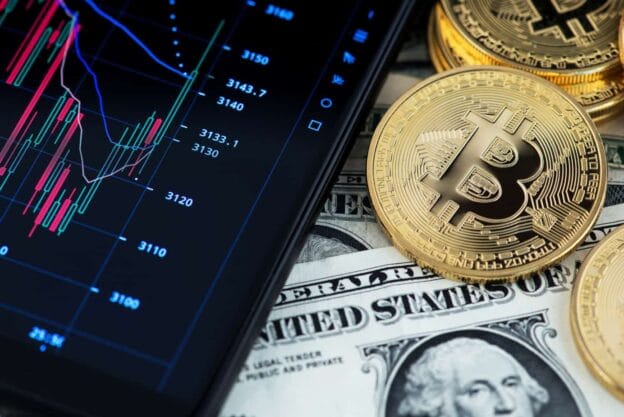
bitcoin cryptocurrency and banknotes of one us dollar next to mobile phone showing candlestick chart 142334515

Square Buys $170 Million Worth of Bitcoin

Bitcoin continues to remain one of the most intriguing investments on the market. Bitcoin has seen a massive rise in its value in the past year. Its value has risen from $30,000 at the start of 2021 to nearly $50,000 in March. Bitcoin also had a record high value of about $57,000 in late February.

One of the largest American financial service providers around is doubling down on its support for Bitcoin. Square announced it had purchased $170 million in Bitcoin. The total equals approximately 3,500 BTC as of March 4.

Much of Square’s support for Bitcoin comes as Cash App customers have helped boost the company’s revenue. Cash App is a mobile payment system developed by Square. Cash App consumers have been trading Bitcoin more than ever, leading to Square doubling its revenue in the fourth quarter of 2020. Cash App helps facilitate Bitcoin transactions to make them easier to run, helping boost peoples’ involvement with the currency.

Square’s purchase is the second such move the company has made. Square purchased $50 million in Bitcoin in October 2020. The total was about one percent of their assets. The company purchased Bitcoin, believing it would be a more viable currency for future international transactions. Bitcoin had a value of about $12,000 at the time.

Bitcoin now makes up about five percent of Square’s assets. These include its cash, securities, and cash equivalents.

Square is the latest company to focus on Bitcoin to diversify its investments and to bring in a potentially higher return on its cash. Other companies like Tesla have been investing in these currencies in the last few years. Tesla particularly acquired more than $1.5 billion in Bitcoin in early 2021, making it where Tesla’s share price is directly linked to Bitcoin’s value.

But the rise of Bitcoin for Square and others comes at high risk. Bitcoin is one of the most volatile investment options on the market today.

Statistics For Square

Square reported a few prominent statistics for Bitcoin and its Cash App use. These points are parts of why Square has invested so much money in Bitcoin:

  • Square reported there were about 36 million monthly Cash App users as of December 2020.
  • At least a million Cash App users bought Bitcoin for the first time in January 2021.
  • At least three million Cash App users utilized Bitcoin payments on the app in 2020. These include people who either purchased or sold Bitcoin.
  • The company’s fourth-quarter revenue from 2020 was $3.16 billion. The total is more than double the $1.31 billion it had in the fourth quarter of 2019. The value is also slightly over the $3.1 billion forecasts from industry analysts.
  • At least half of the quarterly income came from Bitcoin.
  • Square had a minimal customer acquisition cost in 2020. The company spent less than $5 per user. The effort is a sign of the company’s viral marketing efforts helping make it easier for the company to reach more people.
  • More money is flowing through Square’s platforms from both its mobile payments and its traditional storefront kiosks. The gross payment value in 2020 was $32 billion, a $4.6 billion rise from the prior year.

Cash App has also shown it is more viable to Square than its traditional seller business platform. Square had slightly less than $1 billion in revenue from its seller business platform in the fourth quarter of 2020. Part of the move could be due to many physical stores not being open and people focusing on online payments. But contactless payments and the simplicity of Cash App have helped, especially as people become more invested in the currency.

Focusing on Simplifying Bitcoin Efforts

Bitcoin trades are easy to complete with Cash App. Square developed the app to help people transfer funds, and its cryptocurrency feature helps people acquire Bitcoin and others in moments. The company focuses heavily on ensuring people can acquire these currencies while also helping them learn more about how they work. By providing these details, trading efforts can become more viable and accessible.

Stimulus Checks Helped

One reason why Square saw a significant amount of activity in 2020 came as Americans used Cash App to pick up their government stimulus checks. Americans were using Cash App to facilitate the collection process and to ensure they had the funds they needed as soon as possible. The app’s ability to convert funds to Bitcoin and other cryptocurrencies also helped people become more aware of these currencies and how they function.

How Square Stock Is Changing

Square’s Bitcoin investment has helped the company’s stock value rise in the past year. Square trades on the New York Stock Exchange with the symbol SQ.

Square has a value of about $215 as of early March 2021. The stock value grew from $65 in May 2020 to $150 in October 2020. The value went over the $200 mark in November and has stayed over that total since.

Square reports that its net income went from $391 million in the fourth quarter of 2019 to $294 million in the fourth quarter of 2020. Much of this may be due to the increased infrastructure necessary for keeping Square operational. But the ongoing growth of Square and the increased value of Bitcoin will help the company continue to grow and become useful for traders to explore.

Are There Risks?

There is one risk associated with Square’s move. While Square feels confident in Bitcoin, it remains one of the most volatile investments on the market. Bitcoin has a potential to rise or fall by thousands of dollars in value each day. Any investor who is interested in Bitcoin or any other similar investment should watch for the risks associated with doing so.

But the growth of Square and Cash App through Bitcoin shows how appealing the currency will be for many. Expect Square to become a more prominent company as it continues to support one of the most noteworthy trends on the market.

finance and business concept invesment graph and coins rows 111488763

Yelp Reports Small Businesses Slowly Recovered at End of 2020

Since the time the overall fears of the pandemic got outspread in the United States of America in early March 2020, businesses across the country have endured as many as 6 months of uncertainty. Still, businesses are adapting and proving their respective resilience through reopenings, lockdowns, new coronavirus prevention rules, new ways of implementing business like outdoor dining, a summer-time surge in the overall cases, and major milestones like returning to school. Even amidst increasing closures all around, we can observe businesses effectively transitioning into new operating models while keeping the consumers and employees safe.

As per the latest closure data by Yelp, it has been observed that small businesses that provide local, professional, and home-based services are capable of withstanding the overall effects of the pandemic quite well. However, even after some light in specific sectors, retail & restaurants continue struggling while facing total closures across the nation. This figure has started to increase.

As per the last Yelp Economic Average reports, there has been a decreasing number of the total closures have been 132,580 in the total value. As per the reports until 31st August 2020, it was estimated that around 163,735 businesses in the United States on Yelp have experienced closure since the advent of the pandemic (observed as 1st March, 2020). There has been observed to be around 23 percent increase in the number of closures since the time of 10th July.

Amidst the number of coronavirus cases increasing, there have been local restrictions that continue changing in many states. As such, there has been observed both temporary as well as permanent closures rising across the country. Around 60 percent of such businesses that have been closed are not reopening –with 97,966 of them being permanently closed.

Business Closures Continue Increasing Nationally

There are some business sectors that have been capable of weathering the storm of COVID-19 especially well. Generally, professional services as well as solo proprietors together have been capable of maintaining the lower fraction of closures since the time of 1st March, 2020. The given group is known to include accountants, architects, lawyers, and real estate agents –all of them having only 2 out of 3 businesses getting closed until the time of 31st August, 2020. Businesses that are related to health especially have been capable of maintaining a lower rate of closures –including internal medicine, orthopedics, physicians, hospitals, family doctors, and others.

The closure data by Yelp reveals that the overall demand for automotive, local, and home-based services has been robust with a lower rate of total closures in comparison to retail and restaurants. Contractors, plumbers, and towing companies especially have been capable of maintaining the lower rates of closures. As a matter of fact, the overall share of consumer interest in local and home services is around 24 percent between 1st March & 31st August.

Restaurants Hit the Hardest –Temporary & Permanent Closures Increasing

The restaurant industry continues being the most impacted with an increasing number of coronavirus-related closures –reporting around 32,109 closures until the time of 31st August. Out of these, around 19,590 business closures have been permanent. Restaurants for brunch & breakfast, sandwich shops, burger joints, Mexican restaurants, and dessert places are some of the common types of restaurants featuring the highest number of business closures. Restaurant trends in 2021 show that they’re adapting by offering takeout and delivery services, which have slowed the rate of closure in comparison to other businesses. Such businesses include food trucks, pizza places, coffee shops, delis, and bakeries.

At the same time, bars & nightlife –an industry that turns out to be 6 times smaller than restaurants, have experienced higher closures rates during the pandemic. The given industry has experienced an increasing rate of closures that tend to be permanent. Until the time of August 2020, there have been reports of around 6,451 closures of such businesses. Out of these, around 3,499 businesses have been closed permanently. The overall share of closures that have been permanent within nightlife clubs and bars have increased by as much as 10 percent since the release of the Economic Average Report.

Shopping and retail businesses are known to follow behind the restaurant business with around 30,374 businesses getting closures. Out of these, 17,503 of them have been closed permanently. Similar to the businesses of nightlife and bars, the overall share of permanent closures of businesses in the retail & shopping sector have increased by 10 percent by the time of July 2020. Both men as well as women’s clothing –along with home décor, tend to feature the highest rate when it comes to business closures due to the pandemic.

The global beauty industry has observed around 22 percent of increase in the overall business closures in 2020. It reported around 16,585 closures in the United States alone. At the same time, the fitness industry has observed around 23 percent rise in the overall closures since the time of July.

Metros & Larger States Observing a Greater Pandemic Impact on Local Businesses

As the pandemic continued spreading across the nation, Yelp data on geographical grounds reveals the overall rates of business closures varying across the country. Metros and bigger states featuring higher rents & highly stringent local operations for smaller businesses across the period of last 6 months have observed a greater toll. This is true for businesses that are closely associated with physical locations requiring several consumers to ensure profitability. At the same time, solo operations and smaller cities that are capable of doing their operations virtually or one-on-one have been capable of better positioning for staying in business.

For states featuring significant business closures, the overall economic struggle is coupled with higher unemployment rates. Nevada, Hawaii, and California are known to feature the highest rate of total business closures along with permanent closures. These are also the states featuring the highest rates of unemployment while being the biggest states for promoting tourism. At the same time, states like the Dakotas and West Virginia tend to feature lower business closure rates.

hand holding light bulb and business digital marketing innovation technology icons on network 138534565

Skyscend uses AI to Revolutionize Invoice Management

Skyscend has recently launched the revolutionary SaaS (Software as a Service) offering in the form of Skyscend Pay. The given SaaS-based invoice management system aims at leveraging the potential of Artificial Intelligence (AI) for removing friction that exists in invoice processing. The utilization of this high-end technology allows for smart functionalities that tend to be “context-aware.”

Heera Garia –CTO at Skyscend, in an announcement said that, digital transformation is spanning all aspects of modern businesses in every industry vertical out there. At Skyscend, the innovators aim at making use of cutting-edge technology like Artificial Intelligence, mobile-first approach, and blockchain technology for solving specific procurement needs in invoice management.

AI-Powered Invoice Management System

Skyscend Pay is available with a core platform that is known to offer detailed access to information, analytics, and functionalities. Using the advanced invoice management system by Skyscend, the users can go forward with analyzing and managing invoices, talking with customers or vendors, and observing analytics all in a single place. The offering is also available with simple invoice-centric uploads. The solution makes use of the revolutionary Artificial Intelligence technology for importing invoices rather than having the requirement of entering data manually by hand or relying on rule-based OCR or Optical Character Recognition.

In addition to this, the company also reveals that Skyscend Pay will be offering the innovative feature of dynamic discounting. With this feature, the vendors will be allowed to receive the respective funds expediently while providing savings to the end customers. The users can go forward with creating specific terms. However, the given feature can be used for applying one percent of discount for the Net 45 pay term, 2 percent for the Net 30 pay term, and 3 percent for instant payments.

The company also revealed that Skyscend Pay is totally connected with the help of well-utilized ERP (Enterprise Resource Planning) software as well as procurement networks. At the same time, the product can be customized when it comes to handling unique requirements.

The company Skyscend was set up in the year 2016. The main goal of the company is to offer expense management services across the spectrum of “Source-to-pay.”

Leveraging the Digital Transformation

The advent of high-end digital technologies was not able to bring about major advanced in the field of business procurement mechanisms. The original problems that existed in the same continued to remain as there was the absence of a dedicated SaaS or Software-as-a-Service solution catering to the specific requirements.

AI or Artificial Intelligence has been witnessing significant advancements in the recent era. Quite recently, it has been used in a wide range of applications. As such, Artificial Intelligence can also be observed in the business procurement scenario. Skyscend has stepped forward in the direction of integrating Artificial Intelligence in the respective procurement application. As such, the company finally aims at addressing specific problems that are prevalent with the existing invoicing solutions or applications.

Benefits of Skyscend Pay

Some of the top benefits of Skyscend Pay to look out for are:

  • Quick & Easy Uploading of Invoices: Instead of relying on slow, outdated, and inefficient methods of conventional data entry or fragile and rule-based OCR system, the revolutionary AI-based technology by Skyscend Pay aims at employing cutting-edge mechanisms for intelligently importing invoices. The Artificial Intelligence technology contextually parses existing invoices. As such, even totally novel formats could be understood easily.
  • Effective Correction & Reconciliation of Errors: While dealing with invoices, errors are way too common. In most instances, dealing with errors is known to consume time while involving major conversations between the buyers & suppliers. Even the occurrence of the simplest errors can mostly result in elongated email threads for ensuring that there are no misunderstandings between the parties involved. The Supplier Side Error Correction feature by Skyscend Pay helps in resolving the problem.
  • Fully Integrated with Famous Procurement Networks and ERPs: It is quite difficult to come across the right software solution for meeting the individual needs. At the same time, it is even more difficult to get the given software solution for playing nice with the remaining software stack. With the revolutionary AI-powered Pay software solution by Skyscend, the users can get access to top-notch procurement networks and advanced ERP solutions.
  • Fully Customizable for Addressing Unique Requirements: Skyscend Pay helps in adapting to fulfilling the respective needs of the organization. For instance, the configuration of whether invoice validation is done by the Supplier feature of Skyscend Pay or the AP department of the Buyer. The users can also consider making use of the web-hooks for triggering customized workflows on the series of events.
  • A Centralized Portal with In-Depth Access to Data, Analytics, and Features: Skyscend Pay helps in consolidating data from discreet sources into an easy-to-use, single interface. The advanced functionalities like viewing & managing invoices, communicating with clients or suppliers, and viewing curated analytics –all of these can be implemented without switching any tab.
  • Dynamic Discounting: The given feature helps the suppliers in getting the necessary capital that is required instantly. At the same time, it also helps in offering the much depreciated savings to the respective buyers. While the particular terms tend to be completely configurable by the users, the feature of Dynamic Discounting can be leveraged for optimum use.

About Skyscend

Skyscend is a leading procurement product & service organization led by highly experienced team in the industry. The company goes forward with the goal of helping clients in achieving procurement excellence. Since its inception in the year 2016, the company is committed to spend delivery and management services across the spectrum of source-to-pay.

uk flag and silhouettes 28533392

UK Celebrates Three Year Anniversary of Open Banking, Reflects on Significant Growth [2023 Update]

On 13th January 2021, the concept of open banking under the Payment Directive Services 2 in the European Union celebrated its third anniversary. Since 13th January, 2018, the concept of open banking went on to become a mandatory regulatory requirement in the United Kingdom. The given concept was put into execution with the purpose of introducing data-sharing initiative for increasing the overall competition as well as choice for small businesses and consumers.

Since the time of 2019, the total number of third-party service providers out there, the businesses using the technology of open banking, has observed an increase of around 294.

In the year 2018, around 320,000 payments related to open banking were executed. The same value rose significantly to reach more than 3.4 million in the year 2020.

The total number of individuals using the concept of open banking for moving, managing, and making the most of the respective money has increased from the mark of one million during January 2020. The same reached the mark of 2 million in August 2020. In the current scenario, the same value is around 2.5 million. The given mark shows the overall growth of 1 million new users in the period of every 6 months. In 2021, it is predicted that the use of open banking will double.

Rise in the Product Offerings

The total number as well as range of new product offerings has also increased substantially. As of the records of December 2020, around 294 regulated service providers had been present in the given ecosystem. Out of these, around 102 were featuring live offerings in the given market.

The total number of subsequent API calls has risen from the mark of 66.8 million in the year 2018 to reach around 5.1 billion in the year 2020. At the same time, the overall API call volume was capable of reaching around 6.5 billion between the period of 2018 & 2020.

Since the inception of the banking system, the OBIE or Open Banking Implementation Entity of the United Kingdom has been capable of working closely with the regulators and government for the creation of an ecosystem for the concept of open banking allowing for innovation.

OBIE revealed that open banking is on the way of revolutionizing the way in which businesses and individuals can leverage the financial data for the respective benefit. Imran Gulamhuseinwala –implementation trustee in OBIE, reveals that the concept of open banking has been the best kept secret in the field of financial services. Additionally, he added that the team at OBIE had worked hard towards the development of the open banking functionality & infrastructure over the period of last 3 years. As such, the overall significant progress gets reflected –not only amongst the millions of active users of the concept of open banking technology every month, but also in the overall sustained momentum of rapid growth that is being observed.

The agency has been capable of developing the world-leading & thriving ecosystem of around 300 regulated providers for collectively bringing innovative products as well as services to the ongoing market. While there are many things to be done, small businesses and individual consumers are already observing the overall benefits of the functionality & ecosystem in place.

New Phase of Development

Dan Weaver –Expert of Open Banking at Equifax in the United Kingdom, reveals that with the 3rd anniversary of the implementation of the concept of open banking, the given field is entering an all-new mature phase of the development. The credentials of the initiative are established widely while offering creditors the right covid-19 tool for assessing the most accurate image of the finances of an individual. 

Open Banking Implementation

Open Banking Implementation

The overall implementation of the concept of open banking can be now regarded in its final stages. The last one year had been predominantly focused on improving the overall usability as well as functionality such that the customers could leverage the benefits of the given technology. The range and number of new product offerings have also increased significantly. As per the reports in December 2020, it has been reported that around 294 regulated service providers are currently present in the ecosystem. Businesses as well as consumers can consider making use of the Open Banking App store for exploring which products enabled by open banking are perfect for them.

  • Implementation Roadmap: In the year 2020, the final stages of the given implementation roadmap had been approved. Eventually, the vital payments functionality including refunds would be delivered along with the enhancement of reliability and performance.
  • Innovation of the Ecosystem Product: In April 2020, the OBIE had gone forward with launching the campaign referred to as the “Power of the Network” for promoting as well as showcasing how the open banking environment had been responding to the pandemic crisis with products & services for assisting the affected groups.
  • App Store: In June 2020, the OBIE went forward with launching the leading Open Banking app store for helping companies and individuals come across the right financial products that were enabled by the concept of open banking. The app store is currently known to enlist as many as 96 apps as well as services that remain live for marketing.
  • Nesta Open Up Campaign: During October 2020, as many as 4 fintechs based on the concept of open banking had been announced to serve as the winning finalists of the Open Up Challenge of 2020. The given program had run in association with the partners of Nesta Challenges and was responsible for promoting the solutions enabled by open banking for individual users. The same has been built on the similar programme that has been aimed at the SMEs in 2019.
  • Report of the SME Financial Landscape: During December 2020, the OBIE went forward with publishing its research revealing that since the beginning of the pandemic, the small business community of the United Kingdom has been increasingly making use of the services that are offered by the providers of open banking services. This is because they aim at future-proofing the respective business operations.
pos terminal smartphone smartwatch contactless payments set 103888539

MasterCard Introduces Next-Generation Contactless Payments

On 26th January 2021, MasterCard made the announcement that it is going to apply for the revolutionary range of quantum-resistant technologies for the development of next-gen contactless payments. The Ecos or Enhanced Contactless specifications will be the first-ever such technology in the industry. It helps in ensuring that as the dynamic digital landscape continues to evolve, and newer technologies including quantum computing are getting introduced, the technology of contactless payments will be future-proofed. At the same time, it also helps in ensuring that consumers would continue enjoying the same higher levels of security as well as convenience they have in the modern era, for several years to come.

The overall demand for safer, more convenient, and faster ways of payment has ignited the transition to the technology of contactless payments. At the same time, it is expected that the given trend will only grow in the coming years. As a matter of fact, during the 3rd quarter of 2020, contactless payments accounted for around 41 percent of transactions related to in-person purchases across the globe –witnessing an overall increase of 30 percent in comparison to the previous year.

MasterCard Introducing the Revolutionary Contactless Payment Technology

MasterCard has been accelerating the overall shift to the concept of contactless payment for several years. At the same time, the leading payment giant has been developing high-end specifications in the form of Ecos for supporting efforts related to industry standardization. At the same time, it can also help in ensuring that the overall ecosystem tends to benefit from increasing security levels.

Ajay Bhalla –President of Cyber & Intelligence at MasterCard, says that contactless technology serves to be the present as well as the future of in-person payments. The year 2020 had been responsible for bringing with it a significant rise of digitization while reinforcing the overall significance of digital solutions. One major instance of the given solution is contactless technology for helping in meeting the everyday needs. As the given ecosystem continues evolving, an increasing number of connected devices as well as the IoT (Internet of Things) are going to yield improved user demands. At the same time, it can also help in creating a greater need for continuous innovation for building next-gen capability while ensuring that technology would never outgrow trust.

Benefits of Ecos

With the help of Ecos or Enhanced Contactless specifications, some potential benefits to look out for are:

  • Improved Convenience: Over the passage of time, it is estimated that the respective in-store shopping experience will become contactless only. The latest specifications will help in delivering the assurance that any device is truly capable of serving as a payment device while getting rid of the overall need for the backup swiping or dipping of the card.
  • Improved Privacy: The all-new specifications will be helpful in delivering advanced protection when the existing account information will be getting shared between the digital wallet or card and the final checkout terminal. Ecos helps in building on the improved requirements for supporting a myriad of privacy regulations.
  • Improved Trust: Ecos is known to make use of the all-new quantum-resistant technology for delivering advanced algorithms as well as cryptography major strengths. At the same time, it also helps in maintaining the contactless interaction under the value of half a second.

As the all-new specifications get activated in the period of coming years, merchants as well as consumers can expect hassle-free transactions. Mobile payments, digital wallets, point-of-sale terminals, and contactless cards are going to continue working as they are doing in the modern era. Moreover, the overall compatibility with Ecos, along with the ongoing contactless specifications is going to be simple & straightforward.

Ecos is known to work behind the existing scenes while being delivered through some software upgrade. As such, no terminals or hardware specifications are required. The given investment tends to complement similar investments in the form of Click-to-pay, 3-D secure, and token technologies for delivering an improved merchant as well as consumer experience.

The Ever-increasing Demand for Contactless Payments

The overall demand for contactless payments is going strong and is increasing with each passing day. It is estimated that around 15 percent of the respective in-store purchases across the globe make use of the given technology. Realizing the immense opportunity to speed up the process of adoption, MasterCard has come up with a proper roadmap for setting out the specific requirements:

  • After the period of October 2018, acceptance terminals that are relatively newer in countries like Africa, the Middle East, Asia Pacific, Latin America, and Europe will be featuring the EMV chip while being contactless enabled.
  • After the period of April 2019, the cards that are issued new in the countries like Africa, the Middle East, Asia Pacific, and Latin America will be featuring EMV chip as well as the revolutionary contactless technology
  • By the time of April 2023, all the respective merchant terminals in countries like the Middle East, Europe, Africa, and Latin America will be featuring the EMV chip while being contactless-enabled

Markets across the countries of Africa and the Middle East have already embraced and implemented the high-end technology of contactless payments. The given momentum is expected to receive more momentum with the acceleration of the acceptance landscape in the given region.

Foundation for Improved Security and Enhanced Growth

In the modern digital world, transactions are going to get smarter. At the core of the given fact is dynamic authentication in which every transaction would be incorporating unique information. It would also make it virtually impossible to replicate. This helps in reducing the overall risk of ensuring fraudulent transactions.

As the issuers would be evolving the respective offerings with the merchants upgrading the existing terminals, the modern payment system will be becoming more secure. This is because the given form of dynamic data gets introduced into the payment transaction. As such, the roadmap by MasterCard aims at strongly encouraging the overall adoption of the most secure available technologies.

Improve Your E-Commerce Site

Eight Impactful Strategies to Improve Your E-Commerce Site

Every business today must be online. It’s crucial to survive given the landscape of the pandemic. Many businesses either weren’t online or had a small online presence that wasn’t enough to compete in today’s competitive marketplace.

To meet or beat the competition, your e-commerce site must have the following.

Customer Loyalty Program

What incentives do you have to bring customers back? Sure, one-time customers are great, but if you want your marketing efforts to do double-duty, start a customer loyalty program. Whether it’s a points system or you offer specials for each purchase – give shoppers a reason to try you again.

Cross-Sell

Don’t stop your marketing efforts on the product or service that a customer buys. Use the opportunity you have while you’re in front of them to cross-sell or even upsell. Offer more options before they check out – it’s like the candy and gum at the register, sometimes buyers can’t resist.

Make your Site Look Trustworthy

Your site must look legit and the only way to do that is to use words like secure and HTTPS. Test your site on all browsers and with all antivirus programs to make sure it gets through even the toughest security. If customers think their information is even remotely at risk, they’ll bail.

Make Searching Simple

A complex website is like making your store hard to navigate. No one will shop there. Make your home page and product selection are easy to sort through. If shoppers can’t find what they’re looking for fast (within seconds), they’ll go elsewhere. Make your website user-friendly.

Add Live Customer Service

Customers want instant gratification and that includes when they need help with your products or services. An instant chat feature, even if it’s a bot, will help keep their mind at ease. If customer service is hard to find or get to, customers will go elsewhere.

Make Contact Information Easy to Find

Don’t make customers hunt for your contact information. If you don’t have a chat option, make your phone number and email address easy to find. Put them on every page so customers see it and can contact you with questions.

Use Technology to your Advantage

Show off your products in ways you couldn’t in store. Create videos or share your products on social media. Get the word out and let people share. There’s something about videos that makes them go viral versus just pictures and words, so take advantage.

Add Customer Reviews

Nothing sells a product more than others talking about it. Let customers leave reviews on your website or copy and paste them from your social media feeds. Showing that others are using and loving your products is like free marketing.

Improve your E-Commerce Site for the Best Results

Business is competitive today. You have to stand out to get new customers and keep your loyal customers. Existing online seems overwhelming, but once you see the potential it offers, you’ll enjoy finding ways to keep your customer happy too.

What Are NFC

What Are NFC, Apple Pay, and Google Pay?

Today, consumers either don’t use cash or they try to avoid it as much as possible. Many even avoid using their credit card, and thanks to NFC, or ‘Near Field Communication,’ it’s possible.

What is NFC?

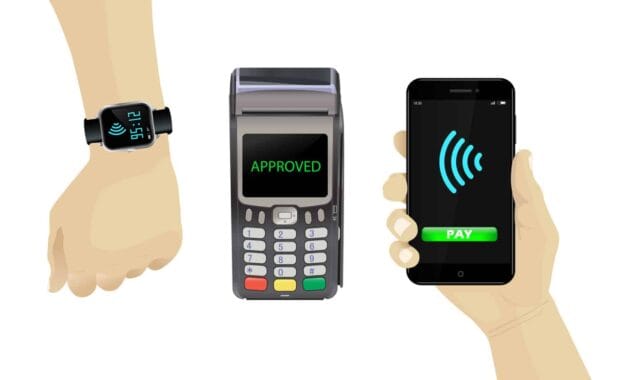
NFC allows two devices near one another to ‘talk’ to exchange payment information. Apple Pay and Google Pay are two of the most common NFC type payments used today, although there are others. How do they work and what should users pay with them?

Apple Pay – How it Works

As you probably guessed, Apple Pay is a payment option for Apple users. Customers may also use their Apple Watch to make payments. When a user is near an NFC terminal where they want to make a payment, they do the following:

  • Unlock the phone or watch using face ID or entering the passcode
  • Hold the phone near the NFC reader
  • They’ll hear a beep or feel a tap when the transaction is complete
  • The screen will show a check mark to show it’s done

Using these steps will pay with the default card set up in Apple Pay. If you want to use a different card, you must switch cards in the app before paying.

Google Pay – How it Works

Google Pay is the equivalent of Apple Pay but for Android phones. Users store a credit card in the Google Pay app and use the default card for contactless payments.

Users use these steps to pay with Google Pay:

  • Unlock the phone or watch
  • Hold the phone or watch near the NFC reader
  • Their device will show a blue checkmark when it’s complete
  • The user’s device will buzz when the payment is complete

Are NFC Payments Safe?

Consumers and merchants have reason to worry about NFC payments’ safety. It seems like it would be riskier, but there is less risk using NFC payments than a credit card.

Since you don’t have to share any personal information or even show a picture ID, there’s a lower risk of the consumer’s information being stolen. Users also have to unlock their phone for the payment to take place, so unless a thief has the passcode, they couldn’t use the Apple or Google Pay function.

Also, both Apple and Google Pay have the option to switch the function off from any device. If a user’s phone is stolen, they can shut off the payment app via any internet-enabled device.

Why is NFC the Wave of the Future?

NFC payments were popular before, but the pandemic further popularized NFC. People were almost forced to adopt the technology, which made it more widely spread. Now that people know how it works and that it’s safe, they are more likely to use NFC payments moving forward.

As a merchant, it works to your benefit to adopt the technology in your store. Consumers will patronize businesses they know keep them safe, and adding NFC payments to your checkout process is a sign of safety.

What to Know About Chargebacks, How to Avoid Them, and How to Win Them

What to Know About Chargebacks, How to Avoid Them, and How to Win Them

An unfortunate part of running a business is the risk of chargebacks. While they are a natural part of accepting credit card payments, if they get too excessive, it can make you a ‘risky’ merchant, causing you to lose your merchant account.

Here’s what you must know.

What is a Chargeback?

A chargeback is a charge reversal. The customer initiates it and it’s usually due to wrongdoing on the merchant’s part, or at least that’s what most people think. Since a chargeback protects the consumer and not the merchant, you’re on the losing end right from the start.

Common Reasons for Chargebacks

Chargebacks happen for a million reasons, but some of the most common include:

  • Customer dissatisfaction
  • Fraudulent charges
  • Clerical error

The most common reason is identity theft or fraudulent charges. But anything can happen, and customers can initiate them if they feel warranted.

So how do you avoid chargebacks? Here are some tried and true methods.

Make your Payment Description Clear

Chargebacks

How often have you seen a charge on your credit card you don’t recognize? Your first instinct is to dispute it. Sometimes, it’s from a company you did initiate a transaction with, but the name differs from the name customers know of you. Use the same name or description and you’ll avoid chargebacks.

Have a Friendly Return Policy

You are in business to make money, but if customers aren’t happy, you won’t make money. Instead, make your customer service and return policy so friendly that customers won’t have a reason to initiate a chargeback. If they know you will figure out the issue, they will most likely trust you rather than making you go through the investigation process.

Watch for Suspicious Transactions

It’s hard to figure out which transactions are legit and which aren’t, but here are a few key areas to watch for:

  • Multiple attempts to use the same card
  • Unusually large purchases for your business and/or industry
  • Questionable answer when you accept a card-not-present transaction

Despite your best efforts, you may not prevent all chargebacks, but you can still ‘win’ at them. Here’s how to win at chargebacks.

Watch the Timeframe

You have only a few days to answer the chargeback. If you ignore it, the dispute will count against you. If you respond right away and can work things out, you may win it. Missing a dispute is like letting your opponent knock you out in a boxing match.

Have the Right Documentation

Don’t let the timeline stress you out. Instead, have your documentation ready so you have everything the merchant processor needs to decide about the chargeback. The more information you have, the better your chances of it going in your favor.

Write a Great Rebuttal

A chargeback is a he said/she said situation, but if you draft a proper rebuttal, you may get your way. While you don’t want to make customers mad, if you have a valid point, it should be taken when going through the process.

Chargebacks are a part of doing business, but when you have great customer service and proper protocols in place, you can minimize them. If they happen, don’t worry, but do your best to ‘win’ so you don’t ruin your rating with the merchant processor.

The Top Reasons You Should Switch to EMV

The Top Reasons You Should Switch to EMV [2023 Update]

What’s the first word that comes to mind when you think of credit cards? If it’s fraud, you’re onto something. Hacking and identity theft are at all-time highs, especially during the pandemic. As a merchant, it’s your job to minimize the risk for your consumers in order to stay in business.

One of the best ways to do that is to switch to EMV or chip technology rather than magnetic strip credit cards. Even though it’s an added expense on your part and will require a little work, there are many reasons you should consider it.

EMV is Harder to Hack

Thieves have an easy time stealing information from a magnetic strip credit card. EMV credit card processing encrypts the data, so it’s harder to hack. EMV transactions each have a unique code that’s for that transaction only. Even if hackers got a hold of it, the code wouldn’t help them on any other transaction.

When you make it harder for thieves to hack information, customers are more likely to visit your business. They don’t want to put their information at risk and when you show you’ll minimize the risk, they’ll visit your business.

Customers Want It

By now, most customers realize the importance of the chip card. Most credit card companies have replaced consumers’ credit cards with EMV cards and consumers know it’s safer. Some customers won’t visit a business if they don’t accept chip cards because they know their information is protected.

Merchant Processors May Hold You Accountable

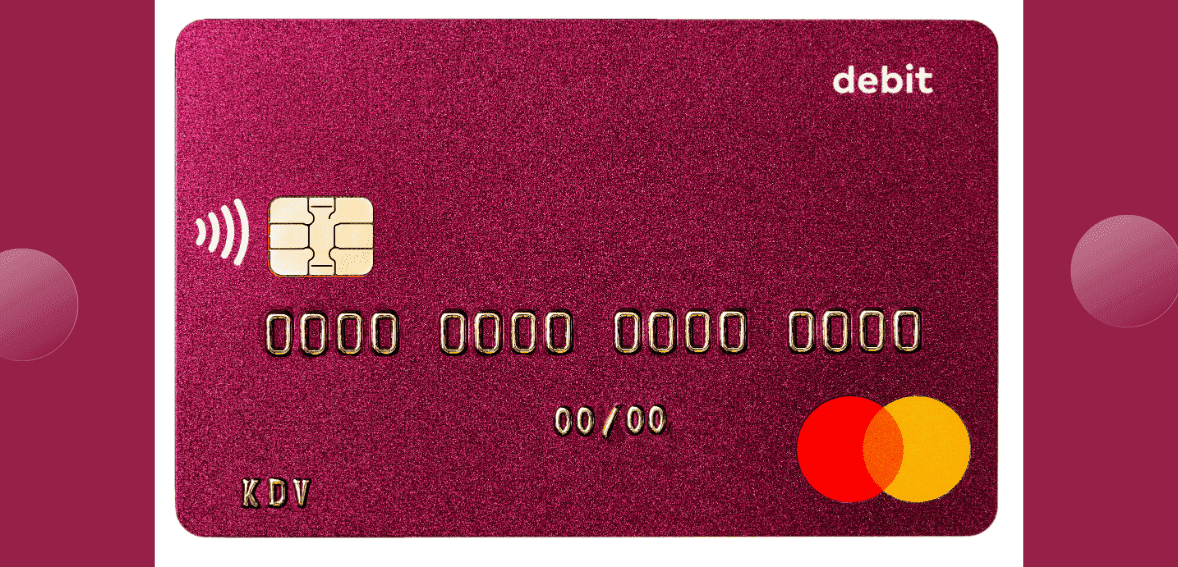
mastercard

Some merchant processors hold their merchants liable for counterfeit transactions. If a customer’s information is stolen at your place of business and it’s because you don’t accept EMV cards, the merchant processor can hold you liable for the damages.

It’s the Standard

People everywhere, including internationally, expect to pay with a chip card. If your business doesn’t have it, they may not trust you as much. Consumers want businesses up with the times, especially when it comes to security, so it’s important to show you are with the times and willing to do whatever is necessary to keep them safe. 

How to Switch to EMV

It’s not as hard as you think to switch over to EMV credit card processing. You may need new equipment and there may be set up fees, but it’s a one-time charge that will pay off in spades when your customers see you taking their safety seriously.

Take Credit Card Processing Seriously

It’s important to always take credit card processing seriously. Consumers need you to protect their information and merchant processors want you to hold up your end of the bargain, too. It’s a collective effort to keep hackers away. While no one can prevent it 100%, if everyone works together, you can minimize the risk for everyone.

Adding EMV chip cards to your credit card processing protocol is the best way to keep your customers safe today.