Tag Archives: contactless payments

Boy Internet Starbucks Coffee 25182893

Restaurant Trends for 2021 – How Restaurants will Succeed

COVID-19 has changed the way restaurants operate in a big way. In some states, they still aren’t fully operating, which leaves restaurants thinking outside the box longer than they ever thought necessary.

2021 looks like it will shape up much how 2020 ended, which means restaurant owners must continue being creative and figuring out ways to make the most of their business as it is right now.

Top Restaurant Trends for 2021

Focusing on Take-Out, Delivery, and Contactless Payments

No one knows when restaurants will open again (for indoor seating). This means all business owners must rely on take-out and delivery. Anything they can make contactless (including payments) is what will bring in the customers. Curbside delivery, online payments, and as little contact as possible are what will bring the business.

Creating a Brand for Themselves

Restaurants shouldn’t rely on just the food that they serve, but on the brand, they want to create. Think about what audience you serve. What are their pain points? What do you offer that helps them? That’s the brand you want to focus on and portray to your audience to bring in more business.

Providing Healthy Foods

Restaurant

Everyone loves to eat out (or order in), but today’s consumer is health conscious. You’ll still have those who love their favorite comfort foods, but including at least a few healthy foods on the menu will cater to a larger crowd.

Pop-Ups and Special Menus

Restaurants today are getting with the times and realizing many of their services may be short-lived. For example, if they can open for in-person dining, it may be for a short period. So instead, they think outside the box and have specials and limited opportunity pop-ups that bring a sense of urgency and excitement.

Online Reservations

Today consumers have to make reservations for just about everything, including any type of dining. The days of popping into a restaurant when you feel like are gone. Merchants need to adopt an easy reservation method, of which online reservations is the easiest. Whether you have a mobile app or just a website, enabling customers to reserve their time easily brings in more business.

Provide Quick Dining Opportunities

Anything you can do to make the diner’s experience contactless will take you far in 2021. Diners want to get in and get out. This includes when they’re taking the food to go. Self-service kiosks and contactless payments (online) let customers come in, get their food, and leave with little to no contact with others.

2021 is all about staying healthy. From serving healthy foods, ensuring the utmost safety precautions, and offering contactless opportunities for ordering, paying, and picking up food is important.

No one knows when the pandemic will end, but restaurants can stay strong by implementing the trends consumers want to see and that makes them feel safe. As we continue to navigate our new normal, it’s time to adapt to what’s in front of you and give your audience what they need to remain loyal.

Frequently Asked Questions

  1. How can restaurants adapt to the demand for contactless dining experiences?

    To meet the demand for contactless dining experiences, restaurants can implement various strategies. This includes adopting digital menus accessible via QR codes or mobile apps, allowing customers to browse offerings on their own devices. Implementing online ordering systems with curbside pickup or delivery options is also crucial. u003cbru003eu003cbru003eRestaurants can offer contactless payment options such as mobile payments or online transactions. Moreover, investing in technology like tableside ordering tablets or self-service kiosks can further enhance the contactless experience and streamline operations.

  2. What steps can restaurants take to incorporate sustainable and locally sourced ingredients?

    Restaurants can incorporate sustainable and locally sourced ingredients by building relationships with local farmers, growers, and suppliers. This involves researching and partnering with those who follow ethical and eco-friendly practices. Highlighting these partnerships and ingredient sources on menus can appeal to environmentally-conscious customers. u003cbru003eu003cbru003eAdditionally, implementing seasonal menus that showcase locally available products can be an effective strategy. Restaurants can also reduce food waste by implementing portion control measures, offering customizable dishes, and repurposing leftovers creatively, thus minimizing their environmental impact.

  3. How can restaurants leverage the concept of ghost kitchens and delivery-only models?

    Restaurants can leverage the concept of ghost kitchens and delivery-only models by expanding their reach and reducing overhead costs. They can establish virtual brands or delivery-only concepts that operate solely through third-party delivery platforms. This allows restaurants to tap into new markets, test innovative concepts, and cater to the growing demand for delivery and takeout. u003cbru003eu003cbru003eBy focusing on efficient delivery logistics, optimizing packaging, and ensuring high-quality food, restaurants can excel in this space. Collaboration with third-party delivery platforms and investing in robust online ordering systems are key steps to success.

  4. How important is customer engagement in the restaurant industry, and how can it be enhanced?

    Customer engagement is crucial for restaurants as it fosters loyalty, drives repeat business and generates positive word-of-mouth. Enhancing customer engagement can be achieved through various strategies, such as active social media presence and engagement. Restaurants should create compelling and shareable content, respond to customer reviews and comments promptly, and run engaging campaigns or contests. Personalized experiences, such as personalized recommendations based on previous orders or special occasion offers, can also strengthen customer relationships. Additionally, implementing loyalty programs that reward customers for their patronage can incentivize repeat visits and create a sense of exclusivity.

With restaurant trends on your list, the restaurant resources hub has the related guides.

Chef In Hotel Or Restaurant Kitchen Cooking Only Hands Prepared Beef Steak With Vegetable Decoration 81415061

Restaurants Feeling the Negative Effects of the Pandemic as Winter Approaches

More than 100,000 restaurants have closed since the start of the pandemic and as many as 40% of restaurant owners don’t think their restaurant will make it through the winter if things continue the way they are going according to the National Restaurant Association.

The pandemic isn’t just affecting independent restaurants either. Chain restaurants are just as much at risk as the smaller establishments.

Costs aren’t any Lower

A big part of the problem is not only that sales are down, but costs are just as high as they were before. In fact, some restaurants state their labor costs exceed their pre-pandemic level because of the stricter measures put in place to ensure everyone’s safety.

Relief isn’t Coming

Another big part of the problem is the lack of relief. While the restaurant industry is grateful for the relief they received, it’s not enough to keep them going. They’ve waited as long as they could and now with the winter months upon us and outdoor dining nearly impossible in many areas of the country, more restaurants will hurt in a big way.

More Workers will be Furloughed or Laid Off

The restaurant industry fully expects to have to lay off or furlough even more workers during the winter months. With most restaurants restricted to curbside pickup and delivery, there is a much lower need for employees in the restaurant. Beyond a few kitchen staff and one or two front-of-the-house employees, restaurants can’t afford to keep others on staff for much longer if they want to try to stay in business.

Most restaurants are running at less than 80% of their normal staffing levels and many other restaurants had to pull back even further.

A Bleak Outlook

Restaurants have a bleak outlook for the winter and even the spring months. Even the restaurants that are making it right now have a meager outlook for the future. Only 6% of restaurant owners think things will get better for them by March.

What can Restaurants Do?

Right now without more relief, there isn’t much restaurant owners can do but try their best. They can offer new services, foods, and market their curbside and delivery services, but beyond that, their hands are tied.

They have little money to do much else and have to preserve what they have so they can keep their doors open and potentially keep some staff working.

It’s a bitter pill to swallow for the entire country. No restaurants in any state are doing well right now. Everyone is just getting by, but with the winter coming, everyone can’t help but worry about what comes next.

Who will be the next restaurant to close? Will the government pull through in time to save more restaurants during their time of need? Only time, patience, and a lot of thinking outside of the box will tell what the future holds for our restaurant industry.

Restaurant Payment Resources collects our restaurant payment articles, news included.

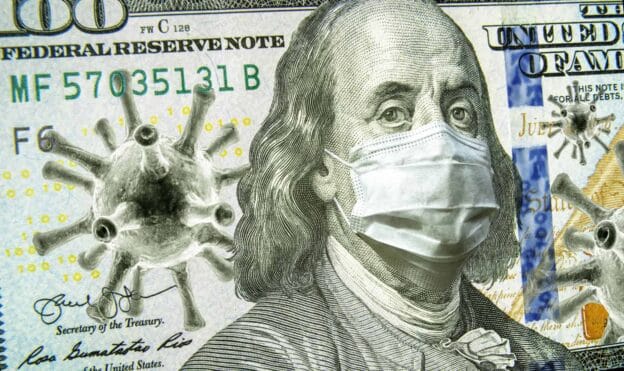
Covid 19 Business And Financial Crisis Concept Dollar Money Bill With Coronavirus Icons 3d Illustration Covid Impacts Global 180851930

COVID19 Drives Adoption of Contactless Payments and Curbside Pickup

Today, shopping retail and even picking up food at a restaurant looks different. Most customers prefer contactless payments and curbside pickup. They are the norm – they are expected. Contactless payments are just one more way to reduce the risk of sharing the virus. With less cash flowing around, the risk lessens, especially when consumers can pay online before they arrive or can use a digital wallet, like Apple Pay.

Curbside pickup used to be a luxury and one that not many customers used. COVID-19 turned the tide on it and so far it looks like there is no going back. Stores and restaurants need to offer curbside (touchless) pickup if they want to remain competitive.

Adopting Contactless Payments

Most stores and restaurants accepted the standard payments – credit and debit cards and some accepted digital wallets, but not many. Fast forward to today and it’s rare to see a business that doesn’t accept contactless payments, whether online payments, digital wallets, or direct transfer from PayPal or Venmo.

Consumers look for those extra payment options. They want the choice of how they’ll pay whether it’s online or in person. Everyone’s looking for contactless payments so even if they shop in-store, they don’t have to touch the credit card machine that everyone else touched too.

Curbside Pickup is the New Norm

Customers today want to walk into a store as little as possible. Rather than paying shipping costs and waiting days for it to arrive, they want instant gratification with curbside pickup. This means two things for retailers:

  • Your inventory system must be up-to-date in real-time all the time. You can’t have customers buying products to pick up that day only to find out a few hours later that it’s not in stock. You won’t have happy or repeat customers.
  • You need a seamless curbside pickup routine. This may mean hiring more staff, setting up new procedures, and creating new routines. The key is keeping a steady flow in the lot, and getting customers their items fast.

Buy Now Pay Later Plans are Important Too

During these trying times, many consumers need help. They don’t want to change their normal holiday shopping routine and give less during such a treacherous time in our lives, but many can’t afford it.

Buy Now Pay Later options give customers more choice. They can shop like they used to despite not having the cash resources today. Adding Buy Now Pay Later options on your website makes it easy for customers to apply in the privacy of their own homes. With an instant answer, they’ll know their options without facing anyone face-to-face.

Getting with the Times

COVID-19 changed a lot for retailers, and the changes are continuing. It’s important to adapt to what consumers need today to keep them and yourself safe, but also your business thriving. The right business model will help your business get through the pandemic and all that it’s changed.

money dollars and smartphone with google pay logo on the screen 142599037 825x340 1

Google Pay to Offer Digital Bank Accounts by 2021

In early August 2020, eight banks in the US have announced that they are partnering with Google to offer digital-first bank accounts directly in the Google Pay app. The partner banks will manage the financial side of these accounts while Google will provide the front-end, intuitive user experience, as well as financial insights exclusive to Google’s digital bank accounts.

Offering built-in budgeting tools, as well as the financial insights, the Google Pay app will launch sometime next year. Known internally as the “Cache” project, the partnership originally started out last year with two financial institutions.

An extension of Google’s original ventures into digital bank accounts from Citi and Stanford Federal Credit Union (SFCU), the partnerships now include six additional banks, namely Bank Mobile, BBVA USA, BMO Harris, Coastal Community Bank, First Independence Bank, and SEFCU.

With the intent to help customers benefit from useful insights and budgeting tools while keeping their money in an FDIC or NCUA-insured account, Google will enable a digital experience that can meet the evolving needs of a new generation of customers.

Up from 39 million global users in 2018, Google Pay is estimated to grow to 100 million users this year. Offering a complete digital banking service next year, Google did not indicate whether or not customers will have access to physical debit cards issued either through Google or through its partners.

Google Pay is an app allowing users to pay online or make contactless payments with their phone. Protected with multiple layers of security, paying with Google Pay is a fast and simple alternative to paying with cards. Using an encrypted number instead of your actual card number, Google Pay allows you to pay with your phone while your details stay secure. In addition to enabling rewards programs and cash back programs from a bank or PayPal, Google Pay also enables loyalty programs from chains.

Host Merchant Services

Depend on a stable and reliable payment processor to partner with your business during the upheaval of 2020. Payment processing should be the least of your concerns. Delivering personalized service and clarity, Host Merchant Services takes the time to explain your payment processing. We want you to understand your monthly statement, and we will ensure that your statement matches our promises during our sales presentation. If you do have questions, you can reach a live representative any time, any day. HMS offers wonderful customer service, as well as great rates.

coca cola 18774330 825x340 1

Coca-Cola Introduces New “Pour by Phone” Contactless Technology

Contactless payments have been there since the 1990s, but the COVID-19 pandemic has brought it to the limelight. Moreover, the trend is here to stay for a more extended period, given the circumstances.

Recently, the global beverage brand, Coca-Cola, is all set to add a variant by launching a contactless option for its consumers’ feasibility regarding pouring their beverages. A touchscreen-operated dispenser would deliver around 200 drink options with a simple tap on the smartphone.

According to Chris Hellmann, Coca-Cola Freestyle’s vice president, “All Coca-Cola beverage dispensers are safe with recommended care and cleaning. However, given these uncertain times, people may prefer a touchless fountain experience.”

Speaking of this, this newly launched contactless solution makes selecting and pouring a drink just a few clicks away for consumers.

How Pour By Phone Works

All it takes for the customer is to scan the QR code on display, leading them to the cloud, bringing the Coca-Cola Freestyle user interface to the phones. Following this, they can feel free to select their favorite drink and flavor from the menu. Before making its way to the Coca-Cola, the idea was run through initial testing at Firehouse Subs, Five Guys, and Wendy’s locations in Atlanta.

We intentionally designed this so anyone with a smart device could pour a drink,” Michael Connor, chief architect of the Coca-Cola Freestyle, said in a statement. “When you have a tray or a sandwich in one hand, you don’t want to deal with downloading an app.” He also added that they have invested time and effort and went the extra mile to ensure necessary steps have been taken to make the solution easy and fast and the experience super-reliable.

The Need of the Contactless Technology

By this summer, the software will be available at around 10,000 Coca-Cola Freestyle dispensers. Also, all of the dispensers will be compatible with contactless technology by the year-end.

As per a study from Civic Science, about 65 percent of people going to a restaurant choose to pour drinks on their own than having a waiter do it for them.

It is pertinent to mention that QR code now making waves once enjoyed a maligned status. However, it has managed to come up as the enabler of contactless commerce. This development came in when China-based Alipay and rival Tencent’s started making use of QR code and went to fulfill their endeavor of standardizing it.

Subsequently, a consortium of platforms has emerged normalizing the use of QR codes to process transactions. Walgreens now accepts payment through the platform of Alipay while Apple is upping its game via Apple Pay. In addition to this, even Walmart has also altered its Walmart Pay app to incorporate QR codes and adopt the new touchless technology.

Final Thoughts

Ever since the COVID-19 crises erupted, many experts suggested contactless payments to curb the spread of the virus through cash, debit, or credit cards.

The news of contactless dispensers is another addition as going contactless became the new normal amidst the COVID-19 global crisis considering that many businesses resorted to the contactless payment option. All eyes are now on how these touchless dispensers by Coca-Cola would fair in the coming future.

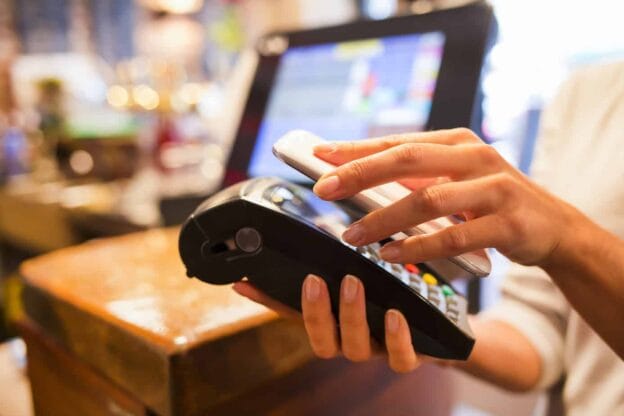
man paying with nfc technology on mobile phone in restaurant b 35345885

Accepting Contactless Payments. What You Need to Know.

Your customers don’t want to touch your credit card machine.

It’s nothing personal, they don’t really want to touch anything that they don’t have to these days. Luckily for those of us that still use hand held or counter top credit card machines to either swipe or dip the chip to accept payment, contactless solutions are easy and inexpensive to implement. Chances are, the machine you currently have already has the hardware required to do this, so it might just be a matter of calling your merchant services provider to get instruction on how to enable it and allow your customers to utilize their contactless payment methods on it.

Contactless payment methods come in three common forms. Your customers will either have a smart phone, a smart watch, or an NFC enabled credit card. All of these use NFC, short for Near Field Communication, as the underlying way to perform the transaction. How exactly NFC works is beyond the scope of this article, suffice it to say, it allows your device or card to talk to a properly configured credit card terminal so long as it is within about 1 inch of the reader. It’s easy, it works reliably and it’s reasonably secure.

You might be wondering, ‘if all you need to be is an inch away from a reader, isn’t it possible for someone to get close to my customer and steal their card information?’ Yes and no. While it is technically possible to intercept the signal, the hacker wouldn’t be able to do much with the information. Smart pay devices like Apple Pay do not directly transmit sensitive card holder data in the transaction. Instead, they submit a unique one-time pass code to the credit card reader, which then sends that pass code to a very secure data center operated by your bank. The bank is then able to communicate with Apple to retrieve the actual card information. A process that happens within a fraction of a second and is completely out of scope of the interaction of the customer with the payment device itself.

To start allowing your customers to use contactless payments, start by checking if you’re already setup with it. The best way to check is to read the wording of the credit card machine when it comes time for the customer to give their payment. If it only says “swipe, dip or enter card” when it is ready to accept payment, it might not be setup for contactless. If you see the word “tap” anywhere, you’re already good to go. Find a customer that wants to use their phone, watch or NFC enabled credit card and try it out. It’s nothing more than holding the device within an inch of the face of the credit card machine.

If you don’t see the word “tap” and holding an NFC enabled payment method near the machine does nothing, you still likely do not need to buy a new machine. Now is the time to call your merchant services provider. Either you have a machine made in the last 5 years and it’s just a matter of asking customer service to help you get it enabled, or you’re due for a new machine. Most providers will provide a free terminal replacement. If they don’t, get a new merchant services provider. They fight fiercely to acquire and retain customers, so the relatively small cost of replacing your terminal for free is worth it to them to keep you as a customer. If not, there are plenty of providers out there that will happily give you a modern terminal if you switch to them.

As consumer sensitivity to sanitary habits in the retail environment continue, NFC is a great way for you as a retailer to make sure your customers continue to feel safe making purchases. The security of the payment itself, coupled with the fact that any would-be coronavirus’s can’t make the 1 inch jump through thin air, make NFC the go-to choice for payment acceptance. It’s either already ready to go, or you have a couple of free options to get it setup, you’ve got nothing to lose.

woman paying with nfc technology on mobile phone restaurant ca 34959179 1

Contactless Payment Trends in 2020 – Apple Pay, Google Pay, NFC, and More

Amidst the global pandemic, many countries are resuming the routine life and easing the lockdown. However, recent studies have shown that around half of the US population is still worried about their health and how shopping, eating, and social interaction can affect it. Therefore, many businesses and shoppers are more inclined to make contactless payments, which has shown a 40% jump in the first quarter of 2020. As the payment trend has grown prominence, NFC-enabled payments across the world can exceed $130 billion within 2020.

What are Contactless Payments and Their Global Outreach?

Contactless payment is a well-encrypted, secure payment mode to buy products or services using NFC (near field communications) enabled devices or cards. When the reader and payment device are near, it activates NFC chips to exchange encrypted data for money transfer. In simple terms, you wave your device in front of an NFC powered payment terminal to make purchases, contact free. But you also require NFC-encrypted payment apps such as Apple Pay, Google Pay, Fitbit Pay, or Samsung Pay on your mobile device to make the contactless payment happen.  Some credit and debit cards also have contactless capability embedded in chips that you can then wave or tap to pay on an NFC enabled reader.

Before the Coronavirus outbreak, this global trend wasn’t prevalent in the US, as only 10% of the consumers were using the technology. Europe however had the largest share in the contactless payment terminal market, due to an increase in smartcard rollouts and technological advancement. According to UK Finance, around 1/3rd of all the card-based payments happened through contactless methods in Q1, 2019. However, the Asian region has been slower to adopt NFC based technologies due to its efficient QR code system that doesn’t require select apps, or POS systems.

Coronavirus – The Driving Force for Contactless Payment in the US

The number of digital wallet users worldwide has doubled in 2020, with Apple Pay and its 227 million users becoming the most prominent, according to the Wall Street Journal.

apple pay google pay samsung pay

https://www.statista.com/chart/19972/digital-wallet-users-double-2020/

The pandemic has redefined consumer priorities, making no-touch payments a necessity. New York Transit Authority laid the groundwork in May 2019, when it announced contactless payments for select subway lines. Being early adopters, they were still pretty late in the global market in relation to other significant metropolises, including London Underground System which adopted the technology in 2014. It is not only public transport, but the worldwide financial industry that relies on contactless payments today. In the Netherlands, every store allows no-touch payment methods, whereas the US didn’t have major adoption for NFC until 2019 when contactless payments increased by 150%.

Meanwhile, food services brands such as Starbucks, McDonald’s, and Dunkin’ led the way with their contactless payment apps. The wearable market also accelerated the adoption rate in the US with the popularity of smart watches and similar devices. The tech-giant, Apple, teamed up with many different brands to improve mobile payment experience. Scooter rental company Bird and clothing retailer Bonobos some notable partners offering NFC-enabled payment to Apple users, without the need for any third-party apps. Small businesses have also reported a 27% growth in the contactless payment made through smart cards and mobile phones.

Nevertheless, card issuers control the widespread adoption of contactless payment in the US. Analysts believe NFC-enabled technology can coexist with traditional card systems and mobile wallets as depicted by tech-savvy nation worldwide.

contactless card payment 74484201 1

Should my Business Adopt Contactless Payments? [2023 Update]

A Guide To Contactless Payments

What are contactless payments, and how do they work? Are they completely safe, and should you opt for the convenience of contactless payments? Over the years, technology has changed, and it has brought innovations in the way we conduct business and also in the way we many things. One of the innovations in technology is contactless payments and the tap and go form of payments. This article will talk about how you can use contactless payments, and it will also help you differentiate between contactless and cashless payments.

Contactless Vs. Cashless Payments

Contactless payments are two terms that are often used interchangeably, but these two terms are very different. Cashless payments are payments that are made without using cash and bank transfers, credit card payments, etc. are all categorized under cashless payments. Contactless payments are the form of payments that use radio frequency identification technology to make payments. Some examples include Apple Pay, Google Pay, and Samsung Pay. Instead of swiping your card, you simply wave your card to make payments, and you don’t require any signature or any pin number entered on the payment terminal. All you need to do is wave your card or smartphone near the payment terminal, and your payment is made. With smart phones, authentication may be required in the form of a pin, facial recognition, or a fingerprint scan.

What Are The Problems With Contactless Payments?

nfc apple pay google pay

Many customers are using contactless payments with their smartphones.

Like every form of payment, contactless payments are not that perfect, and they come in with their own share of problems. With contactless payments, many customers worry about fraud and whether or not their financial information will be safe. The perpetrator needs to gain access to your card to make contactless payments, and in most cases, you are notified by your bank about unusual transactions taking place, and you can easily block that card. Over time, in-person fraud has become more and more challenging to carry out, and most forms of contactless payments are PCI compliant, which protects consumers.

Why Should Businesses Adopt Contactless Payments?

Contactless payments are easy to carry out, and they are also convenient for your customers. Customer convenience is the topmost priority for businesses, and therefore companies should work on adapting measures that help make things easier for their clients. Your clients will think that you have an upgraded and futuristic approach towards the way you do business, and it will leave an overall positive impression. With the advent of technology, there are many more payment options available like Apple Pay and NFC, and many people don’t merely rely on their credit and debit cards for payments. Some customers also use their fitness watches and their wristbands for contactless payments. If you’re thinking about accepting contactless payments, then you should also consider the type of customers your business attracts. If your business attracts people that are more technologically oriented, then installing contactless payment systems can be a good option for your business, but even if not, most contactless payment terminals still allow more traditional payments like EMV chip cards. At Host Merchant Services, most solutions we offer are enabled for NFC and contactless payments at no extra cost, so our merchants are ready when their customers begin adopting these technologies.

Frequently Asked Questions

  1. Why should my business adopt contactless payments?

    Contactless payments offer numerous benefits for businesses. They provide a convenient and hygienic payment option, especially in the current landscape where people are increasingly concerned about germ transmission. Contactless payments also enable faster transactions, reducing checkout times and improving overall customer satisfaction. u003cbru003eu003cbru003eAdditionally, by embracing this technology, your business can stay ahead of the competition, attract tech-savvy customers, and align with the growing trend of digital payment solutions. Overall, adopting contactless payments can enhance customer experience, streamline operations, and position your business as modern and customer-centric.

  2. How do contactless payments work?

    Contactless payments utilize near-field communication (NFC) technology, allowing customers to make transactions by simply tapping their contactless-enabled cards, smartphones, or wearables on a compatible payment terminal. These devices exchange encrypted payment information over a short-range wireless connection, enabling quick and secure transactions. Contactless payments usually have a transaction limit, typically around $100, to ensure security. u003cbru003eu003cbru003eFor higher-value transactions, customers may need to enter a PIN or use an alternative payment method. With the widespread acceptance of contactless payments, customers can enjoy a hassle-free and swift payment experience.

  3. Are contactless payments secure?

    Yes, contactless payments are secure and provide robust protection against fraud. Contactless payment transactions use advanced encryption and tokenization methods to safeguard sensitive customer information. Each transaction generates a unique token that replaces the customer’s actual card details, ensuring that sensitive data is never transmitted or stored by the merchant. u003cbru003eu003cbru003eMoreover, contactless payments offer an added layer of security by leveraging the use of biometric authentication, such as fingerprint or facial recognition, on mobile devices. Businesses need to choose reputable payment processors and follow recommended security protocols to maintain a secure payment environment.

  4. What equipment do I need to accept contactless payments?

    To accept contactless payments, you’ll need a payment terminal that supports NFC technology. Many modern payment terminals already come equipped with contactless payment capabilities. If your existing terminal doesn’t support contactless payments, you may need to upgrade to a new one. Contact your payment processor or merchant service provider to inquire about compatible terminals. Additionally, it’s advisable to display contactless payment acceptance signs at your point of sale to inform customers that this payment option is available, helping to encourage its usage.

  5. Can I track and reconcile contactless payments?

    Yes, contactless payments can be easily tracked and reconciled like any other payment method. Most payment processors and merchant service providers offer robust reporting tools that allow you to monitor and analyze your contactless payment transactions. u003cbru003eu003cbru003eThese reports provide valuable insights into sales trends, customer behavior, and transaction volumes. Additionally, integrating your payment system with your point-of-sale or accounting software can streamline the reconciliation process and ensure accurate record-keeping. By leveraging these tools, you can effectively manage your contactless payments and gain valuable business intelligence to drive decision-making.

master card visa credit card gold 164501 1 scaled 3

PSCU Prepared for Contactless Cards Growth in 2020

With a predicted rush in 2020 for more merchants and customers to jump onto the contactless payment cards bandwagon, PSCU announced earlier this week that they are fully prepared to handle whatever will be coming their way over the following year.

Contactless Credit Card PaymentsHaving already rolled out more than half a million NFC (Near Field Communication) enabled cards via natural reissuance to members amongst 14 owner credit unions, the credit union service organization (CUSO) PSCU anticipates that they will be distributing in excess of 3 million new NFC enabled cards throughout 2020 to more than 100 credit unions.
By keeping themselves ahead of coming payment innovations, PSCU can help to ensure that its owner credit unions members’ accounts are most frequently used, and by offering NFC enabled cards to owners, Jeremiah Lotz, managing vice president of digital experience and payment products at PSCU said, “We help our credit unions achieve top of wallet status” as the adoption of tap to pay solutions continues to rise.

The second yearly Eye on Payments study by PSCU has shown that 25 percent of respondents make transactions with an NFC enabled card a few times per month. They have cited reasons such as ease, convenience, speed, and security, while non-users stated that the stores they frequent aren’t as of yet accepting NFC enabled card transactions.

With an ever-increasing number of merchants each year opting into NFC technology and accepting NFC enabled payments, it’s believed that more consumers will begin to adopt the technology and participate. As many as 95 percent of all payment card terminals feature NFC enabled capabilities, according to Visa, and as of October 2019, 80 percent of the top 10 merchants were accepting NFC transactions.

Jeremiah Lotz has also stated: “Credit unions should be prepared to not only offer contactless cards to their members, but also have information readily available to educate members on how to use these new payment methods and ascertain whether a merchant’s point of sale terminal is contactless enabled.”

The PSCU’s original model is scale and collaboration, and for more than the past 40 years, the company has leveraged its influence on behalf of credit unions and their members. To this day, PSCU provides an end to end competitive advantage that helps to enable the secure growth of credit unions, making sure that they are able to meet ever-evolving consumer demands.

Frequently Asked Questions

  1. What are contactless cards?

    Contactless cards, also known as tap-and-go cards, allow users to make payments by simply tapping their card on a contactless-enabled payment terminal. They use radio frequency identification (RFID) technology to transmit payment information securely and quickly.

  2. How did PSCU prepare for the growth of contactless cards in 2020?

    PSCU, a leading credit union service organization, ensured its member credit unions were ready for the surge in contactless card adoption. They worked closely with partners to upgrade payment terminals, implemented fraud detection measures, and educated credit union staff and members on the benefits and usage of contactless cards.

  3. Are contactless cards secure?

    Yes, contactless cards are secure. They use advanced encryption technology to protect cardholder information during transactions. Additionally, contactless cards have built-in security features, such as transaction limits and authentication requirements, to prevent unauthorized use.

  4. Can I use my contactless card everywhere?

    Contactless cards can be used at a wide range of merchants and payment terminals that support contactless payments. Look for the contactless symbol on the terminal or ask the merchant if they accept contactless payments. If the terminal is not contactless-enabled, you can still use your card by inserting it into the chip reader or swiping it.

  5. How do I know if my card is contactless?

    Contactless cards typically have a contactless symbol on the front or back of the card. This symbol looks like a sideways Wi-Fi icon or four curved lines. If you’re unsure, you can also check with your card issuer or refer to the card’s documentation.

  6. Can I disable the contactless feature on my card?

    Yes, most card issuers allow you to disable the contactless feature on your card if you prefer not to use it. Contact your card issuer’s customer service or use their mobile app or online banking platform to manage your card settings and preferences.

Canadians Prefer Contactless Payments

Near field communication (NFC) transactions have been rising steadily all over the world for several years now, and in Canada, the dominance of mobile payment technology is no exception.

Near Field Communication Mobile PaymentAccording to Visa Inc’s Canadian unit, Canadians are now more comfortable than ever with the use of mobile payment technology, with as many as 52% of 1,000 people polled in a recent survey saying that they contactless transactions regularly. In addition to this, 80% said that they consider contactless payments as “a very convenient way to pay,” and 45% praised their security.

In the first quarter of 2019 alone, near field communication made via platforms such as contactless credit cards, wearables, and mobile devices saw an increase of almost 25% since the previous year, accounting overall for 51.5% of total transactions made.

There are eight stand-out provinces of Canada that are really leading the way when it comes to contactless payments. The province of New Brunswick has seen 51% of its transactions become contactless followed by Saskatchewan (51.6%), Alberta (52.1%), British Columbia (53.5%), Ontario (54%), Nova Scotia (55.2%), Manitoba (58.2%), and Prince Edward Island leading the charge at 59.2% of all transactions.

One huge factor that has contributed to the increase in contactless payments is the recent rise of the digital wallet. Technologies such as Apple Pay and Google Pay, while they may have started somewhat slowly, soon started to pick up speed as Canadians started to realize the benefits and ease of simply paying with their phones, which most of us, especially the millennial and Gen Z generations, will more than likely have in our hands already anyway, as opposed to searching for their credit cards.

It should be worth noting too that, while contactless transactions in Canada make up 51.5% of all transactions, in the neighboring U.S., that figure drops to a pretty staggeringly low 3%. In spite of being one of the highest adopters of smartphones in the whole world (at a rate of 77% in 2018), statistics show that as much as 89% of all U.S. consumers are still shunning mobile payments, making the U.S. one of the lowest adopters of contactless technologies in the world, and Canada one of the highest.