Author Archives: hostmerchantservices

conceptual hand writing showing b2b business photo showcasing exchange of products services information between businesses e 179773045

How Automation and Virtual Cards Help Firms Meet Their Next-Gen B2B Payment Needs

Business-to-business or B2B payments have become essential to businesses as of late. Companies want to complete transactions between one another the same way as they manage B2C deals. They want transactions that are secure, easy, and fast to handle without having to add more data in the process than whatever is necessary.

With MasterCard reporting that the B2B payment market is close to $100 trillion in value, the need to facilitate B2B payments has never been more essential. Businesses are looking to find new ways to interact with one another, which is where automation and virtual cards can work. These can help for B2B payments by facilitating transactions in less time.

B2B payments can take a while to complete, plus they can feature extensive details that are often complex to manage. New forms of technology will make these payments easier to follow, although proper adoption of these efforts will be necessary for them to be successful.

A Need to Settle Payments Sooner

The main reason why automation and virtual cards are working in next-gen B2B payments is to ensure payments can go forward in less time. Settlement speed is critical, as faster transactions make it easier for businesses to forecast their cash stores. The use of electronic transactions through these measures is also convenient, as it is easier for people to process funds through these than if they used manual paper checks for their transactions.

Safety Is Also Critical

The rising B2B industry has also made it to where some payments might be tougher to complete than necessary. Today’s B2B payments need to be safe and secure by keeping private data from being exposed. It could also entail processes that are predictable and easy to organize without adding anything more complicated than necessary. Proper safety and protection will be critical for ensuring there are no struggles in completing any transactions.

What Automation Entails

Automation is a part of B2B payments that could make an impact soon. Automation entails using electronic processes for managing payments. A business will utilize a new infrastructure that can capture payment data and automatically forward it to the proper parties as necessary. Some of the automated functions that can work include handling payments through bank accounts and using routing numbers to send funds.

The use of application programming interfaces or APIs will be critical to the success of any automated campaign. APIs allow businesses to enter in and send data to others when completing transactions. The data the business enters will move in the proper data entry sets, allowing each payment to remain categorized and sortable. Businesses can use these API systems to ensure transactions can go forward in moments, although their success will vary surrounding how well each API setup can work as necessary.

Machine learning could also work in some situations, as it can match invoices to their necessary payments. The matching process helps people track incoming payments in moments. Machine learning helps produce a faster processing speed, plus it makes payments more efficient. It may also save operating costs in some cases, especially when the apps are stable and easy to utilize.

APIs and machine learning also ensures businesses only have to provide the necessary data for whatever transactions they wish to complete. They will keep from sharing excess data that might become lost or stolen. Businesses only need to provide the details that are critical for the deal, ensuring an improved approach to handling the payment process.

The Use of Virtual Cards

Virtual cards have become more appealing to customers recently. Virtual credit cards allow people to complete credit card transactions without using or exposing their real card numbers. A virtual card uses a separate number that hides the customer’s real data, ensuring further security. The virtual card number changes each time, as tokenization allows a real card number to work with a separate single-use number for each deal it completes.

Customers appreciate these for how they make transactions easier to follow. They can trace different transactions they complete, but their actual data will still be concealed to where other parties cannot load the data.

Businesses can also use virtual cards to manage B2B payments. Virtual cards let businesses protect their financial payment systems while ensuring they can forward funds.

The best way to explain a virtual card is that it is a card-less payment solution. It uses a credit card-like system, but it doesn’t require as much infrastructure. It is also more secure than anything else a person might utilize.

Virtual cards are also effective for helping businesses review their spending habits. Companies can review real-time payment data through virtual cards.

There are worries about whether other businesses can accept virtual cards though. They may not fully understand how these cards work or why they are beneficial. They might ask for real cards instead, which some businesses may not be as comfortable with than others.

Artificial intelligence may help make it easier for businesses to accept these virtual cards. Artificial intelligence can identify unique virtual cards and treat them the same way as they review actual cards. Businesses will still need to incorporate new AI systems in their work to ensure they can accept these cards.

Access Is Critical

As appealing as automation and virtual cards can be for B2B transactions, there are still worries about whether businesses can access these technologies. About ten percent of small or medium-sized businesses say that they have payment modernization systems up in place. They are still figuring out what they should be doing with their funds.

Further work will be necessary for helping businesses to adopt next-gen B2B payment methods. It will be easier for businesses to handle funds between one another if they use the right processes for managing their funds. The industry is growing, so there must be a plan for ensuring transactions can move forward while also remaining safe and functional.

Frequently Asked Questions

  1. What is a virtual card in B2B?

    A virtual card in B2B refers to a digital payment method that enables businesses to make secure online payments for goods or services. It is a unique, randomly generated card number that is used for a single transaction or a limited number of transactions. Virtual cards are typically issued by financial institutions or payment providers and can be used for business-to-business (B2B) payments, providing a secure and convenient alternative to traditional payment methods.

  2. What are the benefits of digital payments in B2B?

    Digital payments offer several benefits in the B2B context. Firstly, they streamline payment processes, reducing manual effort, paperwork, and processing time. Secondly, digital payments improve transaction security by minimizing the use of physical checks or cash, reducing the risk of fraud or loss. Thirdly, they provide better visibility and tracking capabilities, allowing businesses to monitor and reconcile payments more efficiently. Additionally, digital payments facilitate faster fund transfers, support cash flow management, and enable businesses to take advantage of automated reconciliation and reporting features.

  3. What are the advantages of digital payments?

    Digital payments offer several advantages, including convenience, speed, and security. They eliminate the need for physical checks or cash, making transactions faster and more efficient. Digital payments also reduce the risk of human error, as automated systems handle the payment process. Additionally, digital payments provide enhanced security measures, such as encryption and tokenization, reducing the risk of fraud or unauthorized access. They also offer improved record-keeping and easier reconciliation, simplifying financial management for businesses.

  4. What are the examples of B2B e-commerce transactions?

    Examples of B2B e-commerce transactions include business-to-business online marketplaces where companies can buy and sell products or services directly, such as Alibaba.com or Amazon Business. Another example is the procurement of goods or services through an online portal or platform specifically designed for B2B transactions. This can involve businesses sourcing raw materials, equipment, or supplies from suppliers or engaging in contract-based services like software development or consulting. B2B e-commerce transactions facilitate efficient and streamlined procurement processes between businesses in various industries.

business travel concept generic design of white luxury private jet flying in blue sky at sunset uninhabited desert 85089873

Fly Now Pay Later Plans BNPL Liftoff In the US Travel Market

The buy-now-pay-later or BNPL format has become commonplace in the American economy. With a BNPL transaction, a customer can purchase a product or service and pay for it in installments. The customer will get what one needs now, and that person will cover the cost for it over time. The process is convenient for many, especially for those who might be dealing with financial issues. It doesn’t require a credit check, making it easier for people to access than a credit card or a traditional loan. 

It is no surprise that the BNPL format is expanding to other industries. The American travel market is one of the latest fields where the BNPL industry is entering. The British fintech company Fly Now Pay Later is making this happen, as Fly Now Pay Later is planning on operating in the United States.

Fly Now Pay Later recently raised capital to help it start a test platform for American travel companies. The company raised £10 million in Series A funding, which is equal to $14 million. FNPL now has £45 million or $62 million in funds. The work goes alongside the £35 million or $48 million that the team raised at the start of last year.

FNPL has been beta-testing its current technology in the United States since late 2020. The new funds FNPL has raised will help the company expand its efforts in the country. The company also has hopes of expanding its work to Germany and other parts of Europe soon.

FNPL uses a system that helps people book travel services and pay for them over time. Instead of paying for them upfront, people can pay for those services over a few months. The service charges a single fee for its convenience and to cover the risk with the transaction. The system offers a useful setup that helps people pay for their travel services without worrying about paying too much right away.

How Does FNPL Work?

Fly Now Pay Later uses a distinct approach to help people book travel services:

  1. A customer will download the FNPL app to start. The app is available on iOS and Android devices. Customers can also send their mobile numbers to the website for a download link if the app isn’t available for their devices.
  2. The customer will then look through the different vacation listings available through the app. FNPL has partnerships with various travel service providers, including prominent domestic airlines.
  3. The customer then provides the necessary payment information for one’s order after determining what one wishes to utilize. The customer can provide one’s credit card data to provide proof of a source for paying for something, for example.
  4. The buyer will enter a payment plan at the end. A customer can choose to pay for one’s travel purchase in as little as thirty days. The customer could also pay for services over a few months with lower monthly totals.
  5. The customer will be subject to a one-time transaction fee. The fee is worth 14.99% of the total transaction. The customer will get a complete look at the total cost for the trip before agreeing to pay for everything.
  6. After agreeing to the deal, the customer can enjoy one’s vacation and then pay for it at the agreed-upon times.

The system can prepare limits over how much someone can use at a time. There may be a limit of about $4,000 for each transaction, for example. Such limits ensure FNPL will stay protected and that the travel service providers will not lose funds from those who cannot pay for services.

What Makes It Useful For Customers?

Customers can utilize FNPL for many reasons:

  • FNPL ensures buyer’s protection, meaning all items one books through the app will be fully confirmed and paid.
  • Many FNPL transactions can work with no financing required.
  • The payment terms are flexible. Customers can pay for their travels over up to twelve months if necessary.

Why Would Businesses Want To Use FNPL?

Businesses that offer travel services can use FNPL because it makes their services more accessible. Travel service providers can offer more flexibility, as they help people see what it will cost for them to use their services.

FNPL also provides full protection, ensuring that all service providers are covered for any potential losses they might experience. The 14.99% transaction fee FNPL puts on all its transactions ensures that FNPL has the funds necessary to cover whatever losses a provider might experience in a deal.

Possible Gains Are Coming

Fly Now Pay Later is looking forward to expanding to the American market, especially as demand for travel starts to pick up. The global pandemic has forced many people to cancel their prior travel plans. But as infection rates drop and vaccination rates rise, more things are starting to reopen throughout the country. People will be more likely to want to travel to different places, and they might have been saving up their funds to enjoy more exciting trips.

Fly Now Pay Later will be there to help people book their vacations as they get back on the road. FNPL hopes to take advantage of the newfound interest people will have in traveling, especially as more parts of the country start to reopen.

Will There Be Competition?

Fly Now Pay Later may be subject to some competitors, especially as travel becomes more popular in the United States. The BNPL service Uplift recently introduced support for domestic air travel payments. The company has also reached agreements with many airlines as of late.

It is also possible that various groups like the home-share company Vrbo could potentially enter the BNPL field. The convenience and flexibility of the BNPL industry will be something that such companies will want to enter.

The one thing that’s for certain is that travel demand will increase as the 2021 calendar year progresses. Fly Now Pay Later is in a strong position to gain revenue through this newfound demand, but that company won’t be the only one looking for some gains.

ecommerce smart pay business and technology concept 98982614

Restaurants Turn To Technology To Offset Labor Shortage

People are looking to return to restaurants these days, as vaccination rates are rising and infection rates are dropping. People want to get back to the restaurants that they enjoyed before the start of the pandemic. Restaurants are also being allowed to operate at a greater capacity, plus curfews have been lifted throughout the country. 

There’s also a problem, many restaurants are struggling to find employees. As demand rises, restaurant owners are looking to find new workers who can handle the demand. Many old employees at these restaurants might have moved on to different jobs during the pandemic. Some people who might have been available for work have also entered different work fields. The fact that so many entities are currently hiring at the same time is also making things a challenge for businesses to manage.

Restaurant owners are using technology to help them stay operational and to overcome some of the issues that have come about surrounding the current dining labor shortage. Many of these efforts come from things that they had started doing as dining areas had been shut down and businesses could not handle anything other than delivery or carry-out service.

Working With Delivery Partners

One way how restaurants are staying afloat amid labor shortages entails linking their ordering apps with different third-party services. Restaurants are producing apps that can connect with food delivery services or with general ordering platforms. They can upload their menus online and accept different payments through these sources. They can also forward delivery information to people who work for third-party services. The work available here makes it easier for restaurants to stay active and functional.

Delivery service providers could be useful for reaching people who might not be willing to reach a physical restaurant. While people might be comfortable going to in-person dining environments, that doesn’t mean every single person will feel confident about what’s open.

Finding Other People

Those who might not already have jobs and are not actively looking for anything new could also benefit from what restaurants are offering. Restaurants are bringing in temporary workers who have other jobs to help them manage many operations in their spare time. The work is about getting some extra income on the side, although it could lead to further employment opportunities for those who might especially be interested in what is being offered at a place.

Restaurants can bring in temporary workers who can handle many tasks, like taking orders and sending them out online. They could also pick up and deliver food as necessary. The cooking staff at a restaurant will continue to produce the foods, while the temporary workers will be there to deliver the products as necessary.

Hiring Analysis Is Critical

Some additional hiring analysis functions can also help restaurants bring in new workers. One example of how tech is helping dining establishments find new employees is through the Landed app. Landed is a new program that helps restaurants and other businesses find people who upload videos of themselves explaining what makes them ideal employees. A business can review each candidate on the app and analyze them based on things like their communication skills, when they are available to work, and many other factors of value.

Paradox is another hiring analysis program to review. Paradox is a text message-based system that screens applicants and plans interviews by text message. The system can help identify candidates who sign up for the service based on their skills, when they are open, and their locations. The smart assistant on the Paradox program will schedule interviews with employees by text, making it easier for restaurants to communicate with possible hires sooner and easier.

Kiosks May Also Work

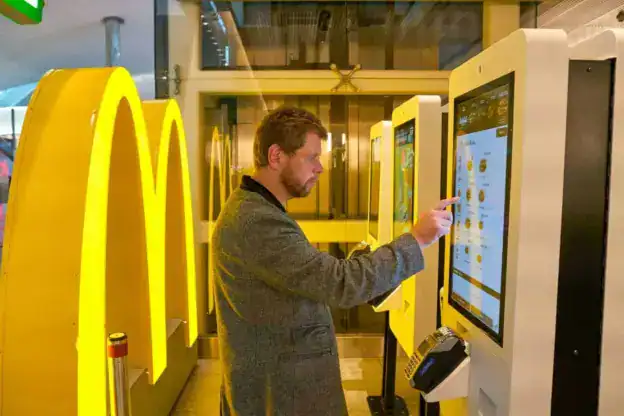
Self-serve kiosks may also help in some situations. It may be easier for restaurants to bring in specific employees who focus more on food preparation and to avoid having to hire attendants if they use kiosks. A kiosk allows the customer to review a menu through a digital platform. The customer can then select what foods one wants to order and pay for their purchase through the platform.

Kiosks are useful for how they give the customer more control over one’s order. They also reduce the risk of order errors. Employers will appreciate how kiosks reduce the need to hire more people, plus they are often cheaper to operate.

Other Ways For Taking Orders

Restaurants that might not be willing to bring in a new wait staff are also finding it easy for them to take orders through technology. In addition to online orders through a website or mobile device, customers can also use call-ahead services. These may entail people contacting a person in the kitchen or another person who might work a register. The system allows a customer to pick up something when one arrives at the restaurant. The customer could also bring the food home, or that person might enjoy a dine-in experience if one prefers. But the effort will not require as much staff to keep it working.

The Rise of the Ghost Kitchen

One other interesting tech-related development to explore entails ghost kitchens. A ghost kitchen is a delivery-only restaurant that delivers foods to people without there being a customer-facing presence. The customer orders food for delivery on a website or app, and the ghost kitchen worker brings the food out at a time of the customer’s choosing. The system provides a unique approach for ordering, plus it is a more cost-effective solution for handling food. Ghost kitchens are more likely to appear in urban areas, although the concept could prove more interesting to some urban areas.

Whether it entails focusing on digital efforts or using new means for finding employees, restaurants are finding ways to get around hiring obstacles. Restaurants will continue to be in demand as time progresses, so the need to use the best materials for work will be critical to success.

Our other restaurant payment articles are collected in Restaurant Payment Resources.

monetizing phrase on vintage watch 3d render 78724722

Is Monetizing Data the Key to Competing in Payments? [2023 Update]

Banks and other financial institutions are often willing to use data sets to make decisions. They need data to figure out who is more likely to use certain services or products. They also want data on customers to see who has the greatest risk of being delinquent or otherwise unable to complete payments as necessary.

Banks can potentially earn revenue from the data they use by using various monetization efforts. While banks might earn funds from traditional transactions, those won’t be enough for banks to survive in an increasingly competitive market. Transaction fees and other charges issued for certain services can be plentiful, but there’s no guarantee that customers will always use the services that provide the banks with the income they want. The effort also requires banks to change some of their long-set attitudes on how they can manage funds.

Review Fraud and Delinquency Issues

Review Fraud and Delinquency

One way banks can monetize their data is to review general signs of fraud and delinquency. A bank can review instances of fraud and delinquency among its clients and review general signs or behaviors in these cases. They can look at how customers invest their funds, how they interact with banks, and general payment behaviors. A bank can use these details to predict future issues where customers might not pay their funds properly and avoid lending to those who might be risky. The effort reduces the general risk of fraud.

Focus on External Data

Estimates show that banks typically focus on internal data. A business might take 80 percent of its data from internal sources, while the remaining 20 percent comes from external data. The external data includes reports from social media, local economic data, and other content the bank might find suitable.

For a bank to monetize its data, it needs to switch to a 20-80 format where 80 percent of its data is from external sources. Banks can review employment data, tax reports, and other things about customers that the bank doesn’t traditionally hold. It will need to request these details for proper info as necessary. The bank can use this information to figure out someone’s net worth and whether someone is capable of handling loans and other services.

Customer Profiles Are Critical

A business needs to produce a comprehensive profile of each customer to be successful. A bank can use a predictive model for identifying customer needs by creating unique profiles for each person who requests services.

Profiles can include details on any private wealth someone holds, retail behaviors, and any assets one might regularly operate. A profile can also include details on whatever small business operations one might run. All profiles can be as complete as necessary, but they should provide enough points on whatever might work in any situation.

Monitor What Needs People Hold

Another way banks can monetize data is to look at how customers might hold unique financial needs based on their behaviors. A bank can analyze customers based on when they ask for funds and what they might look for the most. They can promote loans and other services to people based on life events, changes in income, and other things that might suggest someone could be more willing to contact a bank for help. Banks can use these details to market what they offer to people at the best times.

Who Is At Risk Of Leaving?

One idea to review surrounding customer behaviors involves how some customers might express behaviors when they choose to leave for other service providers. Customers might not be willing to check their accounts as often, or they might relocate to certain places where they might feel a need to use a different financial service provider.

A bank could review prior instances when customers left for other providers and use those details to see what can work to retain those people. The effort should be about reducing the risk of customers leaving for other sites. A bank could promote its services further and maybe highlight some of its benefits that might be different from what people might see elsewhere.

Why Aren’t Banks Willing To Monetize?

Banks could monetize their data to earn more money, but there’s no guarantee they actually will. One reason why is that banks are often more focused on short-term gains. They want to gain money from existing revenue streams that they know are proven to work. But the gains they’ll get through those efforts might not always be worth as much as they might assume.

Meanwhile, banks might not understand how they can transition to new methods to help them collect funds. They may need further guidance to help them understand what they should be doing when moving forward in accepting new funds.

A Long-Term Transition Is Necessary

The effort to transition from a short-term to a long-term strategy for gaining revenue will be a challenge for some banks to manage. But a long-term strategy will entail reviewing unique bits of data surrounding each person who uses a bank’s services.

A bank will need a proper roadmap that helps review what it is doing and how it can bring in more funds from prospective borrowers. The bank can use the roadmap to make decisions on how it will manage its assets the right way and how it can communicate with its customers. Observing behaviors and habits among customers will also be a necessity. The work here can help a bank figure out what is right when dealing with people and knowing what works.

There will be a great potential for banks to monetize their existing data stores. But it will require effort to ensure it all works and that everything remains accurate and useful. Banks that know what is open for work and recognize when customers might need services the most will have more success in monetizing the data they collect.

self ordering kiosks at mcdonalds 157443259

How Self-Service Retail Has Advanced and Helped Consumers Amid the Pandemic

Self-service kiosks and other devices have become a commonplace at many retail sites over the years. From kiosks at fast food restaurants that accept orders to self-checkout aisles at grocery stores, self-service retail has never been more visible than now.

The self-service or unattended retail industry has especially become more essential during the global pandemic. Self-serve kiosks and other unattended items help reduce human interactions and have been preferred by many during the pandemic. But the industry is still evolving, and there’s a potential for new developments further down the road. Some of these changes include efforts in making kiosks safer and making people feel comfortable with them.

Significant Growth

The self-service retail market has been growing in value in the past few years. PYMNTS.com reports that the self-serve market will likely grow to about $46 billion in value by 2027. The growth includes a compound annual growth rate of about 7 percent from 2020 to 2027.

Meanwhile, people are continuing to use more contactless payment solutions. PYMNTS.com also states in the same report that the contactless payment market is currently valued at $40 billion and will likely grow to $100 billion by 2026. Self-service kiosks and other stations can support contactless payment methods, making the industry likely to keep on growing in prominence.

What Makes Self-Serve Retail Useful?

People are finding self-serve retail stations to be safe during the pandemic, but there are many other positives worth noting. These include benefits that support the retailers:

  • Self-service stations help businesses save on labor costs.
  • It is easier for businesses to serve more customers when they have kiosks and contactless stations on hand. Customers can access these features at any time while a business is open, including during off-peak hours.
  • Customers will have more control over their purchases. They will see everything available at a site, or they can select different payment methods for whatever works.
  • The risk of errors is minimal through self-serve spots. People can confirm their orders before paying for them, plus there’s no risk of someone mishearing or misinterpreting someone’s request.

More Consumer Spending

Self-service stations can also potentially increase sales numbers at businesses that offer them. Research and Markets writes that self-service kiosks can increase customer spending by about 30 percent on average. The rise is from people being more willing to spend money on purchases because they have more control over their orders.

Self-service kiosks could help reduce the income hit that stores have experienced as of late. Customers have been using physical stores less often in the past few years. The trend had been around before the pandemic, but the pandemic has accelerated that concern.

Meanwhile, people are more willing to buy products on kiosks, voice-activated devices, mobile devices like smartphones or tablets, and call centers. They want control over their orders, and they especially want more options when buying products. Self-service stations will be critical to how well businesses can thrive as the economy evolves and shifts.

When Will Businesses Adopt Self-Service Stations?

While self-service kiosks have become critical for sales during the pandemic, businesses that have explored these have held off on introducing them. Many enterprises have delayed their 2020 plans for introducing kiosks, as they saw limited revenues that year. They hope to bring in new stations in 2021 and 2022. The increased demand for these stations will especially make it where businesses will want to fast-track the development of new kiosks.

A General Concern of Cleanliness

There is one worry surrounding self-service retail spaces and how effective they can be. People aren’t interacting with others when checking out, but they are interacting with tables, trays, and touchscreens that others utilize each day. Some customers may also be using carts and baskets that others keep touching. They use them to store their purchases before bringing them to these kiosks to finish their orders.

The point proves that not all self-service retail items will be completely clean. But the perceived risk that customers have about these self-service features is lighter than if someone were to checkout with another person in a spot. Still, people might be more comfortable with using these kiosks if they know everything in those spots are clean and safe to use.

New technologies are still in development to make these self-serve spots cleaner. UV-powered antibacterial coatings or sensors may be utilized around these stations to keep them clean, for example. But business employees may still need to clean off these stations on occasion to ensure everyone stays comfortable.

NFC Technology Could Reduce the Risk

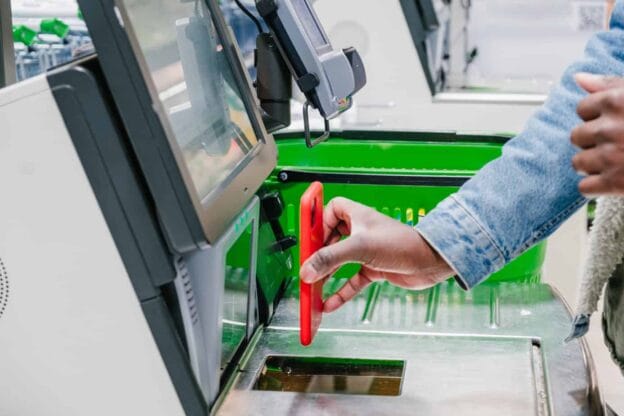
Another solution that could make self-service kiosks cleaner and more appealing entails NFC support. Kiosks could use NFC payment systems that allow people to purchase items through a completely contactless method. The customer can specify one’s order and wave a product over a sensor as necessary. The person will then waive a phone or other device linked to a payment account to pay for the purchase.

Amazon has been utilizing such a system at its Amazon Go stores. The “Just Walk Out” system lets people shop while being monitored by weight sensors, security cameras, and identification tags on items in these stores. Amazon’s system also uses deep machine learning to identify what items were purchased and what needs to be restocked the soonest.

While most businesses likely won’t have technology as advanced or complex as what Amazon uses, it is possible they could start working with more unique systems that reduce contact points. The general goal of the self-service industry will be to eliminate all contact points, providing an environment that everyone will feel comfortable with.

The growth of the self-serve industry will be worth exploring. People appreciate having more control over their orders. Businesses are also finding their own benefits through these systems. Expect the field to keep growing and to expand with new technologies that will make self-service stations more convenient and sanitary. Trends show that these kiosks are growing in popularity, so taking advantage of that trend will be critical to success.

a close up of an african man x27 s hand paying at a grocery supermarket checkout with a contactless payment using a mobile 220100705

Google Pay Adds Grocery and Transit Service Deals

Google Pay is already a popular mobile payment system, as it supports wireless payments on various Android-enabled devices. It is flexible enough to work on any Android-powered tablet, phone, or watch. It uses a secure approach to paying that can link to a credit card or another payment source.

Google Pay isn’t done evolving, as it is partnering with various grocery store chains to offer more benefits for customers who shop with this digital wallet app. Google Pay is partnering with the Target department store and the Safeway grocery chain to offer grocery deals. It is also working with various transit companies in the United States to offer more affordable and convenient ways for users to purchase tickets.

The new development is the latest move from Google Pay to become more convenient and useful for work needs. Google Pay has been expanding its options for how it works while staying competitive with Apple Pay and other competing solutions.

Grocery Support

The first part of Google Pay’s update is to help customers find the best deals on purchases at Target and Safeway grocery stores. The update will work for all Target locations around the United States. It will also run at many Safeway locations across the country. These include Albertsons, Randalls, Tom Thumb, Vons, Pavilions, and Jewel-Osco locations in different areas.

The new Google Pay update allows app users to browse Safeway and Target’s weekly circulars. These features will highlight the latest deals these stores offer.

Google Pay can also recommend different deals from each circular. It can identify prior purchases and one’s preferences to find the best deals.

Google Pay will also notify users of weekly deals when they are near participating stores. The feature works when the device reads the customer’s location. It automatically sends details on the deals available in that location, giving the customer the details one needs before shopping.

What makes this development noteworthy is that in-store shopping hasn’t been as popular as of late. The global pandemic has prompted people to look at online shopping, including digital shopping where people can get their grocery items delivered to their homes. The location-based system Google Pay will likely face a challenge as people might not be willing to return to in-person shopping as soon. But the risk of in-person shopping has been dropping as vaccination rates rise, making it possible that the new move from Google Pay could be more successful than people expect.

Transit Support

Another part of the Google Pay update involves helping people buy transit tickets in moments. Google Pay will help customers buy transit tickets in more than eighty cities around the United States.

People can use Google Pay to search for transit tickets and to buy them with their Google Pay accounts. People can then load their tickets on their apps and use them to board whatever buses, trains, or other transit services they wish to use.

Google Pay transit feature will now work in Chicago and the San Francisco area. The move comes not long after Apple Pay announced its support for the Clipper transit card for Bay Area Rapid Transit services in the San Francisco area.

The Google Pay customer will hold one’s device up to a reader to board the bus or train service. A visual ticket may be necessary if there are no readers available.

Google Pay also uses Token Transit integration to help people pay for public transit services in smaller towns around the United States and Canada. Token Transit lets people search for bus agencies around the country. People can choose whatever passes they need and specify how much time they will require. The system supports various bus transit services in many smaller communities.

Part of an Ongoing Expansion

The new features on Google Pay are part of the app’s ongoing expansion to provide more services and solutions for payment needs. Google Pay facilitates contactless payments, plus it can track a person’s finances. The app even introduced the Plex system as a partnership with major banks to help people keep track of their bank accounts and funds while on the go.

Google Pay is still changing to offer more things. It is working to produce more detailed insights and analysis reports on how people spend their money and how they research things of value. These reports can come from whatever purchases someone makes through Google Pay, including details on what one spends and what specific stores one visits. The insights will help customers find deals on whatever they are more likely to find at stores.

Competition Is Critical

The hope for Google Pay is that it will continue to expand to offer more things of value. But there are some contenders who are trying to capture some of Google Pay’s momentum. These include entities that go well beyond Apple Pay, including a few that have become highly prominent in their own right.

PayPal is hoping to update its app to make it more thorough and comprehensive. PayPal’s app has been updated to support QR code payments that are easy to follow. PayPal can also support buy-now-pay-later transactions, plus it can support some cryptocurrencies.

Facebook also has plans to produce a competitor to Google Pay. Novi, a program formerly known as Calibra, will support full integration of all Facebook programs. These include the WhatsApp, Instagram, Messenger, and Kustomer platforms. The setup allows people to pay for more items and to access various things of value. The app will also potentially link to the Diem cryptocurrency that Facebook is planning, although it is unclear when Diem would be made available.

The competition will likely prompt Google Pay to advance and evolve further. Google Pay has already become a popular choice for payments, and its new efforts in facilitating transit payments and in helping people find shopping deals are proof that the app is still changing.

artificial intelligence machine learning business internet technology concept 101370901

Banks Use of AI to Manage Credit Risk Tripled In the Last Three Years

Banks are using artificial intelligence or AI more than ever to interact with customers. Banks can use AI to produce chatbots that let banks interact with people at any time. They can also use AI to identify fraud and other potential threats. It can even work for mobile banking purposes, as banks can help customers send money to other accounts based on signals and reports they receive.

One other way banks are using AI involves how they can review customers’ credit risk. Banks are often willing to extend credit to customers, but they need to choose the right people to support. Failing to give support to customers that can afford a bank’s services can lead to defaults and other financial issues.

Credit card delinquencies have increased in the past year. People are also struggling to pay off their loans, especially as they struggle to find stable work. But an AI-powered system can help banks review customer data and identify the potential credit risks they hold. AI can analyze prior user data, transaction reports, and credit histories to see if some people are likely to become insolvent or otherwise unable to pay off their loans or other investments.

AI can also identify fraud risks and ensure they do not occur. AI can check on how customers behave and compare that data with prior fraud reports to spot when someone might be engaging in questionable activities with one’s funds.

The AI effort helps banks find the right people to support. AI increases the bank’s potential to earn revenue without adding to its risk.

AI also reduces the unpredictability surrounding the banking industry. Clients are more unpredictable than ever before. It becomes tough for some people to figure out who is right for lending purposes. AI helps identify unique trends and habits in people, ensuring their behaviors are easier for everyone to predict. It becomes easier to confirm certain things when AI works well.

Managing AI In a Time of Uncertainty

The 2021 calendar year will be a time when the economy gets back up and running and people start to find jobs once again. Government stimulus programs have also helped keep the economy moving. But many banks and other financial institutions are uncertain as to what will happen soon.

The uncertainty surrounding the economy has made banks worried about how they can provide lending services to customers. With this in mind, AI can identify possible concerns surrounding who gets funds through loans.

Handling Data From More Sources

It used to be that banks would have more personal relationships with their clients. Local branches would understand each person’s distinct needs and find banking solutions that fit what they demand. But the banking sector has seen some dramatic changes in the last few years, as data is coming from many sources. People are completing more digital transactions than ever before. Some people even have their funds secured in multiple spaces, including separate spots for their 401ks or IRAs.

AI-based systems can collect data from multiple sources. They can gather data from different service providers, online networks, and even blockchain-based systems. The information helps these banks find details on each client while reducing possible fraud or insolvency risks. Banks can attain more revenue while reducing their costs by using AI to automatically review each customer’s financial profile through many confirmed sources.

Working With Data Mining

Banks with at least $100 billion in assets are more likely to utilize AI to review risky customers. But AI use has become common among smaller banks as well. Part of this comes from how AI works alongside data mining processes. Data mining has been in use in the banking industry for a while now, as it helps identify unusual patterns and shifts in large data sets. The mining effort helps banks review ways they can increase their revenues and reduce costs.

AI systems can incorporate data mining in their processes to help them stay functional. It can review massive data sets used in the data mining function and incorporate the mining results into its research database. The AI can then use those details to identify possible threats and opportunities surrounding people who want to borrow funds from the bank.

What People Use AI For Today

Banks are using AI to manage many risk mitigation efforts. Some of the things that AI is being used for include:

  • Identifying discrepancies in data entries, especially for new accounts or files
  • Helping to make credit decisions for applicants
  • Underwriting for credit risks
  • Finding solutions to possible credit problems clients may hold

The AI can work with data mining results and prior reports to see what can work. AI makes it easier for banks to ensure these systems work well.

Interacting With Customers

AI can also interact with customers who want to apply for banking services. AI systems can reach these customers through multiple processes:

  • An AI system can provide quick answers on a website based on a customer’s behavior. The AI could review one’s online actions and provide responses to search queries and other actions.
  • Chat-driven communications may also work. Chatbots are prominent AI examples for how they can read language notes and identify demands for info.
  • Customers can also enter emails that illustrate their concerns. An AI system can produce an automated response based on unique keywords someone enters, the tone of the message, and other points surrounding the writer’s needs. The work ensures the customer will get the answer one requests sooner.

Artificial intelligence is necessary for helping banks find the right people to support for investment purposes. AI will do well for many investment purposes, making it a suitable solution for everyone to follow. People will continue to express various risks for banks to review, so it is essential to watch for what might happen.

gafam the biggest companies in information technology 209504587

Big Tech Earnings Reveal Big Ideas For What’s Next In Commerce

Some of the top entities in Big Tech recently released their latest earnings reports. Amazon, Google, Microsoft, Apple, and Facebook all performed beyond what analysts predicted. Analysts also predict these earnings reports will highlight a greater emphasis on commerce soon. All of these entities have distinct plans for what they will do with their investments.

Ongoing Growth For Amazon

It is no surprise that Amazon is still growing in prominence. Amazon saw about half its revenue come from product sales. The company’s revenue rose by nearly a third to about $57.5 billion this past quarter. The company’s service portfolio also saw a 50 percent increase in revenue to $51 billion in the past quarter. The service portfolio includes Prime Video subscriptions and Amazon ad sales.

But Amazon Web Services saw a drop in its operating income in the first quarter. AWS had $4.2 billion in operating income, which is less than the 75 percent profit burden it had last year. But AWS’ income is still significant enough to make a substantial difference in how the business operates.

Amazon is expecting further growth, although its growth rate in the second quarter will likely slow by about a quarter. Amazon will still be raking in money, as it will likely see operating profits of at least $4 billion in that period.

The development comes as Amazon prepares for a significant transition. Founder and CEO Jeff Bezos will be departing from his position this summer, but he will remain an executive chairman with the company. AWS CEO Andy Jassy will replace Bezos as the company’s CEO. Whether there will be any other surprise announcements from Amazon remains uncertain, but Bezos’ influence will likely remain a constant at the company.

Amazon’s growth is no surprise, as the company continues to be a strong force in today’s economy. Amazon has been a company that people rely on for many reasons. The possible new things that Amazon will have to offer and its next innovations will be worth spotting, especially as they could make Amazon an even more profitable company.

Facebook’s Hope

While Amazon is continuing with business as usual in the commerce industry, Facebook has plans to enter the commerce field. Facebook promoted in its earnings report that the company has more than a billion Marketplace users. Facebook also plans on using virtual and augmented reality programs to help facilitate digital commerce activities.

Facebook has plans to boost its digital commerce activities. These include efforts on the Facebook and Instagram platforms alike. One potentially involves retailers being capable of directly selling products to people through their Facebook and Instagram profiles or feeds.

Facebook continues to be in the news for how it operates and how it regulates its content. But Facebook will soon start focusing more on commerce activities without relying too much on the communication features that people often expect to find through the company. This development will be something to watch for when looking at possible investments.

What Google Wants

Alphabet, the company that runs Google, also wants to do more in the commerce industry. Alphabet has reduced product listing fees on Google’s shopping section. The company has also reduced commission fees for sales facilitated by the Google shopping search feature. Google’s moves are helping people use the system while making it easier for them to manage various transactions while online.

Alphabet reports that its commerce efforts are working through a combination of traditional searches, Maps listings, and YouTube reports. People are searching for local businesses on Google more than ever, making Google a more viable solution for search needs. Google frequently updates its systems to make its data more visible and useful, especially when showcasing some of the specifics surrounding different businesses in local areas.

Google has also been helping businesses with omnichannel marketing. Retailers and other companies can use all of Google’s features to reach customers. They can use the Maps feature to highlight their locations and list their products on Google’s shopping search results. Retailers can also pay extra to advertise on Google and to have their products or services be the top results on searches. The system allows retailers to become more visible to everyone, providing further growth.

Google also has partnerships with PayPal and Shopify, two of the most prominent online shopping systems. Google’s work with these entities will make it easier for people to market their products and for customers to pay for their orders.

Microsoft and Apple Are Competing Well

Microsoft and Apple may be direct competitors, but they are both alike in how they want to reach more people through commerce. Apple regularly reviews different commerce opportunities through its products, including how its products can support NFC transactions and various apps provided by retailers. The Apple Pay contactless payment system has especially become a necessity for many retailers to have.

Microsoft’s commerce work also deserves notice. Microsoft has been highlighting its MS Cloud development and how it can help businesses organize their operations online.

Microsoft is also buying its way into the commerce field by purchasing the online communications system Discord. Microsoft is spending nearly $10 billion on its acquisition. The total is a fraction of the company’s $2 trillion market cap, but it shows how committed Microsoft is in finding ways to expand.

Microsoft also recently purchased Nuance Communications, a healthcare technology firm. The acquisition of Nuance will help Microsoft enter more healthcare-related activities. Nuance particularly focuses on artificial intelligence and speech recognition systems. The potential for Microsoft to use Nuance’s technology for more things could be worth watching, especially when looking at how it continues to thrive in the digital environment.

A Strong Future For All

The Big Tech companies have shown that they are all looking to grow further, and they are ready to use the commerce industry to make it happen. They will become more ubiquitous and inviting for all investors to explore as they look for growth opportunities that they could utilize.

paypal vs venmo smartphone folder with blurred paypal and venmo mobile payment service applications 212752189 (2)

Fiserv Delivers POS QR Codes With PayPal and Venmo

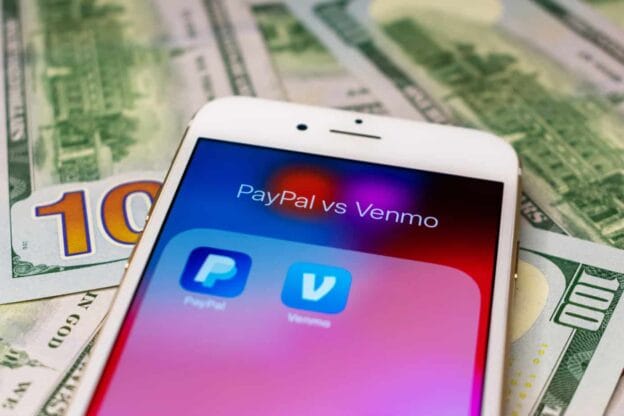
People have been using Venmo and PayPal to handle many financial transactions as of late. People are also using QR codes more often, as they are easy to scan and are more secure than other communication methods.

The financial payment service provider Fiserv is working with both Venmo and PayPal to manage mobile transactions. Fiserv will help introduce new QR codes that can work through PayPal and Venmo to run contactless payments.

Fiserv’s new system will allow businesses that use the Clover POS platform or the Fiserv Carat omnichannel system to accept Venmo and PayPal QR codes. The effort provides businesses the option to make in-person shopping and commerce more convenient.

Contactless payment options have never been more important than they are now. Providing customers the option to handle QR payments from PayPal or Venmo will be a plus for any business to consider.

But merchants often struggle in trying to find contactless payment solutions. It can be challenging for some merchants to support multiple payment platforms. The great news about Fiserv’s move is that it can work with the same platform that one uses right now. People who use Carat or Clover platforms can produce new QR codes that can work with existing PayPal and Venmo-supported devices, making it easier for them to complete transactions in moments.

How the System Works

The Venmo and PayPal app have become essential tools for contactless payments. But not all businesses are capable of collecting payments from these sources. The QR code system that Fiserv is supporting will allow businesses that use their POS system to accept these codes from a PayPal or Venmo account. The system works in moments and does not require the company to produce anything new.

The system can work with a few steps:

  1. The customer can open one’s PayPal or Venmo app. The app is available for all major mobile phones and tablets.
  2. The customer will then select an option to scan an item. The setup will link to the device’s camera. The customer can then look for a QR code to scan here.
  3. The user then scans the QR code the retailer produces on the Clover or Carat program. The QR code must be on a customer-facing display.
  4. The buyer will then confirm the purchase information on the PayPal or Venmo app. The app will display the funds the user will send to the seller.
  5. A second verification method may work in some situations. The buyer has the option to use this for security purposes.
  6. The money will move between the two parties, completing the transaction.

The system is very convenient and provides a simple approach to payments that everyone will appreciate. The process offers a touch-free way to pay for items. The customer can also link one’s credit or debit card to a PayPal or Venmo account, giving that person more freedom over what someone will use when paying for items.

What Makes the Process Ideal For Businesses?

Businesses that use the Clover or Carat platform should look at how well Fiserv’s support for QR codes can work. There are many positives for businesses to note:

  • Accepting QR codes can boost customer loyalty. Customers will be more likely to return to a store because they know the retailer can support the payment methods they want to utilize.
  • Customers might prefer to use QR code payments because they are easier.
  • A company may be interpreted as being more modern and with the times if it can support new payment methods and processes.
  • QR codes are more secure than other scanning methods. All items in a QR transaction will be encrypted, as the data is hard to decipher without the proper equipment.
  • Each QR transaction can work with a unique code. QR codes can store more data than a traditional platform, providing a consistent system for work.
  • QR codes are easy to produce on any computer. The code design can also be read on any screen. A user could even scan that code if it is partially obscured or if the screen is covered in dust, fingerprints, or anything else. The user can also spot it at an angle, as a scanner can identify QR data faster than a barcode scanner can monitor that unique code.
  • People who use Venmo and PayPal will have an easier time linking their credit cards, bank accounts, or other things to their payments. PayPal and Venmo both support many solutions for payment purposes. Customers will appreciate how they have more control over the payment types they will manage through this setup.

Testing Has Been Working

The expansion comes as PayPal has been testing its QR code payment system. PayPal established a pilot program last year where QR code payments were made available in a few global markets. The testing helped review how well QR-based transactions work and if they can make the sale process easy to follow.

PayPal’s testing has helped forward new QR-based solutions for payment purposes. Venmo’s setup is similar to what PayPal already uses for transactions. By expanding the payment options people can use, it becomes easier for all parties to handle their transactions well and without risk.

The process ensures transactions can flow well and that they can work as necessary. The problem with some traditional payment methods is that some cards are hard for devices to read. By using QR codes, it becomes easier to transfer the data between parties. It is also a safer approach, as the QR code will be different for each transaction. Moving towards this payment option will be a necessity to explore as the payment industry continues to shift.

Fiserv’s effort in managing QR transactions will be a practice worth watching. Fiserv has been at the forefront of payment technologies for years. The group’s new effort in handling QR codes from Venmo and PayPal will be a sight to be seen to stay on top, especially as many others might adopt the same payment process.

pricing table template for web design and business 95485487

The Rise of Digital Retail and Subscriptions Continue

Today’s consumers aren’t too concerned about the places they shop. They are more invested in the ways they shop. They are looking for places that are easy to shop at while also being safe and manageable. There’s also a desire for people to want to share what they are doing with others.

The mix of social media and simplicity are two points that will likely influence retail activities. Today’s digital retail industry has more than made itself ready to respond to these newfound desires that customers hold.

Digital retail has never been more essential. Hundreds of millions of Americans are actively buying things online. They’re also looking into subscriptions for recurring payments, including payments for streaming services and other items.

Rising Sales Numbers

Digital retail providers have seen massive sales numbers so far in 2021. The Adobe Digital Economy Index reports that the global digital economy brought in $4.2 trillion in sales during the first four months of 2021. The United States made up close to a quarter of those sales.

These numbers have been rising as businesses are transitioning to digital platforms. People are more likely to stay home and shop from there instead of going out to physical places. Americans spend tens of billions of dollars on digital retail purchases each month.

New Ways How People Can Shop Online

Customers are finding it easier than ever to buy things online. There are many unique ways how people can complete their transactions while online:

  • Customers can browse through virtual storefronts. This point is convenient for online auction or marketplace sites that offer items from multiple sellers.
  • Retailers are starting to focus on particular audiences. These include clothing websites that concentrate on specific people or unique fashion items.
  • Some retailers can also support multiple payment methods. Digital wallet and money transfer systems can work in some cases. Cryptocurrencies may also work at some sites, although most retailers have been reluctant to consider these choices.
  • Augmented reality sales may also rise in popularity. People could use virtual catalogs or other three-dimensional reviews of items to see what’s available. Such reviews are essential for clothes and other fashions.

The assortment of shopping options will likely grow as technology progresses. People are finding some of these at-home sales options more inviting than going to traditional retail sites. The ability of people to do more things while online makes digital shopping inviting for many to explore.

Physical Retailers Adapt

Physical retailers have been adapting to the rise of digital sales by offering a new way for people to purchase products. Customers can go on a website, buy a product online, and then pick it up a few hours later at a local retail store. The process is convenient and safe, plus it can help customers save money on shipping costs in some situations.

This adaptation shows how digital retail is changing the industry. Even physical sites recognize the general value of online sales.

Subscriptions Are More Prominent

Digital customers have been using subscription-based services more than ever these days. These include many things that people pay for each month.

Streaming services are among the most prominent things people subscribe to each month. People can make recurring digital payments to these providers to remain members. They can go to their accounts and adjust how they will pay for services.

But the subscription-based market has been growing to where more items are available through recurring payments. The case of Blue Bottle Coffee is one example to explore. The company has seen a rise in its subscriber base in the past few years. Blue Bottle sells premium coffee grounds by delivering them to customers every few weeks. Customers have developed great relationships with Blue Bottle, as they are always looking forward to the latest shipments. Blue Bottle has grown in prominence to where it has a couple of physical cafes in a few international markets.

Social Media Makes An Impact

Businesses have long used traditional advertising methods to highlight their wares and explain what makes their businesses interesting. But customers are flocking to other places to learn about where they should shop. Specifically, they’re heading to social media.

Customers are looking for brands on social media platforms more than ever. People in the coveted 18-34 market are more likely to use social media to find new brands.

These customers also want to buy products through social media. They would use direct checkout solutions on Facebook, Instagram, and various other platforms if they were available.

Simplicity Is Critical

People also want to simplify their shopping experiences. They want to complete their transactions in as little time as possible.

Part of why subscription-based processes are convenient comes from how simple they are. People can automatically pay for what they purchase there.

Meanwhile, customers often abandon their shopping carts if there are too many steps towards purchasing items. People might not want to create accounts with websites, nor do they feel comfortable with some of the expenses or advertisements they might run into when buying something. Simplicity will be critical in ensuring people can complete their transactions well.

What About Influencers?

Digital retail and subscriptions are also growing thanks to influencers. Influencers are people on social media platforms that promote different brands or retailers. Customers are willing to subscribe to services or buy things from websites if they notice trusted online personalities support these places.

Retailers will need to work with influencers and have them promote products. Given how many influencers can have hundreds of thousands of followers on social media, the potential reach for such messages could be significant.

An Exciting Future

Digital retail transactions are rising in prominence. Subscription-based services are also becoming more popular. The online retail world is growing in many ways and will continue to be worth watching, especially as more retailers focus on their online efforts. Even the most prominent physical retailers will likely flock towards supporting more digital sales soon.