Tag Archives: qr-code

nfc vsqr code

NFC vs QR Code

With the COVID pandemic still being a major concern of people, sharing essential information with the citizens through effective means has become a necessity for the government. People are now more concerned about their safety than ever before. A report published by Walker shows that customer satisfaction and their experience will become the major factor that sets a brand apart from the competitors in the market. 

To improve customer experience, businesses have started embracing modern technologies that could connect the offline and the online world. Now, the question is “which one is better”? Should you rely on QR codes or are NFC tags a better alternative? Let’s have a look:

NFC and QR codes are an innovation in the modern eCommerce technologies. Both offer unique functions, but with the same goal – to offer a seamless and safe user experience to your customers. Let’s understand each product and later we will discuss the differences, features, and benefits.

What is NFC?

NFC stands for Near Field Communication, a system that enables uninterrupted and smooth communication between two electronic devices in close proximity. It consists of a small chip. The appearance may look a little dull, but the performance of these chips is pretty impressive. According to technavio, 25% of mobile payments will be processed by NFC in 2021.

User Cases and Compatibility 

The best use of this technology is for electronic, contactless payments. You must have seen the customer queue at the supermarket, where each customer swipes their cards at the POS to complete the transaction. It is NFC. In addition to payments, NFC is used for sending media files, documents, directions, mobile numbers, and files in other formats.

Despite being new to the market, NFC has garnered a lot of attention among smartphone users recently. The technology is compatible with Android and iOS devices, in fact, the number of Android devices compatible with NFC has increased in the past few years. 

iPhone users have also witnessed consistent growth in near-field communication technology. Some iOS devices are capable of reading the NFC code from the home screen without having to install any mobile app. 

Why Use NFC?

NFC is not as old and popular as QR codes, but the technology is globally accepted for contactless payments. Its popularity has skyrocketed after the pandemic. Here are a few reasons why businesses should use NFC tags:

  • A Wider Scope: the user case of NFC goes beyond contactless payments. Businesses have started using these tags for marketing. The NFC cards are designed for businesses looking for a smart way to share their contact details with their prospects. These cards direct your prospects to your website or email for easier and faster communication.
  • Convenience: It only needs one tap from customers’ end to sign up for the company’s loyalty program. So, if the customer experience is concerned, nothing outperforms NFC tags. Customers can use the NFC tags to collect and redeem reward points with a single tap.
  • Security: NFC is one of the safest technologies. It catches data from customers’ devices located within their acceptable radius.

What are QR Codes?

QR codes were launched as a better and powerful alternative to the barcode for inventory. It was designed in such a way that people could scan these codes from any angle with just about any device without any hassle. Introduced in 1994, the QR code reading has made a big impact not only in the inventory management market but it can be used in transferring digital information. 

QR codes are small square-shaped boxes that can be scanned vertically and horizontally through any smartphone that has the barcode-reading function enabled. QR codes offer great flexibility. Like NFC, these codes can be used for making contactless payments at any retail store. You could also use it for location sharing and marketing.

Most businesses embed their website URL into these square boxes, allowing their audience to visit their website without having to memorize the URL. Similarly, QR codes are used to direct people to your blogs, landing pages, social media accounts, and other sales channels. Recently, many social media sites have embraced QR codes to enable a smooth and seamless information sharing experience for users.

Why Use QR Codes?

Over 9 million families scanned QR codes at least once in 2018, shows a report published by Statista. It is one of the most convenient ways to share information, transfer payments, and direct your customers to your commercial sites.  Here are a few reasons why QR codes are better than NFC tags.

  • Versatility: QR codes are used for all types of websites, social media accounts, and mobile apps. For instance, a QR code that directs your user to your mobile app link can increase your app downloads. You can also share QR codes for product links, your email, landing pages, and more to extend your reach.
  • Ease of Use: QR codes can be scanned from any angle as long as you have a smartphone with QR code reading functionality enabled. Some mobile cameras have a built-in QR scanning feature, while others need to download an app to scan these codes. Either way, the scanning part is super simple. 
  • Customizable: QR codes are customizable. Businesses can use customized codes that match their brand’s logo and looks relevant to their business practices. You don’t have to settle for the traditional black and white square boxes for the QR codes. Add interesting colours, put a nice background, and design a nice QR code that is relevant to your brand.
  • Security: Another major advantage of the QR codes is that they are used for the purpose they were designed for. They offer a high level of security to both customers and merchants.

Which One is Better?

Both NFC and QR codes deliver excellent performance when it comes to marketing, payment processing, and transfer of information. QR codes, however, are more advanced and relatively better than NFC. These codes can be scanned easily, allowing you to process your transaction in the fastest and easiest possible way.
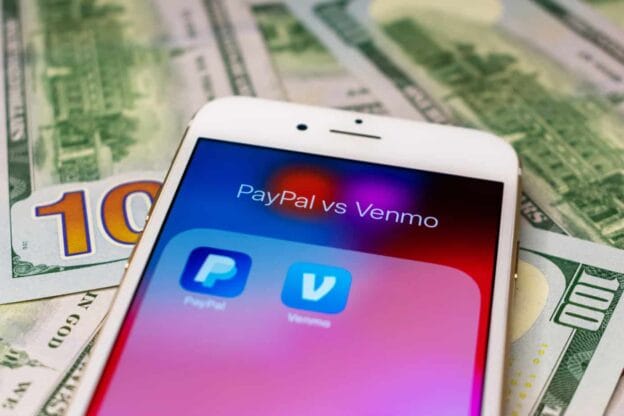

paypal vs venmo smartphone folder with blurred paypal and venmo mobile payment service applications 212752189 (2)

Fiserv Delivers POS QR Codes With PayPal and Venmo

People have been using Venmo and PayPal to handle many financial transactions as of late. People are also using QR codes more often, as they are easy to scan and are more secure than other communication methods.

The financial payment service provider Fiserv is working with both Venmo and PayPal to manage mobile transactions. Fiserv will help introduce new QR codes that can work through PayPal and Venmo to run contactless payments.

Fiserv’s new system will allow businesses that use the Clover POS platform or the Fiserv Carat omnichannel system to accept Venmo and PayPal QR codes. The effort provides businesses the option to make in-person shopping and commerce more convenient.

Contactless payment options have never been more important than they are now. Providing customers the option to handle QR payments from PayPal or Venmo will be a plus for any business to consider.

But merchants often struggle in trying to find contactless payment solutions. It can be challenging for some merchants to support multiple payment platforms. The great news about Fiserv’s move is that it can work with the same platform that one uses right now. People who use Carat or Clover platforms can produce new QR codes that can work with existing PayPal and Venmo-supported devices, making it easier for them to complete transactions in moments.

How the System Works

The Venmo and PayPal app have become essential tools for contactless payments. But not all businesses are capable of collecting payments from these sources. The QR code system that Fiserv is supporting will allow businesses that use their POS system to accept these codes from a PayPal or Venmo account. The system works in moments and does not require the company to produce anything new.

The system can work with a few steps:

  1. The customer can open one’s PayPal or Venmo app. The app is available for all major mobile phones and tablets.
  2. The customer will then select an option to scan an item. The setup will link to the device’s camera. The customer can then look for a QR code to scan here.
  3. The user then scans the QR code the retailer produces on the Clover or Carat program. The QR code must be on a customer-facing display.
  4. The buyer will then confirm the purchase information on the PayPal or Venmo app. The app will display the funds the user will send to the seller.
  5. A second verification method may work in some situations. The buyer has the option to use this for security purposes.
  6. The money will move between the two parties, completing the transaction.

The system is very convenient and provides a simple approach to payments that everyone will appreciate. The process offers a touch-free way to pay for items. The customer can also link one’s credit or debit card to a PayPal or Venmo account, giving that person more freedom over what someone will use when paying for items.

What Makes the Process Ideal For Businesses?

Businesses that use the Clover or Carat platform should look at how well Fiserv’s support for QR codes can work. There are many positives for businesses to note:

  • Accepting QR codes can boost customer loyalty. Customers will be more likely to return to a store because they know the retailer can support the payment methods they want to utilize.
  • Customers might prefer to use QR code payments because they are easier.
  • A company may be interpreted as being more modern and with the times if it can support new payment methods and processes.
  • QR codes are more secure than other scanning methods. All items in a QR transaction will be encrypted, as the data is hard to decipher without the proper equipment.
  • Each QR transaction can work with a unique code. QR codes can store more data than a traditional platform, providing a consistent system for work.
  • QR codes are easy to produce on any computer. The code design can also be read on any screen. A user could even scan that code if it is partially obscured or if the screen is covered in dust, fingerprints, or anything else. The user can also spot it at an angle, as a scanner can identify QR data faster than a barcode scanner can monitor that unique code.
  • People who use Venmo and PayPal will have an easier time linking their credit cards, bank accounts, or other things to their payments. PayPal and Venmo both support many solutions for payment purposes. Customers will appreciate how they have more control over the payment types they will manage through this setup.

Testing Has Been Working

The expansion comes as PayPal has been testing its QR code payment system. PayPal established a pilot program last year where QR code payments were made available in a few global markets. The testing helped review how well QR-based transactions work and if they can make the sale process easy to follow.

PayPal’s testing has helped forward new QR-based solutions for payment purposes. Venmo’s setup is similar to what PayPal already uses for transactions. By expanding the payment options people can use, it becomes easier for all parties to handle their transactions well and without risk.

The process ensures transactions can flow well and that they can work as necessary. The problem with some traditional payment methods is that some cards are hard for devices to read. By using QR codes, it becomes easier to transfer the data between parties. It is also a safer approach, as the QR code will be different for each transaction. Moving towards this payment option will be a necessity to explore as the payment industry continues to shift.

Fiserv’s effort in managing QR transactions will be a practice worth watching. Fiserv has been at the forefront of payment technologies for years. The group’s new effort in handling QR codes from Venmo and PayPal will be a sight to be seen to stay on top, especially as many others might adopt the same payment process.

qr codes in ring scan for product information 21043960

Exploring the Varying QR Code Adoption Rates Around the World

The Quick Response or QR code has become a necessity for various scanning purposes. The QR code is convenient for touchless payments and other transactions.

QR codes are becoming increasingly essential for secure payments. People are starting to see what makes QR codes so valuable and are picking up on their use. But the adoption rates for QR codes vary by country, with some places being more supportive of them than others. The global pandemic may still force people to use them more often.

Early Adoption In Europe

QR codes are more common in Europe. Part of this comes from Europe’s early adoption of these codes. Abode Systems found in a 2014 report that slightly less than 30 percent of people in Germany and France had used a QR code. The total went down to around 25 percent in the United States and the United Kingdom.

People in these parts of the world were more familiar with QR codes at the start. It would be easier for these codes to work in Europe and other places where people often use them.

Prominent In China

China is one country that has been accepting QR codes more than others. CNN Tech reported that at least a trillion dollars’ worth of transactions were handled through QR codes in China in 2016.

Much of China’s use of QR codes come from WeChat, a popular online social media platform available in the county. The app lets people communicate with each other and make mobile payments. The system uses QR codes to transfer funds, authenticate people, and get information on various things.

It appears that these codes would be more prominent in China and other countries around Asia. The system was established in Japan in 1994 as a system to track vehicles in construction. While it was intended to track the construction of new passenger vehicles, it has since found many other applications. It has become a replacement for traditional barcodes in many situations, including in retail and communication sectors.

Major Surge In India

India is another country that has adopted QR codes well. The Indian government started an effort in 2016 to cut down on fraud and corruption surrounding physical currency. Businesses around India have begun using mobile payment platforms that use QR codes to collect and exchange funds. They can do this without requiring paper currency.

The online payment platform Paytm supports millions of these businesses. Such transactions do not require physical currency, thus preventing fraud. It has been part of India’s ongoing effort to create a fair economy and to reduce risks.

American Acceptance

Americans started using QR codes more often as the 2010s progressed. Statista reports that about less than ten million American households had scanned a QR code in 2018. The number rose to about eleven million households in 2020.

QR codes are becoming more prominent in the United States. They are in use through various businesses and private individuals for many purposes:

  • Recording loyalty programs at different retail sites
  • Tracing products and shipments to ensure they reach their desired locations
  • Creating links people can scan to learn more about physical items; these can appear on billboards and other public messages
  • Accepting donations for various events or charitable activities
  • To help people communicate with others through social media platforms; this includes linking QR messages to social media accounts

How the Pandemic Changes Things

The most significant factor influencing the rise of QR codes has been the ongoing pandemic. QR codes are becoming more common for touchless payments. QR codes can send payment data to different parties without requiring any contact, thus providing a safer approach to trading funds. People can also use QR codes to scan and read documents online instead of using physical ones.

Statista found in late 2020 that nearly half of all Americans and those in the United Kingdom had used QR codes more often. Code adoption has also been on the rise in Canada, Australia, France, Thailand, Hong Kong, and other major markets.

Some governments are even requiring businesses to use QR codes. The Australian state of New South Wales requires stores to use QR codes for transactions to support contact tracing. The effort ensures people can be tracked and monitored if there is an outbreak in certain places. People who visited areas where outbreaks occur can be informed of the situation.

Further Work Is Necessary

Additional efforts will be necessary to make QR codes more viable. Governments could potentially start using QR codes to facilitate various monetary transactions. An example of this appears in Singapore, where the government is establishing national payment standards that utilize QR codes. The effort would make it easier for people in the city-state to receive payments from the government.

Pandemic-related changes that have caused businesses to become more reliant on QR codes could also make an impact. These codes are critical as people start looking for contact-free payment and document solutions.

Could the Positives of QR Codes Make an Impact?

It might be easier for people to start using QR codes if they understand the positives that come with them. Businesses and the general public may start using QR codes more often if they notice some of the benefits of the work:

  • A QR code can store more data than a traditional bar code. It features a two-dimensional approach to storing data. The layout includes content in its horizontal and vertical spaces.
  • QR codes are encrypted and hard to hack, making them useful and safe for financial transactions.
  • It is easier for people to read QR codes than barcodes. A QR code can even be read if it is damaged or partially obscured.
  • These codes can also be produced in massive sizes, including ones that could cover an entire billboard.

QR codes are already becoming more prominent worldwide due to the pandemic. But the benefits of QR codes and the familiarity that people have with these codes will make them prominent very soon.

qr code mobile phone scan on screen business and technology concept 145543233

Facebook Pay Tests Use of Personalized QR Codes

QR codes are already helpful for containing more data than UPCs, plus they are encrypted and more secure than UPCs. QR codes have been critical for many touchless payment activities. Businesses are looking to facilitate more touchless payment solutions, so QR codes have never been more of a necessity. Programs like Venmo have especially been using these codes to manage safe transfers between people.

Facebook Pay is taking advantage of QR codes by testing person-to-person QR code payments. It will allow people to transfer funds between each other with one scan. The system can work for P2P deals, but it may also work well for traditional business purchases.

Facebook has not released details on how many people are testing the system. The group is slowly rolling this system out to identify what is working and how it can be used by the public. An emphasis on efficiency and safety will be critical.

The new QR code system will be similar to what Venmo already uses. But the new codes will be personalized to focus on specific people. These unique codes will ensure they can only work for specific P2P moves. It is exciting to see what might happen when getting it to work well, although details on when these codes will be available to the public remain unclear.

How Does This Work?

Facebook Pay’s new personalized QR codes entail a few steps:

  1. The user goes to the Facebook Pay carousel at the top of the screen.
  2. The user selects the Scan button.
  3. A QR code will appear on the screen. There will also be a unique URL at the bottom. The URL displays a unique code that matches up with the QR listing, confirming the data.
  4. The app then uses the device’s camera to scan the other person’s QR code.
  5. The user chooses the amount of money that will be transferred. This work includes whether the user will send money to that other person, or if the user will receive the funds from that someone.
  6. The payment will then be transferred after everything is confirmed.

Facebook Pay will also produce a payment link for those who want to utilize a more direct approach to handling payments. The process facilitates a secure process for transferring funds.

Each transaction will come with a different code. These codes will ensure each transaction is unique. The risk of an outside party copying or hacking into a system will be minimal, as a distinct code will work for each situation.

Focusing on Physical Payments

The new personalized QR code system will allow Facebook Pay to work for direct in-person transactions. Facebook Pay has already been supporting various online payments since its introduction in 2019. Facebook Pay is already part of various Facebook apps like Messenger, WhatsApp, and Instagram. But all earlier moves have been through the Facebook and Messenger apps. The P2P transaction support that Facebook Pay is seeking will improve how well people can complete these deals and get their accounts up and running.

The system would work for cases where someone needs to complete a payment with someone as soon as possible. These include situations where someone needs to pay for unexpected costs, or someone needs extra funds for some sort of activity. The new QR code system would help ensure people can complete these payments sooner.

Bringing New Attention

A critical part of why Facebook Pay is offering this feature is to increase awareness of the system. Most people aren’t fully aware of how Facebook pay can be utilized to transfer money between parties. But many may know about how they can purchase items through Facebook ads or the Facebook Marketplace. Providing personalized QR codes for P2P transfers will help people recognize what Facebook has to offer here.

Terms For Use

There are a few terms for users to follow when using these personalized QR codes from Facebook Pay:

  • All users must be at least eighteen years of age.
  • The only users that can use this feature right now are American customers. Facebook hopes to move this out to other countries soon.
  • Each person must have a supported payment method. These include a PayPal account or a Visa or MasterCard debit card. Facebook Pay can also support various prepaid cards or government-issued cards.
  • The system will remain free to utilize.

The terms are simple, but there is a potential they may change. Facebook’s current testing process will identify what will work for the QR code system.

When Is the Test?

Facebook Pay is currently testing these QR codes and should have them available to the public soon. Facebook has not divulged info on when these tests started or when they will end. It is possible more people will get access to these codes as the year progresses and Facebook refines the technology. It will make for an exciting point for those looking for a unique way to transfer money to others.

What About Novi?

The new feature for Facebook Pay is separate from Novi, Facebook’s cryptocurrency wallet. But there’s a chance that Facebook Pay could start working with Novi. The effort comes as Facebook continues to consider looking at a possible crypto choice.

A Potential For Growth

The Facebook Pay system makes it easier for people to transfer funds. The new QR code feature from Facebook Pay will produce an even more convenient approach to handling the effort.

The most substantial potential for Facebook Pay is that it could help create a viable P2P payment solution. Many people see Facebook Pay as a niche solution available mainly for Facebook users. But the special QR code support that Facebook Pay can handle will possibly make it closer to Venmo and other contenders. It could create a new system that makes it easier for people to complete transactions. It will be inviting for people to see how well Facebook Pay can work for their general payment needs.

Industry Terms: QR Codes

This is the latest installment in The Official Merchant Services Blog’s Knowledge Base effort. We want to make the payment processing industry’s terms and buzzwords clear. We want to remove any and all confusion merchants might have about how the industry works. Host Merchant Services promises: we deliver personal service and clarity. So we’re going to take some time to explain how everything works. This ongoing series is where we define industry related terms and slowly build up a knowledge base and as we get more and more of these completed, we’ll collect them in our resource archive for quick and easy access.

Today I will define the term Quick Response Code, or QR Code. These codes are two dimensional barcodes, sometimes called print based hypertext links, that are designed to be decoded at a high speed. QR codes are increasingly used to identify the URL of a company’s web site so that mobile phone users can photograph the code and retrieve information about the organization. Some companies have even created billboard-sized QR codes for this purpose.

barclay

The versatility of the codes doesn’t stop there, a QR Code can also contain a phone number, an SMS message, a link to a photo, contact information or just plain alphanumeric text, and the scanning device will respond by opening up the correct application to handle the encoded data appropriately. With the technology of mobile phones constantly expanding, especially within mobile internet, QR Codes seem like the perfect solution to quickly and efficiently bring mobile phone users onto the mobile web.

QR Codes can also be used to facilitate mobile payments. Recently, Barclays Bank launched a mobile commerce QR code campaign right here in Delaware, called BarclayCard Mobile Wallet.  The program works in conjunction with a merchant’s credit card terminal,  a customer’s smartphone and the corresponding BarclayCard app.  When paying for something, the merchant prints out a special kind of QR code and hands it to the customer, who uses the BarclayCard mobile wallet application to scan the code and authorize the payment.  We went over this program in detail here a few weeks ago, when our own Steve Myers was the first to use the app at National 5&10.  Advancements in technology will lead to expansion and advancement in the uses of these codes, including new games or more advanced methods of mobile payment.

NFC Taking Too Long?

When I first started writing for this website, and The Official Merchant Services Blog, a topic I was both fascinated with and completely astounded by was Near Field Communication (NFC). It seems fitting that on the eve of the National Football League’s 2012-2013 season debut — a rare Wedensday Night Football game — which features a gridiron battle between the Dallas Cowboys and New York Giants, two mainstays of the National Football Conference (NFC), that I would once again be tackling the topic of NFC. The first time I saw the acronym I thought it was talking about football.

It wasn’t.

It was talking about technology that was poised to revolutionize payment processing and make everyone’s phone their wallet. We were going to be radically transformed from a cashless society relying on plastic cards with magnetic stripes into a cashless society relying on waving around your smartphone at registers and terminals who pick up your signal and magically charge your account. One swipe of the phone, and no hassle whatsoever, as Near Field Communication did all of the talking back and forth between devices while you figured out what you were going to buy next.

But over the past couple of years, the dominance of NFC has pretty much mirrored the Dallas Cowboys own dominance of the NFC in which they play. A lot of hype, but not a lot of tangible financial results. The biggest proponent of NFC has been Google Wallet, but another giant of the NFC industry-in-waiting has been Isis. Just like the NFL season, Isis — the mobile-payment joint venture backed by AT&T Inc., Verizon Wireless and T-Mobile USA Inc. — is poised to get underway in September too.

VeriFone Systems Inc., a maker of payment terminals that Host Merchant Services offers for free to qualifying merchants that sign up with them, is working on the Isis project. Chief Executive Officer Doug Bergeron said in an interview with Bloomberg that VeriFone is preparing to introduce Isis in Salt Lake City and Austin, Texas.

Isis had initially planned to roll out its NFC-based mobile payment service in the first half of 2012. The joint venture tweaked its strategy last year, opting to use credit-card companies to handle transactions rather than the carriers themselves. This shift has taken time to implement because its been focused on ensuring payments can be made securely — the single biggest fear that consumers have voiced about mobile payments.

Are You Ready for some Mobile?

So now that Isis is on the cusp of kicking off NFC-fueled mobile payments in select areas, is this validation for the technology? It doesn’t seem that way. Google Wallet’s NFC-integration still hasn’t come to my local shopping areas. But many other mobile payment options have. I can and have bought movie tickets on my phone. This was done using the QR-Code technology which seems to have had a quicker integration into the U.S. Economy at large. It was something that many companies were already using for their marketing so utilizing the technology to work for payments was faster as it relied on infrastructure already in place, and consumer fears of security were lower since consumers had already opted in with the codes.

Toss Square’s partnership with Starbucks and PayPal’s partnership with Discover into the mix and it seems like the Mobile Payments industry has decided it wants to score an industry-wide touchdown with or without the help of NFC. In fact, Devindra Hardaware suggests in a column for VentureBeat that the industry could still make use of the ideas in NFC, but completely bypass the ground game entirely by going with an aerial assault guaranteed to score big with consumers: “There’s still plenty of room for mobile wallets to disrupt the way we pay — just look at the Pay with Square with app, which lets merchants charge you just based on your name and face. In many cases, you won’t even need to pull your phone out of your pocket.”

Wallet

What Brand is Your Wallet? [2023 Update]

Wallet

Today The Official Merchant Services Blog keeps examining the rapidly growing payment processing sector of Mobile Payments. With an never ending stream of deals being made by startups and established companies developing the latest gimmicks and technology to bring mobile payments and mobile wallets to the average everyday U.S. consumer driving the marketplace, it’s easy to get lost in a sea of mobile payment processing media hype.

In our blog yesterday we were able to see how some of that disconnect works. Visa pushed mobile payment technology aggressively at the London games. Their plans were almost scuttled by a malfunction with the processing terminals during a men’s soccer match between Great Britain and United Arab Emirates. The crowd was cranky as they were unable to pay for concessions using a mobile phone or a credit card. They had to resort to cash, and many patrons were unprepared for the anachronism.

This wrinkle in Visa’s mobile plans underscores how fragile mobile payment technology still is; and it also highlights how close we’ve come to a cashless society — the kind of society where mobile payments promise to be a thriving and convenient way to pay for goods and services.

The Knock on Mobile Wallets

The continued skepticism U.S. consumers have with mobile payments can be found summarized well in this L.A. Times article by David Lazarus. The main theme is something we’ve covered extensively in the past year: Mobile Payments are the future, but people are worried that the payment processing is not secure. It seems that for almost every story published about how mobile wallets are going to revolutionize e-commerce and make billions and billions of dollars in profit, there’s a story like this one that says consumers are worried about security, fraud and identity theft.

Host Merchant Services image for article on Mobile Payments and Near Field Communications

These are valid concerns. Much like regular old online shopping — which has become ingratiated into the average U.S. consumer’s shopping habits — the threat of tech savvy criminals stealing pertinent payment information is an ongoing issue. Everything from phising scams to data breaches affect e-commerce. But none of it has stopped the juggernaut from steam rolling consumer buying habits. Everyone shops online because of the ease and convenience. This is powered by how easy it is for people to be online, click some buttons and buy something. The power of convenience trumps security concerns.

This will happen for mobile wallets as well. Once the technology gets out in front of people they will flock to it because it is easy to use and available where they shop.

Convenience is the Key

So what I believe is the current obstacle holding Mobile Payments back from making a huge splash with U.S. consumers is the fractured marketplace. They’re not readily available at the store when you go there. There’s too many variations on the theme. And too many different companies trying to inject a new technological advance into the sector before it gets traction with consumers. We covered the top types of Mobile Payment technologies recently, and even keeping our analysis to just a few contenders we’re stuck noticing a competition between Near Field Communication driven “Swipe Phone” technology and QR-Code driven “Scan” technology.

iPhone 4S Drives Mobile Commerce

monetate eqRecent reports by Monetate show it gets even simpler than that — Smartphones themselves. Gone will be the advertising slogan of Captial One, “What’s in your wallet?” that questions what plastic card you use. Instead it will be “What brand is your wallet?” Or rather, which smartphone are you using to pay for things with — iPhone or Android?

According to the data from Monetate, the answer used to be in doubt as late as Q4 2011; and is now a resounding iPhone by Q2 2012. Monetate released its E-Commerce Quarterly Report for the second quarter of 2012, and the figures showed some dramatic changes in smartphone usage driving e-commerce traffic.

According to the report, “Leading e-commerce websites receive 3.31% of their total visits from smartphones running Android, up from 1.76% last year and an increase of 85% in total shopping sessions. These same websites receive 5.41% of their traffic from iPhones compared to 2.45% a year earlier, an increase of 117% in total shopping sessions over the same time period.”

The data showed that in Q4 of 2011 websites received 1.99% of their total visits from Androids and just 2.25% of their visits from iPhones, suggesting the two competing smartphone systems were about dead even. The iPhone 4S was released that quarter however, and iPhones spiked way ahead of the Android.

Despite that spike in iPhone usage, the report indicated that shoppers on Android-powered smartphones converted better than iPhone users — Android converting at a 1.26% clip and iPhone at a 1.00% clip.

What Does This All Mean?

Well even with iPhone getting a bigger spike than Android, both phones grew their e-commerce usage in 2012. That means the goal of realizing those heady revenue predictions from companies like Juniper and Gartner Research are on course. The security concerns may make good copy for the media, but the real obstacle remains saturation in the actual physical marketplace. Give people more opportunities to pay with their phones and they will readily begin to pay with their phone. It will start off as some new gimmick people want to try. And then it will become second nature.