

Employee theft is one of the most difficult and costly forms of theft for a merchant. It is difficult to detect because employees develop ways to hide their theft. The Association of Certified Fraud Examiners (ACFE) reported on 2,402 cases of workplace fraud and loss in May 2026. The cases reported a total loss of more than $3.4 billion. The average loss per case was $104,000. According to the ACFE, the average merchant loses 5% of its annual revenue to employee fraud.
Many of these fraud schemes are committed at the point of sale (POS). There are many ways to steal merchandise without physically taking it out the store. For example, an employee can steal merchandise by using a cash discount, redeeming a refund, or committing a void transaction. Each of these interactions should be logged in the POS, and each user of the POS should be authorized.
This article discusses the methods by which employees can steal, the fraud schemes which occur at a POS, the evidence which should be looked for in business reports, and ways to limit the effects of employee theft.

Employee theft occurs when a worker takes money or products from a business. The ACFE terms this type of theft as “asset misappropriation.” This type of theft occurs in about 90% of all cases of employee theft, and the median loss in these cases is $100,000. The other types of occupational fraud identified by the ACFE are corruption (45% of cases) and fraudulent financial statements (6% of cases).
Of course, theft from a cash register is just one type of employee theft. The ACFE breaks the category of asset misappropriation into eight other schemes. Of the remaining schemes, skimming (taking cash before it is recorded) occurs in 10% of cases, cash larceny in 9% of cases, and theft of cash on hand in 8% of cases. The most common scheme of employee theft is removal of business goods by an employee, which occurs in 23% of cases.
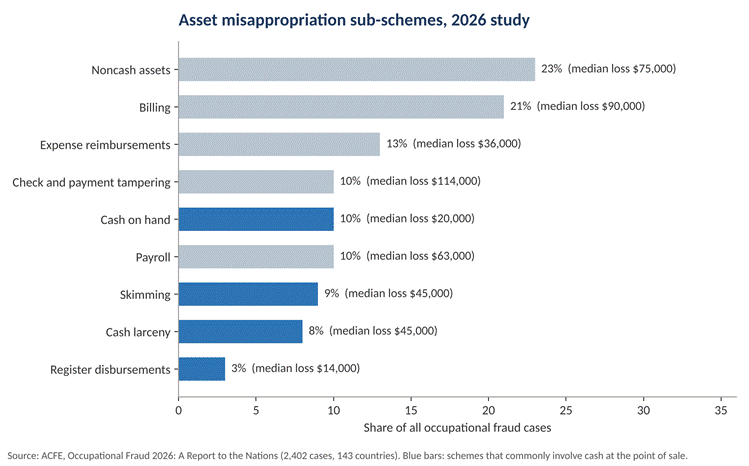
Figure 1. Frequency and median loss of each asset misappropriation sub-scheme in the 2026 study.
Losses from cases involving retail businesses rank low in comparison to other sectors. However, the 2026 report documented a median loss of $59,000 from 110 retail cases. Skimming was reported in 20% of the cases, nearly triple its occurrence in other cases that year. The study also found that retail businesses with less than 100 employees experienced a median loss of $126,000, the highest of all the groups studied.
Retail theft has other important characteristics. The NRF’s 2023 survey estimated shrink for retail businesses at 1.6% of sales, approximately $112.1 billion. Businesses surveyed attributed 28.8% of this loss to employee theft.
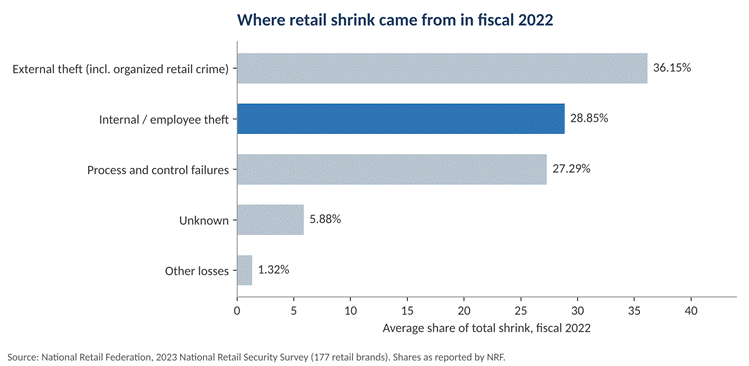
Figure 2. Average share of retail shrink by source, fiscal 2022.
Staff cases are larger than shoplifting cases. The National Retail Federation’s (NRF) 2022 research stated that its members reported an average of $2,180 per investigated case of employee theft. Its members reported an average of $1,063 per case of shoplifting. In 2023, Jack L. Hayes International (now closed) stated in its 35th Annual Retail Theft Survey that its 26 participating retail members reported an average of $1,136.93 per case of employee dishonesty and an average of $802.01 per case of shoplifting.
Therefore, the cases of retail theft involving employees were, on average, larger than retail theft cases involving shoplifting.
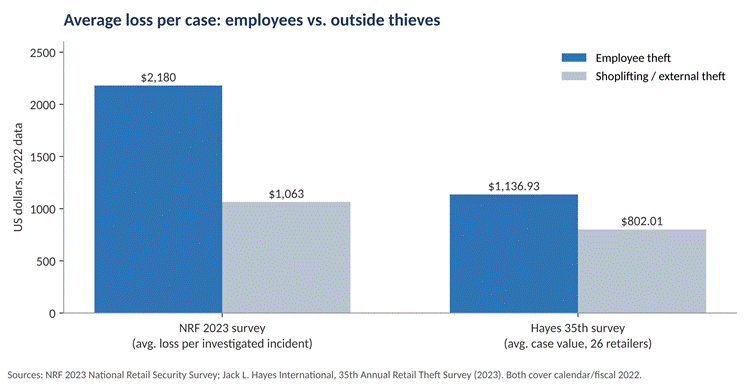
Figure 3. Average loss per case from employees and from outside thieves in two 2022 retail surveys.
The NRF 2023 survey reported cash theft, refund fraud, merchandise theft and passing to third parties as the most common forms of internal theft. Cash and merchandise theft occur at the register and take numerous forms.
Cash Skimming
Cash skimming occurs when an employee fails to take and record a cash sale. In the eyes of management, no cash is missing because the sale was never recorded. Skimming does not cause the register to come up short, which is why it occurs more often than larceny and is harder to detect.
Cash Larceny
Cash larceny is the removal of cash from a cash drawer or register by an employee after the sale is recorded. Cash larceny is easier to detect than skimming because the drawer comes up short unless the employee alters the register records to cover it.
False Refunds
False refunds occur when an employee issues a cash refund for a sale that never occurred. Issuing a refund requires the employee to enter a transaction that reflects the sale of a good or service that never occurred. To commit this fraud, the employee must determine how much cash to refund the customer. Employees then pocket the refunded cash.
False Voids and Sweethearting
False Voids occur when a customer is rung up and pays for a transaction; however, the employee voids the sale later. The cash from the voided transaction is kept by the employee. The ACFE cites this as an example of a register disbursement.
Sweethearting describes when an employee gives a family member or friend a discount or free item at the cash register. The employee may not touch the cash and the loss is later discovered when an item is found to be out of stock.
Abuse of Staff Discounts and Managerial Overrides
Staff discounts and management overrides of prices are considered legitimate business practices; however, they become fraudulent when a staff member gives a friend or family member a staff discount or alters the price of an item to be rung up at a discounted price. Overrides are generally logged under the employee’s ID, and staff should not share their IDs in order for management to be able to identify the perpetrator of the override.
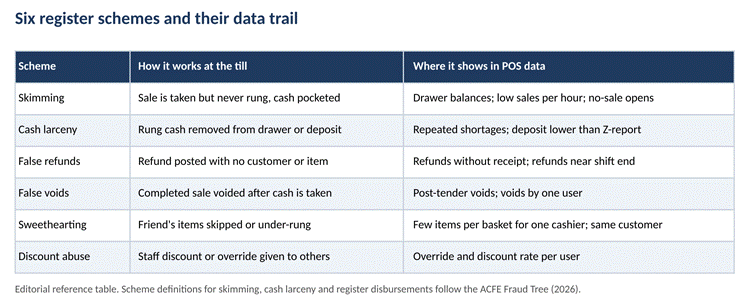
Figure 4. Reference table of register schemes and the POS data that tends to reveal them.
There are behavioral signs that are evident prior to committing fraud. The ACFE reported that 84% of fraud perpetrators displayed behavioral warning signs like financial problems or an extravagant lifestyle. There are behavioral signs within the data as well.
Refunds can indicate fraud. Examples include a cashier repeatedly keying in refunds, refunds made shortly after the cash drawer opens or cash out, or refunds made just prior to the cash drawer being closed. Voids can also indicate cashier fraud. A cash out should only be performed if the cash drawer is in an over or short condition. A cash out performed after all sales have been rung up should also be investigated. Other indicators can include a high void-to-transaction ratio or a high discount-to-sales ratio. Cashiers who consistently have high ratios of cash out or void transactions to total transactions may be stealing.
The ACFE reported schemes that lasted less than a year had a median loss of $40,000. Schemes that lasted between 5 to 10 years had a median loss of $1.1 million.
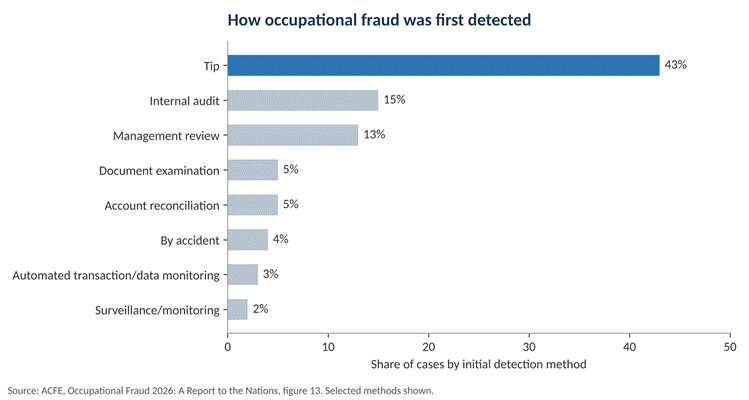
Figure 5. Initial detection methods for occupational fraud cases in the 2026 study.
Tips led to the discovery of 43% of cases reported in 2026. Employees offered the most tips, according to the ACFE. In 3% of cases, the first method of detection was through the monitoring of business data and processes using technology.
The ACFE studied the impacts of various controls and found that the median loss for organizations using proactive data monitoring controls was $70,000, while the median loss for organizations lacking these controls was $150,000. Median losses for organizations using management review controls were $75,000 compared to $150,000 for organizations lacking management review controls. Lack of internal controls was the most prevalent control weakness, comprising 33% of the 2026 control deficiency cases.
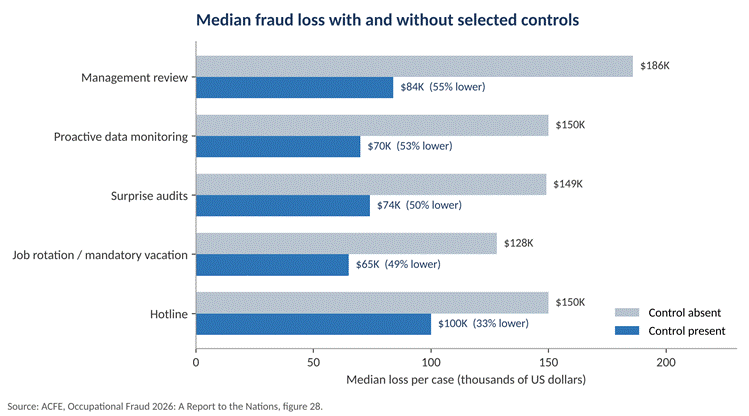
Figure 6. Median loss per case at organizations with and without selected anti-fraud controls.
User Permissions
Staff members should have individual POS accounts. General access codes remove accountability. Limit cashier-level privileges to functions they require to perform their tasks. A manager should review the required action to approve it. The audit logs and reviews recommended by the ACFE should help detect and prevent theft.
Drawer Reconciliation
Each cash drawer should be assigned to a single cashier for the duration of the cashier’s shift. The cash drawer should be counted at the beginning and end of the shift. An unusual discrepancy should be documented. Surprise audits, employee job rotations and scheduled employee absences were credited by the ACFE for a reduced median loss of theft from business. Employees on scheduled absences cannot work a cash drawer.
Surveillance
Video cameras should be placed to capture cash transactions and receipt issuance. The time a transaction is electronically logged should be synchronized with video capture of the cash transaction. Management should have the ability to review recorded transactions. Surveillance was the initial means of detecting and assisting in the investigation of theft in less than 2% of cases reported in the 2026 ACFE survey.
According to the NRF 2023 survey, refund fraud is one of the top methods of internal theft and cashier fraud. The implementation of a standardized, written refund policy would help create consistency among employees regarding refund procedures and give management a standard against which to audit. When a refund is requested without a receipt, look up the sale. Send all returns without the original sale receipts to store credit or the manager.
Refunds should be made only to the payment method used in the original sale. Take the name and a contact phone number of the refund recipient, and contact the customer to confirm the refund was issued if the refund was made at the request of management.
Voids should also be limited. Allow cashiers to remove individual line items from a sale before processing payment. A management void code should be used for any post-payment item removals. Retain each voided receipt with end-of-day receipts. Also review post-payment voids and no-receipt refunds.
An employee policy outlines types of theft, how management responds, and issues related to employee theft. Policy language related to theft should be straightforward. Other terms that describe theft may include sweethearting, misuse of employee discounts, and failure to pay for merchandise. Make it clear that management will investigate potential theft by reviewing point-of-sale activity and/or video.
To help prevent employee theft, provide management with a system that permits employees to raise concerns regarding potential employee theft and/or other issues. The ACFE reported that the median loss for organizations with a hotline was $100,000 compared to $150,000 for organizations without a hotline.
Related staff and management training should be integrated with the theft policy. Loss figures from the 2026 study suggested that organizations lost a median of $84,000 when both employee and management training occurred, compared to a loss of $150,000 when neither training occurred.
Legal limits may affect certain aspects of the policy. The US Department of Labor cited situations where management requires employees to repay a shortage from their cash drawer as an example of an illegal wage garnishment. If management retains an employment screening company to conduct background checks, the FTC provided that prior to requesting the background check, management must provide a standalone explanation to the applicant and obtain the applicant’s written consent.
State laws also may affect policies pertaining to employment. It is advisable to have legal counsel review policies related to employment prior to distribution to employees.
Employee Theft Insurance
Insurance for employee theft is usually included in a commercial crime policy. According to Marsh in May 2026, crime policies are often called fidelity policies. Small businesses may be able to purchase an employee dishonesty endorsement to a businessowners policy (BOP) or purchase a crime policy and endorse it to a BOP. The Independent Insurance Agents & Brokers of America cautions that a BOP endorsement and a crime policy form may provide different coverage and may split a recovery. It is important to compare the language and check the limits.
According to Marsh, a crime policy only covers losses from the acts of crime that it specifically names. A series of crimes committed by the same employee is considered a single loss. A crime policy may cover a loss that was discovered during the policy period, even if it occurred prior to the policy, and Marsh states that this is a desirable feature of the policy. Two important exclusions are losses caused by an employee after the insured has discovered that employee’s dishonesty, and losses whose only proof is an inventory computation.
When You Locate It
Be suspicious of your gut feelings and lean on the data. POS logs, video, and drawer counts are just a few of the sources of information you should review prior to building your case. Be surgical in denying the suspect access to the system. You should consult with an employment attorney before conducting any interviews and have your HR representative and/or another manager present during the meeting. Do not discuss your suspicion with employees.
Notify your carrier.
The longer you wait to notify your carrier the more difficult it can be to make a claim. They will require you to demonstrate a loss and evidence supporting your claim. Forensic accountants can help create this evidence. It is not uncommon for carrier policies to cover the costs associated with a forensic accountant. Consult with your attorney before filing a police report. The 2026 ACFE study found 54% of cases involved the recommendation to file a police report.
Study of Point of Sale employee theft indicates a limited range of behaviors. Skimming, cash larceny, fraudulent refunds and voids, sweethearting, and excessively large discounts are a few. Larceny and fraud can be recorded in drawers and POS logs, and may be identifiable using physical and/or logical controls. The 2026 ACFE report suggests surprise audits and reviews of POS activity logs may cut median losses by about half compared with organizations without them.
Policies and procedures to address employee theft may include managers using their own codes to authorize refunds and voids, and exception reports. Controls to address employee theft may be supplemented with a crime policy subject to the policy’s discovery and notice periods.
According to the ACFE report, 23% of cases involved theft of inventory and other non-cash assets. Additionally, the NRF report lists stealing inventory as one of the most prevalent fraud schemes in retail, along with cash and other fraud schemes.
Monitor and compare cash refunds, no-sale drawer openings and discounts by cashier. With video evidence, investigate sales that exceed the store’s average. The ACFE states tips lead to the discovery of theft in 43% of cases.
The policy should outline what constitutes theft according to your business, include specific examples to illustrate what is being monitored, and describe potential consequences. To ensure the policy adheres to the law, consult an attorney.
Yes. Employee dishonesty is covered through a business insurance policy or a business owner’s policy (BOP) endorsement. Report theft to your insurer as quickly as possible, since Marsh notes that policies often require notice within 30 to 60 days of discovery.
Reduce Your Fees, Upgrade Your Service.
Your information will not be distributed
We received your request. A payments specialist will reach out shortly.
