

Posted: November 27, 2026
Bidding is risky for contracting businesses. Set prices that are too low, and that’s money lost. Prices set too high result in lost business. With increasing costs of inputs, this makes coming up with an appropriate bid even more difficult. The Associated General Contractors of America (AGC) reported on November 13, 2026, that from October 2025 to October 2026 producer prices of inputs to new nonresidential construction increased by 13.3%. According to the AGC’s report, this was the largest increase in the last 4 years.
This guide will explain how to bid a job and prepare bid estimates in 5 steps, including consideration of scope, materials, labor, overhead, profit, and contingency. Lastly, written bid preparation will also be included. Where applicable, the source of each chart is noted.
Based on the increased costs of inputs, contractors are essentially taking a gamble on each project as to whether they will break even or make a profit.

Price requests should be assessed on a case-by-case basis. A bid can take hours to prepare. If the job is awarded to a different contractor, that time was wasted. To decide whether to bid, gather as many details as possible about the job.
First, consider if the job is within the scope of your license, your crew’s ability, and the equipment you have available. Taking on work outside your core business increases the risk of losing profit and control over the quality of the work.
Next, consider the logistics of your current work schedule. Would taking on this new job and project stretch your crew too thin? Alternatively, would completing this new project cause too long a delay on the existing work? It also helps to find out how many other contractors they’ve requested bids from.
Last, consider if the client is even able to pay you. Can they secure funding? Have they set a hard deadline for the work?
Also consider cash flow. Would taking on this job tie up your capital for an extended period of time? Some states limit how much a contractor may collect up front. Check these laws before accepting a deposit to determine if the job is economically feasible.
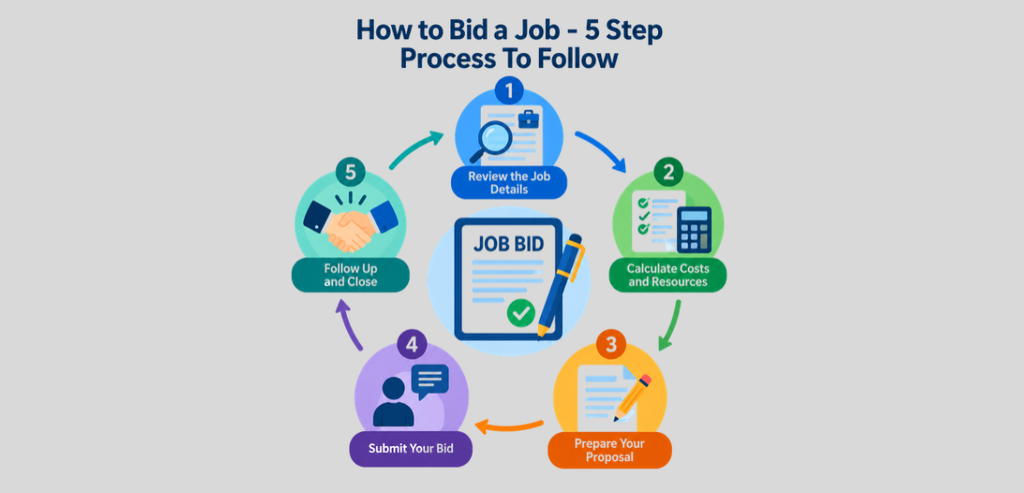
The ‘scope’ defines the client’s request and determines the price in the bid. An indistinct scope results in an ambiguous price and potential client dissatisfaction.
Inspect the site to take measurements. Don’t rely on client-provided measurements or plans to determine dimensions. When assessing a site, take pictures of any conditions that may negatively impact the cost or duration of the project. Also consider truck access, power, and water at the site.
While on site, be sure to ask the client pertinent questions to better define the cost of the project. Who is responsible for removing debris? What are the hours of operation for the site? Is there off-site storage of materials?
Upon returning to the office, write a detailed scope outlining the different steps and stages of the project. These include, among others, demolition, framing, and finishing. Provide an approximate measurement of each to create a takeoff. This aids the client in comparing bids.
Use this takeoff as the foundation of your supplier quote requests to increase accuracy of the bid.
Direct costs consist of money spent on materials, labor, equipment, and subcontractors. They usually comprise the largest portion of a bid. According to the NAHB’s report, “Cost of Constructing a Home” released in January 2025, construction costs comprised on average, 64.4% of the price of a new single-family home in 2024.
Do not use previous year’s supplier invoices to determine cost of materials. Prices fluctuate significantly. According to the November 2026 report by the AGC using BLS data, during the period October 2025 to October 2026, the prices of steel mill products increased on average by 32.9%. Copper and brass mill products increased on average by 23.9%. Aluminum mill products increased on average by 23.3%. The price of diesel fuel increased by 115.2% and truck freight transport increased by 24.6%.
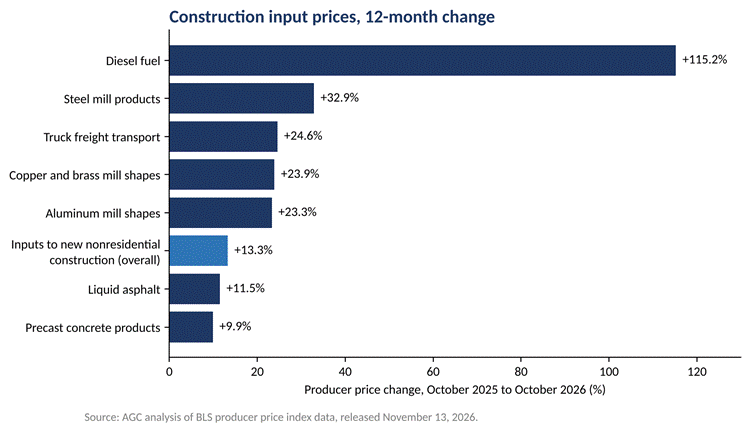
Figure 1. Year-over-year producer price changes for selected construction inputs.
Add a waste factor to each material line to account for offcuts, breakage, and mistakes. Find out how long each supplier will hold a quote. You will take the price risk if the quote expires before you submit your bid.
Estimating labor cost is more subjective. Some assumptions must be made. A good starting point would be to determine the labor hours for each task based on personal experience. When determining the cost for each labor hour, you must consider not just the employee’s wage, but also the cost of benefits, equipment, and other costs associated with doing business. According to the June 2026 report by the Bureau of Labor Statistics, construction employees on average earned $51.96 an hour with $36.13 of that being wage income and $15.84 being benefit costs. Legally mandated benefits on average increased cost by $4.42 per hour.
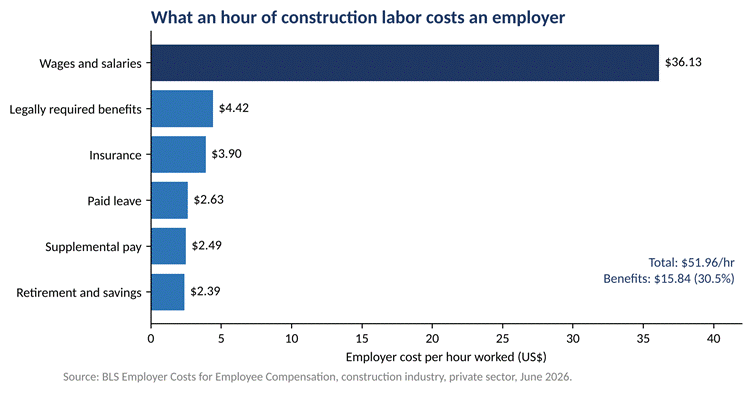
Figure 2. Employer cost per hour worked in the construction industry, by component.
Benefits added about 44 cents to every dollar of wages in the BLS data. Bids that don’t account for benefits understate the cost of labor.
Next, check each subcontractor’s quote to ensure it covers the same work scope as your bid. Any difference in their scope and your bid scope will be added to your cost.

Overhead costs are expenses incurred in running a business that are not attributed to a specific job. Examples include rent of the office space, insurance, phones, software, accounting services, and your time spent working in the business. These costs are incurred regardless of whether a particular job is awarded to the business.
To recover these costs, estimate the total annual amount and apportion it to each job. One way to do this is to express the amount as a percentage of anticipated annual direct costs. For example, at a 15% rate, add 15% on top of the direct cost of the job and add this to the bid price. This rate should be reevaluated each year.
Overhead costs should not be confused with profit. Profit is typically very low among home builders. The NAHB 2024 survey showed the average profit of a home builder to be 11.0% of the sale price of the home, up from 10.1% the previous year. General expenses and overhead of home builders also increased to 5.7% of the sale price of the home from the previous year’s 5.1%.
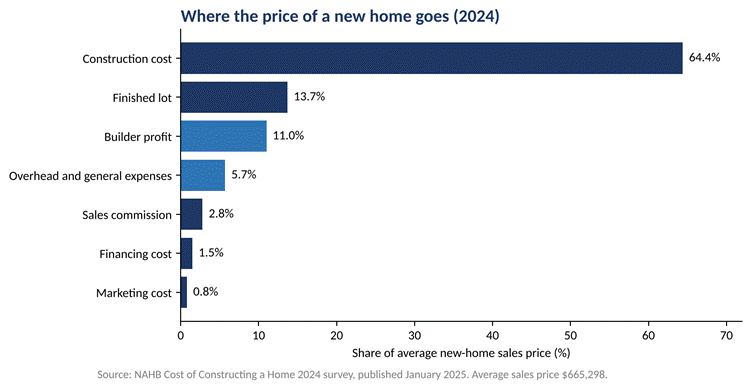
Figure 3. Average breakdown of a new-home sales price, NAHB 2024 survey.
These averages are specific to builders of new structures. Others in the industry, such as remodelers and specialty trade contractors, on average earn less. Use the figures reported by the NAHB more for comparison’s sake.
A common misunderstanding in pricing relates to markup and margin. Markup is added to cost to arrive at the selling price. Margin is the selling price minus the cost, expressed as a percentage of the selling price. Adding 20% to cost results in a 16.7% margin. A 25% markup on cost is needed to arrive at a 20% margin.
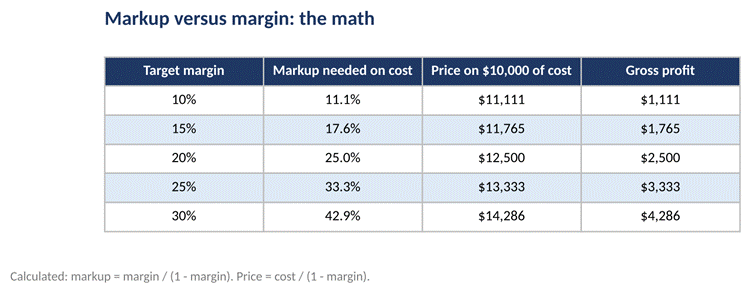
Figure 4. Markup required on cost to reach a target margin.
Decide which number you are aiming for before you set your price. Use the same method to determine price for each job. That way you’ll be able to compare results to see what’s working best.
Unknown costs are embedded in every contract. Delays can be caused by several factors from legal barriers obstructing the work to inclement weather. Some contractors build a contingency into their bid to cover these costs.
The size of the contingency should be based on the level of risk associated with each individual job. Generally speaking, remodeling work is riskier than new construction. To gain a better understanding of the level of risk associated with a given trade, look to previous projects and determine how much the actual expense exceeded each cost estimate.
Recent increases in the cost of materials have also increased the cost to perform the work. According to AGC, costs for materials used in construction increased 13.3% in the last year. Some contractors include an escalation clause in the contract to protect against increasing material costs. This clause increases the contract price in line with increases in the cost of the materials to be used in the project.
Exclusions explicitly state what is not included in the price. Examples of exclusions include permitting costs, engineering, removal of hazardous materials, and repair of damaged landscape, to name a few. If you can’t touch it, see it, or measure it, it should probably be listed as an exclusion.
An allowance is a predetermined dollar amount included in the bid for items to be selected later by the client. Once the client has made his selection and it is determined that the item is of greater value than the allowance, a change order and additional charge are issued.
From the client’s standpoint, clear exclusions in a bid give them greater certainty of costs. From your standpoint as the contractor, clear exclusions give you justification to request a change order should unexpected costs be incurred.
As with any bid, the goal is to outline as many elements of the work to be performed so that unexpected costs do not arise.
Your bid should be easy to read and easy to interpret. Once written, you’ve effectively made an offer that the client can accept.
Start each bid with your business name and address, license number, and contact information. Next, include the client’s name and the job address. Lastly, include the scope of work broken out into the same phases used in your cost estimate. You may choose to include the cost for each phase or just one total cost. Many contractors will give the total cost for each phase, but keep their markup figure secret.
Follow the exclusions and allowances with the estimated duration of the project and the deposit. List the amount of each payment to be made and the work activity for which the payment is associated. Describe how the cost of change orders will be determined and who will be authorized to accept them. Lastly, include a list of the payment methods that you will accept.
State how long the bid will be valid. The price of materials changes and so does your crew’s schedule. Long-term, unfixed costs will eventually cut into your profit. Sealed bids to federal agencies typically remain open for 60 days unless the solicitation states otherwise. For most private jobs, write a bid expiration date comparable to the length of time for which your supplier quotes remain valid.
There are often written-contract requirements for residential customers. In California, as per the Contractors State License Board, home improvement contracts over $500, both in labor and material cost, must be in writing.
Prior to sending a bid to a potential customer, check with your state’s contractor board to see if there are any similar requirements.
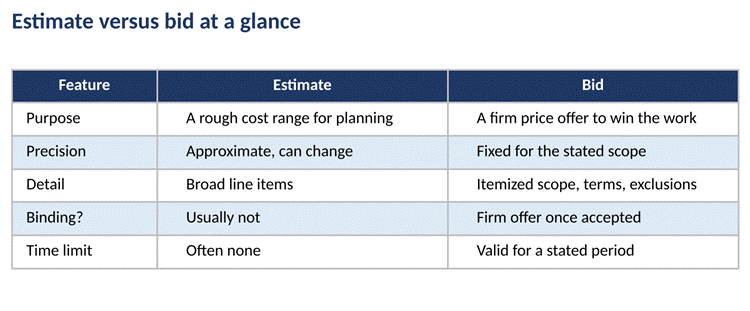
Figure 5. How an estimate and a bid differ.
Estimates and bids differ from each other. Estimates are preliminary costs provided to clients for preliminary planning purposes. Bids are firm offers to provide a particular service within specified limits. Make it easy for clients to identify which of the two documents they are currently looking at.
Send your bid as quickly as you can after your site visit. Follow up with a short phone call or email a few days later to address any concerns the client may have and to clarify any misunderstandings they may have about the scope of work.
When reduced prices are requested by the client, keep your margin and reduce the scope of the work. Use different materials or omit a step in the process. Clients will begin to question the logic behind every bid they receive if you simply drop your price.
If you don’t win the job, ask the client the reason so that you can gain insight into the accuracy of your estimate. Over time, you’ll learn what prices clients are willing to pay.
Once a client has awarded you the job, collect a deposit before purchasing the materials to be used in the project. How large of a deposit you’re permitted to collect varies depending on location and the nature of the work. According to the CSLB, in California contractors may not collect more than $1,000 or 10% of the total contract price, whichever is less, as a deposit prior to work commencing. After this deposit has been paid, you may not collect payment for work or materials before they are delivered.
Other rules may apply as well. Under the FTC Cooling-Off Rule, buyers have until the end of the third business day to change their mind and cancel a purchase if the sale was made in their home and the sale price was at least $25. In that case, the seller has 10 days to refund the money.
The FTC states that this rule would not apply to fees charged to meet an urgent or emergency need. Since rules and laws vary by state and by profession, it would be prudent to have both a lawyer and your state contracting board review the contract to verify its legality.
Accepting the deposit by check, card or electronic transfer lets the client pay on the same day the contract is signed. Provide the buyer with a receipt showing the payment and the contract number to verify payment. In the event of a dispute about the contract or services provided, you will be glad you have a paper trail supporting your position.
A clear scope and a clear contract description are important elements of a good bid. Work that a bidder cannot see or measure should be excluded. Material costs should be based on quotes provided by suppliers. Labor should be priced at its fully loaded cost; the BLS reported a construction industry average of $51.96 per hour for June 2026. Overhead should also be recovered through a predetermined rate. Profit should be included in the bid based on the margin the bidder desires, not based on what remains after all costs have been paid.
Some uncertainty will always remain prior to award of the contract. To protect against inflation in construction costs, which according to the AGC was 13.3% in the previous year, bid prices should be valid for a specific period of time, and quotes from suppliers should be recent.
Go to the job site and write a scope of work. Obtain material prices from suppliers for an accurate estimate. Add costs for labor, overhead, and profit. Add a contingency for unforeseen situations and provide the bid to the client.
On average, home builders include profit in a bid of 11.0% of the selling price, as reported by the NAHB 2024 report.
An estimate is an approximate guess of the cost to complete a task. A bid is the price a contractor will charge to complete the work described in the bid.
The length of time a bid remains valid is dependent on the length of time the prices of the materials quoted remain valid. Generally, for federal sealed bids, bids remain open for 60 days in the absence of other stipulations.
Reduce Your Fees, Upgrade Your Service.
Your information will not be distributed
We received your request. A payments specialist will reach out shortly.