
Posted: November 26, 2026
Plumbing services are in high, year-round demand. But the cost to acquire each new customer has increased. Homeowners have started comparing plumbers on their mobile devices. Once a potential customer has identified a few plumbers they think have the most positive reviews, they’ll contact the one of the four they’ve identified that has the courtesy to call them back first. According to BrightLocal’s Consumer Search Behavior study of 2026, 75% of consumers make a decision on which company to use within 30 minutes, with 28% of consumers making their decision in less than 5 minutes.
To win that business, you’re going to need quality leads and the speed to contact potential customers first. In this report, you’ll learn where the best sources of quality plumbing leads can be found. Once you’ve secured a new customer, it’s important to implement strategies to retain that customer to ensure repeat business and increases in revenue.
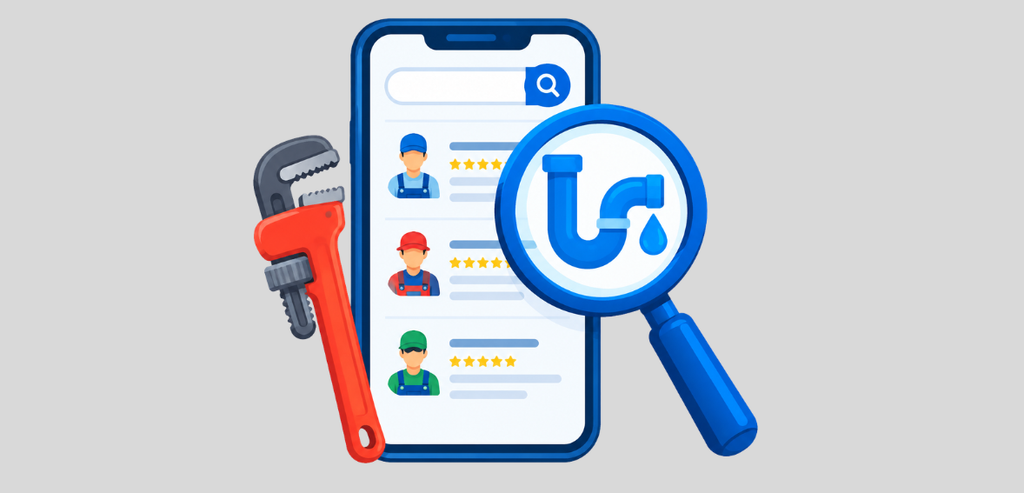
Most consumers begin their plumbing searches on their mobile device. According to BrightLocal’s 2026 study, 73% of customers use their mobile device to conduct a search to locate a business. Of those customers, 72% look into three or fewer businesses and choose one of them.
Google provides very little information about their local search results, but in their Business Profile page they name relevance, distance and prominence as the three key elements. Relevance is how relevant your business is to a customer’s search query. Distance is how far your business is from the customer. Prominence is determined by customer reviews of your business.
Customers are also using a wider variety of methods to conduct local searches. In BrightLocal’s 2026 study of local customer behavior, 45% of customers use ChatGPT to find local business recommendations, compared to only 6% the previous year. During the same time period, use of Google reviews decreased from 83% to 71%, and use of Apple Maps increased from 14% to 27%.
To improve your business’s presence across these apps, it would help to verify your business on each of these apps and provide them with the same, consistent information.
Emergency plumbing work is lucrative but leads to rapid burnout. The Insurance Information Institute reported that in 2023, 22.6% of losses reported on homeowners’ insurance were attributable to water damage and freezing pipes. Between 2019 and 2023, the average homeowners’ insurance claim for water damage was $15,400. After suffering such loss, homeowners are not likely to shop around for the best rate and are most likely to use the first plumber who takes their call.
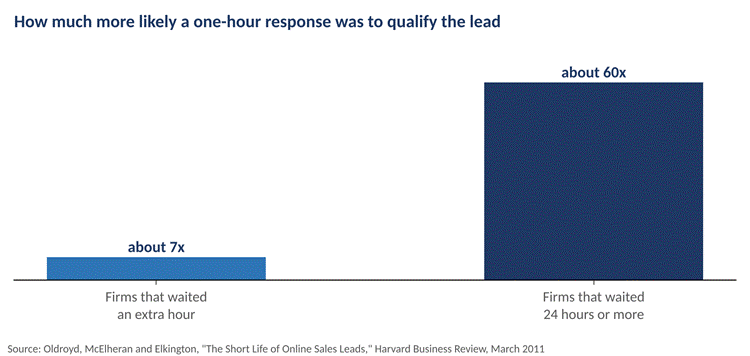
Speed is the most important factor in getting these customers. A 2011 study in the Harvard Business Review found that companies that contacted potential customers within an hour of the lead being generated were 60 times more likely to qualify the lead, compared to companies that contacted the customer an hour later.
Time was of the essence for most of these leads. For a residential plumbing crisis, like a broken pipe, companies have even less time to respond and qualify the lead.
Show after-hours service on your Google profile only if you are personally available to take the call. Otherwise, use a live answering service or on-call technician. Limit the area that you are available to take calls to the area that you provide service to. During the call, explain the estimated cost of the visit to set the expected cost of the visit.
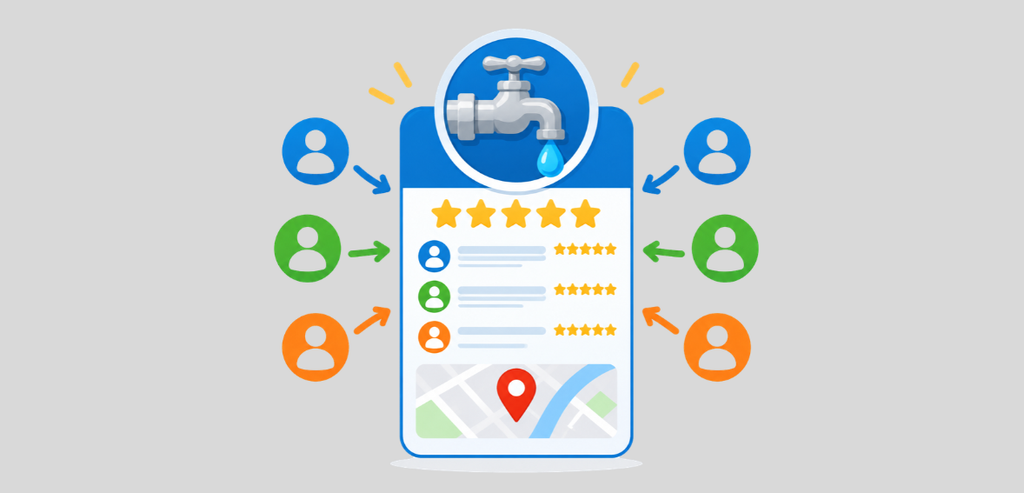
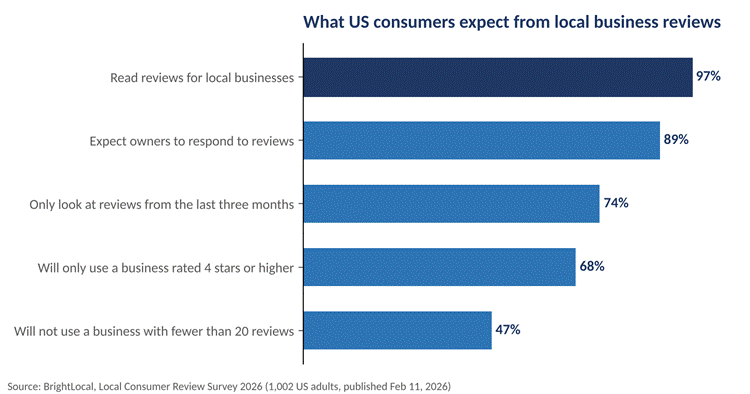
Reviews are what ultimately decide which plumbers get the job. In BrightLocal’s 2026 study, 97% of customers were found to read business reviews. About three-quarters of customers, 74%, read reviews within the past three months. Nearly half of customers, 47%, will not consider a business if it has fewer than 20 reviews. Also, 68% of customers will only use a business with a minimum of a four-star rating, up from 55% the previous year.
Freshness of reviews is just as important as the number. A plumber with 300 reviews from 4 years ago isn’t as competitive as one with 40 reviews from this year. The best way to increase your review count is to ask every customer to leave you a review. According to BrightLocal’s survey, 28% of customers will now provide a review when requested, compared to 16% from last year’s survey. Send these requests via text and include a direct link to where they can post a review.
Customers also expect business owners to respond to their reviews. 89% of customers in BrightLocal’s survey were in favor of this practice, and 50% of customers were put off by owners using standard, boilerplate responses to reviews.
To improve your local search result ranking, post on your Google Business page the services you offer, hours you’re open, the areas you serve, and pictures of members of your team and the vehicles used in your business. According to Google, these actions will increase the likelihood of customers finding your business.
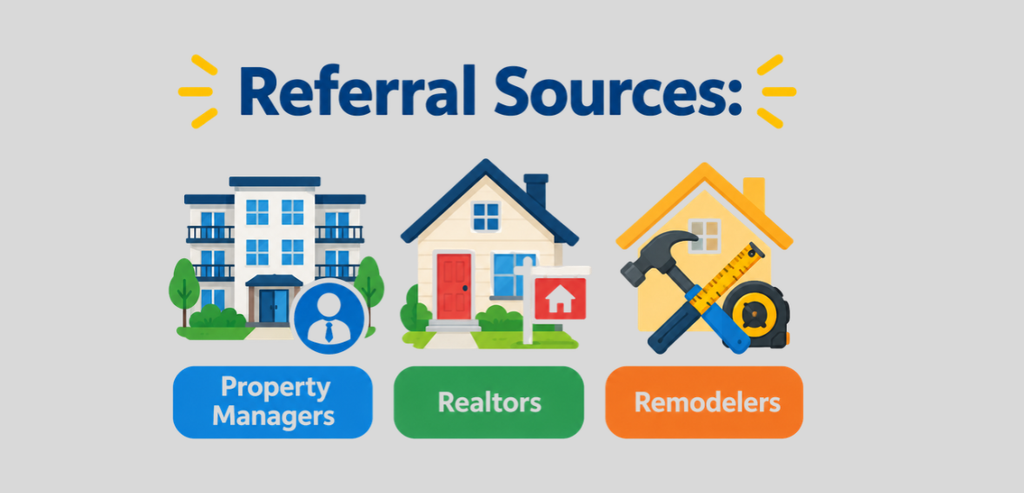
Trust generated by referrals is higher than that of any type of advertisement. In Nielsen’s 2021 Trust in Advertising study, conducted on over 40,000 participants, 88% of participants mentioned that they trust references made by friends and family the most.
Of all these referrers, the most effective for a plumber would be those whose business is most commonly affected by plumbing issues.
Property management companies have multiple rental units under their charge. For them, the timeliness of the plumbing service provider is of utmost importance. To ensure that you are listed on their preferred vendors’ list, it would be beneficial to have a set rate card with a priority phone number.
Real estate agents, too, require urgent plumbing service. One such example would be on a property that has a leaking water heater or a sewer line.
General contractors and remodelers also require time-sensitive service of plumbers to install various fixtures and to assist them in obtaining building permits.
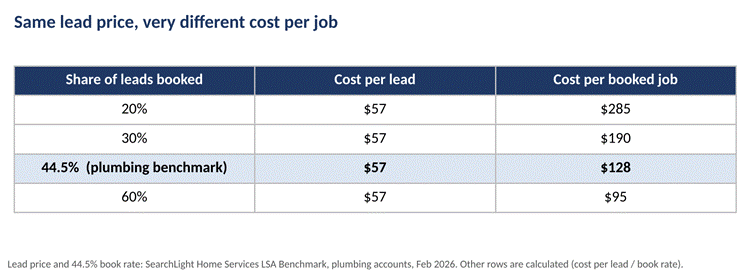
Paid leads can fill a slow week fast. The trap is judging them by the price of a lead instead of the price of a booked job.
Google’s Local Services Ads charges customers based on each lead generated, as opposed to each click. According to Google’s help center, the cost is also influenced by the type of service requested and the likelihood that the customer will make a booking. Google has previously stated that call response time is also taken into account when ranking ads. Calls are considered ‘missed’ after 20 seconds, at which point it is considered a bookable lead. Recently, Google’s help center has stated that Local Services Ads will be integrated into Google’s Performance Max campaigns.
Google has not disclosed what it considers an average lead to cost. In February 2022, SearchLight Digital conducted a study including 888 customers in the home services industry who spent a total of $6.72 million. According to the study, the average cost per lead for plumbing services was $57, making the average cost to acquire a booked plumbing job approximately $128. Plumbing services with account participation in the study reported an average job size of $1,714.
HomeAdvisor is an Angi company that sells leads to home service providers. In January 2023, the FTC ordered HomeAdvisor to pay 7.2 million dollars to settle charges related to deceptive lead generation practices. According to the FTC, HomeAdvisor also charged members a 287.99 dollar annual fee, in addition to the cost of each lead. HomeAdvisor admitted to the order, but denied wrongdoing.
Regardless of the lead generation service you use, track each separate source independently. On a monthly basis, record the number of leads, the number of jobs booked from those leads, the money earned, and requests for refunds. Cut any lead source that does not result in an economically reasonable number of jobs being booked.
The best lead is a previous customer. Upon completion of a job, you get a name, address, and a description of the house. Take note of what kind and what age of water heater is in the house. According to the US Dept. of Energy, most storage tank water heaters don’t last more than 10 to 15 years. With these statistics, customers most likely should be replacing their water heaters around the 10-year mark.
Use this to your advantage. Send out reminders to customers to flush or check the drain on their water heater each year. Offer to add these customers to an inspection list to ensure they get priority.
Limit your follow-up contacts to no more than 3 a year. The first should be a thank-you message, the second should request a review of your business, and the last should be sent to remind customers of something of value to them, like how to protect their pipes from freezing.
Water leaks in the average home, according to the EPA’s WaterSense program, can waste up to 10,000 gallons of water a year. Customers should have you check their home for leaks since this could also potentially save them money on their water bill.
Lead time is just part of the margin equation. The larger portion is lost on slow-paying customers. To improve margins and close out the job, the truck should leave with payment.
According to the 2026 Diary of Consumer Payment Choice conducted by the Federal Reserve, cash is still used for approximately 14% of all payments. Therefore, mobile wallets or bank transfers, implemented along with acceptance of credit cards by the plumber, would remove the customers’ biggest incentive to put off making a payment.
State laws vary on deposit regulations. In California, the Contractors State License Board limits home improvement project deposits to $1,000 or less. Other payments cannot be accepted until work covered by the payment has been completed. Prior to undertaking a large volume job like a repipe it would be prudent to consult with a lawyer to determine the most appropriate deposit amount.
For small service calls, it’s better to implement a ‘recipe’ fee, explained over the phone, than to take a deposit. Customers have greater incentive to put off making a payment to which they may feel entitled. With the invoice generated on the spot and emailed to the customer, they can process a payment prior to your departure.
Leads for plumbing work come from search engine results, reviews, referrals, and paid services. Search engine optimization and reviews take time and money to set up but are low cost to maintain. Potential clients are more likely to use a plumbing service that has good search engine results and reviews. Referral partners send a consistent level of business once they have confidence in your work. Paid services should be used to fill in the gaps when you don’t have enough work to do otherwise. To be profitable, services should be measured by the cost to gain each new client.
Complete your Google Business Profile, solicit reviews from customers and develop relationships with realtors, property managers, and remodelers. Use paid lead generation only once you have determined your cost per booked job.
The cost varies with the market and source. According to SearchLight Digital’s February 2026 report, the average cost of a lead using Google’s Local Service Ads is $57, with the average cost to book the job being $128.
Not necessarily. Prospective customers will look for a plumber’s website after reading a positive review about the business. According to BrightLocal’s 2026 study, 54% of customers say they will look for a company’s website following a positive review.
To increase the chance of qualifying the lead, plumbers should contact the person as quickly as possible. According to a study published in the 2011 Harvard Business Review, plumbing firms taking this approach were more than seven times more likely to qualify the lead compared to firms that took longer to follow up.
Reduce Your Fees, Upgrade Your Service.
Your information will not be distributed
We received your request. A payments specialist will reach out shortly.