
Posted: October 20, 2026 | Updated: October 21, 2026 at 9:51 AM
If your payment processor is acquiring a new business or is part of a business acquisition, you may be concerned about how the acquisition will affect your business. Will you have to pay more to process payments? Do you need to change your payment terminal? Will your contract change, or can you keep using your current system?
These concerns are entirely valid, as payment processing is a crucial aspect of any business. It manages customer payments, deposits, tracking, and refunds. Even a small change in your payment processing can have significant impacts on your business if you are not prepared.
The recent Exectras merger announcement raises these questions. On September 14, 2026, Exectras announced a new payments venture that will combine selected assets, technology, infrastructure, and experience from Exectras and Simpay. Exectras Payments is set to launch on October 1, 2026.
The announcement is part of a bigger trend of merchant services consolidation, in which payment companies combine their businesses and resources to diversify their services and gain new customers.
For merchants, the key issue is not which companies are merging; it is whether the changes will impact your payment processing, fees, contracts, or overall operations.
Here is what the Exectras merger announcement means and what may change after a merger of a payment processor, plus what to look out for.

Exectras announced the formation of a new venture that combines select capabilities from Exectras and Simpay. The intention is to offer payment processing, technology and merchant services under one roof.
Each company is bringing different expertise to the new venture, according to a spokesperson. Simpay offers payment processing infrastructure, operations and direct sales experience. It will bring its ISO channel, agent platform and experience supporting independent sales agents. Exectras brings its business services and membership offerings.
The new venture will target serving merchants in addition to ISOs, agents, software providers, financial institutions, associations, and other business partners. It is expected to provide payment processing, technology, and membership benefits.
The companies emphasize that this is not just a change in ownership; they intend to do more than meet the needs of one particular marketplace. They plan to use the opportunity to connect two different sets of business functions and deliver a broader range of value to merchants and distribution partners.
However, the announcement does not specify any financial or ownership details of the deal. In addition, it does not mean that all existing merchant accounts have been migrated to a new payment processing platform.

When payment companies merge, the consequences can vary from a simple rebranding to a complex restructuring of the entire payment system. It depends on the case and on how management transfers customer accounts from one system to another.
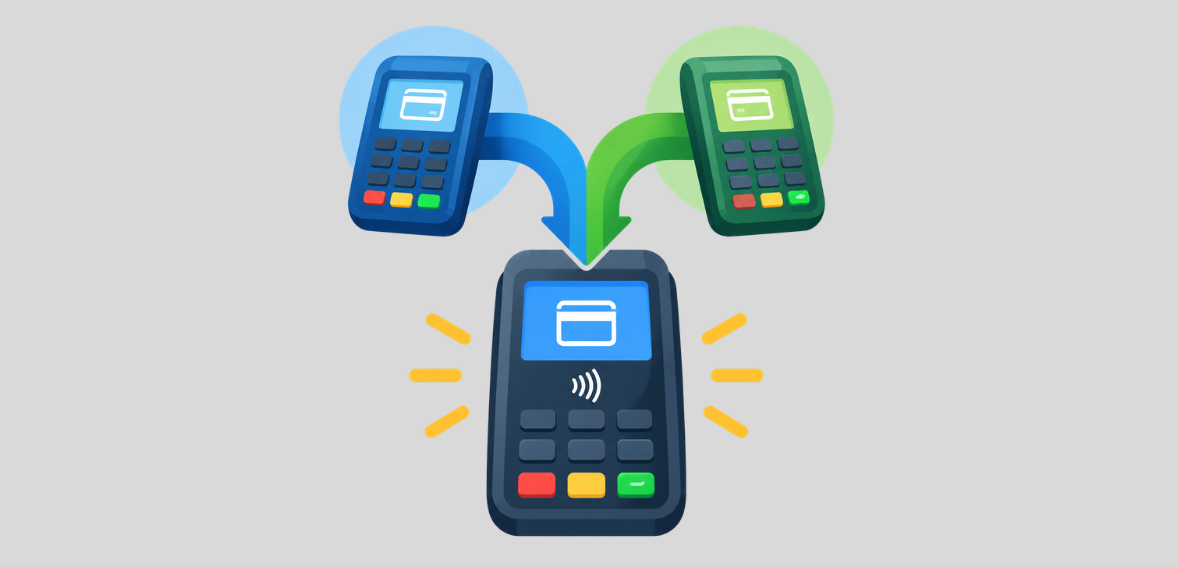
A payment processor merger may lead to changes in the technology that a company uses to accept and process payments. The acquiring company could consolidate the different payment platforms, update its reporting processes, or offer other services.
For instance, a business that uses a countertop payment processor is likely to be informed of a new technology or receive an upgrade to its current machine, whereas an online business could be notified of any gateway or integration changes.
But these shifts won’t necessarily happen automatically after a merger. You may be able to keep your existing terminal, gateway, or software integration working as it does today. If changes are needed, your provider should explain them and tell you what you need to do.
Don’t put your business or payment options at risk by agreeing to a new system until you ensure it meets your existing payment, software, and reporting requirements.
When a merchant hears about a change in their payment processor’s ownership, one of the primary concerns is typically fees.
Processing fees may contain interchange, card network fees, processor fees, gateway fees, equipment fees, and other fees detailed in your agreement. A company ownership transition does not necessarily require adjusting all costs.
New businesses can have a variety of service packages or pricing. However, any rate change is subject to the notice and consent terms of your agreement.
Review your processing statements from before and after the change. Compare your processing fees, monthly fees, transaction fees, and other fees to see whether anything has changed, and ask your representative about anything that has.
If your business needs an immediate response to a declined payment, settlement delay, refund, or equipment malfunction, make sure you have the correct contact information on file after the merger.
Do not wait for a billing discrepancy to discover that your support contact has changed. Maintain updated contact and support information for your account representative to avoid billing delays.
Your payment processing account can help you perform a variety of operations related to managing the payments you process, including receiving, reviewing, refunding, and reconciling.
If your processor changes its processing platform or account structures during the transition, it may notify you of any changes to your account’s login, reporting tools, merchant IDs, or settlements. Not all mergers and acquisitions will involve such modifications to individual accounts.
Before you make any changes, double-check that deposits are still going to the right bank account and that you can view your transaction reports. If your business uses any accounting or invoicing software, make sure you don’t need to sync a new program.

Your payment processing statement can show what changed after a business merger. If the company’s name or logo has changed, your statements should still help you understand your processing fees.
Compare your most recent statement to the previous statement before the merger announcement. Examine your total sales, processing fees, monthly costs, equipment costs, and most recent charges.
Also check for changes in charges. Your new statement may use different names for charges or may show charges in a different format. This doesn’t necessarily mean that you’re paying more. If you see charges that you don’t recognize, contact your payment provider and ask them to explain the charges to you.
Also compare your effective processing rate. Compare the total processing cost to payment volume for the same period. This isn’t a comprehensive list of all fees, but it will help you spot changes that warrant a closer look.
For instance, if sales are steady but sales processing costs are higher, ask your representative for clarification. This may be due to a price adjustment, a different mix of card transactions, extra services, or something else.
Don’t just look at the bottom line of the statement showing the amount due; review individual charges and question them before deciding whether the increase relates to the merger.
Make copies of your statements and written notices regarding the transition. These records can help you compare costs over the years and answer questions with your provider.
A merger of your payment processor does not automatically void the contract or let the provider change the terms at will; whether your contract terms change depends on your agreement, any amendments, and applicable laws.
Agreements often include clauses that specify how the contract should be treated in the event of a merger, change of control, consolidation, assignment, or changes to the services the processor provides. The documents may also include clauses on price revisions, termination notice, renewal options, and other considerations.
Review the sections concerned with termination, assignment, fees, alterations to services, and auto-renewal. Knowing what you can and cannot change helps you understand your options if the terms change.
If your provider announces a new service or processing platform, ask whether you need to update your agreement. A request to update your information should not be interpreted as an offer to amend your pricing plan.
Furthermore, if one receives an invoice or reminder about a price increase/change to your contract terms, you should always verify the information in your latest agreement. In particular, you should check when the new terms take effect and whether there was a deadline to submit consent.
You may have options if a material change affects your business, but your available rights depend on your contract and applicable laws. If the terms are unclear or the financial impact is substantial, it may be best to consult an attorney before canceling or entering into a new agreement.
First, ascertain your rights under the existing contract. A general statement from the company does not necessarily address your specific situation.
The Exectras announcement signals a trend in the payments industry. Payment processing, technology, and other business services are being bundled to give companies more solutions for merchants and partners.
A payment processor merger doesn’t always mean higher fees, a different payment terminal, or a different contract for merchants. The effect will depend on how companies change operations on current accounts and on changes to their systems, services, or agreements.
Review your payment statements and make sure you understand what you agreed to in your contract. Contact your account representative for an explanation of any changes to your account as a result of the announcement. If your provider changes how you are charged, get the new amounts and effective dates in writing before you make any decisions.
A little preparation can go a long way in ensuring continued payments to your business while you review your options.
