
Posted: September 23, 2026 | Updated: September 23, 2026 at 12:19 PM
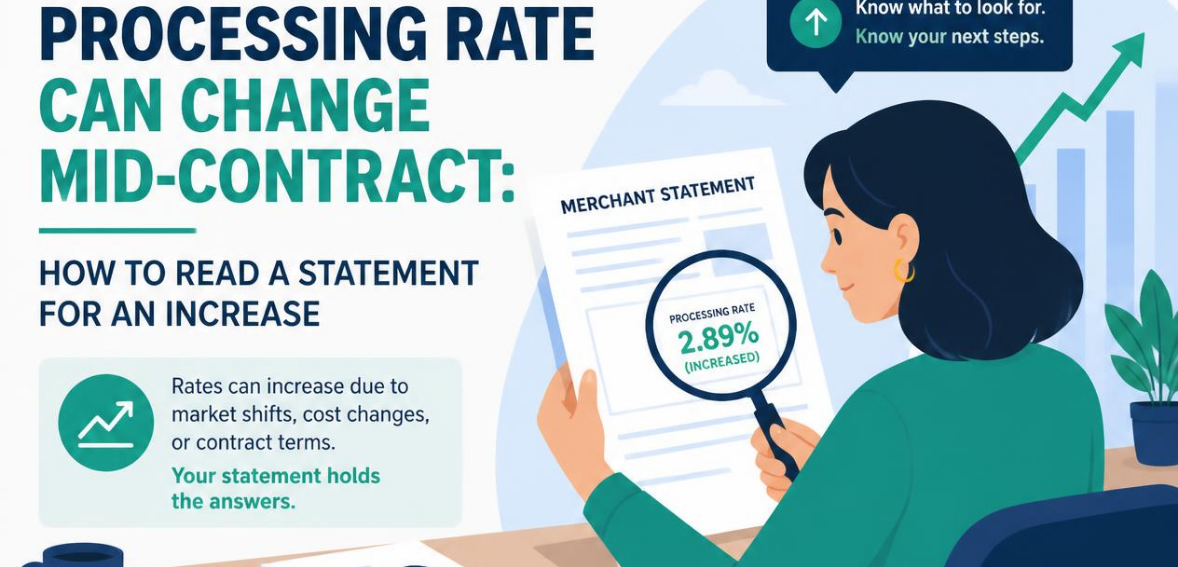
Increases to processing fees happen over the life of a contract. Merchants are given prior notice, but it’s typically hard to find in processing statements. Many merchants don’t examine their processing statements, so it’s likely merchants are unaware that processing fees increase. During August and September of 2026, numerous merchants of two large national processors became aware of increases in processing fees by receiving statements with fee increase notifications.
Merchant Cost Consulting reported that on statements issued in August 2026, increases ranged from a few basis points to as high as 225 basis points for some merchants. Increases notified for September did not state the new rate at all. Neither processor alerted merchants to the fee increases. It is likely that the average merchant will not become aware of fee increase notifications for several billing cycles. This article about mid-contract rate change helps merchants determine when processing fees have increased.
Most merchant processing agreements state that the processor may increase fees at any time, but must notify the merchant of the increase. How much notice is required differs from agreement to agreement.
An example of one of these agreements states that the processor has the right to increase its fees in one of two ways. The first way is if a card network or another third party increases its fees or if there is a change in the law. If this is the case, the processor may increase its fees to the extent required and pass the increase on to the merchant.
The second way the fees may be increased is if the processor increases its markup. In this case, the processor is required to notify the merchant of the increase and the new fee. The increase may not take effect until after the requisite notice is provided to the merchant.
Five business days’ notice is fairly standard practice. The same part of the agreement usually provides a merchant with the ability to object within a set window and, if the merchant does so, the agreement may be terminated by the merchant without charge.
There may be other provisions in an agreement which protect a merchant; however, those protections typically come at the cost of other obligations and constraints.
Some processors provide a thirty (30) day prior notice to a merchant for any change to the processor’s schedule of fees. Other processors provide that a merchant will not be provided any prior notice for changes to interchange rates. A thirty (30) day notice for interchange changes is a goodwill provision by a processor; however, interchange rates are beyond the control of the processor. The provision provides little value to a merchant.
Merchant Cost Consulting reported recently that processors are raising discount rates. In the August statements of one large processor, some merchants reported discount rate increases of 5 to 20 basis points. Others reported increases of 100 to 225 basis points. Increases of that order of magnitude are not uncommon. It is typical to see small across the board increases and larger increases on a small number of accounts.
Both small and large increases require that processors notify merchants. Notification can be done by issuing an update to the affected account.
Two processors notified their merchants of rate increases in August. One processor increased rates by 0.15% to 0.40% for its merchant accounts effective August 1. Notifications for a second increase to be effective September 1 were also sent. Those notifications, however, failed to notify merchants of the new rate. That means merchants would not know their new rate until after the increase was implemented, and had no way of knowing the amount rates increased by until the next statement arrived.
Repetitive formats and layouts abound in the design of a merchant statement. Different processors have varying amounts of sections in their statements, but many of these sections repeat across processors. Some processors publish guides explaining their statement formats. One of the repeating sections of a merchant statement is Important Messages. Important Messages typically inform a merchant of any changes affecting their merchant account or changes to how Card Association products are processed and introduced by the Card Networks.
Changes to Card Association products are referred to as Interchange Changes. Processor-initiated changes to merchant accounts may be included on the last statement page, or may be included on an attachment to the merchant statement. The attachment may also include other legal notices to the merchant, changes in terms and conditions to the merchant account and other information.
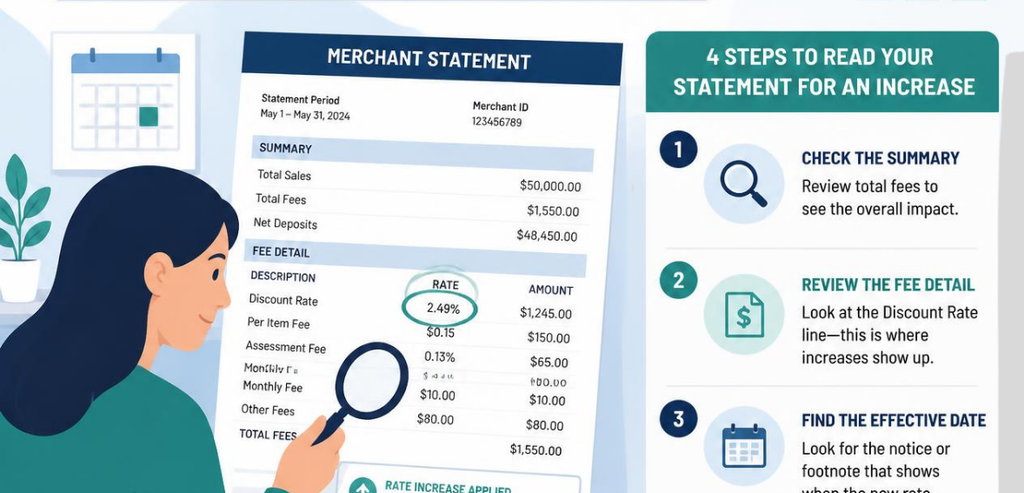
Due to different formats of merchant statements, processors may not always explicitly state discount rates charged to merchants on a statement. It may be necessary for a merchant to work out the true discount rate charged for a given card type by dividing the amount charged for that card type by the amount sold for that card type.
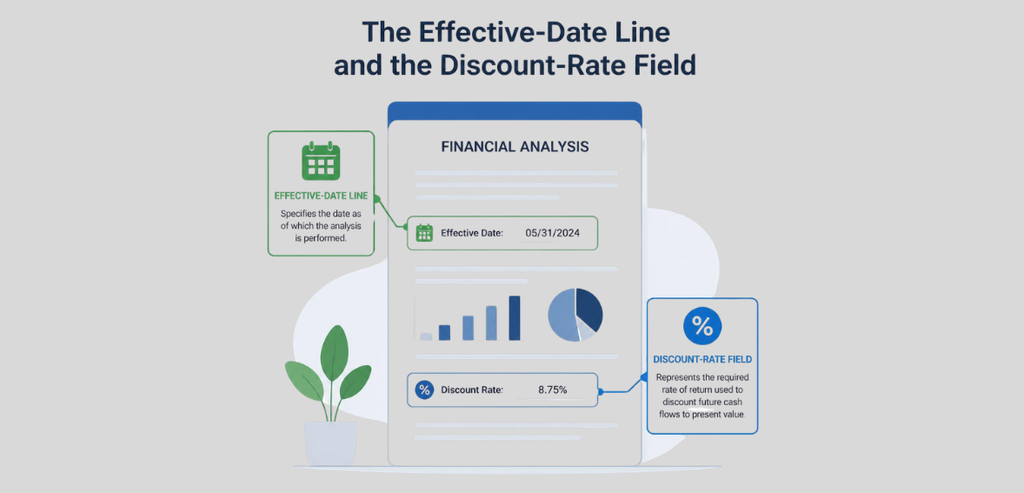
When reviewing changes to a rate, there are typically two clues on a customer’s statement. The first is the effective date. The rate effective date will indicate to a merchant which billing cycle to apply the new rate to. The second clue is the discount rate itself. This is shown on the Fee Summary with related fees, such as transaction fees and dues and assessments. The labels of these fees differ by processor; however, most statement guides provide explanations.
Knowing where a card network’s interchange fee is relative to a processor’s markup is important, because generally, both will change at the same time. The card networks will publish an update to interchange fees generally in April and October. Interchange is set by the card networks, not the processor; therefore, if a processor notifies you that both its markup and an interchange rate have changed, only the markup is at the processor’s discretion.
The effective rate is what you’re looking for when you don’t know the actual percentage increase. The effective rate is total fees divided by total volume, and is usually between 2% and 4% for small businesses.
To calculate the effective rate, you first determine the total fee for the month. Next, determine the total card volume for the month. Divide total fees by total volume and multiply by 100 to get the effective rate. Repeat this each month. The effective rate is the number you want to track, and it will increase if the rate charged by the processor increases. This works even if the statement does not show a discount rate, because every monthly statement discloses the total fees and total volume. However, if the mix of card types is different or the average transaction amount changes, it could falsely appear that the effective rate increased when in fact it did not.
The wording varies, and the two examples differ significantly. The first example allows the merchant to terminate the agreement within five business days following the receipt of the change notice. Additionally, the merchant may contest the charge or credit within thirty days from the billing date.
The first Merchant Agreement states that the merchant has waived their right to contest the charge and credit if no contest was made in writing. The second agreement states that the merchant may contest the credit or charge within forty-five days. The second agreement requires a ninety-day notice to terminate.
The amount charged for early termination also varies. The first agreement states that if the merchant terminates the agreement within the first year, the processor may charge an early termination fee of two hundred fifty dollars. If the agreement is terminated after the first year, the fee is five hundred dollars. The second agreement scales the fee to the time remaining on the agreement. In both agreements, a processor that is in breach may not charge the merchant to terminate. These are examples; read your own agreement for the terms that apply to you.
The effect of a basis point change is proportional to the volume of card transactions. So, the effect of a basis point change is felt more acutely by merchants who process a large volume of card transactions. A 100 basis point change means an extra cost of about $30,000 for a merchant processing $250,000 worth of card transactions in a month and a 225 basis point change means an extra cost of about $67,500 for that same merchant.
A $25,000-a-month merchant incurs an extra cost of $3,000 and $6,750 for a 100 and 225 basis point change, respectively. The high volume merchant feels the increase right away. It may be some time before the low volume merchant notices the increase. The calculations presented are estimates. A merchant’s actual increase is complicated by the average dollar amount of the transactions and what kind of cards are processed.

Locating change notices usually isn’t a big problem, because most processors place notices in the same or similar locations on the different statements. Notices are usually at the end of a statement or on a notice page. If you can’t find a change notice on a statement, check to see if the discount rate on the Fee Summary is left blank. If the rate is left blank, calculate the discount rate for that card type by dividing the discount amount by the sales volume for that card type.
To find the effective discount rate for the month, divide the total discount fees for that month by the total volume for that month. This rate needs to be compared to the rate for the previous month. If the rate went up for the month and the card mix didn’t change for the month, then you can say that the rate changed for that month even if you didn’t find a change notice.
The effect of the rate change can be calculated by multiplying the rate change by the total volume for that year. The change-of-terms section of your merchant agreement describes the notice period, the right of termination and the dispute period. These do not appear on your monthly statement.
Notices of rate increases are generally difficult to spot. Your contract with your payment processor determines how much notice you have to have of a rate increase, your right to terminate the contract for an increase, and how long you have to dispute a charge. The contracts described here have notice periods of between 5 and 30 days, dispute windows of between 30 and 45 days, and termination notice of up to 90 days.
The effective rate, total processing fees charged to you divided by the total volume you processed during that time, is almost always greater than the rate you were quoted. It is the rate you are actually charged, whether you received a notice or not.
Usually, this information will be located at the end of your statement. Look in the Fee Summary, Important Messages, or Notices.
Take the monthly processing fees and divide by the total monthly card volume in dollars. Multiply by 100 to get the effective processing rate.
Usually, processors can increase rates if they notify you first. Your processing agreement may allow you to terminate your processing agreement if you do not agree to the increase in rates.
No. Increases to Interchange rates are independent of rates charged to you by your Processor.
This will depend upon the terms of your processing agreement. In some agreements, you will have 5-30 days from the date of notice to object or terminate your processing agreement. In some agreements, you will have 30-45 days from the date of the statement in question to object to the charge.
Work out your effective rate from a statement before the notice date, then again from one after it, and compare the two.
