Tag Archives: payment processing

What to Know About Chargebacks, How to Avoid Them, and How to Win Them

What to Know About Chargebacks, How to Avoid Them, and How to Win Them

An unfortunate part of running a business is the risk of chargebacks. While they are a natural part of accepting credit card payments, if they get too excessive, it can make you a ‘risky’ merchant, causing you to lose your merchant account.

Here’s what you must know.

What is a Chargeback?

A chargeback is a charge reversal. The customer initiates it and it’s usually due to wrongdoing on the merchant’s part, or at least that’s what most people think. Since a chargeback protects the consumer and not the merchant, you’re on the losing end right from the start.

Common Reasons for Chargebacks

Chargebacks happen for a million reasons, but some of the most common include:

  • Customer dissatisfaction
  • Fraudulent charges
  • Clerical error

The most common reason is identity theft or fraudulent charges. But anything can happen, and customers can initiate them if they feel warranted.

So how do you avoid chargebacks? Here are some tried and true methods.

Make your Payment Description Clear

Chargebacks

How often have you seen a charge on your credit card you don’t recognize? Your first instinct is to dispute it. Sometimes, it’s from a company you did initiate a transaction with, but the name differs from the name customers know of you. Use the same name or description and you’ll avoid chargebacks.

Have a Friendly Return Policy

You are in business to make money, but if customers aren’t happy, you won’t make money. Instead, make your customer service and return policy so friendly that customers won’t have a reason to initiate a chargeback. If they know you will figure out the issue, they will most likely trust you rather than making you go through the investigation process.

Watch for Suspicious Transactions

It’s hard to figure out which transactions are legit and which aren’t, but here are a few key areas to watch for:

  • Multiple attempts to use the same card
  • Unusually large purchases for your business and/or industry
  • Questionable answer when you accept a card-not-present transaction

Despite your best efforts, you may not prevent all chargebacks, but you can still ‘win’ at them. Here’s how to win at chargebacks.

Watch the Timeframe

You have only a few days to answer the chargeback. If you ignore it, the dispute will count against you. If you respond right away and can work things out, you may win it. Missing a dispute is like letting your opponent knock you out in a boxing match.

Have the Right Documentation

Don’t let the timeline stress you out. Instead, have your documentation ready so you have everything the merchant processor needs to decide about the chargeback. The more information you have, the better your chances of it going in your favor.

Write a Great Rebuttal

A chargeback is a he said/she said situation, but if you draft a proper rebuttal, you may get your way. While you don’t want to make customers mad, if you have a valid point, it should be taken when going through the process.

Chargebacks are a part of doing business, but when you have great customer service and proper protocols in place, you can minimize them. If they happen, don’t worry, but do your best to ‘win’ so you don’t ruin your rating with the merchant processor.

The Top Reasons You Should Switch to EMV

The Top Reasons You Should Switch to EMV [2023 Update]

What’s the first word that comes to mind when you think of credit cards? If it’s fraud, you’re onto something. Hacking and identity theft are at all-time highs, especially during the pandemic. As a merchant, it’s your job to minimize the risk for your consumers in order to stay in business.

One of the best ways to do that is to switch to EMV or chip technology rather than magnetic strip credit cards. Even though it’s an added expense on your part and will require a little work, there are many reasons you should consider it.

EMV is Harder to Hack

Thieves have an easy time stealing information from a magnetic strip credit card. EMV credit card processing encrypts the data, so it’s harder to hack. EMV transactions each have a unique code that’s for that transaction only. Even if hackers got a hold of it, the code wouldn’t help them on any other transaction.

When you make it harder for thieves to hack information, customers are more likely to visit your business. They don’t want to put their information at risk and when you show you’ll minimize the risk, they’ll visit your business.

Customers Want It

By now, most customers realize the importance of the chip card. Most credit card companies have replaced consumers’ credit cards with EMV cards and consumers know it’s safer. Some customers won’t visit a business if they don’t accept chip cards because they know their information is protected.

Merchant Processors May Hold You Accountable

mastercard

Some merchant processors hold their merchants liable for counterfeit transactions. If a customer’s information is stolen at your place of business and it’s because you don’t accept EMV cards, the merchant processor can hold you liable for the damages.

It’s the Standard

People everywhere, including internationally, expect to pay with a chip card. If your business doesn’t have it, they may not trust you as much. Consumers want businesses up with the times, especially when it comes to security, so it’s important to show you are with the times and willing to do whatever is necessary to keep them safe. 

How to Switch to EMV

It’s not as hard as you think to switch over to EMV credit card processing. You may need new equipment and there may be set up fees, but it’s a one-time charge that will pay off in spades when your customers see you taking their safety seriously.

Take Credit Card Processing Seriously

It’s important to always take credit card processing seriously. Consumers need you to protect their information and merchant processors want you to hold up your end of the bargain, too. It’s a collective effort to keep hackers away. While no one can prevent it 100%, if everyone works together, you can minimize the risk for everyone.

Adding EMV chip cards to your credit card processing protocol is the best way to keep your customers safe today. 

Convenience Store

Smart Tech Keeps Convenience Stores Relevant as Industry Declines

As the pandemic continues and more people turn to online shopping versus running into local convenience stores, the industry has seen a decline of almost 2 percent since 2019. Consumer spending habits changed drastically as everyone tries to stay safe.

Fortunately, smart tech helps keep convenience stores relevant in society by thinking outside the box and helping stores offer services they didn’t offer before.

How are Convenience Stores Changing?

With fewer people commuting and/or fewer people making traditional brick-and-mortar purchases, merchants are finding ways to meet customers where they need it.

For example, 7-Eleven and other large convenience stores implemented delivery services. Some partnered with companies like Shipt and DoorDash, while others offer their own delivery services within a specific radius.

Convenience stores also offer contactless payments for their credit card customers and self-checkout choices for consumers who want as little contact as possible.

Some convenience stores in large areas, such as airports, are utilizing Amazon’s ‘Just Walk Out’ technology which recognizes the items a customer takes and charges the purchases to their credit card. Amazon has used the technology in their retail stores for a while and convenience stores are taking advantage, too.

Focus on How you can Instill Convenience

Convenience

The name of the store says it all – ‘convenience.’ It’s why millions of people subscribe to Amazon Prime – they can have what they need/want to be delivered the next day usually. They don’t have to leave their home and still have the convenience of what they need in hand.

As the pandemic continues and the convenience store industry sees almost a 2 percent decline, it’s important to think outside the box.

How can smart technology help you give your customers the convenience they desire?

Credit card processing is big. While most stores already accept credit cards, instilling contactless payment methods is the key. Customers want as little contact as possible. When they feel safe shopping in your store because of the minimal contact, they’re more likely to shop at your store.

Smart apps and mobile payments are another great option. Whether you partner with a delivery company like DoorDash or you do your own thing – providing customers with contactless delivery gives them the option to stay loyal and safe.

If delivery isn’t an option for your convenience store, consider curbside pickup. This offers your customers another way to get the products they need without unnecessary contact.

Think Outside the Box

Today, it’s all about convenience and safety. Customers are even willing to pay more in certain situations if they know their safety is protected.

Show your audience you care about their wellbeing and will do whatever is necessary to keep them safe while providing the products they know and love.

As the pandemic continues and the industry continues declining, it’s about who stays in front of the issues, utilizing smart technology and giving customers alternative ways to shop and pay so they have the products they need and continue to patronize your business.

2

More Consumers Want to Use Venmo at Retail Stores [2023 Update]

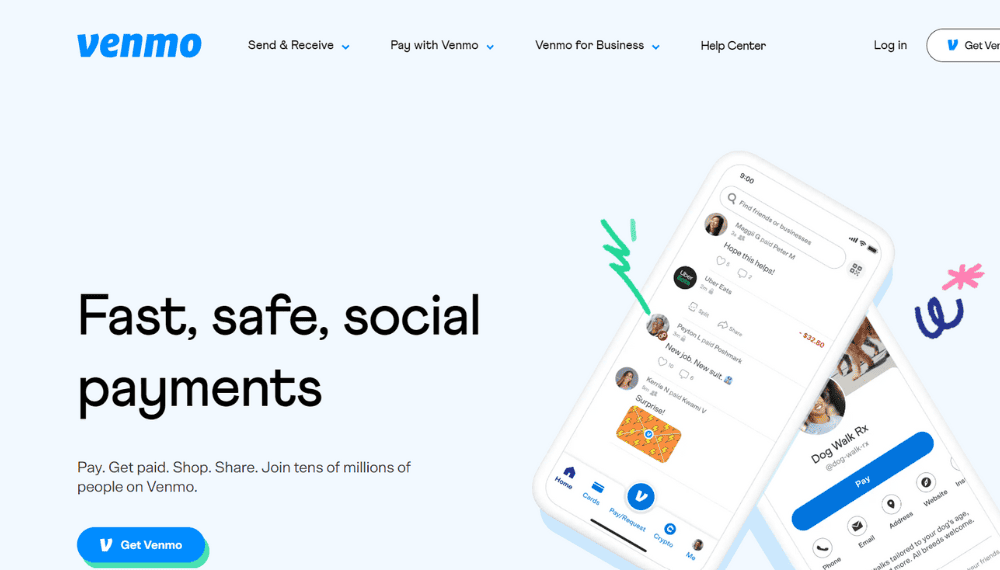
Venmo started as a fun way for peers to pay one another, but it’s quickly becoming the payment method of choice at retailers too.

Venmo has become a household brand – it’s the brand consumers trust when paying friends and family, and now they want retailers to use it too. While contactless payment options are more available than ever before, consumers don’t trust all of them, but Venmo is an exception.

Venmo Has an Incredible Following

Over 65 million people use Venmo to send and receive funds. Much of the audience is the younger generations, but it also includes affluent and educated older generations who’ve embraced contactless payments today.

Venmo users love the versatility Venmo offers including splitting the bill with family and friends. It’s a natural transition to use it to pay retailers, especially in restaurants when out with a group, and splitting the bill always causes that award silence everyone hates.

Consumers Want to Change Their Habits

At the start of the pandemic, consumers shopped mostly online as many retailers were closed while the entire country was shut down. The trend continued for a while, but slowly, retail trends indicate that consumers are shopping in-store again.

When they do, they want options to stay safe and that includes contactless payment options, of which Venmo is a top choice.

Since consumers are already comfortable with it, they don’t have to learn a new platform or discover if it’s safe or not. They know Venmo is safe. With consumers able to add funds to their Venmo account and/or pay their balance over time, Venmo is quickly the most popular choice.

What Troubles Would Retailers Face?

While consumers are on board with paying for retail purchases via Venmo, the platform itself isn’t quite ready.

While some retailers use Venmo, they are few and far between. It’s primarily a peer-to-peer app that doesn’t need to consider taxes or fees. With the onslaught of changes accepting retail payments would offer, Venmo’s platform would have to change considerably to handle the pressure of accepting retail payments.

Why is Contactless Payments so Popular?

Is Venmo Safe for Sellers

Image source

As the pandemic continues, consumers want contactless payment options. It creates the best of both worlds for consumers – they can shop safely, in person, and not have to worry about touching shared devices or even exchanging payment with the cashier.

The more hands-off the shopping experience can be, the better off we’ll be in the end. Not using cash and using phones to pay is the epitome of cashless spending. You can check out with ease, shop in person, but not have to worry about the risk the virus poses with shared devices.

Will Venmo Jump on Board?

The jury is still out if Venmo will become the way of the future. But one thing is for certain, all consumers want contactless credit card processing systems. Whatever you can do to make that happen in your store will help increase your sales.

Installment Plans Gain Traction Among Consumers, Predicted to Grow in 2021

Installment Plans Gain Traction Among Consumers, Predicted to Grow in 2021

The pandemic has been hard on almost all business owners and consumers across the world. With people losing their jobs and expenses rising, millions of consumers have been going through a financial crisis for the last 10-12 months.

Such wide economic gaps are compelling buyers to trim their shopping lists and finding better ways to save. Consumers are also seeking more flexible payment options, especially contactless payments, to prevent the spread of coronavirus.

As a result, the past few months have witnessed a drastic change in people’s purchasing trends and patterns, along with a massive shift in their interests and preferences. For example, according to research, about 4% of Americans preferred the ‘Buy Now, Pay Later’ option during the Black Friday season.

This is why installment payment providers gained significant traction during the past few months all over the US market. COVID-19 has been unexpectedly favorable for these companies and has opened doors for them to grow further.

As mentioned earlier, more shoppers are going for budget-friendly and more flexible purchases. Therefore, numerous merchants are pursuing several methods to accelerate their sales by offering more convenient payment options to their customers.

During lockdown restrictions imposed in various countries across the globe, consumers relied more on e–Commerce stores, which naturally gave a significant push to the growth of online sales for merchants. Another aspect that online shopping gave rise to is installment payments. These are the major causes of the rapid growth seen in M&A activities.

The new ‘Buy Now, Pay Later’ (BNPL) trend is an extremely convenient method for customers, so much so that a study shows that most of them are not willing to buy from merchants not providing this solution. The trend is not only popular in the online shopping platforms, but also in stores, especially during holiday seasons such as Black Friday.

What are Installment Payments?

Installment payments refer to the method by which a customer pays a bill in small parts over a fixed period of time. These kinds of payments are arranged and agreed upon between the buyer and the seller. Examples include ‘Buy Now, Pay Later’ models and point-of-sale financing, which provide buyers with the flexibility to pay their purchase bills over time as per their convenience.

Some merchants even offer installment payment solutions without charging any interest. This is convenient for customers and merchants as well, who get paid by installment providers, thus increasing their conversions and average order values (AOVs).

For this reason, installment payments are most suitable for merchants who are in the high-AOV categories, including furniture, electronics, travel, fashion, and apparel. This is why several market players are occupying the entire installment payments industry. Some popular names among them are PayPal, Afterpay, Credit, Klarna, Affirm, etc.

Benefits of Installment Payments

Some of the top advantages of installment payments for both buyers and sellers include:

For customers:

  • They help customers keep track of their finances.
  • Buyers can stay within their budget limits.
  • They allow consumers to stretch the cost of the purchase through a longer time period.
  • Customers can make low monthly payments easily.

For sellers:

  • You can provide more shopping flexibility for your customers.
  • You can regulate and stabilize your cash flows.
  • You can bring in more sales and boost your profit margins.

How to Track Installment Payments?

One excellent way to record or track your installment payments is through invoicing software, which ensures that your customers are paying their monthly installments on time. Two best methods to record installment payments are via recurring invoices per installment or partial payments for a single invoice.

If you use recurring invoices, you can set that up for every installment amount. The process will be smoother if you have your customer sign a payment contract, explaining to them the payment plan.

If you prefer partial payments, you would first need to generate the invoice for the particular consumer, ensuring you state the installment periods and payment terms clearly on the invoice. Next, when the time comes for the client to pay the first installment amount, you will need to add a partial payment to the created invoice.

Some software will have the option to update the status, such as partially paid, and the remaining amount to be paid.

The Current Status and Future of Installment Payments

For quite some time now, installment payments have been extremely popular in various markets, such as Australia and Europe. However, the trend has gradually been increasing in the United States for the last 12-18 months. The overall 2019 spending in the installment payments markets has been $623 billion.

The adoption of installment payment options has been especially prominent among Millennial and Gen Z customers. According to 451 Research, more than 1 out of 3 buyers within the age group of 18-37 believe that the availability of a flexible and convenient installment option has been a major factor affecting their buying decisions positively.

This is why merchants are noticing a rising demand in this trend and more successful order completions. Gradually, more than 40% of merchants from various industries have started offering this option during checkout, which has also reduced cart abandonment rates.

However, another 43% of the online-centric merchants are considering making the change or are discovering the benefits associated with it. A study in 451 Research’s Q2 2020 Voice of the Enterprise (VotE) revealed that among the top initiatives taken by merchants since the COVID-19 outbreak include adding flexible payment methods to their e-Commerce portals.

Some well-known merchants providing options for flexible installment payments in the US include Sunglass Hut, Walmart, Abercrombie, Peloton, Warby Parker, etc.

The mutual benefit that installment payment plans have for both consumers and merchants means that buyers will be more willing to return to your business and continue to make recurring purchases in the future.

Frequently Asked Questions

  1. What was the purpose of installment plans?

    The purpose of installment plans is to provide consumers with a flexible payment option for purchasing goods or services. Installment plans allow customers to pay for their purchases over time, breaking the total cost into smaller, manageable installments. This makes expensive products or services more accessible to a wider range of consumers who may not have the means to make a full upfront payment. The goal is to increase affordability and enable individuals to enjoy or benefit from a product or service immediately while spreading out the financial burden.

  2. What are the benefits of installment payments?

    Installment payments offer several benefits to consumers. Firstly, they provide a more budget-friendly approach, allowing customers to spread out the cost of a purchase over a set period. This can help individuals manage their finances more effectively and avoid the need for significant upfront payments. Secondly, installment plans often come with low or no interest rates, making them an attractive alternative to credit cards or loans. Additionally, installment payments provide convenience and flexibility, giving consumers the option to choose a payment plan that aligns with their financial situation and cash flow.

  3. How do installment payments work?

    Installment payments typically involve breaking down the total cost of a purchase into equal or predefined amounts to be paid over a specified period. When purchasing with an installment plan, the consumer agrees to pay a down payment (if required) and signs an agreement outlining the installment terms. The remaining balance is divided into regular installments, usually paid monthly, until the full amount is cleared. Depending on the arrangement, installment payments may be managed by the merchant directly or through third-party financing companies.

  4. What is the history of installment plans?

    The concept of installment plans has a long history, dating back to the early 20th century. Installment buying gained prominence in the 1920s when it became popularized as a way to make consumer goods more affordable. This approach revolutionized the retail industry by allowing customers to purchase items like automobiles, appliances, and furniture through installment payments. The availability of credit and the rise of installment plans fueled consumer spending and contributed to economic growth. Over time, installment plans have evolved and adapted to changing consumer needs and technological advancements, becoming a common feature in various industries today.


Covid 19 Business And Financial Crisis Concept Dollar Money Bill With Coronavirus Icons 3d Illustration Covid Impacts Global 180851930

COVID19 Drives Adoption of Contactless Payments and Curbside Pickup

Today, shopping retail and even picking up food at a restaurant looks different. Most customers prefer contactless payments and curbside pickup. They are the norm – they are expected. Contactless payments are just one more way to reduce the risk of sharing the virus. With less cash flowing around, the risk lessens, especially when consumers can pay online before they arrive or can use a digital wallet, like Apple Pay.

Curbside pickup used to be a luxury and one that not many customers used. COVID-19 turned the tide on it and so far it looks like there is no going back. Stores and restaurants need to offer curbside (touchless) pickup if they want to remain competitive.

Adopting Contactless Payments

Most stores and restaurants accepted the standard payments – credit and debit cards and some accepted digital wallets, but not many. Fast forward to today and it’s rare to see a business that doesn’t accept contactless payments, whether online payments, digital wallets, or direct transfer from PayPal or Venmo.

Consumers look for those extra payment options. They want the choice of how they’ll pay whether it’s online or in person. Everyone’s looking for contactless payments so even if they shop in-store, they don’t have to touch the credit card machine that everyone else touched too.

Curbside Pickup is the New Norm

Customers today want to walk into a store as little as possible. Rather than paying shipping costs and waiting days for it to arrive, they want instant gratification with curbside pickup. This means two things for retailers:

  • Your inventory system must be up-to-date in real-time all the time. You can’t have customers buying products to pick up that day only to find out a few hours later that it’s not in stock. You won’t have happy or repeat customers.
  • You need a seamless curbside pickup routine. This may mean hiring more staff, setting up new procedures, and creating new routines. The key is keeping a steady flow in the lot, and getting customers their items fast.

Buy Now Pay Later Plans are Important Too

During these trying times, many consumers need help. They don’t want to change their normal holiday shopping routine and give less during such a treacherous time in our lives, but many can’t afford it.

Buy Now Pay Later options give customers more choice. They can shop like they used to despite not having the cash resources today. Adding Buy Now Pay Later options on your website makes it easy for customers to apply in the privacy of their own homes. With an instant answer, they’ll know their options without facing anyone face-to-face.

Getting with the Times

COVID-19 changed a lot for retailers, and the changes are continuing. It’s important to adapt to what consumers need today to keep them and yourself safe, but also your business thriving. The right business model will help your business get through the pandemic and all that it’s changed.

Get PCI Compliant

Payment Card Industry compliance refers to a specific grouping of standards that have been set up to help ensure that customer data is being secured uniformly throughout the industry. MasterCard, Visa, Discover, and American Express set up the Payment Card Industry Security Standards Council over 13 years ago in 2006 with a view to helping regulate the credit card industry and maintain the Payment Card Industry standards to hopefully improve the security of transactions and payments.

Why Do I Need PCI Compliance for My Business?Small Business Cash Advance Options

Any business, no matter how big or small and regardless of transaction volume, needs to be Payment Card Industry compliant if they’re accepting payments from credit and debit cards. To be more specific, any company that will be storing, transmitting, or processing credit card information is legally required to be Payment Card Industry compliant. Should a data breach occur, any company that is not fully Payment Card Industry compliant will be subject to steep fines by the Payment Card Industry Security Standards Council. When it comes to smaller-sized businesses, being Payment Card Industry compliant will lessen any liability for your business in the event of a data breach occurring.

How Do I Become PCI Compliant?

In order to become fully Payment Card Industry compliant, a yearly self assessment questionnaire must be completed, along with a quarterly Payment Card Industry security scan which must be passed.

The self assessment questionnaire will include a series of questions that have been designed to assess Payment Card Industry security levels, and depending on how a business is to deal with their payment processing, they will fall into one of several categories.

Additionally, by finding a payment processor that will provide Payment Card Inquiry compliant payment processing, you can ensure that all of your business’ credit card transactions will be secure.

The different types of Self Assessment Questionnaires break down as follows:

A: Card-not-present merchants for whom all cardholder data functions have been outsourced to validated third party service providers with no cardholder data stored, processed or transmitted on the merchant’s systems or premises.

A-EP: Online merchants for whom all payment processing data is outsourced to validated third parties, and who don’t receive any cardholder data through their website, but can, however, impact the transaction’s security. No cardholder data is stored, processed or transmitted on the merchant’s systems or premises.

B: Merchants who only use standalone dial out terminals with no electronic cardholder data storage and/or imprint machines with no electronic cardholder data storage.

B-IP: Merchants who use only standalone terminals that are PTS approved, with an IP connection to the payment processor, and with no electronic cardholder data storage.

C-VT: Merchants manually entering single transactions at a time with a keyboard into a validated third party virtual terminal solution. No electronic storage of cardholder data.

C: Merchants with online payment application systems and no electronic storage of cardholder data.

P2PE-HW: Merchants with hardware only payment terminals, with no electronic storage of cardholder data.

D (Merchants): All merchants not covered by any of the above

D (Service providers): All service providers a payment brand has defined as eligible to complete a self assessment questionnaire.

Hackers Steal Credit Card Data at Major Seafood Restaurant Chain

Individuals who have wined and dined at theme restaurants such as the Bubba Gump Shrimp Company and the Rainforest Cafe at least once since 2016 may want to review their credit and debit card statements. According to a notice posted by restaurant giant Landry’s shortly after New Year’s Day, hackers were able to inject malware into an internal system that operates separately from the point-of-sale (POS) network, but which nonetheless involved payment cards.

E-commerce Data Security BreachBefore discussing details about this security incident, it should be noted that Landry’s POS system was not breached. In fact, the restaurant chain operates a system that not only encrypts data but also blocks all scripts it does not recognize which means that unrecognized malware would have no effect. There was another card-reader system affected, but not one used for payments. With this in mind, the scope of the incident is sharply reduced because the credit and debit cards that may have been intercepted were not supposed to be swiped in the targeted system anyway.
When you sit at table or at the bar of the Rainforest Cafe or Del Frisco’s Grill, you probably have noticed that servers interact with more than one card reader. There is the POS for payments, which is encrypted, but there is also an order-entry system that restaurant staff members access by means of swiping cards that often hang from lanyards around their necks for easy access. In some cases, servers carry a wireless tablet with from table to table; this portable card reader can be used to swipe Landry’s Select Club cards, a nice customer loyalty and rewards program.

Between payment cards, access cards, and customer loyalty cards, it would not be unusual to expect that busy Landry’s servers would, from time to time, get these cards mixed up, which is what happened in this case. Some debit and credit cards were inadvertently swiped to place an order from the table or from the bar to the kitchen; perhaps a MasterCard was swiped instead of a Landry’s Select Club card, thus depriving some customers of points that could have been redeemed for a frozen margarita or a free side order of Cajun shrimp.

Even though Landry’s operates more than 600 restaurants, only 60 locations were affected, and individual cases are limited because most servers employed by this chain are retained based on their ability to carry out their duties with precision. This does not mean that hackers are giving up on attacking point-of-sale systems; if anything, malware targeting card readers terminals is becoming more sophisticated. The intent to breach Landry’s was certainly there, but it did not work as hackers had hoped for.

More restaurant payment coverage and guides: Restaurant Payment Resources.

Chinese Hackers Were Successfully Able to Bypass 2FA

On December 19, the cyber security firm Fox-IT, which is headquartered in the Netherlands, reported that they discovered a previously-unknown infiltration of managed service provider and government computer systems in at least 10 countries, including the United States, Mexico, Brazil, the United Kingdom, France, Germany, Italy, Portugal and Spain. These systems covered a wide range of industries, including aviation, construction, energy, finance, gambling, healthcare, insurance, offshore engineering, payroll and HR services, physical lock manufacturing, software development and transportation. Fox-IT believes a Chinese government-funded hacking group managed to bypass two-factor authentication (2FA) to initially access and then spread through these systems.

What Is 2FA?

Two-factor authentication was designed to make it more difficult for hackers to access secure, private data. It requires that a user provide two unique forms of information to prove identification when logging into accounts. For example, a system might recognize a user by their physical hardware, via a unique linked code, coupled with a separate unique password. The user might input a memorized password or a one-time password generated by a separate piece of hardware called a token or password generator. In banking, 2FA occurs when a card holder uses their physical card with their unique PIN number at an ATM or during debit transactions. In point-of-sale software payment processing, a merchant or an employee uses 2FA when they sign into their point-of-sale software on a computer, a unique device, with a unique password.

Which Group Is Responsible?

Although many hacking groups supported by the Chinese government exist, Fox-IT has linked this event to a Beijing-based group called APT20. Security firms believe this group started in 2011. Since the Chinese government invests a lot of time and money into hiding their hacking groups, APT 2020 was able to keep a low profile during 2016 and 2017. Firms couldn’t track them until they slipped up in 2018. Fox-IT referred to the 2FA bypass as “Operation Wocao” after a member of APT20 used the Chinese curse word “wocao” in a final line of Windows command failure code when they realized that their actions had been detected and they couldn’t hack a system. The word aptly described both the frustration and shock felt by not only the hacker, but also Fox-IT techs who realized that the system and others had been hacked in such a rare fashion.

How Did They Do It?

Cloud-Based Business App For MerchantsThis specific group typically uses the most basic hacking tools combined with the software already present on their victims’ systems. Two-factor authentication is incredibly difficulty to bypass since it uses unique forms of identification. Fox-IT has stated that APT20 found a way, currently unknown, to compromise the 2FA for virtual private networks possibly via vulnerabilities in the the corporate and government enterprise application platform known as JBoss. Essentially, they found a way to bypass the credentials necessary to access their victim’s VPN accounts and the computer systems attached to those networks. APT20 then focused their efforts on locating and hacking additional linked systems that held the credentials necessary for them to find and retrieve additional private data. The attack was designed to help them find higher and higher levels of authentication to access higher and higher levels of information. For example, they targeted password managers/vaults and then used the passwords they found to continue their data search and retrieval. Once they were finished, they did everything possible to delete all footprints of their actions to prevent detection.

What About Payment Processing?

APT20’s rare bypass of 2FA shows that hackers might be able to access any system in a similar fashion, including networked computers owned by merchants using point-of-sale software and/or customer databases. A hacking group could potentially mine merchant systems for customer names, credit card numbers, expiration dates and secure CVV codes. If the system also has a customer database, hackers could also retrieve private details, such as customers home addresses and product likes and dislikes. Hackers might use this data to learn more about specific individuals, such as politicians or military leaders, or create false identities.

We recommend that all merchants focus on improving not only their computer and network safety, but also their employee-based vulnerabilities. It’s important to train employees to recognize the many techniques used by hackers and how their actions can help these bad government-funded actors gain access. Merchants can also protect their systems by blocking employees from checking private email or downloading software on these systems.

Our team at Host Merchant Services goes beyond securing our own payment processing systems against these types of attacks: Host Merchant Services Data Breach Security Program. Click that link to download a PDF explaining the value-added service HMS provides its merchants that goes above and beyond just simple PCI Compliance and helps ensure a merchant’s peace of mind.

credit-card-processer

How Should I Choose a Credit Card Processor for My Restaurant?

Because restaurants operate on thin profit margins, restaurateurs must leverage every payment type to attract every type of customer while simultaneously leveraging the support of their credit card processor. Business owners don’t have time to waste on deciphering complex credit card processing fees during their monthly reconciliation. Nor do they have the luxury of refusing payment types in the digital age when customers are trying out every new payment trend available. Restaurants must weigh several factors in choosing a merchant service provider.

Great Customer Service

Restaurant paying bill with cardThe owners and employees of restaurants are in the business of customer service. Their priority is creating the best dining experience possible for their clientele. They can’t be bogged down with complicated point of sale technology that slows the process and frustrates the end user. If they do experience technical challenges, they need support pronto in a 24-hour business cycle.

Knowledgeable Point of Sale Support

Restaurants have unique business needs regarding their credit card processor. In addition to round-the-clock support, a business needs restaurant merchant services that offer solutions that fit various business models. Depending on the restaurant, point of sale solutions may need to accommodate both a traditional style of service, as well as catering service and beyond, including mobile flexibility to allow a restaurant to meet the customers in multiple locations under a variety of circumstances.

Point of Sale Options

A restaurant needs a payment processor that can synchronize current processing systems with their solutions or provide a whole new solution to fit the restaurant’s circumstances. Keeping both security and convenience in mind, restaurants need a merchant service provider that can help the business to accommodate as many customers as possible in a secure fashion while also making transactions easy for restaurant owners and staff.

Low Rates & Transparent Pricing

And while customer service, ease of use, and processing simplification are ideal goals for a restaurant, none of it matters if the cost eats into the restaurant’s profits. Restaurants need a merchant service provider that offers interchange plus pricing, the pricing model merchants can rely on to offer the lowest cost interchange fees on the market. With a low markup over the wholesale cost, the interchange plus pricing model provides flexibility in equipment and payment options while keeping costs as low as possible.

Host Merchant Services: What Your Restaurant Needs in a Payment Processor

HMS provides customer support for restaurant credit card processing 24 hours a day, 7 days a week, 365 days a year. We know we need to work as much as you do to properly support an industry that can operate nearly 24 hours a day. That’s why we have operators standing by to answer your call any time of day.

HMS also explains how payment processing works. Providing a comprehensive package including credit card processing and financial transaction services to restaurants, we will custom design a flexible credit card processing solution to fit the needs of your restaurant.

And when we do demonstrate your payment processing scenario selections, HMS also offers your restaurant several point of sale options, including Clover, Vital, Bonsai, SwipeSimple, and more to fit your specific operation. If your restaurant is already equipped with hardware, HMS provides an easy point of sale integration. 

Whether you need an entirely new point of sale system or a solution for your current system, HMS offers a suite of services to suit your restaurant’s needs. From wireless equipment, payment by check, recurring billing, to online payment gateways, HMS has everything a restaurant needs for serving customers in both traditional sit-down establishments and catering services. 

With our low rate guarantee, HMS provides a Free Rate Analysis to show where you can save on your restaurant payment processing. If HMS can’t save your restaurant money, we will give you a $50 Gift Card. The best pricing model on the payment processing market, Interchange Plus Pricing will help your restaurant’s bottom line. 

Host Merchant Services will even provide your restaurant free equipment via our free equipment program to qualified merchants along with receipt paper at wholesale prices. We are your restaurant’s credit card processing solution.

Frequently Asked Questions

  1. What factors should I consider when choosing a credit card processor for my restaurant?

    When selecting a credit card processor for your restaurant, consider factors such as transaction fees, processing rates, contract terms, and equipment compatibility. It’s also important to assess the processor’s reliability, customer support, and security features. Ensure that the processor can handle the volume of transactions your restaurant typically processes and offers features like tip adjustments and split payments to accommodate your needs.

  2. How do transaction fees and processing rates impact my restaurant’s profitability?

    Transaction fees and processing rates can significantly affect your restaurant’s bottom line. Higher fees or rates can eat into your profits, especially if you have a high volume of credit card transactions. Compare the fee structures of different processors, including flat-rate pricing, interchange-plus pricing, or tiered pricing, to determine the most cost-effective option for your restaurant’s transaction volume and average ticket size.

  3. What should I look for in terms of contract terms and hidden fees?

    Carefully review the contract terms and conditions offered by credit card processors. Look for transparent and flexible contract terms without long-term commitments or early termination fees. Be cautious of any hidden fees, such as statement fees, PCI compliance fees, or monthly minimums, as these can add up over time and impact your restaurant’s profitability.

  4. How important is equipment compatibility for my restaurant’s credit card processing?

    Equipment compatibility is crucial for smooth credit card processing in your restaurant. Ensure that the processor’s hardware and software options integrate seamlessly with your point-of-sale (POS) system. Consider whether you prefer traditional countertop terminals, mobile card readers, or online payment gateways. Assess compatibility with contactless payment methods like NFC and digital wallets, which are increasingly popular among customers.

  5. What role does customer support and security play in selecting a credit card processor?

    Customer support and security are vital considerations when choosing a credit card processor. Look for processors that offer 24/7 customer support to address any technical issues promptly. Additionally, processors that prioritize data security, comply with Payment Card Industry Data Security Standard (PCI DSS), and provide advanced fraud protection measures. Protecting your customers’ payment information is essential for maintaining trust and avoiding potential liabilities.

Related reading on choosing a credit card processor for your restaurant: Restaurant Payment Resources.