A traditional point-of-sale system processes payments, and that’s about it. Such systems were fine 10 years ago, but not today. Practices today rely on a multitude of data, information, communication, and scheduling systems. Anything that only processes payments is leaving everything else to chance.
The right veterinary point-of-sale system makes invoicing and payments easier and improves the client’s experience. It integrates scheduling, inventory, staff and systems management, and communication. The result is a practice that runs efficiently, clients who sense and appreciate the practice’s focus, and a team that is less burdened by paperwork and more engaged with the patients.
A veterinary point-of-sale (POS) system helps veterinary practices handle their transactional needs and operational tasks. Some veterinary POS systems are as simple as a cash register with a card reader. Others are more complex, built on top of cloud systems, mobile payments, and kiosk systems with deep analytics.

Like any POS system, a veterinary POS exists primarily to process sales. What differentiates systems today are the capabilities that surround that primary purpose. Modern systems manage inventories, schedule staff and customers, receive and manage customer feedback, and offer flexible payment methods, both on- and off-site.
Most veterinary practices now have a modern POS system to help streamline payment collection and ensure they have a system to manage patient and practice data, and assist with daily tasks including marketing. A robust veterinary POS system allows practices to quickly and easily access a pet’s health records, review previous visit notes and appointment records, and see past and future scheduled appointments. Additionally, these systems help veterinary practices send personalized and targeted practice offers.
Modern systems also help veterinary practices manage multiple locations. Managers have the flexibility to manage and monitor any of the practice locations without the need to call practice managers and request separate operational reports.
The features below distinguish between a payment processing POS system and a POS system that grows a practice. Each addresses a different aspect of a practice’s daily operations from billing to client retention.
Veterinarians are rapidly modernizing as veterinary practices begin adopting technological solutions to improve the practice. Cloud technology is changing veterinary practice booking and record-keeping by offering services that are flexible, easy to implement and scale, secure, and cost-efficient.
Vet practices can forget about the burden of internal servers and the cost of their maintenance. Staff can easily access records and services wherever they are, making things like telemedicine and direct record access for clients easier than ever. Records and services stored on a cloud server can easily be accessed by all staff as a practice scales. Keeping records and services on a cloud-based server will ensure a backup is always maintained and up to date, as data is automatically encrypted and copies are saved.
From booking appointments to direct and secure record access, cloud technology is a flexible and secure way to make a veterinary practice more competitive and efficient. After switching to cloud technology, practices often improve client communication, ease of access to records, and staff productivity.
Your practice will benefit from greater efficiency thanks to the financial accuracy and improved workflow that automation of invoicing brings. Industry estimates indicate that, on average, veterinary practices lose between five and ten percent of their revenue from failing to bill for services.

Taking a mid-sized practice with $500,000 in annual revenue, that translates to an annual loss of between $25,000 and $50,000. The majority of this lost revenue is caused by income not billed due to errors in the provision of services, omissions in treatment, and lack of documentation.
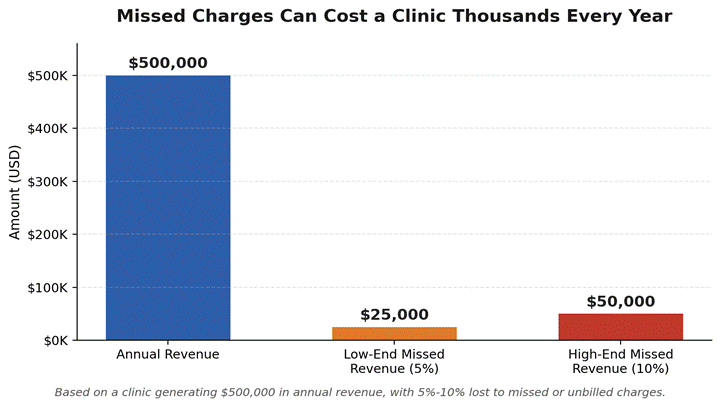
Figure 1: Missed or unbilled charges can quietly cost a mid-sized veterinary practice tens of thousands of dollars each year.
POS systems with automatic invoicing features allow billing to occur in real-time for services, procedures, medicines, and products. This decreases the chances of leaving billable services unbilled and reduces the workload for the staff.
Several newer systems allow practices to configure payment plans for clients that can be set to bill the client on schedule for each service. This is beneficial for practices that provide ongoing services (e.g. wellness visits) and for practices that provide services that require the client to come to the practice (e.g. dispensing prescription medicines). Cash flow for the practice is positively impacted and so is the convenience for the client. Electronic, no-contact payment systems reduce the paperwork for the practice.
Automated invoicing improves a practice’s ability to invoice accurately and charge for all services, and it improves a practice’s back office operations. This also enables practices to improve the level of services that they provide to their clients.
Connecting veterinary POS with other software tools decreases daily administrative tasks. A POS that connects with telemedicine, diagnostics, and client communication tools creates an integrated platform that decreases manual work and increases efficiency by eliminating the majority of data entry mistakes.
Integrating these tools allows employees to do more useful, client-rewarding activities instead of repetitive data entry.
Software integrations increase client engagement as well as client care. A POS connected to a telemedicine system allows vets to view full patient records for telemedicine consultations, and therefore allows vets to make better decisions for their patients. Communication system integrations create automatic appointment reminders and follow-ups, boosting client satisfaction and helping clients to be more compliant with their pet care.
Using a POS system designed for easy integrations allows a practice to be more efficient and prepared for future client care systems and technology.
Improved operations and more informed decisions result from a veterinary POS system’s embedded reporting and analytics. A good system generates comprehensive reports of practice metrics, income patterns, and patient information. Reports summarize accounts receivable and payable. Metrics of appointments reveal actual client participation.

Reports showing inventory levels can assist in managing your practice’s inventory, along with customizable report templates that can aid your practice in reporting its preferred information. Embedded analytical tools within the system generate charts and graphs to convey information quickly and effectively.
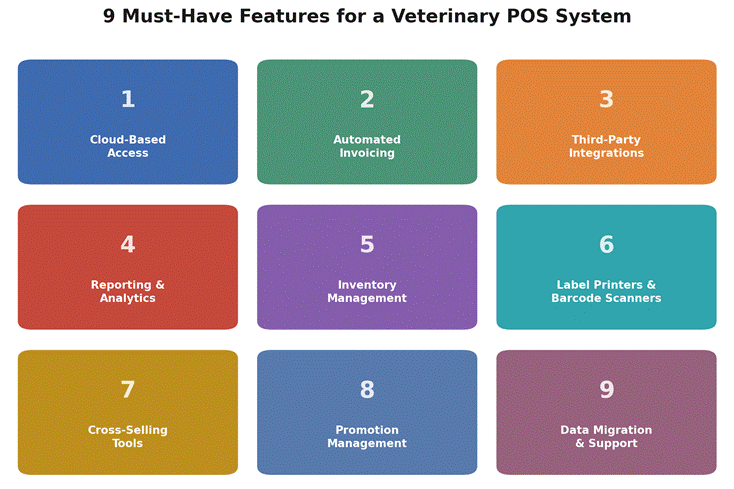
Figure 2: The nine features covered in this article, at a glance.
These tools show a practice where it can improve and allow it to set its own benchmarks through metrics rather than estimations. Financial metrics and trends are pivotal for sustaining and assessing the financial health of a practice. Inventory trends help keep the right amount of supplies on hand without excess cash being tied up.
Having these tools allows a practice to focus its energy on patient care, client retention, and growth. An informative and effective reporting system built into a POS gives a practice the means to act on what the information shows.
Good inventory management can improve both the quality of care a practice can provide and the efficiency of the practice’s financial resources. An inventory management POS system does away with the need for manual tracking and reordering by offering automated inventory management with real-time inventory levels. This system helps ensure that the necessary supplies are available and helps eliminate waste from unsold products that have expiration dates.
Inventory management systems that provide functionality for managing reorder points help eliminate overstock and product shortages. The management of suppliers and the scheduling of automated ordering also reduces the loss of products that have expired, while assisting in the management of inventory and costs. The removal of these costs improves the practice’s financial health.
Inventory management systems with analytical and reporting functionalities aid practices in tracking and managing supply use. This makes it possible to determine the supplies that are used most frequently, and helps create more efficient operational practices through optimal use of supplies and resources.
A veterinary clinic’s efficiency and accuracy can be maximized with the right combination of a POS system and added label printers and barcode scanners. When a barcode is scanned, data concerning pricing, product details, and descriptions is pulled up and posted into the practice management software. Staff is relieved from data entry work, errors are virtually eliminated, transaction processing time is significantly reduced, and improved management of practice operations means more time is available for staff to focus on and engage in activities and care related to the needs of the patients.
Affordable thermal technology label printers provide veterinary staff the means to produce crisp and clear labels that are fully and easily accessible and available to staff for the appropriate and specific instructions concerning the care to be provided.
Prioritizing a provider within the veterinary industry that focuses on hardware and technology that offers the integration of thermal label printers and barcode scanners is a worthwhile investment. There is a significant positive effect on the daily workflow from the reduced errors and enhanced service to the clients and patients. Improved and integrated staff communications and operations also provide a positive effect and experience to the clients.
POS systems with built-in cross-selling tools can boost revenue and improve customer satisfaction. These systems encourage staff to sell related products or services. For example, if a customer purchases pet food, the system encourages the staff to offer dietary supplements or feeding accessories. Selling related products builds a better customer experience and increases sales.
Modern systems enable staff to design and control the cross-selling prompts to address the specific needs of the pet and the preferences of the customer. This encourages the staff to offer thoughtful suggestions to pet owners about products and services that are beneficial to the pet.
The exercise of cross-selling should be embedded in the training of staff and should be addressed during the onboarding process, as it helps the entire staff to formulate helpful recommendations from their first days in the practice.
When a practice implements cross-selling systems, practice operations are simplified, staff performance is improved, and pet owners are helped with beneficial products and services for their pets. It is a win-win solution for both practice and clients.
Veterinary POS systems with built-in promotion management tools allow clinics to plan, implement, and measure the success of marketing campaigns. Well-designed POS systems allow practices to set location-wide time-defined promotions. For example, a clinic can set a discount for dental cleanings during National Pet Dental Health Month, with the POS system discounting all applicable cleanings across all locations. Centralized control not only applies the discount consistently but also reduces clerical errors and increases client satisfaction.
Flexible promotion formats are also supported by modern systems. Percentage off promotions, dollar amount off promotions, and promotions that group services together are just a few of the options available. Modern systems support promotion targeting beyond the service level. Systems with a built-in marketing module also allow practices to create promotional campaigns quickly and easily. Consistent marketing collateral improves the overall effectiveness of the marketing campaigns.
Advanced POS systems support automation for scheduled and recurring promotions. This is especially useful for seasonal campaigns to reduce the administrative burden of creating and implementing the promotions on time. All of this allows a veterinary practice to easily increase client engagement and revenue.
Changing to a new veterinary POS doesn’t have to be a hassle, especially if data migration is done right. Reputable companies have dedicated teams for the project. These teams ensure the transfer of patient data, histories, records, and client communications is done safely and accurately. In addition, a good number of companies provide a staging environment where a practice can validate and preview the data before the system goes live.
The data migration process is crucial, but even more important is the training and support offered afterward. Look for a company providing a workflow consultancy service for a more tailored approach, and more importantly, offering a 24/7 service to reduce the waiting time for support. A good system also offers a guided training walkthrough, or a series of training sessions for the whole team to empower them to use the system properly even prior to going live. Co-browsing sessions and multiple support channels truly make a system stand out.
Selecting a point-of-sale system for a veterinary practice affects daily operations and overall efficiency for years to come. Each aspect of a good POS system deals with a specific function of a practice: invoicing, inventory, client communication, and even patient care. A good system decreases the administrative burden and enhances the overall accuracy of the practice.
Innovative features such as cloud technology and automated invoicing and software integrations with detailed reporting and cross-selling tools do more than simply ease the work of a single day. They foster actual practice growth and the development of stronger client relationships. A practice that invests in the proper POS system based on the specific needs of the practice is positioning itself for optimal growth and the development of long-term success with improved workflows and services.
A Point of Sale (POS) system will track and report inventory for you. It offers technology to set reorder levels. Each sale adjusts the inventory levels, so your business has less chance of overstocking or running out of necessary inventory.
A successful upgrade combines effective integration of the latest technology, careful execution, and the training of all staff involved. It is also critical to successfully migrate all of the old system’s data. There cannot be gaps in patient information and history.
Modern POS systems enhance customer service with flexible payments, built-in loyalty programs, and appointment scheduling. Clinics employing POS systems can offer more individualized service with the help of detailed patient records and automated reminders.
Most small practices would say that the answer is yes. Compared to the old on-premise systems, newer, cloud-based systems lower the costs associated with having to maintain physical servers. Additionally, they scale costs based on the size of the practice and keep the information secured and backed up. The pricing structures of cloud-based systems, compared to the traditional on-premise systems that are hardware intensive, offer a more predictable subscription-based pricing model.