
Payment methods for veterinary services will keep changing as they have been. In the past, payment options included cash and checks and manual card processing. Today, there are many options from the digital ecosystem, including contactless payment options.
Spending on veterinary services in the U.S. is nearly $40 billion annually, and this is expected to grow. If veterinary practices do not adjust to the changes in payment methods and the payment systems that their clients demand, they will be impacted negatively.
When veterinary practices add payment options, they have to ensure that they are building a strong framework for their practice. In this article, we will analyze the security, personalization, and flexible integration of practice management systems as we look at the trends and the future of payments in veterinary practices.

Making payments at veterinary practices used to be simple. A pet owner would take their pet to the practice, the pet would be seen, and then the pet owner would pay the bill either with cash or credit at the practice. Payments at veterinary practices were simple, but there were many operational issues, especially for practices with a lot of clients.
There were many administrative bottlenecks due to manual data entry. This created long wait times and an inefficient, outdated experience.
In the past decade, technology began to change payments at veterinary practices. A lot of practices began to have online invoicing and internet-connected card terminals. Many practices have this, and more technology is coming.
The next stage of technology used for payments at veterinary practices will be the adoption of contactless, mobile payments. This will allow practices to operationally streamline their workflows. Mobile payments will allow practices to keep up with a fast, digital world, and provide the service that clients expect.
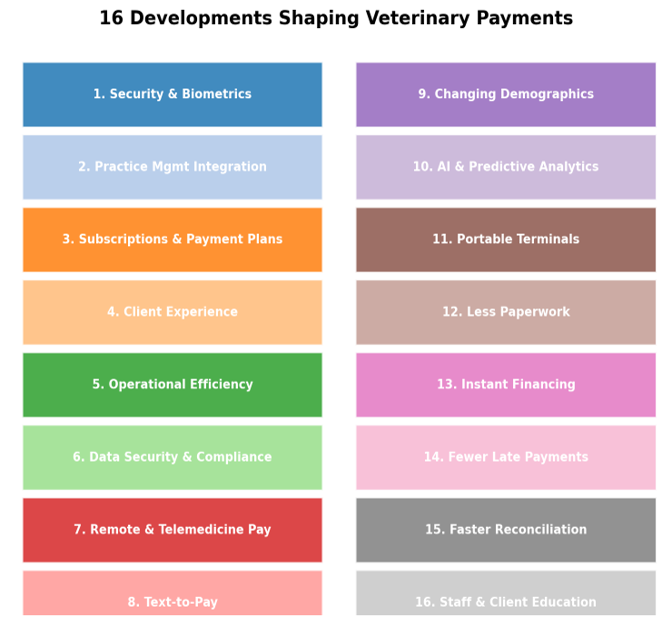
Figure 1: An overview of the sixteen developments covered in this article.
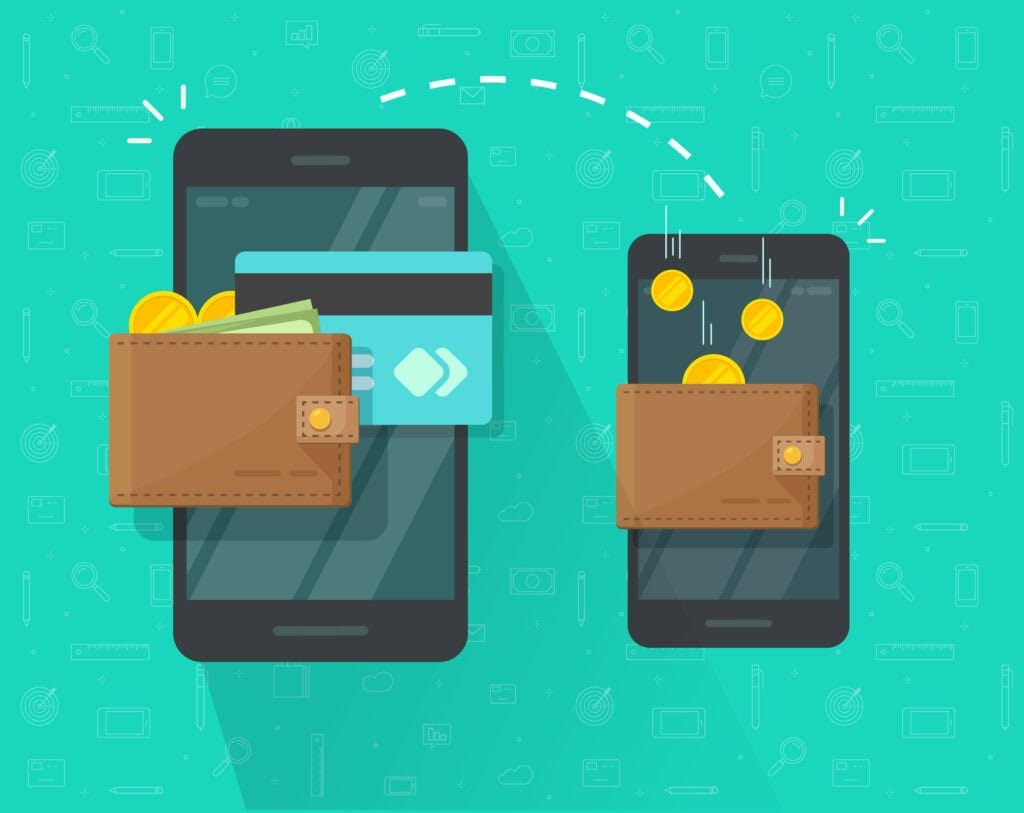
Payments can be handled via card or mobile app with a simple tap. Contactless payments eliminate the need to swipe cards, sign receipts, or provide cash, and thus reduce register time for customers and data input time for merchants.
A clear generational gap exists for utilization of contactless payment systems. The 18 to 24 age group leads the brackets, with 45% utilizing a tap-to-pay system on a weekly basis. That bracket is closely followed by the 25 to 34 age group with 44%, and the 65 and older age group brings up the rear, with 23% utilizing tap-to-pay every week.
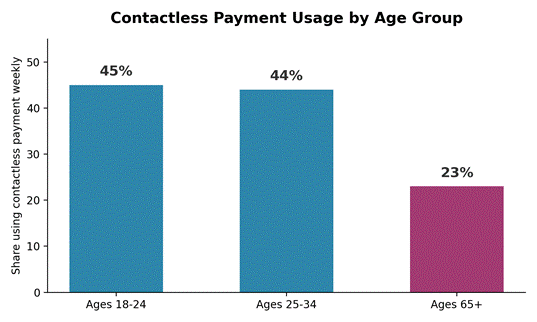
Figure 2: Weekly contactless payment usage by age group in the United States.
Typically, contactless payment systems are predicated upon NFC technology within payment cards, wallets, or a display-embedded QR code, allowing customers to make payments without interacting with cash or a card. This system is preferred by hyper-connected customers who expect instant payments.
Recent studies indicate that nearly 50% of modern retailers have adopted contactless payment systems, allowing customer transactions via mobile wallets and tap technologies. As such, these payment systems are no longer a novelty in the marketplace.
While contactless payment may have negligible effects on the time-to-service of a customer in a veterinary clinic, it may reduce the interaction time with the front-desk staff (and potentially the time the customer has to wait) and reduce the demand to print a transaction receipt. It positively adds to customer satisfaction, and it is more in line with the payment experience that customers are used to in other non-veterinary-related transactions.

Mobile wallets let you make instant contactless payments without hassle. They store payment cards and other necessary information to make payment collection a tap away.
Veterinary services tend to have long-standing issues related to payment collection and processing. Traditionally, payment processing would involve the customer waiting for the invoicing to be completed and visiting the service center to complete the payment. Mobile wallets make payment processing easier and more efficient, as just after a consultation, invoicing is done, and payments are received straight from the customer’s home. Additionally, late payments are avoided, and cash flow is maintained.
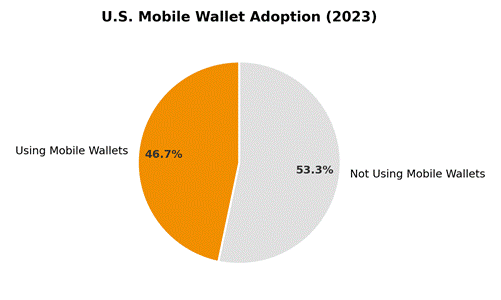
Figure 3: Roughly 46.7% of U.S. consumers used a mobile wallet in 2023.
Mobile wallets are now used by around 46.7% of U.S. consumers, and adoption rates are rising steadily. The vast majority of mobile wallet users already make digital payments for groceries, rideshare services, and streaming subscriptions. So, most consumers would already see the ease in paying a vet bill through a mobile wallet.
Veterinary practices that offer mobile wallet services are simply meeting clients where they are. This aligns veterinary payment services with the digital payment services and practices clients are already accustomed to in their daily lives.
Moving to digital veterinary payments is a multi-faceted evolution. Many shifts are creating a compounding effect on this evolution. Below are sixteen of the most significant shifts currently occurring.

Security, unsurprisingly, is the priority as we enter a new age of digital payment systems. Customers and companies care about secure information and trusted systems that will not expose it, since a company that does expose it suffers a damaging reputation.
One of the more successful innovations of the last few years has been the implementation of biometric security systems. The company and client get the security and trust of the payment system with the added benefit of a fingerprint, face, or voice scan completed in a matter of seconds.
The integration of biometrics in the payment system removes the burden on the client to remember passwords or card numbers. With biometric security, a payment is authorized with the scan of a client’s fingerprint, and in the unfortunate event that a client’s mobile phone is lost or stolen, there is no unauthorized access to the client’s secure information.
Biometric systems secure payment information for companies and clients, removing the need for clients to repeatedly enter secure payment information and fostering client loyalty.
A secondary major development is integrating payment systems with practice management systems. Traditionally, billing is seen as a separate process. However, including invoice generation and billing as part of the system that manages the daily clinical workflow reduces the need for paperwork, decreases errors, and improves financial visibility.
When these systems are integrated, they share the required information for billing. If a service is provided to a client, a medication is dispensed, or a diagnostic test is done, an invoice can be generated. The client can receive the invoice through email, text, or secure message. The practice management system is updated automatically when the client pays the invoice.
This integration results in outstanding invoices being resolved in a minimal amount of time. It also results in enhanced accounting accuracy and simplified reconciliations with improved forecasting.
As veterinary services expand, so do different types of payments. The shift from the expectation of a single payment for a visit to the offer of wellness packages, subscriptions, and payment increments illustrates the changing landscape of veterinary payments.
The advantage of the monthly wellness packages for a veterinary practice is a predictable monthly income. For the client, the cost barrier is reduced as a package of services is offered.
Veterinary emergencies that are both time-sensitive and costly have been shown to benefit from the availability of a payment method that provides convenient payment increments for the client. While the initial cost of the visit may create a financial burden for a family, having no-interest payment options available helps the family manage the cost of the veterinary visit without a large upfront burden.
Convenient payment systems take on the responsibility of the billing, notification, and receipt functions of the payments, relieving the staff burden of managing overdue payments and the financial strain. Payments are securely processed, and the follow-up on overdue balances is handled by the system.
Now, it’s all about the client. Expectations have evolved. Convenience and seamlessness, with the minimum requirement of friction between various systems, have become baseline expectations for the clients of any business.
Various payment methods include a contactless payment terminal, mobile payment applications, text payment links, and other online payment methods, giving the customer the most flexibility. Digital payment receipts and automated confirmation emails clear customer payment doubts and provide evidence of payment.
A modern payment system offers convenience and generates a sense of trust and confidence in a veterinary service among customers. With many other practices still using legacy payment systems, a practice that modernizes becomes a more attractive option for customers, and thus increases customer retention and customer referrals.
Payment systems of today go far beyond offering convenience for clients. With automated billing and compatibility with practice management systems, they take on the burden of staff follow-up on late payments and invoice integrity checks.
Payment collection time is further reduced, and the practice’s cash flow improves. This enables the practice to fund growth, the hiring of additional staff, the addition of new practice services, and the purchase of new practice management systems.
Settlement time can be hours instead of days with systems that support digital payment transactions.
Increased functionality of digital payment systems can even include reporting and analytics. These systems can support financial analysis and planning by tracking and reporting payment behavior such as average payment size, late payments, and payment periods.
As digital transactions increase, so does the associated liability for a practice. Any veterinary practice that stores or processes payment card transactions will be subject to significant obligations to ensure that such data is not compromised or accessed unlawfully.
Encryption or tokenization are perhaps the most effective tools to combat the risks associated with payment card data breaches and the subsequent legal challenges. If a veterinary practice utilizes a payment gateway that is PCI DSS compliant, that practice can be fairly confident that payment card data is being handled to industry security standards.
Data security measures are most effective when data breaches are prevented, but this should also encompass security measures for transaction data logs and payment data. A practice that does this can send out payment reminders and collect payment without requiring the client to submit their payment card information again.

As veterinary telemedicine evolved, so did the need to bill for remote consultations. This prompted the need for flexible electronic billing systems to accommodate the demand for remote payment. Similar to remote appointment scheduling, clients expect remote payment solutions to be available.
Remote payment solutions allow clients to make payments for telemedicine consultations from any location. There is no need to visit the clinic to make a payment. This payment solution enables clients to arrange for the needed medical attention for their pets.
Text-to-pay is an innovative design that makes settling payments easier for both customers and businesses. Customers receive a text message with the payment link, and all they have to do is click the link and the payment is processed. There are no terminals and no portals that have to be logged into.
For customers that communicate primarily through text, this system is great. This system also saves time for employees since sending a text is more efficient than making a phone call to process a payment. Also, employees can send reminder texts to customers to encourage payment of overdue invoices.
Text-to-pay works extremely well with curbside service. Employees can send the payment link to customers while they wait in their cars; therefore, no one has to walk into the office to make a payment. This system is extremely effective for keeping the office workflow efficient and running smoothly.
Veterinary payment systems are changing and younger pet owners are leading the way. Payment habits formed by the convenience of modern financial technology have led to the expectation of the same or similar technology everywhere.
Payment options that require cash or the swiping of a credit card will alienate an entire generation of customers for veterinary practices. Updating payment options is not a convenience but a necessity to keep up with the pace of an evolving customer base.

AI is starting to be used in veterinary billing. Some advanced billing systems review prior billing information to identify veterinary invoices that will likely take longer to be paid, and thus, reminders will need to be sent. These systems can also create payment plans tailored to each situation.
These systems can also identify strange billing patterns that may suggest fraudulent behavior or ‘hacks’ of the system. There are a number of different uses for predictive analytics to enhance the billing process. For example, if predictive analytics determines that a small discount for early payment will encourage a higher rate of on-time payments, a veterinary practice could implement that policy with confidence.
The development of payment software has brought about new payment hardware. Payment terminals can now be brought into exam rooms or on farm calls.
Veterinarians working in non-traditional settings will benefit the most from this technology. Payment collections can now happen at the time of service. This saves both the veterinarian and the customer time, while lowering the chances of the payment being missed. In addition, the small payment readers will eliminate the need for a permanent payment station in the practice.
Traditional billing systems grouped invoices and printed receipts. Staff members completed these tasks one at a time. Digital payment systems streamline these processes. Payment requests can be generated and sent to the client via email or a secure online portal. The digital payment systems do away with manual processes. There is a subsequent reduction in the probability of errors and the resulting disputes. Digital transactions post directly to a client’s account record. Each entry is time-stamped, providing a record of the transaction and allowing staff to respond to client inquiries in the shortest time possible.

Some digital payment services now provide instant financing when goods and services are purchased. Clients can receive near-instant financing with little to no delay in receiving time-sensitive services.
Due to instant financing, practices are not affected financially, since the partnering lender is now at financial risk, not the practice. Clients appreciate being able to finance a large, unexpected bill, since it allows them to receive time-sensitive care that they would otherwise delay, and to break the bill up into smaller pieces. This service is in line with the current trend in the retail and consumer financing industry.
Overdue balances impact a practice’s financial health. Traditionally, a practice had to rely on repetitive phone calls, or worse, assigning a staff member to have the difficult conversations to collect overdue balances. This has been solved by digital tools.
Digital solutions automatically send reminders. With a digital solution, a practice can resend an invoice with the click of a button. If a client has a card on file, the digital solution will automatically charge the card on the reattempt date. This solution automates the collection process, helps with cash flow, and relieves the burden from the staff.
At the end of the day, every bustling clinic needs to balance its books. Digital payment systems can simplify this process. Payments made electronically leave behind reports that take care of the documentation and reconciliation headaches. The report will tell you the transaction count, total revenue, and remaining invoices.
The speed and accuracy of this process and the reports created for your reconciliation needs help to eliminate costly accounting errors and make tax and audit seasons much easier to get through. Not to mention, the reports can be sent electronically in a matter of seconds to your accountant, so you can say goodbye to the worry of lost or misfiled reports.
With new payment methods, training is involved for both the client and the practice. Employees must learn how to do a contactless tap, set up a recurring charge, and fix problems with online payments. On top of that, employees must confidently teach their clients how to do each task.
Straightforward instructions and a FAQ section make clients feel more at ease to make a secure online payment, store their card, or use a text payment. Clients appreciate shorter waits, no need for cash, and on-demand payment histories. In time, with less resistance to payment systems, the practice experiences the full benefit of an easier payment system.
Veterinary payment solutions are here to stay, and for good reason. They help practices remain financially healthy by addressing client needs and enhancing operational flow. As a result of cashless, mobile, and flexible payment solutions, practice admins see a significant reduction in client wait times and increased client satisfaction.
Payment solutions are fully integrated with practice management tools and flexible billing options. These systems will safeguard practice revenue and significantly reduce errors that result in missing or inaccurate billing.
Veterinary practices have a multitude of reasons to modernize payment solutions. Every aspect of the latest payment solutions, from the cashless payment systems to mobile billing, serves to safeguard the financial health of a practice, enhance client satisfaction, and support the long-term viability of a practice.
These tools minimize data entry and quicken all transactions at the front desk. They also offer real-time financial tracking and help staff focus on patient care over paperwork.
Along with protective technologies, biometric authentication helps to protect client data. Protections against fraud and unauthorized access to a client’s data give clients a great deal of confidence regarding the safety of their payment.
Clients always appreciate flexible payment options. Mobile and contactless payment options cut down on waiting and transactional times. This is beneficial for curbside pickup and telehealth as there is minimal physical contact. Clients appreciate flexible payment options, and this builds client loyalty.
Adoption slows in higher age brackets. Only 23% of clients 65 and older use contactless payments weekly. As contactless payment systems are installed, it is a good practice to also keep cash and card payment systems to avoid excluding clients.