When a merchant starts selling online, selecting an e-commerce option is one of the first important calls. It will impact the appearance of the online store, the speed of page loads, and the overall monthly expense. Shopify and Volusion provide easy options for merchants to begin selling online. At first glance, they look very similar.
From a distance, they are similar, but the differences are large. Shopify is an e-commerce platform that many are familiar with. Volusion predates Shopify, starting in 1999, but never gained an equivalent market share. This comparison of Shopify vs Volusion will evaluate both options. Whether you are setting up a store for the first time or transferring an existing store, this will help you select an option with confidence.

Shopify aims to eliminate technical hurdles for its users, bringing them a step closer to their online store dreams. Users can run their stores through a system that only requires a browser, allowing for a hosted, code-free, and design-free way to manage an online store.
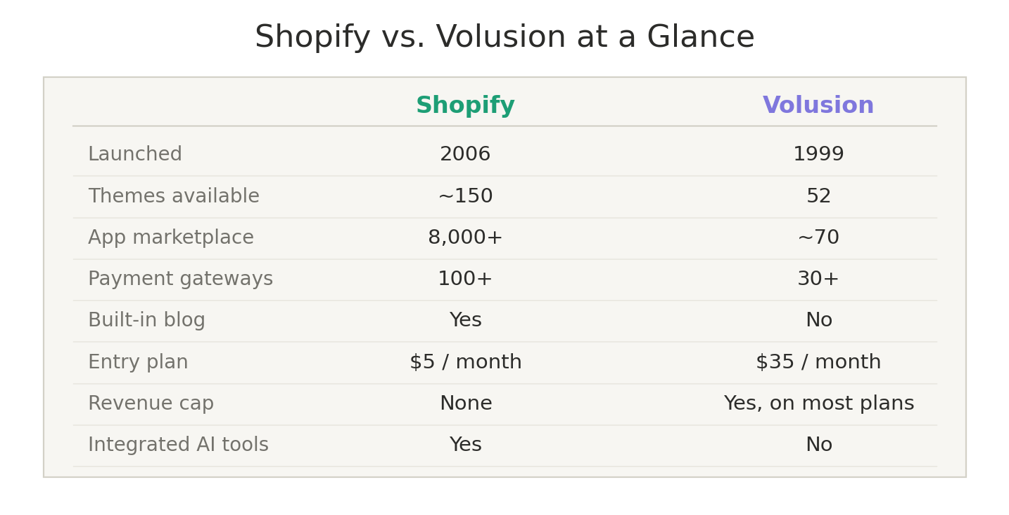
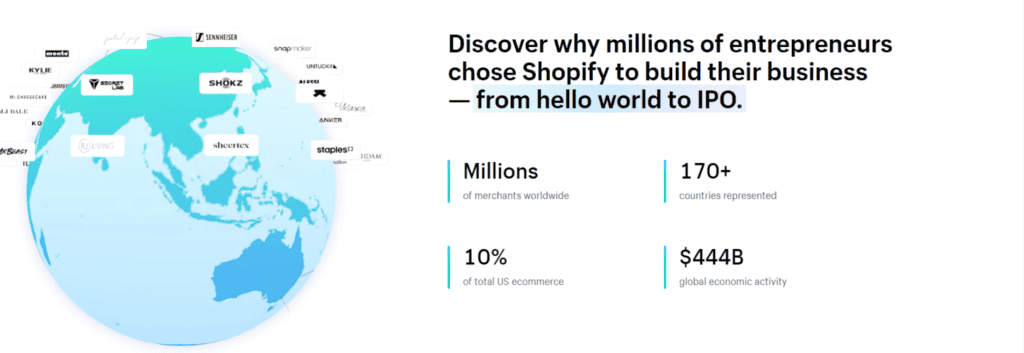
Shopify may have been a latecomer in the e-commerce realm, launching in 2006 after Volusion in 1999; however, it now has dominance, being the largest e-commerce systems provider in 2024. Shopify has allowed millions of users, including global enterprises, to run their online projects with ease, offering them hosted store management services.
Shopify focuses on a software-as-a-service model to deliver all of the components of a hosted online store to users. Users are empowered with the ability to run and manage store operations, inventory, sales (digital or physical), engage with customers and respond, as well as record and analyze their marketing efforts and more.
Volusion is yet another hosted solution with an overlapping feature set. Design your site, manage your inventory, process payments, and manage all of your day-to-day business from a single interface. It also includes CRM, feedback collection, mobile app creation, SEO, and business analytics with a set of APIs for developers.
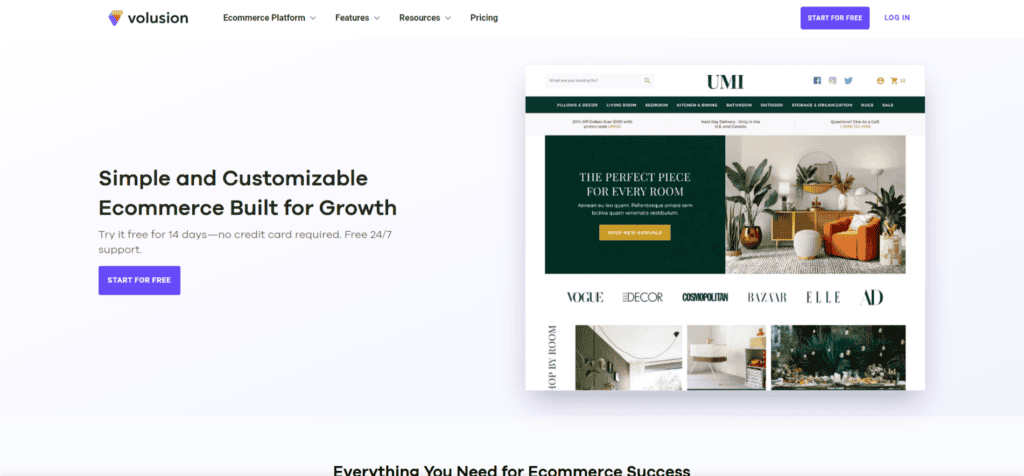
Image source
Volusion was founded by Kevin Sproles in 1999. Kevin also created the shopping cart software and offered hosted solutions to complement it (Volusion is shopping cart solutions + hosting). Since then, his business has grown to over 185,000 merchants. Volusion’s first version (Volusion V1) was later replaced with Volusion 2, which vastly improved speed and usability.
It is very easy to use and caters to merchants wanting the ability to set up, host, and manage their own store. It’s more of a Shopify Lite, and depending on your needs, that may be more advantageous.
Shopify’s greatest strength is arguably its dashboard. It is simple and easy to learn. With an account, you get an unlimited number of products, storage, or data transfers. You have access to 24-hour support. Shopify users are not charged extra transaction fees when using Shopify Payments, and there is a short free trial to see if it is for you.
Shopify is not perfect. Its section-based editor is simple, but design options are greatly limited because of this. To gain full functionality, third-party applications are required, which will add to the overall cost. The range of free themes is also quite limited, which usually results in merchants paying for a premium template.
Volusion’s dashboard is also strong and includes a built-in CRM. They also do not charge their own transaction fees. Marketing and SEO tools are included, and like Shopify, they also have a 14-day trial. Their data transfers are also unlimited, and they have a large library of guides and video tutorials.
Volusion’s weaknesses are more evident. Each plan has a cap for the annual revenue, which is somewhat rare and will negatively affect growing stores. Their basic plan also lacks phone support, and there is no feature for creating a blog. Some of their site-building tools also feel incomplete.
The simple version:
Choose neither for a custom solution that requires intensive coding.
Choose Shopify for options on scaling your store, access to third-party applications, and a variety of AI tools.
Choose Volusion for a straightforward and easy-to-manage online store for lower sales volumes.
Shopify has its own payment gateway built with Stripe that provides merchants a lower effective cost for cards and waives transaction fees for merchants. There is no need for a separate merchant account.
Shopify provides powerful tools to manage your store. Admins can analyze shopping behavior and implement systems that increase customer retention, such as guest checkouts or account creation. Customer purchase history can easily be filtered and exported based on your preferences. Shopify also provides dropshipping integrations with Ordoro, eCommHub, and Inventory Source. Full and partial refunds are easy, and the inventory is automatically updated.
Shopify provides an abandoned cart recovery system that automatically sends an email to customers with a cart to encourage their purchase. This system benefits most stores.
Shopify provides an easy-to-use system for product and inventory management. You can have an unlimited number of products, variants, and images. The system also provides an inventory management system and a bulk import system using CSV files. An analytics system on the same dashboard provides reports on orders, sales, visitors, finances, and product demand.
Volusion uses a clean design to display customer contact information and history on its customer management dashboard. Analytics to track customer shopping behavior and business metrics are integrated. These analytics promote the customization of marketing strategies. Tools integrate with Mailchimp for email marketing to target customers based on their shopping history.
All themes and design elements are mobile responsive. Volusion customizes online stores for viewing on mobile devices, tablets, and desktop computers. This is especially useful because most internet traffic is mobile. Client retention is Volusion’s goal.
Inventory management is straightforward. Simply input product data, upload an image, and provide a product description. Volusion guides you through the inventory management process. No tech skills are required to maintain a large online catalog.
Onboarding is an especially strong feature. Volusion customizes the online store based on the business owner’s responses to targeted questions. This removes the guesswork for the business owner.
Volusion’s SEO tools are more comprehensive than you would assume. SEO tools are available for product, category, and homepages. Volusion encourages unique product descriptions as duplicate descriptions hurt webpage rankings. You can edit metadata, create product redirects, and focus on keyword phrases. Mailchimp is the main email marketing platform for automated emails to customers after they make a purchase and for marketing emails. Volusion uses optimized servers to create fast page loads for online stores. This protects the online store’s bounce rate and webpage rankings.

Both have a free trial to begin with, though Shopify’s is only three days while Volusion’s runs fourteen. You log in to Shopify with a store name, email, and password. You give Volusion your store name, email, and password, plus your name, phone number, country, and a check box agreeing to receive promotional text messages, which is a lot more.
Shopify more or less drops you off on their dashboard after answering a few follow-up questions. You can start adding products right away. Volusion loads a store editor to design your store first, which feels pretty slow and unintuitive. Volusion is just slower in general.
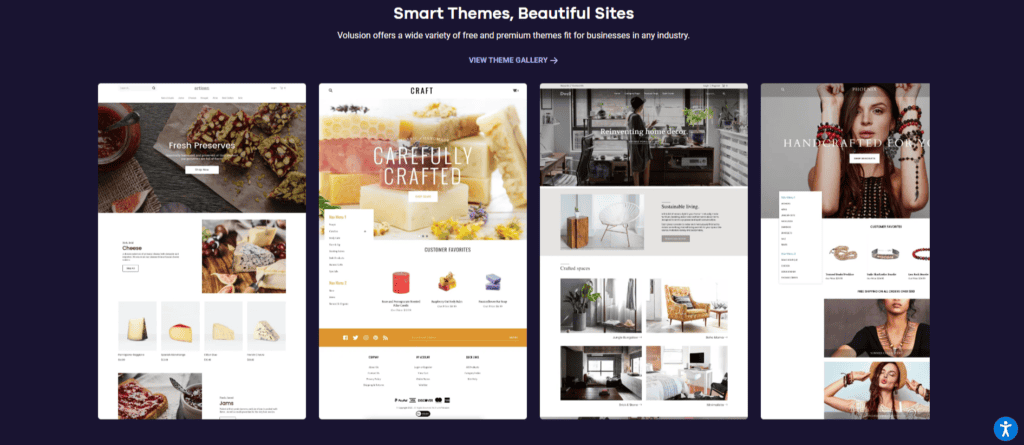
The same can be said about theme management. Volusion offers a free theme and a selection of premium themes, which you can view in your dashboard. Shopify is faster and more responsive than Volusion.
The two platforms also have very different storefront editors. Shopify has all the site elements and style settings consolidated with lots of preview functionality, while Volusion has a fragmented and clunky editing style.
Shopify is more intuitive and descriptive in the storefront design feature and has the edge. Volusion has a fragmented and cluttered approach to designing/editing your store which makes it much less pleasant of an experience. Shopify is simply faster all the way around.
Shopify has nearly 150 themes, some of which are free and others range between $170 to $380. All themes are responsive and work on both mobile and desktop. Many customization options exist for each theme, so storefronts can be designed with most business needs in mind.
Volusion has 14 free themes and 38 themes priced at $180. All themes are responsive, but limited customization requires knowledge of HTML and CSS.
Shopify lets you specify three options per product, and each product can have up to 2,048 variants. This is usually a sufficient product limit, and for particularly complicated products, you can list them as separate products. Compared to Volusion, Shopify calls for less detail on product pages, allowing you to specify the image, description, videos, and more for product variants.
Both Shopify and Volusion help merchants maximize their store efficiency, but they target different markets. Volusion focuses on users who prefer simplicity, while Shopify focuses on users who prefer rapid expansion.
Shopify has impressive tools to cater to these users. Their toolset includes comprehensive integration to design, build, and optimize checkout experiences and even enables global selling. Shopify even helps with abandoned carts and provides tools to create discount codes and gift cards.
Volusion keeps it more compact. Volusion is more than capable for small and simple merchants with its sufficient order processing and inventory tools. They even help small and simple merchants with returning customer order history by offering customer account management. Volusion is more limited with its integrations and advanced tools. Shopify is more ideal for rapidly expanding merchants.

The Starter plan from Shopify is priced at $5 but includes 5% transaction fees. With this plan, selling is possible through social channels and messaging, but not your own online store. For $39 a month, the Basic plan includes core functions for setting up a store, but there are limits to reporting and only one account is supported.
The Shopify plan at $105 a month has improved reporting, lower transaction fees at 1%, and allows up to 5 accounts. With this plan, there are improvements to processing support. Advanced Shopify, priced at $399 a month, includes transaction fees at 0.5%, advanced reporting, improved support and checkout, and all other plans include enhancements. Shopify Plus, the enterprise plan, is $2,300 a month and includes a dedicated support account and complete access to code.
Volusion’s Personal plan is $35 a month and has a selling limit of 100 products and $50,000 in annual sales. It has live chat support, includes one staff account, and carries a 1.25% gateway maintenance fee when using third-party gateways. The Professional plan is $79 per month with a lower 0.65% gateway fee, a selling limit of $100,000 in annual sales, 5 staff accounts, 5,000 products, and additional features.
The Business plan is $299 a month with no selling limits and includes support for a greater sales volume, loyalty, 15 user accounts, and support via phone. The Prime plan is the custom-priced enterprise plan and includes no selling cap and feature enhancements.
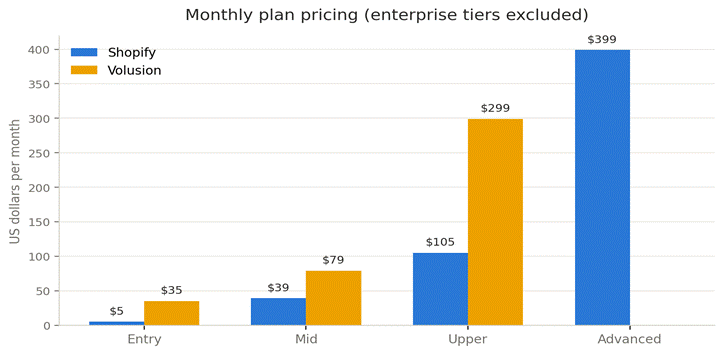
Infographic 2: Monthly plan pricing, with enterprise tiers excluded.
Card rates with Shopify vary by plan. Rates for the Basic plan are 2.9% and $0.30 for online and 2.7% for in-person transactions. The Shopify plan offers rates of 2.6% and $0.30 for online and 2.5% for in-person transactions. Advanced offers rates of 2.4% for online and in-person transactions, with $0.30 for online transactions. Additional fees apply when using third-party gateways.
Volusion offers many third-party gateways such as PayPal and Stripe, as well as Volusion Payments for US merchants. Volusion offers low transaction fees with easy scaling for their plans. Online and in-person sales include POS functionality. Unfortunately, there is a gateway maintenance fee for using third-party gateways, which ranges between 0.35% and 1.25% per transaction depending on the plan.
Shopify has a clearer lead on Volusion in several areas. They have invested in their AI Builder, which customizes the design of the stores. Their AI also generates the store’s SEO suggestions and optimized reports. Shopify has a predictive AI inventory system, and their advanced analytics system offers better insight into and prediction of customer behavior. All these features help to customize the online store and automate multiple business functions.
Volusion does not feature any integrated AI, so it is unable to provide automated personalized experiences, advanced content automation, or predictive AI inventory systems. For a simple online store, Volusion might be adequate; however, businesses that require more automation and customization, such as those in retail or logistics, will find the limitations of Volusion to be significant.
A blog increases the utility of your online store. It enhances SEO, increases organic traffic, and improves conversion rates. Content marketing offers great value for little cost and has a long-term effect.
Shopify provides a blogging feature. It is convenient for users, but it clearly is not a priority for the company. The blogging tool offers sub-optimal URLs, and feature customization is only possible with Liquid coding. Directly linking products in a blog post is a hassle without additional integrations. For stores that will have a lot of blog posts, DropInBlog is a great option that integrates well with Shopify and takes on the CSS of your store.
Volusion does not have a blogging feature at all, and therefore blogging has to be done with a third-party service. Their app marketplace offers integrations, or you can use an HTML integration such as DropInBlog. Shopify is the clear winner in this respect, both for a blogging tool that is built into the platform and an easier process for external integrations.
Many features that other platforms push to add-ons are included in Volusion natively. Additional features are available via their App Market, which includes roughly 70 customer support and marketing apps.
Compared to Volusion, Shopify is on a different level. In the area of marketing tools, Shopify has 8,000+ apps covering everything from countdown timers and loyalty programs to dropshipping and live chat, both free and paid. Apps are grouped into collections to help end users find what they need.
This trend continues with payments. Shopify supports 100+ payment gateways and provides Shopify Payments in more than 20 countries, and using Shopify Payments means Shopify’s additional transaction fees are waived. Volusion has 30+ payment gateways including Stripe and PayPal, but the offer can be limited in some of the regions, and the US has more variety compared to Europe. Volusion supports payments without a transaction fee, however, Volusion Payments is US-only, doesn’t support multiple currencies, and charges a monthly fee.
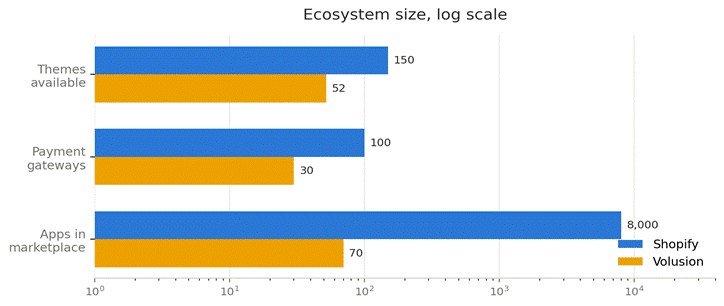
Infographic 3: Ecosystem size on a log scale, covering apps, gateways, and themes.
Volusion is a champion of responsiveness in support. Live chat is available for all plans, while phone support is available for the Professional plan and above. There is an unusual lack of email support. However, their guides and articles are good, and their support team is friendly and swift.
Shopify provides all three forms of support, but response times are slow due to high demand. It has a large help center and forum to answer member queries. The articles help with everything from changing the color scheme to editing customer email notifications.
Shopify stores fulfill Level 1 PCI DSS standards for safeguarding customer and payment information, as well as an SSL certificate for every store. SSL certificates protect card details by encrypting data between the shopper and the site. SSL also provides HTTPS and the reassuring padlock symbol for buyers.
Volusion also ensures that every store is PCI compliant and provides SSL certificates for all plans. When it comes to security, there is virtually no difference between the two platforms.
Shopify is the dominant platform for greater numbers of merchants. When comparing features, it is the more advanced platform with a more attractive interface and more advanced AI. It’s easier to customize themes and manage products on Shopify. Both new and experienced merchants should use Shopify when considering a long-term platform.
Volusion is a decent platform. Users have access to a good dashboard and a real CRM system, and there are no internal transaction fees. Merchants get a good onboarding system and quick, good live chat support.
However, Volusion has more shortcomings when compared to Shopify. Volusion is less user-friendly and has fewer integrations. Merchants cannot create a blog and, with most plans, Volusion places a cap on annual revenue. Volusion is a good choice for small, simple, low-traffic online stores.
It depends on the direction you want your business to grow. If you want to keep your store at a small and stable size, choose Volusion. However, if your goals include growing your store, creating new sales channels, selling to new countries, and using more technology and your marketing content to drive sales, choose Shopify. Shopify will support your goals for your business better than Volusion.
Not well. Volusion is centered on physical products; its digital product support is limited, and there is no native subscription selling. Shopify handles both. Shopify is the pragmatic solution if either model is core to your business.
Shopify Payments is available in more countries and reduces or eliminates fees in supported countries. Shopify offers over 100 payment gateways as compared to Volusion’s shorter gateway list. Volusion Payments offers even less with only US merchants and no multi-currency support.
Both have SEO tools. Volusion actually has a more complete toolkit than many expect. Shopify wins on marketing. They also have social integrations, an abandoned cart system, and AI recommendations. Volusion also has some issues because of the way they have implemented their URL structures.
Yes, but there are some limitations with the integrations. Shopify connects to a much larger variety of dropshipping apps and services. Shopify provides a greater variety for a supplier-driven model.
Yes, Volusion supports dropshipping, but its integrations are limited. Shopify offers extensive dropshipping options and better integration with multiple suppliers, making it a more robust platform for this model.