
The Federal Reserve’s 2024 Payments Study estimates that U.S. businesses issued 9.2 billion checks in that year, with a total value of $24.45 trillion. The 2015 study reported that U.S. businesses issued 17.0 billion checks with a total value of $26.1 trillion. The average value of a check in 2024 was $2,653, up from $1,533 in 2015. As check volume has fallen but the average amount has risen, the emphasis on quickly and safely getting checks to the bank has also increased.
Remote deposit capture, or RDC, refers to a technology that enables a business to electronically transmit an image of a check to the bank from the business’s location. Prior to RDC, a business would have to physically take the check to the bank. This article will provide an overview of RDC, the electronic process of a check deposit, compare RDC to phone deposits, provide average costs of RDC, and explain when a customer can spend the deposited funds. Furthermore, this article will describe the reasons for and process of double deposits, as well as bounced checks.
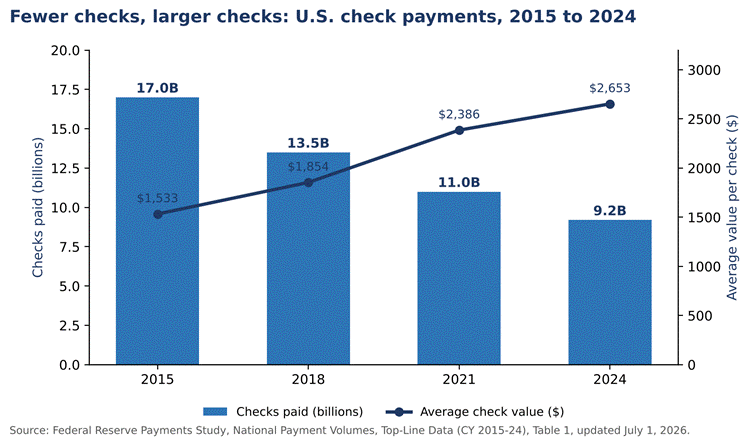
Figure 1. U.S. check payments by number and average value, 2015 to 2024
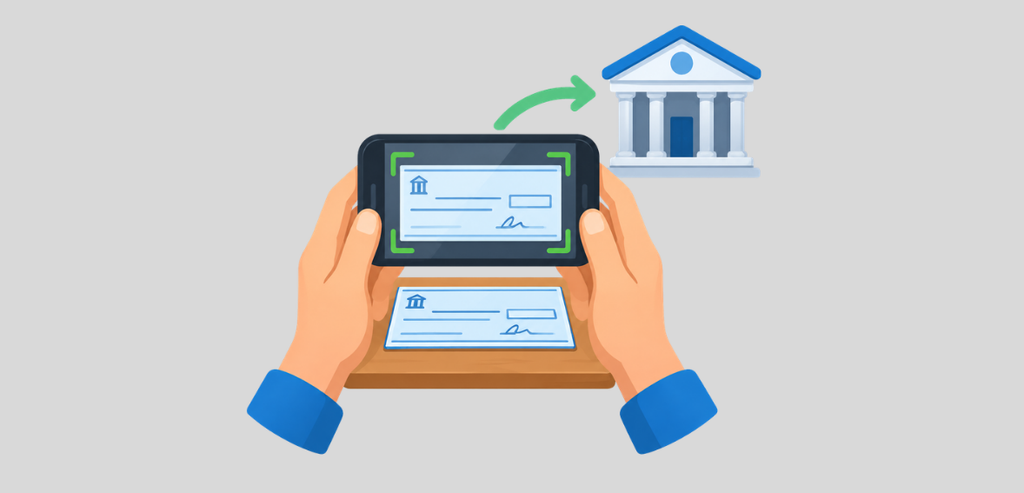
RDC, short for remote deposit capture, describes a method of depositing checks electronically. Checks are no longer physically transported to a bank. Instead, images of the checks are transmitted electronically. The customer uses a scanner or takes photos of the checks, and software does the rest. The transport of the images to the bank is done over the Internet. The bank automatically clears the checks and the images are stored by the bank.
The FFIEC, a joint council of U.S. bank regulators, published RDC guidance in January 2009. RDC, according to the FFIEC, allows customers to make bank deposits from remote locations. It advised banks to evaluate the risks posed by RDC and establish appropriate controls. The guidance further stated that RDC should not be viewed merely as an added convenience to a customer’s existing checking account.
RDC was made possible by a federal law known as Check 21, signed in 2003. The act provides that a “substitute check” (an image of an original check) is equally valid as the original check. Banks can now electronically clear checks and stop transporting checks to one another.
There are two types of RDC. Business RDC uses a desktop scanner and computer software. Mobile RDC uses the camera on a smartphone. Both methods are covered by Regulation CC, which includes the Federal Reserve’s indemnity rule for duplicate deposits.
Business RDC services generally follow the same process from desk to account. The following outlines the process reflected in the RDC books and agreements published by banks:
Following a deposit, a bank electronically transmits an image of the check to the clearing network. The receiving bank does not examine the physical check. The Federal Reserve has stated that check collections and returns have become fully electronic.
Each bank determines its customers’ RDC privileges. The FFIEC states that banks must assess their customers’ risks before granting RDC access and monitor their deposits after granting access. Predictably, banks set a daily dollar limit on RDC transactions. A few banks require an in-person visit. State Bank requires RDC users to obtain access through an on-site visit by a bank representative and officer.
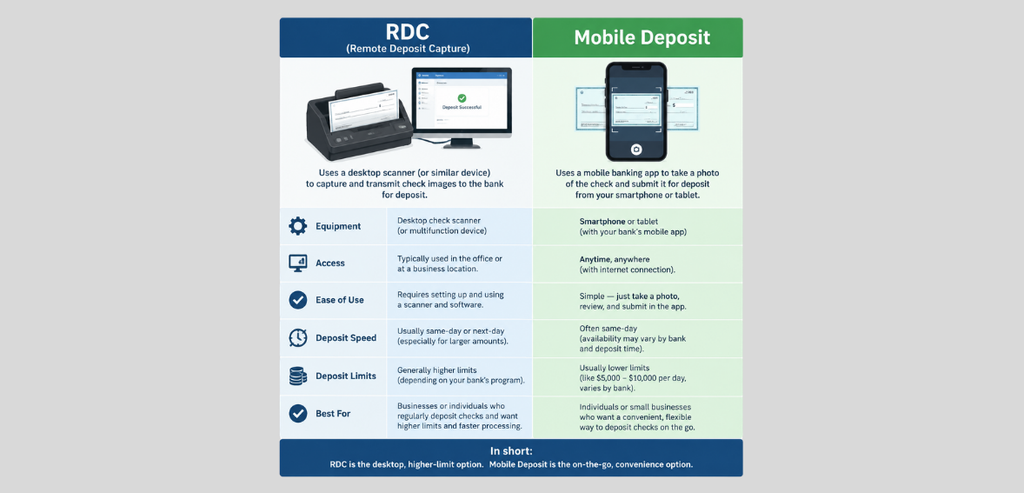
Both methods produce an image of a check. Mobile deposit requires a smartphone, while RDC requires a scanner. Mobile deposit also limits the user to depositing only one check at a time. A business can deposit many checks simultaneously by using RDC.
There is usually no charge for mobile deposit. Business RDC, however, typically carries a monthly fee; $45 per scanner is common.
Restrictions also differ. Banks can change the restrictions on mobile deposit. Restrictions can include how many checks a customer can deposit in a day or a month. With business RDC, restrictions are set in the contract and are determined during underwriting.
Limits and restrictions can always change based on individual situation, contract, location, and other external factors.
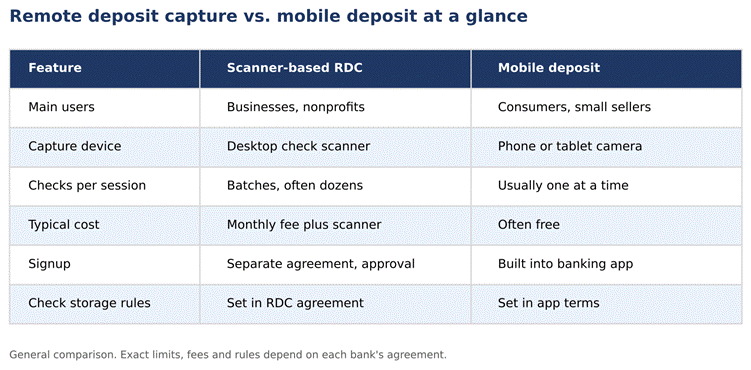
Table 1. Scanner-based RDC and mobile deposit compared
Both methods have similar rules pertaining to double deposits, courtesy of Regulation CC. Additionally, in both methods, the bank requires the physical check for a certain period after it is scanned. Generally speaking, manufacturers of check scanners sell single-feed scanners to consumers and small businesses, and sell multi-feed scanners to large businesses and financial institutions. A small business or individual that receives only a few checks a month is considered a low volume user and may not need a check scanner. A business that receives a high volume of checks, say, several dozen checks a week, is considered a good candidate for scanner-based remote deposit capture.
The main expense for the hardware is the scanner. There are two main types. A single-feed scanner, such as the CheXpress CX30 from Digital Check, scans one check at a time. A multi-feed scanner, such as those in the Vision X line from Panini, scans checks that are stacked in a hopper.
Digital Check
As described in Digital Check’s January 2025 literature, the CX30 handles a maximum of 30 items each minute and is designed for businesses that have a lower volume of checks to be scanned. Other sources indicate that the CX30 is the first scanner designed for remote deposit capture and that it is a good entry-level scanner for remote deposit.
Panini
A single-feed scanner in the Vision X line is rated at 50 items a minute. The fastest model in the Vision X line, which uses a 100-check hopper, is rated at 100 items a minute.
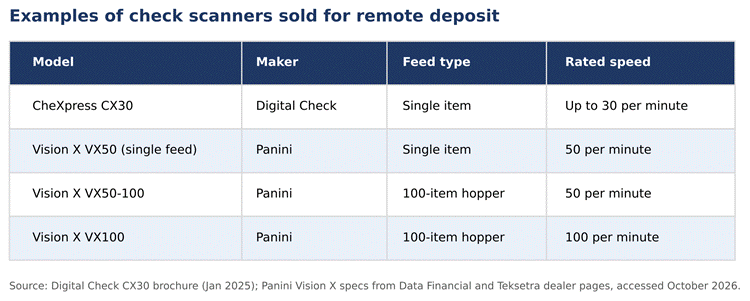
Table 2. Sample RDC scanner specifications
Software is available from banks and contains a browser and desktop version. The desktop version extracts the MICR line and amount, identifies fuzzy images and creates a deposit file.
Fees vary by bank. Most charge a monthly fee for business RDC and impose a per-item fee above a monthly threshold. Eight published fee schedules reviewed for this article charge a monthly fee from $30 to $65. Old Point National Bank charges a monthly fee of $45 for business RDC and up to 249 items and sells scanners for $299. Sandia Area Federal Credit Union charges a two-year scanner rental fee of $65 for a multi-feed scanner, a $100 setup fee, and a $45 monthly fee for a single-feed scanner.
Early termination of scanner rental contracts results in a fee. Sandia Area Federal Credit Union charges $400 for a single-feed scanner and $600 for a multi-feed scanner. The same fees are charged by the Bank of Hope.
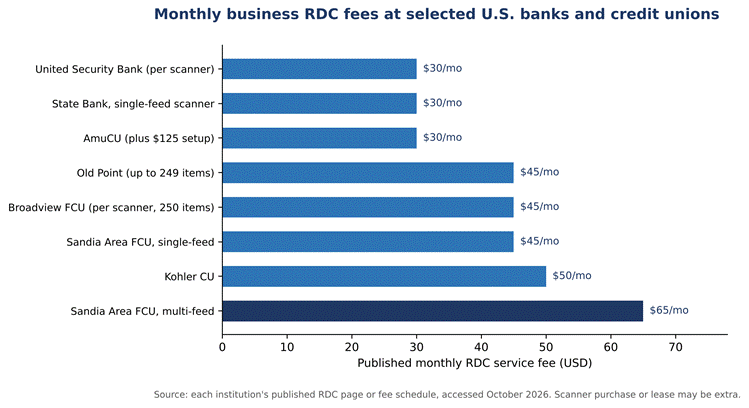
Figure 2. Published monthly RDC fees at selected institutions
Regulation CC, enacted by the U.S. federal government, outlines the latest time at which banks are permitted to place a check hold on funds that a customer deposited. Banks have the right to release funds prior to this time frame.
The figures in the legislation are increased to account for inflation every five years. Effective July 1, 2025, the Fed and CFPB adjusted the figures. From this date, the funds that a bank must make available to a customer by the next business day increased to $275. The long-funds-hold threshold increased to $6,725.
Banks may place a longer funds hold on customer deposits that exceed $6,725.
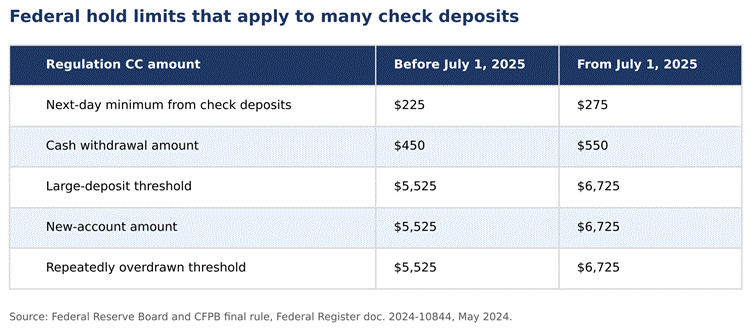
Table 3. Regulation CC dollar amounts before and after the July 2025 update
This rule generally works well for RDC deposits. There are, however, exceptions. In the bank world, a deposit made by check, cashier’s check, or certified check is considered received in person when the check is handed to a bank employee. Since a scanned check deposit is not handed to anyone, the bank has the right to treat the deposit as if it were made by a check that was not handed to a bank employee. Therefore, some banks have adopted a policy of releasing RDC deposits on the second business day.
America’s Credit Unions, Inc. has cited RDC as an exception to the rule because the definition of a deposit is somewhat subjective. As a result, many banks have included a separate availability schedule in the RDC agreement, which, by law, the bank must provide to the customer.
The regulation that governs cutoff times specifies that a branch can not set a cutoff time earlier than 2 p.m. For ATMs and other off-premises facilities, the earliest cutoff time is noon. Each bank decides the deadline for its RDC batches. AmuCU sets its RDC cutoff time at 3 p.m. Mountain Time. State Bank sets its RDC cutoff time at 4 p.m. A batch sent past that deadline is considered a deposit for the following business day.
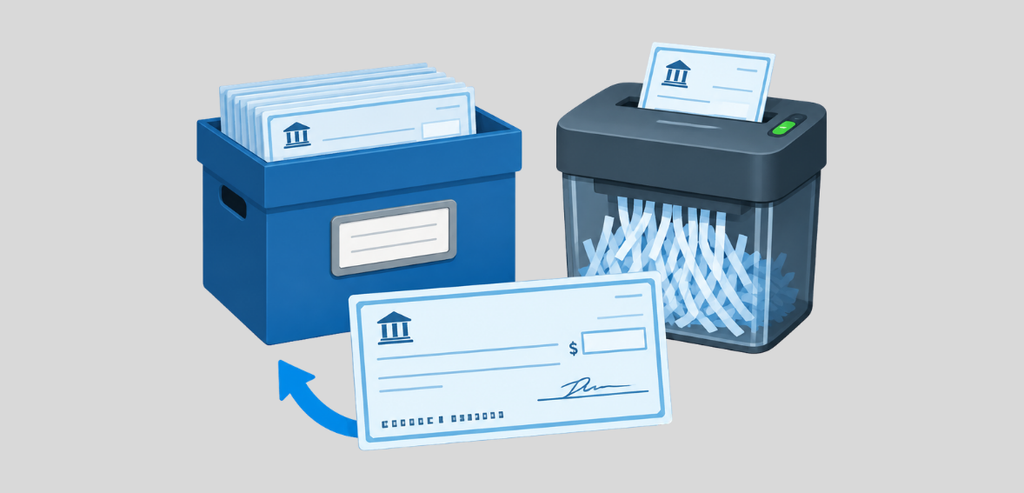
The depositor keeps the paper check after a scan. Federal rules don’t standardize the holding period. Bank RDC and mobile deposit agreements set the holding periods. As such, the holding periods differ from bank to bank.
Chase, for example, requires mobile depositors to hold on to scanned checks for two business days or until Chase confirms the acceptance of the deposit. Truity Credit Union, on the other hand, requires a holding period of 7 days after the date of deposit. RCU’s business RDC requires a 14-day holding period. Stockman Bank requires a 30-day holding period. First State Bank requests a 60-day holding period.
While a case may be made for longer holding periods, scant information exists regarding the practices of banks to ensure the integrity of scanned checks.
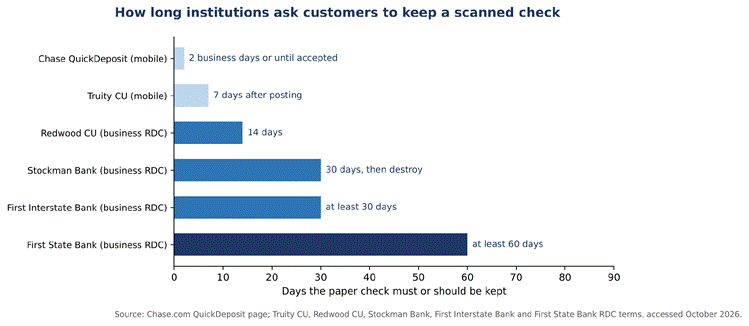
Why retain the paper copy at all? Images of checks can become illegible. Checks can be disputed. Resolving check-related issues over the phone may require the bank to review the original copy. First Interstate Bank, in its RDC annual certification, requires customers to retain the original copies of checks for 30 days in a safe and secure location.
Store checks in a locked area that is not customer accessible. Destroy checks after the 30-day retention period. First State Bank mentions the use of a cross-cut shredder for the destruction of the checks. Each check contains personally identifiable information, and a failure to maintain checks securely can increase the risk of check fraud.
A simple habit can be instituted to reduce the likelihood of a check being discovered to have been previously deposited. Chase instructs its mobile check deposit customers to write “deposited” on the face of the check after it has been scanned. Writing this information on the check makes it easy to identify if a check has already been deposited.
The greatest risk presented by RDC is that a single check will be cashed or deposited more than once. Traditionally, a check’s existence in a physical form allows for copies to be made and presented for payment at different locations.
Regulation CC resolves conflicts resulting from the presentation of the physical copy of a check. Generally, the deposit-taking institution that has a copy of the check in image form receives liability protection in the event the physical copy is paid and returned unpaid to the second accepting institution. The second institution is prohibited from making a claim if the physical copy of the check carries a limiting endorsement stating it is meant only for mobile deposit, or other similar endorsements as deemed appropriate by the depository institution. As a result, a number of financial institutions have adopted policies to include language on physical checks that limits them to mobile deposit.
The second risk is that a check is returned. Checks may be returned for insufficient funds, stop payment orders, or due to fraud. RDC allows financial institutions to act on checks that have later been returned.
Theft of checks from the U.S. Mail has caused a significant increase in check fraud. In 2022, check fraud was the second leading cause of Suspicious Activity Reports (SARs) filed by U.S. Financial Institutions.
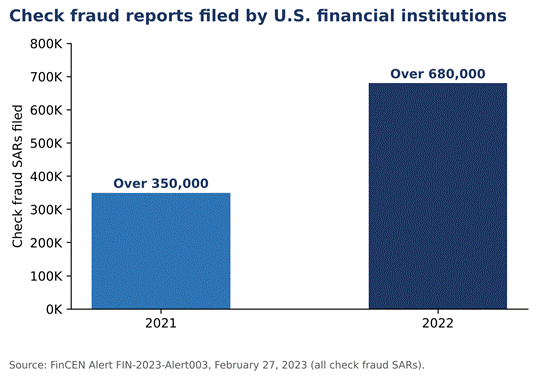
Figure 4. Check fraud reports filed with FinCEN, 2021 and 2022
RDC agreements normally restrict how many checks a business may scan and cap the total dollar value it may scan in a day. First State Bank requires that only checks payable to the business on the account be scanned. Checks payable to other parties should be deposited by a teller.
With remote deposit capture, businesses can electronically deposit checks from their place of business. Check 21 facilitated RDC in 2004, and the clearing of checks in the form of images made electronic deposit of checks a reality. Essential elements for implementation of RDC by a business include a check scanner, software, and a contract with a bank. Fees charged by the banks reviewed in this study range from $30 to $65.
The agreement governs the essential terms of RDC, including the time after which checks are no longer acceptable, the duration for which a check deposited electronically is secured by the bank, maximum checks that can be electronically deposited in a day, and other terms. Federal Law defines the period for which a check deposited electronically carries a hold and establishes indemnity for damages caused by the deposit of a check electronically and another check in the same account. For clarifications regarding interpretation of a bank’s RDC agreement or a loss claim, consult your attorney.
It is a bank service to process paper checks by scanning or photographing them and sending those images to the bank online.
RDC includes mobile check deposit. Traditionally, businesses use RDC by scanning checks and sending them electronically to the bank as a batch deposit.
Your bank determines this. A business RDC agreement may require you to shred scanned checks after 60 days.
The bank may reverse the second deposit. If the check lacks a limiting endorsement, the bank that took the image deposit may be liable.
Reduce Your Fees, Upgrade Your Service.
Your information will not be distributed
We received your request. A payments specialist will reach out shortly.
