

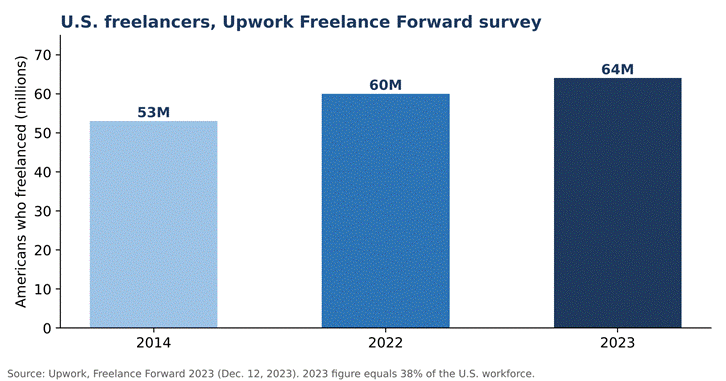
The freelance workforce accounts for a large portion of the U.S. labor market. According to Upwork’s Freelance Forward 2023 report published on December 12, 2023, approximately 64 million Americans did freelance work in 2023. That number accounts for 38% of the U.S. workforce. Freelancers were also reported to bring in an estimated $1.27 trillion in 2023.
Collecting that money is a challenge for many. A May 2022 survey of New York freelancers by the Authors Guild, Freelancers Union and five partner organizations found that 91% had been paid late at least once in their career. Freelance billing software fills that need. It creates a payment page for an invoice, chases payments, and holds on to the documentation a sole proprietor needs for taxes.
This article covers what freelancers expect from freelance billing and invoicing software, how deposits and retainers work, what processing costs are, what changed in the tax code in 2025 and 2026, and what the tools in this category charge.

The main task of a freelancer billing app is to generate an invoice, send it, capture payment, and record the result. Additional features are templates, logos, and color themes.
The NY survey shows where this breaks down. 62% of those surveyed said they’ve lost wages at least once because a client didn’t pay. 54% of those surveyed said they had at least one payment that was past due for three months or more. 39% of those surveyed said they had trouble paying rent or other bills due to late or non-payment. Less than one percent said they’ve utilized the court system to collect payment.
The numbers indicate four things that are more important than design. The first is a way to accept payment through the invoice. The second is taking payment before the work is done. The third is follow-up automation. The fourth is a clear, automatic record of all payments. The sections that follow will discuss each.
An invoice that just has a bank account number requires the client to do more work. A payable invoice contains a button that leads to a secure payment page. The client has the option to pay using a card or bank transfer and finishes the payment process without the need to create an account.
Processors call this a hosted invoice page. The invoicing tool sends each customer a unique link to a page hosted by the provider, where the customer can pay the invoice. The accounting-first tools in this space have similar features within their invoice tools.
How freelancers get paid depends on which rail the money travels on. Card payments have a per-transaction fee and a fixed fee. In the U.S., bank payments use the ACH network and run under the Nacha Operating Rules. Most players in this space cap ACH fees. Published U.S. rates run from 0.8% to 1% for ACH, with caps of $5 to $10 on some tools.
Giving the client the option to pay by card or by bank on the invoice lets the accounts payable process work how its designed to work. It also allows the freelancer to steer larger invoices to the cheaper payment option.
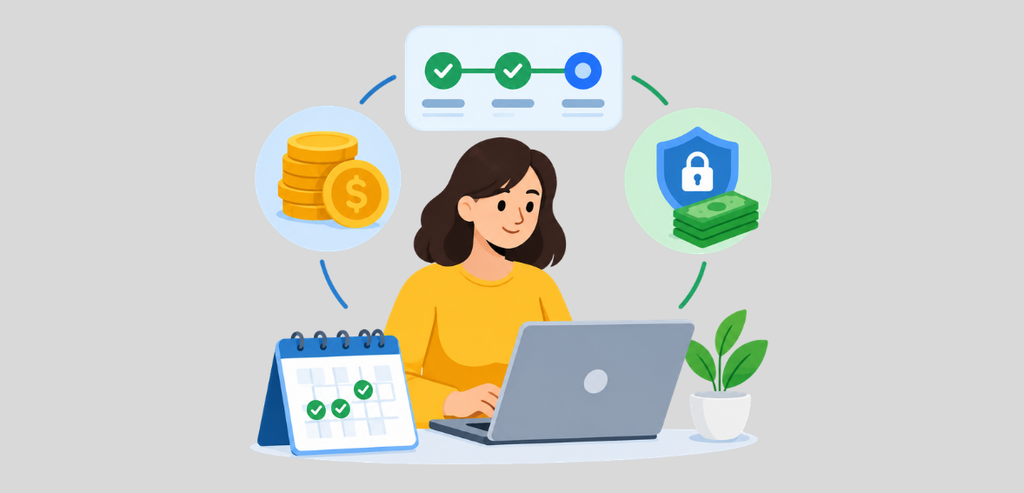
The risk of non-payment is highest after the work is delivered. Freelance invoice payments collected earlier lessen that risk. Billing software manages early collection in several ways.
A deposit is an invoice sent before the work starts. The billing software issues the deposit invoice, records the payment, and decrements the final invoice. The client sees one running balance.
Milestone billing breaks a project into several stages, and each stage has an invoice sent after approval. The client is never obligated to pay more than one stage, and the freelancer always has work done for only one stage.
A retainer is a fixed amount billed for future work. Most billing software manages retainers through recurring invoices. Some accounting-first tools reserve recurring invoices for a paid plan. Some processors offer subscription billing as an independent product, charging around 0.7% of the billed amount on a pay-as-you-go plan in addition to the charge for payment processing.
There are rules surrounding recurring bank debits. The rules are described in the Nacha Operating Rules and Regulation E. The rules state that a debit to a consumer’s bank account requires an authorization that is written and signed. The person collecting the payment must also give the consumer a copy of the authorization. The rules were recently updated and restated in November 2025. The authorization rules may differ for freelancers billing businesses instead of individuals. Rules around bank debits may also differ depending on the processor’s merchant agreement.
Chasing payment manually is very inefficient. A 2024 study by Upwork, conducted by Censuswide and surveying 500 UK freelancers working offline, showed that freelancers spend 30 hours on average in a year chasing late payments. 75% of the respondents admitted to sending chase emails, while 49% actually tracked down a client in person.
Automated reminders replace that work. The freelancer sets a schedule. A common pattern is to send a reminder before the due date, a due date reminder, and a past-due reminder. The software sends the reminders and the payment request, and automatically stops the process when the payment is made.
Most invoicing products allow users to send automated email reminders about missed or overdue payments. Smart retries, which attempt a failed card payment again, are included on some plans. Automated payment reminders are a standard feature of the accounting-first tools as well.
Reminders work better when there is a due date. The due date helps the reminder focus on something. This is particularly important when referring to payment laws, as discussed in the next section.
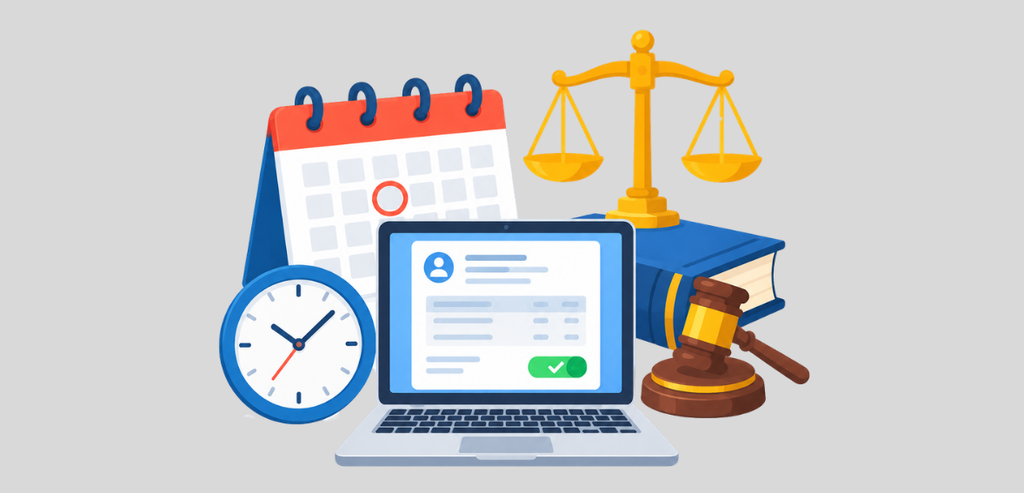
New York City’s Freelance Isn’t Free Act went into effect on May 15, 2017. New York State’s version went into effect on August 28, 2024. Law firm Vedder Price notes that New York became the second state with statewide freelancer protections, after Illinois, on August 28, 2024.
New York state’s law covers freelance agreements of $800 or more within 120 days. The law requires an agreement that contains the scope of work, the rate, and the date payment is due. If no payment date is included in the agreement, the client has 30 days from the date of completion of the work to make payment. The New York Attorney General can seek penalties of up to $25,000.
Freelancers Union reported in August 2024 that the city law had recovered over $3 million for more than 2,500 freelancers. Rules vary from state to state and from city to city. Freelancers outside New York should verify the rules that apply to them with an attorney before relying on any statutory deadlines.
The tools listed in this article process payment fees before sending payment to the freelancer. Standard card rates for the tools in this article range from 2.9% to 3.49%, plus a fixed fee of $0.30 to $0.60. Bank transfers have significantly smaller fees on larger invoices.
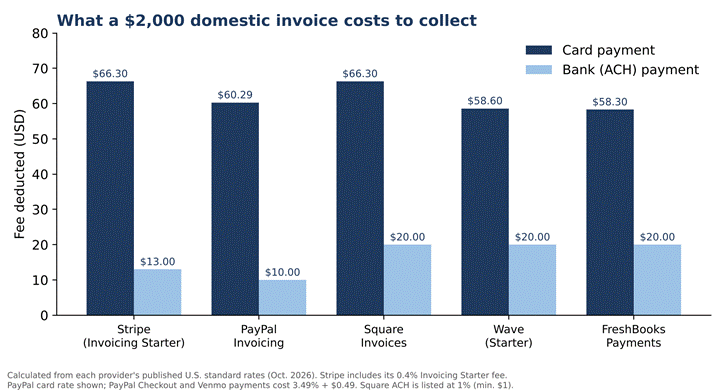
An invoice for $2,000 includes a credit card processing fee of about $58 to $66 at those rates. Using ACH to pay the same invoice costs $10 to $20, depending on the tool’s percentage and cap.
Some freelancers pass card costs to the client through surcharges. Card network rules limit surcharges. Visa and MasterCard have rules to limit credit card surcharges. As of April 15, 2023, Visa reduced its cap from 4% to 3% of the merchant’s cost to accept credit. Both networks prohibit surcharges for debit and prepaid cards. Merchants should confirm any notice requirements with their processor before implementing surcharges.
State law provides another limitation. The Michigan guidance says that merchants must abide by state laws restricting surcharges, and these vary. As stated by the Michigan guidance, merchants can give a discount to clients for cash payment. For a freelancer, practical options to offer are to implement a credit card surcharge, a lower price for a bank payment, or build card costs into the project rate. A surcharge program must be looked at by an attorney and/or accountant first.
Each payment processed through billing software becomes part of your tax record. The IRS states the self-employment tax rate is 15.3%. This rate consists of 12.4% for Social Security and 2.9% for Medicare. The IRS also states that self-employed individuals may have to pay estimated taxes quarterly.
Two reporting thresholds changed under the One Big Beautiful Bill Act, which became law on July 4, 2025. The table shows both.
| Form | What it reports | Threshold | Applies to |
| Form 1099-K | Card and payment app payments, filed by the payment processor | More than $20,000 and more than 200 transactions | Reinstated retroactively; IRS guidance issued Oct. 23, 2025 |
| Form 1099-NEC | Payments by a business client for a freelancer’s services | $2,000 (previously $600) | Payments made after Dec. 31, 2025 |
Source: IRS (IR-2025-107, Oct. 23, 2025); National Association of Tax Professionals.
These limits decide if a form gets filed. They don’t decide if income is taxable. The National Association of Tax Professionals says that a freelancer who receives less than $2,000 from a client and doesn’t get a Form 1099-NEC may incorrectly think that income is not taxable. Payments made by card or using a payment app are reported on Form 1099-K, not Form 1099-NEC, according to the instructions to the IRS forms.
Record retention follows the IRS period of limitations. In most cases, the IRS says to keep records for 3 years. The period becomes 6 years if unreported income is more than 25% of the gross income shown on the return. The period is extended to 7 years if the deduction relates to a bad debt.
Billing software makes this easier, as it can export invoices listed by client, payment, and date. These tools can also integrate payments and expenses, and do bank and credit card reconciliations. Some tools reserve these features for their paid plans.
There are two types of freelance billing software. Payment processors that include invoicing, and accounting tools that include payments. Published U.S. rates for invoice payments across both types run 2.9% to 3.49% plus $0.30 to $0.60 for cards and 0.8% to 1% for ACH, with some tools capping the ACH fee and some charging a monthly subscription.
The New York survey reports that 91% of freelancers experience late payments. Four tools in freelance billing software address this issue: payment links, deposits and milestones, recurring retainers, and automatic reminders.
Cost is more related to payment method than the brand. Based on a $2,000 invoice, the tools in this category charge from about $58 to $66 to use their payment processing feature. Using ACH to process payments costs from $10.00 to $20.00. Freelancers who bill a lot of money save the most using this software by putting a bank payment option on every invoice.
They also use the same system to generate 1099-NECs. The 1099-NEC threshold for 2026 is $2,000 for payments made after December 31. The threshold for 1099-Ks is over $20,000 and more than 200 transactions. Freelancers are required to report all income regardless of whether or not they receive a form.
No one tool fits every freelancer. Accounting-first tools suit those who want their bookkeeping done in the same place. Processor-first tools suit those who need invoices to be paid quickly.
They can charge a fee, but always within the Visa and Mastercard limits and never on a debit card. Offering a bank payment as a lower option is the better alternative.
A client can set up a recurring payment by saving their payment method and authorizing the invoice to charge on a set schedule. Most tools can also set up a recurring subscription for a set amount.
