A business owner must avoid lost sales due to limited payment options. Not accepting customers’ preferred payment methods can often lead to abandoning their carts at the checkout. Instead of experimenting to determine the right payment methods for your clients, you can use this guide to make an informed decision.
We’ll outline the most popular payment methods in the US, explain how they function, and identify the consumers who frequently use them. This information will help you understand which payment types to accept to maximize sales.
A payment method is the approach individuals or businesses use to complete financial transactions when buying or selling goods or services. It includes various options such as cash, checks, wire transfers, credit cards, debit cards, and cryptocurrencies. Payments may be processed at various points: before, during, or after the delivery of goods or services, typically confirmed through invoices or bills.
While buyers can choose their preferred payment method, certain legal tender laws might impose specific requirements or restrictions. Payment methods are essential for conducting transactions securely and efficiently, reflecting the transition from traditional to digital platforms due to changes in consumer behavior.
When selecting payment methods for your business, it’s important to consider several key factors:
Evaluating these considerations will help you choose the most suitable payment methods for your business, ensuring efficiency, security, and growth potential.
Consumers in the United States have many payment options. Keeping up with their preferred payment modes gives businesses a chance to avoid last-minute cart abandonment.
From traditional methods like cash and checks to modern alternatives such as digital wallets and cryptocurrencies, various payment methods reflect users’ diverse needs and preferences. Understanding the most commonly used payment methods can help businesses adapt to these trends, ensuring they meet customer expectations and remain competitive. Here’s a look at the ten most used payment methods in the US right now:
Cash remains a relevant payment method despite reports of its decline. Studies by the Federal Reserve indicate that while cash was used for about 20% of all transactions in 2021, this figure dropped to 16% by the end of 2024. Yet, the benefits of cash, including its immediate liquidity and absence of processing fees, keep it in use.
Offering a discount for cash payments could attract customers and lead to sales that might not have occurred otherwise. However, there are drawbacks to handling cash; it is vulnerable to theft, fraud, and mismanagement. Cash is often viewed as less sanitary, a concern that has grown since the beginning of the COVID-19 pandemic, contributing to its decreased use.
Credit cards provide a swift and easy method for conducting both large and small transactions. Clients can utilize a predetermined credit limit their card issuer provides for in-store and online purchases. Major credit card networks in the US include Visa, American Express, Mastercard, Discovery, and Diners Club.
Accepting credit cards has significant advantages. They facilitate immediate purchases and enable customers to finance larger expenses, potentially increasing sales and customer base.
However, accepting credit cards does come with costs, specifically transaction fees ranging from 1.5% to 6%. While these fees are a consideration, the benefits of accepting credit cards — increased sales opportunities and customer convenience — generally outweigh these costs. To mitigate these expenses, you can choose a pricing model that aligns with your sales volume, such as a flat fee for predictable costs or a tiered fee structure for higher volumes.
Additionally, credit card transactions carry the risk of chargebacks and fraud. A secure payment processing system can minimize these risks and protect your business.
Debit cards function similarly to credit cards but are directly connected to your bank account, eliminating the possibility of accruing interest or incurring late fees. However, transactions can be declined if the account lacks sufficient funds, so monitoring your balance is necessary.
A key benefit of debit cards is that they restrict spending to the available balance in the customer’s account, enhancing financial management. Debit cards also provide convenience and security, as customers don’t need to carry large amounts of cash and can complete transactions quicker than with bank transfers or checks.
In 2024, debit cards represented 41.9% of total card payment values, a slight decrease compared to credit cards. The frequency of debit card use in the US increased to 194.1 transactions per person in 2024, up from 176.7 in 2020.
Automated Clearing House (ACH) payments directly withdraw funds from a customer’s bank account, similar to how you might automatically pay for utilities or a mortgage. These transactions don’t require a credit or debit card; customers authorize payments using their bank account and routing numbers. In 2022, the ACH Network processed 30 billion payments worth $76.7 trillion, marking increases of 3% and 5.6% over the previous year. By 2024, ACH payments are expected to account for nearly half (47.9%) of all B2B transactions.
ACH payments are particularly effective for recurring transactions. As a sales strategy, consider offering discounts for ACH payments to encourage this method. This ensures payments are automated, providing you with a more stable and predictable cash flow.
For example, customers who sign up for a monthly gym membership and opt for ACH payments will provide their banking details once, enabling automatic monthly withdrawals without further action. Similarly, suppose a local business hires you to train new employees. In that case, rather than issuing invoices and awaiting payment, you can use ACH to draft varying amounts each quarter based on the services delivered.
Peer-to-peer (P2P) payment platforms such as Venmo, Cash App, Zelle, and PayPal enable users to transfer money using email addresses, phone numbers, or account information. These platforms are useful for dividing bills, reimbursing friends, or handling minor transactions, with transfer speeds that can be immediate or may take a couple of days, depending on the service. Transactions can be conducted via bank accounts, debit cards, or credit cards and are typically completed with just a few clicks. PayPal is the most widely used payment app in the US, with 57% of Americans utilizing it.
Signing up for P2P payment services is usually free, but fees may apply for sending money, particularly for international transfers. Additionally, P2P apps offer enhanced security features, such as biometric authentication (including fingerprint and facial recognition), to safeguard transactions.
Bank transfers are a dependable and secure payment method for substantial transactions. They transfer funds directly between bank accounts and can be facilitated through online banking platforms or mobile applications. In the US, bank transfers are frequently utilized for settling bills, paying rent, and clearing invoices.
These transactions might be processed via the Automated Clearing House (ACH) network for ACH transfers or executed as direct bank-to-bank wire transfers. Wire transfers are widespread for significant financial dealings, such as real estate purchases.
Bank transfers are highly secure and usually incur a fixed fee for both the sender and receiver, unlike transactions with BNPL services or credit cards, which often charge a percentage-based commission.
Check usage has steadily declined since 1995 as credit and debit cards have become more popular for daily transactions. Writing a check is slower than the quick swipe of a card. Although checks are still legal and issued in the US, their use in retail is rare.
Checks do provide a paper trail, which can be useful for confirming payments in high-value transactions or where payment assurance is crucial. Nonetheless, they come with the downsides of processing delays and the risk of fraud, necessitating cautious management.
Switching to eChecks, these are processed online rather than through the traditional paper method. In the US, eChecks uses the ACH merchant network to transfer funds directly from the payer to the payee’s bank account. Transactions are authorized online or via a signed contract by the customer.
eChecks generally process faster than paper checks and may incur lower processing fees than some credit cards. However, they are vulnerable to security risks such as hacking, which can expose customer banking details, and technical errors that may result in incorrect withdrawals.
To accept eChecks, businesses must have an ACH-compatible merchant account and obtain the necessary banking information from their customers, including routing and account numbers. For business owners, incorporating eCheck payments taps into a lucrative market and can attract more customers, especially considering that 11% of online shoppers abandon their carts due to insufficient payment options. Not providing eChecks could lead to lost sales.
A digital wallet is a software system that enables individuals to conduct electronic transactions, including bill payments, mobile top-ups, and bookings for travel and movies. It also transfers funds between bank accounts, offering a secure and efficient alternative to physical wallets. With a digital wallet, users can manage their financial information and execute transactions without cash or credit cards.
Digital wallets are particularly valued for their ability to facilitate direct peer-to-peer (P2P) transactions, often proving to be a quicker and more convenient method than handling cash. They function as payment apps and provide additional features, such as the secure storage of essential documents. Prominent examples of trusted digital wallets in the US include Google Pay, Apple Pay, and Amazon Pay.
Recent statistics show that 65% of US adults have used a digital wallet at least once in the past month. Furthermore, in 2023, digital wallets accounted for 30% of global point-of-sale transactions, surpassing all other payment methods.
BNPL services offer loans that allow customers to purchase items on credit without needing a credit card. Approximately 40% of BNPL users use this service at least once a month. Projections suggest that BNPL transactions will increase by about 14% in 2024 compared to 2023. Notable BNPL providers include Afterpay, Affirm, PayPal’s Pay Later, Klarna, and Apple Pay Later. This payment option is widely used in online shopping and is increasingly accepted by physical stores.
BNPL services provide a credit option that is accessible even to those with poor credit scores or no credit cards. Typically, there are no initial fees for using BNPL services. Customers repay their loans in installments without interest, provided they do not miss a payment. However, BNPL can encourage consumers to spend more than they might otherwise with cash, a debit card, or a traditional credit card.
The use of cryptocurrency in business transactions is becoming increasingly common. This digital currency is handled through payment gateways utilizing blockchain technology, ensuring that transactions are secure and that cryptocurrencies like Bitcoin are converted into stablecoins, typically pegged to the dollar.
Cryptocurrencies such as Bitcoin are managed on blockchain platforms. These platforms document financial activities on decentralized, peer-to-peer networks. Because blockchains function without governmental oversight, they attract individuals seeking alternatives to traditional, government-regulated financial systems and those who view cryptocurrencies as safer. By incorporating cryptocurrency payments, businesses can cater to these customer bases and enhance their ability to participate in the global digital economy.
A gift card, also a stored value card, works like a prepaid card, allowing you to buy items at various places such as retail stores, gas stations, and restaurants. You add money to the card, and then you or the person you give the card to can use it to make purchases where it’s accepted. Gift cards come in two types: open-loop and closed-loop. Here are some of the advantages of gift cards and vouchers:
How to Accept Gift Cards and Vouchers:
Before start accepting gift cards as a payment method, businesses need to consider:
Bartering or trading is a payment method involving directly exchanging goods and services without money. This exchange method has existed since ancient times and is relevant today, particularly in communities and networks prioritizing sustainable and local exchange systems. It’s an excellent way to obtain goods or services you need without the use of traditional currency. Some advantages of bartering include:
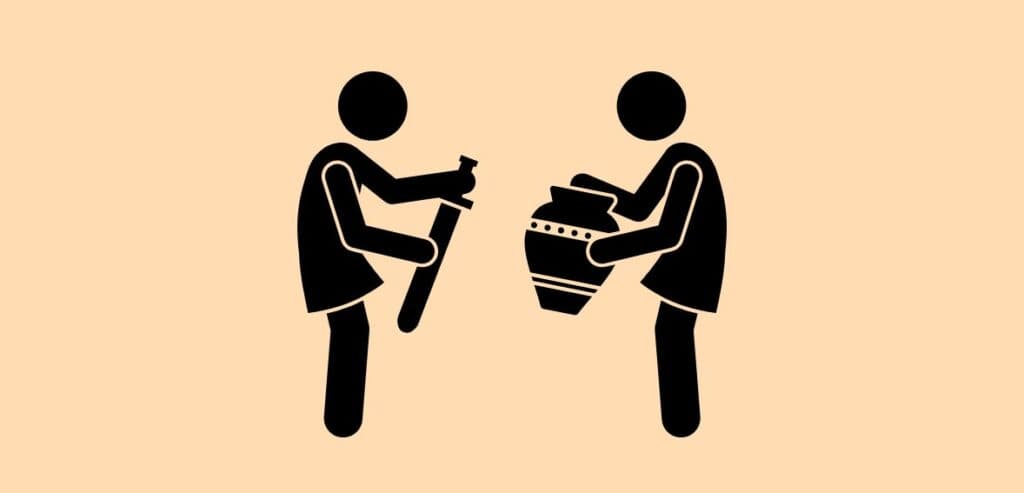
To accept barter/trade payments, businesses should:
When considering barter as a payment method, businesses should be aware of:
Bartering can be a valuable addition to a business’s payment methods, particularly for small businesses or those looking to expand their network and community engagement.
Selecting the optimal methods of payment for your business involves evaluating various options to meet your operational requirements and your customer’s preferences. To identify the most suitable payment solutions, it’s essential to analyze the advantages and disadvantages of each method, ensuring they align with your business model and cater to the specific demands of your customer base.
Opt for payment solutions that minimize obstacles for your customers and business processes. If uncertainty persists regarding the best choice, consider beginning with the most universally recognized and utilized payment method among consumers.
Credit and debit cards are the preferred payment method, offering versatility in in-person and online transactions. This supports businesses operating in both physical and digital spaces. Credit and debit cards are globally accepted, providing customers with a sense of reliability and security worldwide.
Adopting various payment options within your business strategy offers numerous advantages, from enhancing the customer experience to boosting your competitive stance in the market. Here’s a reorganized look at the key benefits:
Offering a variety of payment methods is essential for small businesses to prevent lost sales and meet customer expectations. Understanding the benefits, costs, and functionality of popular payment methods—such as cash, credit cards, debit cards, ACH payments, P2P transfers, bank transfers, checks, digital wallets, BNPL services, and cryptocurrencies—can help you make informed decisions.
Prioritizing features like security, scalability, and ease of implementation ensures that your payment solutions cater to current customer preferences and support future growth. By carefully selecting and integrating the right payment methods, you can enhance customer satisfaction, streamline payment processes, and ultimately drive business success.
Integrating multiple payment methods increases sales opportunities and customer satisfaction by catering to different payment preferences. This can reduce cart abandonment and help you reach a broader customer base.
Each payment method has its cost structure. Credit and debit cards typically charge 1.5% to 3.5% per transaction, while digital wallets like PayPal charge around 2.9% plus a fixed fee. ACH transfers and cash have lower or no fees, but balancing costs with the potential for increased sales is essential.
Security features vary, with digital wallets and platforms like PayPal offering advanced encryption, tokenization, and multi-factor authentication. ACH payments and wire transfers are secure but may provide consumer protection different from credit cards.
Consider compatibility with your systems, transaction fees, supported payment types, and security features. Also, evaluate the processor’s reliability, customer service, and whether they support mobile payments, recurring billing, and international transactions.