
Posted: October 23, 2026
Winter can be a hectic time for plumbing and HVAC contractors. A burst pipe, a boiler malfunction, or a heating system failure can happen at any time and should be addressed immediately. After such emergency service, a customer wants to return to the comfort of their home, while the contractor should be paid for their work. But how can the process be organized to be convenient for both the client and the service provider?
A well-defined procedure for paying emergency calls eliminates misunderstandings and ensures your contractor can get paid for the work performed. Here is how to bill customers for burst pipes, no-heat calls, and other winter emergencies.
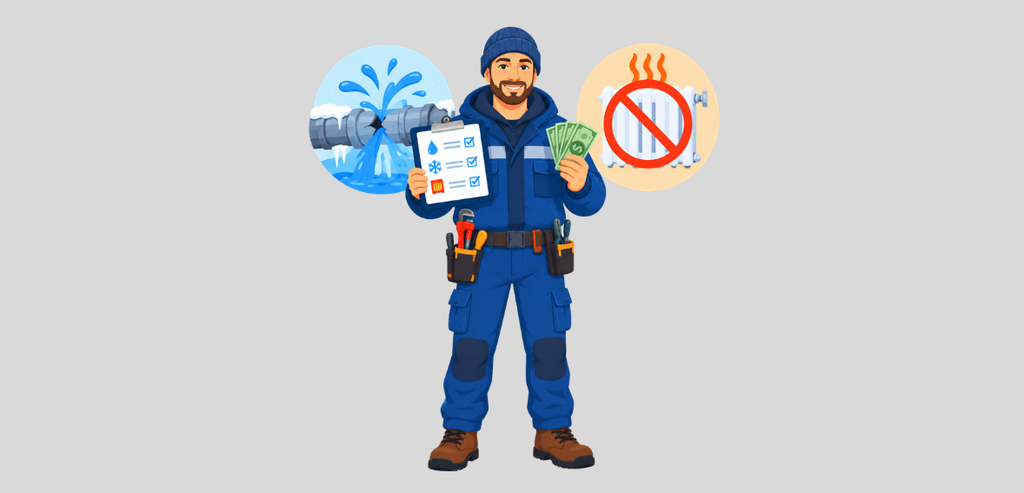
Contractors should discuss their emergency fees before sending a technician on-site, if possible. The quote should include the service call charge, possible after-hours charge, and what the customer should expect to pay for the initial visit.
For instance, a contractor could charge a regular service call rate during business hours and a higher rate for service calls at night, on weekends, or during holidays. Once the technician examines the issue, they may give a different estimate for the repair work.
If you can’t determine the total repair cost over the phone, give the customer an approximate estimate of the fees and let them know when a final quote will be available. Obtain permission before beginning any work outside the original scope.
Clear pricing helps customers make well-informed decisions and gives contractors a better chance of getting paid without hassle.
Emergency calls frequently occur when customers are stressed or cannot make immediate payment arrangements. Having customer payment information before a technician arrives can make things easier for both the customer and the technician.
Before leaving, a contractor can use a secure payment system to collect the customer’s payment details, if the customer agrees. This can help ensure the customer’s payment method and reduce your wait time after the work is done.
However, keeping a card on file does not mean that a contractor can charge whatever amount they want without approval. The customer must be informed about what charges they may be responsible for using their card, such as emergency service calls, approved repairs, and any other disclosed charges.
For example, a contractor who arrives at the scene of a burst pipe can collect the call fee before leaving and provide an estimate of the damage after an inspection. The contractor can then collect the amount due after the customer approves the estimate.
If the contractor must buy expensive parts and/or call in extra labor, the customer may need to pay a deposit for certain emergency repairs. If a deposit is necessary, describe the amount, the nature of what it is for, and whether it is to be deducted from the final bill.
Additionally, contractors should employ secure payment methods to safeguard customer data. Never store the details in a regular note, spreadsheet, or email message.
Agreeing on payment in advance will make things easier later in the day, especially when several urgent calls come in at once.
For many simple emergency jobs, collecting payment on-site makes perfect sense. This means the customer receives and reviews the invoice when the job is complete and pays before the technician leaves.
This method works well for smaller jobs like fixing a leaking pipe, installing a new valve, or repairing a heating system and getting it back up and running. It is also a great way for the customer to see exactly what was done and how much they need to pay.
Contractors should provide all available payment methods, including credit cards and debit cards, where applicable. In addition, technicians can use a mobile payment terminal or an online payment link to receive payments from customers, rather than billing them at the office or requiring a special trip.
For larger repairs, the contractor may need to collect a deposit before work begins and the remaining balance after completion. The agreement should explain when each payment is due.
If additional work is needed, the technician should inform the customer of the problem and give them a new estimate. This matters most in emergency plumbing jobs, where a wall may need to be opened to see the full picture.
Emergency repairs often require technicians to work in challenging conditions. Technicians may find themselves in a flooded basement, facing frozen water pipes, or working in a house without heat. The customer may also be distracted, preoccupied with the emergency, and not remember everything the technician said.
Good documentation protects the customer and the contractor. Document the problem described by the customer, the results of your initial inspection, and the estimate you gave the customer. Also note any emergency or after-hours charges you discussed with the customer.
The technician should also document the work performed, the parts used, and any changes to the initial estimate if the customer approves additional work, and record that information in the job file.
In addition, photos can help document a damaged pipe, faulty components, or a completed repair. The contractor should take them appropriately and respect the client’s privacy.
After completing the work, a contractor should issue an invoice that specifies the scope of work and payment terms. With estimates, approvals, and invoices on file, a contractor can point to the approved estimate if the client later disputes the charge.
This helps in case of a disagreement over the final bill, especially if the customer thinks they were charged too much.
Some winter-related emergencies can cause damage that a homeowner’s insurance policy may cover. For instance, a broken pipe may damage flooring, walls, or belongings. However, the damage may not be covered, depending on the policy’s terms and conditions and the insurance company’s decision.
Contractors should not assume claim approval means automatic payment. The homeowner remains responsible for the repair costs. The customer should be advised that reimbursement may be partial, depending on the insurance company’s approval.
Before starting the large repair, make sure you discuss payment responsibilities with the customer. Ask whether they want to pay for the home repair directly, submit a claim, or use an approved payment arrangement through their insurance company. Clarify which charges are due immediately and which may be postponed and paid under the established payment plan.
The contractor should be ready to provide an invoice that includes all expenses, photographs, inspection details, and other paperwork the homeowner may need to submit to the insurance company to file a claim. Nevertheless, the contractor may not assure the client that the insurer will pay certain expenses in full or in part.
For emergency plumbing payments, it may be best to separate the cost of the immediate service from the restoration work that happens afterward. The contractor can collect payment for the agreed emergency service or repair, and the customer will deal with their insurer on the claim.
If the insurer will pay the contractor directly under an authorized agreement, the contractor should first clarify payment instructions and anything the customer is responsible for, and ensure any deductible or non-covered repair is communicated.

Emergency winter calls may be an excellent opportunity to generate revenue for plumbing and HVAC companies, but they can also breed payment disputes. The customer’s primary concern is a timely resolution. At the same time, the contractor worries about the technician’s time, travel, and parts expenses, as well as the lost opportunity cost of an unavailable technician. A standardized payment procedure will minimize the risk of a dispute by establishing a transparent basis for payment once the work is done.
Pre-call clarification of emergency rates and collection of payment information, when applicable, combined with obtaining a customer’s approval to commence services, is the best way to ensure prompt payment. The contractor should facilitate the payment process by offering multiple payment methods at the site, providing the customer with an itemized invoice, and maintaining organized records of completed services.
Moreover, if a customer’s insurance is involved, the contractor should clarify the reimbursement terms and prepare the documentation to be submitted to the insurer. Overall, these procedures minimize the risk of a payment dispute and ensure the contractor is promptly compensated for their time and expenses.
Make payment collection easier for your business. Sign up for free.
The platform is free to use, with costs covered through payment processing.
Yes, contractors can charge an emergency call-out fee. They have to explain the fee and any additional after-hours charge before sending their technician on site.
Yes, for larger jobs that require parts or equipment to be bought up front or that will take more time.
Confirm who is responsible for payment and whether the insurer will pay you directly. Provide all required invoices and job records, and explain how much the customer should pay.
