Posted: July 21, 2026 | Updated: July 21, 2026 at 9:47 AM
Things go quiet in October. The summertime rush is done, and the winter booking and emergency calls have yet to begin. This is the most stressful time of the year for most home service pros. The trucks are parked, the techs are just watching time pass, and cash flow is about to hit its worst stretch right before the holidays. You are not imagining it, the market really has gone quiet.
This part is important to understand. Winter bookings are not won in winter. They are won in the fall. The customers that keep you busy through December make their choice long before and get on the schedule for a winter prep service or a maintenance plan (or at least save you in their contacts) before the first winter weather sets in.
This is your fall opportunity. What you’ll learn in the rest of the guide is how to use this season in home service marketing to fill your schedule up well in advance of the slow weeks. Throughout the guide, you’ll learn about the winter prep service campaign, the maintenance plan, the review engine, financing, online booking, local visibility, and more. You’ll have a plan for each fall-to-winter season for years to come.
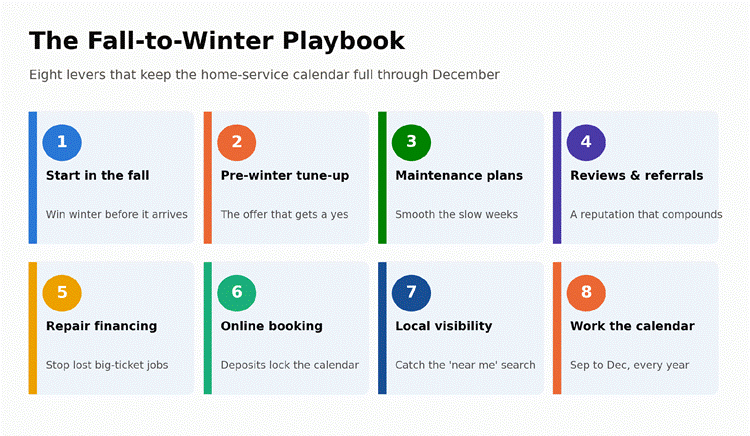
Figure 1. The fall-to-winter playbook: eight levers that keep the calendar full.
Recognizing the seasonal nature of demand will help you tailor your customer experience and marketing efforts to enhance demand for your installations and services. Understanding the natural operational cycle (peak demand, slow demand, and shoulder seasons) of your business will allow you to plan and schedule calls in advance (e.g., during slow-demand periods, schedule calls for peak-demand periods). The slumps in demand will have varying lengths depending on your location (geography).
During July, homeowners are not thinking about their furnace. They are thinking about their furnace (and probably needing the assistance of a contractor) on the first cold morning of autumn, winter, and early spring. If you wait to market until that morning, you will find yourself competing for business with every other contractor and tradesperson in town. Based on recent estimates, the demand for search-based HVAC services has increased approximately 20% per year, with intense spikes following drops in temperature. The cost for those searches also increases during the peak demand periods.
Most owners consider a slowdown to be a negative. In reality, it’s an opportunity. Other businesses are also experiencing a slowdown, so they are working less on promoting themselves. That means that, for the majority of the year, this is the cheapest and least competitive time to contact a homeowner. An advertisement published in September will be less expensive and more effective than one published in January.
There is also a behavioral reason to act fast. When a homeowner finally needs a service, they are rarely loyal to any one company. 84% of people do not have a company in mind when they are searching for a service. The professional who gets the potential client’s attention first will not have to deal with the competition. Fall is the ideal time to get your name out there.
Fall marketing is not about filling this week’s calendar. The purpose is to book the next three months. Every October tune-up you sell means some of your technician time is covered for a slow week later in the winter. Each plan member you enroll means a December visit is guaranteed regardless of what kind of weather you will have to deal with. This strategy is primarily focused on making the trade of a slow or quiet afternoon for a guaranteed appointment later.

The best fall offer, by far, is the heating tune-up. It addresses a major concern for the homeowner, but that isn’t the best part. Believe it or not, it gives your technician access to the inside of the home before the competition arrives. It also introduces you to the larger conversations about repairs, plans, and replacements. It is the only campaign you will need for the season.
A tune-up offer is effective because of its size, timing, and precision. It’s a message the homeowner can understand. Set the price as a reasonable and straightforward figure. Give the offer a weather-dependent deadline, such as “before the first freeze.” Instead of offering a technical checklist solution, offer peace of mind and savings on heating bills. Relief from the fear of a broken furnace on the coldest night of the year is what the customer is actually buying.
Do everything to maintain the simplicity of the request. Having too many offers, or too many options on price or timing helps no one, and reduces response drastically. The tune-up offer is the ideal hook, and should be the primary offer.
Google isn’t going to have the best audience for this offer. The best audience is your own records. Every customer you have has prior trust in you, has seen your trucks, and has your equipment in their home. The cost for reaching out to these customers is much less than the cost for a cold lead, which is between $153 and $275 in this industry. Just sending a short email and a text will usually book more jobs per dollar than you would get from an ad you run.
Your messages to previous customers don’t all have to be the same. The client with the system that is eight years old can use the old system replacement pitch. The one you saw last spring for cooling is also a good candidate for a heating tune-up. Prioritize service history and age of equipment, and then you can create a timely message. A furnace that is almost at the end of its life will need a different email than a system that is still under warranty. It will cost you almost nothing and give your best offer to the customers that are most likely to accept it.

One appointment equals a tune-up. Years’ worth of appointments equals a maintenance plan. This is what you need to transform your seasonal business into a steady business plan. This is the difference between running around for work each quarter and knowing your bookings and appointments are already done.
A service plan is a contract for service that recurs. The consumer is the homeowner. For a small cost, often around $99 a year, the homeowner buys the scheduled service and the perks of being a member. The cost of the plan establishes the baseline for revenue. For a company with 2,000 members, $99 each per year translates to about $200,000 of recurring revenue, and this is before the dollar value of the repairs is calculated. Operators approximate that to potentially earn $1 million in revenue, they need about 500 service plan members.
Positive behavior change is the greater reward. Members increase their spending with your company. Members typically increase revenue for the company by more than two and a half times, compared to customers who are not members. One plumbing company gained a thousand members in one year, and as a result, their company revenue grew from $1.1 million to $3 million. This plan does not just create scheduled service. It enhances the relationship with the customer, and the deepened relationship creates potential future revenue for the company.
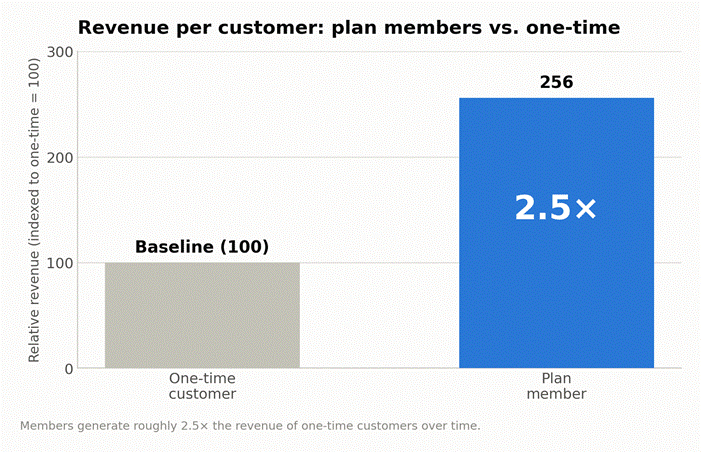
Figure 2. Plan members generate roughly 2.5 times the revenue of one-time customers.
The true innovation of a plan is its visit cadence. An average membership has two yearly maintenance visits. One visit is scheduled in the spring and the second in the fall. You decide when these visits occur. Because of this, you can purposefully schedule member appointments in your slow weeks, which helps keep your technicians productive when walk-in demand is low. Instead of hoping for a breakdown, you are effectively working a calendar that you filled months in advance.
There’s a less obvious advantage to the maintenance visit. Since your technician is in the home of each member twice a year, they have the opportunity to find and diagnose problems that worsen over time before the equipment ultimately breaks. Looking deeper into the data over a longer period for a group of members, it’s reasonable to predict that about 8% of systems each year will need replacing. Due to the nature of the business, the system replacements represent big, profitable jobs, and those jobs will go to the company that is already in the home. The membership fees fund the plan, and the big, profitable jobs it uncovers pay for it all over again.
Reviews and referrals create trust. A well-established reputation is the best marketing tool because it works 24/7 and builds upon itself. For most local trades, nothing is a better investment than the testimonials from your past clients.
Getting reviews is essential. Buyers look for them. Almost 87% of buyers use Google to look at businesses, and about 74% read at least one review for a service company. The service provider who has the most recent and positive reviews gets the click before the call is made.
Getting reviews comes down to timing. The best time to ask for a review is right when the job is done, and the technician is still on site. Make the review request personal and simple. A technician with a simple QR code in their hand will gain more reviews than a simple review request email sent 72 hours later. Make the review request part of every job and watch the reviews pile up.
Customers will refer you for your services, but usually, you have to ask and make it beneficial for them to do so. An easy referral incentive is to offer both the referrer and the referred friend a discount on their next service. The goodwill will convert to a service booking. Additionally, because the new customer is referred, they are more trusting, so they will book a service with you with less price resistance than you would usually expect. If you implement this throughout the winter, every completed job will continually refer you work, with little to no advertising spend.
Winter can be harsh on mechanical systems. A furnace breaking during January can quickly lead to an unplanned four- or five-figure expense for a homeowner. Due to a lack of cost-spreading alternatives, many of your customers will delay purchasing your service, or worse, walk away for a less expensive service. Providing financing can help you keep winter business.
The numbers on offering financing speak for themselves. Deals close about 30% more often when contractors offer financing, and the average deal size goes up by 40% as well. The numbers also show that offering financing is crucial to closing the sale, as about 30% of customers said they would not have bought the product had financing not been offered. When financing is not offered, those larger, more likely-to-close replacement sales are lost to the competition.
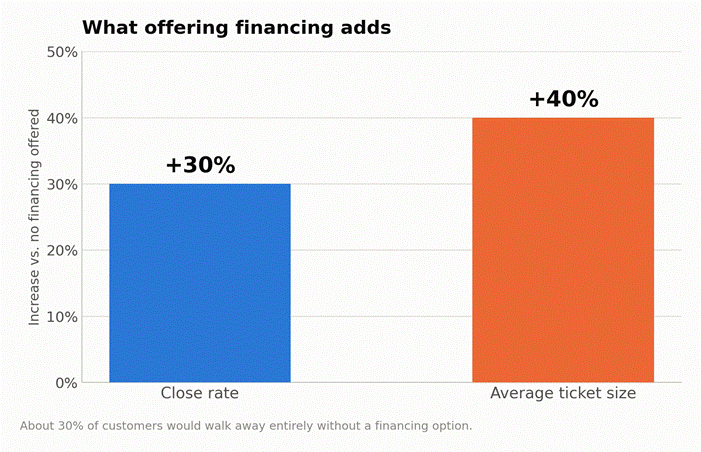
Figure 3. Offering financing lifts both close rate and average ticket size.
Financing is most useful when offered to the entire customer base, not just to the anxious-looking ones. Just like how car dealerships structure their offer, display monthly payments along with the total cost in all larger estimates. Make it look like a standard situation.
A homeowner who sees a value in the form of a monthly payment is much more likely to say yes to the complete and correct solution instead of the band-aid solution. Financing is not the answer to all problems, and customers who are talked into a payment plan don’t serve your purpose. Rather, you want to help the customer manage the monthly cost of the right solution.
Homeowners have adjusted to a new norm when it comes to the booking process. Most homeowners nowadays desire the ability to book appointments with the tap of a screen over waiting on hold. If your business requires a call to schedule an appointment and your competitor offers a booking system that allows appointments to be made at midnight, then your competitor will be taking the business.
The data presented is compelling. Approximately 82% of consumers prefer web-based bookings. Additionally, 40% of bookings made through the internet are completed after typical working hours. Companies that allow 24/7 booking receive about triple the number of bookings. Since about 27% of your missed calls are from customers that are unable to reach your company, creating an online booking platform will help regain that lost call revenue. It will also help bring in additional money, with several studies estimating a revenue increase of 27% during the first year of launching the platform.
While customer-generated online booking creates an easy-to-read calendar, there is nothing to hold a customer to that booking. Luckily, there is an easy solution. Take a small, refundable deposit when a customer books online. This will drastically reduce canceled bookings and will eliminate tire-kickers. It is a safe bet that the customer who booked online and paid a deposit is the customer who will be home waiting when the service vehicle arrives.
This saves the business a lot of potential revenue during the off-seasons, such as winter. No customer means a wasted trip, and the bad weather makes it an even worse loss. Online booking combined with a small refundable deposit drastically improves firm bookings.
This small habit protects your bookings. An automated text reminder sent the day before the appointment helps the customer remember and gives them the option to confirm. Jobs booked online are already showing up at a far higher rate than bookings made by phone. Adding text reminders widens that gap even further. It is a five-minute setup that saves you an empty slot on a cold morning.
Unlike tune-ups, some winter jobs can’t be scheduled ahead of time. Pipes can burst, or your furnace can break at the worst possible time. When this happens, homeowners try to find the nearest plumbing service to help them out the quickest.
First, you want to make sure you show up first when they perform their Google search.
For a small business, your Google Business Profile is your best place to have a digital footprint. This profile is what shows up in the map results when someone nearby searches for an emergency service. The profile that is most complete and has the most reviews, best pictures, and the most up-to-date information outranks the competition. Since almost 80% of local searches result in a visit or a call to a business, the business that shows up first gets the call before the competition is even loaded. Be sure to keep it updated and respond to any new reviews to improve your ranking.
The homeowner in crisis is doing something every homeowner does in crisis. They are asking the question, “Why is my furnace blowing cold air?” and “Is a frozen pipe an emergency?” A few pages or short articles on your website that answer these questions would do two jobs. Help you show up in a search, and benefit you by establishing your expertise, even before the call. You do not need a content factory. A page or two a month on real customer questions is more than enough for most local businesses to gain great visibility over a season.
Strategy remains on the whiteboard without a schedule. The plan is designed so that each piece moves at the moment. Here’s how each lever stacks across fall to ensure the schedule is filled before the cold arrives.
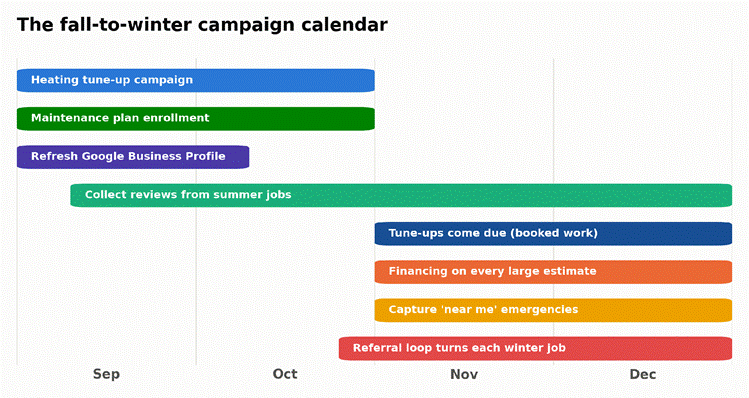
Figure 4. A month-by-month calendar for filling the winter schedule.
Pre-booking occurs in early autumn. This is when you reach out to your customer list for your heating tune-up campaign and ramp up enrollment for your maintenance plans. This time of year, you can also update your Google Business Profile and request customers from your late summer work to leave you reviews. Because the weather is still mild and your competition is still quiet, homeowners will be more receptive. Each maintenance plan and tune-up you get this season will guarantee a booked appointment for later.
In late fall, seasonal work transitions from planting to harvesting. The tune-ups and plan enrollments you planted in September become booked appointments, and your schedule begins to fill for the holiday season. Your financing program becomes the payment method of choice for large estimates as the first cold-weather breakdowns begin to occur. Your online booking, along with your local search visibility, is sufficient to fill the spots left by emergency breakdowns and pre-booked scheduled maintenance. Your referral program turns your happy winter customers into your next winter customers. By December, your schedule is as full as it was during the summer rush.
The off-peak season presents an issue, and all issues are addressed through planning. Winter bookings are won during the fall, when marketing is cheap, and homeowners are still making their winter service decisions. The system works easily. Create an advertisement campaign to get winter services scheduled early. Create service agreements that balance and optimize the schedule during the off-peak season and generate demand for high-revenue replacements.
Use an engine for reviews and referrals that builds up and serves your company for free, and offer service financing to tackle cold winter breakdowns to ensure you don’t lose service calls. Add online booking with a deposit to guarantee service on the scheduled date and ensure your service shows up on local search results.
Although individually none of the above actions are revolutionary, the true power lies in executing them together, consistently, beginning in September and ending in December. The scary quiet off-peak season becomes the season in which you book your best year. Choose one of the actions and execute it this week. The customers who will keep you booked this winter are making their decisions to book service right now; ensure you are their choice.
They book the entire season in the fall. The best strategy combines a heating tune-up campaign for past customers, a maintenance plan for scheduled visits during the slow weeks, and good local visibility for emergency searchers. Financing keeps the large repairs that would otherwise fall through, and online booking and a review engine provide the new demand. When all of these are working together starting in September, the calendar is filled before the cold arrives, instead of after.
Begin in early fall, preferably September and October, before the initial cold front. This is a slow time of year when competitors have receded, and homeowners are still calm regarding their heating. Releasing your tune-up offer and plan enrollment during this time allows you to schedule appointments for November and December. If you wait until the deep winter to schedule appointments, you will have to spend more for leads and compete with other contractors for the same desperate phone calls.
Yes, they are one of the best options available. Usually, plans include two visits per year, per your schedule. Place visits during your slow weeks, and you’ll have a reliable baseline of work. Plans level out work that is unpredictable due to the weather, and they build steady income for your business and improve the loyalty of your clients. Your clients spend significantly more over the long run when you compare them to one-time clients. Typically, your clients will spend the most on the major replacement jobs that maintenance visits identify.
Request feedback when things are at their best, right after a job and while the technician is still there. Make it easy with a direct link or a QR code on site rather than sending it by email later. For referrals, give an easy incentive to your customer and to the friend they send. Since most people read reviews to select a business, loyal, recent reviews help you the most to get the next booking.
Yes, for most home service companies, this is true. A winter breakdown can run into the thousands, and most homeowners cannot pay that all at once. With financing, they can approve the expense, and the company wins with a higher close rate and higher average ticket as the job doesn’t walk away to a lower bidder. Offer a monthly payment plan for large estimates so that cost is not a deciding factor for the homeowner.