merchant services

Top Merchant Services Trends to Watch in Fall 2021 and 2022

The past year has been full of surprises for merchants, processors, and everyone involved in the payment processing ecosystem. There have been many unexpected highs and lows, but overall the trajectory of the industry has been positive despite some immense challenges. We saw the evolution of payment channels to handle consumer demands and COVID-19 threats. Governments imposed social distancing rules. Customers of all ages quickly shifted to contactless digital payments. There are many important and emerging trends to watch in merchant services through fall 2021 and into 2022.

COVID19 had a major impact on the economy over the past 18 months. While it isn’t going away anytime soon, we have reasons to be optimistic about the future. A study by JP Morgan showed that about 54% of consumers said that they started using digital payment tools more due to the pandemic. There have been significant developments in the industry, and looking at the trends we have all the reasons to be excited about merchant services in 2022.

Here are the top merchant services trends to watch in the fall of 2021 and 2022.

#1. Online Shopping Changed Digital Payments

When we had the COVID-19 first wave, we saw more and more consumers using online services. And businesses had to adapt to the new situation. A study showed that more than 76% of companies agreed that most consumers are now using different payment methods. Digital wallets are now a new normal and people are using them in buying all types of things over the internet. Even those customers who were not comfortable sharing their financial details with businesses have started to shop regularly. More than 18% of the consumers shopped online for the first time during the pandemic. People became confident and habituated to online payments. 38% of consumers said that even after COVID-19 is entirely gone, they will continue to shop online more. This is one of the most encouraging signs for merchant services trends that are going upwards in 2022. It is expected that even after 2022 it will grow exponentially.

#2. Spending and Tracking Tools for Payments

During the pandemic, the businesses saw that consumers had a different paying pattern. They also saw that consumers needed to manage their spending accurately too. With the rise of multiple digital wallets, consumers are getting added advantages. With wallets, the biggest advantage is that they now have a clear picture of how, when, and where they spend their money. This trend was accelerated further due to the COVID-19 pandemic. There are many mobile apps that offer wallets and quick payment options. They also offer you options to manage your spendings and also provide financial advice. With the use of AI (Artificial Intelligence) in future apps, it will be easy to track and control spendings.

#3. Increased Use of Biometric Authentication

The first factor that shook the payment industry is PSD2. The industry will see a significant impact on the growth trends next year. This is also because the time limit to implement the PSD2 strong customer authentication was ending soon. From January 2021, the transactions without any multi-factor verification will be automatically declined. We will witness a significant increase in the use of biometric tools for payment verifications. A study by Juniper Research also predicted that the use of biometric verification for transaction value would be more than $210 billion just in 2021. And the figure will touch $3 trillion by the end of 2023. This trend will increase in the coming years. With the introduction of compulsory biometric verification, people have started to trust online payment gateways. They feel it is far safer now to spend online. Thus the increased use of biometric authentication has boosted the trend in a positive direction.

#4. Global Rise in Real-time Payments

With the COVID-19 pandemic, experts predicted that real-time payments would see good growth in the US. This trend was increasing in 2021 where the value of real-time payments increased by more than 50%. But it did not just limit the growth to the US. One of the studies predicted that real-time payments will grow at a rate of 29% globally between 2020 and 2025. COVID-19 started the trend of real-time payments and will also accelerate its growth in the next year too.

#5. New Focus on 5G Technology

The year 2020 also saw a prediction about the growing importance of 5G and IoT. Where the pandemic accelerated many expected trends, the adoption rate of 5G slowed down. At the same time, far more people were spending much time at home, entertaining themselves over the internet. The number of people who shopped online grew exponentially. And the 4G could have not matched this overload. It failed miserably. 46% of businesses agreed that they lost sales due to slow checkout times. All credit to the 4G technology. The businesses wanted a frictionless in-store experience for their customers. So they now have started shifting their focus to 5G technology to overhaul the store checkout time. The sooner 5G technology is adapted by the market, the better results for merchant services trends in 2021 and 2022.

#6. A Steep Rise in Subscription Models

The pandemic saw many businesses launching their subscription models because of the business need. The customers were also looking for more benefits and they also showed great interest in subscription-based services. More and more customers were planning to increase their subscriptions from what they had earlier, and the age group of 18-34 years was a frontrunner in this trend. Surprisingly, this trend was not limited to digital services only. The famous Pret A Manger coffee chain started its in-store subscription service for coffee in the UK. The subscription model was a success and many businesses will use it and replicate a similar success for their products and services.

#7. Crypto Payments Go Mainstream

Anything that can boost the entire ecosystem of merchant services in the coming years is the use of crypto payments. The fintech companies have been working to find more real-world use for cryptocurrencies. Initially, it was a big challenge to start a system of crypto payments. Big projects like Facebook Libra saw significant setbacks due to regulations. 2021 saw a breakthrough in eCommerce payments. Many big payment processors announced that they would be enabling payments in cryptocurrencies at merchant locations as a priority. This is encouraging and will certainly boost the online payment numbers in the years to come.

#8. Using AI and Machine Learning to Prevent Fraud

AI is comparatively a new technology. But the rate it is growing is astonishing. And the banking sector was the pioneer in implementing this technology. As this technology grows, the online payment gateways will get more secured and robust. For the last few years, online crimes have been increasing rapidly. And the only way to control this is AI implementation that can learn fast and respond with enhanced security. Banking sectors need to expedite the process of implementing AI systems because during the corona pandemic online transactions grew multifold. And fast implementation of AI to protect consumers and merchants is the need of the hour. Although a recent report shows that banks have spent more than $217B for implementing AI. And they plan to implement it further and faster to safeguard consumers from any type of fraud.

#9. Payment Apps with the Customer Loyalty System

Businesses are not only adapting digital payments but also encouraging their customers. They are pushing their customers to use the digital mode for transactions. To do so they offer rewards, discounts, loyalty points, and various other loyalty schemes to their customers. The customers have responded well. Each time they make a transaction, they get benefits. This is a mix of traditional and digital systems. The customer loyalty program has been successful in the past and it will still define merchant services trends in 2022 and beyond.

#10. Peer-to-Peer Payments Merchant Adoption

Another prediction that came true was about the increase in peer-to-peer payments. In the US alone, more than 50% of consumers are now using P2P apps. The use of cash has been declining. The use of apps to send money to family and friends is increasing rapidly. And this will see faster growth in the next few years. But this growth will not be for the US alone. Other regions like South America will also see an explosion in the use of such apps. P2P networks have been positively pushing the merchant services trends since the beginning of the pandemic. And it is expected that this trend will continue to grow upwards for many more years to come.

time is money 8964120

What You Should Know About Real-Time Payments

The democratization of something is often used too loosely and in many industries and business practices. The democratization of shopping, renting, buying, traveling, and particularly finance. The over usage of this term does not apply to payments transfer over the past decade. With the advent of smartphones, better internet, and peer-to-peer payments are virtually real-time within the U.S. and many developed countries worldwide.

The Past, Present, and Future

Western Union first started to issue employee salaries via non-cash payment with a metal plate card in 1914. Throughout the ’50s and ’60s, payments networks such as American Express, Mastercard, and Visa emerged as payment networks that began facilitating trade. This paved the way for the magnetic-stripe POS system in the ’70s and ’80s, which went wireless in the ’90s.

Today, non-cash transactions make up more than 80% of in-store sales. Non-cash is the preferred method of payment for a growing number of transactions. Payment networks continuously look for ways to capture a larger piece of the payment’s universe, particularly the tail-end of the payment ecosystem, such as small ticket items such as candy bars and large ticket items like cars.

Advances in payments processing have made the world both smaller and safer and have allowed trade to grow in the form of e-commerce and mobile payments and digital wallets.

However, there still are key barriers to overcome. Payment settlements are not quick. In many cases, nor is it cheap. Even with automated clearing house (ACH) transactions, which has reduced the cost of payments and processing time down to a matter of one day, instead of the average three days, merchants would still prefer to have the funds for the goods sold right now, as is the case with cash.

Enter Real-Time Payments (RTP)?

That is what Real-Time Payments (RTP) accomplishes. Although RTP is not a new technology, it has been adopted only recently in the U.S. In the ’70s, Japan introduced the first RTP, and today it is estimated that over 50 countries have an active RTP system implemented.

RTP allows payments and data to flow extremely fast, settling payments instantaneously. The Clearing House (THC) unveiled the U.S. iteration of the RTP in 2017 and now processes payroll, B2B, P2P, and RFP transactions, among others, in real-time.

How does RTP work?

Real Time Payments

The closest to RTP so far has been Next Day Payment and ACH Same Day Payment. They are usually traditional payments processed very fast. They have a specific cutoff time for transactions to be assigned to particular dates and then processed.

ACH Same-day funding and Next day funding utilize batch submission that happens faster via the ACH network and, depending on the cutoff times of the day, has the payments transferred to sellers in a matter of hours or overnight. 

Real-time payments are different. RTP is the collection of financial information and verification of user identity between the seller and the buyer that is settled, and funds transferred at that very moment, effectively in real-time, like cash. The following steps are involved in this exchange:

  1. The seller submits a Request for Payment (RFP).
  2. The buyer submits payment details.
  3. The payment is settled once the seller receives payment details and confirms authenticity.
  4. The buyer confirms the finality of the transaction.

These steps happen in a matter of seconds, if not microseconds.

Even with the fastest existing payment rails, merchants must wait overnight to access their funds if the processing is done by a specific cutoff time. The system is available 24 hours a day, 365 days a year, even on weekends and holidays with RTP.

Benefit

There are numerous benefits for all types of users using RTP. First, Merchants can get their funds immediately. If there are issues in processing a certain payment, the merchant will know of it in real-time.

Another benefit is that the RFP is available 24/7/365, including holidays. So anyone can transact at any time, and the payment is cleared, and funds settled immediately.

This system can translate into actual dollars for firms. Any business processing payroll will not need appropriate funds and processing fund transfers out of their bank accounts a day or two before the paycheck date. Businesses can process payroll and have the funds withdrawn at that date.

Risks

As with any innovation, there still are cracks in the system. The biggest hurdle will be adoption. As the system gains traction, many financial institutions will be late adopters, which will not be able to accept RTP payments. Until there is mass adoption as banks and financial intermediaries ramp up their technology infrastructure and security, it will not be easy to gauge the impact of a new payment system.

Furthermore, although there will be a heightened level of security surrounding the new payment rails, any fraudulent transactions that slip through the system will also be processed just as quickly as any other real-time transaction. This will create more hurdles in monitoring and tracing transactions involved in theft or other criminal activity.

Federal Reserve’s FedNow 

The U.S. Federal Reserve Board is also expected to enter the fray. The central bank announced in late-2019 that it was developing an RTP rail called FedNow and will launch in 2023. As of early-2021, over 200 financial institutions were participating in the FedNow pilot program, supporting the rail’s development, testing, and implementation. These financial institutions also included several payment processors that are part of developing the technological integration requirements to sync with FedNow to adopt the RTP.

The payments industry has experienced many changes, with a history ripe with ingenious innovation. More and more firms enter the market to take advantage of the latest technology to facilitate trade and transactions at breakneck speeds. Now, thanks to real-time payments, merchants and consumers alike can benefit from a payment system that is both cheaper and settled instantaneously.

selective focus to customer hand holding smart phone to scan qr code payment 188176594

Advantages and Disadvantages of QR Codes

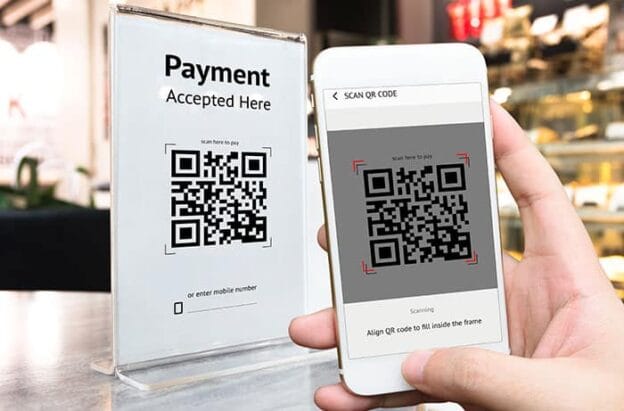
QR or the quick code has become a popular technology used extensively by many retailers around the world recently. Unlike the regular bar codes located on the commercial packaging, the QR code is a comprehensive code that can be scanned and decoded with smartphones. The best example of a company using QR codes for in-store payments is Starbucks.  

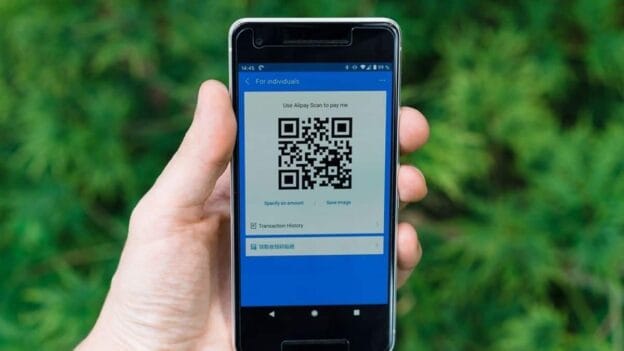
It may look as simple as the black and white squares, but these codes have the capacity to store a large amount of information. They make an excellent option for connecting the offline and online world seamlessly. Customers can make payments through QR codes by scanning them using their smartphones, and the retailers can accept payments directly to their bank accounts or mobile wallets with these codes. 

A Brief on its History

Denso Wave, a famous Japanese automobile manufacturing company, launched QR codes back in 1994. The main purpose of launching these codes was to deal with the limitations of barcodes. 

The quick response code was designed to store infinite information within small white and black squares. These codes started gaining popularity in Japan in 2002 when the country launched smartphones with the ability to scan and read QR codes. Since then the popularity of QR codes has skyrocketed.  

QR Code Advantages

A QR code is used as a marketing tool to attract more people to your business. It’s one of the ideal ways to turn your prospects into regular customers. Here are a few major benefits of using QR codes for your business.

  • Good for Networking

As mentioned earlier, QR codes are not the regular barcodes printed on your company’s package. It is a marketing technique that can get your customers to your Facebook, Twitter, and LinkedIn pages. Bringing your audience to your social media means higher engagement and more attention. These people will spread the word about your brand to their social media friends.

  • Call-to-Action

You can use QR codes to direct your audience to instructional posts, websites, landing pages, emails, and trailers. Businesses have started linking these codes to the email and call function where people are directed to your email page as soon as they scan the code. Some retailers allow their audience a huge discount if they scan the QR code. 

  • It is Versatile

Another advantage of QR codes is their versatility. You can use it for a wide variety of purposes ranging from social media marketing to online transactions. In addition to directing people to your landing pages and social platforms, a QR code can be used to make payments. You can integrate different payment methods into your QR code, thus allowing your audience to choose a convenient payment option.

  • It Makes You Creative

Ideally, the QR code is the black and white squares that can be scanned in simple taps. However, it comes with infinite creative possibilities. You can make it look super interesting by using a personalized and colorful QR code, designed for your business. It’s a great way to make your brand stand out from your competitors and attract a wider audience.

  • Your Customers Find Them Attractive

Customers like QR codes for a few reasons. For starters, they are easy to use. All your customers need is a simple scanning and they will be taken to your company’s landing page or email address. They no longer need to write the website address or remember the email. 

Besides, only a few people remember to visit your website later. QR codes make your customers’ life a lot easier by allowing them to visit your website by scanning the code. If you make it easier for your audience to find the latest offers and connect with your brand, there is a good chance they will convert. 

  • It Helps You Go Digital

With QR codes, you can save time and money on traditional advertising campaigns. It is the ultimate way of going digital with your business. You no longer need to get posters, flyers, and other paper materials for your company’s publicity. 

Instead, a QR code is all your customers need to find just about any type of information about your business – be it the latest product launch or your website’s landing page. It also saves you the cost of traditional marketing methods. Printing flyers and brochures can cost you hundreds of dollars. QR code, on the other hand, is a one-time investment.

Disadvantages of QR Codes

A QR code comes with a set of limitations for businesses and customers. Here are a few disadvantages of using QR codes.

  • Not the Best Customer Experience

QR codes were designed to direct people to the company’s social media, landing page, and other informative content in a single snap. However, your audience needs to download a QR code reader in order to make it work. So, for those who are not comfortable with installing a new software app on their device, the QR code is not a viable option.

  • You May Have to Offer a Better Reward to Your Audience

A QR code is useful for businesses that are willing to offer exciting rewards and promotional deals to their audience. So, just linking your social media or directing your users to your email may frustrate your customers, as this is the basic information. If you don’t have any special discount to offer, the QR codes might not work for you. 

  • It isn’t Accepted by all Customers

QR codes can get your business on a digital platform, but it is not embraced by customers looking for traditional marketing techniques. If your audience doesn’t know how to use the QR codes or they aren’t comfortable with it, they will never convert. So, it is better to stick to the conventional advertising methods than a QR code, which may confuse your target audience.

Bottom Line

These were the pros and cons of QR codes. While the technology works as a solid marketing tool to expand your reach to a wider audience worldwide, it comes with a few drawbacks.

word writing text buy now business concept for asking someone to purchase your product provide good discount writing 166946211

What Are the Risks of the Convenient Buy Now, Pay Later (BNPL)?

Buy now, pay later has taken off over the past few years. Maybe it’s the psychological factor driving adoption and growth where the consumer gets instant gratification of being able to buy what you want right now. Or it’s the new watered-down form of financial engineering giving the masses freedom to make a purchase, even of small-ticket items.

There are benefits of this buy now, pay later phenomenon. However, there are considerable inherent risks in the behavior this program encourages. Below we’ll explore buy now, pay later, how it works, its pros and cons, and who are the biggest players offering the service.

What is Buy Now, Pay Later?

As the name suggests, buy now, pay later lets consumers make purchases now and then pay for them in installments. This segment of payment types is fast-growing compared to debit and credit cards. The service is a relatively cheap, if not free financing option that approves almost all types of customers. Another benefit to the shopper and one Fitch Ratings has cautioned about, is that buy now, pay later service seldom have reporting requirements to credit agencies about the debt a consumer is incurring, or even adverse payments histories resulting from these payment plans.

Convenience and speed by which a buy now, pay later allows shoppers to complete the transaction and get their product is another factor driving mass adoption of payment options.

How does the service work?

The actual client of the buy now, pay later industry is the merchants, not the consumer. Merchants partner with buy now, pay later service providers to sell their products to consumers. The service provider works a factoring service, taking on the risk in exchange for a small margin of the sale price and collecting the monthly payments from the consumer.

For consumers, the transaction can be potentially interest-free and without any fees, as long as the payments are made timely.

Why is it such a big deal?

Buy now, pay later is gaining a lot of traction lately. Large players offering the service are being listed on the stock market at lofty valuations. What was once offered as a service via a partnership with merchants, more and more businesses are considering building out their own offerings with more control over data and pricing. One of the largest consumer hardware companies, Apple, has partnered with Affirm to offer buy now, pay later services in select jurisdictions. This announcement came after the company is reported to be building its own services called Apple Pay Later, with Goldman Sachs.

In August 2021, Square announced that it would be acquiring Australian-based Afterpay for $29 billion in an all-stock deal, making the transaction the largest acquisition of an Australian company.

Many consider buy now, pay later a nascent industry with a huge opportunity for growth as it makes a small piece of the $3.4 trillion e-commerce industry, or the $7.1 trillion cashless transactions space.

What are the benefits?

Considerable benefits are driving the adoption overall, particularly the younger demographics. There is a general shift away from non-cash transactions. The convenience of conducting transactions quickly, and via mobile devices has been a prerequisite for some time. Now there is also instant gratification. Consumers who would have historically waited to save to make a purchase can now simply purchase right away and allot their savings to installment payments.

However, consumers have also become price-conscious over the past year and a half, prompting consumers to shop smartly. They have jumped at opportunities where BNPL  service providers offer the option to make interest-free installment payments in exchange for timely payments.

What are the risks?

Of the number of benefits available in the industry, the risks are also tantamount. There is the possibility of regulation which buy now, pay later service providers may be required to be treated like banks. They may also be required to disclose information on consumer credit and credit quality reporting. The industry may also come under further scrutiny of consumer watchdogs around the globe, where many of the program covenants are reminiscent of payday loans, including no interest or fees unless there is a late payment.

There is also the potential of consumers not realizing the limits of their own spending habits and may end up accumulating more debt than they can afford to make purchases of items they may not necessarily need.

That leads to the next risk, buy now pay later leads to overspending. Consumers purchase more often and are emboldened to spend on big-ticket items. Based on a survey by a buy now, pay later service provider, many consumers would balk at the purchase if the service was not an option. These exact facts and figures are used to market the product by the industry as more and more merchants see this as to quickly increase sales, cash flows, all without any consumer credit risk.

For merchants, they may lose out on 3-4% of the sale proceeds to the buy now, pay later service provider, but the added sales is more than the markup for any margin shortfalls. Plus, businesses may just be breaking even on the margin shortfalls as they no longer have to incur payment processing fees.

Who are the major Buy Now, Pay Later service providers?

There are several large players in the budding buy now, pay later industry. Many large consumer product companies are looking to capitalize on the payment industry shift by offering their own version of the service, namely, Apple Inc.’s Apple Pay Later.

One of the largest service providers in the industry is Swedish-based Klarna, with a valuation of nearly $46 billion. The company has processed $39 billion in payments in the first half of 2021.

Another major player is Afterpay, an Australian company that Square has just decided to pay $29 billion for. Other smaller players include another Australian-based company called Zip and the San Francisco-based Affirm.

digital marketing banking payment and online shopping businessman touching global business networking on colorful background 172987534

Trends to Global eCommerce Success

Global eCommerce is a necessity in this digital age. The borderless business has gained immense popularity. Most of the credit goes to social media, search engine marketing, SEO, and other digital marketing campaigns. Not only does it benefit retailers, but the advent of online businesses has made it possible for customers to shop for products from any corner of the world and make payments online. 

The mobile and internet are the main components that drive maximum sales for businesses running on a global scale. Even during the pandemic, global sales witnessed a growth of 25%, according to a report published by Statista. And, credit/debit cards and PayPal were considered the most sought-after options for payments. Here are a few common trends for global eCommerce success.

global ecommerce

Global eCommerce –Mobile Shopping – A New Normal

With land-based stores shutting down overnight, customers were left with no other option than to buy things online. Technological advancements and M-commerce have made customers’ lives a whole lot easier, as they can purchase just about anything with simple clicks. 

The product is delivered to their doorsteps and the payment is processed either online or through credit card machines. The Mobile e-commerce industry is expected to be worth $3.56 trillion in 2021, according to Oberlo. The pandemic has made mobile eCommerce an efficient way to shop for goods online, not only for customers but for B2B sectors and wholesalers as well. 

Global ecommerce trends - mobile shopping

This trend is expected to continue when the pandemic ends and everything goes back to normal. Considering its current popularity, it is safe to say that mobile shopping is not going out of trend anytime soon. 

Shopping Overseas is Easier than You Think

Going global was a big step for any business before the digital era. However, the Internet has transformed the way businesses are executed. You do not need a global presence to go global with your brand. Nowadays, buyers are often looking for purchases outside their countries. So, setting up a borderless business is a breeze. 

You don’t need to set up a warehouse or fulfillment center for international merchants or have a separate office in the countries you are covering. Cost-effective marketing combined with a broad range of advertising tools makes global business ideas a success for emerging businesses. Geographic targeting can help companies target the international audience and promote their brands to people based in different corners of the world effortlessly. As far as product delivery is concerned, many international courier delivery companies offer discounts on bulk shipping. So, you can have your products delivered to your international customers at a reasonable delivery cost and without any hassle.

Understanding the Product Market

Your product market is different for every region. For example, the demand for deodorant in China was always low because of biological reasons. Despite the solid marketing tactics, the product never gained popularity in this economy. 

So, a product market should always be your first consideration when going global. Research the demand for your product in the particular region, along with potential revenues, and opportunities. There is no point in targeting a region where there is no market for your product or an area where customers are not interested in your services. Research the market thoroughly before promoting your brand. 

Understanding the Product Market

Monitoring the Global Analytics

Analytics is the key to a successful global marketing campaign. Google insights tell you how your business is performing on a global scale and whether you are reaching your target audience. A global analysis gives you comprehensive details of your business’ performance in different regions. 

Check out the traffic to your websites and social media by country data. Note down the countries with the highest traffic and also the regions where you are attracting a large audience but low conversions. This shows that the demand for your product and services is high in certain regions, but people don’t buy from you because of the onsite barriers, such as language, currency conversions, and more. Focus on addressing these issues to extend your reach and build audience engagement. These stats show you the data that will help you target countries with the best product-market fit.

Local Language is Important

Another trend in the global e-commerce business is the language. The language is often a communication barrier for your international audience, especially in regions where English is not the first language. Translating your content, including product descriptions, return & refund policies, terms & conditions, and blogs into your audiences’ first language is the easiest way to connect with your prospects. It also increases your chances of converting your prospects into loyal customers.

Posting content in your customers’ native language has a significant impact on your brand’s success in international countries. You can offer a native experience to your target audience by getting your website translated into their native language. According to research by CSA, 65% of customers want website content in their native languages. 40% of customers do not buy products from a company that doesn’t translate the website content into their native language. 

Customers Prefer Different Payment Methods

One of the common mistakes of startups and SMEs is choosing a payment method that works domestically for the international audience. The payment preferences of customers vary by country. In some areas, PayPal is the most suitable payment option, while buyers in other regions may use credit and debit cards for online shopping. 

More and more customers are now adapting to digital wallet payment methods, such as Apple Pay, Google Pay, and PayPal for instant transactions. The online payment modes offer great perks. For starters, they transfer payments immediately. Moreover, they are easy to use.

Bottom Line

If there is one thing we have learned from these trends and stats, it is that global eCommerce is no longer a luxury, but a must for every business. The size of your business doesn’t matter, as it has nothing to do with your ability to go global. So, take advantage of these trends and expand your business on a global level.

close up of mobile phone screen with logo lettering of food delivery service grubhub on wood table with dish and cutlery 205467998

Online Orders Through New Clover and Grubhub Integration

Grubhub, the United States’ popular food payment and delivery marketplace, and Fiserv (the fintech company that has launched the Clover® payment solution app) have announced a partnership recently. They released a press statement that showed how the companies have decided to collaborate in order to make the food delivery and payment operations smoother for independent restaurant owners.

This integration is for the food retailers and restaurant owners that often struggle with food management and delivery processes. If you struggle with different point-of-sale units for food delivery, menu updates, and order processing, you should definitely give this integrated service a try. The best part is that the service is available for even those who are not using Grubhub, though it is available for a limited period only and you may have to subscribe to Grubhub to receive the ultimate benefits of this partnership. 

Grubhub and Clover – What are They Used For?

Grubhub is designed to connect over 33 million food lovers with the local restaurants, enabling them to order food from their favourite place and enjoy the meal at home. The food is then delivered to their given address, and the payment is processed through mobiles. 

Clover software app is also built for restaurant owners. The app makes it easier for restaurant owners to manage their inventory, streamline payment processing, and handle large orders efficiently. The app eliminates the need for traditional restaurant management tools, such as spreadsheets, barcode scanners, and other systems for receiving and processing orders. Not only does it allow businesses to grow, but Clover has proven to be an ultimate solution for customers who need to make credit/debit card or mobile payments for food orders. The platform reports over $180 billion in transactions every year.

Both Clover and Grubhub serve the same purpose – streamlining the restaurant management operations. Now that they have announced a partnership, it is going to be a whole lot easier for restaurants to manage all kinds of orders efficiently. In this post, we will show you how the partnership of these two leading restaurant platforms can help restaurant owners. 

The Online Ordering System of Clover makes it easier for people to monitor almost every restaurant operation – from food delivery to menu updates from a single centralized platform. The major advantage of the Clover and Grubhub integration is that businesses using Grubhub can now migrate every Grubhub function to the Clover app. This helps restaurant owners synchronize menus and make the best of the online ordering system. 

It saves the restaurant teams the time needed for entering the menus manually on different tablets. With this integration, you no longer need to have multiple tablets for managing different operations. Whether it is online ordering or food delivery, everything is executed and managed within one app. Efficient food management also means more satisfied customers.

Benefits of the Grubhub and Clover Partnership

Customers who are using Clover and are also registered with Grubhub can combine these two portals to streamline the restaurant management operations. Here are a few common benefits of this partnership.

  • Better and Efficient Order Management

Most restaurant owners used Grubhub and Clover platforms separately to receive online food orders from different customers. As a result, they had to manage multiple POS systems to process these orders. Not only was it confusing, but transferring data from one portal to another was pretty hectic and time-consuming. They had to record everything manually on each platform. 

With the integration announcement, the food retailers can have peace of mind knowing that all the orders will be received on a single system and sent directly to the kitchen printers. The major advantage of this integration is the accuracy of online order management. 

  • Real-time Syncing

Now, it is possible for restaurant owners to update the food menu on Grubhub through Clover. The real-time synchronization means your customers will know when certain food items are out of stock or when your store opens and closes. Your customers will get just about any real-time information about your restaurant. If you are not serving, you could simply toggle off the “Accept Order” button on Clover and turn it on when you are ready to execute orders.

  • Manage Delivery Options

Food ordering is not the only complex part of restaurant management. Ensuring that the food is prepared as requested and delivered to the right address on time are other important aspects of a successful restaurant management plan. The integration of Grubhub and Clover is expected to streamline food processing and delivery for restaurant owners. The integration supports the GrubHub food delivery, pickup from the restaurant, and self-delivery services.

  • Consolidated Reporting

Different management systems for restaurants means you need to access separate platforms for reports. It is important to monitor these reports for the real-time tracking of your restaurant performance. These reports also give you a better understanding of your financial growth. You no longer need to check separate reports and combine the data into one system manually. This integration allows restaurant owners to get consolidated reports on the Clover app.

How Can You Sign up for the Integrated Platforms?

Restaurant owners who have Clover but are not partnered with Gubhub can use the integration services for the first few days as part of a free trial. You can use your Clover app for signing up for the service. While the free trial is a perfect way to explore the Grubhub integration with Clover, it is available for only a small while and is only available for selected restaurants that have been maintaining the Clover POS unit for a long time. 

Conclusion

The two US leading restaurant-based software apps announced their partnership on August 25 2021, providing relief to the restaurant owners. Now, there is no need to run different software systems for order processing and delivery management. One app is sufficient to handle all kinds of restaurant operations in the most convenient and efficient manner.

The Clover® name and logo are trademarks owned by Clover Network, Inc., an affiliate of First Data Merchant Services LLC, and registered or used in the U.S. and many foreign countries.

driverless car interior with futuristic dashboard for autonomous control system 192397485

What Are In-Vehicle Payments and How to Develop Such Solutions?

Inspired by the growing popularity of contactless payment after the COVID crisis, the in-vehicle payment solution has become a new trend in the post-COVID world. The data by Facts and Factors show that the market size of in-vehicle payments will reach $7.66 billion by 2026 from $3.09 billion in 2020. 

Recently, the payment processors, such as PayPal, are collaborating with the automobile industry to bring these latest payment solutions to the market. The companies that have reported a major contribution to the in-vehicle payment trend are BMW, General Motors Co., Honda Motors Co. Ltd., and more.

What is the In-vehicle Payment?

As the name suggests, the in-vehicle payment system allows drivers to pay for goods and services from the vehicle. Whether you are grabbing a coffee or getting fuel, the payment for just about any goods and services can be processed without the drivers having to step out of the car. So far, this payment system is expected mainly at tolls, gas stations, and parking spaces. 

Use-cases

Distance has become a crucial safety protocol in the post-covid-era, but despite the Government’s regulations, people are gathered in large crowds at parking spaces and fuel stations. The main purpose of launching the in-vehicle payment system is to eliminate customers’ struggles and save them time. Technically, it works as a virtual vehicle wallet that enables people to purchase and pay for fuel, parking lots, and other services without any hassle. Here are a few popular use cases of the in-vehicle payment solution.

  • It Enables Smart Parking

Finding appropriate parking lots is one of the biggest challenges for drivers. Whether it is a crowded shopping mall or the airport, getting your parking spot instantly is super difficult these days. However, the integration of the in-vehicle payment system with the IoT-powered applications can help drivers navigate to the available parking spaces and pay from the vehicle itself. 

The available parking lots are visible to the drivers around the parking space, thus offering hassle-free and the best parking experience. The driver can book the parking space from the vehicles and make the payment using any convenient payment mode. The whole process is executed without the driver having to leave the vehicle. Not only does it offer safety, but it is the most convenient way of getting your parking space.

  • Contactless Payment at the Fuel Station

The geofencing technology has already made it easier for drivers to get notifications about the fuel pumps located nearby. The integration of geofencing with the in-vehicle payment technology will not only enable drivers to locate gas pumps but process the transaction from the dashboard. The payment can be made when the driver is on his way to the fuel station

  • Smart Toll

Nothing is more annoying for a driver than the traffic at the toll booth. One way to make this process hassle-free is by introducing the in-vehicle payment system and embedding it in the vehicle’s license plate. With such a system in place, a certain amount of fee will be deducted from the driver’s account as soon as they cross the booth. In addition to eliminating the unnecessary traffic at the booth, smart tolls reduce pollution and make travelling convenient for drivers and passengers.

  • Automated Payments for Repairs

There are ongoing rumor’s about Tesla launching a system that supports self-analysis for repair and maintenance requirements. With these systems, cars can detect any repair or replacement requirements automatically and estimate the cost of repair. The advanced model of this technology will enable drivers to check and compare the repair cost before they head to the automobile repair shop

How to Develop In-vehicle Payment Systems?

Only a few customers have linked their smartphones to their vehicles. To be more precise, there are only 16.7% of people with their mobiles connected to cars. Mobile connectivity with the vehicle has become a necessity in today’s age when locating places and making contactless payments have become a thing. 

The main objective of the in-vehicle payment system is to help customers completely abandon their phones in the vehicle. Whether you want to find the nearest fuel station or pay for the groceries you bought on your way, the in-vehicle payment system can make everything possible for you. Here are a few important steps to building the in-vehicle payment units.

Infotainment Systems: A vast majority of cars come equipped with an infotainment system that can be used for a lot of activities. The developers need to incorporate the in-vehicle payment system into the infotainment units to streamline transactions and ensure faster and one-click payments.

Turning Vehicles into an Automated Payment System: Bluetooth and the RFID tools can turn your vehicle into an automated payment system where the payment for the toll, fuel, and other purchases can be made in simple clicks. The developers need to integrate the payment system with the infotainment units using the third-party API.

A Digital Wallet: The developers need to build a digital wallet for the vehicle to offer customers the convenience of making transactions using a comfortable payment mode. 

Customized to Individual’s Requirements: The in-vehicle payment systems are designed to make the lives of commuters easier. Building a system that enables drivers to pay for fuel and parking lots will not make the in-vehicle unit stand out. The developers should rather focus on a unit that’s customized to the commuter’s requirements. It should enable them to find and pay for the car repairs from the vehicle, find the nearest fuel stations, choose the best automobile repair shop based on the repair quotes, and so on.

Final Words

It’s obvious that convenience is the first and most important reason for the growing popularity of in-car payment systems. More and more people have started to embrace the system because of the safety concerns after the COVID outbreak. 

In addition, it is pretty convenient for customers to pay for fuel, repairs, and other purchases without stepping out. A solid and robust in-vehicle payment system can bring convenience, safety, and innovation to the way payments are processed.

shopping online order purchase buying concept

Integrated vs. Non-Integrated Credit Card Processing

Do you own an online business? Are you trying to find ways to navigate the complex world of e-commerce? Well, no need to keep searching! You’ve come to the perfect place to answer all your questions about online finances, payment processes, and more.

Today, we will discuss credit card processing, focusing on integrated vs. non-integrated credit card processing. While these two may seem pretty similar, they have many crucial differences that make them suitable for certain businesses. Want to find out which one is best for your online shop? Then, keep reading to discover more as we dive deeper into the battle between integrated and non-integrated credit card processing.

Integrated vs. Non-Integrated Credit Card Processing – What’s The Difference?

Integrated vs. Non Integrated Credit Card Processing

Learning the difference between both is an excellent place to start. First, we need to define our terms to answer this fundamental question.

 Integrated credit card processing is a method built into the platform or website where you sell your products. It is revered for being fast, easy, and convenient and helps retain customers by making their checkout experience quick and effortless.

On the other hand, non-integrated credit card processing is a way of processing credit card payments that aren’t run by your platform but by a third company. This company creates a safe payment gateway for consumers to buy things while keeping their personal information safe. 

Now that we’re all on the same page let’s discuss each process in detail so you can weigh the pros and cons and see which is right for your business.

Credit Card Processing – How Does It Work?

Credit Card Processing

Well, it depends entirely on which process you choose. Let’s compare the two by proposing a hypothetical situation. A young woman named Samantha has found her way to your online shop via Instagram. She sees a pair of earrings she loves and decides to have them immediately. 

If the website uses integrated credit card processing, here’s how it will all go down:

Step 1: Samantha will click “go to checkout.”

Step 2: Samantha will put in all her personal information without getting redirected anywhere else and finish her purchase all in one fell swoop!

But if the website has non-integrated credit card processing, this is what will happen:

Step 1: Samantha will click “go to checkout.”

Step 2: Samantha will put in her information

Step 3: Samantha will be redirected to a third company page to choose which payment option she prefers. Since she’s a young person, she’s most likely to choose PayPal, as many young people nowadays find it easier and more convenient to use, especially when shopping online. 

Step 4: Once she has entered her payment info, it will be authenticated, and as soon as it does, it will redirect her to the website, where she will be asked to complete her purchase. 

Right off the bat, you can probably spot the main difference here: time. The integrated processing options are done in a few seconds, while the others can take up to a few minutes. But can this impact the consumer’s decision? It turns out that it does quite a lot.

Wanting to buy something from an online business and then getting redirected can quicken consumers’ hearts since they feel like they’re getting scammed. Although PayPal is a favorable option, it still takes some time to put in your information, which will most likely make your customers impatient and abandon their carts. 

With integrated processing, everything is done in one place. The shopper will most likely feel safe giving the company their information since the power to process credit cards builds trust and security. The shopper also has less time to panic because the transaction is completed in seconds. They finally get to sit back, thankful that modern technology allows them to buy things without leaving their home.

Alright, now that you’ve examined how each option behaves in the same scenario, let’s examine each payment process in more detail. 

Integrated Credit Card Processing

Integrated Credit Card Processing

Integrated Credit Card Processing is used by almost all the major brands that have online stores, providing a clean and comfortable way for people to shop. 

An integrated processing system does all the work by authenticating the shopper’s information and interacting with their bank’s server without needing a third-party processor. This also means it won’t redirect customers to another page, making them feel more secure and dissipating doubt that they’re getting scammed. 

Now that you’ve got a short description let’s get down to the nitty-gritty by looking at the pros and cons: 

Pros:

  • Fast
  • Efficient
  • It makes customers feel like they had a better experience
  • All your payments are processed in one place
  • Safe
  • Useful
  • Modern

Cons:

  • It may take a while to sort out since you’ll need to hire a software developer to add it to your website or switch platforms if the one you’re using doesn’t have integrated payments.
  • It may require an initial investment.

Now, let’s compare this method with non-integrated credit card processing. 

Non-Integrated Credit Card Processing

Non-integrated processing is done through a third party instead of your website. It can be run through any software, from a Chrome extension to a mobile app. 

Pros:

  • Safe for the customer and the merchant
  • Intuitive
  • Useful

Cons:

  • It takes longer to process payments
  • May make consumers feel like they’re getting scammed by redirecting them
  • It takes too long to finish the purchase

Conclusion

The truth is that the only way to know which process is best for your business is to try one of them yourself. If you’ve been using non-integrated payment processing for a long time and it hasn’t caused any trouble, then you can continue to use it. After all, if it isn’t broken, don’t try to fix it! But if you see your revenues starting to drop or you want a change, investing in some software to make payments easier can go a long way.

businessman hand points to the word interest rate with a decreasing chart or graph 213338059

Interchange Downgrades: What They Are And How To Avoid Them

Interchange downgrades are a pretty complex subject to grasp. But, if you don’t take the time to learn how they work, you could be throwing a massive amount of your money down the drain each year.

Though many are avoidable, they are unfortunately quite common. Some providers intentionally allow customers to continue to experience downgrades because they make money in the margins based on their pricing strategies. In this article, we will be going over the fundamentals of an interchangeable downgrade, why they occur, and the things you can do to avoid them.

What Is An Interchangeable Downgrade?

Although you may not be familiar with this, interchangeable downgrades can happen anywhere and at any time. You may already be familiar with the term “interchange,” which is the cost card brands charge to conduct a credit or debit card transaction. 

So, each time you process a credit or signature debit card, it gets assigned to an interchange category. Each category differs depending on their rates and fees, which processors calculate the transaction’s cost. If everything runs smoothly, then each of the transactions will reach their target interchange category, which is a category that has the lowest possible rate and fee given the type of transaction. 

However, things can go wrong during this process. Whether this is because there wasn’t enough information provided or there were particular requirements that weren’t met, it allows transactions to jump from one category to another. This re-categorization can cause a transaction to be placed in an interchange category priced higher than the target category. 

When something like this happens, the rate increases, resulting in a more expensive transactional cost, and therefore the transaction has “downgraded.”

Why Do Interchangeable Downgrades Happen?

Unfortunately, downgrades are not uncommon to experience nowadays, and there are even specific situations that will immediately set off an interchangeable downgrade. The payment software, equipment, and processes that run the transactions play a massive role in ensuring everything goes according to plan. 

Not only that, but the more significant number of downgrades is because of how the business processes each transaction, or in other words, how it settles and authorizes transactions. Since these businesses tend to be the root of their downgrades, it welcomes the opportunity to look at the processing behavior to remove or reduce these downgrades.

What Are The Most Common Causes Of Downgrades?

Before you learn the ways, you can avoid these downgrades. It is essential to understand some of the common causes behind them, which are listed below:

  • Delayed Authorization

A “stale” authorization is another term for this situation. It happens when the interval between the first authorization and the credit card settlement is too long, usually exceeding 48 hours.

Authorizations must be settled for a business to receive money from a transaction. Cardholders must allow enough time to pass between authorizations and settlement. This will make sure they get their money in full in a timely way.

Many of them state the authorization needs to be settled within the first 24 hours, so you should make sure your batch settles at least once a day to avoid reductions due to stale approvals. If you don’t settle your transactions quickly enough, the authorization will expire, and the transaction will most likely downgrade.

  • Mismatched Authorization

It occurs when authorization and settlement amounts differ when they must always match. 

For a better understanding, let me give you an example:

Let’s say you are working as a cashier at a grocery store, and one of your customers just purchased $300 worth of items. You’ve swiped their card, but your customer decides they don’t want to buy a product.

When this change of heart happens, it brings their total down to $275. So now, the settlement amount is at $300 while the settlement amount has lowered to $275. You have to cancel the transaction and do it again; otherwise, you risk a downgrade. 

  • Failing To Use AVS

AVS stands for address verification system, a customer address verification tool that provides an extra layer of security for customers while at the same time simplifying the process for our payment gateway. The customer’s five-digit zip code, which stands for their address information, is necessary for card-not-present transactions to target their interchange categories. If a customer fails to enter their zip code, the transaction will downgrade.

How Can You Avoid Interchangeable Downgrades?

Although downgrades can’t always be avoided, you can make sure it doesn’t become a casual occurrence by following the measures listed below:

  • Pay special attention to the provider you are using, check that they offer different pricing programs that meet your needs, and provide all the information necessary about the practices you should follow.
  • Make sure AVS is required on any keyed transaction. Any trusted provider should make sure this feature is a requirement to avoid a breach in security and therefore downgrades. 
  • Always enter your sales tax and tip amounts separately from the total of your transaction. With a trusted provider, the system you are using for your transactions should have, without exception, separate fields for each amount to avoid mismatched authorizations.
  • Schedule your daily credit card batches to avoid stalling authorizations. You can even set up most POS systems, so your batches are settled automatically at a specific time every day. 

Final Thoughts

You need to understand every aspect of your credit card processing fees, and learning about interchange downgrades is an excellent way to start. Although they aren’t usually discussed, they are a widespread incident and can put you at a considerable disadvantage. However, now that you know all about them and the ways you can prevent them, this situation is bound to become a rare occurrence in your life. 

We hope you found the information valuable and exciting. Let us know in the comments other vital things you think we should know about our credit cards and processing fees. We would be glad to provide you with any extra information you need.

customer self service order drink menu with tablet screen and pa

Different Ways To Increase Conversions and Customer Retention With a Point of Sale System

Are you an online entrepreneur? If so, today we’re bringing you the only guide you’ll need for POS systems and customer retention strategies. In this article, we’re going to be defining all of these terms and giving you some tips and tricks of the trade so that you’re ready to rock the e-commerce world!

If you’ve had an online business for years or you’re starting a new brand, the chances are that you know how hard it is to make revenue. It’s a struggle selling all the inventory each month, paying for expenses, etc. Online business management can also feel cold and impersonal. 

You see a bunch of names scrolling past you on your screen, but you don’t know these people, and you’ve never seen their faces. How are you supposed to get them to trust you? Well, POS systems may be just the thing you need to build a loyal customer base that can get you through tough times.

Don’t Know What We’re Talking About?

Before we dive into this guide, we may have to define some terms. We’ll go one by one, so it’s easier. 

Firstly, what are conversions? Well, when we talk about conversions in eCommerce, what we’re talking about is your conversion rate, which you can calculate by figuring out what percentage of the people who visit your website make a purchase. If your rate is high, then that’s awesome; good for you! But if it’s not what you want it to be then, it may be time to innovate.

Secondly, we’ll talk about a more complex term: customer retention. What does this mean? Are we suggesting that you hold your customers’ hostage? No such thing! Customer retention is essentially your store’s ability to not only acquire new customers but also to get them to become regulars and help you stay in business even in tough times.

Finally, let’s approach the most important term of them all: point for sale systems. Well, a point for sale system (or POS) is a system that gives points to your customers each time they make a purchase. The goal is to redeem a number of these points for discounts, limited products, and rewards.

Incorporating this system into your business will exponentially increase the level of trust and engagement with your products, as customers will want to buy more from your store to gain access to special offers and benefits. But what else can it bring to your commerce and, most importantly, how can you implement it? We’re going to answer these questions now as we delve deeper into the topic of POS systems.

Make Inventory Management Seamless!

Everyone knows the disappointment of finding the perfect product only to realize it’s out of stock. There’s no worse feeling in the world. Undoubtedly, your customers get that same disappointment when they find out that one of your products is out of stock and they have to buy it from someone else. This is why you must keep track of all your inventory so you can keep this from happening.

POS systems are a great asset to avoid this situation since they help keep your inventory complete and up to date. All you need is a barcode scanner and a printer, and you’re good to go! 

By keeping track of your inventory, you can also offer customers the option of notifying them via email when the product they like is back in stock and available for them to purchase. This keeps customers from jumping the fence to buy identical products from another company while also improving your relationship with them.

Use It For Marketing!

Talking about all the rewards that people can get from your point-based system is a fantastic way to make your business more alluring.

Sponsored Instagram ads are great, but what if those ads could also promise customers that if they purchase a certain number of items, they earn points that they can then redeem for gifts, exclusive items, and more? This is how POS works in your favor; it plays into people’s FOMO (fear of missing out) by reminding them that if they don’t buy now, they might miss out on a chance to get limited items. 

Likewise, you can use POS rules in other forms of marketing like newsletters, coupons, and discounts. Newsletters are especially significant since they send a message right to your customer’s inbox, enticing them to all the beautiful things they can get if they buy from your store! This also helps you build a loyal customer base, as you can attach personal letters to these cards. This will make your customers find you more authentic and start to feel that they know you.

Launch A Customer Loyalty Program

This is the ultimate way to boost your sales and create a loyal customer base simultaneously! All you have to do is add a pop-up on your website saying that if customers contribute to your business each month, they can get exclusive deals, gifts, and discounts.

Depending on how much they spend, you can also add tiered rewards depending on how much they spend so that customers are more enticed to stay on your website longer or spend more money to get the rewards they want. This will help build a better relationship with your customers since it gives both of you a shared level of trust and intimacy as you reward them with limited products for supporting your business.

Conclusion

When it comes to running an online business, no one said it would be easy, but nobody said it couldn’t be fun, either! That’s why points programs are so popular. They’re the tried-and-true way to build a personal relationship with your customers so that they can support you through hard times and help you grow your business daily. 

As we all know, running a business can be very stressful and challenging, so ensuring you have loyal customers who have your back can be a massive relief during those times when you might be struggling greatly.