

Posted: October 08, 2026 | Updated: October 08, 2026 at 4:27 PM
The National Retail Federation (NRF) predicts that American consumers would spend $29 billion on gift cards during the 2025 holidays. NRF ranked gift cards as the second most popular holiday gifts, and 43% of holiday shoppers said they would purchase gift cards during that year’s holiday season.
The demand for gift cards during the holidays is evident, and many fitness and wellness studios have capitalized on this by selling gift cards and class packs during the holiday season. Class packs are sold as a set and give customers the opportunity to purchase sessions at a discount. The sessions sold with class packs can be used throughout the year.
Sales of class packs and gift cards help the studios meet their goal of filling their schedules for the new year and provide customers with an opportunity to purchase sessions at a discount.
This report provides information on how studios can enhance sales of holiday gift cards, information on federal laws and rules related to gift cards, survey data, and other information that may be useful to studios after the gift card sales.

There is broad interest in gift cards. In March 2025, TSG and Bank of America surveyed 1,005 U.S. consumers and 10 months later, released findings on the holidays. The survey noted that about 86% of participants said they purchased gift cards during the 2024 holidays. The survey also noted that about 75% of consumers preferred purchasing gift cards, as opposed to giving material presents, during the holidays.
The preference for giving gift cards as presents was evident, as the survey also indicated that the number of consumers, 35% in 2025, who preferred receiving gift cards, as opposed to material presents, was up from the previous year, which was 32%.
A greater level of interest amongst the older generation was also noted. According to a December 2025 report by the NRF, 53% of consumers 65 and older indicated they were going to purchase a gift card, more than any other age group. The NRF, further noted that the 65 and older age group anticipated they were going to spend about $58 on each gift card, as compared to the rest of the consumers, who anticipated spending about $53 each.
It is favorable from a business perspective. A gift card purchased in December can be redeemed before the recipient joins a class. The International Health, Racquet and Sportsclub Association (IHRSA) found that 12% of members join a gym in January. Chain Store Guide reported that the average for the rest of the months is 8%. January is a likely month for a first-time client to visit the business, and December gift cards can help facilitate that first visit.
Rules pertaining to gift cards are found in the Credit CARD Act of 2009. The rules have been codified in Regulation E. The Consumer Financial Protection Bureau has jurisdiction over the rules. The provisions of the rules apply to gift cards with an issuance date of August 22, 2010, and after.
An issuer of covered cards cannot cause the funds represented by the card to expire or decimate less than five years from the issue or load date of the card. A dormancy or inactivity fee may be charged after the first year from the card loading date if the card has not been otherwise used. Such a fee may be charged only once in a calendar month. There is a requirement to disclose the fee in advance. The fee and expiration date may not be changed after the card has been issued.
The distinction between a gift card and a class pack is important. The CFPB has interpreted its rules to mean that a card which is redeemable for a service, and is not of a fixed dollar amount, is beyond the scope of the rules. The CFPB has taken the position that, if there is no exception that applies, a card that states, “a $50 value,” is covered by the rule. Class packs sold around a holiday, for example, should be treated as gift cards.
| Product | Example | Treatment under 12 CFR 1005.20 |
| Dollar-value gift card | $100 studio gift card | Covered. Funds last at least five years and fee limits apply. |
| Emailed e-gift code | $50 code sent by email | Covered. An emailed code is not paper-only, even if printed. |
| Session pass with no stated dollar value | 10-class pack | Generally outside the rule under comment 20(a)-3. |
| Session pass that states a value | 5 classes, “a $100 value” | Covered unless an exclusion applies. |
| Promotional bonus card | $20 bonus card with a purchase | Excluded if labeled as promotional, with expiration and fees disclosed. |
| Paper-only certificate | Handwritten paper certificate | Excluded under 1005.20(b)(5). |
State laws can set rules that are more restrictive than the federal statute, and different states can also have different rules on unredeemed balances. Therefore, studios should consult with an attorney on the terms governing expiration and fees before print or electronic publication of any such terms.

Internet shopping creates a market for clients a studio cannot reach in-person. According to NRF and Prosper Insights & Analytics, 85.7 million consumers did their shopping online on Black Friday 2025. Estimates for Cyber Monday were even higher, anticipating 75.9 million online shoppers. Some 38.7 million shoppers did their Black Friday shopping online in 2025, up from 32.8 million the year prior.
To purchase an online gift card, a client should be able to choose the amount or a gift card pack, provide the e-mail address of the recipient, and select a delivery date. Disclosures can be presented to the client electronically or in other formats, as long as they are provided to the client prior to completing the gift card purchase.
Store purchases are the second most popular method of purchasing gift cards. According to the report, 71% of shoppers said that placements near a store’s cash registers or kiosks increase their likelihood of purchasing gift cards. 25% of respondents reported placements near store aisles increased their purchase intent.
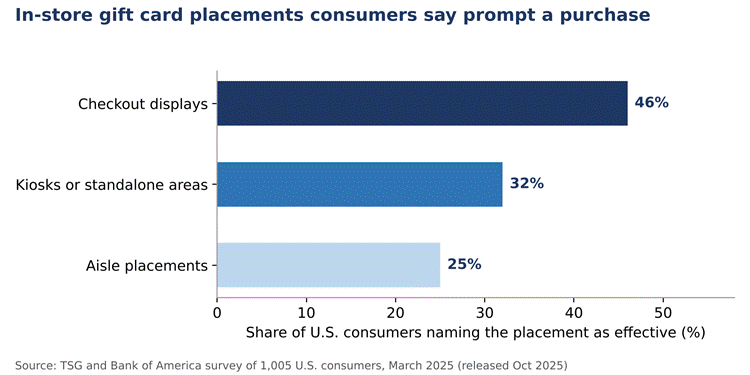
The front desk of a studio is like a check-in desk. Members interact with it multiple times, like while checking in and out for a class. A card rack placed next to the payment terminal is basically staffed by the staff working at the front desk. Discounts, offers, and physical cards should have similar disclosures as the cards disclosed on the website.
This document provides information on four alternative holiday formats. The first alternative provides for the offering of fixed-dollar value gift cards. The second alternative format provides for the selling of class packs (gift cards) as presents. The third alternative provides for offering an introductory package to new clients. The fourth alternative provides for a purchase of a gift card valued at $100 or more, and the gift card package includes a $20 bonus card.
The survey provides additional support for bonus offers. According to the 2017 TSG and Bank of America surveys, 38% of respondents stated that bonus cards or promotions would increase their purchase of gift cards. This was a 2% increase from the previous year’s survey.
A bonus card offer is distinct from a discount. For example, if a studio offered a 20% discount on a $100 gift card, the studio would receive a service value of $80. Alternatively, if a studio offered a bonus card with a $100 purchase, the studio would receive a service value of $120. Additionally, a bonus card can also have a promotional value and time limit if it meets the promotional card requirements in 12 CFR 1005.20(a)(4).
This rule states that a promotional card must disclose the card’s time limit and any fees on the card. Additionally, the card must state on the front of the card that it is a promotional card. The studio can state that the card can only be redeemed in January and February.
For optimum results, denominations should be tied to your price list. Offering cards equal to the price of a drop-in class, a pack of classes, or a card for a month of unlimited classes gives the buyer and the recipient a convenient first means of class attendance. According to the NRF’s 2025 study, the average shopper spends about $53 on a given gift card.
Gift bundles pair cards with other offers and items. For example, you can include a pack of classes plus a studio mat or water bottle. You can also create bundles that offer first-time buyer offers or new client offers. When creating first-time buyer offers or new client offers, state the offer restrictions in the buyer’s view before payment.
The holiday shopping season, according to NRF, is from November 1 to December 31. According to the NRF and Prosper Insights and Analytics, by Thanksgiving weekend of 2025, 84% of consumers had already started their holiday shopping. Therefore, starting your campaign in early November means your gift cards will be available to shoppers before a majority of their shopping is done.
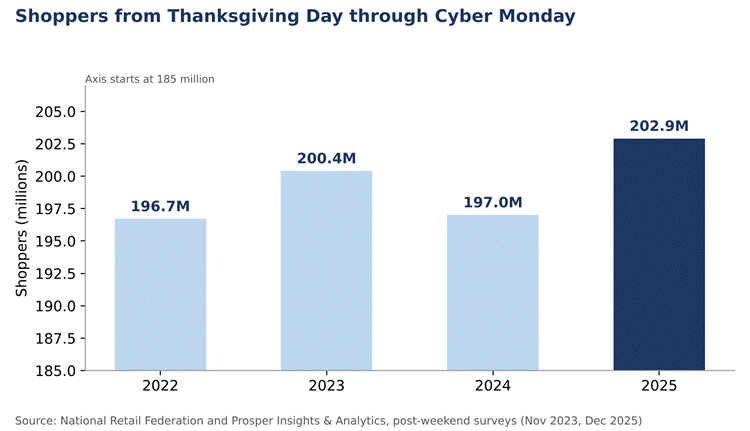
The shopping period from Thanksgiving to Cyber Monday is the busiest. In 2025, the NRF reported that 202.9 million shoppers were reported to have shopped during this period, as compared to 197 million shoppers reported in 2024. In 2025, Black Friday was the busiest day for in-person shopping, with 80.3 million shoppers reporting they shopped that day, and the busiest day for online shopping, with 85.7 million shoppers reporting they shopped that day.
Each year on the Saturday after Thanksgiving is Small Business Saturday. The NRF 2023 survey reports that 78% of the participants shopped on Small Business Saturday. The following calendar has the dates of when studios can start planning.
| Date | Day | Event | Studio focus |
| November 1, 2026 | Sunday | Start of NRF holiday season window | Member pre-sale by email and at the desk |
| November 26, 2026 | Thursday | Thanksgiving Day | Online offer goes live |
| November 27, 2026 | Friday | Black Friday | Front desk and online, top day for both in 2025 |
| November 28, 2026 | Saturday | Small Business Saturday | In-studio sales and local outreach |
| November 30, 2026 | Monday | Cyber Monday | Email campaign and online checkout |
| December 24, 2026 | Thursday | Christmas Eve | Instant e-gift delivery for late buyers |
| January 1, 2027 | Friday | New Year’s Day | Redemption reminders begin |
The Mindbody blog contains results from an internal analysis of gift card sales on their system. The Mindbody system is used to schedule and book appointments at establishments in the fitness, wellness, and beauty industry. The analysis found that the last month of the year accounts for over 15% of the total gift card sales for the year.
Gift card sales on Fridays make up 18% of sales, with Tuesdays and Wednesdays at 17% sales each. Sales between the hours of 11:00 am and 4:00 pm were the most active of the day for gift card sales. The IDEA Health & Fitness Association used the Mindbody analysis in their 2019 holiday industry planning guide.

When holiday gift cards are sold, the studio technically sells a promise to provide a service in the future. The studio honors this promise until the gift card is redeemed.
At the time a sale is made, the studio records the sale amount, the product type, the sale channel, and whether the buyer is a studio member. At the time of service, the studio completes information such as the service or redemption date, the client’s status (i.e., first-time client, etc.), and the service balance. This information is used to generate reports regarding the monthly service redemption rate, the balance of services remaining, the percentage of first-time clients, and the percentage of first-time clients who purchase a service or membership.
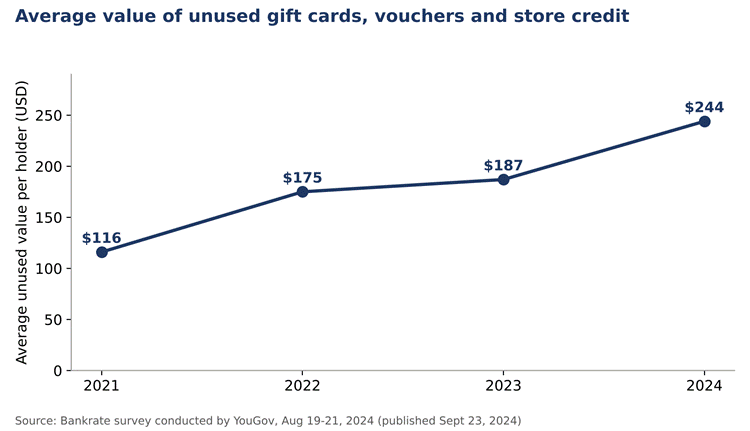
It is common to have services remaining to be fulfilled. The Bankrate study revealed that 43% of U.S. adults (2,373) have not redeemed gift cards, gift certificates, or store credits. The average value of gifts cards/certificates that have not been redeemed is $244, which increased from $187 in the previous year (2023). Further, 34% of the U.S. adults surveyed stated they have made an “oops” gift card mistake (i.e. letting a gift card expire or losing a gift card).
Reminder emails to recipients with an outstanding balance help alleviate the issues relating to card expiry and loss that Bankrate measured. An email is captured for the email gift sale. For studios charging card dormancy fees, a card balance inquiry would not constitute activity on the card under Regulation E. This regulation defines activity as a purchase, redemption or reload.
A gift card sale is recorded under the Accounting Principles (AP) as a financial liability, and revenue is recognized when the card is redeemed under the Revenue Recognition Standard (RRS) issued by the Financial Accounting Standards Board (FASB). This standard defines breakage (unredeemable gift cards) and expects that a studio would not be entitled to breakage and would recognize a liability thereof if there is an expectation that breakage would occur in the future.
The breakage would be recognized when the card is redeemed or if the chance of breakage is deemed to be remote. The standard states that the amount due to the state under unclaimed property would be considered a liability and not revenue. A studio’s accountant should implement the breakage policy and ascertain unclaimed property liabilities.
Class card and gift card sales give studios cash flow in November and December, and scheduled visits in January. Demand is predictable. The NRF predicted $29 billion in holiday gift card spending in 2025, and 202.9 million people shopped over the Thanksgiving weekend that year. TSG and Bank of America found gift card display offers and bonus offers drive gift card transactions.
Constructing a product also depends on the rules. An un-load value card is a from-me-to-you card, subject to rules in 12 CFR 1005.20, and has a minimum 5-year load and time and amount limits on fees. Session-based packs without a load value fall under different rules. Promotional bonuses also have shorter time limits. After the gift card promotional window, studios send reminders to the 43% of Bankrate survey respondents who admitted to having unspent gift card balances.
November 1 is the start of the holiday shopping season according to the NRF. In 2025, 84% of consumers finished their holiday shopping by Thanksgiving.
Holiday bonus cards are full face value. 38% of consumers say they would be more inclined to make a purchase if a bonus card is offered (TSG and Bank of America 2025).
When you sell a gift card, write the amount and the name of the purchaser on the card. When the card is redeemed, write the name of the customer and the new balance on the card. You may also want to note if the customer is new.
