Author Archives: hostmerchantservices

US to Spend Record

US to Spend Record 126 Billion Online This Holiday Season [2023 Update]

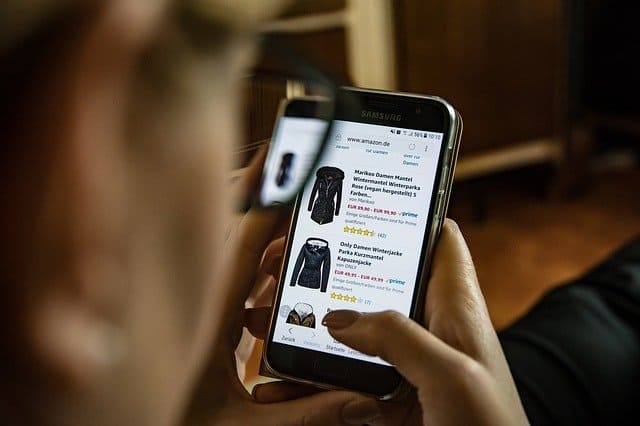
According to recent data released by Adobe Analytics, American shoppers will be going online to spread the holiday cheer among retailers in 2019. The Adobe study was published a few weeks ahead of Black Friday and Cyber Monday, two of the most active and lucrative shopping events in the United States. As has been the case in recent years, e-commerce activity will once again expand this holiday season, and even brick-and-mortar chains will be processing more digital payments than they did in previous years.

Online E-commerce Mobile Payments

Retailers in the U.S. got an early start on their holiday offerings because the season will be a few days shorter in 2019. Once the e-commerce extravaganza known as Cyber Monday wraps up, shoppers will only have 22 days to complete their lists before Christmas. As for digital payments, some shoppers will likely be eager to try out new methods such as the Apple Card on their iPhones. One trend that analysts believe will rise sharply this holiday season is the “buy online to pick up in-store” (BOPIS) method, which is attractive to retailers because they can launch strategic marketing displays near pick-up counters.

Black Friday was displaced by Cyber Monday as the busiest online shopping event of 2018, and this will probably happen again this year. All the economic elements seem to be in place for a busy holiday shopping season: the economy continues to show signs of stability thanks to low unemployment, and consumer confidence remains positive despite a few concerns related to delinquency in subprime auto loan payments. Reaching the projected $126 billion sales target should not be a problem unless political uncertainty in the White House reaches an overly critical point.

For brick-and-mortar retailers, even those that operate a single location, being able to offer a diversity of payment options will be crucial to their success this holiday season. Some financial institutions such as Ohio’s KeyBank are offering cashback rewards to shoppers who make online purchases, and this is a smart move to entice individuals concerned about the trade war between the United States and China, which has resulted in items such as toys and holiday decorations being priced higher this year.

Artificial Intelligence Impacting Cybersecurity

How Artificial Intelligence is Impacting Cybersecurity [2023 Update]

AI has been something of a hot topic over the last few years, and many are debating whether or not its impact on human life is a good thing or a bad thing. AI is being relied upon more and more frequently by today’s enterprises, especially when it comes to cybersecurity. Here’s a look at the potential benefits and drawbacks.

The Positive Impacts of AI on Cybersecurity

Cyber Security Data Breach Protection

In today’s online security world, secure biometric logins like fingerprints, retinas, or palm prints are being used with increasing frequency, either alone or in conjunction with a password. The majority of new smartphones use this technology, and with more and more large corporations being the victim of security breaches, cybersecurity experts have continually made it known that passwords alone can be extremely vulnerable.

Typically, information such as credit card numbers and other personal information such as email addresses and passwords is what gets compromised during a cyber-attack, so beefing up security with positive AI contributions such as biometric logins is a sure-fire way to tackle the problem.

AI is also able to detect all kinds of threats and potentially malicious activities. Unfathomable amounts of malware are created month after month, and older, conventional systems are simply unable to keep up. AI systems are being taught by cybersecurity companies to detect malware and viruses effectively with the use of complex algorithms. Even the smallest behaviors of malware or ransomware attacks can be picked up by an AI system and dealt with before they can achieve their goals.

Multi-factor authentications are one of the applications to which AI systems can be applied. If different users within a company have different levels of authentication privileges, also depending on where they’re accessing the data, AI can provide a much more dynamic authentication framework, which can collect the user information, in real-time, to understand the behavior of the person and determine their access privileges.

It’s estimated that up to 85% of customer interactions can be managed with AI as early as next year, and many e-commerce businesses have already turned to some type of AI to generate leads, improve customer experience, and gather insight into customer behavior. For example, an e-commerce business can improve the customer sales experience by integrating the technology with a CRM system to solve customer problems, answer questions, or support voice input.

The Negative Impacts of AI on Cybersecurity

While the positive impacts above don’t even begin to scratch the surface of the potential possibilities of AI lending its hand to cybersecurity, it is, however, worth mentioning that there are some downsides and limitations that prevent AI from going mainstream.

If an AI system is to be built and maintained, it would necessitate immense amounts of data, memory, computing power, and other resources. Also, due to the way in which AI systems are taught through learning data sets, it can take an incredibly long time, and at a fairly substantial cost, to source all of the malware codes, non-malicious codes, anomalies, and other data sets required.

One other negative point to consider is that hackers will also use AI themselves to test, improve, and enhance their malware with a view to it essentially becoming AI-proof. AI-proof malware can, as a result, be incredibly destructive as they learn from existing AI tools to develop more advanced attacks and easily get through both more traditional cybersecurity systems and even AI-boosted cybersecurity systems.

And one last thing to consider if you are a merchant and you are worried about data breaches affecting your bottom line: Host Merchant Services Data Breach Security Program. Click that link to download a PDF explaining the value-added service HMS provides its merchants that goes above and beyond just simple PCI Compliance and helps ensure a merchant’s peace of mind.

microsoft all access 1 1

Citizens Bank Partners with Microsoft for Xbox All Access

With 2020 looking to be the year that all the next generation games consoles will begin to hit the market, it won’t come as a surprise to learn that many eager consumers are starting to put money aside. For many, a lack of immediately available funds will direct attention to credit, but this past week, Citizens Bank has released details of a brand-new funding option for consumers ready to buy new Microsoft products.

Xbox All Access Program

Mobile Payments For Video GamesCitizens Bank and Microsoft have joined forces to provide financing for the Xbox All Access program, offering consumers the choice of Xbox One X, Xbox One S, or the Xbox One S All-Digital Edition console bundles paired with a 24 month subscription of Xbox Game Pass Ultimate. This gives customers access to more than 100 games and online multiplayer via Xbox Live Gold. In addition, Xbox Game Pass Ultimate features multiple new Xbox exclusives, with new content added constantly, along with reliable and fast online multiplayer gaming. This will be predominantly available via Amazon, and will have a complete point-of-sale experience as well as 0% APR financing.

For the time being, the program is limited to just the current generation of Xbox consoles. Consumers who do pick up a current-generation Xbox through the Xbox All Access Program, however, will be eligible for an upgrade once what is currently only known as Project Scarlett launches, presumably next year.
Citizens Bank president of consumer deposits and lending Brendan Coughlin, said about the integrated payment solution, “Consumers want affordable ways to make purchases without taking on additional credit card debt. Xbox All Access bundles hardware, services and software with affordable and predictable financing delivered through Amazon’s online check out process. Xbox All Access represents the first time a lender, manufacturer and retailer have come together to offer a seamless way for consumers to buy, and we believe that it will be the model for how purchases are made and financed in the future.”

Looking Toward the Future

While it may not seem right now that this type of payment solution will send Xbox sales soaring, it’s worth remembering that Microsoft have very definitively lost this generation of the console wars, so this could be a cunning plan for the next generation. By offering potential future customers an easy way to pick up a console now while holding their place in line for the next console, Microsoft seems to be hoping to snatch away a few Sony supporters ahead of the game. Also, with each new console generation, or any new generation of any technology, supply issues tend to be a bit of an issue in the early days. This has by no means been confirmed by Microsoft, but perhaps those who buy under the Xbox All Access program will have priority access to Project Scarlett when it releases.

Early in 2019, Microsoft announced it was ending its mobile payments solution Microsoft Wallet. Support for the mobile payments app ended in February 2019 less than a year after Microsoft announced it integrated Microsoft Pay with Masterpass which allowed users to use the Edge browser to make online purchases with retailers who accepted Masterpass. The decision was inevitable since Microsoft Pay had a low user rate and the company discontinued support for its Windows 10 Mobile operating system which had just 2.4% of the market share of US mobile operating systems.

diamond retailers 1

Online Retail Fraud on the Rise

According to the 2019 Fraud Attack Index by e-commerce security company Forter, attempts at defrauding online retailers have, for the second year consecutively, increased with online electronics and food and beverage retailers seeing the biggest hits.

After going through merchant and transaction data, Forter determined the rate at which e-commerce fraud attacks occur has increased between 2017 and 2018 over several different verticals.

Electronics

Electronic Retail Fraud SecurityFraud targeted at electronics retailers shot up by a huge 73% in 2018 compared to the year before. Electronic devices often come with hefty price tags, and they can be easily resold, making them so appealing to fraudsters. Forter’s analysis showed that customers are more than prepared to purchase their electronic goods from third-party sites in order to score a better deal, and many fraudsters will list their stolen items as “refurbished” items.

Food and Beverage

Fraudulent attacks against food and beverage companies saw an even bigger increase between 2017 and 2018 with a 79% increase in attacks. This comes following a 60% increase between 2016 and 2017. Forter’s analysis suggests that lower-priced online food and beverage items will be where fraudsters typically test out stolen cards or e-wallets, before then going onto more expensive higher-ticket items.

Clothing

Fraud attempts in the online clothing world rose by 47% between 2017 and 2018. Clothing has always been an appealing and attractive option to criminals, with bulk items being resold with relative ease. Much as was the case with electronic items, many legitimate buyers will be eager to purchase their clothing from third-party resale sites.

Bots can also be used by fraudsters to buy up large quantities of any limited edition clothing runs which they’ll then sell on with substantial mark-ups.

Jewelery and Luxury Items

Jewelry Retail Security MerchantsIt goes without saying that criminals have always been attracted to the high value of jewelry. 2018 saw a 19% year-on-year increase in attacks towards online sellers of jewelry and other luxury items.

The security company Forter’s study looked into many often undertaken means by which fraudulent attacks are typically launched upon online retailers. Account takeovers, whereby criminals will unlawfully gain access to an unsuspecting customer’s account with the aim to make illegal purchases, or even redeem loyalty points, grew by 45% in 2018 when compared to 2017. Fraudulent attacks coming from fraud rings, or even online criminals grouping together to commit fraud together grew by 26% year-on-year.

What saw the sharpest increase was policy abuse, which entails cheating retailers through discount codes and coupons, creating multiple accounts, or overusing referral reward programs. This saw an increase of a whopping 170%, whereas stricter e-commerce returns policies saw the more historically traditional fraudulent returns abuse drop by a huge 90%.

As of 2019, these are the 10 U.S. states with the highest rates of identity theft and fraud:

  • 1. District of Columbia
  • 2. California
  • 3. Nevada
  • 4. New Hampshire
  • 5. South Carolina
  • 6. Delaware
  • 7. Louisiana
  • 8. Texas
  • 9. New York
  • 10. Florida

And one last thing to consider if you are a merchant and you are worried about data breaches or fraud affecting your bottom line: Host Merchant Services Data Breach Security Program. Click that link to download a PDF explaining the value-added service HMS provides its merchants that goes above and beyond just simple PCI Compliance and helps ensure a merchant’s peace of mind.

5G Communications Could Change the American Retail Landscape [2023 Update]

5G Communications Could Change the American Retail Landscape [2023 Update]

In terms of telecommunications and payment transactions, the United States is strangely out of step with the rest of the world in some aspects. Paper checks, for example, are still used by many companies. The adoption of EMV technology by American retailers was slow enough to cause anxiety among providers of payment processing services. As for the fifth generation of wireless technology, commonly known as 5G, South Korea and China are examples of significant markets that rolled out 5G networks way ahead of the U.S.

How 5G Will Impact Brick-and-Mortar Stores

In major metropolitan areas such as Atlanta, wireless service providers have already upgraded their infrastructure to 5G. Widespread upgrades to 5G technology will take place over the next few years, and retailers have everything to gain from this development. In essence, 5G networks are able to handle vast amounts of data at much higher speeds; while it is easy to see how e-commerce operations can benefit from this technology, it is important to note that brick-and-mortar retailers will also be able to capitalize on this upgrade.

Mobile Payment Processing Systems

Retail storefronts do not have to compete against e-commerce because they can simply embrace it. With the advent of 5G, however, brick-and-mortar stores can give their e-commerce counterparts a run for their money through interactive experiences. Augmented reality features, for example, can let shoppers get more information about products on shelves, and they can also enable trying on clothes and putting on makeup prior to going into dressing rooms or approaching the cosmetics counter.

A more practical benefit of 5G technology as it relates to physical stores will be found at the point-of-sale. Payments industry analysts believe that 5G is the missing ingredient in the perfect recipe of true mobile payments, and this is something that merchant processing companies also believe will result in a digital payments revolution. That current lag experienced by shoppers who wish to pay with their smartphones at POS terminals should go away once 5G is implemented.

Mobile Shopping Trends

The use of digital wallets and other devices that enable contactless payments has been on the rise across Asia and Europe. In China, nearly 50% of retail purchase transactions are settled with digital wallets; in the U.S. only 23% as of July 2019. Another improvement that retailers can expect from 5G technology is to mobile equipment; brick-and-mortar stores that do not offer this option should start looking into ways of implementing it between now and the end of 2020.

The next major retail trend in the U.S. is expected to be a hybrid of mobile shopping and in-store pickups. A neighborhood pizzeria that offers takeout should strongly consider developing a native or progressive web app that enables mobile ordering and payments because this is what many consumers are showing a preference for: they want to browse menus, select toppings, and pay for their orders right from their smartphones, but they also want to be able to stop by the stores and physically retrieve their purchases.

E commerce Merchant Sevices 1

Stripe Funding Round Values Company at $35 Billion

Digital payment processing startup Stripe Inc said in a press release it raised $250 million in its latest funding round, bringing its pre-money value to $35 billion, which is more than a 50% increase to its valuation at the beginning of the year. 

After raising $100 million from Tiger Global Management in a Series E round in January, Stripe had a $22.5 billion valuation. With investors like Andreeson Horowitz, General Catalyst, and Sequoia Capital, Stripe’s valuation puts it on the same level as Airbnb Inc, which announced it was going public in 2020.

Stripe Looking to Expand Global Reach

E-commerce Merchant Services Provider

Stripe provides software that allows companies to send and receive online payments. Processing billions of dollars a year for businesses, including Airbnb, Wayfair, Twilio, a cloud tech company, and The RealReal, a luxury online reseller, among millions of other businesses around the globe, Stripe is a high tech credit card processing company.

Stripe will use its newly raised funds to broaden its product offerings. With five out of six new e-commerce merchants joining online from parts of the world beyond North America and Western Europe, Stripe will also expand its footprint overseas. Recently launching in eight additional countries, Stripe plans to expand to a total of 40 countries or 70% of the global economy in 2020. 

The New Stripe Corporate Card

Piggybacking on the company’s launch earlier in September of Stripe Capital, Stripe also introduced a corporate credit card for e-commerce companies, which Stripe claims will cut the application time while also featuring digital tools. 

Providing companies the ability to set spending limits, as well as block specific spending categories, the Stripe Corporate Card also allows cardholders to report expenses in real time, eliminating the manual process of expense reporting. With no fees, the card gives businesses 2% cashback on the two top spending categories every month. 

Frequently Asked Questions

What is Stripe Capital?

Stripe’s lending product Stripe Capital allows small businesses to skip the lengthy application process to borrow money, freeing startups and small businesses to access capital when banks have decreased their lending to small businesses almost by half in the past ten years. 

With less than eight percent of commerce taking place online, merchant services like Stripe can only grow. With quarterly e-commerce retail sales doubling since the start of 2014 according to the Commerce Department, it is still only 11% of the total retail sales in the quarter with nowhere to go but up. 

While also handling in-store payments for customers, Stripe allows businesses to add the Stripe widget to their website, instantly creating a payment button for online customers. Worth 30% more than its online payment counterpart, Square, Stripe is evolving at a rapid pace, not only in the payment processing world but also in its expansion into business lending and corporate credit cards. With big clients like Wayfair, Stripe hopes to tap into the projected 12% annual growth for e-commerce. 

What is Stripe?

Stripe is a financial technology company that provides software and APIs for businesses to accept online payments. It was founded in 2010 by Patrick and John Collison and is headquartered in San Francisco, California.

How much money did Stripe raise in its latest funding round?

Stripe raised $250 million in its latest funding round, which values the company at $35 billion. The round was led by Sequoia Capital, with participation from Andreessen Horowitz, General Catalyst, and other investors.

What will Stripe use the money from its latest funding round for?

Stripe plans to use the money from its latest funding round to expand its product suite, grow its international presence, and hire more employees. The company also plans to invest in new technologies, such as blockchain and cryptocurrency.

What is the significance of Stripe’s latest funding round?

Stripe’s latest funding round is a significant milestone for the company. It is the largest funding round ever raised by a privately held fintech company, and it values Stripe at a higher price than many publicly traded companies. The round also demonstrates strong investor confidence in Stripe’s business model and growth potential.

What are the implications of Stripe’s latest funding round for the payments industry?

Stripe’s latest funding round is a sign of the growing importance of online payments. The company’s success is a testament to the demand for simple, reliable, and affordable payment solutions. Stripe’s growth is also likely to accelerate the adoption of online payments by businesses of all sizes.

What are the next steps for Stripe?

Stripe is well-positioned for continued growth in the years to come. The company has a strong product suite, a large and growing customer base, and a deep pool of talent. Stripe is also well-funded, with over $1 billion in cash on hand. This gives the company the resources it needs to expand its product suite, grow its international presence, and hire more employees. Stripe is also likely to continue to invest in new technologies, such as blockchain and cryptocurrency.

bank banking bitcoin 1 scaled 2

Twitter CEO Backs Cryptocurrency Startup

The Wall Street Journal has been reporting this week that CEO of both Twitter and payment processing company Square, and longtime advocate of Bitcoin, Jack Dorsey has been a prominent investor in the two-year-old company CoinList during their Polychain Capital-led $10 million funding round.

What is CoinList?

Bitcoin Online E-commerce CryptocurrencyCoinList was founded in San Francisco two years ago in 2017 with the aim of helping startup companies raise capital through the sale of cryptocurrency. They made waves almost out the gate during the cryptocurrency boom in ICOs (initial coin offerings) when tokens were exchanged for the money the companies were raising. With the roller coaster-like sudden rise and fall in Bitcoin, the market for ICOs blew up with it before it then bombed.


As the CEO of payments company Square, Dorsey has had Bitcoin of his own for some time, and has often advocated the positives of the cryptocurrency. Square recently announced that they will be introducing a new cryptocurrency service of their own called Square Crypto, as they also revealed that in the second quarter of 2019 alone they generated as much as $125 million in Bitcoin revenue.

The Future of Bitcoin

Despite being a fond advocate of Bitcoin, Dorsey said recently to the Australian Financial Review “[Bitcoin is] not functional as a currency. The peaks and troughs are like an investment asset and are equivalent to gold. What we need to do is make it more usable and accessible as a currency, but it’s not there yet.”

He did add, however, that he thinks Bitcoin can and will eventually grow and become more widely adopted by the online community by saying, “I think [Bitcoin is] the best because it’s been the most resilient, it’s around for 10 years, it has a great brand and it’s been tested a bunch. As I look at all cryptocurrencies that could fill that role of being the native currency for the internet, [bitcoin is] a pretty high probability.”

CoinList will aid new startups in raising money through token sales, and will then use that cash to build a new exchange platform they’re calling CoinList Trade. Along with CoinList Trade, they’ll also set up a cryptocurrency wallet, according to the Wall Street Journal.

shopping 1232944 640 1

Kroger Will Begin Taking Visa Payments Again

In a not at all surprising turn of events, Kroger has decided to cease their ban on Visa payments across all of their 130 Smith’s Food & Drug stores.

Why the Ban?

Kroger Taking Visa Payments AgainEarlier this year, after slamming Visa’s transaction fees, Kroger decided to take action against Visa. Saying that they’ll “drive up food prices for all customers” and calling them “excessive,” they subsequently banned all Visa payments at all of their California stores, before bringing in a total ban across all 130 of their Smith’s Food & Drug stores located around the country.

Kroger CFO Mike Schlotman said when asked to comment earlier this year, “Visa has been misusing its position and charging retailers excessive fees for a long time. They conceal from customers what Visa and its banks charge retailers to accept Visa credit cards. At Smith’s, Visa’s credit card fees are higher than any other credit card brand that we accept,” and then went on to instigate the ban.

According to Visa, when asked to comment on the situation, “It is unfair and disappointing that Kroger is putting shoppers in the middle of a business dispute.”

Kroger Remains Quiet About the Reversal

Now, in spite of their reasoning for the ban on accepting Visa payments, Kroger has decided to reverse the ban, and will be accepting Visa credit cards at all of their locations across the country according to a Kroger spokeswoman. This includes chains such as Kroger, Fry’s, Dillon’s, Ralphs, Harris Teeter, and all other Kroger owned chains.

There has been no comment by Kroger or their spokespeople as to the reasons behind the ban’s reversal, nor has there been any response from Visa.

Earlier this year, shortly following the introduction of the Visa ban, Kroger went on to launch its mobile payment app Kroger Pay. Kroger Pay is a smartphone-based payment system that combines both a customer’s payment information with the company’s loyalty card with an aim to speeding up checkout times.

The company also launched a Kroger Rewards debit card, with Kroger Personal Finance CEO and corporate strategy integration lead Gary Millerchip saying “Kroger is redefining the customer experience by creating innovative ways to pay at our stores and online.”

Canadians Prefer Contactless Payments

Near field communication (NFC) transactions have been rising steadily all over the world for several years now, and in Canada, the dominance of mobile payment technology is no exception.

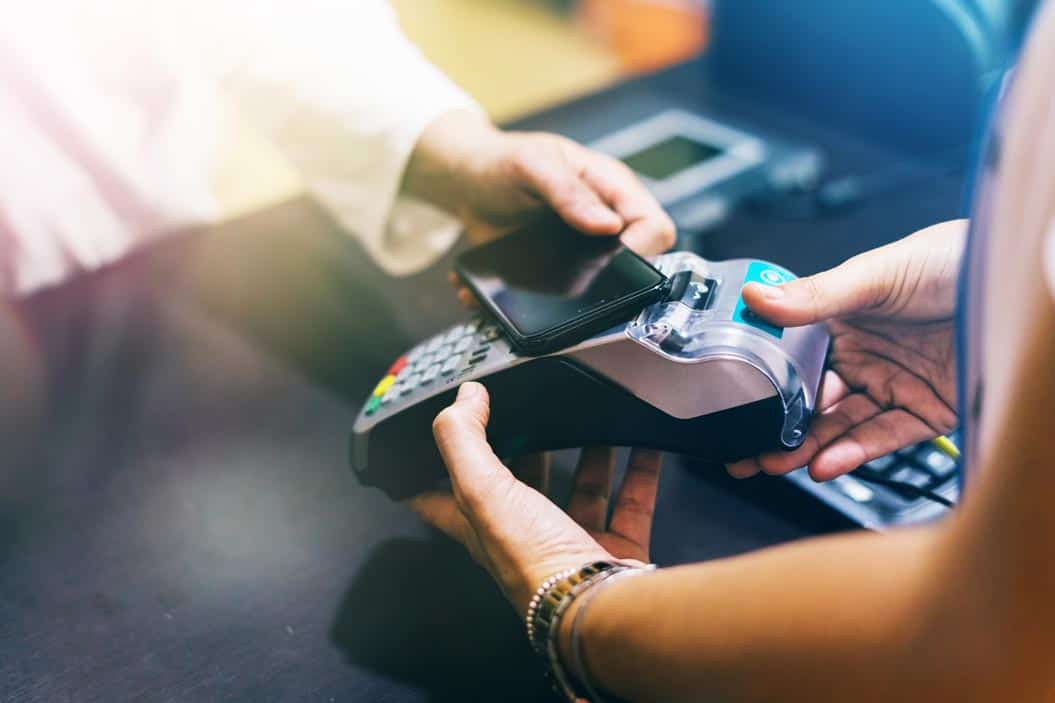
Near Field Communication Mobile PaymentAccording to Visa Inc’s Canadian unit, Canadians are now more comfortable than ever with the use of mobile payment technology, with as many as 52% of 1,000 people polled in a recent survey saying that they contactless transactions regularly. In addition to this, 80% said that they consider contactless payments as “a very convenient way to pay,” and 45% praised their security.

In the first quarter of 2019 alone, near field communication made via platforms such as contactless credit cards, wearables, and mobile devices saw an increase of almost 25% since the previous year, accounting overall for 51.5% of total transactions made.

There are eight stand-out provinces of Canada that are really leading the way when it comes to contactless payments. The province of New Brunswick has seen 51% of its transactions become contactless followed by Saskatchewan (51.6%), Alberta (52.1%), British Columbia (53.5%), Ontario (54%), Nova Scotia (55.2%), Manitoba (58.2%), and Prince Edward Island leading the charge at 59.2% of all transactions.

One huge factor that has contributed to the increase in contactless payments is the recent rise of the digital wallet. Technologies such as Apple Pay and Google Pay, while they may have started somewhat slowly, soon started to pick up speed as Canadians started to realize the benefits and ease of simply paying with their phones, which most of us, especially the millennial and Gen Z generations, will more than likely have in our hands already anyway, as opposed to searching for their credit cards.

It should be worth noting too that, while contactless transactions in Canada make up 51.5% of all transactions, in the neighboring U.S., that figure drops to a pretty staggeringly low 3%. In spite of being one of the highest adopters of smartphones in the whole world (at a rate of 77% in 2018), statistics show that as much as 89% of all U.S. consumers are still shunning mobile payments, making the U.S. one of the lowest adopters of contactless technologies in the world, and Canada one of the highest.

website banner unicredit data breach 1

UniCredit Unveils Data Breach That Involves 3 Million Users

On Monday, UniCredit revealed to the public that a 2015 file comprised of names, addresses, phone numbers, and email addresses pertaining to more than 3 million of their customer base was compromised and leaked.

This occurred in spite of spending an additional €2.4 billion over the past 3 years on cyber security enhancements to their IT systems. Despite UniCredit catering to a wide range of customers worldwide, the records leaked in Monday’s attack were related to only their Italian client base.

Cyber Security Data Breach ProtectionThe data breach was reported to authorities last Thursday, October 24th, while a company representative relayed the information to Reuters. While there were no details with regards to how the breach was able to happen, the spokesman did confirm that there is an internal investigation ongoing. Italian police are also examining the possibility that other crimes may have been committed in conjunction with the security breach.

This is the third such incident of its kind to affect UniCredit after two previous data breaches in September to October of 2016 and June to July of 2017 in which the private information of over 400,000 Italian customers was compromised. It is not thought that this latest attack is linked to those two in any way, however, as they were the result of a third party accessing customer data without any form of authorization or consent.

The Italian bank was quick to assure customers in their statement issued on Monday, however, that there was no serious financial information leaked in the data breach, nor were there any compromising information leaked that could lead to unauthorized access of customer accounts. The data lost by those affected is Personally Identifiable Information (PII) which won’t be able to lead to any unauthorized transactions. It is, however, usually used for social engineering campaigns, and it can potentially aid those who wish to commit identity theft.

UniCredit customers who may have been affected by the breach will have been contacted by them either by online banking notifications or via the post. A new business plan is expected to be presented by the bank in early December.

And one last thing to consider if you are a merchant and you are worried about data breaches affecting your bottom line: Host Merchant Services Data Breach Security Program. Click that link to download a PDF explaining the value-added service HMS provides its merchants that goes above and beyond just simple PCI Compliance and helps ensure a merchant’s peace of mind.