Author Archives: hostmerchantservices

mobile payments

Keepin’ it Mobile

Today The Official Merchant Services Blog brings an update on Mobile Payment Technology.

The Mobile Payments Technology sector has been the topic of overt optimism for quite some time now. We’ve reported multiple times that industry analysts have predicted large gains in Mobile Payments profits over the short- and long-term future. Our article from 2011 showcased three different research groups and their take on the successful future they felt was in store for Mobile Payments.

More pieces of that predictive puzzle have been falling into place. According to a mobile payments survey conducted by IDC Financial Insights, mobile payments use in the United States has doubled. The May 2012 study looked closely at emerging pay method technologies and discovered that 33 percent of respondents had used their devices for mobile payments at least once.

iPhoneIDC’s practice director, Aaron McPherson, told QRCode Press that “Based on our results, we expect to see continued growth in open-loop prepaid cards and mobile payments next year, and believe that the improvements being offered in electronic-bill delivery will break electronic-bill presentment and payment out of its doldrums as well.”

The Next Big Affirmation for Mobile Payments

Visa is convinced new payment tech, including mobile payments, are definitely the trend of the future — so much so that the card association giant is poised to showcase the power of the future in the spotlight of the 2012 Olympic Games in London. One of the new technologies Visa is thrusting into the public eye at the Olympics is EMV Chip Cards — something we highlighted back in February. Visa is heavily invested in Smart Card technology so it’s no surprise the company is using its Olympic Games partnership to point some attention at its EMV efforts. But right alongside that EMV push, Visa is also Mobile Payment Technology as a safe and convenient payment option for consumers throughout the London games.

visa olympics

Jim McCarthy, Head of Products at Visa Inc., said “This summer we will be demonstrating the future of payments in London – a future where most consumers will rely on mobile devices, tablets and PCs to manage their daily financial lives.” Visa’s Olympics marketing push for the future of Mobile includes:

  • Visa Mobile Payments and Services: A limited edition of the Samsung GALAXY S III, Samsung’s Olympic Games Phone during the London 2012 Games, will be provided to Visa sponsored athletes and trialists. The device will feature an Olympic-branded version of Visa’s mobile payment application, Visa payWave. To make purchases, consumers simply select the Visa icon on the Samsung device and hold the phone to a contactless payment terminal to pay.
  • Visa Mobile Prepaid: During the London 2012 Games, Visa Inc. will also showcase its newest product – Visa Mobile Prepaid – the first mobile-based Visa product providing consumers in developing countries a payment account that offers Visa’s high standards of security, reliability and global interoperability. By accessing their Visa Mobile Prepaid account on their mobile phone, consumers can send and receive international remittances, pay bills, top-up wireless minutes, and access Visa ATMs.

Setting New Standards

Looking at last year and then at this year’s statistics, Mobile Payments are doing their best to meet the bold predictions analysts have lined up for the future. The sector is growing rapidly and consumers in both the U.S. and around the world are embracing the convenience that the technology brings to their shopping habits. Juniper Research, a company that specializes in the identification and appraisal of high growth opportunities in various mobile telecommunications and applications sectors, put out a publication on July 5, 2011, titled “Mobile Payment Strategies.” Juniper predicted worldwide mobile spending would jump from $240 billion in 2011 to $670 billion in 2015.

juniper logoWell Juniper is back with a new forecast that focuses on Near Field Communication (NFC) and this study predicts that in just five years the NFC Mobile Payments market will will exponentially increase and eventually exceed $180 billion — a whopping seven times what it is today. The study forecasts that one in four people from Western Europe and the United States will use NFC as a payment mechanism by 2017.

Juniper cites last year as a turning point for NFC payments and suggests that major consolidation of the technology is the impetus for the predicted growth in the market as consistent standards and protocols will help fuel rapid growth and assuage the security concerns of consumers. Juniper says that in 2011 major technology infrastructure standards were finalized within the NFC Mobile Payments market so that many mobile network operators committed to the market and NFC payment pilots from both mobile operators and financial institutions transitioned to commercial service. And the research firm pointed to NFC-enabled smartphone models being announced by almost all handset manufacturers and Google as a key factor for igniting interest in the mobile payment usage in the U.S.

“This is a critical time for the NFC retail payments market,” said report co-author Dr. Windsor Holden. “Despite the significant progress being made today, the full potential of the market can only be fulfilled if all ecosystem players are equally committed and mobile wallet consortia remain in place.”

The Big Cash Comeback?

Today, The Official Merchant Services Blog is going to tackle a big picture topic in the world of credit card processing. Two weeks ago there was a proposed settlement of a lawsuit against Visa Inc., MasterCard Inc. Lawyers involved in the case claim it is the largest antitrust settlement in U.S. history. The card companies agreed to pay more than $6 billion to settle lawsuits from retailers claiming that the card issuers engaged in anti-competitive practices.

The July 13 settlement proposal — which still needs the OK by a judge — has stipulations that drop requirements that retailers charge the same price for cash and credit purchases. This opens the way for millions of businesses to add checkout fees when customers pay with plastic. In short, the settlement lets retailers push the cost of swipe fees off of them and onto the consumer directly.

A Paradigm Shift

This decision has really started to hit home for me personally. Just last week I was in the emergency room at Christiana Hospital waiting for a family member to be admitted. I got there around 5 a.m. and was in a rush so didn’t really bring much of anything with me. Hours later, I was hungry and in need of a snack. And I didn’t have any cash on me. But the vending machines at this hospital are state of the art. Which means they have fully equipped credit card swipers, allowing you to purchase snacks from them without pocket change or single dollar bills. That realization hit home with me as I noted both the power of credit card processing to be present in all aspects of my own life, and just exactly how much closer we’ve really gotten to being a cashless society. One of the last holdovers from the previous generation’s use of coins — vending machines — were now accepting credit cards. It was convenient and really helped me out in a time where I was far too worried about everything but having cash on me.

Cash Still Rules

But then came this settlement, and a quick reminder of the Wu-Tang Clan credo: Cash Rules Everything Around Me (C.R.E.A.M.). This decision will do two things:

  1. It will allow merchants the power to offset their processing fees in a very direct fashion that gives them control and power.
  2. It will give the consumers themselves the incentive to start using cash again.


cashless 2That first bullet point is good for the credit card processing industry as it allows merchants to feel more in control of their business and lets credit card processors offer more attractive savings directly to potential merchant accounts. But that gets offset by the second bullet point, as the consumer is then the direct decision maker on the purchase and has the power to affect the entire credit card processing industry by not using the plastic at all.

So Something’s Gotta Give, Right?

This boils down to an issue of convenience for the consumer. Plastic has always been the more convenient option. It’s easier to carry around than cash. And with a huge push still being made by Mobile Payment Processing Technology to make it even easier than plastic, cash still seems like it can be on the way out as we still careen quickly toward a cashless society.

But when faced with a choice between using cash and saving money, or using plastic and taking the hit on added surcharges directly, there will be a lot of consumers who will gladly switch back to cash. It won’t be that hard an adjustment to ease back into one’s daily life for shopping habits.

But, E-Commerce

The thing is, though, there’s still a really big chance these surcharges are going to hit consumers hard as too much advancement has been made in the technological infrastructure of a cashless society — namely the rise of e-commerce. Consumers today have taken to shopping online, and all of those sales utilize a credit card. A Rasmussen Reports poll in April 2012 showed that 43% of Americans said they have gone through a full week without paying for anything in cash or coins. And The Official Merchant Services Blog has reported avidly on how pervasive and commonplace online shopping has become for the typical U.S. Consumer. A move back to cash may simply not be all that effective now that people are used to the convenience and control that online shopping — and mobile shopping — provides.

Don’t Forget Durbin

cashless 3This decision is the second major event concerning limitations placed on swipe fees in credit card processing. Last year the Durbin Amendment to the Dodd-Frank Act took effect. This amendment placed a hard cap on debit card swipe fees. And it’s affect is still rippling through the payment processing industry as big banks, the credit card associations, and processors all try to figure out ways to recoup the billions of dollars in projected losses that stem from having the swipe fee capped at 24 cents or so.

The one thing we can learn from the Durbin Amendment, however, is that the use of convenient swiping that debit cards provide has not been ground to a halt by Durbin, and e-commerce is still booming. It seems unlikely that this settlement concerning credit card swipe fees will curb the growth of e-commerce to the point where we take a huge step back into a cash-filled society.


Hello From HostingCon!

HostingCon2012 is in full swing, and Host Merchant Services is in the thick of the action. Here’s a picture from today:

Host Merchant Services at HostingCon 2012

That’s our very own dynamic duo Ken and Justin Hemmel working the booth with our partner OpenSRS.

This partnership — which began in April — brings Host Merchant Services, the premier provider of payment processing and e-commerce services for small businesses and medium businesses, to OpenSRS Offers, the platform that allows OpenSRS Resellers to extend valuable third-party offers and discounts to their customers.

The partnership is bolstered by HMS’ experience with the web hosting industry and HostingCon is a perfect venue for the company to present its ongoing initiative to provide E-Commerce focused companies a robust solution for processing credit cards online.

“We don’t write a business off as high risk just because it sells its products or services online,” says Host Merchant Services CEO Lou Honick. “HMS understands the needs of e-commerce merchants and works tirelessly to provide them with the right services at the best possible rate.”

Also, don’t forget that  Honick will participate in a panel discussion on the topic of Best Practices for Payment Processing at 9 a.m. on Wednesday July 18. The panel offers hosting providers tactics for reducing payment processing costs and reducing risk. Honick is part of a panel of payment processing industry experts addressing the conference.

Industry Terms: Cloud Hosting

This is the latest installment in The Official Merchant Services Blog’s Knowledge Base effort. Well we want to make the payment processing industry’s terms and buzzwords clear. We want to remove any and all confusion merchants might have about how the industry works. Host Merchant Services promises: the company delivers personal service and clarity. So we’re going to take some time to explain how everything works. This ongoing series is where we define industry related terms and slowly build up a knowledge base and as we get more and more of these completed, we’ll collect them in our resource archive for quick and easy access. Today’ we’re going to break from the norm, and provide a definition for a term from the web hosting industry: Cloud Hosting. We’re breaking from the norm for two reasons.

First, Host Merchant Services is at HostingCon 2012 this week. Second, Cloud Hosting is an integral aspect of the future of E-Commerce, something Host Merchant Services specializes in.

Cloud Hosting

Cloud Hosting is a type of hosting platform that allows customers powerful, scalable and reliable hosting based on clustered load-balanced servers and utility billing. Web hosting services allow individuals and organizations to make their website accessible via the World Wide Web.

Web hosts are companies that provide space on a server owned or leased for use by clients, as well as providing Internet connectivity, typically in adata center. Web hosts can also provide data center space and connectivity to the Internet for other servers located in their data center, called colocation. Host Merchant Services CEO Lou Honick — who is speaking at HostingCon 2012 this year — founded and ran a successful Web Hosting company prior to beginning his credit card processing venture with HMS. This experience gives HMS an edge in terms of understanding the needs of E-Commerce merchants.

Cloud hosting gets its name from the use of a cloud-shaped symbol as an abstraction for the complex infrastructure it contains in system diagrams. Cloud hosting entrusts its data, software and computation over a network — the cloud.

A cloud hosted website can be more reliable than alternatives since other computers in the cloud can compensate when a single piece of hardware goes down. Also, local power disruptions or even natural disasters are less problematic for cloud hosted sites, as cloud hosting is decentralized. Cloud hosting also allows providers to charge users only for resources consumed by the user, rather than a flat fee for the amount the user expects they will use, or a fixed cost upfront hardware investment. Alternatively, the lack of centralization may give users less control on where their data is located which could be a problem for users with data security or privacy concerns.

HMS will be at HostingCon 2012

HostingCon 2012 is right around the corner. And The Official Merchant Services Blog is pleased to announce that Host Merchant Services CEO Lou Honick will be there to participate in a panel discussion on the topic of Best Practices for Payment Processing. The discussion, scheduled for 9 a.m. Wednesday July 18, offers hosting providers tactics for reducing payment processing costs and reducing risk. Honick is part of a panel of payment processing industry experts addressing the conference.

“As a three-time keynote panelist, I’m excited to return as a speaker this year,” said Honick of his speaking engagement. “Panel discussions at HostingCon have been consistently excellent at packing a high level of knowledge and experience into a single session.  Having been the CEO of a hosting company for 11 years, and now at the helm of Host Merchant Services for three years, I’m able to bring a great perspective on best practices for credit card processing in hosted services.”

hostingcon logoHostingCon, celebrating its 8th anniversary, is the foremost conference and trade show for the hosted services industry. The best and the brightest from the industry will be attending the event from July 16 – 18 at the John B. Hynes Veterans Memorial Convention Center in Boston, MA.

“As a specialist in partnering with web hosting companies, I’m glad to share my experiences from both sides of the table to help attendees reduce costs, decrease fraud, comply with regulations, and maintain security.”

Host Merchant Sercies CEO Lou Honick, image taken by Ashley Salada www.ashleysalada.comHost Merchant Services specializes in providing world-class customer service and support to its credit card processing customers. The company takes a different approach to merchant services, focusing on delivering the industry’s lowest processing rates while providing industry-leading service and support. Host Merchant Services, headquartered in Newark, Delaware, specializes in partnering with web hosting and other professional services companies to offer payment processing to their customers.

This approach stems from Honick’s experience in the web hosting industry. Honick got his start in the hosting industry as the founder of HostMySite.com, growing it from a two person operation in 1997, to an industry leader with 240 employees and over 100,000 customers at the time it was acquired by a private equity firm in June of 2008. He transferred the same successful approach to the credit card processing industry when he began Host Merchant Services in 2009.

To learn more about HostingCon 2012 visit their website.

Host Merchant Services will also be there in force to promote their special offer program with partner OpenSRS. OpenSRS partnered with Host Merchant Services back in April.

This partnership brings Host Merchant Services, the premier provider of payment processing and e-commerce services for small businesses and medium businesses, to OpenSRS Offers, the platform that allows OpenSRS Resellers to extend valuable third-party offers and discounts to their customers.

The partnership is bolstered by HMS’ experience with the web hosting industry and HostingCon is a perfect venue for the company to present its ongoing initiative to provide E-Commerce focused companies a robust solution for processing credit cards online.

“We don’t write a business off as high risk just because it sells its products or services online,” added Honick. “HMS understands the needs of e-commerce merchants and works tirelessly to provide them with the right services at the best possible rate.”

Industry Terms: Transaction Integrity Fee

This is the latest installment in The Official Merchant Services Blog’s Knowledge Base effort. Well we want to make the payment processing industry’s terms and buzzwords clear. We want to remove any and all confusion merchants might have about how the industry works. Host Merchant Services promises: the company delivers personal service and clarity. So we’re going to take some time to explain how everything works. This ongoing series is where we define industry related terms and slowly build up a knowledge base and as we get more and more of these completed, we’ll collect them in our resource archive for quick and easy access. Today’s term is Transaction Integrity Fee.

Transaction Integrity Fee

logo VisaVisa introduced the Transaction Integrity Fee (TIF) in April, 2012 — the same time it introduced the Fixed Acquirer Network Fee (FANF). It is a new $0.10 fee that will apply to U.S. domestic regulated and non-regulated purchase transactions made with a Visa Debit card or Visa Prepaid card that fail or do not request Custom Payment Service (CPS) qualification. The CPS rates are Visa’s best rates and apply to both regulated and non-regulated transactions.

This fee can be viewed as a definite response from Visa to offset the losses they incur from Durbin Amendment’s interchange rate cap and finance reform/regulatory changes. As a result, The TIF is charged in addition to the applicable interchange fee and discount rate — meaning that regulated debit transactions still receive the regulated interchange rate (0.05% + $0.22), but are also subject to the TIF if they fail to qualify for a CPS program. For example, a transaction that qualifies for Standard Debit – Exempt or Regulated – will be assessed an extra $0.10 for the TIF.

Tips to Avoid the TIF

  • Always settle your  transactions within one day of authorization. This means always batch out your terminal, POS, or payment gateway at the end of every day’s business.
  • Always read and transmit complete magnetic stripe data.
  • Always authorize and settle for the same amount. If a customer changes an order before that day’s settlement, always void the original order and start over. Do not adjust the amount of the existing order.

In addition, Card Not Present transactions need to do these things to avoid TIF:

  • Always obtain an exact AVS (Address Verification System) match on Card Not Present, Key-Entered, and E-Commerce transactions. An exact match is the street address number and zip code matching the billing street adress number and zip code on file with the issuing bank. If you are an E-Commerce merchant that allows sales with partial or no AVS match (to increase conversions), you may want to consider requiring an exact match, depending on average ticket size, the effect this has on conversion ratios, and other steps you might take to screen for fraud (like 3D-Secure, etc.).
  • Ensure that your processor is transmitting the correct MOTO/ECI Indicators with your transactions. If you have changed your business model or added an e-commerce capability to an existing merchant ID confirm with your processor that the correct MCC and Indicators are attached to your transactions, and open additional or new merchant IDs if necessary.
reminder

FANF Reminder [2023 Update]

reminder

Today The Official Merchant Services Blog wants to review the details of VISA’s new Fixed Acquirer Network Fee (FANF). On April 1, 2012, Visa began charging this new fee. But it has taken about this long for it to catch up to merchants and their statements. The process sort of knocked its way down like dominoes falling — The fees went in effect in April, but were based on May’s activity, so didn’t show up until June’s statements, that many merchants are now noticing here in July.

These fees are new, and start to show up on statements where they hadn’t appeared before and they have the appearance of being hidden fees. This development goes against the Host Merchant Services policy of no hidden fees. Which is why we’ve attacked this story so vigorously in our blog, trying to keep our readership up to date on these new card association fees affecting the credit card processing industry.

The HMS Guarantee

Host Merchant Services wants to assure its customers that it sticks by its guarantee. HMS will never increase their fees for their customers. HMS continues to offer the guaranteed lowest rate. And that rate is frozen. Unfortunately, Card Association Fees are new, and are not part of any current pricing model. They are also mandated and initiated by the credit card companies themselves — Visa, MasterCard and Discover. All processors everywhere will be adding them to their pricing structure. So your statement will start showing new fees moving forward. But we here at Host Merchant Services will help explain what they are, where they come from and why they’re just now appearing on your statement. So please feel free to contact us if you have any questions about your statement.

Now About Those Fees

FANF is the most high profile of the new fees. But it’s name is a bit misapplied, as the fee itself is not “fixed” in any sense of the word.  The FANF is a monthly fee that will affect all merchants to a varying degree. For card present businesses like retailers, the amount of the Fixed Acquirer Network Fee will be based on the number of locations a business has. For card not present businesses like e-commerce operations, the FANF will be based on gross Visa processing volume. So the “Fixed” fee’s actual amount varies based on multiple factors. Those variables are:

  • Merchant Category Code (MCC)


    The merchant category code used to classify a business plays a role in the amount of the FANF charged each month. However, the impact of the MCC is very minimal, amounting to a difference of $0.90 – $1.10 for most businesses (less than fifty locations).
  • Acceptance Method


    The main factor in determining the amount of the FANF is whether a business processes the majority of its transactions in a card present or card not present environment.
  • Card Present Businesses

     (Excluding Fast Food Restaurants / MCC 5814)
    The amount of the Fixed Acquirer Network Fee for card present businesses will be based number of locations. Businesses with one location will be charged $2 – $2.90 a month, up to $85 a month for businesses with 4,000 or more locations.
  • Card-Not-Present Businesses

     (As well as Fast Food Restaurants / MCC 5814)
    For card-not-present businesses, the amount of the FANF will be based on gross Visa processing volume. Card-not-present businesses will see a greater impact from the FANF than card-present businesses due to the fee being determined by volume.

For example: card-not-present business processing between $8,000 and $39,999 will be hit with a Fixed Acquirer Network Fee of $15 a month opposed to just $2 for a card present business with similar volume and one location.

Other Fees

Besides FANF, Visa also is implementing a Transaction Integrity Fee and making revisions to its Network Acquirer Processing Fee. Visa’s Transaction Integrity Fee is a new $0.10 fee that will apply to U.S. domestic regulated and non-regulated purchase transactions made with a Visa Debit card or Visa Prepaid card that fail or do not request Custom Payment Service (CPS) qualification. On the other hand, the Network Acquirer Processing Fee on Visa-branded signature debit will be reduced — going from $0.0195 per authorization to $0.0155 per authorization. The fee for credit card authorization will remain $0.0195 per authorization.

HMS Partners with ServInt

Today The Official Merchant Services Blog has learned of a new partnership agreement between Host Merchant Services and cloud hosting services provider. With HostingCon 2012 right around the corner, this partnership announcement is well-timed. Credit card processing firm Host Merchant Services has announced that it has entered into a strategic marketing partnership with ServInt.

Servint is the latest provider to join a partner program that has taken the web hosting and cloud services industry by storm. This alliance will give ServInt the ability to provide flexible and customizable merchant services and credit card processing to its customers quickly and efficiently.

ServInt, based in McLean, VA, has been providing managed hosting services to businesses and enterprises around the world since 1995. Today, they offer a full portfolio of VPS, dedicated, IaaS cloud and PaaS Java hosting to clients in more than 130 countries.

Partnering with Host Merchant Services, the premier provider of payment processing and e-commerce services for small businesses and medium businesses, lets ServInt maintain its high level of quality customer service while offering a guaranteed best-rate plan for merchant services. ServInt customers will be able to accept credit card payments easily from a merchant services provider that is intimately familiar with the needs of cloud hosting customers and e-commerce merchants.

Host Merchant Services is a registered Independent Sales Organization (ISO) with Visa U.S.A. and MasterCard International with bank sponsorship provided by Wells Fargo Bank, Walnut Creek, CA. The company specializes in providing world class customer service and support to its credit card processing customers.

“ServInt is an outstanding, reseller-centric, cloud services company that we are excited to partner with,” said Host Merchant Services CEO Lou Honick. “Host Merchant Services shares ServInt’s dedication to quality customer service. Their customers will benefit greatly from a seamlessly integrated payment processing solution, from a provider that really understands their needs. ServInt customers will enjoy transparent pricing, 24x7x365 customer support, and a skilled technical support team to assist them in quickly integrating the service to their website.”

ServInt COO Christian Dawson added, “ServInt prides itself on being one of the most reseller-friendly service providers in the hosting marketplace. Our partnership with Host Merchant Services further enhances our ability to meet the needs of this critical segment of our customer base, as it adds a critical business product to the best-of-breed support services we offer – at very favorable terms – to the hosting reseller community.”

The partnership is part of a Host Merchant Services initiative to provide web hosts and cloud operators like ServInt a fast and transparent third party solution for processing credit cards. The Host Merchant Services partner programhas been gaining traction at a rapid rate to become the “go to” choice for web hosts that want the best mix of revenue sharing and quality service without onerous contracts or commitments.

Host Merchant Services COO Dan Honick sums it up by saying, “Our customers and partners stay with us because they are happy with our service.”

About ServInt 
ServInt is a pioneering provider of high-reliability, managed cloud hosting services for enterprises worldwide. Founded in Northern Virginia in 1995, ServInt provides a range of IaaS, PaaS, VPS and dedicated server packages to hosting service resellers, web designers, developers and online businesses in more than 130 countries. To learn more about ServInt’s cloud, VPS and dedicated hosting solutions you can visit their website http://www.servint.net/.

About Host Merchant Services 
Host Merchant Services is a different type of merchant services company which focuses on delivering the industry’s lowest processing rates while providing industry-leading service and support. The company’s products include merchant services and credit card processing. Host Merchant Services is the only merchant services company with a partner program that guarantees unsurpassed pricing, support, and customer service. The company is headquartered in Newark, Delaware and executes all operations with the manifesto of “bringing trust to merchant serivces”.
To learn more about Host Merchant Services visit https://hostmerchantservices.com

Loyalty Program

Industry Terms: Loyalty Program [2023 Update]

This is the latest installment in The Official Merchant Services Blog’s Knowledge Base effort. Well we want to make the payment processing industry’s terms and buzzwords clear. We want to remove any and all confusion merchants might have about how the industry works. Host Merchant Services promises: the company delivers personal service and clarity. So we’re going to take some time to explain how everything works. This ongoing series is where we define industry related terms and slowly build up a knowledge base and as we get more and more of these completed, we’ll collect them in our resource archive for quick and easy access. Today’s term is Loyalty Program.

Loyalty Program

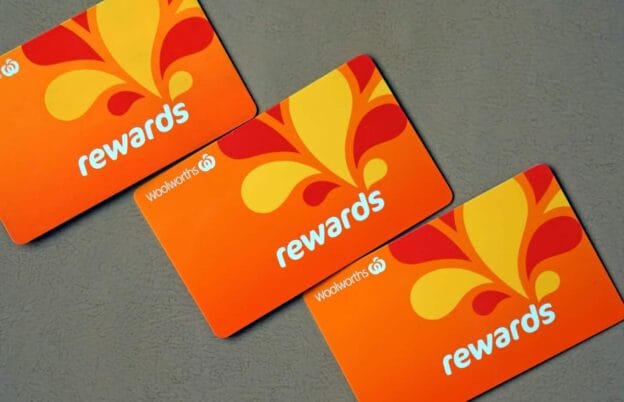
A Loyalty Program is an e-commerce and channel partner term that is used to describe a program that rewards customers for making purchases from the same vendor or company. Loyalty programs may offer prizes, reward points, future discounts and other incentives designed to keep customers coming back and doing repeat business with you. Loyalty programs are structured marketing efforts that reward, and therefore encourage, loyal buying behavior.

Loyalty Programs utilize the same common item to make the program work — a card. The type of card varies in name — called any number of things such as a loyalty card, rewards card, points card, advantage card, or club card — but the characteristics are all the same. It is a plastic or paper card, visually similar to a credit card or debit card, that identifies the card holder as a member in a loyalty program. These cards typically have a barcode or magstripe that can be easily scanned, and some are even chip cards. Small keyringcards (also known as keytags) which serve as key fobs are often used for convenience in carrying and ease of access.

The way the system works is by presenting the card, the purchaser is typically entitled to either a discount on the current purchase, or an allotment of points that can be used for future purchases. Hence, the card is the visible means of prompting return business.

Where a customer has provided extensive identifying information in the application process, the loyalty card may also be used by the company running the program to access customer data and trends in order to expedite verification during the receipt of membership privileges — such as the receipt of cheques or dispensing of medical prescriptions, access to a club lounge in airports, using a frequent flyer card, etc.

Recently there has been a move away from traditional magnetic card, stamp or punchcard based schemes to online loyalty programs. While these schemes vary, the common element is a push toward eradication of a traditional card, in favour of an electronic equivalent. The popular choice of medium is often a QR code.

Industry Terms: Gift Cards

This is the latest installment in The Official Merchant Services Blog’s Knowledge Base effort. Well we want to make the payment processing industry’s terms and buzzwords clear. We want to remove any and all confusion merchants might have about how the industry works. Host Merchant Services promises: the company delivers personal service and clarity. So we’re going to take some time to explain how everything works. This ongoing series is where we define industry related terms and slowly build up a knowledge base and as we get more and more of these completed, we’ll collect them in our resource archive for quick and easy access. Today’s terms is Gift Cards.

Gift Cards

A Gift Card is a restricted monetary equivalent or scrip that is issued by retailers to be used as an alternative to a non-monetary gift. Highly popular, they ranked as the second-most given gift by consumers in the United States in 2006 — when about $80 billion were spent on them. Gift cards are so popular because relieve the donor of selecting a specific gift and their convenience combined with the proliferation of e-commerce has only made their use skyrocket in the 6 years since those figures were released.

The recipient of the gift card can use it at his or her discretion within the restrictions set by the issuing agency. This makes for a lot of variety in the gift cards themselves, even if their basic function remains exactly the same. Gift cards usually resemble a credit card in appearance, including the presence of a barcode or magnetic strip which is read by an electronic terminal — most often the same terminal merchants use for swiping credit and debit card transactions. The gift card itself is identified by a specific number or code, not usually with an individual name, and thus can be used by anybody. They are backed by an on-line electronic system for authorization. Some gift cards can be reloaded by payment and can be used multiple times.

Some cards have no value initially associated with them. When they are sold the cashier enters the amount which the customer wishes to put on the card. This amount is rarely stored on the card but is instead noted in the store’s database, which is crosslinked to the card ID. Gift cards thus are generally not stored-value cards as used in many public transport systems or library photocopiers, where a simplified system (with no network) stores the value only on the card itself. To thwart counterfeiting, the data is encrypted. The magnetic strip is also often placed differently than on credit cards, so they cannot be read or written with standard equipment. Other gift cards may have a set value and need to be activated by calling a specific number.

Gift cards are divided into “open loop” or “network” cards and “closed loop” cards. The former are issued by banks or credit card companies and can be redeemed by different establishments, the latter by a specific store or restaurant and can be only redeemed by the issuing provider. The latter, however, tend to have fewer problems with card value decay and fees. In either case the giver would buy the gift card (and may have to pay an additional purchase fee), and the recipient of the card would use the value of the card at a later transaction.

Mobile Gift Cards and Virtual Gifting

As we reported last year, Virtual Gifting and Mobile Gift Cards are a recent and hot trend. Mobile gift cards are delivered to mobiles phones via SMS messages and phone applications including iPhone applications allowing users to carry only their cell phones. Benefits include tying them to a particular phone number and ease of distribution through email.

Virtual gift cards are delivered via e-mail to their recipient, the benefits being that they cannot be lost and that the consumer does not have to drive to the bricks and mortar location to purchase a gift card.

In these types of transactions the merchant is not involved in the loop, therefore it’s not a traditional gift card. It’s more of a cash transfer.