
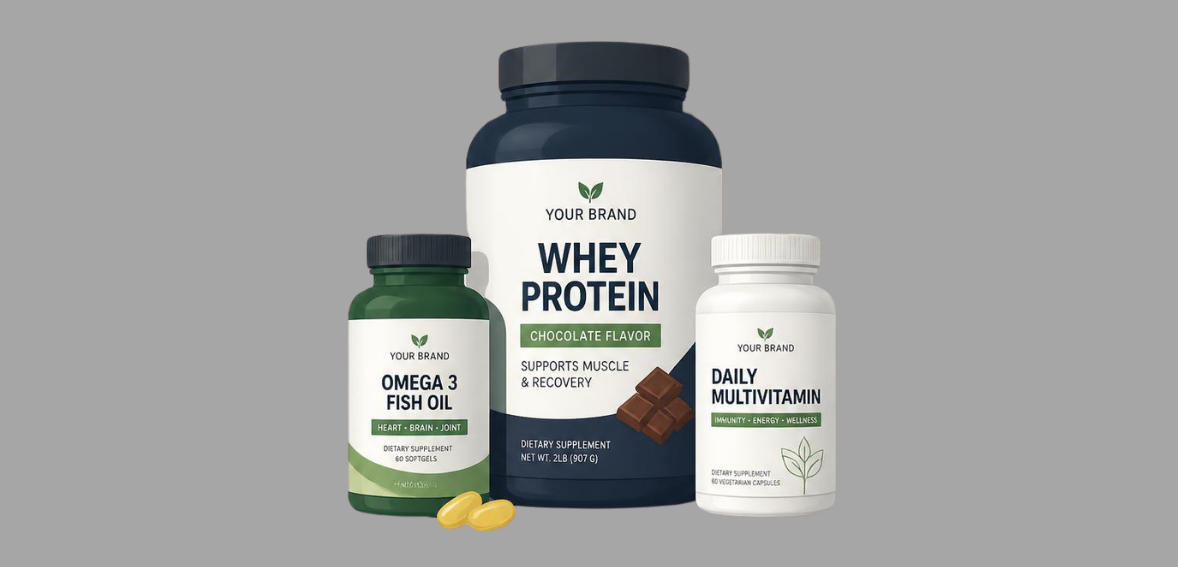
The supplements aisle is an ever-expanding space. Over 200 million US adults take at least one daily supplement. There’s a reason that a personal interest in health has turned into an easily accessible business opportunity. There’s no need for a lab or factory. There’s an opportunity to start a supplement brand with strong health formulas and good manufacturing resources, as well as an understanding of the regulations.
The final element is where inexperienced entrepreneurs face a challenge. There is a fallacy that there are little to no regulations for supplements. This is not true. There is a specific law that regulates this industry. The FDA, the FTC, and even your payment processor will be keeping an eye on your business practices. If one of these entities finds a violation, your business will be shut down, even if it hasn’t opened yet.
This guide is the ultimate supplement business regulation resource. This guide will also define compliant regulations for supplement labeling and what claims are legal to make. It will also unpack the high risk of supplement payment processing and why it is considered high risk. By the end of this business regulatory guide, you will be able to see the path you need to take to start your first supplement business.
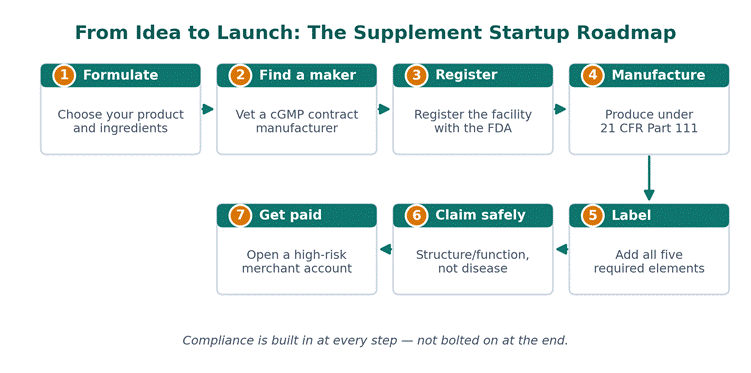
Figure 1. The seven-step path from idea to launch for a supplement brand.
Supplements are not completely unregulated. There is a law that was passed in 1994. It is the Dietary Supplement Health and Education Act, DSHEA for short. This is the most critical law for your new company. It provides the definition of a dietary supplement and provides a framework for the rules.
In making DSHEA, the law placed supplements in a different category of legal products. Supplements are treated as a different category of food as opposed to being a drug. This makes a world of difference for the law. A company cannot sell a drug unless it can demonstrate that the drug is safe and effective. A supplement is not subject to that same burden. Instead, the company behind supplements is entirely responsible for the safety of the product.
The Food and Drug Administration (FDA, is the major governmental regulator. It has the authority to regulate the safety of products, the process of manufacturing the products, and the labeling of the products. The FDA does not review the product to make sure it is safe and effective before it is sold on the market. However, the FDA has the ability to act very quickly. If a product is unsafe or the labeling is not correct, the FDA has the authority to remove the product from the market.
Two governmental agencies share the authority. The FDA regulates the product and the labeling of the product. The Federal Trade Commission, or FTC, is responsible for the advertising and marketing of the product. Understanding the division of authority will save you a lot of money in the future.
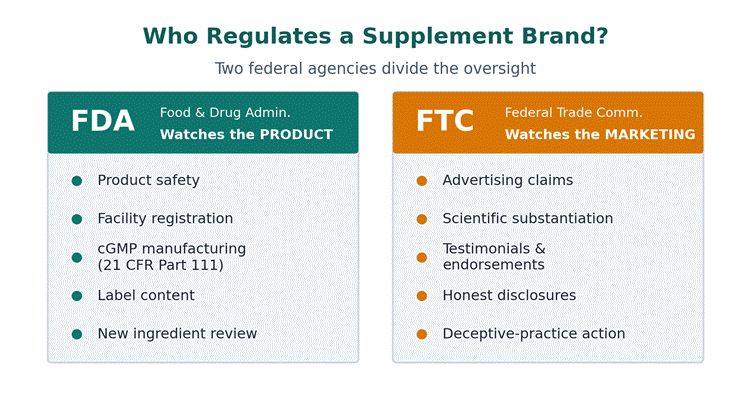
Figure 2. Two federal agencies divide oversight of the supplement industry.
Here’s the thing about supplements that everybody seems to get wrong. The FDA does not approve supplements before companies market them. When you submit your product to the FDA, you don’t have to sit around waiting for months for them to approve it. You can just make your product and sell it.
Now don’t get it twisted. No pre-market approval does not mean there are no rules. Not having the FDA approve your supplement means the responsibility is put onto you, the manufacturer and seller of the product. You are responsible for the safety of the product and you have to make sure the product is not misbranded or adulterated, and you have to have evidence to support all claims.
There is one exception, and it is for new ingredients. If your product has a dietary ingredient that was not sold in the United States before October 15, 1994, then you have to give the FDA a notification. This has to be done 75 days before the product is sold to give the FDA a chance to review the safety of the ingredient.
Once you sell your dietary supplement, you have to keep reporting serious health issues that the product may cause. The FDA has to be notified about the serious health issues. If the trust you have is abused, there are consequences.
The FDA needs documentation for every step in the supplement manufacturing process. The FDA requires all facilities that manufacture, pack, or store dietary supplements to register. This requirement was established under the Bioterrorism Act of 2002. Facilities need to register periodically in order to maintain their registration.
After registration, compliance with manufacturing standards is required. The manufacturing standards for dietary supplements are called Current Good Manufacturing Practices (cGMP). The cGMP for dietary supplements are established under 21 CFR Part 111.
The purpose of Part 111 is to ensure that the contents of the dietary supplement match what is on the label. Part 111 requires that the identity, purity, strength, and composition of each dietary supplement be tested and substantiated. This means that a dietary supplement that is claimed to contain 500 milligrams of a dietary ingredient should be tested to verify that it indeed contains 500 milligrams.
This regulation requires the testing of all raw materials and finished dietary supplements. Additionally, this regulation requires the documentation of all manufacturing activities, a record of each dietary supplement that is manufactured, and the maintenance of a clean manufacturing environment by trained manufacturing personnel.
For many new supplement founders, this is the best reason to use a manufacturer. A compliant contract manufacturer is already compliant with Part 111. A contract manufacturer would have the obligations, systems, and personnel that Part 111 requires. It would be more costly and time-consuming to be compliant on your own. For new supplement founders, it is a priority to use a manufacturer that is compliant.
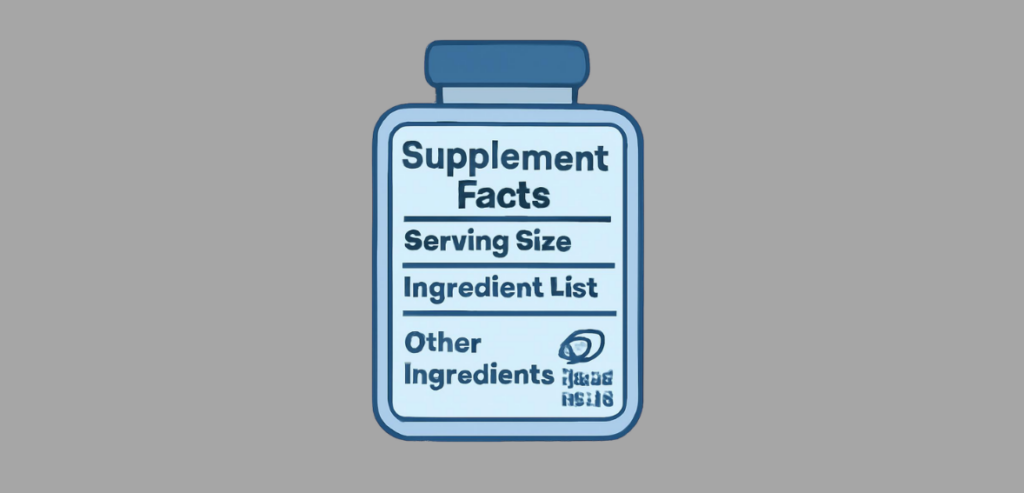
Your label is a legal document, not a packaging design. The FDA has specific parameters for what must be included. Skipping an element renders your product misbranded. That can result in a product recall. There are five required components on every dietary supplement label.
First is the product name. Generally, this is the name of the dietary ingredient, for example, “Vitamin C” or “Magnesium.” The second required component is the net quantity of the product. This conveys to the consumer the amount of dietary supplement the product contains, for example, “60 capsules” or “8 fl oz.” Both components must be on the package principal display panel (where it is most visible to the consumer when shopping).
The remaining three components are located on the information panel, which is mostly the right-hand side of the product packaging. One of the three components is the Supplement Facts panel. This is a box on the product that contains the serving size, the number of servings, and the amount of the dietary ingredient. Another is the ingredient list, which contains all other components of the product that are not included in the Supplement Facts panel. The last component is the name and address of the manufacturer, packer, or distributor. Customer-centric brands also include directions for use, to help the customer use the product as intended.
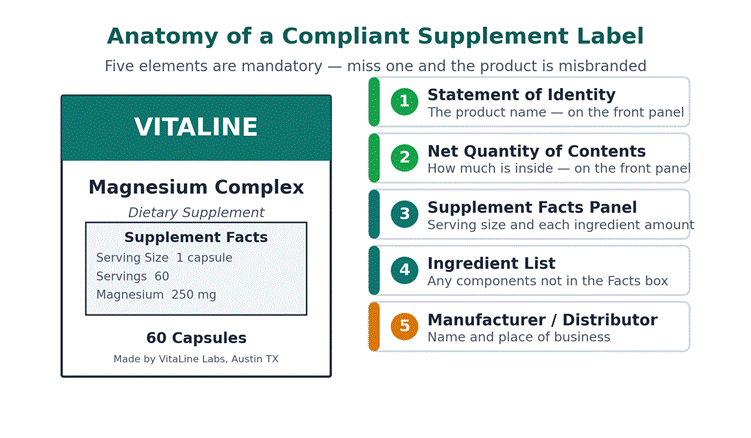
Figure 3. The five mandatory elements of a compliant supplement label.
This might be the most critical portion of the guide. What you communicate about your product could lead to the success or failure of your business. There is a clear distinction between two types of claims. Cross that distinction, and your supplement legally becomes an unapproved drug.
On the legally safe side are claims of a product’s supportive role in the normal structure or function of the body. A classic example is the claim, “Calcium builds strong bones” or “Fiber promotes normal bowel regularity.” Such claims are made in reference to normal health and don’t cross into the language of illness, which is the language of the drug industry.
Disease claims say your product can diagnose, treat, cure, or prevent a specific illness. An example of a disease claim is, “Cures arthritis” or “Prevents the flu.” Such claims can only be made by an approved drug. Making such a claim on a supplement is breaking the law. The difference between “supports joint comfort” and “cures arthritis” is the difference between a legal product and a federal issue.
Two rules accompany every structure/function claim. You must have the evidence to support the claim and ensure the claim is not misleading before making the claim. Additionally, the claim must be reported to the FDA within 30 days of the product being offered for sale to the public. The required disclaimer must be provided.
The claim that a statement has not undergone evaluation by the FDA and that the product is not meant to diagnose, treat, cure, or prevent any disease is an essential legal restriction. This disclaimer is not optional.
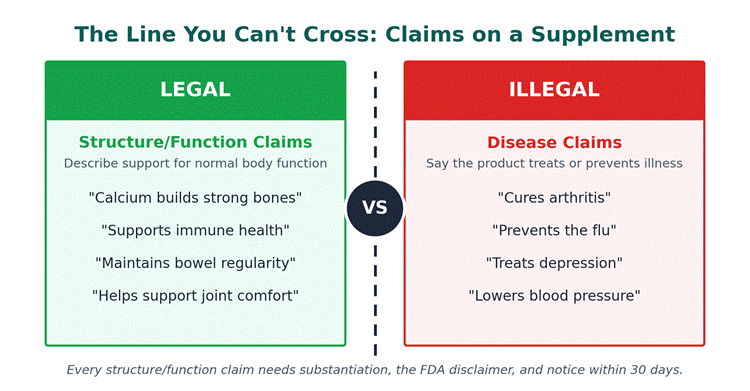
Figure 4. Structure/function claims are legal; disease claims cross the line.
The FDA regulates your product’s label while the FTC regulates your advertising. Each advertisement and social media post, including every landing page, is regulated by the FTC. The FTC’s main requirement is that each health-related claim must be made with solid science substantiating that claim. While this may seem simple, it is far more complicated and challenging to satisfy this requirement.
“Competent and reliable scientific evidence” is the description of the legal requirement. This means legitimate testing, studies, and analysis conducted by and under the supervision of qualified professionals. This means research that the scientific community would deem valid. This would not include a singular positive customer review or a singular animal study. The gold standard would include a well-controlled, well-designed randomized controlled clinical trial in humans.
Using a testimonial is also a trap. You cannot use a customer’s testimonial when that testimonial implies a claim that a dramatic result is the average or typical result when that is not the case and when that result is not substantiated. It must be clearly qualified, and any payment or other relationship to your brand must be revealed. Phrasing such as “may help” will not support or replace the need for evidence.
The most important thing to understand in all of this is to practice restraint when marketing. The quickest way to inspire an FTC investigation is to make a health-related claim that is unsubstantiated and bold. The FTC investigation is the first of your problems. Expect a host of refund requests, as that will be the next problem that will occur. Your claims should be conservative, sincere, and should be grounded by evidence to protect your company and your customers.
Almost all new brands partner with contract manufacturers instead of building their own factories. Choosing a contract manufacturer is a critical business decision. Your partner should be able to protect your product’s quality and safety.
Start by looking at the partner’s credentials. Ensure that their facility is compliant with 21 CFR Part 111. Check for certifications by reputable, non-biased organizations. Some organizations that provide audits and certifications of good manufacturing practices are NSF, USP, and the Natural Products Association. If a manufacturer has a current certification by one of these organizations, then their quality systems are most likely operational.
When evaluating a potential partner, you should also consider their sourcing of raw materials. A good manufacturer should obtain raw materials and conduct testing of the materials. Contract manufacturers should be able to provide a Certificate of Analysis (COA) for each raw material. This supports you in case a member of a regulatory body or a customer questions your product.
Consider what type of product you want to sell. Some manufacturers provide private label products where you sell the product under your brand, and other manufacturers provide formulation services to create a product under your specification. From a cost and time-to-market perspective, private label products are easier to sell; however, differentiating your product with a custom formulation may provide a competitive advantage. Many new brands begin with a private label product and custom formulation as the brand grows to provide their own product.
You have a compliant product and a clean label. Now you need to get paid. This is where many founders experience sudden, unexpected challenges. Banks and payment processors categorize supplement companies as high-risk merchants, which negatively impacts your fees, approvals, and daily operations. The good news is that understanding the reasons why this occurs will help you manage it.
Chargebacks are first and foremost on the list of causes. Supplement companies sell a majority of their product online. Supplement companies also use subscription and auto-ship billing. Customers often forget to cancel subscriptions and will initiate chargebacks. To add to this, many supplement companies offer free-trial products. This is compounded by the use of aggressive marketing and health claims. Chargebacks are also impacted by the rate of refunds.
The result of these chargebacks is that standard payment processors will most likely deny you a merchant account and/or freeze your account. A company like PayPal or even Stripe will easily and with virtually no notice shut down your account. This is why high-risk merchant accounts exist. These companies understand the risk and are willing to absorb the risk to provide the service. They also expect and require clear, plain terms of billing.
To keep your merchant account, it is critical to be transparent and clear about your subscription terms. It should be clear and easy to cancel your subscription. If your health claims are inflated, you will likely have an increased rate of chargebacks and refunds. Consider using verification tools to mitigate fraud and chargebacks. Be sure to clearly communicate any changes to your business model to your payment processor.
Think of your payment partners as compliance allies, and your revenue engine is in good shape.
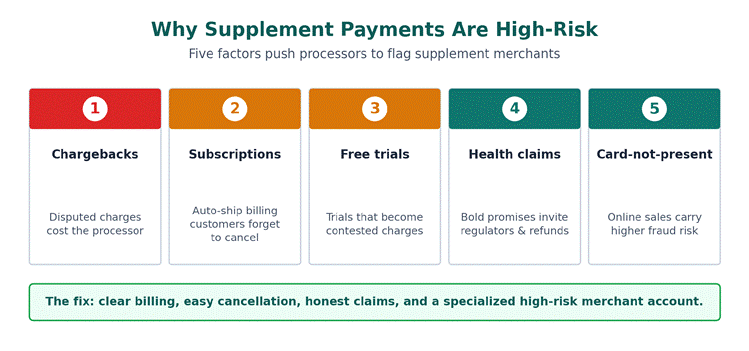
Figure 5. Five factors that push supplement businesses into the high-risk category.
Jumps in the supplement game don’t require as much overhead as many other avenues. Once you understand the basics of the DSHEA, you can get your supplement to market much quicker than competing products. The act requires you to take responsibility for your supplement—as the act does place some level of oversight on safety and honest marketing— and for your labeling. The safety of the product and the marketing of the product and the claims of the marketing all fall under the jurisdiction of the FDA and FTC, respectively, so long as you understand that Division of Labor.
The formula to success in this arena is not much more difficult than understanding the basics of the DSHEA. You are required to register your manufacturing facility and follow the 21 CFR Part 111 standards. These are much less difficult to follow when a contract manufacturer is used.
There are also five requirements on a supplement label. You are on the correct side of the law with claims of marketing when you stick to claims regarding the body’s structure and function. These claims of marketing should be supported by scientific research. You should also obtain a merchant account that is designed for this specific type of business. Following all of these correctly will help you turn a passion for health into a serious business.
Work with a 21 CFR Part 111-compliant contract manufacturer to formulate your product, create a fully compliant label, then establish a high-risk merchant account. From day one, focus on legal claims and truthful marketing.
No. The FDA does not pre-approve supplements. Manufacturers are responsible for the safety and for labeling correctly. The FDA is able to remove unsafe or misbranded products from the market after they have been launched.
With a disclaimer and FDA notification, you can make claims like “supports immune health” on product labeling. You cannot say the product treats, cures, or prevents any disease.
A statement of identity, net quantity of contents, Supplement Facts panel, ingredient list, and name and address of manufacturer or distributor are the five required elements.
Sales through the internet, subscription services, free trials, and health claims lead to elevated chargebacks. Since these also increase dispute rates, processors identify these as high-risk and usually offer specific merchant accounts.
