
Posted: September 25, 2026 | Updated: September 25, 2026 at 2:57 PM
The event is over, and the guests are gone, but for event business owners, the real work starts right after.
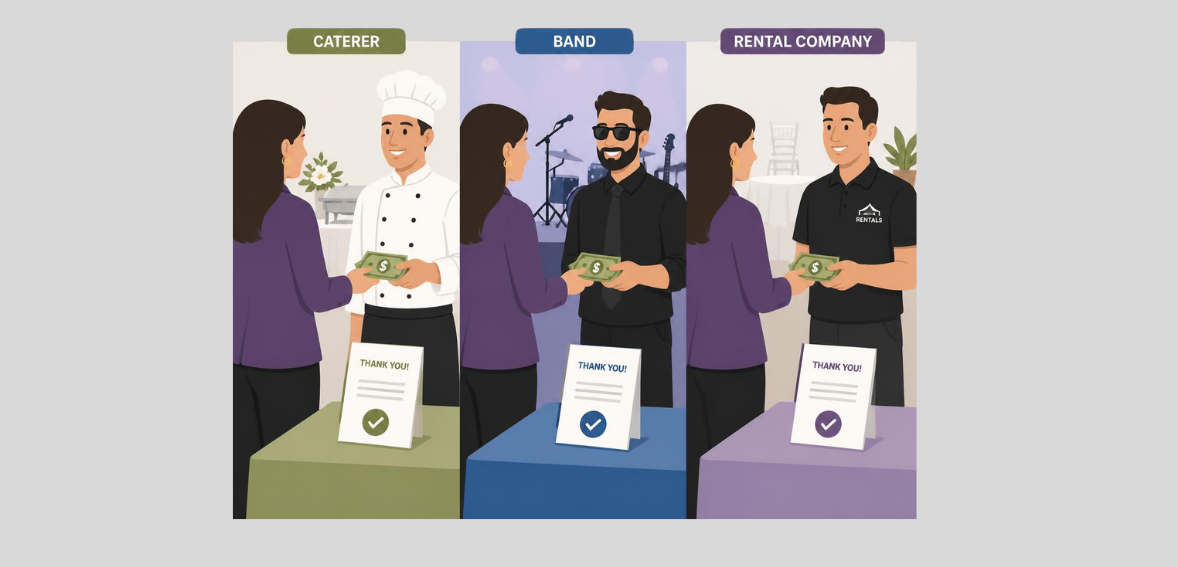
Behind every successful event is a line of vendors waiting to be paid. The caterer wants their final payment, the band/DJ wants their balance, and the rental company wants payment for their tables, chairs, equipment, or décor. If you don’t handle these payouts correctly and promptly, the days after the event can turn into a disaster of invoices, emails, payment reminders, and unanswered questions.
Vendor payments don’t have to be complicated. The key is to organize vendor information beforehand, agree on payment terms in advance, pay through a trusted method, and keep a record of every payment. Including these in your event workflow from the start makes paying vendors a normal part of your event closing process.
Vendor payments become much easier when you collect the necessary information before the event. Asking for a tax form, an invoice, or payment or mailing details after an event can slow down the entire payout process.
When you book a vendor, collect the information you’ll need later. This information includes the vendor’s legal business name, contact details, invoice, payment instructions, and a completed Form W-9, if applicable. Keeping these on file saves your team the hassle of starting from scratch when making a payment.
A vendor W-9 is crucial for any company that must report payments to the IRS. This form contains vital information, including the vendor’s name and taxpayer identification number. Collecting it when the vendor relationship begins ensures your accounting department has the information it needs and avoids chasing vendors at an inopportune time.
Don’t overlook payment terms when finalizing vendor contracts. Make sure both parties understand all payment terms for services.
Some vendors may request a deposit at booking, which will be applied to the final payment, while others may split the total into a payment at booking and a balance due before or after the event. The agreement should also specify total sums, deposits, payments, due dates, and any cancellation terms.
Clear terms benefit both parties: the event business knows when to pay out, and the vendor knows when they are due to be paid. This also helps with cash flow forecasting rather than leaving multiple large invoices to clear after the event.
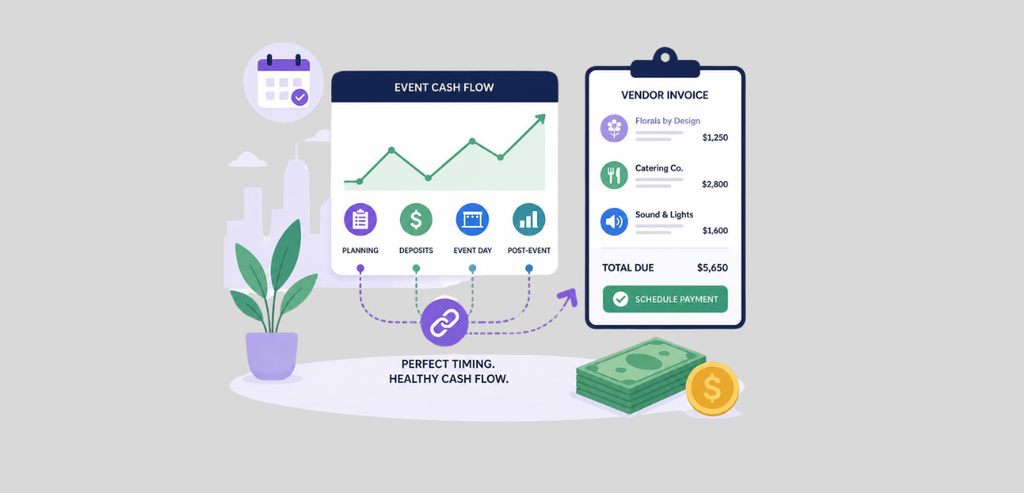
One effective way is to align your vendor payment schedule with your event payment schedule. If your client pays a deposit upon booking and the balance closer to the event date, your vendor contracts should reflect the same cash-flow-friendly schedule. You don’t want every vendor’s full payment falling due right after the event, when the client hasn’t paid the balance yet. Avoid these imbalances.
Of course, this does not mean you can hold back payments that are due. It means negotiating terms with your vendors in a way that makes financial sense for your business at all times.
A common reason vendor disbursements become problematic is that invoices and payment details are scattered across emails, texts, paper files, and the accounting system. Create a single, shared location to store all vendor invoices and payment information.
For every vendor, you should be able to see the amount they will be paid, the amount already deposited, the amount due, the invoice number, the due date, and the payment status. This will make auditing much easier when the event closes and you need to determine the current state of affairs with every vendor. Instead of wasting time digging through hundreds of messages trying to find out if you already paid the caterer or not, it will be right there in the record. A central system also reduces the risk of paying the same invoice twice or forgetting a smaller vendor payment that was easy to overlook.
For many companies, ACH is a good option for vendor payments because, instead of mailing paper checks, the business sends money electronically to the vendor’s bank. In addition, ACH payments can reduce paperwork and make payment information easier to access and track.
It can give vendors certainty about when they’ll get paid if the company is clear about when a payment has been sent and when it’s due to arrive.
However, ACH payments are not always instantaneous. Processing time can vary widely based on factors such as the payment processor, the type of ACH transaction, weekends, holidays, and other variables.
Your objective should be to determine how much money to pay vendors, when it is due, and whether your business will have the money on hand then.
That is why businesses should avoid telling a vendor that money will arrive “immediately” unless the payment service actually supports that timing. A better practice is to give the vendor a clear payment date and allow enough time for processing.
Clear communication is one of the simplest ways to avoid vendor payment inquiries. Tell vendors when you’ll send payment after you approve an invoice and when it should land in their account. This matters especially with ACH transfers, since the payment date and the clearing date can differ.
Clear communication builds a positive working relationship. It saves your staff time by eliminating repetitive payment status inquiries.
Late invoices may complicate matters if your accounting department needs to close out an event. The vendor agreement should specify invoice due dates and required information. If an invoice is late, check whether the vendor’s payment terms are still valid and whether the invoice requires approval.
Don’t assume you should pay an invoice just because it has arrived. Make sure the invoice amount matches your contract and that it accounts for any deposits and previous payments.
Create separate journal entries for vendor deposits and the balance due. This keeps all payments to a particular vendor together, giving you an up-to-date record of what has been paid and what is still owed.
At the end of the event, confirm the amount due to each vendor by comparing the initial contract with the final invoice, including the deposit amount, any approved variations, extra charges incurred, and the balance due. This is especially important if there are any variations during the event, such as extra guests, equipment, hours of performance, or additional services rendered.
Events always have last-minute changes. Clients add services, increase or decrease guest counts, extend the event, or request additional equipment. These last-minute extras show up on your vendors’ invoices. Before you pay that final balance in full, make sure those extras were approved and accounted for in your contract, agreement, or change order. It doesn’t mean you should intentionally complicate things for vendors. It just means your business should clearly know what it is paying for.
A quick review can identify duplicate charges, incorrect quantities, or unapproved costs before the payment is issued.
A vendor payout log will make the event closing process much easier. The log should list each vendor, invoice, amount, deposit, balance, payment date, payment type, and status. The log should also note any invoice paid in more than one installment. The idea is simple: in case of a dispute at the event’s close, anyone on your team has a complete overview of the payments and their current status.
This will also help your accounting team reconcile payments with bank transfers and invoices. If a vendor asks about a payment, your accounting team can easily access the document.
After paying all vendor invoices, analyze the event’s financial statements. Double-check each invoice to ensure it’s recorded correctly, deposits have been applied, and all amounts due are noted. Compare the figures from your income statements to those in your expense reports. This will show how much the event made after paying vendors and covering other expenses.
In addition, a well-documented closeout report will become a valuable planning tool for future events. It can help you apply what you learned if expenses such as catering, entertainment, and rentals were higher than expected so that you can set more realistic pricing and budgets for similar events in the future.
Vendor payments sometimes require tax reporting and documentation. Companies should track all payments to business vendors throughout the year, rather than saving them for tax season.
Whether a payment requires an IRS report depends on several factors. These include the nature of the payment, the vendor, the amount, and relevant tax laws and regulations. Therefore, companies should consult their tax professionals or review IRS resources for up-to-date information on reporting requirements.
Some vendors use Net 30 or other payment terms. This means that the invoice is usually due within the specified number of days from its issue date, as per the agreement. If your company works with such vendors, it is critical to set reminders for their due dates. Relying only on memory or an email in the draft folder is not enough.
For companies that work with many vendors, even a few invoices with Net 30 terms can be hard to track if they aren’t consolidated in one place with the other bills.
An event may end as guests depart, but the financial stress for business owners doesn’t end until they pay vendors and close the event’s financial records. If you’re an event business owner, discuss vendor payments long before the event date, not as an afterthought. Collect W-9s and payment details in advance, establish and agree on payment terms, apply deposits and payments to invoices, and select a payment method that leaves a digital paper trail for both parties.
ACH is a convenient option for many vendors. However, it is critical to communicate clear timelines to payees. They must understand when their payment is being processed and how long it will take before they can expect to see the funds in their accounts.
Finally, keep an updated payout log and close the event’s books after you’ve made all payments. This will help you track event spending and simplify tax and accounting at the end of the fiscal year.