Posted: August 14, 2026 | Updated: October 06, 2026 at 6:03 PM
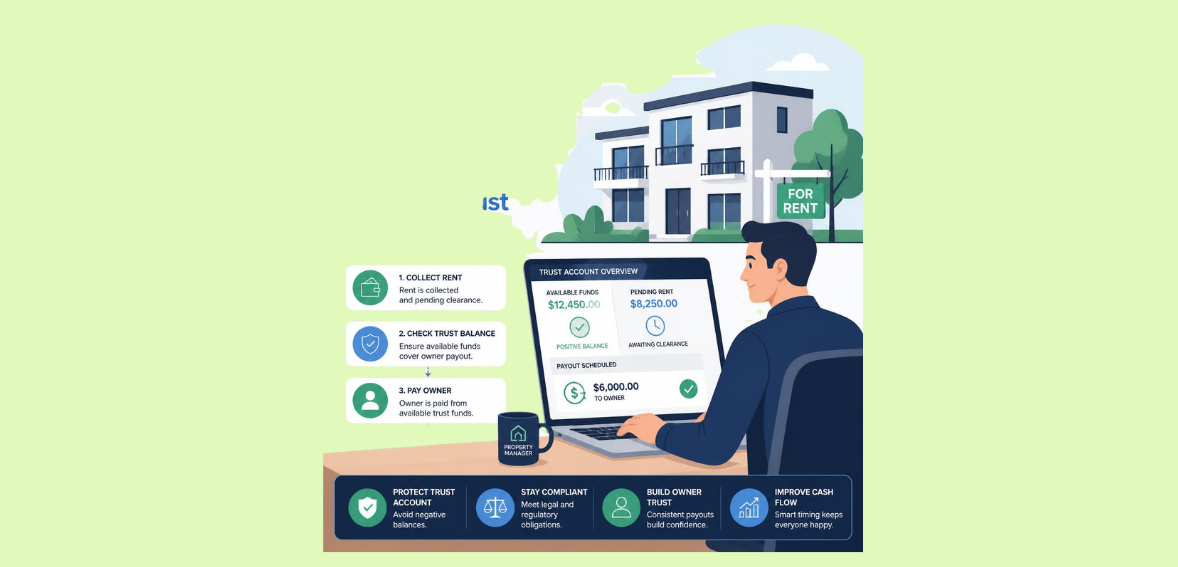
Rent payments from tenants are deposited on Tuesday into the trust account. By Thursday, the owner’s disbursement is made. Then, on Friday, the bank takes back the payment and the money the property manager sent is gone. This happens all the time, and it usually has nothing to do with fraud or carelessness.
It has to do with the timing of the banking system. The money you see in your bank account and the money that is truly available once a payment clears are not the same. Trust account balances that fall into the negative are due to this gap along with disbursement practices.
Because of this, any software used for property management has to know how to handle the disbursement of trust account funds.
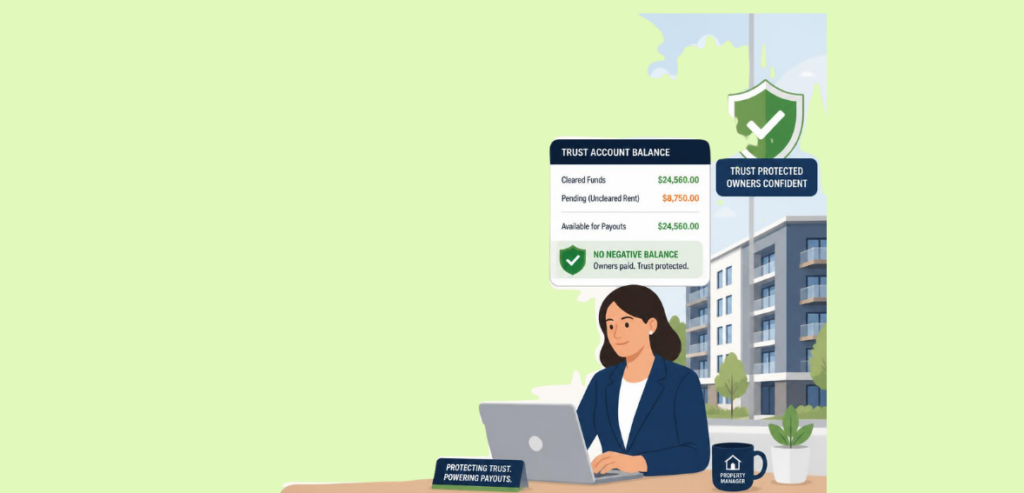
Most property management software marks a payment as received when a tenant submits it. This leads property managers to believe they are able to spend the funds. However, an ACH debit or card charge is still provisional. The tenant’s bank has not verified the funds.
Additionally, the card network has not closed the time period during which the cardholder can contest the charge. Should a property manager pay an owner from this provisional balance, the owner’s trust account goes into the negatives.
Because trust accounts are usually held in a single bank account, a negative balance for one owner creates a shortfall that is effectively covered by the funds of other owners. The foundation of nearly every negative trust balance is the misconception of “posted” versus “cleared.”
ACH payment is the most frequent rent payment option for landlords. Businesses and consumers believe that once the payment is processed, it is available for withdrawal, but as defined by Nacha operating rules, receiving banks can take up to two banking days to return standard ACH payments. A normal return could be due to insufficient funds, a closed account, or an invalid account number.
The greater risk, however, comes from a much longer window. A receiving bank can take up to 60 calendar days to return a payment if the tenant disputes the authorization. This is known as an unauthorized debit return, caused by a tenant disputing the authorization of the payment or by the authorization being otherwise revoked.
Because of this, ACH rent payments leave landlords exposed well after the funds appear. An ACH payment can appear processed, and the landlord can withdraw the funds, but the payment can still be reversed. No practical hold period covers the full 60-day unauthorized-return window, which is why the exposure must be managed by policy as well as timing.
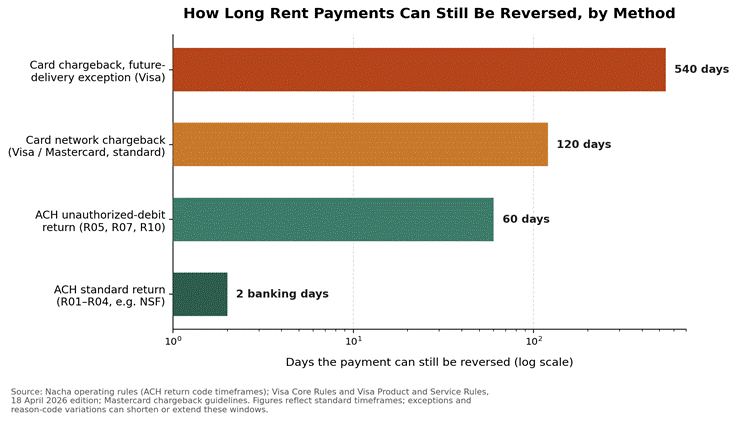
Figure 1: Reversal windows by payment method, based on Nacha ACH return rules and Visa/Mastercard chargeback rules. Standard ACH returns close in two banking days, but unauthorized-debit returns and card chargebacks stay open far longer.
More tenants are using debit/credit cards to pay rent. The card payment method is very convenient for tenants, but it carries a much longer reversal exposure than an ACH payment. Most debit/credit card companies state that cardholders must submit a dispute request within 120 days from the transaction date in order to dispute the payment.
For most Visa disputes, the 120-day clock runs from the transaction date, with an exception for future delivery of goods and services purchases, where the clock can start at the expected delivery date. Since prepaid rent is a payment for future services, a payment made with a credit card for the prepaid rent may also be protected by Visa’s extended dispute period.
As with an ACH payment reversal, when a card rent payment is disputed, the amount is pulled back from the trust account and returned to the cardholder. In this case, the risk to the landlord is much larger because the exposure window stretches from a few days to several months.
Card processors embedded in property management systems are the typical front end for card-based rent collection. The key point is that every processor passes the card network’s dispute rules through to the merchant of record. No processor shortens the Visa and Mastercard chargeback windows; when a chargeback is filed, the processor notifies the merchant and holds the contested funds.
Therefore, property managers must consider all card payments as carrying the extended risk of a card-not-present reversal, regardless of the processor handling the transaction.
Although payments may be perceived as cleared, funds may not be immediately accessible. ACH transfers are batch processed. The settlement of transactions is dependent on the daily transaction deadline of the bank. As such, it may take 1 to 3 days for transactions to clear.
Funds are not truly available during the clearing time. Settlement of transactions takes even longer over the weekend since ACH does not settle on Saturdays and Sundays. Payments made on a Friday may take until Tuesday or Wednesday for settlement. The fact that a payment has cleared in the software does not mean that the transaction has been completed on the bank’s end.
Property managers have to be aware of the time lags that are associated with the settlement of transactions.
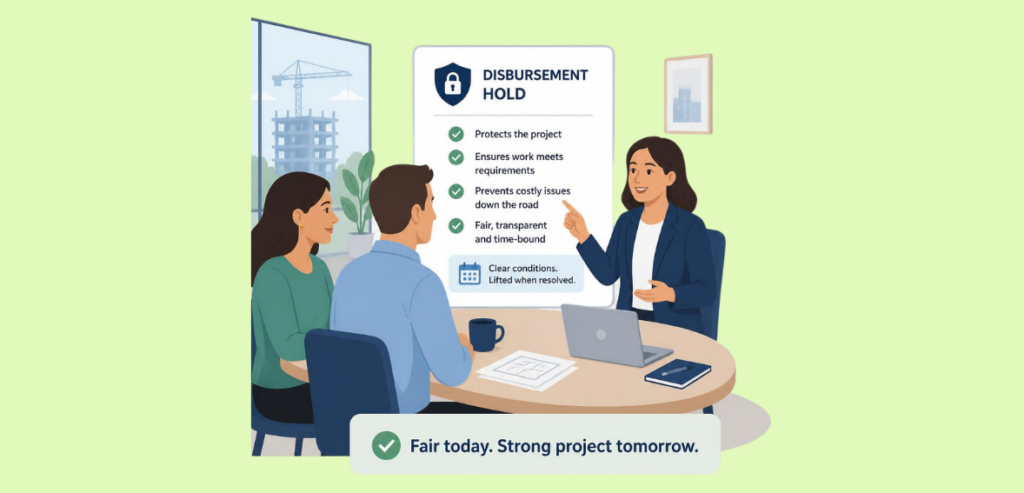
The solution isn’t to hold every dollar. It’s to implement disclosed hold periods that match practical return windows. Most firms build their policy around typical ACH return windows with a bit of leeway. This is because that window covers the majority of returns as well as the lag in bank settlement.
A funding schedule that releases money 3-5 business days post-payment, rather than immediately, closes most of the risk cited, with minimal impact on an owner’s cash flow. Owners accept disclosed holds once they understand that the policy protects their own funds from being used to cover the reversal of other owners’ payments.
The policy should be formalized and applied the same way for every owner. It should not be introduced through the back door after a cash shortage crisis, without owner communication, and without formal documentation.
HMS Pay lets companies decide the timing of disbursements by configuring hold periods. Without such a tool, property managers have to manually track each disbursement for each of hundreds of property owners to avoid making payments within the window where a payment could still be returned. With the disbursement schedule configured for a firm’s hold period, payments are released after the window of each transaction has passed.
Negative individual owner ledgers are not footnotes for state real estate regulators. They are an indication of one owner sponsoring another owner, probably without either owner’s knowledge. State investigators have described this exact pattern. A broker would disburse from an owner’s ledger and make the payment; however, the underlying rent payment would later be reversed.
This would create a deficit in the trust account for that owner. This means that trust account funding was provided by another owner. The normal mitigating control for this is a three-way reconciliation system. A three-way reconciliation reviews the balance at the bank, the internal balance, and the total of all owner ledgers.
If any of these do not agree, then a state audit is normally the next step. Because of control systems, most firms do not experience the negative owner ledger issues that regulatory bodies are concerned about.
Not even the most sophisticated hold period can account for every reversal, especially longer-tail ACH unauthorized-debit returns and card chargebacks, which can take weeks or months to come through. In this instance, the first step is to allocate the reversal to an owner and particular property ledger. Instead of allowing it to impact the overall trust balance (which will then impact the other owners), it should be isolated.
The second step would be to note the date rental income was received, the date rental income was distributed, and the date the reversal was posted. This is what an auditor or an owner will request. The last step would be to recover the loss by offsetting the shortfall against the next rental income disbursement to the owner, or sending the tenant an invoice for the reversal and all related fees per the terms of the lease agreement.
It is unethical for a firm to cover the gap by dipping into the funds of another owner to clean the ledger (this is a practice that would be flagged by the regulators as a license-level violation, even if the intent was to avoid an uncomfortable conversation).
Each payment method has a clearing process, and a disbursement policy that treats all payment methods similarly will be excessive for cash payments or insufficient for card payments. A firm disbursing rent that was paid via ACH after the standard 2-day return window and on confirmed settlement takes only a small residual risk, since unauthorized-debit claims can still be made up to 60 days later.
All other payment methods have a shorter exposure period than rent payments made with debit or credit card as a chargeback can be made up to 120 days after the purchase and in some cases, can be extended if the transaction is a future-delivery contract. A lot of firms have a longer hold on disbursing rent that was collected via card payment than on ACH payments.
A process should not disburse against rent paid by check until the check has cleared the depository bank, since a bounced check behaves much like an ACH return. Cash payments do not have a reversal risk if they are deposited, so some firms disburse verified cash rent payments faster than any other payment method.
Most payment platforms provide settlement reports for rent payments. Through these reports, bookkeepers can see how long it takes for a payment to be submitted and settled in the bank. The bookkeeper can then account for this lag and wait for payment to clear in the bank before making disbursements for these payments.
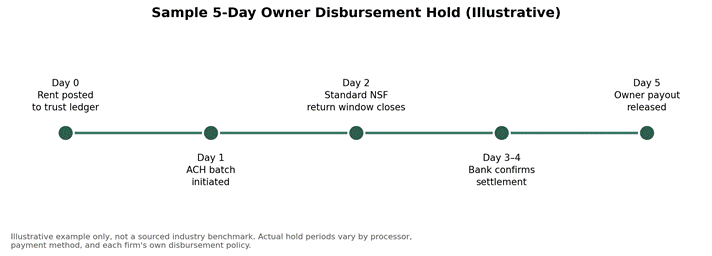
Figure 2: Illustrative example of a five-day disbursement hold aligned to the standard ACH return window. This is a sample policy structure, not a sourced industry benchmark; actual hold periods vary by firm and processor.
Trust account deficits rarely start with an intent to defraud. Instead, they start with a flaw in how the system defines a posted payment. A balance can be disbursed before the underlying payment has truly cleared, and that payment can then come back as an ACH return or card chargeback. The gap creates a situation in which rent was collected, disbursed, and must still be returned.
This gap does not require a permanent hold of the owner’s funds; it does require a disclosed hold that is appropriately long and consistently applied for returns in which the exposure window is significant.
Clear policy and three-way reconciliation ensure that reversals are caught and isolated. Trust account disbursement timing based on actually cleared payments protects owners and the firm from liability under trust account laws.
For more on owner payouts and trust balances and other property management payment questions, see Property Management Payment Resources.
Most companies hold funds for three to five business days after an ACH payment is initiated. This horizon covers the standard return window plus bank settlement lag.
Yes. Generally, when dealing with returns, you have about 2 banking days to file, but returns due to unauthorized debits can be filed up to 60 days after the settlement date.
It is a compliance breach: when one owner’s ledger goes negative, another owner’s funds are very likely covering the shortfall.
Yes. Cardholders of Visa and Mastercard can take up to 120 days to file for a chargeback, which is longer than the return window of ACH. Card rent has prolonged exposure to this because of this extended chargeback window.
Set the hold period to match the return windows of your primary payment methods, document it in the management contract, and apply it consistently to all owners.