
Tag Archives: visa

global reveals more about data breach

Global Reveals More About Data Breach [2023 Update]

global reveals more about data breach

Today The Official Merchant Services Blog is updating its coverage of the Global Payments Data Breach. The big bomb Global just dropped is that apparently there was a second data breach.

The story, initially broken by Ellen Messmer at Network World stated that Global Payments itself revealed this latest news.

Data Breach II: Credit Card Boogaloo

From the Global Payments Website:  “The Company’s ongoing investigation recently revealed potential unauthorized access to servers containing personal information collected from a subset of merchant applicants.  It is unclear whether the intruders looked at or took any personal information from the Company’s systems; however, the Company will notify potentially-affected individuals in the coming days with helpful information and make available credit monitoring and identity protection insurance at no cost.  The notifications are unrelated to cardholder data and pertain to individuals associated with a subset of the Company’s U.S. merchant applicants.”

So What Was Compromised?

Host Merchant Services logo art for Blog Series on Global Payments Data BreachThis second breach compromised the personal information of a subset small merchants that applied to be clients of Global Payments — and the company stressed that this set of merchants was different than the ones exposed in the first breach. The exposed information includes the sort of personal information the Atlanta processor uses as part of its underwriting process. The company stressed that it does not have evidence that any fraudsters obtained or misused the merchant applicants’ information — but the servers that contained that information were possibly accessed by an unauthorized party. Last time we updated this story, we provided information from Brian Krebs about how information from the first data breach could have been used by fraudsters.

Something to keep in mind regarding Global’s claims that the second breach did not lead to fraud is that Global still maintains that the information that was compromised in its first breach was not involved in fraud — even after Krebs dug up examples of fraud happening to Global customers in his blog entry here.

Wait, What?

The author of the official updated statement released by Global — Jane Elliot from Investor Relations — added this caveat to the statement: “This announcement may contain certain forward-looking statements within the meaning of the ‘safe-harbor’ provisions of the Private Securities Litigation Reform Act of 1995.  Statements that are not historical facts, including management’s expectations regarding future events and developments, are forward-looking statements and are subject to significant risks and uncertainties.  Important factors that may cause actual events or results to differ materially from those anticipated by such forward-looking statements include the following: further results of the continuing investigation of the unauthorized access of our processing system, including the discovery of additional card data or information implicated in the incident; the effect of our remediation efforts on operations; the impact of fines or penalties from the card networks and state authorities on our results of operations; and other risks detailed in the company’s SEC filings, including the most recently filed Form 10-Q or Form 10-K, as applicable.  The company undertakes no obligation to revise any of these statements to reflect future circumstances or the occurrence of unanticipated events.”

That reads like a very wordy hedge against the way this story has evolved to date. To put it another way, much of what Global has already stated, including clinging to the claim that the breach is contained and the number of compromised cards was just 1.5 million, has already been contradicted by information revealed by Visa and MasterCard.

logo VisaVisa and MasterCard issued new alerts on May 15 suggesting the breach dated back to January 2011 — an exposure window significantly longer than what was originally reported by Global when news of the breach surfaced in late March. Visa’s alerts in March, which Brian Krebs used to break the story,  indicated the breach occurred sometime between Jan. 21, 2012, and Feb. 25, 2012. Global used those alerts to help underscore their assertion that the breach was small and contained. But on April 26, an updated advisory from Visa put the suspected intrusion date closer to June 7, 2011. Setting the length of exposure for compromised cards back six months. And then Visa and MasterCard released information that pushed the date back an entire year from the initial alert, to January 30, 2011. This vaults the figure of compromised cards to 7 million — much higher than the 1.5 million “or less” suggested by Global in their official statement.

All this contradiction over the length and severity of the breach had  been met with silence from Global Payments. They had offered no further comment other than to link to their website. But with this latest batch of statements, they’re now adding that very long caveat. And they apparently intend to clear matters up even further in June. The Company plans to provide additional information regarding the potential financial impact, the PCI compliance process and the status of the investigation not later than its July 26, 2012 year-end earnings call according to Paul R. Garcia, chairman and CEO of Global Payments.

The Official Merchant Services Blog will be following this story as close as ever now. It’s getting more complicated and convoluted. Hopefully that earnings call will clear the air a bit. But it still seems like the reporters digging into this, as well as Visa and MasterCard have a very different set of facts than the ones Global is sharing with people.

Industry Terms: Interchange


Interchange

Interchange is a term used in the payment card industry to describe a fee paid between banks for the acceptance of card based transactions. Usually it is a fee that a merchant’s bank (the “acquiring bank”) pays a customer’s bank (the “issuing bank”).

In a credit card or debit card transaction, the card-issuing bank in a payment transaction deducts the interchange fee from the amount it pays the acquiring bank that handles a credit or debit card transaction for a merchant. The acquiring bank then pays the merchant the amount of the transaction minus both the interchange fee and an additional, usually smaller fee for the acquiring bank or ISO, which is often referred to as a discount rate, an add-on rate, or passthru.

For cash withdrawal transactions at ATMs, however, the fees are paid by the card-issuing bank to the acquiring bank (for the maintenance of the machine).

These fees are set by the credit card networks, and are the largest component of the various fees that most merchants pay for the privilege of accepting credit cards. Visa, Mastercard, and Discover are each known as card associations. And each card association has their own rate sheets known as Interchange Reimbursement Fees. These fees make up the majority of what you pay to your processor and they vary greatly depending on the card type accepted.

Download Visa’s Interchange Fees Here

Merchant Services Document Download Graphic

Download MasterCard’s Interchange Fees Here

Merchant Services Document Download Graphic


Interchange Plus Pricing

Interchange Plus pricing means that the acquirer charges you a variable MSC consisting of the cost price plus a fixed markup. Interchange Plus Pricing  is exclusively how we quote at Host Merchant Services. Interchange Plus, also known as Cost Plus, pricing gives the customer a fixed rate over published Interchange Fees. This pricing format is normally quoted as a discount rate (percentage fee) along with a per item or authorization fee. The great thing about Interchange Plus pricing is that you always know exactly what you are paying to your processor to services your account. Think of Interchange, and all the associated fees, as an unavoidable cost. No matter who you process with, you have to pay these fees. They may be labeled differently, or wrapped up in a confusing pricing tier, but one way or the other, you are paying Interchange fees. By understanding the markup you pay over Interchange, you know exactly what you pay to your processor and exactly what is going to the card associations. That allows you to make a decision on whether or not the markup seems reasonable for the service you get and choose your processing partner accordingly.

Here’s a small graphic explaining the basics of how Interchange Plus works:

Host Merchant Services infographic on Interchange Plus pricing

Visa Investigation Update

On May 2 it was revealed by Visa CEO Joe Saunders that the credit card giant was being investigated by the Department of Justice for violation of antitrust laws. One of the key elements of the DoJ’s interest in Visa for antitrust violations is its new fee, the Fixed Acquirer Network Fee (FANF) which went into effect on April 1, 2012. Saunders stated that the investigation began on March 13, prior to the fees taking effect.

Saunders revealed that Visa was being investigated during Visa Inc.’s Fiscal Q2 2012 Earnings Conference Call, which prompted The Official Merchant Services Blog to take its readers through the strange roller coaster ride that was Visa’s beginning of May in THIS BLOG HERE.

The strength of Visa’s earnings in the last quarter was framed immediately by Saunders in the conference call: Credit. As Saunders says, “In the U.S., payment volumes increased 6% for all products. Our star performer for fiscal second quarter was credit. Building on that, we continue to invest in new and expanded long-term credit relationships with our largest U.S. clients to drive growth in our core business.”

The other side of that statement, however, is debit. Where MasterCard took great strides — notably adding the nation’s largest debit card institution Bank of America, which switched from Visa.

Host Merchant Services image of Visa CEO Joe Saunders

Visa claims it was hampered by the Durbin Amendment in terms of making earnings from debit in the last quarter.  As Saunders said in the conference call, “So far, the situation is playing out as we expected, and in line with our updated guidance for fiscal 2012 as well as our guidance for fiscal 2013. During the March quarter, U.S. aggregate debit payment volumes slowed to 2% growth and, as expected, has continued to decline in April. Interlink is bearing the brunt of the regulatory impact.”

Saunders then took a moment to emphasize the individual differences between Visa Debit — the well known Visa check cards that get swiped through terminals around the country — and Interlink, Visa’s PIN-debit product. Saunders noted that Visa’s swipe debit grew, but grew very slowly. And then went into detail about how Interlink was the company’s worst performer in the quarter, “We posted negative payment volume growth in each month of the March quarter. More recently, between the compliance deadline of April 1 and April 28, Interlink payment volume has experienced notable deterioration. Keep in mind, though, that in the March quarter, Interlink contributed less than 10% of U.S. debit revenue and about 2% of Visa Inc.’s overall revenue and was our lowest yielding product in the U.S. market. “

At this point in the call Saunders shifted into a very general discussion of Visa’s “strategies to compete” — essentially their new fees, including FANF, the Transaction Integrity Fee and a revised Network Acquirer Processing Fee. That led Saunders to discuss the Department of Justice investigation: “On March 13, prior to the April 1 implementation date, the U.S. Department of Justice Antitrust Division issued a civil investigative demand requesting additional information about PIN-authenticated Visa Debit and elements of our new debit strategies, including the fixed acquirer fee. In March, we met with the department twice and provided materials in response to the CID. We are confident our actions are appropriate and that our response to the DOJ supports that.”

More Commentary from Visa

During the question and answer period of the conference call, Saunders stepped up to defend Visa’s new fees. Saunders says that the fees are part of “the total structure we’ve put to deal with the Durbin regulation. We are not making money per se off of that fee. The combination of discounts and incentives that we have put together, I think, actually relate in a modest loss in the amount of $100 million a year. So we aren’t doing this with the intent of raising prices.”

Host Merchant Services image of the Department of Justice

Then another question comes up in the call asking about the outlook the company has for recovering from the losses in Debit due to Durbin. Saunders very vocally defends the company’s fees and strategies: “Let me just follow up on that and make perfectly clear one thing, and that is that we are never going to regain all of the market share that we had in the debit card business. Nothing that we say or none of our strategies suggest that that will happen or could happen. And nothing that we have done or thought about or said anticipates that it will happen. The environment has changed by regulation. We are operating in a different world, and we are going to live forever with less share than we once had.”

The TLDR Version from Visa

So essentially Visa’s CEO has revealed the company is being investigated by the DoJ for antitrust violations because its new fees could circumvent the point of the Durbin Amendment’s reform. But Saunders states the company is cooperating with the government probe, and stoutly defends the fees as not circumventing Durbin. Saunders says the fees don’t recoup the losses that the company will incur from the hard cap, and that the company is still taking a downturn in the debit sector even with the fees in effect. He admits that these fees are part of their strategy to deal with the legislation but feels that the company isn’t violating antitrust laws.

The transcript of the entire conference call can be read HERE at Seeking Alpha. Many thanks to them for providing it for use to bloggers and media outlets.

Visa’s Ups and Downs

The Official Merchant Services Blog takes a look at Visa’s wild ride between May 2 and May 3. In the midst of a very active first quarter of 2012, Visa’s earnings report came in. The San Francisco based credit card giant then took a ride on a roller coaster in the span of two days after the report was released.

The Up Vote

The company had good news to report on May 2: Visa said Wednesday that its profit for the first three months of the year was up 30 percent from the year before, primarily because credit card use rose in the United States and overseas. Bloomberg broke down some key statistics from the report in their story here: “The company said Americans rang up 12 percent more on their charge cards for the quarter. Debit card use grew by only 4 percent to $284 million, however, the slowest growth in a year.”

So the boost in Visa profits is tied to an increase in the use of credit cards in the first three months of the year. But it appears the Durbin Amendment, financial reform legislation designed to address problems with swipe debit fees, has slowed down debit card use. As the Bloomberg article reports, the Durbin Amendment appears to be having an impact on profits: “Banks have eliminated some debit card rewards programs since October, when the government limited the fees banks can charge stores for card transactions.”

The profit breakdown for the quarter paints a very rosy picture. Visa’s net income was $1.3 billion, or $1.60 per share. Wall Street was expecting $1.51. Revenue rose 15 percent to $2.6 billion. Wall Street was expecting $2.48 billion.

The Down Turn

And then the roller coaster ride took a dip. Bloomberg reported the next day, May 3, that Visa stock took a decline based on the details of a U.S. Antitrust Probe into Visa’s Debit Strategy. The article states: “Visa Inc., the payments network that has lost market share amid new debit-card rules, slid as much as 4.5 percent in extended trading after disclosing a U.S. antitrust probe into the firm’s pricing and strategy.”

Visa adjusted the network’s fee structure to defend its leading market share after the Durbin Amendment took effect in October. On March 13, the U.S. Justice Department’s antitrust division issued a civil investigative demand asking for information about Visa’s debit strategy. Bloomberg quotes Visa Chief Executive Officer Joseph W. Saunders as saying in a conference call: “We are confident our actions are appropriate and that our response to the DOJ supports that.”

According to Saunders Visa has received four other requests for information from the Justice Department since 2007, and all have been resolved with Visa’s full cooperation.

The Durbin Factor

The Visa news comes after recent announcement from MasterCard, which stated that their own first-quarter profit increased 21 percent to $682 million. Like Visa, MasterCard’s profits also beat Wall Street estimates.

Speculation suggests that the hard cap on Debit Card Swipe fees imposed by the Durbin Amendment from October 2011 may have helped MasterCard take some market share away from Visa. MasterCard has been winning deals to handle processing of debit transactions according to the company’s Chief Financial Officer Martina Hund-Mejean.

Bloomberg quotes Hund Mejean as saying in a conference call to analysts: “In every quarter we’re going after business very surgically and opportunistically. You can see those results in our numbers.”

And according to Tien-tsin Huang, a JP Morgan Chase & Co. analyst in a May 1 research note, Bank of America Corp. — the biggest debit-card issuer and catalyst of post-Durbin media frenzy — switched to MasterCard.

Visa’s Fees Bite Back

Visa changed its debit-card fees in April, creating new fees like the Fixed Acquirer Network Fee (FANF) in an attempt to create incentives for merchants to route more transactions on the company’s network. The fees, which had been variable were broken into various components. To read more about those fees, you can CLICK HERE to see Host Merchant Services‘ own coverage of the April fees. The Bloomberg article suggests that Bank of America switched to MasterCard in reaction to the new Visa fees and MasterCard’s own surgical strike against Visa’s market share.

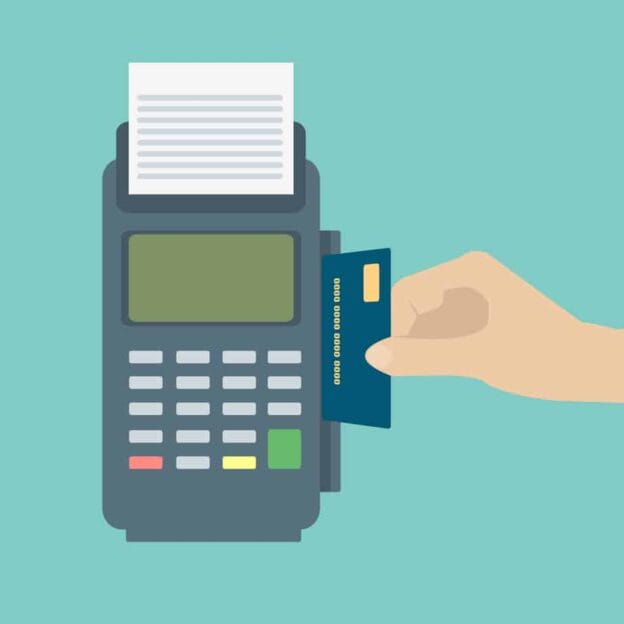
Hand Inserting Credit Card To A Pos Terminal Payment Terminal Flat Design Vector 64931018

A is for Acquirer

We’ve been working hard the past 7 months at The Official Merchant Services Blog to offer our readers a knowledge base — a place to come frequently to get clear and useful information about the payment processing industry. But we’re always looking to take things a step further. We want to offer more information and be even more helpful. I was recently inspired by this article over at UniBul’s Credit Card Blog which offers a definition of 21 confusing payment processing terms. Credit Card Processing has a lot of buzzwords that get used. This type of technical or industry language can sometimes make understanding statements very difficult for merchants.

Well we want to make these terms clear and remove the confusion. This is part of the ongoing service Host Merchant Services promises: the company delivers personal service and clarity. So we’re going to take some time to explain how everything works. This is going to be an ongoing series where we define industry related terms and slowly build up a knowledge base. We’ll start with the same term that kicked off the UniBul blog. But our coverage is going to go a bit deeper than just a definition. We’ll provide a little extra context. And as we get more and more of these completed, we’ll collect them in our resource archive for quick and easy access.

Hand Inserting Credit Card To A Pos Terminal Payment Terminal Flat Design Vector 64931018

Acquirer

An acquiring bank (or acquirer) is the bank or financial institution that processes credit and or debit card payments for products or services for a merchant. The term acquirer indicates that the financial institution accepts or acquires credit card transactions from the card-issuing banks within an association. The best known (credit) card Associations are Visa, MasterCard, American Express, Discover, Diners Club, JCB and China UnionPay.

An acquirer is contacted to authorize a credit card or debit purchase. The acquirer will either approve or decline the debit or credit card purchase amount. If approved the acquirer will then settle the transaction by placing the funds into the seller’s account.

Every time you use your credit or debit card you are using the services of an acquirer. An Acquirer will charge a monthly and/or a per transaction fee to the stores or merchants to facilitate transactions. Acquirers need to be licensed with credit card companies, such as Visa or MasterCard.

To get a better understanding of how payment processing works, you can view this infographic.

Visa, MasterCard Add New Fees

The Official Merchant Services Blog has just learned that Visa and MasterCard are planning to add new processing fees in the coming months — fees specifically targeted toward Debit Card Swipe transactions. These new fees, which we are consolidating and dubbing as “Card Association Fees” are going to complicate the pricing process for Merchant Services Providers in 2012.

Tricky Fees

Visa, MasterCard and Discover are the main players in the “card associations” and they are the driving force behind interchange and interchange rates. These associations periodically review and modify their interchange rate structures and billing strategies. What this means is that normally each year the big credit card companies get together and increase interchange rates. But after the Durbin Amendment went into effect in 2011, the credit card associations are taking pause and tweaking their own strategy. So effective April 2012 there are new Card Association Fees being implemented and these fees are not interchange fees. These are brand new processing fees created by the associations.

Visa’s New Fees

Visa has announced that beginning April 1, 2012, it will be introducing a trio of new fees:

  • A Transaction Integrity Fee
  • Revisions to its Network Acquirer Processing Fee
  • A Fixed Acquirer Network Fee (FANF)

logo VisaTransaction Integrity Fee: Visa’s Transaction Integrity Fee is a new $0.10 fee that will apply to U.S. domestic regulated and non-regulated purchase transactions made with a Visa Debit card or Visa Prepaid card that fail or do not request Custom Payment Service (CPS) qualification. The CPS rates are Visa’s best rates and apply to both regulated and non-regulated transactions. This new fee can be viewed as a definite response from Visa to the Durbin Amendment’s interchange rate cap and finance reform/regulatory changes.  This is part of the ninja-style set of moves The Official Merchant Services Blog has cited would be the reaction to the Durbin Amendment.

Network Acquirer Processing Fee: The Network Acquirer Processing Fee on Visa-branded signature debit will be reduced — going from $0.0195 per authorization to $0.0155 per authorization. The fee for credit card authorization will remain $0.0195 per authorization.

Fixed Acquirer Network Fee: FANF will apply to the acceptance of all Visa-branded products and is based on both the size and the number of merchant locations. The FANF fee will be based on volume reported in July 2012. Visa will require U.S. acquirers to provide new merchant location reporting for the tracking of this fee. The new reporting requirements will include a monthly breakdown of acquired merchants, number of merchant locations, and merchant sales volume by merchant Taxpayer ID. For Card Present merchants, with the exception of Fast Food Restaurants, a merchant Taxpayer ID with physical locations will be assessed FANF on a per-location rate basis. For example, Card Present Merchants with one to three locations will see a pass through per location per month fee of $2. Price per location per month will increase according to the number of locations – upwards of $65 month for merchants exceeding 4000 locations. Card Present High Volume MCC Merchants with one to three locations will see a pass through per location per month fee of $2.90. Price per location per month will increase according to location — upwards of $85 month for merchants exceeding 4000 locations. Customer Not Present, merchant aggregators and merchants primarily operating as Fast Food Restaurants (MCC 5814) will be assessed based on gross merchant sales volume originating from any Visa-branded card. Merchants that fall into this category with monthly gross sales volume ranging from less than $50 a month on the low end will see a $2 a month fee- to merchants with gross sales exceeding $400 million at a $40,000 a month fee. There are some 18 tiers, with a merchant falling into a volume tier of $8,000 to $39,999 a month seeing a new $15 per month FANF fee.

Visa will also effectively waive the FANF for eligible Charitable and Social Service Organizations (MCC 8398). The FANF waiver for Charitable and Social Service Organizations will be provided through a quarterly rebate process that Visa has indicated will be defined at a later date.

Continue Reading – Visa, MasterCard Add New Fees, Part 2 

step forward

1 Step Forward, 2 Steps Back [2023 Update]

step forward

We’ve been covering Mobile Payments here at The Official Merchant Services Blog since the very beginning. In fact, the Article Archive at Host Merchant Services has extensive coverage of the topic as well. It’s just too sexy a topic — everybody loves the allure of gadgets — and too fascinating a financial prediction — folks in the know are predicting Mobile Payments to boom in the billions between now and 2015-ish — to not continually cover Mobile Payments.

But I keep picturing a scene from the 1992 women’s sports movie A League of Their Own in my head every single time I look at the state of Mobile Payments in the U.S. The scene that resonates with me is the one where Marla Hooch — fearsome and uniquely striking power hitter for the team — is about to step into the batter’s box. But she’s getting confused. She steps into the box. Then back out of the box. The reason for her confusion? She’s getting contradictory signals from her Manager and her teammate. One wants her to swing away and unleash the fearsome potential of her staggering offense. The other wants her to play it safe and move the runner over for a better chance to score an efficient run. So there she goes, Marla Hooch, the powerhouse of the league. One foot in the box. Then out of the box. It’s the exact problem Mobile Payments currently faces. The power and potential of what it can do for commerce keeps getting highlighted in story after story, research after research. And then the biggest obstacle it faces keeps getting thrust in front of its face: Security.

Step Out of the Box

Google Wallet, one of the biggest lynchpins in the mobile payment industry’s bid to effectively take hold in the U.S. market was recently plagued by a security problem. This article from ExtremeTech notes the issues that happened to Google and its mobile payment system in a piece that discusses the pitfalls of its beta testing. A pair of bugs forced Google to shut down its pre-paid cards and Google Wallet took a huge hit on the nose in the press. This reinforced the public’s view that mobile payments are a bit scary because people think that their personal information — account numbers, social security information, credit card numbers — will get swiped from them out of thin air. The thought process being that if all they have to do to pay for an item is wave their phone in the air at a cash register, some sneaky net ninja can pluck the data right out of the very same air.

The article sums up the problem: “In the last week, there have been not one, but two exploits that could give a malicious individual access to your Google Wallet mobile payment app on Android. While the first is a root-only hack that Google couldn’t really be expected to plan for, the second affects all Android users and is simple to do.”

It goes on to suggest these bugs popped up due to a core problem with how google beta tests things.

Since that story broke, Google has gone on the offensive, and is now stating that the bugs are fixed. As this cnet article says: “Google has patched a hole in Google Wallet that could’ve allowed someone to access a user’s funds simply by resetting the PIN and using a prepaid card. The company said yesterday it has issued a fix that now prevents a prepaid card from being re-provisioned to another person. It has also restored the ability to issue new prepaid cards following a move on Monday to disable the use of such cards.”

These bugs were a major setback for more than just Google. The Mobile Payments landscape is bubbling with interest but it’s also saturated with variety. There are multiple avenues businesses are considering for their entry point into what research firms like Gartner predict will be big money very very soon. One of those avenues is Near Field Communication (NFC).  The underlying technology of NFC is described as: “Near field communication (NFC) is a set of standards for smartphones and similar devices to establish radio communication with each other by touching them together or bringing them into close proximity, usually no more than a few centimetres. Present and anticipated applications include contactless transactions, data exchange, and simplified setup of more complex communications such as Wi-Fi. Communication is also possible between an NFC device and an unpowered NFC chip, called a “tag”.” 

This is the technology that Google tagged to be their entry into Mobile Payments. And so these bugs are a major hit for Google and NFC as a whole, taking one of the most hyped aspects of Mobile Payments down a peg in the industry.

Step Into the Box

In the midst of NFC taking it on the chin, Visa and MasterCard unleashed its EMV initiative — as The Official Merchant Services Blog reported on February 7. This is, in my mind, the Mobile Payments Marla Hooch being told to step into the batter’s box and knock it out of the park. Visa is invested heavily into Mobile Payments, and is prepared to drag the industry kicking and screaming into the future of profits that are being predicted for Mobile Payments. The EMV initiative hinges on chip technology being attached to cards, and for Mobile Payment evolution also being attached to smart phones. What Visa’s investment in this avenue brings is added security. This is huge. The security advantage addresses the biggest fear people have for mobile payments. Visa, much like Tom Hanks, wants Marla Hooch to get in there and swing away.

Going Sci-Fi

This article from Asia One adds another wrinkle into payment processing, and possibly the future of mobile payments: Biometrics. The article cites The Monetary Association of Singapore (MAS) as researching ways to make Debit card transactions more secure. And one of the avenues of research has been biometrics. This could really lead to a breakthrough in the march towards a cashless society, including the use of smartphones for mobile payments. Having biometric security measures on your phone would work in tandem with the chip technology that Visa is pushing, making both the unit you use to store the information — your phone — attuned to your own physiology; and the transmission of your transactions — the swipe of said phone in the air — attuned to a secure chip. Identity thieves and card fraud masters would be stymied on multiple ends and have to work very hard to stay ahead of that security curve in their mission to steal your information and then your money.

The Bottom Line

So What’s Marla Hooch going to do? It looks like Google is sticking with its plan and dedication to NFC. They sort of have to due to how invested they are into the technology already. And it’s no secret that Visa is very much tied into the future of mobile payments, chip card technology, and payment processing security. Both entities are full steam ahead. And with that much tech and finance industry strength behind the initiatives, Mobile Payments will get its chance to swing for the fences. We look for the Google Bugs to blow over and not really hinder Mobile Payments growth much at all in 2012.

For more information on Mobile Payments you can read from Host Merchant Services:

The Official Merchant Services Blog will continue to keep you up to date on the latest advances in Mobile Payments technology.

Visa Kicks Open the Door for Chip Cards

Today The Official Merchant Services Blog discusses a fascinating new development by Visa in the realm of credit card processing, security, and hopefully Mobile Payment Technology.

Smart cards have been slow in gaining traction, especially in the United States. But now Visa is making moves to drag the U.S. into the chip card realm, kicking and screaming if it has to. A recent article on Credit.com reveals as of December 31, 2011, Visa — the largest processor of both debit and credit card payments — had issued more than 1 million credit cards that use “chip” technology to sore consumer payment information. The article notes that this data is being announced rather quickly in relation to Visa’s August 2011 announcement that it planned to start issuing more EMV — Europay, Mastercard, Visa — smart cards to push the industry toward better security and an easier transition to mobile payments.

What is Smart Card Technology?

A smart card, or chip card, is any pocket-sized card with embedded integrated circuits. These cards contain volatile memory and microprocessor components, are made of plastic,and provide strong security authentication capabilities. Because of these characteristics, the technology is being utilized for credit cards by major card companies like Europay, MasterCard and Visa — garnering the nickname EMV. Visa has begun a major push of this technology because of the benefits the technology provides.

Host Merchant Services image of smart card chip technology

What are Those Benefits?

These kinds of smart cards can provide identification, authentication, data storage and application processing. A single contact/contactless smart card can be programmed with multiple banking credentials, medical entitlement, driver’s license/public transport entitlement, loyalty programs and club memberships to name just a few. Multi-factor and proximity authentication can and has been embedded into smart cards to increase the security of all services on the card. In one fell swoop, this technology can bridge the gap between card-swipe style processing and the mobile payment processing that the industry is striving to move toward. The technology lets virtual wallets and contactless payment happen, increasing convenience for consumers. And then it also boosts security, which is the largest concern consumers have with mobile payments.

The Credit.com article quotes Stephanie Ericksen, head of authentication product integration at Visa Inc. as saying “Migrating the U.S. market to chip will help build an infrastructure for accepting NFC mobile payments, enhance international acceptance and reduce fraud.”

TransFirst Sets Guidelines

TransFirst, Host Merchant Services’ acquirer and one of the premier providers of transaction processing services and payment processing technologies in the U.S., has issued a mandate in response to the EMV push. TransFirst says that Visa will require U.S. acquirer processors and sub-processor service providers to be able to support merchant acceptance of chip transactions no later than April 1, 2013. Visa also intends to institute a U.S. liability shift for domestic and cross-border counterfeit card-present point-of-sale transactions effective October 1, 2015, and for fuel-selling merchants by October 1, 2017.

Many of these dates are long-term projections and would seem to be a little far out there in comparison to the fast-paced results Visa is achieving already with their shift to chip cards.

Host Merchant Services image of a contactless terminal for EMV cards

The Carrot on the Stick

TransFirst explains that Liability Shift is often used as the incentive to encourage acquirers or issuers to move to chip transactions. For magnetic stripe swipe transactions, POS counterfeit fraud is mostly absorbed by the card issuers. But in the EMV shift Visa is pushing, the party that is not chip-capable will be liable for frauds that would have been prevented if the transaction were processed with a chip-on-chip connection.

It would seem that Visa is happy with the fast embracing of their chip transition but are still giving the acquirers and the merchant service providers and the merchants years to implement this fully before holding them liable.

In preparation for Visa’s Accelerated Chip Migration plan, TransFirst will migrate new terminal deployments on the following POS Terminals to chip capable versions of the same devices. Once implemented, non-chip capable versions of these terminals will no longer be available for purchase through TransFirst:

  • Verifone’s Vx570
  • Hypercom’s T4205
  • Hypercom’s T4220
  • Hypercom’s M4230

How Chip Cards Work

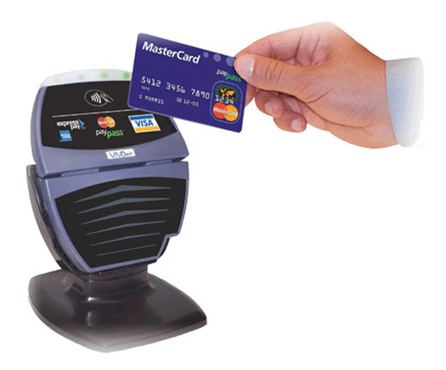
These new cards work in a similar fashion to the cards they are replacing. Users present them when making a purchase and from there the transaction follows the steps detailed in the Host Merchant Services Infographic found here. But the cards are different from swipe cards in some very important ways. Consumers do not swipe these cards. Instead they wave them over a sensor. This is the exact same style of payment that mobile phone based “virtual wallets” look to employ. You wave your smart card across a sensor, or you wave your smart phone across a sensor. Payment made. Visa also plans to allow chip cards to work with PIN codes, bringing debit under the umbrella.

Host Merchant Services image breaking down how chip cards work

The Mobile Payment Connection

Visa is heavily invested in the future of Mobile Payments. Which is not surprising as you can see from Host Merchant Services‘ coverage of the topic in its article archive. Past blogs have noted that the biggest obstacle Mobile Payments face with U.S. consumers is concern about the safety of the transactions. Visa’s hoping that the added security that the chip technology provides will overcome that obstacle and finally tap them into the billions of dollars of revenue that Mobile Payments are predicted to have in the coming years. As Ericksen says in the Credit.com article, “Since announcing our roadmap last year, we have seen strong interest among U.S. issuers large and small to invest in chip technology, as today’s milestone shows.”