Tag Archives: discover

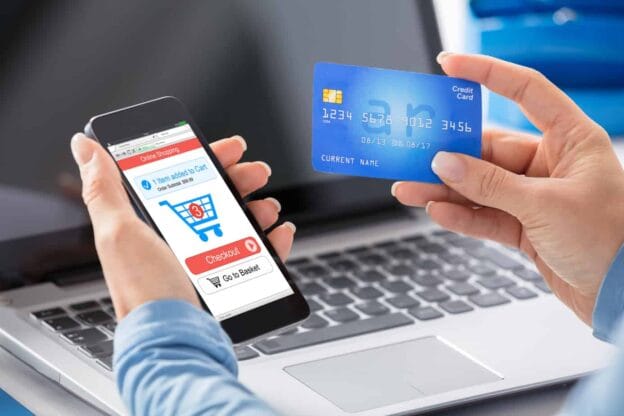
Woman Doing Online Shopping Using Credit Card 103311834

The Best Credit Card Offers for 2020 and 2021

If you have a New Year’s resolution to get your finances in order, that may include finding the right credit card. If you have a high-interest card that doesn’t provide you with any rewards or benefits, you could be missing out.

The Top Credit Card Offers for 2020 and 2021.
Here are the top credit card offers for 2020 and 2021.

Discover-It Cash Back

If you want a simple credit card that pays you for your purchases, Discover-It is it. You earn 5% back on your purchases up to $1,500 each quarter. The reward categories change, but you always have options, and they are typically categories everyone spends in or specific stores everyone shops at (such as Amazon).

Discover also doubles the cashback you earn after your first year. In other words, you earn ‘free money’ if you keep your card in good standing for the year.

Citi Double Cash Card

Earn 1% back on all purchases and an additional 1% when you pay your bill. Even if you pay your balance over a few months, you still earn 1% of what you pay. So it totals out to 2% cashback as long as you don’t let interest charges take over your rewards.

The Citi Double Cash card doesn’t have a reward bonus like most cards, but it comes with a 0% balance transfer APR for 18 months. That’s a nice long period to pay off your balance before interest accrues.

Chase Freedom Unlimited
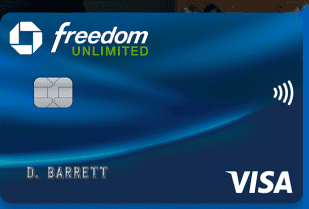
chase freedom unlimited

If you like tiered rewards, check out the Chase Freedom Unlimited card. There’s no annual fee, and you earn cashback year-round in a tiered manner.

It’s best for people who travel as you get the largest reward on travel purchases (5%). It also pays 3% back on restaurant purchases, 3% back at drugstores like CVS, and 1.5% back on all other purchases. So, no matter where you spend money, you’ll earn cashback.

Bank of America Cash Rewards Credit Card for Students

Students sometimes have a hard time finding a credit card that provides them any benefits besides a small credit line. The Bank of America card is a great place to start and it offers students rewards.

Students earn 3% cashback on a category that you choose, whether it’s groceries, dining out, or gas. Students can also earn 2% cashback on groceries, including Sam’s Club and Costco, and 1% back on everything else.

The 3% bonus category and 2% rewards can be used up to $2,500 per quarter, and then it falls to 1%, which is the perfect amount for students.

Look at the Credit Card Rewards you Need
Rewards Cards

Before you take just any credit card, determine your needs. What rewards will you use and what categories do you spend money in the most? Why not take advantage of what credit cards have to offer by finding the card that pays you back in ways you’ll use it and for purchases you already make?

If you aren’t sure which one is right for you, pull out your bank and credit card statements for the last year and total up your spending in each category to make the right choice.  
Discover To Pay $200 Million For Deceptive Practices

Today the Official Merchant Services Blog will investigate the more than $200 million dollar fine that the U.S. Government issued on Discover Bank. The Federal Deposit Insurance Corp. (FDIC) and Consumer Finance Protection Bureau (CFPB) have ordered Discover to refund approximately $200 million to more than 3.5 million of its customers, as well as pay a $14 million civil penalty to the government. The order comes after the FDIC began investigating Discover last year for deceptive telemarketing practices and sales tactics used to sell consumers various credit card products, such as payment protection, credit score tracking, identity theft and wallet protection.

Consumers reported that these telemarketers would downplay key words during the calls and also used scripts that misled the customer about whether they would actually be paying for the product.  Some Discover customers thought the products were free because of the use of such words as “benefits.”

Some consumers asked for reading material on the products before purchasing them, however they found themselves being billed for the products before receiving the materials.  Some customers were even fully enrolled in the programs without permission, according to the FDIC and the CFPB.

The telemarketers also did not disclose eligibility requirements for certain payment protection benefits, such as exclusions for pre-existing medical conditions and certain employment limitations. Discover is not only required to pay the refunds and civil penalty, but also must make changes to its telemarketing strategies for the products involved.  The company must submit a compliance plan to the CFPB and FDIC for approval.

“Discover has worked hard over the past decade or so to reinvent its brand into one of a first class credit card,” David Johnson, principal with Strategic Vision, (Discover’s PR Company) told CRM Buyer. “This is not something consumers are likely to forget. It will become part of the Discover narrative.”

Unfortunately for Discover, I’m inclined to agree. This is not a story that is going to go away any time soon and we will be on top of any updates or appeals. While on the topic of Discover however, I find it necessary to remind our reader base and all merchants that the ‘Add Discover On Discover’ program is ending in the coming months, and you should know when you will start being charged for the service.  The program started back in 2011, and offered free Discover card processing to customers who could show they had not taken Discover cards for at least six months.  In this way, the program really targeted non-Discover Card merchants and was a strong effort to increase the usage of Discover in retail outlets.

Here’s a quick reference chart for the schedule:

Host Merchant Services chart for Discover reinstatement schedule of Interchange Fees

Host Merchant Services continues to adhere to its customer service philosophy of transparency and education. We do not want any merchants confused or unaware of the fees they are charged on their statements. If you have any questions about this program or Interchange and its rates, please contact us.

Industry Terms: AVS

This is the latest installment in The Official Merchant Services Blog’s Knowledge Base effort. We want to make the payment processing industry’s terms and buzzwords clear. We want to remove any and all confusion merchants might have about how the industry works. Host Merchant Services promises: the company delivers personal service and clarity. So we’re going to take some time to explain how everything works. This ongoing series is where we define industry related terms and slowly build up a knowledge base and as we get more and more of these completed, we’ll collect them in our resource archive for quick and easy access. Today’s term is the Address Verification System, or AVS.

The system was designed by card issuers to aid in the detection of suspicious credit card transaction activity, and verify that the cardholder’s address info matches what the banks have on file. The service is provided as part of a credit card authorization for mail order/telephone order transactions (MOTO) or Internet e-commerce transactions.  A code is received with an authorization result that determines the level of accuracy of the address match. This verification helps secure the most favorable interchange rates for the merchant.

Visa, MasterCard, Discover, and American Express support this service, and when paired with a CVV confirmation the result is a secure, verified transaction. To verify a customer’s address, a merchant will need the cardholder’s billing ZIP code and the house or apartment number of the billing address.  The merchant does not need to enter in the street, city or state of the cardholder.  While AVS is not intended for use as absolute protection against suspicious transaction activity, it is an important step in securing non-face-to-face transactions. Host Merchant Services recommends to all merchants that they secure these types of orders with both AVS and CVV.

Changes to Interchange Fees

Breaking News from The Official Merchant Services Blog: MasterCard and Discover have announced interchange increases and modifications to take effect October 2012. Specific association modifications such as these are beyond the control of payment processors like Host Merchant Services. They come directly from the big card associations themselves. These changes affect all merchant card processors and their customers, meaning these changes in fees and rates travel in a straight line from Visa, MasterCard and Discover to the merchants.

The Meat and Potatoes

MasterCard will be reducing the Consumer Debit rate from 1.64% + $0.16 to 1.60% + $0.15. MasterCard will increase the Small Ticket Debit rate from 1.30 + $0.02 to 1.30 + $0.03.

Discover Card will be enacting several changes to their PSL Public Services interchange fee programs. Rates will increase from 1.50% +$0.10 to 1.55% + $0.10. Discover PSL Card-Not-Present/E-Commerce Premium Plus will increase from 2.30% + $0.10 to 2.35% + $0.10. Discover will also increase Key Enter Premium Plus from 2.10% + $0.10 to 2.15% + $0.10.

Add These Fees to the Pile

These changes come on the heels of a series of changes we reported back in February. Visa’s new Fixed Acquirer Network Fee and Transaction Integrity Fee made all of the headlines back then, but MasterCard also implemented its new annual Acquirer License Fee. This fee took effect in July 2012. MasterCard also implemented a new annual Type III Third Party Processor (TPP) Registration Fee in July 2012.

MasterCard based these fees on a full year of 2011 volume for each merchant, and for 2012 only the fees are 50% of the total fee calculated — since they cover only half of the year. MasterCard passed these fees through on a pro-rata basis and all acquired MasterCard credit and signature debit volume was utilized to determine the annual volume for both programs. PIN debit volume was excluded.

MasterCard Worldwide Logo

The changes to Discover Card’s PSL Public Services interchange fee programs are also in addition to a series of changes Discover announced back in February. Discover introduced a US Commercial Large Ticket Interchange program, increasing its assessment fee by .005%. Discover also changed existing card present Interchange rates for transactions less than $15 for Express Service merchants (Local Commuter, Bus Lines, Toll & Bridge Fees, Restaurants, Fast Food Restaurants, News/Dealer Stands, Laundries, Dry Cleaners, Quick Copy & Reproductions, Parking Lots/Garages, Car Washes, Motion Picture Theaters and Video Entertainment Rentals) and less than $25 for Taxi/Limo merchants.

logo Discover

Pay Attention to Your Statement

As stated above, these changes are made directly to Interchange rates from the Card Associations.  Unlike Visa’s much ballyhooed FANF, which is a completely new fee and not subject to regulation from the Durbin Amendment, these fees fall under the scope and purview of Interchange, and thus Durbin.

Merchants will begin to see the following text on their August Statements to explain the changing fees:

Visa, MasterCard, Discover Card Services have announced category introductions and modifications to their current interchange structures. These changes may affect your current pricing effective October 2012. Further detail specific to these changes and impacts to your merchant account will be detailed on your September merchant statement. As previously disclosed on your February and March merchant statements, MasterCard introduced the new MC licensing fee. Beginning in August 2012, the new licensing fee of $.005 will be included with the MasterCard NABU billing and appear as “MC assoc NABU/license fee”. Thank you for your continued business.

Discover Teams Up with PayPal

Discover Teams Up with PayPal [2023 Update]

The Official Merchant Services Blog continues to shine its spotlight of educational information directly on the Mobile Payments Industry. This bristling business sector keeps creating buzz among payment processing persons as well as overall economic assortments. One minute people are predicting hundreds of billions of dollars in revenue will get generated by consumers embracing the cashless society model and conveniently swiping their phones to pay for every little thing that catches their eye. The next minute people are predicting U.S. consumers are too wary and cautious and not ready to expose their information to the cloud and the criminals trying to crack their way into that cloud.

This titanic tug-of-war between “the next big thing” that economic analysts desperately desire M-Payments to become and the “hold your horses hombre” caution that those same analysts caveat the slow acceptance in U.S. markets has been defining the media coverage of the Mobile Wallet Madness for more than a year. But the potential for prodigious profits has pushed the possibilities of mobile payment processing through the morass of misgivings.

Merchants United!

As we purposely pointed out to our peerless readers just mere days ago, the Merchant Customer Exchange was formed. This epic assemblage of retail industry giants teams Wal-Mart Stores Inc., Best Buy Co. and Target Corp, 7-Eleven  Inc., Alon Brands Inc., CVS Caremark Corp., Darden Restaurants Inc., Lowes Co., Sunoco Inc., Sears Holding Corp. and the Publix Supermarket chains into a mega-group of retail merchant might on a mobile wallet mission.

Coming on the heels of Visa’s saturation of the 2012 London Olympics with all things Mobile and all things Visa, the mighty mingling of the MCX merchants applied unforeseen amounts of pressure on the mobile payment marketplace.

Mobile Payment Paring: Discover and PayPal

Host Merchant Services image about Discover Card and payment processing.

On August 22 PayPal, owned by eBay, announced a deal with Discover Financial Services to bring PayPal access to the 7 million merchants in Discover’s network. This deal will begin in the second quarter of 2013 and the announcement was made a mere two weeks after Square partnered up with Starbucks to let customers pay with Square’s app at the 7,000 U.S. Starbucks locations.

Excelsior! Retail titans are teaming up with mobile gadgeteers in one mass scramble to make it to market before the U.S. consumer becomes firmly affixed on the easiest and most widespread brand — as is wont to happen with U.S. shopper market behavior.

The PayPal deal is a particular point of note because PayPal itself is pushing from the online marketplace back into the physical realm of brick and mortar. This may indeed help bridge the gap from e-commerce to old fashioned commerce, and that bifrost of payment processing could very well buttress mobile payment processing in a brave new world of cashles-sness and contactless transactions.

logo DiscoverThe super-powered pairing of Discover and PayPal drove stock prices for each company, with Discover gaining 3.9% and eBay gaining 2.5% on the market the day the announcement was made. This arrangement will greatly accelerate PayPal’s in-store payment efforts. By riding on Discover’s network, PayPal can get into more locations  and get there quickly. Best of all this movement doesn’t requiring any significant integration work by merchants. That potentially puts PayPal at a big advantage against rival mobile payment systems such as Google Wallet, Isis, and Square.

Discover is integrating PayPal’s payment system into its software, which will be uploaded to millions of point-of-sale terminals that support Discover Card payments. PayPal’s branding and rules will be presented to consumers who choose to pay in store with PayPal. PayPal currently has more than 50 million U.S. customers who will be able to take advantage of in-store payments.