Tag Archives: merchant services

website banner credit card trends 1

AmEx Offering Incentives to Boost Card Acceptance

To keep up with Visa and Mastercard, American Express is offering sign-on bonuses to companies to offset start-up costs. Ranging from $10,000 to nearly $500,000, American Express sign-on bonuses are part of an effort to close the gap of the 1.3 million more U.S. locations accepting Visa and Mastercard in 2018 than those accepting American Express, which is accepted in 10.3 million locations, according to the Nilson Report. 

With few, sometimes no conditions, American Express salespeople not only offer these large payments, but they’re also offering discounted swipe fees to companies that agree to accept AmEx. While Visa and Mastercard may pay businesses to offset technology upgrades, sign-on bonuses with credit card companies were heretofore unheard of.

High-End Customers

Known for its high-end clients, American Express had always stayed competitive by charging higher interchange fees. Businesses agreed to these fees as the price of doing business with AmEx customers known for spending more, but Visa and Mastercard’s reward cards lured the high-end crowd from AmEx, leaving the company with fewer big spenders using the card in addition to fewer merchants accepting the card.

Matching Visa and Mastercard in Merchants

Credit Card Processing E-commerce SolutionsWith more than three million new merchant locations agreeing to American Express acceptance since 2017, the company expects to meet Visa and Mastercard numbers by the end of the year. More than merchant numbers, American Express stock shares also have some catching up to do with Visa and Mastercard. While AmEx shares rose 32% in the past five years, Visa and Mastercard boast a 190% and 230% increase, respectively.

Market Value

Compared to Visa and Mastercard’s market value ending in positive territory during the last eight years resulting in $386 and $279 billion in market value respectively, American Express’s market value experienced double digit losses during the last decade’s annual performances resulting in one third its counterparts’ value at $98 billion.

How AmEx Did It

Through its OptBlue program, American Express added most of its new merchants through third-party payment processors. Plus, internal sales people gave sign-on bonuses to more than 130 businesses since last year. Because AmEx both issues its cards, as well as operates the network on which the cards run, the company benefits from merchant acceptance on both sides of its business. With a 2016 pledge to reach Visa and Mastercard merchant numbers by 2019, American Express hopes to achieve higher billings and a larger scale of business.

Host Merchant Services: The Power of Knowledge

If your business wants to explore accepting AmEx cards, Host Merchant Services can help you make a decision regarding AmEx or any other aspect of merchant service. We’ll explain everything so you can make an informed decision! We go out of our way to educate our customers so that they fully understand pricing for AmEx, as well as our pricing model in general. Having this knowledge is important to ensure you aren’t overpaying, not just with us but with any processor! After we explain everything, the pricing will be so transparent that you’ll even know exactly what we make as a profit. How’s that for transparency?! 

E commerce Merchant Sevices 1

Stripe Funding Round Values Company at $35 Billion

Digital payment processing startup Stripe Inc said in a press release it raised $250 million in its latest funding round, bringing its pre-money value to $35 billion, which is more than a 50% increase to its valuation at the beginning of the year. 

After raising $100 million from Tiger Global Management in a Series E round in January, Stripe had a $22.5 billion valuation. With investors like Andreeson Horowitz, General Catalyst, and Sequoia Capital, Stripe’s valuation puts it on the same level as Airbnb Inc, which announced it was going public in 2020.

Stripe Looking to Expand Global Reach

E-commerce Merchant Services Provider

Stripe provides software that allows companies to send and receive online payments. Processing billions of dollars a year for businesses, including Airbnb, Wayfair, Twilio, a cloud tech company, and The RealReal, a luxury online reseller, among millions of other businesses around the globe, Stripe is a high tech credit card processing company.

Stripe will use its newly raised funds to broaden its product offerings. With five out of six new e-commerce merchants joining online from parts of the world beyond North America and Western Europe, Stripe will also expand its footprint overseas. Recently launching in eight additional countries, Stripe plans to expand to a total of 40 countries or 70% of the global economy in 2020. 

The New Stripe Corporate Card

Piggybacking on the company’s launch earlier in September of Stripe Capital, Stripe also introduced a corporate credit card for e-commerce companies, which Stripe claims will cut the application time while also featuring digital tools. 

Providing companies the ability to set spending limits, as well as block specific spending categories, the Stripe Corporate Card also allows cardholders to report expenses in real time, eliminating the manual process of expense reporting. With no fees, the card gives businesses 2% cashback on the two top spending categories every month. 

Frequently Asked Questions

What is Stripe Capital?

Stripe’s lending product Stripe Capital allows small businesses to skip the lengthy application process to borrow money, freeing startups and small businesses to access capital when banks have decreased their lending to small businesses almost by half in the past ten years. 

With less than eight percent of commerce taking place online, merchant services like Stripe can only grow. With quarterly e-commerce retail sales doubling since the start of 2014 according to the Commerce Department, it is still only 11% of the total retail sales in the quarter with nowhere to go but up. 

While also handling in-store payments for customers, Stripe allows businesses to add the Stripe widget to their website, instantly creating a payment button for online customers. Worth 30% more than its online payment counterpart, Square, Stripe is evolving at a rapid pace, not only in the payment processing world but also in its expansion into business lending and corporate credit cards. With big clients like Wayfair, Stripe hopes to tap into the projected 12% annual growth for e-commerce. 

What is Stripe?

Stripe is a financial technology company that provides software and APIs for businesses to accept online payments. It was founded in 2010 by Patrick and John Collison and is headquartered in San Francisco, California.

How much money did Stripe raise in its latest funding round?

Stripe raised $250 million in its latest funding round, which values the company at $35 billion. The round was led by Sequoia Capital, with participation from Andreessen Horowitz, General Catalyst, and other investors.

What will Stripe use the money from its latest funding round for?

Stripe plans to use the money from its latest funding round to expand its product suite, grow its international presence, and hire more employees. The company also plans to invest in new technologies, such as blockchain and cryptocurrency.

What is the significance of Stripe’s latest funding round?

Stripe’s latest funding round is a significant milestone for the company. It is the largest funding round ever raised by a privately held fintech company, and it values Stripe at a higher price than many publicly traded companies. The round also demonstrates strong investor confidence in Stripe’s business model and growth potential.

What are the implications of Stripe’s latest funding round for the payments industry?

Stripe’s latest funding round is a sign of the growing importance of online payments. The company’s success is a testament to the demand for simple, reliable, and affordable payment solutions. Stripe’s growth is also likely to accelerate the adoption of online payments by businesses of all sizes.

What are the next steps for Stripe?

Stripe is well-positioned for continued growth in the years to come. The company has a strong product suite, a large and growing customer base, and a deep pool of talent. Stripe is also well-funded, with over $1 billion in cash on hand. This gives the company the resources it needs to expand its product suite, grow its international presence, and hire more employees. Stripe is also likely to continue to invest in new technologies, such as blockchain and cryptocurrency.

ISO Merchant Services Agent Program

How to Choose the Best Merchant Services Agent Program

The world of merchant services is extremely exciting, yet it can be competitive. There are countless opportunities to make money in this industry, but throughout it all, you want to ensure that you are providing the best possible experience for your clients. Because of this, joining the best merchant services agent program is absolutely critical to finding success in this space.


In this article, you will find some of the key characteristics that you should search for when selecting a merchant services agent program. By keeping these characteristics in mind, you will increase the chances that you select the best possible merchant services ISO program.

Factors to Consider When Selecting the Best Merchant Services Agent Program

To select the best merchant services agent program, you will first want to find a program that offers stellar customer service. The worst-case scenario is hearing complaints from your clients and not being able to get in touch with your merchant services ISO program. Even if the problem at hand isn’t necessarily your fault, you will suffer the consequences if you can’t get a representative from your merchant services agent program on the phone. Before making your choice, therefore, you must ensure that your merchant services agent program has a dedicated staff that can quickly and accurately answer any questions that you may have. While it may not seem like a large issue now, ignoring this factor can put your client relationships at risk.

Next, search for a program that offers boarding options from large payment processing platforms. Having access to many of the largest payment processing platforms—like First Data and TSYS—provides you with some valuable peace of mind. It significantly minimizes the chances of your clients encountering any technological or integration issues. Instead of worrying about whether their point of sale or billing software will integrate with the platforms within your program, your client can spend more time focusing on growing their businesses. It’s a win-win for both you and your clients.

Offer Great Cash Discount ProgramsA terrific merchant services agent program also offers great cash discount opportunities. Cash discount programs allow merchants to offset their entire payment processing bill. In other words, they let merchants collect the entirety of their revenue while taking advantage of great payment processing tools. These programs work by automatically adding the cost of the transaction to that transaction, allowing merchants to skip payment processing fees. While you will want to read the fine print on these types of programs, they are a valuable added benefit that you can reference when pitching potential clients. 

Finally, your merchant services agent program should be able to take on high-risk accounts. While the definition of “high-risk” may somewhat vary, high-risk accounts can include things like medical marijuana, travel agencies, non-US gaming, tobacco, and pharmacy accounts. Even though you may not be working on these accounts at the moment, having this optionality is extremely valuable as you search for additional clients. Instead of needing to find another merchant services agent program to accommodate these “high-risk” businesses, you can seamlessly work with these merchants to grow your business. This puts less stress on you as you are scaling your business.

Seizing the Opportunity

This is not an exclusive list, but we encourage you to look for the factors above when selecting your merchant services ISO program. When completing your research, we also recommend that you search for and read reviews. Doing so can help you confirm that a particular merchant services agent program provides real value for its agents.

Finally, while we may be biased, we believe that our merchant services agent program is second to none. At Host Merchant Services, we are proud of our terrific customer service and are confident that you will be happy with our white-glove service. We are proud to offer an extensive number of boarding partners. Some of our partners include TSYS and First Data, which are two of the largest payment processing platforms in the world. Finally, we offer cash discount programs and multiple high-risk bank partnerships, providing you with additional benefits and features that you can pitch to your clients.

To learn more about our independent sales agent program, click here. If you have any questions about our program, don’t hesitate to reach out.

Amazon Convenience Store Steering Away From Cashless

ACLU Makes the Case Against Cashless Stores

The American Civil Liberties Union, or ACLU, has been defending individual rights and freedoms guaranteed by the Constitution, as well as by the laws of the United States of America for close to 100 years. Most recently, the ACLU turned its focus to cashless stores.

Reasons ACLU Says No to Cashless

Cashless Store Credit Card Transactions

Consistent with the ACLU’s campaign to install privacy protections in the digital age, the civil liberties nonprofit addresses the anonymity of cash, but they also recognize the impact a cashless society would have on low-income, homeless, and undocumented people. In addition, the ACLU points out that a cashless trend negatively impacts small merchants who avoid credit card processing fees by doing a cash-only business or who offer cash discounts. Not to mention, the ACLU points out that cash always works while technology often lets us down, from technology failures to privacy and security breaches.

Cashless Bans Across the Country

Amazon Convenience Store Steering Away From Cashless

The ACLU’s robust statement is in response to the cashless trend, most notably Amazon’s backpedaling on only offering cashless and cashier-less convenience stores. In response to criticism, both Amazon and Sweetgreen, a salad chain, reversed their decisions to implement a cashless business. Beyond public sentiment, actual legislation outlawed cashless stores starting in 1978 when Massachusetts banned the practice. Current backlash moved New Jersey, as well as San Francisco and Philadelphia to do the same.

Private Matter

Cash prevents anyone from knowing anything about your purchases. With the convenience of credit cards comes the potential of the credit card company not only obtaining but leveraging data about you and your purchase. Cash does have its limits, specifically the limit of $10,000, which is the starting amount one must report to the government as a cash transaction.

Fully Banked

Both low-income populations and large percentages of people of color are not “fully banked,” meaning they do not have a checking or savings account, barring them from the cashless society. Specifically, the ACLU points out, 6.5% of U.S. households have no checking or savings account while only 52% of Black people and 63% of Latino people have bank accounts. Plus, more than 18% of U.S. households have a bank account but still need to check cashing and payday loans.

Cash Discount Merchant Services

Businesses can avoid backlash while simultaneously embracing cash-paying customers by adopting cash discount merchant services. With this model, merchants can offset service fees while avoiding an increase in prices by enrolling in a cash discount program. Unlike surcharging, which charges customers an extra fee for paying with a credit card, businesses can instead add a service fee to all customers while applying a discount equivalent to this service fee when customers pay by cash or check. This platform incentivizes the use of cash.


Businesses should carefully consider whether or not their customers would not appreciate a service fee added to their bill. Service-based industries, including auto shops, landscapers, and electricians are well-suited for the service fee. Ultimately, the business owner will know best if a cash discount will work for their business.

HMS to Exhibit at WSAA 2019

The Western States Acquirers Association is a not-for-profit company that holds a yearly conference aimed at educating about trends and new technology in the payments industry. This year’s conference will take place September 17-19th in sunny Palm Springs, CA. Topics covered at WSAA 2019 will include financial services, payment technology, education, and networking. In addition to conference seminars and talks, WSAA will feature a trade show floor with over 100 booths exhibiting everything from new payments technology to new merchant boarding options and new partnership opportunities.


Host Merchant Services, a leading credit card processing ISO, is excited to be exhibiting at this years WSAA at booth #7. Host Merchant Services, also known simply as HMS, will be exhibiting with the purpose of building partnerships with ISOs and Agents, touting a lot of great new boarding options and updates to their already solid Partner Program. HMS is known for expanding services constantly to the benefit of their partners. In fact, their partner program has doubled in size in the past year, and for a good reason.


“Our value to our partners increases for every new relationship we build, product we can offer, or boarding option made available,” says John Burns, Director Of Marketing for HMS. “Our goal is to be the all-around boarding and equipment option for our partners.” Not only do our existing HMS partners love when new offerings are added, it also makes HMS extremely attractive to new partners. “When a relationship with HMS can offer everything a sales agent is looking for they won’t have to deal with the headache of using other companies with a lower quality of service or spreading their deals around,” says Burns. 


On top of constantly expanding product offerings, HMS is also known for their high quality of service to both merchants and partners alike. For example, HMS touts that 95% of all inbound calls are answered by a real person in three rings or less (after the single option that simply asks if the caller is wanting sales or support). In fact, the HMS phone system does not feature a hold queue at all for either merchants or agents. And that’s just the tip of the iceberg. HMS’s internal employee motto is “whatever it takes”, and it shows when you deal with them.


Host Merchant Services is looking forward to meeting with their existing partners and friends made at previous shows across the country as well as building relationships with new friends and partners in the payments space. Booth #7 is definitely a “must stop” booth and will be well worth the drop in. As rumor has it – they may even have the robot back again…WSAA HMS booth #7

Interchange Plus VS Tiered Pricing Banner 1

Interchange Plus vs Tiered Pricing

Interchange Plus vs Tiered Pricing

Interchange Plus vs Tiered Pricing

No one wants to pay more than necessary for credit card processing, which can already eat into profits. When comparing merchant services, it’s important to understand how different pricing systems work. Many merchant account providers advertise very low fees as a teaser, even though most transactions do not qualify for these rates.

There are two common pricing models used for payment processing: tiered pricing and interchange plus pricing. Here’s how they compare.

Tiered Pricing
Tiered pricing is probably the most common pricing model for merchant services. While it’s advertised as an easy pricing method that makes statements simpler, the truth is it merely lumps hundreds of interchange rates into just three tiers or buckets. The processor may advertise the rate of the lowest tier, but most transactions will fall into tiers with a much higher rate. A debit card, which usually has the lowest interchange rate, can be billed using the same high rate as a rewards credit card, for example.

There are no set guidelines that determine which cards go in which category which leads to massive overcharging to merchants. Some payment processors have an incentive to downgrade transactions into a lower tier to boost profits. Transactions can be downgraded for any number of reasons, including using terminal software that isn’t updated, tips and tax that aren’t entered separately, or batches that aren’t settled within 48 hours. Not all of these factors are in your control.

As a merchant, you will have no way to predict which rate you will pay for transactions or how much you are being charged above the set interchange rate. You can’t even effectively compare tiered pricing quotes between payment processors because you don’t know what the mid- or non-qualified rates are — just the lowest available rate — and you won’t know the criteria the processor uses to categorize transactions.

Interchange Plus Pricing
Rather than using tiers, the interchange plus pricing model passes the set interchange rates directly to the merchant “plus” a small markup. Because the interchange rates are not changed or lumped into arbitrary categories, you can predict your payment processing costs and know what you are paying above interchange.

The only downside of interchange plus pricing is it does take time to understand the different rates you will pay for different types of transactions and credit cards. Your statements will be longer, but with greater clarity and transparency.

In the not so distant past, interchange plus pricing was only available to merchants with high credit card volume of $25,000 or more. Today, interchange plus credit card processing can be available to small and even new businesses. Interchange plus pricing is a smart choice with only two rates to consider: the transaction fee and the interchange markup fee. This pricing model is the safe and transparent choice with no arbitrary criteria you must meet.

Protection from skimmers banner 1

Protect Your Business from Credit Card Skimmers

Protection from Credit Card Skimmers

Protect Your Business from Credit Card Skimmers

Each year, companies sign on to take advantage of merchant services offered for credit card processing. Skimmers are quickly becoming a threat to unsuspecting customers as companies rely more heavily than ever on point of sale services for their businesses. As a merchant, you want to protect your customer from all potential forms of credit card scams.

Continue reading →

Chip Card Checkout

Speeding up Chip Card Checkout Times with Visa

Over the last couple of years, more retailers and providers of merchant services in the United States have been settling into the new Europay, MasterCard and Visa (EMV) credit card processing system. As EMV acceptance expands, business owners will start to see more technology upgrades offered by through their merchant services providers.

One current quirk of chip card acceptance is that shoppers believe it takes too long in comparison to the old magnetic stripe system that enabled the swipe transaction. Current EMV implementations do not allow swiping; instead, shoppers have to insert their cards into the credit card processing terminals and wait for the processes of verification and authorization to be completed.

What is a Quick Chip?

Quick Chip, a new EMV technology improvement by Visa, which is starting to make its way to select merchants, aims to make transactions smoother at the register. With Quick Chip, chip card acceptance will be vastly improved for Visa chip card holders.

How Quick Chip Benefit the Shoppers and Business Owners

In essence, Quick Chip speeds up the checkout process for the benefit of shoppers and business owners. This new merchant services upgrade allows shoppers to insert their cards into the terminal and wait just one or two seconds. Upon receiving acknowledgment, shoppers can retrieve their cards and put them away in their wallets, purses or pockets.

To a certain extent, the Visa Quick Chip emulates the swipe transactions of yesteryear, which were very satisfying for both store clerks and consumers. With this upgrade, which rolled out in select California stores in late July, the crucial check out experience speeds up considerably for the purpose of making shoppers happier.

A very advantageous aspect of Quick Chip is that it can be rapidly implemented. The first installation in California was a network of chip card terminals at a chain of grocery stores with seven locations. In only one week, the new system was running flawlessly.

When it comes to credit card processing, speed is of the essence. The Quick Chip system comes at a time when shoppers at major metropolitan areas have noticed that lines at the cash register are getting longer and moving slower due to the new chip card systems. This could be a good argument in favor of near field communications (NFC) payment systems and smartphone wallets, but this transition will take a while. For the time being, solutions such as Visa Quick Chip are the kind of technology upgrades that merchants and shoppers are looking for.

Oracle MICROS Hackers

Oracle MICROS Hackers Also Hacked 5 Other Companies

American companies that use credit card processing and merchant services are on high alert after a Russian hacking group breached the servers of various POS or point of sale systems.

The first victim of the breach was tech giant Oracle, which in mid-2016 acquired MICROS Systems, a major provider of POS solutions for the retail and hospitality industries.

Cyber-Attack on Oracle MICROS

Following the cyber-attack on Oracle MICROS, five more providers of cash registers reported being hacked by the same Russian crew.

The companies targeted by the hacking group have an important business aspect in common: they all offer cloud cash registers, which are advanced POS or point of sale systems integrated with functions such as employee scheduling, customer relationship management (CRM), credit card processing, marketing intelligence, merchant services, and more.

Security analysts who covered the aforementioned incidents explained that the Russian hackers were specifically looking for individual customer account records, which means that they were trying to get their hands on credit card data. A likely suspect has already been mentioned, the Carbanak Gang.

An initial security investigation indicates that Oracle became aware of the breach when it detected a malicious code in a few servers used by nearly 700 customers. The attack also included a help desk system used by Oracle to provide technical support to clients. This is very concerning because hackers could gain the ability of intercepting service tickets and spoofing support agents.

It is not unusual to see hacking crews such as the Carbanak Gang being suspected of pulling off major cyber heists. Internet security experts have been following this cybercrime group for a while; they believe that this group may be associated with the Bratva, which is the name insiders use to describe the Russian mafia.

It is interesting to note that one of the reasons major cyber-attacks come from Russia is that computer education has major support in public schools and state-funded universities. It is believed that the Russian government often recruits malicious hackers to work as cyber warfare agents.

paypal and visa partnership

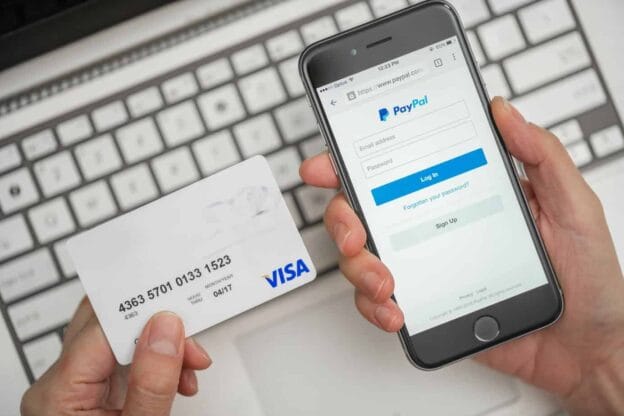
What the PayPal and Visa Partnership Means for the Future of Payments

Discovering Visa and PayPal were partnering up has shaken up the credit card processing industry. It is believed that everything from merchant services to eBay will be affected. Some immediately lauded how the partnership will enhance in-store NFC payments. The most cynical critics believe Visa, with PayPal under its watchful eye, will be better suited to tackle competition like Checkout.

The major reason this partnership has stunned the industry is because company heads at Visa and PayPal previously expressed opinions that could be interpreted as being diametrically opposed to ever working together.

Visa CEO Charlie Scharf has stated that payment players – merchant services, credit card processors, etc. – were either against Visa or with Visa. He believed “co-opetition” did not reflect how the traditional payment ecosystem and standard network model had operated for over five decades. The success of PayPal’s ACH and the many accounts it held contradicted this and, for Visa, made PayPal a serious concern.

Meanwhile, Dan Schulman, CEO at PayPal, has made it quite clear he saw PayPal as a new and unique entity after its break from eBay. Schulman has made it clear that he was running a very different enterprise. He stated the company was primed to look at consumer options and, yes, partnerships. As the driving force behind ACH, PayPal was pretty much indifferent to tender types.

Among the most interesting notions to come out of the partnership is that it will energize in-store NFC payments. Others took issue with PayPal’s business model being totally overshadowed by its new partner’s traditional credit card processing. Some analysts wondered if Visa would force PayPal to disband its business model and take on a more traditional credit card processing operation. Whatever is to come, the market took notice of the potential disadvantages. The day after the announcement, PayPal saw its stock ending down 6.75%.

Visa is the biggest credit card network in the world. PayPal is the world’s largest digital payment network with an estimated 188 million active users. PayPal’s merchant services are beloved by vendors and businesses globally. PayPal also has dormant accounts that this partnership could reinvigorate with accountholder incentives.

Still, while one can make it look good on paper, all the credit card processing in the world cannot guarantee this will work.