Tag Archives: credit card processing

icloud keychain

iCloud Keychain to Now Store Credit Card Data [2023 Update]

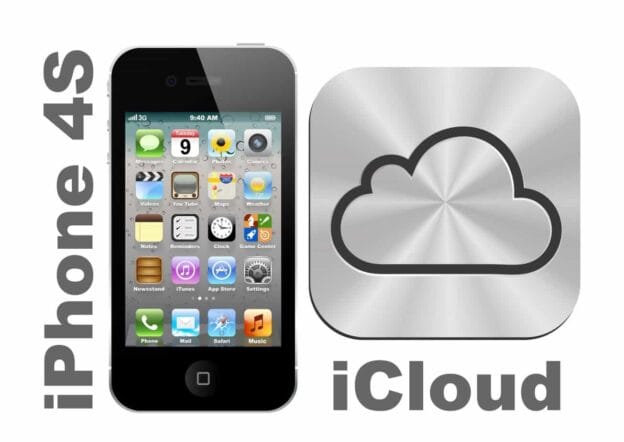
Apple’s recent software update includes a new product called the iCloud Keychain. With the feature, consumers can save sensitive information in a secure online file. Specifically, Keychain will save passwords and credit card information for all of their Apple devices. The program also helps Internet users create safer passwords.  Given the new functionality allowing users to store credit card data and synchronize with the cloud, we thought this functionality would be of particular interest to our customers and blog readers.

Keychain Details 

The Keychain service operates on Safari in iOS as well as OS X Mavericks. Once it has helped a consumer select a secure password, it will store the information and synchronize it to the consumer’s iOS and Mac units.  The software upgrade also makes credit card processing easier for consumers as Keychain saves the user’s credit card number and expiration date. To abide by MasterCard and Visa regulations, the program is unable to store the Card Verification Value, or CVV, code.

As a result, consumers will still need to input this information manually. Users should keep in mind that the software can only operate in Safari on Mac. Therefore, users of Chrome or FireFox will need to use a different password storage provider. In addition, consumers must have the iOS 7 upgrade installed on their devices.

Installation Overview

While installing the OS X Mavericks upgrade, the system will automatically ask the user if he or she would like to establish iCloud Keychain. When the user approves the setup, the program will direct him or her through the security key creating and linking process. If consumers prefer to establish the program manually, then they can access Keychain through the iCloud settings screen on a Mac device. Once a user has accessed the program, he or she will need to enter the password information manually into the system for the Apple program to save it. Keep in mind that other devices can be added to the program. However, the system will require approval for each extra unit. Once Keychain receives authorization, it will automatically begin updating on that unit. If a user decides to remove Keychain from his or her device, then the cancelation procedure is easy to complete. To remove the program, just click on the settings option and turn off the “Approve with Security Code” feature. Users who change their mind can easily reactivate the program.

Keychain Offers Convenience

Credit card processing is easier for consumers who have Keychain on their iOS and Mac devices. The Apple program is secure and helps users create better passwords to safeguard sensitive information. Keychain is a system feature that provides extra security and overall convenience.

How to Save Money on Credit Card Processing Fees

Here at Host Merchant Services we guarantee to save our customers money every month on their credit card processing. We understand that some of you are wondering how we do this! Transparency is a key cornerstone of our customer service values, so we have no problem sharing our secret formula and show everyone out there exactly how we carve out superior savings for every single one of our customers. We believe that when you get your statement every month, you should understand every item, and it should match what you were promised in the sales process. One of the first things to understand when switching to Host Merchant Services is we utilize the most cost effective and fair pricing available in credit card processing. It is called “interchange plus” or “cost plus pricing.” Interchange is a set of rates and fees determined by the card associations (Visa, Mastercard, and Discover). What this means is that our merchants are able to clearly see what interchange categories they qualify for. Here are a few different interchange categories that merchants pay with the same consumer visa credit card. Keep in mind each interchange category has a percentage and a dollar amount included in the category.

Supermarket Credit 1.22% + $0.05
Small Ticket (Transactions under $15) 1.65% + $0.04
Standard Retail / Restaurant 1.51% + $0.10
Charity 1.35% + $0.05
Service Station 1.15% + $0.25
e-Commerce / Mail order & Telephone order 1.80% + $0.10

These examples are based on interchange plus pricing. They also don’t include processor markup, and we have the lowest in the industry! There are other types of pricing that processors will use. You may encounter three-tier pricing (1.79% Qualified, 2.49% mid-qualified, and 3.29% non-qualified) for example. Some merchants are priced flat rate (2.9%, or 2.75%) or flat rate plus surcharges. There is also the dreaded enhanced bill back! Once you understand your pricing and category you need to look at how you are accepting your credit cards. Credit cards that are taken face-to-face (card present) often cost less than cards that are taken over the phone or on the Internet (card not present). For example, retail swiped transaction of 1.51% versus an e-Commerce transaction of 1.80%. Card associations justify this increased interchange rate due to transactions not being face-to-face. The next step in saving money is learning how much money is currently being spent on average to take in each dollar on credit cards. This is called your effective rate. This is calculated by totaling all the money you are paying in fees divided by the total amount your business processes in sales and refunds. For example a merchant who pays $300 in fees to bring in $10,000 in credit cards has an effective rate of 3.00% ($300 / $10,000 x 100 = 3.00%). A few other pieces of information are important to solving the puzzle. The average ticket or average transaction amount is also critical to understanding your rates. The reason being is that a $.20 transaction fee is not a substantial amount of an average ticket of $100 ($.20 / $100 = 0.20%). However, take that same transaction fee on an average ticket of $10 ($.20 / $10 = 2.00%). This goes to show that merchants with larger average tickets pay lower effective rates on average. Lastly we want to look at other fees; many processors will charge monthly fees, statement fees, administrative fees, regulatory and product fees, PCI fees, and annual fees. Host Merchant Services will help you save money on these fees as well! You can learn more about this process through our Official Host Merchant Services Road to Savings Infographic. The best way to start the process is to have one of our industry experts analyze a current merchant statement. We will walk you through the confusing process by explaining what you are currently paying versus what you would pay with HMS. Along with the potential to save hundreds to thousands of dollars each year on your credit card processing, we’ve upped the ante with our new $100 Challenge.

Call us today at (877) 517-4678 and let us design a solution that dramatically improves your bottom line – we guarantee it!
3

Tokenization Makes Card Use Safe

Safeguarding Stored Cardholder Data with Tokenization

In this era of connectivity, consumers are increasingly concerned about the safety of their personal data. Leaders in the merchant services industry are actively engaged in developing new ways to protect customer information. Here at Host Merchant Services, we commit to security by providing our clients with tokenization, the most secure type of cardholder information storage available today. This system has enormous potential for any company that regularly utilizes credit card processing.

Tokenization involves taking in cardholder data and returning a token, a string of letters, numbers, and characters that represents and stands in place of the original data. Each token serves as a pointer for cardholder information, which is securely stored offsite in a cloud-based database. Since tokens do not contain cardholder data in and of themselves, they are essentially immune from the threat of hackers and identity thieves.

Tokenization And PCI Compliance

Tokenization and PCI Compliance

Through data tokens, merchants can safely store customer information with payment gateway providers like Host Merchant Services. This system is particularly well-suited for companies that charge customers on an ongoing basis. For example, businesses that offer subscriptions or memberships generally charge clients around the first of the month.

Storing large amounts of cardholder data for this purpose can create PCI compliance headaches. Essentially, when a merchant retains and stores a customer’s card information, it changes the level of compliance they have to adhere to for PCI DSS standards. You can review PCI Compliance in more detail here, but Tokenization helps to alleviate some PCI issues for merchants and boost transaction security at the same time.

Instead of storing cardholder data on-site, merchants can store tokens and simply pass these tokens to their payment processors at the appropriate times. Upon receiving these tokens, processors use the tokens to pinpoint cardholder data and generate unique credit card transactions. This system is fast and efficient while minimizing the risk of fraud and identity theft.

Helping  Businesses Small And Large

Helping  Businesses Small and Large

Token systems are ideal for smaller companies seeking to reduce their PCI compliance burdens while maintaining impeccable customer security. That said, companies of all sizes use data tokens to simplify their operations. For example, a tokenization-based payment processing system is useful for closely managing even a large-scale customer rewards program. The ability to store the tokens securely while not compromising customer cardholder data, lets a large company deftly keep track of and maintain their rewards program.

As credit card processing becomes ever more critical for modern commerce, many more companies will adopt this robust system of safeguarding customer data. Here at HMS, we are proud to offer tokenization as an integral part of our Transaction Express payment gateway.

A payment gateway is a system of technologies and processes that allow merchants to electronically submit payment transactions to various payment processing networks (i.e., the Credit Card Interchange and the ACH Network). Payment gateways may also provide merchants with transaction management, reporting, and billing services. Payment Gateways essentially bridge the gap between web-based payment options and credit card processors.  To take payments in a store, you must have a merchant account, to take payments online you must have a payment gateway.

Beyond the in-house Transaction Express gateway, Host Merchant Services also supports a variety of other Payment Gateways for your payment processing needs. We are able to customize a payment processing solution that fits your own individual needs. Here is a brief list of the Payment Gateways we support directly.

Services like the ones Host Merchant Services offers demonstrate how the payments industry is working tirelessly to prioritize information security.

Benefits Of Tokenization In Payments

Benefits Of Tokenization In Payments

Tokenization within the realm of payment gateways involves substituting payment information, like credit card numbers with an identifier or token. This token serves the purpose of enabling transactions without exposing the data. There are advantages to using tokenization in payment gateways;

  1. Enhanced Security: Tokenization provides security for information by preventing access and reducing the risk of data breaches. Since intercepted tokenized data is useless without the tokenization system it holds no value for attackers.
    PCI DSS Compliance; Compliance with Payment Card Industry Data Security Standard (PCI DSS) is crucial for businesses that handle cardholder data. By minimizing storage and transmission of information tokenization helps reduce the scope of PCI DSS compliance audits.
  2. Risk Reduction: Replacing card details with tokens significantly decreases the risk of transactions. Even if a token is somehow intercepted it cannot be easily exploited for transactions without access, to a system.
  3. Simplified Compliance: Tokenization assists in meeting regulations related to data protection and privacy.
    It ensures that customer data, which is sensitive is handled securely and in compliance, with requirements like GDPR, HIPAA, and others.
  4. Efficient Operations: Tokenization simplifies the process of integrating payment gateways into systems. By eliminating the exposure of card data during transactions developers can focus on integrating with the tokenization system making it a straightforward process.
  5. Building Customer Trust: Businesses that prioritize the security of payment information are likely to gain customer trust. Tokenization showcases a commitment to safeguarding customer data fostering trust and confidence in the brand.
  6. Convenient Recurring Payments: Tokenization proves advantageous for businesses offering subscription services. Once a card is tokenized it can be utilized for recurring payments without customers needing to enter their card details.
  7. Accelerated Transactions: ** Processing Speed;** Since tokenized transactions do not involve transmitting the information they can be processed rapidly resulting in enhanced efficiency, in payment processing.
  8. Support, for Multiple Channels: Tokenization can be used in payment channels, such as mobile and in-store transactions. This flexibility makes it a versatile solution for businesses that have payment requirements.

In essence, tokenization in payment gateways offers a security measure that minimizes the chances of data breaches and ensures adherence, to regulations. Improves the overall effectiveness and reliability of payment procedures.

nfc

NFC loyalty down by contact for Google [2023 Update]

Google Wallet dropped NFC Loyalty Points and Gift Cards

Google recently announced fundamental changes to its Google Wallet service. On August 21, Google Wallet stopped supporting NFC redemption for gift cards and merchant loyalty points. In these competitive times, more and more businesses have come to rely on loyalty programs to spur consumer activity. By simplifying the point-of-sale experience, NFC payments are supposed to optimize loyalty programs for mobile shoppers. The new changes to Google Wallet may make some companies rethink joining Google’s bold experiment in merchant services.

Though Google says it is looking for new ways to process loyalty and gift cards, no details are available as of yet. Nor has Google revealed a specific reason for scaling back its mobile wallet service. Furthermore, this newest change caps a string of high-profile personnel shuffles and policy changes for Google Wallet. In the wake of embarrassing security issues, Google discontinued its virtual prepaid debit cards last year. Since prepaid cards are gaining popularity very quickly, Google’s move inspired curiosity and controversy alike. In May, many observers were startled by the sudden departure of Osama Bedier, the vice president and public face of Google Wallet.

The story of Google Wallet demonstrates the complex pitfalls of pushing technological innovation in merchant services. For years, Google has boosted NFC technology as a game-changer for the mobile wallet industry. Though the company remains officially committed to NFC-enabled point-of-sale transactions, the changing dynamics of Google Wallet could herald future troubles for the payment system. In 2013, the public is increasingly worried about privacy and security issues. As details emerge about corporate involvement in NSA snooping and surveillance, many are wondering if Google is fully committed to safeguarding customer data. For many, these concerns may overshadow and obscure the security advantages of Google’s NFC-powered transactions.

Deeply invested in NFC technology, Google’s course is innovative yet arguably too experimental for many companies. Even forward-thinking carriers and vendors have limits to their adaptability. If Google Wallet’s limited market share is any indication, many smaller merchants are still unsure about the practicality of adopting NFC payments.

AlignCloud and HMS partner up

Host Merchant Services, an industry leading provider of payment processing and e-commerce services for small and medium businesses, announced a promising new partnership with cloud consulting firm AlignCloud. This partnership is the product of extensive research and collaboration and the bold new alliance  represents an exciting opportunity for customers to benefit from the combined expertise of these two companies.

AlignCloud tailors services for cloud providers and end-users alike. From cloud readiness assessment planning to cloud vendor management, AlignCloud provides indispensable services for all cloud customers. For cloud hosting providers, AlignCloud can help providers train sales staff, draft sales plans and fully engage with Web marketing and SEO. With its focus on the cloud and web hosting market, AlignCloud is a natural referral partner for Host Merchant Services.

HMS CEO Lou Honick has aptly summarized the buzz surrounding this collaboration. “Our expertise in e-commerce, payment cost optimization, and security meshes perfectly with AlignCloud to create compelling offerings,” Honick said of the AlignCloud partnership. AlignCloud clients can now seamlessly access secure, reliable merchant services, PCI compliance solutions, and e-commerce.

In the business world, demand for cloud services has reached an all time high. As mobile devices become more important for business, public worries about information security keep pace. Cloud Hosting is a type of hosting platform that allows customers powerful, scalable and reliable hosting based on clustered load-balanced servers and utility billing. Web hosting services allow individuals and organizations to make their website accessible via the World Wide Web.

For AlignCloud’s customers, HMS has designed services to insure absolute peace of mind. According to AlignCloud CEO Stacy Griggs, the program will provide clients with “lower rates and better service for credit card processing, mobile payments and merchant services.” The experts at HMS combine technical knowledge with uniquely dynamic customer service. Through expertise in data security and fraud reduction, Host Merchant Services promotes more confident commerce, both for businesses and customers alike.

A cloud hosted website can be more reliable than alternatives since other computers in the cloud can compensate when a single piece of hardware goes down. Also, local power disruptions or even natural disasters are less problematic for cloud hosted sites, as cloud hosting is decentralized. Cloud hosting also allows providers to charge users only for resources consumed by the user, rather than a flat fee for the amount the user expects they will use, or a fixed cost upfront hardware investment.

For Host Merchant Services, the partnership with AlignCloud is part of their successful strategy to partner with the web hosting and cloud services industry. Companies like AlignCloud can better serve clients by integrating credit card processing into their offerings. Through Host Merchant Services, AlignCloud customers will experience hassle-free credit card processing with 24x7x365 hour technical support and responsive website.

Clients of AlignCloud can also earn extra revenue by referring their customers to the program.

Are Credit Card Rewards Points Programs Harmful?

Over the course of the past ten years, credit card providers have ramped up their efforts to woo consumers with point-based loyalty programs.

Custom gift cards and loyalty cards are a great way to encourage repeat business and so many merchants have embraced the concept that the credit card providers have pushed. These redeemable Transaction Cards let customers make flexible decisions when purchasing goods or services from a merchant.

Early in the history of credit cards, most financial institutions were too dignified to offer game-like rewards systems involving point accumulation. As time went by, it became increasingly clear that nearly all types of credit card users were energized and excited by point systems. In the early part of the last decade, easy credit led to a dizzying proliferation of rewards programs. Although credit limits and eligibility requirements have tightened in recent years, credit card issuers maintain loyalty programs as integral parts of their marketing initiatives.

On an individual, case-by-case basis, rewards programs create very attractive incentives for customers. The public record abounds with stories of individuals who use reward points to gain earn free flights, hotel stays and other financial advantages. Collectively, some loyalty programs inspire widespread exploitation and abuse.

Since point-based reward programs are textbook examples of gamification, it is little surprise that many program members are gaming these systems irresponsibly. These individuals have perfected cunning “ghost transactions” that earn points without adding real value to the economy.

One popular technique is to purchase numerous gift cards with credit, only to use the gift balances to pay off credit card balances in a circular fashion. Though most of these schemes are technically legal, they consume manpower and resources in an exploitative manner. Point churning is a zero-sum game that leads to more expensive payments processing for retailers. Ultimately, many of these increased costs are passed on to the general public.

Point system abusers only account for a small percentage of loyalty program members. Even for ordinary users, rewards programs aren’t always as beneficial as they first appear. Individuals who use loyalty programs need to read and understand the fine print of program rules and regulations. In many cases, gains from cashing in points are fully offset by the costs of using additional credit. At their best, loyalty programs are engaging systems that spur responsible spending. However, economists argue that aggressive rewards programs can distort incentives and upset natural credit use patterns.

Here at Host Merchant Services, we are sensitive to how responsible credit card use contributes to the health of the broader economy. We provide our customers with tools to better understand and fulfill the needs of the public. Flexible, responsive payment processing encourages consumers to use credit with caution and care.

Can Durbin Debit Rates Go Even Lower

Can Durbin Debit Rates Go Even Lower? [2026Update]

A new U.S District Court ruling could lead to major changes in debit card processing fees. Will the Durbin debit rates go lower with this? Let us understand.

On July 31, U.S. District Judge Richard Leon swept aside the Federal Reserve‘s 2011 implementation of the Durbin Amendment. Passed in 2010, this amendment to the Dodd-Frank law was intended to limit the upward trajectory of debit processing rates. According to Leon, the Fed’s 2011 regulations directly counteracted the original intent of the Durbin Amendment. Though the Fed capped the base rate for debit processing fees at 21 cents, they raised debit rates for transactions under $12. Essentially, the Fed lowered the debit price for large transactions while raising them substantially on small transactions.

Can Durbin Debit Rates Go Lower?

Durbin Debit Rates

In general, debit card caps are highly advantageous for retail businesses. However, the current implementation of the Durbin debit amendment creates grave concerns for many retailers. It is sensible to lower debit card interchange fees at a time when many retail companies are struggling with low consumer demand. Months will pass before the nation sees new, concrete debit processing rules. In the meantime, the response to Judge Leon’s ruling starkly illustrates a growing conflict between the retail industry and major banks.

In this struggle to define the costs of merchant services, both sides claim to represent the best interests of the public. However, the banking industry is so politically influential and entrenched that it is hard to see this industry as truly vulnerable or consumer-focused. Retailers are achieving broader public support as they tout their intentions to lower costs for ordinary Americans.

1 18

To be fair, it is demonstrably true that banks could lose enormous profits in the wake of Judge Leon’s ruling. Undoubtedly, the banking industry will pass some of these costs on to consumers in the form of higher fees and tighter restrictions. A strong, profitable American banking industry is vital for the United States and the global economy. 

At the same time, history has shown that the banking industry is far less volatile than the retail sector. When banks are in danger of failing, they can often use their political influence to gain unique concessions and loans from the government. In stark contrast, retailers must stand on their own during problematic times. In light of this power imbalance, the public may well benefit from retailer-friendly debit price controls.

The new ruling on Durbin debit rates represents a fascinating turn of events. However, only time will tell if Judge Leon will have the final word in Durbin implementation. The Federal Reserve and large banks have many more tools at their disposal in their quest to control the state of debit processing fees.

What Is the Durbin Amendment

The Durbin Amendment is a part of the Dodd-Frank Wall Street Reform and Consumer Protection Act, a law enacted in 2010 in the United States. It was named after Senator Richard Durbin, who played a role in its development. This amendment primarily focuses on the fees that merchants pay to banks for processing debit card transactions, known as interchange fees.

What Is the Durbin Amendment

The key features of the Durbin Amendment are as follows

Regulation of Interchange Fees: The Durbin Amendment introduced regulations to limit the interchange fees charged by banks to merchants, for processing debit card transactions. The aim was to make these fees more reasonable and transparent.

Exemption for Smaller Financial Institutions: These regulations specifically apply to institutions that surpass a certain asset threshold. Smaller banks and credit unions generally do not have to follow the restrictions on interchange fees.

Choice of Network Routing for Merchants: Another objective of this amendment is to promote competition among payment card networks. It allows merchants to select which network they prefer for processing debit card transactions. This provision encourages competition. May potentially reduce costs, for merchants.

Prohibition of Exclusive Network Agreements: The Durbin Amendment prohibits card networks from imposing agreements that would restrict merchants from routing their transactions through networks.

Measures to Protect Consumers: The amendment included provisions that aimed to strengthen consumer protection. One of these provisions required issuers to offer consumers a choice, between two payment card networks that were not affiliated with each other for each debit card. This gave consumers options and flexibility.

Challenges in Implementation

The implementation of the Durbin Amendment faced some difficulties, which sparked debates about its effectiveness and potential unintended consequences. While some believed that it successfully achieved its goal of reducing interchange fees others had concerns about effects on smaller banks and financial institutions.

Impact on the Debit Card Industry

The Durbin Amendment had an impact on the debit card industry by changing the dynamics of interchange fees and fostering competition among payment networks. It continues to be a regulation in the United States influencing the relationships, between banks, merchants and consumers when it comes to debit card transactions.