Fiserv Targets Restaurant Industry with Bold Clover Hospitality Launch
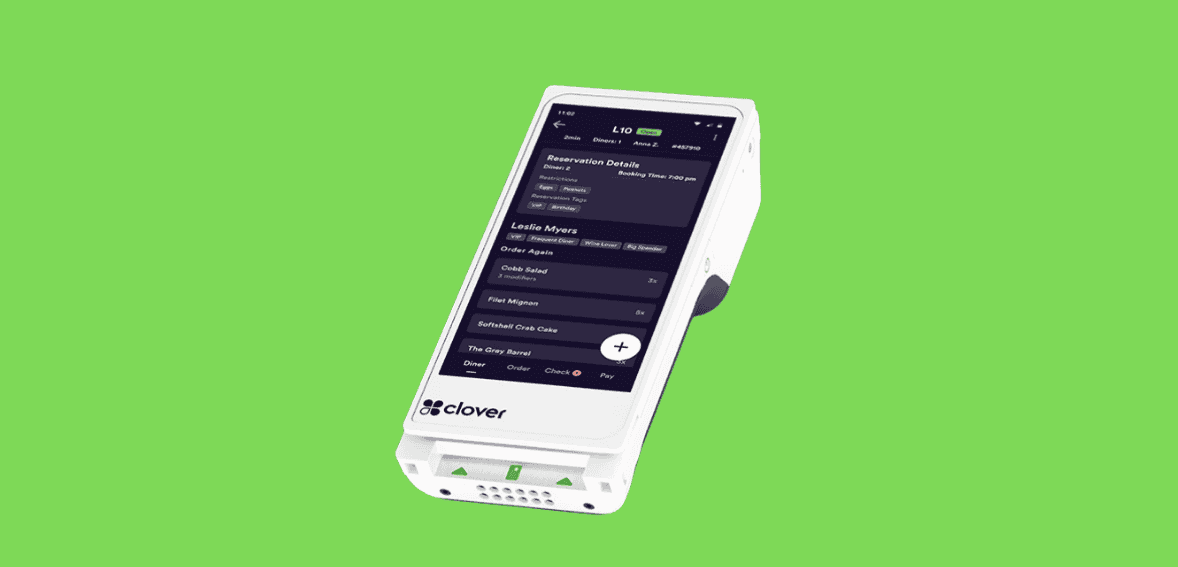
Fiserv is making an aggressive move into the restaurant space with the upcoming launch of Clover Hospitality, a new high-end point-of-sale solution tailored for the hospitality sector. The product is set to debut next month, with Brooklyn’s renowned Italian restaurant Lilia as its first client.
“This is a premium solution built specifically for restaurants,” said newly appointed CEO Michael Lyons during the company’s Q1 earnings call. Lyons, formerly president of PNC Financial, takes over from Frank Bisignano, who was appointed by President Trump to lead the Social Security Administration.
The restaurant tech space is crowded, but Fiserv is betting big on Clover’s strong track record. Already a standout performer in Fiserv’s merchant-services division, Clover is now poised to push deeper into one of the most competitive verticals in payments.
Key Takeaways
Fiserv is launching Clover Hospitality, a point-of-sale solution designed specifically for fine-dining restaurants. This marks its first major move into the high-end hospitality segment, with Brooklyn’s Lilia as its inaugural client.
Developed in collaboration with Union Square Hospitality Group, the new Checkless Payments feature lets guests pay using a card saved at reservation, eliminating the wait for the check and improving table turnover.
Clover Hospitality integrates front- and back-of-house tools, customer profiles, marketing, and loyalty programs—building on Fiserv’s 2021 BentoBox acquisition to deliver an all-in-one system tailored for upscale venues.
Fiserv is banking on features like mesh networking, encrypted payments, and partnerships with firms like Verifone, Klarna, and ADP to compete in a crowded market led by players such as Toast, Square, and Stripe.
Fiserv Targets Fine Dining with Clover Hospitality Launch at NRA Show
Nowadays, every industry is getting inundated with technology, and fine-dining establishments are not behind in the race. These establishments seek technologies that complement their haute cuisine and personalized service. To that end, Fiserv, Inc.—a Fortune 500 leader in payments and financial technology – has announced the launch of Clover Hospitality, a point-of-sale (POS) solution specifically tailored for upper-market restaurants.
The new offering debuts at the 2025 National Restaurant Association (NRA) Show on May 17 in Chicago, marking Fiserv’s first major push into high-end dining.
The full-service restaurant sector is transforming, with 64 percent of diners placing a higher value on experience over price, according to the National Restaurant Association’s 2025 State of the Restaurant Industry report. Meanwhile, rising costs—restaurant expenses have climbed 26 percent since 2021—and tightening labor markets are increasing operational pressures on restaurateurs. These trends underscore the need for integrated technology solutions that streamline both front‐ and back‐of‐house operations while enhancing the guest journey.
Clover Hospitality is designed to meet the nuanced requirements of fine‐dining venues, integrating intuitive hardware, advanced software, and seamless payment processing into a single package. At its core, the system provides real‐time table management, guest intelligence, and resiliency features such as localized mesh networking, promising in‐service continuity even during Wi-Fi outages. And by extending the functionality of Clover through technology acquired from BentoBox in 2021, Fiserv is looking to offer an “omnibranded” toolkit: reservations, online ordering, marketing, loyalty, and now POS all under one roof.
A cornerstone of the Clover Hospitality launch is Checkless Payments, developed in collaboration with Union Square Hospitality Group (USHG) and inspired by conversations between USHG founder Danny Meyer and former Fiserv chairman Frank Bisignano. This feature allows guests to pay using the card saved at reservation time, avoiding the traditional “waiting for the check” ritual and reducing service friction. Pilot tests at USHG’s Manhatta restaurant have shown promising results, with guests completing their payments seamlessly and departing without ceremony.
During Fiserv’s Q1 earnings call in April, incoming CEO Michael Lyons revealed that Lilia, a renowned Italian eatery in Brooklyn, will be the inaugural client of Clover Hospitality. Lyons described the new product as “a high-end solution for restaurants,” which shows its focus on the premium segment. Securing Lilia as a launch partner lends credibility and visibility to Fiserv’s upmarket ambitions.
At the NRA Show, Fiserv showcased Checkless Payments in action, highlighting its implementation at Manhatta—USHG’s sky-high, fine-dining destination. Danny Meyer emphasized that Checkless Payments addresses “the least hospitable part of the dining experience: waiting for the check,” and positions technology as an enabler of genuine hospitality rather than a barrier. With plans to roll out across USHG’s portfolio and subsequently to all Clover Hospitality customers, Fiserv is setting a new standard for frictionless payment in premium dining.
Beyond checkless dining, Clover Hospitality offers an array of high-touch features like:
Digital Waitlists & Ticketing: Streamlines guest flow with visual dashboards for front-of-house teams.
Customer Profiles: Builds loyalty by tracking order history, dietary preferences, and payment methods.
Back-of-House Integration: Unifies front- and back-of-house tasks, from inventory management to staff notifications.
Omnichannel Marketing Tools: Leverages BentoBox’s platform to power websites, reservations, and promotional campaigns.
These capabilities are developed in consultation with restaurant managers to ensure data-driven insights support operational growth and guest satisfaction.
Through streamlined operations and faster table turnover, upscale restaurants can uphold their premium price points while boosting both seating capacity and revenue earned per cover. Integrated guest analytics enable personalized service, anticipating preferences and enhancing the emotional connection between staff and diners. Automated check processing not only elevates the experience but can free up staff to focus on service, driving higher labor productivity and reducing error rates. Collectively, these improvements position Clover Hospitality as a profit multiplier rather than a mere cost center.
The restaurant POS market is fiercely contested. Major players such as Toast, Square, Lightspeed, Shift4 Payments, PayPal, Block, and Stripe have all introduced or enhanced solutions targeting hospitality venues. According to AFM Consulting principal Aaron McPherson, this proliferation of tailored offerings highlights the need for vertical-specific innovation and exceptional service. Fiserv tries to differentiate through deep industry partnerships (e.g., USHG), integrated commerce capabilities, and a broad distribution network of over 1,000 partner banks.
Additionally, Clover Hospitality leverages cutting-edge infrastructure and security:
Localized Mesh Networking: Ensures POS terminals and tablets stay in sync, even during connectivity disruptions.
Point-to-Point Encryption (P2PE): Through partnerships with Bluefin and Verifone, merchants can reduce PCI scope by up to 90 percent while maintaining robust security.
Integrated Finance and Payroll: Recent additions include Klarna for flexible guest payments and ADP payroll integration for streamlined labor management.
Data-Driven Insights: Real-time dashboards track gross payment volume—in Q1, Clover processed $296 billion with revenue growth of 27 percent year-over-year.
These innovations position Fiserv to support both operational resilience and guest-centric experiences in premium hospitality.
Fiserv has already introduced Clover in 13 countries and continues to expand its international footprint. With a revenue target of $3.5 billion for Clover in 2025 and capital expenditures of $1.4–$1.5 billion allocated for product development, Fiserv is committing substantial resources to sustain growth. Retail analysts at William Blair emphasize that the small-business POS market, particularly food and beverage, represents a $3.1 trillion annual volume opportunity, underscoring the strategic rationale for Fiserv’s upmarket pivot.
Fiserv, Inc. is an American multinational financial technology company founded in 1984 and headquartered in Milwaukee, Wisconsin, U.S.. It is publicly traded on the New York Stock Exchange under the ticker symbol FI and is a member of the S&P 500® Index. The company provides technology solutions and services for banking, merchant acquiring, global commerce, billing and payments, and point-of-sale platforms, serving clients such as banks, credit unions, securities broker-dealers, mortgage providers, insurance firms, and retailers worldwide. As of 2024, Fiserv employs approximately 38,000 people globally.
For the fiscal year ended December 31, 2024, Fiserv reported GAAP revenue of $20.46 billion, representing a 7% increase year-over-year. The company recorded operating income of $5.88 billion and net income of $3.13 billion, with total assets of $77.2 billion and total equity of $27.1 billion as of year-end 2024. Under the leadership of President and CEO Frank Bisignano, Fiserv has pursued strategic growth through acquisitions, including the transformative $22 billion acquisition of First Data in 2019, followed by recent deals such as Payfare in March 2025 and Australian payment facilitator Pinch Payments in April 2025 . Looking ahead, Fiserv projects organic revenue growth of 10% to 12% for 2025.
Conclusion
Fiserv’s entry into high-end hospitality with Clover Hospitality signals a calculated expansion into a competitive but lucrative market. By targeting fine-dining restaurants with purpose-built tools like Checkless Payments, real-time table management, and integrated marketing capabilities, Fiserv is positioning Clover as more than a payment solution—it’s a full-service operational platform.
Backed by strong industry partnerships and a proven track record in merchant services, Fiserv is aiming to deliver tangible value where efficiency, service quality, and guest expectations intersect. As the premium dining sector looks for ways to balance cost pressures with elevated experiences, Clover Hospitality arrives at a pivotal moment—with the potential to become a key player in shaping how technology supports hospitality at the top end of the market.
FIS Unleashes Quantum Cloud Edition: A Game-Changer for CFOs Battling Market Volatility
Global fintech leader FIS has unveiled its cutting-edge treasury solution – Treasury and Risk Manager: Quantum Cloud Edition – purpose-built to empower CFOs and treasurers with unmatched control in an era of relentless financial turbulence.
This next-generation, cloud-native platform redefines enterprise treasury by delivering real-time cash visibility, scalable transaction processing, and seamless global connectivity. Designed for the complexities of today’s financial landscape, it fuels faster, smarter decisions, boosts agility in the face of risk, and accelerates money movement at enterprise scale.
With Quantum Cloud Edition, FIS isn’t just enhancing treasury operations – it’s setting a new standard for how finance leaders navigate uncertainty with confidence and precision.
Key Takeaways
Quantum Cloud Edition is a cloud-native overhaul of FIS’s legacy treasury platform, rebuilt using microservices and containerized architecture. It’s designed to address common challenges CFOs and treasurers face, such as the need for real-time data, faster decision-making, and better risk control amid rising market volatility.
The platform enables real-time cash and risk insights by connecting directly with ERP systems, banks, and market data providers through APIs. It dynamically scales computing resources to handle transaction spikes—supporting tens of millions of transactions per day—while reducing delays and manual reconciliation.
Compared to traditional systems, implementations are 30–40% faster due to preconfigured environments, automation, and ERP integration kits. The subscription model reduces capital expenses, with pricing based on transaction volumes or user roles, making it more adaptable for both growing and mature organizations.
Security and governance are embedded throughout the platform, with MFA, encryption, role-based access, and built-in compliance for standards like IFRS 9, ASC 815, GDPR, and SOC 2. FIS is also planning future enhancements, including AI for cash forecasting and fraud detection, as well as tools for ESG reporting and blockchain-based settlement.
Quantum Cloud Edition Introduces Scalable, Real-Time Tools for Cash, Risk, and Compliance Management
On April 29, 2025, FIS® (NYSE: FIS) announced the launch of the “Quantum Cloud” edition of its Treasury and Risk Manager platform. Known as Treasury and Risk Manager – Quantum Cloud Edition, this new solution is built in the cloud to meet the changing requirements of CFOs and corporate treasurers who need timely data, strong risk oversight, and rapid decision-making capabilities.
In recent years, many companies have moved their systems to cloud-based platforms to gain flexibility and scale operations more efficiently. A late-2024 EY survey found that while 65% of firms invested in cloud technologies, only 32% felt they fully achieved their goals, revealing a common struggle to realize cloud benefits. This is especially true for treasury teams, which rely on accurate data, fast transaction processing, and detailed risk analysis.
Legacy on-premises systems often slow down when transaction volumes spike or when new integrations are needed. As the market changes, fluctuating capital costs and regulatory demands make it harder for treasurers to stay on top of their strategies without a modern platform.
FIS has a long track record in treasury and risk management under its Quantum brand. Over 1,000 organizations worldwide have used the classic Quantum platform to manage cash, liquidity, risk, debt, investments, hedge accounting, and compliance. To keep pace with customer needs for cloud-first solutions, FIS re-engineered Quantum rather than just moving the old system to the cloud. The new version uses microservices, containerization, and automation to support faster updates and better performance.
At the heart of Quantum Cloud Edition is a microservices architecture that runs on a public cloud. This design lets the platform increase or decrease computing power and storage as transaction volumes change. During heavy workloads, such as month-end closings or large cash movements, additional resources are allocated automatically and then reduced when demand falls, keeping costs in check.
Each major function, like cash management or risk analytics, is packaged in its own container, allowing independent updates or rollbacks. A Kubernetes-based system manages these containers, checking their health and redistributing work if an instance fails. Automated testing and deployment pipelines cut release cycles to weeks or days instead of months.
Handling higher transaction volumes is a key focus. Quantum Cloud Edition can process tens of millions of transactions per day without slowing down. This is possible because workloads are split across multiple servers in the cloud, rather than relying on a single data center. An API-first approach makes it easier to connect with ERP systems like SAP and Oracle, bank APIs and SWIFT networks, and market data providers such as Bloomberg and Reuters. These APIs enable real-time data exchange – for instance, general ledger balances flow directly into the treasury system, and market rates update risk calculations every few minutes.
The Liquidity Hub component centralizes cash information in a single dashboard. It gathers data from ERPs, bank APIs, and treasury workstations so treasurers can view intraday cash positions across legal entities, currencies, and regions. Streaming technology updates cash balances as often as every five minutes, ensuring that teams see current liquidity, which is vital when markets are volatile or large payments are due.
An automated matching process reconciles bank statements, ERP entries, and internal records, flagging any mismatches for review. Rules-based workflows help teams quickly resolve exceptions, cutting down manual work and reducing the risk of errors.
Risk analytics in Quantum Cloud Edition provide ongoing calculations of metrics like Value at Risk (VaR), Earnings at Risk (EaR), and Cash Flow at Risk (CFaR) as market data moves. Users can set up stress scenarios – such as interest rate spikes or currency changes – to see how these events might affect profit and loss or the balance sheet.
Hedge accounting is automated for IFRS 9 and ASC 815 (US GAAP), with prebuilt templates guiding users through risk designation, hedge ratios, and effectiveness tests. This simplifies compliance tasks and audit readiness. Built-in controls monitor internal policy limits – like counterparty credit exposure or notional caps – and external regulations, sending alerts when positions approach set limits so treasury teams can act before problems grow.
For debt and investment management, Quantum Cloud Edition handles loan origination, servicing, and amortization, whether for revolving credit facilities or bond issuances. Interest accruals, covenant compliance, and schedule updates occur automatically. On the investment side, the system covers short-term and long-term instruments – money market funds, government bonds, corporate notes – providing real-time mark-to-market valuations that feed into cash forecasts. Automated accruals and reconciliation processes calculate interest and update the general ledger without manual intervention. Daily mark-to-market routines ensure investment values remain accurate with current market rates.
Security and governance are built in at multiple levels. Role-based access controls let organizations assign permissions by role – such as Treasury Analyst, Risk Manager, or CFO, and integrate multi-factor authentication (MFA) and single sign-on (SSO) through identity providers like Azure AD or Okta. Data is encrypted both in transit and at rest using AES-256 standards. The cloud setup spans multiple availability zones to keep systems running in case of a hardware failure, and disaster recovery plans aim for recovery time objectives under 24 hours. Regular automated upgrades and patches use blue-green deployment methods, allowing new features and fixes to roll out with minimal disruption and quick rollback if needed.
This design offers concrete benefits for CFOs and treasury teams. By gathering data from various sources into one cloud platform, users gain a clear view of cash and risk exposures in real time. This reduces the delays and blind spots that can occur when relying on monthly or weekly reports, letting teams make informed decisions faster. Companies experiencing rapid growth, acquisitions, or seasonal transaction spikes no longer need to plan for excess capacity months ahead. The cloud platform adjusts automatically, ensuring performance holds steady no matter the workload. Shifting to a pay-as-you-go model also cuts down on fixed IT costs, aligning expenses with actual usage.
Historically, rolling out a new treasury system could take nine to eighteen months, with on-premises hardware orders, software installations, and complex integrations. FIS reports that Quantum Cloud Edition implementations can be 30–40% faster, thanks to preconfigured cloud environments, automated ERP connectors, and guided onboarding wizards.
This means organizations start seeing better cash visibility and tighter risk controls sooner. Moving from capital-intensive data centers to subscription-based cloud costs makes budgeting more predictable. Licensing fees adjust to transaction volume or user count, and hosting charges reflect actual consumption. Bundling software, infrastructure, and support into one subscription simplifies budgeting and avoids surprise bills.
Public cloud providers often invest heavily in security measures that exceed what most companies can manage alone. Quantum Cloud Edition takes advantage of dedicated security operations centers (SOCs), ongoing vulnerability scans, penetration tests, and compliance checks for standards like GDPR, SOC 2, and ISO 27001. This shared security model relieves organizations of maintaining siloed controls and reduces the risk of data breaches.
During the announcement, JP James, Head of Treasury & Risk Management at FIS, commented that CFOs and treasury teams face a mix of challenges – rising capital costs, market swings, and expanding duties. He noted that the modern treasury platform must help users process company data, understand financial risks, and shape effective strategies. With this new offering, he said, FIS aims to give companies tools that help them steer through changing conditions and support growth.
To build Quantum Cloud Edition, FIS worked with major cloud providers such as AWS, Azure, and Google Cloud. Each deployment comes with a pre-built virtual private cloud that meets security requirements and identity and access management integration for centralized authentication. Managed database services optimized for high-performance workloads ensure that transactional and analytical tasks run smoothly. These partnerships help reduce setup errors and ensure compliance with data residency rules in different regions.
The platform’s data structure uses both relational and NoSQL databases to balance transactional reliability with speed. A transactional ledger database handles cash transactions, journal entries, and audit records with full compliance. Time-series databases store high-frequency market feeds and intraday cash balances, while document stores keep unstructured data like policy documents and risk modeling settings.
Microservices communicate through RESTful APIs and an internal messaging system – using tools like Apache Kafka or AWS SNS/SQS – to run processes asynchronously. For example, when an ERP publishes new cash entries, an ingestion service processes them, sends events to the message bus, and triggers workflows for cash forecasting or exception handling without delay.
To maintain uptime, the platform replicates services across different availability zones. If one zone has an outage, traffic shifts automatically to other healthy instances. For customers with strict recovery goals, cross-region data replication keeps a near-real-time copy of critical information in a separate location. Automated failover checks monitor service health, and if a primary instance fails, backup instances take over, preventing a single point of failure.
FIS also offers integration kits to help companies connect existing systems quickly. Prepackaged connectors for ERPs like SAP and Oracle, sample API libraries in Java, .NET, and Python, and configuration templates for common treasury tasks – such as cash concentration, forex netting, or debt issuance – reduce custom development needs and cut implementation risks.
Typical implementation follows four phases. First, a discovery and design phase lasting four to six weeks involves stakeholders from treasury, finance, IT, and risk to outline requirements and finalize the solution setup. Next, configuration and integration take about eight to twelve weeks, where core modules are set up, data connectors are configured, and workflows are tested.
User acceptance testing and training happen over four to six weeks, during which end-to-end functionality is verified and treasury staff learn the new processes. Finally, a two-to-four-week go-live period with hypercare support addresses any early issues. Overall, the timeline is 14–20 weeks, reflecting a 30–40% speed improvement compared to on-premises projects.
Pricing is designed to suit different company sizes and needs. License tiers are based on transaction volumes – bands cover up to one million, one to five million, five to ten million, and over ten million transactions annually. User-based licenses are available for those who prefer per-user fees, with roles like Analyst, Manager, or Administrator. Advanced modules – such as detailed liquidity planning, FOREX netting, or multi-entity consolidation – can be added on top of the core license. For hosting, most customers let FIS arrange cloud infrastructure, but some choose to deploy in their cloud accounts, paying only the software subscription.
Compared to providers that offer single-function tools, Quantum Cloud Edition covers a full range of treasury needs – cash and liquidity management, risk analytics, hedge accounting, debt and investment oversight, compliance reporting, and integrations with ERP, banking, and market data systems.
This integrated design cuts down on data silos and manual reconciliation, giving treasury teams a complete view of their positions and risks. FIS’s long history in the treasury space adds credibility, and its ongoing development of AI tools like FIS Treasury GPT and machine learning for anomaly detection shows a commitment to future innovation. Large organizations that need to handle very high transaction volumes benefit from FIS’s global cloud infrastructure and its ability to process tens of millions of transactions daily while preserving performance.
Several early adopter examples highlight the platform’s impact. A major European bank with ten million retail customers and two hundred thousand corporate clients switched from a legacy on-premises treasury system to Quantum Cloud Edition. Before the switch, the bank struggled with manual data uploads and lacked real-time integration with its SAP ERP.
After going live, the bank saw a 30% drop in the time spent on manual reconciliations, since bank API integrations and automated workflows took over. Treasury teams gained 24/7 visibility into cash positions across fifteen legal entities in ten currencies, helping them react more quickly when foreign exchange markets shifted. Risk teams could run new hedge scenarios twice as fast, speeding up management approvals.
A global manufacturing company operating in North America, Europe, and Asia faced difficulties consolidating cash forecasts for over fifty subsidiaries, each using different ERP setups. After implementing Quantum Cloud Edition, a central forecast model gathered data from five ERP systems, cutting forecast cycle time from ten days to three days. Built-in regulatory templates for IFRS 7 and local reports let the treasury team generate audit-ready documents in minutes instead of spending days assembling data. Shifting to cloud computing reduced the treasury IT budget by 20%, freeing funds for working capital improvements.
For CFOs and treasury teams dealing with fluctuating interest rates, supply chain issues, and geopolitical uncertainty, having real-time cash and risk insights becomes a key advantage. Quantum Cloud Edition helps users adjust quickly to market changes, start digital projects faster, and improve working capital management. Future updates are planned to add more AI and machine learning features – beyond FIS Treasury GPT – for cash flow predictions, fraud detection, and automated investment decisions.
FIS is also evaluating distributed ledger technologies for interbank settlements, trade finance, and intercompany reconciliations, which could cut settlement times and boost transparency. An expanded set of tools focused on environmental, social, and governance (ESG) factors – like ESG scoring, green bond tracking, and sustainability-linked loan support – will meet growing demand for sustainable finance.
With its shift to a cloud-native architecture, FIS aims to give clients a treasury platform that handles today’s needs, such as large-scale processing, real-time liquidity views, and compliance, while preparing for tomorrow’s advances in AI, blockchain, and ESG reporting. The Quantum Cloud Edition is set to expand that reach by offering a scalable, data-driven platform that helps treasury teams act on fresh information, improve efficiency, and manage risk more effectively.
About FIS
Fidelity National Information Services, Inc. (FIS) is a U.S.-based financial technology company founded in 1968 and headquartered in Jacksonville, Florida. It supports over 20,000 clients across banking, wealth management, and capital markets by processing about 75 billion transactions annually, moving close to $9 trillion. With a global workforce of around 50,000–55,000 employees, FIS provides secure, scalable technology for large financial institutions, mid-sized banks, and fintech startups.
The company operates through three main segments: Banking Solutions, Capital Market Solutions, and Corporate and Other. Its offerings include core banking systems, mobile banking platforms, payment processing, fraud management, trading systems, and retirement services. FIS has expanded through acquisitions such as SunGard and its former merger with Worldpay, helping clients update their technology, manage financial risks, and respond to changing market demands.
Conclusion
The launch of Treasury and Risk Manager – Quantum Cloud Edition marks a major step forward for FIS and its clients. By rebuilding its platform around cloud-native principles, FIS has created a solution that directly addresses the growing pressure on CFOs and treasurers to manage cash, risk, and compliance with more speed and precision. The platform’s scalable architecture, real-time data capabilities, and integrated toolset allow teams to respond faster to changing market conditions without overhauling their internal systems.
As organizations face tighter margins, regulatory shifts, and increasing operational complexity, the ability to gain instant insights and automate core processes is no longer optional. Quantum Cloud Edition is built with those realities in mind. Backed by FIS’s long-standing industry experience and partnerships with major cloud providers, it offers a practical and forward-looking foundation for enterprise treasury management, both for current needs and for what’s coming next.
The United States Senate is moving forward with the Guiding and Establishing National Innovation for US Stablecoins (GENIUS) Act. This bipartisan bill is designed to establish a regulatory framework for stablecoins — digital currencies that are pegged to stable assets like the US dollar.
The bill’s proponents argue that this legislation will offer the clarity needed that is important in the financial and payments sector, given it is a financial product. But critics (from the Democratic Party) of the Stablecoin bill have argued about the same and have expressed concerns about potential risks to consumers and the overall economy.
Senator Elizabeth Warren (D-Mass.) to be specific has been a vocal opponent of the current version of the GENIUS Act. She warns that the bill lacks much-needed safeguards, making the consumers more vulnerable to financial instability and undermining national security. Warren pointed out that without strict regulations, stablecoin issuers might invest in risky assets, which in turn will mimic the financial practices that led to previous economic crises. She has called for amendments to ensure robust consumer protections and to prevent the legitimization of potentially hazardous crypto schemes.
Key Takeaways
Senator Warren suggests that the latest draft of the GENIUS bill “lacks consumer protection.” She goes on further to mention that, unlike traditional financial products, the bill does not offer “safety nets” or mechanisms for consumers to recover funds in cases of fraud or scams, leaving them vulnerable in need.
The senator noted that the bill could unknowingly facilitate illegal financial transactions that include terrorism financing and sanctions evasion. She pointed out that without explicit and stringent regulations, stablecoins could be exploited by the “Axis of evil” – North Korea or Iran to bypass US sanctions, posing threats to national security.
Warren raises alarms about the bill permitting stablecoin issuers to invest in risky assets, reminiscent of those involved in past financial crises. She cautions that such provisions could increase the likelihood of financial instability and potentially necessitate taxpayer-funded bailouts.
The senator expresses concern over the involvement of high-profile individuals, specifically President Donald Trump and his family’s crypto venture, World Liberty Financial. She warns that the President’s direct involvement in a financial venture that stands to benefit from forthcoming legislation could undermine the integrity of the regulatory process and pose extraordinary conflicts of interest.
Senate Stablecoin Bill Faces Scrutiny as Warren Warns of Consumer Risks
In the past few years, stablecoins – digital assets pegged to stable reserves like the US dollar – have emerged as key instruments in the ecosystem of cryptocurrencies. They offer the benefits of digital currencies while mitigating the notorious volatility associated with cryptocurrencies like Bitcoin and Ethereum.
Stablecoins have gained prominence due to their ability to maintain a stable value, typically by being backed one-to-one by assets such as fiat currencies or commodities. This stability makes them attractive for various applications, including remittances, trading, and as a medium of exchange in decentralized finance (DeFi) platforms. As of early 2025, the stablecoin market has seen substantial growth, with major players like Tether (USDT) and USD Coin (USDC) collectively surpassing a market capitalization of $150 billion.
To establish a regulatory framework for stablecoins, the US Senate Banking Committee approved the Guiding and Establishing National Innovation for US Stablecoins (GENIUS) Act in March 2025. The bill is designed to provide clarity and oversight for stablecoin issuers, delineating the roles of federal agencies such as the Federal Reserve and the Office of the Comptroller of the Currency (OCC) in supervising these entities. The GENIUS Act proposes that stablecoins be fully backed on a one-to-one basis with US dollars or other high-quality liquid assets, ensuring that issuers maintain adequate reserves to honor redemptions.
Senator Kirsten Gillibrand from New York, a Democrat who supports cryptocurrency initiatives, emphasized the bipartisan nature of the proposed legislation. She believes that the bill is crucial for the future of the country, advocating for clear and logical regulations on stablecoins. She expressed her confidence that the legislation will promote innovation, safeguard consumers, and uphold the supremacy of the US dollar.
Despite the bipartisan support for the GENIUS Act, Senator Elizabeth Warren has voiced substantial concerns regarding its current provisions. She argues that the bill lacks essential safeguards to protect consumers, the economy, and national security. In a statement, Senator Warren emphasized that without necessary amendments, the legislation could expose consumers to significant financial risks and potentially destabilize the broader financial system.
Warren expressed her worries on social media, accusing President Trump of using the project as a means to profit personally. She also stated that Congress needs to amend the ongoing stablecoin bill in the Senate, which she claims would allow Trump—and Elon Musk—greater control over the public’s funds.
One of Senator Warren’s primary apprehensions is the bill’s omission of robust consumer protection measures. She points out that, under the current draft, stablecoin issuers could invest in risky assets, including those that have previously necessitated government bailouts, thereby increasing the likelihood of financial instability. Senator Warren cautioned that such provisions might lead to scenarios where taxpayers are once again called upon to rescue failing financial entities, as was the case during the 2008 financial crisis.
She further argued that the legislation would pave the way for Elon to launch X Money as his personal stablecoin, lacking any safeguards to protect consumers, national security, and financial stability.
Further complicating the legislation is the involvement of high-profile individuals in the stablecoin market. Notably, World Liberty Financial, a cryptocurrency project associated with President Donald Trump and his family, announced plans to issue a stablecoin named USD1. This development has raised alarms among lawmakers, including Senator Warren, who perceive it as a potential conflict of interest. They argue that the President’s direct involvement in a financial venture that stands to benefit from forthcoming legislation could undermine the integrity of the regulatory process.
Amid these legislative discussions, cryptocurrency executives are lobbying Congress to permit stablecoin issuers to pay interest to token holders. Proponents argue that allowing interest payments would position stablecoins more like traditional bank deposits, offering consumers additional benefits. However, critics, including regulatory experts and the American Bankers Association, warn that this could incentivize consumers to move funds out of the insured banking system, potentially destabilizing financial institutions and increasing systemic risk.
The GENIUS Act proposes that stablecoin issuers be regulated by federal agencies, potentially preempting state authorities. This centralization of oversight has been met with resistance from state regulators, who argue that it could undermine state-level consumer protections and financial stability measures. The Conference of State Bank Supervisors (CSBS) has expressed serious concerns, emphasizing the need to eliminate unnecessary preemption of state authority and ensure sufficient capital and liquidity requirements for issuers.
A critical issue in the stablecoin debate is the potential for systemic risks akin to traditional bank runs. If stablecoin holders lose confidence in an issuer’s ability to maintain the peg, mass redemptions could occur, leading to liquidity crises. Senator Warren has highlighted that the current bill lacks basic safeguards to prevent such scenarios, thereby posing a threat to the entire financial system.
In between all this, the Trump administration is focused on advancing initiatives to position the US as the leading hub for cryptocurrency, highlighted by the establishment of a SEC Task Force to manage digital asset regulations. President Trump advocated for straightforward regulations for stablecoins during a presentation at the Blockworks crypto conference in New York.
David Sacks, appointed by Trump as the crypto czar, has committed to enacting stablecoin and market structure legislation early in Trump’s second term. Senator Elizabeth Warren also targeted David Sacks over possible personal gains from crypto policy changes. Additionally, Elon Musk’s leadership of the Department of Government Efficiency, which focuses on streamlining government operations, has drawn scrutiny from Warren for potentially allowing Musk undue influence on US financial policy.
In a direct communication, Warren criticized the Department of Government Efficiency as a possible avenue for corruption and proposed reforms to address tax loopholes and government contract inefficiencies.
Conclusion
The ongoing debate surrounding the GENIUS Act underscores the complexities and potential perils of legislating emerging financial technologies like stablecoins. While the act aims to provide a much-needed regulatory framework to foster innovation and stabilize the growing stablecoin market, significant concerns persist about its adequacy in protecting consumers and ensuring financial stability.
Senator Elizabeth Warren’s forceful criticisms highlight the need for stringent safeguards to prevent misuse, protect national security, and avoid financial crises reminiscent of the past. As the Senate considers this bill, it must balance the benefits of innovation with the imperative to protect consumers and the broader economic system from unforeseen risks.
The involvement of prominent figures and potential conflicts of interest further complicate the legislative process, underscoring the importance of transparency and robust regulatory oversight in the evolution of digital currencies. As the debate continues, it remains crucial for legislators to heed the warnings of experts and refine the bill to ensure that it not only promotes technological advancement but also guards against the vulnerabilities inherent in this dynamic sector.
Global Payments Unveils Genius – A Game-Changing POS Command Centre
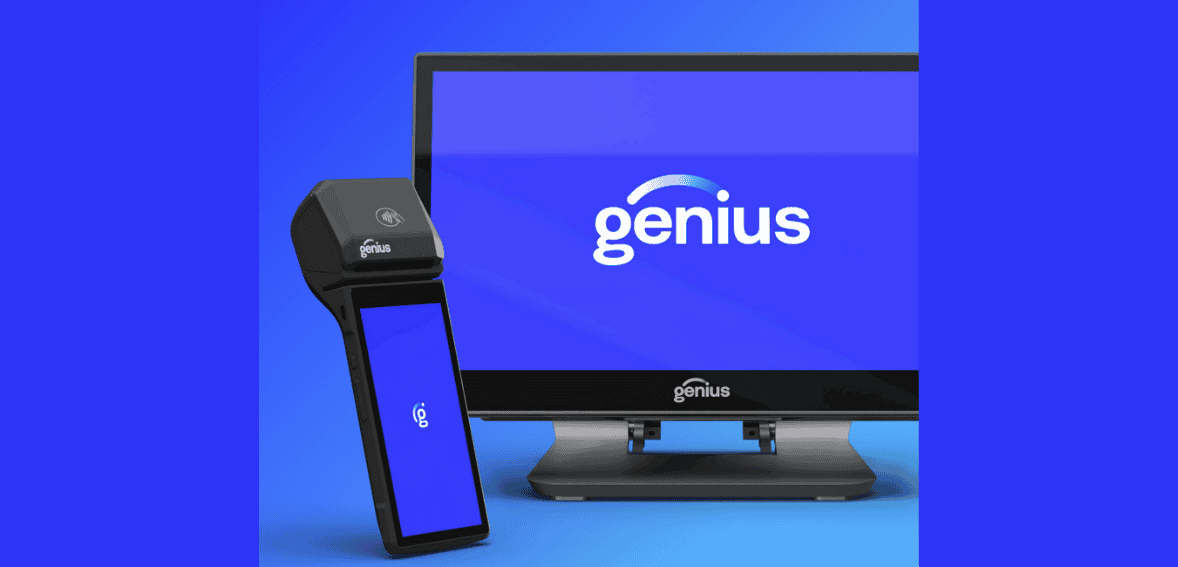
Global Payments, a leader in payment technology and software, has launched Genius POS, a powerful new POS command centre designed to transform business operations.
With Genius, Global Payments is doubling down on its mission to streamline and supercharge its ecosystem, bringing together its suite of POS products into one unified, fully configurable platform. This bold move positions the company at the forefront of commerce enablement, offering businesses a robust, all-in-one solution packed with advanced features.
Global Payments delivers a frictionless, future-ready experience for its customers by consolidating its offerings under a single POS platform. This not only enhances operational efficiency but also drives growth and reinforces its brand as an innovation powerhouse in the payments industry.
Key Takeaways
Global Payments has introduced Genius, a single, fully integrated POS platform that consolidates over a dozen tools into one scalable command center.
Genius debuts with restaurant-focused features, with retail and enterprise versions following across North America and Europe by the end of 2025.
Built on a shared code base with in-house hardware, Genius enables faster updates, tight integration, and country-specific customization without complexity.
As part of a broader corporate reset including major acquisitions and divestitures, Genius positions Global Payments to compete aggressively in a crowded, innovation-driven POS market.
Global Payments Launches Unified Platform ‘Genius POS’ to Streamline Operations and Regain Market Confidence
Global Payments Inc. announced the public launch of its Genius point-of-sale platform on May 16, 2025, positioning the product as a cornerstone in its effort to streamline operations after several years of bolt-on development and acquisitions. The company described Genius as a “command center” that melds more than a dozen existing payment and commerce tools into one code base, supported by new hardware that can run either as a countertop terminal, a mobile unit, or an all-in-one kiosk. Executives said the move should give merchants a single point of update for features, compliance patches, and software improvements, reducing the time and money lost to platform swaps or fragmented integrations.
Genius unites inventory, checkout, loyalty, marketing, invoicing, real-time reporting, and analytics in a layout the firm calls highly configurable but deliberately simple. It shares an application programming interface across its modules, letting independent software vendors hook in without rewriting code for separate restaurant and retail versions. Hardware is produced in-house; that decision, Global Payments argues, allows spec changes such as adding cameras or extra memory without waiting on a third-party vendor roadmap. The platform’s software layer runs the same regardless of form factor, which the company believes will shorten testing cycles and make regulatory updates less disruptive for merchants.
The first vertical rollout is Genius for Restaurants, shown to operators during the National Restaurant Association show in Chicago and released in the United States and Canada on May 17. That edition handles table management, wait-list and reservation flow, tip adjustments, and menu changes on the fly, along with tableside card or digital-wallet acceptance. The next in line is Genius for Retail, slated for U.S. release in June and international expansion to Canada, Germany, Austria, and the Czech Republic soon after. An enterprise build that targets large quick-service chains, stadiums, and other high-volume venues is scheduled for late 2025.
Global Payments argues that the vertical approach lets it respect country-specific rules, such as fiscal receipt mandates in Germany or age-verification checks in regulated retail, without duplicating its core. The company also points to growth segments such as higher education, healthcare, and age-restricted stores, indicating that Genius can be localized to meet sector requirements while keeping feature parity across markets. Management claims that rolling out in new countries will now be measured in weeks rather than quarters because the shared code base needs only targeted compliance layers instead of full rewrites.
Cameron Bready, CEO of Global Payments, stated that launching a unified, upgraded point-of-sale platform allows customers to access their complete suite of features and commerce solutions. He emphasized that this move streamlines the customer experience, simplifies operations, and strengthens the company’s brand presence in the marketplace.
Bob Cortopassi, president and chief operating officer of Global Payments, remarked that Genius strengthens the company’s role as a premier technology partner for businesses navigating today’s fast-changing market. He noted that the new point-of-sale platform boosts the value delivered to customers by offering a unified, scalable, and robust suite of POS technologies—one that will continue to evolve and expand over time.
Those comments by Cortopassi underline a broader effort to rebuild investor confidence after the stock lost roughly half its value in the last five years despite revenue doubling to more than $10 billion.
The timing of Genius intersects with a strategic reshuffle that includes the pending $22.7 billion acquisition of Worldpay and the $13.5 billion divestiture of Global Payments’ issuer processing arm. Management maintains that paring away non-core units and adding Worldpay’s merchant base should widen distribution for Genius, give the combined entity stronger negotiating power on hardware components, and simplify the corporate structure that analysts have criticized as unwieldy.
Competition in the small- and medium-sized merchant space is intense. Fiserv’s Clover, Block’s Square, Toast’s restaurant-first model, and Stripe’s terminal API all bundle payments with business software, while PayPal continues to add in-store features for omnichannel sellers. Analysts quoted by American Banker argue that the race is not only to pack more capabilities into a single system but also to keep it from becoming bloated. Don Apgar of Javelin Strategy & Research warned that an all-in-one suite can grow unwieldy if each new feature lacks tight integration. Global Payments counters that by owning both software and hardware, it can push firmware updates and security patches on a predictable calendar, avoiding the fractured timelines common to multivendor builds.
Early merchant reaction will hinge on performance metrics—transaction latency, uptime, and the ease of remote updates—as well as pricing. Global Payments has not released rate cards but signaled that Genius will run on a subscription model that folds hardware rental, software license, and support into one monthly figure. That structure is familiar to restaurants using Toast, but the company believes its wider geographic reach and multisegment lineup could pull in retailers and service providers that have so far avoided single-purpose offers.
Independent observers have flagged two operational tests ahead. First, restaurant operators will judge whether the integrated wait-list and loyalty modules work as promised during peak service times; early adopters often cite real-time sync glitches as a reason for abandoning past POS migrations. Second, the midsummer retail release must show that inventory, bar-code scanning, and returns can run on the same core without forcing merchants to add costly plug-ins. Success in both scenarios would support Global Payments’ claim that common architecture can handle divergent workflows without a performance hit.
Longer term, Global Payments hints at using the platform for computer-vision checkout, softPOS acceptance on consumer devices, and embedded financing tools. Because Genius controls the user interface, the firm can toggle new payment methods, such as local wallets or account-to-account transfers, by remote update. That flexibility is important as regulators in Europe, India, and Brazil push real-time rails that bypass traditional card networks. Merchants want to add those options without a separate terminal; Global Payments is betting that Genius can turn regulatory churn into a selling point rather than a cost center.
Investors will watch whether Genius improves margin trends. Consolidating five major POS lines into one should reduce maintenance expenses, while larger purchase orders for uniform hardware could lower bill-of-materials costs. Management has talked about migrating more than half of its merchant base to Genius within three years, a target that would retire legacy systems and increase recurring revenue from software subscriptions. Analysts remain cautious, noting that even modest delays could extend exactly the cash-burning period that the restructuring is meant to shorten.
For merchants and industry watchers alike, the Genius launch serves as a real-time test of Global Payments’ turnaround thesis: that a cleaner product stack, paired with sharper geographic focus, can revive growth and deliver the predictable earnings the market now demands. If the platform meets its release schedule and performs under scale, it could shift the competitive balance in point-of-sale technology, validating the company’s larger bet on unified commerce infrastructure. Failure would reinforce skeptics who argue that buying and merging businesses is easier than welding their disparate technologies into one offering. The coming months—starting with restaurant deployments already underway—should reveal whose view is closer to the mark.
Global Payments Inc. (NYSE: GPN) is an American multinational financial technology company specializing in payment processing software and services for merchants, issuers, and consumers worldwide. Headquartered at the Three Alliance Center in Atlanta, Georgia, the firm was founded in 2000 as a subsidiary of National Data Corporation and spun off as an independent, publicly-traded company in 2001. Under the leadership of President and CEO Cameron M. Bready, Global Payments delivers solutions for credit, debit, digital, and contactless transactions across brick-and-mortar, e-commerce, and omnichannel environments—combining global reach with local support to serve businesses of all sizes.
As of fiscal year 2024, Global Payments reported GAAP revenues of $10.1 billion and net income of $1.57 billion, processing more than 50 billion transactions annually for over 3.5 million merchants and 1,300 financial institutions across more than 100 countries. The company employs approximately 27,000 people worldwide and operates key subsidiaries including TSYS and Heartland Payment Systems. In line with its strategy to sharpen focus on core merchant commerce solutions, Global Payments agreed in April 2025 to acquire Worldpay in a $22 billion deal, while also divesting its Heartland Payroll Solutions business to Acrisure for $1.1 billion in May 2025 to streamline operations and return capital to shareholders.
Conclusion
The launch of Genius marks a pivotal step in Global Payments’ plan to simplify its product offerings, reduce operational complexity, and sharpen its competitive edge in the POS market. By unifying software and hardware under a single platform, the company aims to improve merchant efficiency while setting a foundation for faster updates, broader international reach, and more consistent performance across sectors.
As the rollout continues through 2025, the platform’s success will depend on how well it handles diverse merchant needs without sacrificing stability or integration. For Global Payments, Genius is more than a product—it’s a litmus test for its broader restructuring strategy and a chance to prove it can grow through cohesion, not just acquisition.
Artificial Intelligence (AI) is revolutionizing digital payment systems, reshaping the industry amid rapid technological advancements. By 2028, global investments in Agentic AI are projected to reach $632 billion, with financial services expected to capture the largest share, around 20%. From enhancing fraud detection capabilities to streamlining transaction efficiency, AI is fundamentally transforming how payments are processed.
In this blog, we’ll explore AI’s significant impact on the payment industry, explore recent breakthroughs, and anticipate future developments.
What Is AI in Payments?
AI in payments refers to the use of artificial intelligence and machine learning algorithms to optimize and secure every phase of the transaction lifecycle. Rather than relying on static, rule-based checks, AI-driven systems ingest and analyze vast amounts of payment data—transaction histories, device fingerprints, behavioral biometrics—and continuously refine their models to detect anomalies, flag fraud, and automate routine processes like reconciliation and chargebacks. It not only accelerates transaction processing and reduces operational overhead but also improves accuracy by learning emerging patterns and threats in real time.
Beyond fraud prevention, AI in payments enables personalized consumer experiences and dynamic transaction routing. Large transaction models (LTMs), for instance, can assign risk scores within milliseconds by evaluating factors such as past behaviors and contextual signals, allowing processors like Mastercard’s Decision Intelligence to vet up to 160 billion transactions annually with sub-50 ms latency. Plus, AI-driven smart routing solutions select the optimal payment gateway or installment option, such as Buy Now, Pay Later plans, based on predictive success probabilities, boosting approval rates and customer satisfaction while shielding merchants from credit and fraud exposure.
What Are the Standard AI Tools and Technologies Used in the Payments Industry?
Machine Learning
Machine learning underpins many payment-industry innovations, from real-time fraud detection to customer segmentation and predictive analytics. By continuously analyzing transaction patterns—such as purchase amounts, locations, and device fingerprints—ML models can flag anomalies within milliseconds, greatly reducing fraud losses and false positives.
Beyond security, these algorithms cluster users by spending behavior to tailor marketing campaigns and forecast spending trends, helping merchants optimize inventory and cash-flow management.
Graph Analytics and Network Detection
By treating transactions and accounts as nodes and edges in a graph, AI systems can uncover complex fraud rings and collusion schemes that rule-based tools miss. Graph neural networks (GNNs) learn patterns of legitimate versus fraudulent clusters, spotting small, coordinated groups of accounts rapidly cycling funds or testing stolen cards.
This network-aware approach boosts fraud catch rates, especially for “mule” accounts and synthetic identities that slip past individual-transaction checks.
Natural Language Processing (NLP)
NLP empowers conversational and text-based payment experiences. Voice-enabled transactions allow users to initiate and confirm payments hands-free, leveraging speech-to-text and intent-recognition models to interpret commands accurately.
Chatbots staffed by NLP pipelines handle customer inquiries, guide users through refunds or disputes, and even upsell financing options—all with 24/7 availability. Sentiment-analysis tools then mine customer feedback (in reviews or social media) to surface service issues or gauge satisfaction, informing product improvements and compliance efforts.
Robotic Process Automation (RPA) with Cognitive Enhancements
RPA bots have long handled repetitive back-office tasks (reconciliation, invoicing, compliance reporting).
When combined with AI, particularly computer vision and NLP, they can also read unstructured documents (PDF statements, emails) to extract payment data, classify exceptions, and even draft responses for payment disputes. These “cognitive RPA” workflows reduce manual effort, speed up settlement cycles, and cut operational costs.
Biometric Authentication
Biometric methods—facial recognition, fingerprint scanning, and voice print verification—add robust, user-friendly security layers to digital payments. Facial and iris-scan systems cross-reference live camera data against encrypted templates, thwarting presentation attacks and account takeovers.
Fingerprint sensors built into mobile devices offer instant unlocks for wallets and apps, while voice biometrics analyze speech patterns to confirm identity during call-center or phone-based transactions, reducing reliance on PINs or passwords.
Blockchain
Blockchain’s decentralized ledger ensures immutability and transparency for cross-border and high-value transactions. Each payment is encrypted and linked to prior entries, making retroactive tampering virtually impossible and simplifying audit trails.
Smart contracts—self-executing code on blockchain networks—automate escrow, settlements, and compliance checks: when predefined conditions (e.g., delivery confirmation) are met, funds release instantly without intermediaries, reducing settlement times from days to minutes.
Data Analytics
Advanced analytics teams mine terabytes of transaction and customer data to uncover patterns that drive strategic decisions. Clustering and regression techniques identify rising product categories or regions with high fraud risk, enabling targeted interventions.
Personalization engines then use these insights to recommend payment options (e.g., 3-installment plans versus pay-later offers) tailored to individual credit profiles. Meanwhile, process-mining tools detect bottlenecks in reconciliation workflows, pinpointing steps that cause settlement delays and suggesting automation opportunities.
Generative AI
Generative models—such as GANs and VAEs—are increasingly used to craft personalized marketing messages, dynamic UI elements, and even synthetic transaction data for stress-testing fraud systems.
By generating realistic customer-service dialogues, these models train chatbots to respond with greater contextual awareness. In marketing, they produce customized emails and in-app notifications that adapt tone and content based on predicted user preferences, boosting engagement and conversion rates.
To leverage insights without compromising user privacy, payment firms are adopting federated learning, which trains shared models across distributed data silos (e.g., multiple banks) without exchanging raw transaction records.
Homomorphic encryption and differential privacy techniques further ensure that sensitive details never leave the source system. This collaborative AI enables more robust fraud models and personalization engines while staying compliant with global data-protection regulations.
5+ Ways AI Is Transforming Payments in 2025
1. Agentic AI Transforming Payment Operations
Agentic AI systems are reshaping payment operations by automating specialized tasks with minimal human involvement, boosting efficiency and accuracy. Unlike generative AI, which focuses on creating content based on prompts, agentic AI is designed for autonomous decision-making and task execution. This makes it particularly valuable for streamlining complex payment processes.
One key application of agentic AI in payment operations is autonomous task execution. For instance, agentic AI can independently analyze transaction details, timestamps, and fraud detection patterns in chargeback dispute management. It can then compile relevant evidence to either support or challenge the dispute and generate a resolution recommendation for human review. This level of automation speeds up dispute resolution, reduces operational costs, and minimizes human error, ultimately improving customer satisfaction.
Agentic AI also plays a major role in fraud detection and risk management. By continuously learning from new data patterns, it adapts to evolving fraudulent tactics. Its real-time monitoring capabilities allow it to detect suspicious transaction anomalies as they occur, while predictive analytics help forecast potential fraud based on historical data and emerging trends. By handling these tasks autonomously, agentic AI reduces the workload on human analysts and strengthens payment system security.
In payment routing and processing, agentic AI optimizes transaction success rates by making intelligent routing decisions. For example, AI-powered smart routing systems can dynamically select the most efficient payment gateway based on real-time performance data. Through adaptive learning, they refine routing strategies by analyzing past transaction outcomes, leading to a 4–6% improvement in success rates across various payment methods.
Finally, agentic AI streamlines compliance and regulatory reporting by automating data collection and monitoring activities. It can gather information from multiple sources for compliance reports and conduct real-time audits to ensure ongoing adherence to regulations. This reduces the risk of non-compliance and associated penalties while lightening the workload for compliance teams.
2. AI-Optimized Real-Time Payments and Embedded Finance
FedNow, the Federal Reserve’s instant‐payment service launched on July 20, 2023, has rapidly onboarded over 1,000 financial institutions by 2025 on its ISO 20022-based rails, leveraging standardized PACS.008 credit-transfer and PACS.009 liquidity-management messages to carry richer, structured data payloads.
Payment processors and banks are now deploying AI-powered pipelines that ingest these live transaction feeds and apply ensemble machine-learning models alongside graph analytics techniques. In practice, such systems flag anomalous or potentially fraudulent transactions in under 300 milliseconds, forecast upcoming liquidity requirements by analyzing flow trends, dynamically batch and route payments through optimal corridors to minimize fees, and automatically reconcile settlements within milliseconds. Crucially, these AI engines continuously retrain on performance telemetry, such as gateway latency, success rates, and chargebacks, to refine routing logic and anomaly-detection thresholds in real time.
At the same time, “agentic commerce” is embedding finance directly into user interfaces, collapsing the gap between discovery and payment. For example, Perplexity AI’s summer-2025 rollout will enable U.S. users to execute bookings, ticket purchases, or retail orders right within the AI chat interface, seamlessly completing transactions via PayPal or Venmo behind the scenes through simple account linking. By eliminating passwords and shrinking checkout to a single query or click, this integration taps PayPal’s 430 million-plus account base and exemplifies how AI agents can both guide and transact on behalf of consumers, extending frictionless finance into every conversational touchpoint.
3. AI Enhancing Fraud Detection and Prevention in Payment Systems
AI transforms fraud detection and prevention in payment systems by offering faster and more accurate identification of suspicious activities. By analyzing vast datasets in real time, AI strengthens the security and efficiency of financial transactions, helping financial institutions stay ahead of increasingly sophisticated fraud tactics.
AI relies on machine learning algorithms to identify patterns and detect anomalies that may indicate fraud. Unlike traditional rule-based systems, AI can analyze large volumes of transaction data in real time, allowing financial institutions to spot and block fraudulent activities more effectively. This real-time monitoring reduces the window for potential losses and improves overall security.
Leading financial institutions are leveraging AI to enhance their fraud detection capabilities. For instance, in 2024, Mastercard processed and monitored over 125 billion payment transactions using AI, enabling it to protect its global user base with greater precision. Similarly, Visa has made significant investments in AI-powered fraud detection. By analyzing transaction patterns and reducing false positives, Visa’s AI systems offer more accurate fraud prevention while minimizing unnecessary transaction disruptions, resulting in a smoother customer experience.
AI is also transforming the management of transaction disputes. In 2024, Salesforce introduced AI-powered tools to help banks streamline dispute resolution processes. These capabilities include generative AI for customer communication and automated workflows for faster coordination with merchants. Similarly, Quavo’s AI-driven dispute management platform, QFD®, allows financial institutions to resolve disputes more efficiently. The platform reduces errors, accelerates processing times, and improves satisfaction for both customers and employees.
Consumers increasingly expect financial institutions to adopt AI in fraud prevention. A recent study revealed that 77% of consumers expect their banks to use AI to combat fraud, highlighting the growing demand for advanced technology to maintain trust and security in financial services.
4. AI-Driven Personalization in Financial Payments
AI is transforming the financial sector by enabling hyper-personalized payment solutions that cater to individual customer needs and preferences. This shift goes beyond generic services, offering tailored experiences that enhance customer satisfaction and loyalty. Initially, AI’s integration into financial services focused on improving operational efficiency and speeding up market deployment. However, the focus has shifted toward enhancing user experiences through personalization. By analyzing large volumes of transaction data, AI can identify individual spending habits, preferences, and financial behaviors, allowing financial institutions to offer customized services.
In practice, AI powers several personalized payment applications. For instance, banks and financial platforms use AI to recommend financial products that align with individual goals and behaviors. The Bank of Ireland, aiming to become the “Netflix of Banking,” uses AI and data science to suggest relevant products and services based on customers’ life events and needs. Similarly, AI-driven financial management tools provide users with insights into their spending patterns, assist with budgeting, and support financial planning. Wells Fargo’s LifeSync, for example, allows customers to set and track financial goals in real time, offering a tailored financial management experience.
AI also enhances rewards and loyalty programs by analyzing purchasing behaviors. This enables financial institutions to create personalized offers and incentives that resonate with individual spending patterns, boosting customer engagement. Additionally, adaptive payment options are becoming more common. Financial platforms can assess a user’s financial situation and recommend personalized payment plans, such as splitting large purchases into manageable installments or suggesting alternative financing based on the user’s credit profile and spending history.
AI-powered financial assistants further demonstrate the potential of hyper-personalization. Chatbots, such as Cleo AI, provide personalized financial advice, budgeting tips, spending insights, and even humorous nudges to help users manage their finances. These assistants deliver tailored recommendations that align with users’ financial goals by analyzing individual transaction data.
Despite the benefits, AI-driven personalization also presents challenges. Handling sensitive financial data requires strict security measures to maintain customer trust and comply with regulations. Algorithmic bias is another concern, as it can lead to unfair treatment of certain groups if not adequately addressed. Transparency is also essential—financial institutions must clearly explain how customer data is used to avoid perceptions of privacy intrusion.
5. RegTech Automation and Autonomous Payment Agents
In the RegTech arena, AI-driven compliance platforms are transforming how financial institutions stay abreast of and react to constantly evolving regulations. Solutions like 4CRisk.ai leverage advanced natural language processing (NLP) to ingest and parse newly published AML, KYC, and sanctions texts, mapping obligations directly to internal controls and automatically updating workflows or flagging exceptions for review.
Similarly, AI for compliance tools can analyze unstructured data—legal opinions, regulatory guidance, and policy documents—to ensure that every policy change triggers the appropriate system adjustments without manual intervention, dramatically reducing the risk of non-compliance penalties and freeing compliance teams to focus on strategic oversight.
Meanwhile, major payment networks are piloting autonomous “payment agents” that not only advise users but complete transactions on their behalf within pre-set budgets and preferences. Visa’s new Intelligent Commerce platform—developed in partnership with Microsoft, OpenAI, Anthropic, IBM, Mistral, Perplexity, Samsung, and Stripe—lets AI agents autonomously handle everything from product discovery to booking travel or ordering groceries, all while enforcing spending limits and ensuring secure payment settlement.
By embedding these agents into chat and voice interfaces, the line between interaction and payment blurs, enabling consumers to execute complex purchases with a single click or command. Pilot projects launching next year aim to shift e-commerce toward fully agent-driven checkout experiences, reducing abandonment rates and ushering in a new era of conversational, frictionless commerce.
6. AI to Transform Cross-Border Payments
AI is transforming cross-border payments by improving exchange rates, lowering transaction fees, and boosting overall efficiency. By analyzing large volumes of real-time market data, AI makes international transactions faster and more cost-effective.
One key application is AI-driven exchange rate optimization. AI algorithms process vast amounts of market information, including currency trends and economic indicators, to accurately predict exchange rate movements. This allows businesses and individuals to time their currency conversions strategically, protecting profit margins and reducing costs. For example, AI-powered tools can uncover market insights that human traders might miss, providing a competitive advantage by identifying emerging trends.
AI also plays a role in Dynamic Currency Conversion (DCC), which enables customers to pay in their home currency at the point of sale. By continuously analyzing exchange rates, AI ensures transparency and reduces markup fees, which helps build customer trust and lowers cart abandonment rates. However, the effectiveness of DCC depends on the AI model’s ability to understand regional buying behaviors and offer relevant currency options.
In addition, AI optimizes batch processing and counterparty matching to reduce costs. It can group smaller transactions bound for the same region, negotiating bulk fees with liquidity providers, which lowers processing expenses. AI also identifies banks or financial institutions with the lowest intermediary fees for specific corridors, helping businesses avoid unnecessary overpayments.
Regulatory compliance is another area where AI proves valuable. As cross-border payments must adhere to varying and constantly evolving regulations, AI automates the monitoring and analysis of international requirements. It scans regulatory updates in real time and adjusts transaction processes accordingly, lowering the risk of non-compliance and avoiding potential fines.
AI also enhances security by detecting fraud and cyber threats in real time. By monitoring transactions across multiple nodes, AI algorithms can proactively identify suspicious activities, reducing fraud risks. Additionally, decentralized AI systems minimize the chance of single points of failure, making the entire network more resilient against potential attacks.
A notable case study highlighting AI’s impact is Wise’s integration into Japan’s bank payment clearing network, Zengin. As the first foreign company with direct access, Wise bypassed intermediary banks, significantly reducing fees and processing times for cross-border payments. This example demonstrates how AI, combined with strategic partnerships, can greatly enhance the efficiency and affordability of international transactions.
AI is transforming cross-border payments by improving exchange rates, lowering transaction fees, and boosting efficiency. By analyzing large volumes of real-time market data, AI makes international transactions faster and more cost-effective.
One key application is AI-driven exchange rate optimization. AI algorithms process vast amounts of market information, including currency trends and economic indicators, to accurately predict exchange rate movements. This allows businesses and individuals to time their currency conversions strategically, protecting profit margins and reducing costs. For example, AI-powered tools can uncover market insights that human traders might miss, providing a competitive advantage by identifying emerging trends.
AI also plays a role in Dynamic Currency Conversion (DCC), which enables customers to pay in their home currency at the point of sale. By continuously analyzing exchange rates, AI ensures transparency and reduces markup fees, which helps build customer trust and lowers cart abandonment rates. However, the effectiveness of DCC depends on the AI model’s ability to understand regional buying behaviors and offer relevant currency options.
In addition, AI optimizes batch processing and counterparty matching to reduce costs. It can group smaller transactions bound for the same region, negotiating bulk fees with liquidity providers, which lowers processing expenses. AI also identifies banks or financial institutions with the lowest intermediary fees for specific corridors, helping businesses avoid unnecessary overpayments. For instance, a Canadian e-commerce company used AI-driven batch optimization to reduce its processing costs by 22% annually.
Regulatory compliance is another area where AI proves valuable. As cross-border payments must adhere to varying and constantly evolving regulations, AI automates the monitoring and analysis of international requirements. It scans regulatory updates in real-time and adjusts transaction processes accordingly, lowering non-compliance risk and avoiding potential fines.
AI also enhances security by detecting fraud and cyber threats in real-time. By monitoring transactions across multiple nodes, AI algorithms can proactively identify suspicious activities, reducing fraud risks. Additionally, decentralized AI systems minimize the chance of single points of failure, making the entire network more resilient against potential attacks.
A notable case study highlighting AI’s impact is Wise’s integration into Japan’s bank payment clearing network, Zengin. Wise was the first foreign company with direct access to bypass intermediary banks, significantly reducing fees and processing times for cross-border payments. This example demonstrates how AI, combined with strategic partnerships, can dramatically enhance the efficiency and affordability of international transactions.
Conclusion
As AI continues to permeate every layer of the payments stack—from fraud detection and real-time settlement to personalized offers and autonomous “agentic” workflows—it’s clear that the industry is entering a new era of intelligence and automation. No longer confined to static rule-sets, payment systems leverage continuous learning to anticipate risk, optimize liquidity, and even complete transactions on behalf of users. Embedded finance and ISO 20022-powered rails make settlement faster and more transparent, while RegTech automation keeps institutions compliant with ever-shifting global mandates. Together, these advances not only slash operational costs and error rates but also elevate the end-customer experience through seamless, context-aware touchpoints.
Looking ahead, the challenge for businesses will be to strike the right balance between innovation and responsibility. As federated and privacy-preserving learning unlock broader data collaborations, firms must also uphold stringent security and ethical standards to maintain consumer trust. For merchants, banks, and fintechs, the opportunity lies in thoughtfully integrating these AI tools—choosing the right models, data governance frameworks, and partnerships—to unlock new revenue streams, deepen customer loyalty, and prepare for a landscape where payments are no longer a back-office function but a smart, proactive partner in commerce.
Nowadays, dining out is not just about having a nice meal; it’s more about a social experience—connecting with loved ones, savoring extraordinary dishes crafted by skilled chefs, and boosting the local economy.
Restaurant owners kicked off 2025 with a strong sense of optimism. As expenses continue to climb and time is at a premium, businesses embrace fresh approaches to streamline operations, elevate the customer experience, and boost profitability.
This year, the restaurant industry is undergoing a significant transformation fueled by technological innovations. Artificial intelligence is at the forefront, and diner demands are changing. Integrating advanced systems and a shift towards sustainability are introducing new methods to improve efficiency and enhance the dining experience. Here’s a look at the leading trends redefining the restaurant industry in 2025.
Top 6 Restaurant Business Trends for 2026
Restaurants Are Increasingly Adopting Technology to Boost Efficiency
In 2025, restaurant owners increasingly leverage advanced technologies to address operational challenges and enhance efficiency. Despite a reported 60% of operators finding hiring easier this year compared to last, the demands of running a restaurant remain high. Many owners report dedicating more time to business operations than in previous years, focusing significantly on business strategy, management, and marketing.
To streamline these processes and reduce administrative burdens, restaurateurs are adopting various technological solutions:
Self-Service Kiosks: Implementing self-service kiosks allows customers to place orders and make payments independently, reducing wait times and minimizing order errors. This technology not only enhances the customer experience but also alleviates the workload on staff, allowing them to focus on other critical tasks.
AI-Powered Scheduling: Artificial intelligence assists in creating optimized staff schedules, ensuring adequate coverage during peak hours while preventing overstaffing during slower periods. Considering individual preferences and availability improves labor efficiency and enhances employee satisfaction.
All-in-One Management Systems: Comprehensive platforms integrate various aspects of restaurant operations, including inventory management, sales tracking, and customer relationship management. By consolidating these functions, owners gain real-time insights and can make data-driven decisions to boost profitability.
AI-Driven Customer Interactions: Restaurants are utilizing AI to manage reservations, answer customer inquiries, and provide personalized dining recommendations, thereby improving customer engagement and satisfaction.
Real-Time Data Analytics and IoT Integration: Modern systems provide actionable insights—from monitoring kitchen performance to tracking customer trends—allowing operators to make informed decisions that drive efficiency and profitability.
Staff Training for Digital Transition: As technology becomes more embedded in day-to-day operations, many restaurants are investing in training programs to ensure that both management and frontline staff can effectively leverage these tools.
Improving the Dining Experience with AI-Driven Personalization
In 2025, personalization is no longer a luxury – it’s an expectation. AI is revolutionizing how restaurants interact with their guests by turning raw customer data into bespoke experiences that truly resonate. Rather than relying on generic promotions, modern restaurants harness sophisticated algorithms that analyze everything from purchase history and dietary preferences to real-time contexts like weather and local events. Every recommendation, whether a tailored menu suggestion or a personalized loyalty offer, feels uniquely crafted for each diner.
AI-driven personalization is transforming the dining experience by offering hyper-targeted menu recommendations. Restaurants now dynamically use granular data to curate menus, tailoring suggestions based on diners’ past orders, current weather conditions, and local events. For instance, mobile ordering apps can recommend warm beverages on a chilly day or highlight popular dishes during nearby events. Companies like Starbucks have successfully leveraged this technology, increasing average check sizes and boosting customer satisfaction.
Loyalty programs have also become more effective with AI integration. Instead of offering generic rewards, restaurants can deliver personalized promotions, such as discounts on a customer’s favorite drink or bonus points for recurring orders. These customized offers foster a stronger emotional connection, encouraging repeat visits and enhancing long-term brand loyalty.
AI further optimizes customer engagement across multiple channels. Whether through in-app push notifications, voice assistants at drive-thrus, or interactive digital kiosks, AI ensures a consistent and personalized experience. By synchronizing data from various touchpoints, restaurants can anticipate guest needs, reduce friction, and improve overall satisfaction.
Moreover, AI enables real-time adjustments for maximum impact. It continuously refines its recommendations based on emerging trends and customer behavior. This flexibility allows restaurants to dynamically adjust promotions, ensuring the right message reaches the right customer at the right moment. For example, they can offer flash sales during slow periods or promote trending dishes during peak hours, driving sales and customer engagement.
Sustainability on the Menu Is No Longer an Option – It’s a Must
Sustainability significantly influences modern dining experiences, with consumers increasingly prioritizing eco-friendly practices. Over 70% of diners will pay more for sustainably produced food. For restaurant owners, adopting sustainable practices is an ethical decision and an innovative business strategy that can enhance customer loyalty and profitability.
One key aspect of sustainable dining is local sourcing and community engagement. By partnering with local farms and artisanal producers, restaurants can reduce food miles, cut carbon emissions, and offer fresher, more flavorful ingredients. This practice also strengthens the local economy and creates a meaningful narrative that resonates with diners, transforming each meal into a celebration of community and craftsmanship.
Innovative waste management and upcycling are also becoming essential sustainability strategies. Advanced inventory management systems and first-in, first-out (FIFO) storage methods help restaurants minimize spoilage. Emerging technologies, such as smart sensors that monitor perishable items in real-time, further reduce waste. Some restaurants are even turning food scraps into new ingredients or converting them into energy, generating additional revenue while reducing their environmental impact. Every dollar spent on cutting food waste can yield up to $8 in savings.
Another impactful step is the adoption of eco-friendly packaging and circular solutions. Shifting to biodegradable or reusable takeout containers reduces waste and reinforces a restaurant’s commitment to sustainability. As consumers become more eco-conscious, packaging made from natural materials like seaweed or recycled fibers can help restaurants stand out. This shift lessens the environmental footprint and enhances the brand’s reputation.
Finally, integrating sustainability into the overall brand experience is becoming a competitive advantage. Restaurants that communicate their eco-friendly efforts—whether through menu storytelling, social media, or on-site displays—build trust and transparency with their customers. Highlighting initiatives like local sourcing, energy-efficient kitchens, and waste reduction programs builds trust and loyalty, transforming sustainability into a unique selling proposition that benefits your customers and your bottom line.
Autonomous Delivery and Virtual Brands Are Reshaping Food Service
The food delivery service is undergoing a significant shift with the introduction of autonomous technologies and the growing influence of virtual brands. These innovations are improving efficiency and transforming the customer experience.
Autonomous delivery vehicles, including self-driving cars, drones, and sidewalk robots, are becoming more common. Companies like Uber are testing self-driving cars for food delivery, while significant chains like Wendy’s are experimenting with drone technology to reduce service times.
These systems offer significant financial benefits by lowering labor costs and minimizing human error. Many autonomous vehicles also use electric or low-emission technology, helping reduce the carbon footprint of delivery operations. Equipped with AI-powered route optimization and real-time tracking, these delivery methods can quickly adapt to changing traffic conditions, weather, and demand, ensuring fast, reliable service that meets modern expectations for contactless convenience.
Alongside autonomous delivery, virtual brands are becoming more prominent. These restaurants operate exclusively online, using ghost kitchens rather than physical dine-in locations. This model reduces overhead costs and allows businesses to experiment with menus, cater to specific dietary trends, and adapt to regional preferences.
With the help of AI and data analytics, virtual brands can fine-tune their offerings, anticipate customer cravings, and quickly adjust to shifting market trends. This flexibility enables them to test new concepts rapidly while offering personalized, high-quality dining experiences.
Loyalty Programs Is the Engine Behind Restaurant Growth in 2025
Loyalty programs have become a strategic necessity for restaurants rather than just a bonus. Survey data indicate that 83% of restaurant leaders with active loyalty programs report larger orders and repeat visits, while 71% of operators plan to increase their investments in rewards initiatives. This trend highlights the critical role customer engagement plays in driving revenue. Modern loyalty programs rely on advanced analytics and integrated POS tools to analyze sales patterns and understand customer preferences.
By examining past purchasing behavior, restaurants can offer exclusive deals, discounts, and members-only perks that resonate with their community, boosting visit frequency and enhancing the overall dining experience. Additionally, today’s successful programs operate across multiple channels—whether through mobile apps, in-restaurant digital kiosks, or online ordering platforms—enabling real-time rewards, instant notifications, and flexible adjustments to offers based on current trends and inventory levels, all of which keep customers engaged and orders flowing quickly.
Diversifying Revenue Streams Is Necessary to Remain Profitable
In 2025, restaurants are shifting their focus beyond traditional dining to create new revenue streams. Relying solely on food service is no longer enough, so many leaders are expanding into retail products and additional services as part of their growth strategy. Recent surveys reveal that 76% of restaurant executives believe that broadening their offerings can unlock significant new income, and more than half of diners have already bought off-menu items, from gourmet sauces to branded apparel.
Digital tools are equipping restaurant owners to manage multiple revenue channels easily. By establishing an online store, restaurants offer everything from signature sauces and spice blends to limited-edition merchandise. These platforms simplify inventory and sales tracking while providing real-time analytics that allows owners to adjust their offerings based on customer behavior.
Restaurants also experiment with virtual brands and ghost kitchens to create fresh business models. These agile setups let operators test new menus or exclusive collaborations in a low-risk environment, allowing them to explore niche concepts or regional specialties without the costs of a full-service location. In addition, creative partnerships are on the rise; establishments are hosting themed event nights, cooking classes, and pop-up tasting sessions that generate immediate sales while strengthening customer loyalty through memorable experiences beyond the dining room.
Conclusion
Technological advancements, changing consumer expectations, and a growing focus on sustainability are shaping the restaurant industry in 2025. From AI-driven personalization and streamlined operations to eco-friendly practices and autonomous delivery, restaurants adopt innovative strategies to remain competitive and profitable. Loyalty programs and diversified revenue streams also play a key role in driving customer retention and boosting overall growth.
As the industry evolves, restaurants prioritizing efficiency, adaptability, and customer-centric experiences will be best positioned for long-term success. By leveraging technology, embracing sustainable practices, and expanding their service models, they can meet the demands of modern diners while improving profitability and staying ahead of industry trends.
Restaurant business trends: one piece of running payments in a restaurant. The rest of our restaurant payment guides are in Restaurant Payment Resources.
Square is betting big on mobile-native consumers and small-business owners with the launch of its powerful new Square Handheld POS – a sleek, all-in-one point-of-sale device built for speed, simplicity, and control. Designed to feel as intuitive as a smartphone, the Square Handheld device, restaurants and retailers will be able to run their entire business operation – from payments to back-of-house functions – right from the palm of their hand.
Backed by Square’s new unified Point of Sale app, this device is more than just a payment terminal. It’s a full-scale business command center. Businesses can accept tap or dip payments, scan QR codes and barcodes, and even capture high-resolution product images with the built-in 16-megapixel camera to instantly update their item library.
Compact, connected, and completely versatile, the Square Handheld is built to streamline operations and elevate the way modern businesses work.
Key Takeaways
Square Handheld is a lightweight, portable device designed for restaurants and retailers, combining payment acceptance, barcode scanning, and high-resolution product imaging into a single tool.
The device runs Square’s new unified Point of Sale app, replacing four separate apps with one flexible system that supports various business types and can be adjusted on the fly.
Features like tableside ordering and digital receipts help businesses reduce labor bottlenecks and cut costs, including a reported 25% drop in paper-receipt expenses from early users.
Priced at $399 or $37 per month interest-free, Square Handheld undercuts rivals and is supported by a new twice-yearly “Square Releases” update cycle, aligning hardware and software improvements for ongoing innovation.
Square Handheld POS: A Compact, Powerful POS Designed for Restaurants and Retailers
On 13 May 2025, Square (the merchant-services arm of Block Inc.) quietly dropped a hardware bombshell: Square Handheld, a fully integrated point-of-sale (POS) computer that weighs just 11 oz, measures under an inch thick, and slips into an apron pocket. Square says the device is its “most powerful, portable POS ever,” built for restaurants and retailers that cannot afford checkout choke-points or inventory blind spots. The debut arrived as the opening act of “Square Releases,” a new twice-a-year cadence for shipping hardware and software in synchrony.
Square Handheld looks and feels like a ruggedised smartphone with its 6.2-inch Corning Gorilla Glass touchscreen, IP54 ingress protection against dust and splashes, and a chassis slim enough to ride in a jeans pocket yet sturdy enough to survive a double shift. Under the glass sits an all-day battery – Square’s lab tests show two complete service shifts on one charge. The 16-megapixel rear camera doubles as a documenter of new SKUs, while a laser barcode reader on the top edge speeds price checks and gift-card scans. At 11 oz the unit is lighter than a Toast Go 2 (≈18 oz) and markedly trimmer than a Clover Flex (1.13 lb).
Payments functionality is table-stakes in 2025, but Square squeezes its entire stack – tap, dip, and NFC wallet acceptance – into the handheld with no dongles required. That means sellers can start, split, and close checks at the table or in the store aisle, then send a digital receipt via SMS or email in seconds. The antenna array leverages the same encryption and tokenization services that protect transactions on Square Register, preserving compliance without extra certifications for merchants.
Hardware grabs headlines, yet the bigger strategic move is inside – Square’s unified Point of Sale app now ships pre-loaded on every Handheld unit. The single code-base consolidates what used to be four separate apps (Restaurants, Retail, Appointments, Invoices) into seven “modes” that can be toggled on the fly – Quick Service, Bar, Retail, and more.
Push-notification APIs warn staff when an order backs up; quick-settings tiles let managers change floor plans or item availability without diving through sub-menus. In effect, Square is turning each device into a context-aware node on a cloud POS fabric.
Thomas Templeton, Square’s hardware lead, suggests that on-device AI is planned for the future, such as automatically identifying unlabelled SKUs or recommending menu options based on the weather. The Snapdragon-level processor inside Handheld is reportedly more powerful than needed for current tasks, providing capacity to run AI models locally. This could reduce API response times and lower cellular data costs.
How Square Handheld Can Help Restaurants and Retailers Streamline Operations and Cut Costs?
Restaurants drove 50% of Square’s 2024 gross payment volume; they are also the vertical where labour shortages hit hardest. Tableside order-and-pay with Handheld compresses the order-to-fire cycle to seconds, while managers can flip a “Bar Mode” on busy nights to turn every server into a mobile tab station. Early pilot users such as La Mediterranee in Berkeley report a 25% drop in paper-receipt costs and the end of mid-shift charging rituals.
On shop floors, the same camera that photographs latte art can capture UPC-A, QR, or DataMatrix codes in low light, pushing updates straight to Square’s item catalogues. Garden-centre staff can check out customers at the greenhouse gate; apparel associates can start a sale on Handheld and finish at a staffed register if the shopper wants gift-wrapping. With Digital Receipts enabled by default, businesses can eliminate on-counter printers entirely – something not possible on Clover Flex, whose integrated printer adds bulk and cost.
The launch lands in a crowded field. Toast Go 2, released in 2023 and refreshed this spring, emphasises 24-hour battery life and deep kitchen-display integration, but it remains restaurant-only and requires a monthly SaaS plan that often tops $75. Clover Flex hits a broader SMB audience and packs a built-in printer, yet its $749 entry price and proprietary app store deter micro-merchants. Stripe’s Terminal S700 is slick, but it assumes the merchant already codes against the Stripe API. Square’s Handheld therefore, threads a gap: undercutting competitors on device cost, selling exclusively through first-party channels, and offering an à-la-carte software menu that scales from pop-ups to multi-unit enterprises.
Pricing, Financing, and the Accessory Upsell
Square undercut its two closest rivals on day one. Handheld lists at $399 or $37 per month for 12 months, versus Clover Flex at $749 or $40 over 36 months. There is no built-in receipt printer (a choice that shaves weight), but Square teamed with Belkin on a $39 silicone case line in seven colours – reminiscent of the strategy Apple used to build margin on iPhone accessories.
At $399, a café can deploy three Handhelds and a Wi-Fi mesh for less than the price of a single Clover Flex kit. Square’s flat 2.6% + $0.10 card-present fee matches its other hardware, simplifying forecasting. The only consumable is optional receipt paper if merchants pair Handhelds with countertop printers; digital-only shops eliminate that line item entirely. Financing at $37 per month is interest-free, a tactic Square has used since 2018 to accelerate the uptake of Square Terminal.
Operational Caveats and Potential Friction Points
Square Handheld is Wi-Fi-only; there is no LTE SKU at launch. Operators with spotty networks will need mesh extenders or fallback Registers.
The camera, while 16 MP, lacks optical image stabilisation, so UPC scans can fail in dim storerooms.
And bigger chains on Oracle or NCR Aloha stacks may balk at migrating because Handheld currently plugs only into Square’s own back office.
Hardware Drag on Gross Profit, Software Lift on ARPU
Hardware margins are thin – Square historically grosses single-digit percentage points on devices – but each deployed Handheld multiplies annualised revenue per unit (ARPU) via SaaS modules and incremental payment volume.
The company disclosed that restaurants and retail together already account for half of 2024 GPV; converting even 10% of that cohort to Handheld would put millions of devices in the field and raise service-based revenue far faster than Block’s Bitcoin-linked bets.
Square Releases: Why the Cadence Shift Matters?
Square historically dripped out features at random; “Square Releases” formalises a biannual versioning rhythm akin to Apple’s WWDC or Tesla’s OTA updates. Launching Handheld inside that umbrella signals that future hardware, perhaps a next-gen Register or self-order kiosk, will drop alongside major firmware pushes, ensuring that the physical and digital stacks evolve together. That matters for CTOs who need predictable change windows, and for investors tracking Block’s cap-ex cycles.
About Square
Square, founded in 2009 by Jack Dorsey and Jim McKelvey and headquartered in San Francisco, is a pioneering financial technology company whose mission is to empower businesses of all sizes with easy-to-use, affordable payment and commerce solutions. Its flagship offering, the Square Reader, revolutionized point-of-sale by turning smartphones and tablets into full-featured payment terminals. Building on that success, Square has developed a comprehensive suite of hardware and software products—including Square Stand, Square Terminal, Square Register, and the Square Point of Sale app—that seamlessly integrate payments, inventory management, invoicing, and analytics. Through the Square Developer Platform, third-party apps can tap into its APIs to extend functionality.
Since its IPO in 2015, Square has rapidly expanded both its product ecosystem and its global footprint, serving millions of sellers across the United States, Canada, Japan, Australia, and the U.K. Beyond core payment processing, Square has broadened its services to include Square Capital (business loans), Square Online (e-commerce storefronts), Square Appointments (booking and scheduling), and Square Payroll. By combining financial services, software tools, and powerful data insights, Square helps entrepreneurs streamline operations, deepen customer relationships, and grow revenue.
Conclusion
Square Handheld represents a significant step for Square in meeting the evolving needs of small businesses. By combining powerful hardware with a unified software platform, it offers restaurants and retailers a flexible, efficient tool to manage payments, inventory, and operations all in one device.
While some challenges remain, such as Wi-Fi dependency and integration limits with larger legacy systems, the Handheld’s competitive pricing and thoughtful design position it well against rivals. The introduction of a regular release cycle also suggests Square is committed to ongoing innovation, supporting merchants with timely updates and new features. Overall, Square Handheld aims to simplify daily workflows while providing room to grow alongside modern business demands.
Uber is now letting riders pay with cash, but only its most seasoned, top-rated drivers will get the green light to accept these trips. As Uber tests cash trips, when a verified rider books through the app, they’ll receive a clear cash notification signaling that this option is available.
This move comes as millions of Americans remain shut out of traditional banking. In 2023, nearly 19 million U.S. households — about 14% — were underbanked, according to a Federal Deposit Insurance Corporation report. For many, cash isn’t just a preference — it’s a necessity.
Key Takeaways
Uber launched cash payments in select U.S. cities to serve underbanked and unbanked riders—roughly 14% of U.S. households—who don’t have access to traditional banking or digital payment methods.
Originally tested in Cincinnati and San Antonio, the pilot was expanded in April 2025 to include Dallas, Orlando, and Fort Myers, signaling strong demand and early success.
Riders must complete identity verification, and only experienced, highly rated drivers can accept cash. Uber has restricted cash transactions between 11 pm and 6 am to reduce safety risks.
Beyond inclusion, Uber’s cash rollout supports its competitive positioning in markets where cash remains dominant, like India and parts of the UK, helping it regain market share from local players.
Uber Tests Cash Trips in U.S. Cities to Serve Riders Without Bank Access
In just over a decade, Uber has reshaped urban mobility by pioneering a cashless, app-driven ride-hailing model. Yet, this digital-first approach has inadvertently excluded millions of Americans who lack access to credit cards or bank accounts. To bridge this divide, Uber launched “cash trips” in March 2025, initially in Cincinnati and San Antonio, and has now expanded the pilot to five U.S. cities. This move underscores Uber’s commitment to making transportation accessible to everyone, regardless of payment preferences or financial inclusion status.
An estimated 19 million U.S. households—around 14%—were underbanked in 2023, relying heavily on cash for everyday transactions, according to the Federal Deposit Insurance Corporation. Meanwhile, Uber reports that roughly 15% of American households prefer or need alternatives to digital payments. By integrating cash payments, Uber aims to eliminate a key barrier to mobility for this significant segment, offering a lifeline to those traditionally underserved by fintech innovations.
An Uber spokesperson said the company believes transportation should open doors for everyone. But they recognize a simple truth: not everyone has a bank account or credit card, and many still rely on cash. That’s why Uber is piloting a new cash payment option, aiming to make rides more accessible for all while creating better earning opportunities for drivers.
What began on March 11, 2025, as a limited experiment in Cincinnati and San Antonio has rapidly evolved. On April 23, Uber tripled the scope of its cash-based pilot, adding Dallas, Orlando, and Fort Myers, Florida, to the list of participating markets. This expansion reflects strong early interest from both riders and drivers and signals Uber’s resolve to test the waters in diverse urban environments before committing to a nationwide rollout.
Cash trips mimic standard Uber rides but with key adjustments. Riders must first complete a verification process, including ID checks and a selfie, to qualify for cash payments. Once verified, the app flags cash—based trips, and drivers know in advance that the fare will be collected in physical currency. Drivers tap “Collect Payment” at trip end and enter the exact amount received, and Uber handles any discrepancies by crediting overpayments or debiting underpayments from the rider’s account.
Uber’s cash feature is opt-in for drivers and restricted to “experienced, highly rated” partners to mitigate risks. Drivers can also opt out entirely through their app preferences if they prefer to remain cashless. To address safety concerns, Uber recommends secure storage of collected cash, frequent deposits, and use of in-app safety tools, such as “Record My Ride” and 24/7 incident reporting. These measures aim to balance earning opportunities with driver well-being.
For underbanked and unbanked riders, cash trips dismantle a critical barrier to app-based mobility. No longer constrained by the absence of credit cards, users can access reliable transportation at the same speed and convenience as digital payments. Uber’s policy of crediting any overpaid amount to the rider’s Uber Cash balance and managing shortfalls directly through the app ensures financial accountability without leaving either party out of pocket.
Uber’s cash experiment is far from its first. The company accepts cash in markets such as Brazil and piloted cash payments in Hyderabad, India, back in 2015 to challenge local leader Ola, which then commanded roughly 80% of India’s organized cab market. More recently, Uber extended cash payments across most UK cities—excluding London—after successful trials in Birmingham, Leicester, Nottingham, and Stoke, aligning its UK operations with international practice.
In the UK, a Treasury Committee report stopped short of mandating cash acceptance but labeled the shift to card-only services a “wake-up call” for policymakers. Cash campaigner Ron Delnevo of the Payment Choice Alliance praised Uber’s move as evidence they “now believe in the future of cash in the UK”. The report also highlighted vulnerable groups, such as survivors of domestic abuse, who rely on cash to avoid digital tracking, a dependence described as “life and death” by Sam Smethers of Surviving Economic Abuse.
Handling cash introduces new operational complexities. Drivers worry about personal security when carrying notes and coins, and Uber prohibits cash transactions between 11 pm and 6 am to further reduce risk. Riders must be verified, and drivers do not provide change—overages are credited electronically. These constraints, along with the need to safeguard cash, may limit adoption rates among both drivers and passengers until trust is firmly established.
Uber’s cash rollout also represents a strategic counter to entrenched local competitors. In India, players like Ola built their dominance on cash payments long before digital wallets gained traction, capturing roughly 80% of ride-hailing volume in 2025. By offering cash trips, Uber hopes to win back market share in regions where digital adoption lags and secure its position in emerging economies.
Uber has yet to disclose how long the U.S. pilot will run or when additional cities might gain access to cash trips. The company emphasizes that it is “carefully monitoring how it’s going and gathering feedback from riders and drivers” before deciding on a broader deployment. Early indicators from rider satisfaction and driver earnings will likely shape whether cash becomes a permanent fixture of Uber’s payment options portfolio.
Uber Technologies, Inc., launched in March 2009 by Garrett Camp and Travis Kalanick, has grown into a global powerhouse in transportation and mobility. Headquartered in San Francisco, this publicly traded company now operates across 70 countries and 10,500 cities, linking more than 150 million active users each month with a network of 6 million drivers and couriers. From ride-hailing and food delivery to package drop-offs and freight logistics, Uber handles an average of 28 million trips every single day — and has completed over 47 billion trips since its service debut in 2010.
Following its initial public offering on May 10, 2019, on the New York Stock Exchange under the ticker UBER, the company has pursued growth and profitability, reporting US $43.98 billion in revenue, US $2.799 billion in operating income, and US $9.856 billion in net income for the 2024 fiscal year, with US $51.24 billion in assets, US $21.56 billion in equity, and 31,100 employees worldwide. In addition to its core ride-hailing service, Uber’s platform supports on-demand food delivery, courier services, and freight transport, and the company has committed to becoming a fully electric, zero-emission platform by 2040 as part of its long-term sustainability goals.
Conclusion
By reincorporating cash—the century-old bedrock of commerce—into its high-tech platform, Uber underscores a powerful lesson: true mobility requires inclusivity of all payment methods. As the cash trips pilot unfolds, it offers a compelling model for addressing digital inequality and expanding access to millions who have been sidelined by purely cashless ecosystems.
Whether this experiment blossoms into a global standard remains to be seen, but its potential to reshape the future of urban transportation is undeniable.
Costco-Affirm partnership to Launch Flexible Buy Now, Pay Later Option for Big-Ticket Online Purchases
Costco is making it easier to shop big and pay small, over time. The retail giant has partnered with Affirm to roll out a new Buy Now, Pay Later (BNPL) option for online purchases ranging from $500 to $17,500.
Unlike the familiar “pay-in-four” plans with zero interest, this new option comes with interest rates ranging from 10% to 36% APR. For example, a $500 purchase at a 20% APR over six months will come with interest, but also much more manageable monthly payments..
All payments are made through Affirm’s app or website, with the added convenience of setting up automatic payments so you never miss a due date. Costco’s move brings more purchasing power straight to your fingertips—on your terms.
Key Takeaways
Costco and Affirm have partnered to offer Buy Now, Pay Later (BNPL) financing for online purchases between $500 and $17,500. This lets members choose customized installment plans instead of paying upfront or using credit cards.
The plans come with interest rates ranging from 10% to 36% APR, based on the shopper’s credit profile. Payments can be spread over 3 to 36 months and are managed through Affirm’s app or website.
This move helps Costco boost online sales by making high-ticket items like appliances and furniture more affordable. The setup is integrated into Costco.com, keeping the checkout process familiar and easy to use.
While BNPL offers budgeting flexibility, it carries risks such as interest charges and potential credit impact from missed payments. Affirm does not charge late fees, but missed payments can still be reported to credit bureaus.
Costco-Affirm Partnership to Expand Flexible BNPL Payment Options for Online Shoppers
In early May 2025, leading fintech provider Affirm and global warehouse retailer Costco announced a landmark multi-year partnership to integrate a buy now, pay later (BNPL) option directly into Costco’s eCommerce platform. This partnership will let all Costco members defer payment on online purchases, choosing transparent, customized installment plans rather than relying on traditional credit cards.
The news, first confirmed by Affirm in a shareholder letter on May 8, 2025, marks a significant expansion of BNPL into the wholesale retail sector, reflecting broader shifts in consumer expectations around payment flexibility and eCommerce growth.
Buy now, pay later solutions have surged in popularity amid rising interest rates and inflationary pressures, providing consumers an alternative to revolving credit. As of late 2024, the U.S. The BNPL market was estimated at $175 billion, with 38 percent of American shoppers having used BNPL services, up from 24 percent the previous year. At the same time, Affirm itself has scaled rapidly: by March 31, 2025, the company reported 22 million active users and partnerships with over 358,000 merchants, underscoring the broad acceptance of installment-based payment models in the modern retail ecosystem.
Under the terms of the multi-year agreement announced on May 14, 2025, Affirm will serve as the exclusive pay-over-time provider for Costco.com in the United States. After a quick, real-time eligibility check at checkout, eligible members can choose from monthly payment plans through Affirm for orders between $500 and $17,500. Costco intends for this service to launch immediately, giving its online offerings a competitive edge in the eCommerce landscape.
Costco members shopping online simply add at least $500 of eligible items to their cart, then select “Affirm” as the payment method during checkout. Affirm conducts an instant eligibility assessment—based on a soft credit inquiry—to determine available plan options. Once approved, shoppers see a menu of installment schedules tailored to their order value, enabling them to choose the plan that best fits their budget. This seamless integration ensures that members remain within the familiar Costco.com interface throughout the process.
The new BNPL offering allows repayment over three to thirty-six months, with APRs ranging from 10 percent to 36 percent depending on the member’s credit profile and purchase amount. Unlike many financing products, Affirm imposes no hidden fees or late penalties, though missed payments may carry credit-reporting consequences. Members can manage installments via the Affirm app or website, and they have the option to set up automatic payment deductions to ensure timely repayment and avoid potential credit impacts.
For Costco, the partnership presents an opportunity to enhance customer loyalty and drive higher average order values (AOV). By offering interest-bearing installment plans, the retailer makes its large-ticket items, such as appliances, patio furniture, and electronics, more accessible, potentially reducing cart abandonment rates.
Pat Suh, Affirm’s Senior Vice President of Revenue, noted that as summer approaches, more consumers are turning to Affirm to get ready for the season, whether it’s purchasing outdoor entertaining essentials like a new barbecue or patio furniture, investing in a storage shed, or upgrading appliances. She highlighted that Costco members, in particular, understand the benefits of planning and buying in bulk. Affirm is excited to provide them with a transparent alternative to traditional credit, helping them manage larger purchases with confidence and without hidden fees.
Shoppers stand to gain greater flexibility in budgeting for significant purchases, spreading payments across pay periods rather than shouldering lump-sum costs. The transparency of Affirm’s pricing—displaying total repayment amounts and schedules up front—helps members better plan their finances. Additionally, with no late or hidden fees, consumers avoid unpredictable charges often associated with credit cards. The auto-pay feature further simplifies repayment, reducing the risk of missed installments and subsequent credit consequences.
Affirm’s collaboration with Costco reinforces its broader strategy of partnering with diverse merchants. Earlier this year, Affirm teamed up with airline-owned network UATP to provide BNPL for travel bookings and with fashion retailer Revolve Group to embed installment options at checkout. Beyond these verticals, Affirm counts eCommerce giants Amazon and Shopify, among others such as Apple, in its network of merchant partners, demonstrating the versatility and scalability of its payment platform. Meanwhile, competitors like Klarna, Afterpay, and PayPal’s Pay in 4 continue to vie for share in both digital and physical retail channels.
Despite the benefits, BNPL services have drawn scrutiny over consumer debt levels and regulatory oversight. An AP News investigation found rising consumer struggles to repay BNPL loans, with credit losses up 17 percent quarter over quarter at leading providers and concerns that financially vulnerable groups may overextend themselves. Moreover, many BNPL plans do not report on-time payments to credit bureaus, though late or defaulted installments often do, leading to “phantom debt” and potential credit score damage for users unaware of the implications.
Affirm Holdings, Inc. is an American financial services and technology company headquartered in San Francisco, California, founded in 2012 by Max Levchin, Nathan Gettings, Jeffrey Kaditz, and Alex Rampell, and publicly traded on the Nasdaq under the ticker symbol AFRM. Since its inception, Affirm’s mission has been to deliver honest financial products that improve lives—a guiding principle reflected in its transparent, fee-free lending solutions and commitment to consumer-friendly financing.
As of March 31, 2025, Affirm served over 22 million users and partnered with more than 358,000 merchants, processing approximately $28 billion in payments annually across the United States, Canada, and the United Kingdom. Its suite of products—including point-of-sale installment plans like “Pay in 4,” the Affirm Card debit solution, and the Affirm Money savings account—combined with strategic alliances with retailers such as Amazon, Walmart, Shopify, and Apple, and technology-driven underwriting powered by machine learning, has enabled Affirm to expand responsibly while minimizing borrower defaults.
Costco Wholesale Corporation (Nasdaq: COST) is an American multinational membership-only warehouse club operator headquartered in Issaquah, Washington. Founded on September 15, 1983, by James “Jim” Sinegal and Jeffrey H. Brotman in Seattle, Washington, the company pioneered a high-volume, low-cost retail model offering a curated selection of national and private-label goods to businesses and individual consumers.
Costco operated 890 membership warehouses as of September 1, 2024, spanning the United States, Mexico, Canada, Asia, Europe, and Oceania. In fiscal year 2024, Costco recorded net sales of approximately $250 billion—a 5% increase year-over-year—and net income of $7.36 billion, driven by strong bulk sales and membership fee revenue. Its global membership totaled 136.8 million in 2024, supported by approximately 333,000 employees across its operations.
Conclusion
Costco’s new partnership with Affirm adds a financing option that gives members more control over how they pay for large online purchases. By offering flexible installment plans and clear terms, the service makes it easier to budget without relying on traditional credit.
While BNPL comes with interest and some risk, the integration of this option into Costco’s checkout process reflects changing expectations in how consumers want to shop and pay. As both companies continue to grow, this move strengthens Costco’s eCommerce strategy and expands Affirm’s reach into the wholesale retail space.
Affirm, a leading payment company headquartered in London, has forged a powerful alliance with UATP—the global payment network backed by the world’s major airlines. This Affirm-UATP partnership puts Affirm’s flexible installment plans at the fingertips of UATP’s extensive network, spanning airlines, rail services, and travel agencies across the U.S., U.K., and Canada.
As demand for flexible payment solutions in travel surges, this collaboration gives UATP merchants a major edge, empowering their customers to break up travel expenses into manageable, transparent payments. No late fees. No hidden costs. Just simple, smart financing.
For UATP, this means more completed checkouts, higher conversions, and boosted revenue. For travelers, it builds trust, confidence, and loyalty, with crystal-clear pricing and quick, hassle-free eligibility checks. This isn’t just a payment option—it’s a game-changer for the travel industry.
Key Takeaways
Affirm’s pay-over-time installment plans are being integrated into UATP’s global payment network, allowing airlines, rail operators, and travel agencies to offer flexible financing directly at checkout.
Eligible customers can choose from personalized installment plans ranging from short-term, interest-free options to 36-month terms, with APRs starting at 0%. All plans include transparent pricing and no late fees.
The partnership gives travel brands a tool to increase bookings and raise average order values, especially as consumer demand softens. Affirm data shows that merchants offering financing typically see a 70% lift in order value and reduced cart abandonment.
By offering an alternative to traditional credit cards, Affirm and UATP aim to make travel more affordable and less stressful, especially for consumers looking to avoid revolving debt or high-interest charges.
Affirm-UATP Partnership to Bring Pay-Over-Time Financing to Global Travel Merchants
On May 1, 2025, Affirm (NASDAQ: AFRM) announced a strategic global partnership with the Universal Air Travel Plan (UATP), the payment network owned and operated by the world’s leading airlines.
This collaboration integrates Affirm’s flexible, transparent pay-over-time financing directly into UATP’s network, enabling thousands of travel merchants – including airlines, rail carriers, and travel agencies—to offer customers the option to finance travel expenses in installments. Affirm is a leading point-of-sale financing provider whose travel and ticketing business grew 40 percent year-over-year as of December 31, 2024, while UATP has long served as the premier payment network for airline-centric transactions worldwide.
With Affirm’s transparent financing model and UATP’s established global infrastructure, the partnership will modernize travel payments, enhance consumer affordability, and boost booking conversions amid ongoing market uncertainties.
Under the agreement, merchants on the UATP network will integrate Affirm’s pay-over-time options directly into their booking and checkout flows, allowing customers to split travel expenses into equal, manageable payments without hidden or late fees.
After a quick, soft credit check to determine eligibility, consumers can select from customized payment plans with term lengths ranging from short-term, interest-free installments to longer-term financing of up to 36 months, with rates starting as low as 0 percent APR. At launch, UATP merchants in the U.S., U.K., and Canada can access integration details and merchant support resources via dedicated web pages provided by Affirm and UATP.
In late 2024, Affirm expanded its partnership with Priceline to enable pay-over-time financing across one of the world’s largest online travel agencies. Additionally, in August 2024, Hotels.com integrated Affirm’s pay-later solution into its booking flow, allowing consumers to split hotel costs into installments.
By choosing Affirm at checkout, travelers can book flights, accommodations, and ancillary services immediately, then spread the cost over time in equal installments that align with their cash-flow needs.
Unlike traditional credit cards, which often impose compounding interest and hidden fees, Affirm’s model guarantees a transparent fee structure with no penalties for on-time payments, reducing financial stress and improving budgeting predictability.
The ability to finance travel purchases mitigates sticker shock and encourages itinerary upgrades, enabling travelers to consider premium seating, additional services, or extended stays. This flexibility can also reduce reliance on high-interest credit cards, potentially leading to lower default rates and a more inclusive payment landscape.
Merchants on the UATP network stand to benefit from increased average order values and improved conversion metrics when offering pay-over-time options. Affirm’s merchant analytics indicate that retailers generally see a 70 percent increase in average order value and a 28 percent reduction in cart abandonment when financing is available at checkout. Affirm reports that over 90 percent of its transactions come from repeat users, meaning the loyalty generated by its platform among travelers who value financial flexibility.
Not only this, but transparent pricing and straightforward eligibility checks can also result in deeper customer trust and repeat bookings, driving long-term revenue growth for travel brands. Merchants can also leverage promotional financing offers, such as zero-interest holiday campaigns, to spur incremental demand during off-peak travel windows.
The partnership is unfolding against a backdrop of softening consumer demand across the travel sector. In early May 2025, American Airlines withdrew its full-year guidance due to persistent softness in domestic travel demand and broader economic headwinds. Delta Air Lines reported “solid” first-quarter results but noted that growth stalled amid global economic uncertainties. European carriers—including Air France-KLM, Lufthansa, and Virgin Atlantic—have all reported declines in U.S.-bound bookings attributed to factors such as American border policy changes, tariffs, and overall economic volatility.
UATP data further indicates that 44 percent of consumers will abandon a transaction if their preferred payment method is unavailable, underscoring the critical need for diverse, consumer-friendly payment options. Post-pandemic travel rebounds are leveling off, and discretionary spending remains under pressure, making financing solutions an attractive lever to reignite bookings.
UATP has previously collaborated with multiple buy-now-pay-later and installment payment providers to diversify its payment offerings. In September 2024, UATP partnered with BNPL provider Klarna to enable flexible airline payment options via its network. Earlier, in April 2021, UATP expanded its arrangement with PayPal to include the “Pay In 4” installment solution for airfare purchases.
In March 2019, UATP teamed with Uplift to offer installment payments for travelers booking flights and accommodations. By partnering with multiple BNPL providers, UATP has positioned itself as a neutral facilitator that accommodates both legacy and innovative payment methods, ensuring member merchants can tailor financing offerings to diverse consumer preferences.
Max Levchin, Founder and CEO of Affirm, emphasized the consumer benefits of the collaboration, noting that travel accounts for 10% of global spending, and it can often be both costly and stressful. Traditional credit options only add to the burden with hidden fees and unnecessary complexity. He stated that people deserve better, and this partnership with UATP will deliver exactly that: the transparent, flexible payment solutions that Affirm is known for, offered as a turn-key option for leading travel brands. He added that they’re excited to help make travel a little less stressful for everyone while supporting growth across the industry.
Ralph Kaiser, President and CEO of UATP, added that partnering with Affirm will make travel more accessible for customers who prefer not to use traditional credit cards. He emphasized that travelers are increasingly seeking safer, alternative payment options, and this collaboration meets that demand by offering a solution that hasn’t been available to them until now.
Affirm’s travel and ticketing segment experienced nearly 40 percent year-over-year growth through the end of 2024, which shows consumer uptake of pay-over-time financing in the travel industry. The company has extended credit to over 50 million consumers globally, with repeat transactions accounting for more than 90 percent of volume, illustrating strong consumer satisfaction and platform stickiness.
From a merchant perspective, data indicates that adding Affirm can boost average order values by up to 70 percent while reducing cart abandonment rates by approximately 28 percent, critical performance indicators for travel operators aiming to optimize conversion.
Merchants participating in the UATP network can integrate Affirm’s pay-over-time option into their online and mobile booking channels through a simple onboarding process supported by UATP and Affirm technical teams. During checkout, customers select Affirm, complete a quick eligibility check based on a soft credit inquiry, and immediately view personalized payment plan options, ranging up to 36 months at rates starting from 0 percent APR, all displayed with clear terms and no hidden fees.
This seamless process preserves the merchant’s booking flow and minimizes friction by eliminating the need for customers to leave the checkout page or complete lengthy applications, thereby enhancing overall user satisfaction.
Affirm also recently partnered with Costco to offer members similar payment flexibility. Through this collaboration (similar to that with UATP), Costco shoppers can now split eligible purchases into 36 monthly installments, making it easier to manage larger expenses with transparent, predictable payments.
About Affirm
Affirm Holdings, Inc., founded in 2012 by PayPal co-founder Max Levchin with Nathan Gettings, Jeffrey Kaditz, and Alex Rampell, is redefining the future of finance. Headquartered in San Francisco and publicly traded on NASDAQ under AFRM, Affirm is a powerhouse in financial technology.
The company runs a cutting-edge point-of-sale payment network and offers innovative financial products—including installment loans, a modern debit card, and a high-yield savings account—serving customers across the U.S., Canada, and the U.K. Affirm isn’t just offering alternatives to traditional credit—it’s reshaping how people pay, save, and spend. By underwriting each transaction with a mix of credit data and machine-learning models, and charging no late or hidden fees, Affirm has grown into the largest U.S.-based “buy now, pay later” lender, serving 22 million users and 358,000 merchant partners and processing $28 billion in payments annually.
Affirm went public on January 13, 2021, raising about $1.2 billion in its initial offering. In fiscal 2024, the company generated $2.32 billion in revenue but posted a net loss of $518 million as it continued to invest in technology and expansion, supported by $9.52 billion in assets and $2.73 billion in equity.
To fuel growth beyond North America, Affirm launched in the U.K. in November 2024—its first market outside the Americas—offering both interest-free and interest-bearing installment plans at merchants such as Alternative Airlines and Fexco. In early 2025, it extended its exclusive Shopify partnership into Canada and partnered with FIS to integrate its “Affirm Card” pay-over-time solutions into banking clients’ offerings—moves that underscore CEO Max Levchin and CFO Robert O’Hare’s drive to scale the business responsibly on a global stage.
Universal Air Travel Plan, Inc. (UATP) is a global closed-loop payment network dedicated exclusively to travel-related corporate expenses, including airline, hotel, rail, and travel agency payments. Established in 1936 as the Air Travel Card by American Airlines and the Air Transport Association, UATP pioneered a buy-now, pay-later model for ticket purchases and has since evolved into a multicarrier network owned and operated by a consortium of global airlines. Headquartered in Washington, D.C., with regional offices in Los Angeles, São Paulo, Miami, New Delhi, Beijing, Geneva, Tokyo, and Singapore, UATP issues cards through participating airlines and travel management companies to corporate account holders worldwide.
UATP’s core product suite includes the Travel Protection Plans, UATP Corporate Card, and comprehensive payment and data solutions—such as DataStream®, DataMine®, DataView®, and Ceptor®—that streamline transaction processing, reporting, and reconciliation for issuers and account holders. Serving over 300 airlines, rail networks, and travel agencies—accounting for approximately 97 % of scheduled global available seat kilometers—UATP processes around $15 billion in annual payments, delivering secure and efficient financial technology to thousands of corporations and merchants.
Under the leadership of President and CEO Ralph Kaiser, who has more than doubled network charge volume to over $18 billion since 2003, UATP continues to expand its ecosystem through strategic partnerships—including integrations with B2B airfare aggregator Mystifly and Uber Wallet—to enhance payment flexibility and data transparency for corporate clients.
Conclusion
The Affirm–UATP partnership marks a major step forward in reshaping how travel is paid for in today’s economic climate. With Affirm’s installment plans now accessible through the UATP network, merchants gain a tool that meets evolving customer expectations while helping improve conversions and revenue.
Travelers, in turn, get more financial flexibility and clearer cost control without relying on traditional credit cards. As economic pressures continue to affect consumer spending, this collaboration offers a practical solution that benefits both merchants and customers while modernizing the payment experience across the global travel sector.
Cookie Consent
We use cookies to enhance your browsing experience, analyze site traffic, and support our marketing.You can accept all cookies, reject non-essential ones, or manage your preferences below. Learn more in our Privacy Policy.
Cookie Preferences
Manage your cookie preferences below:
Essential cookies enable basic functions and are necessary for the proper function of the website.
Name
Description
Duration
Cookie Preferences
This cookie is used to store the user's cookie consent preferences.
180 days
These cookies are needed for adding comments on this website.
Name
Description
Duration
comment_author_email
Used to track the user across multiple sessions.
Session
comment_author_url
Used to track the user across multiple sessions.
Session
comment_author
Used to track the user across multiple sessions.
Session
Google Tag Manager simplifies the management of marketing tags on your website without code changes.
Name
Description
Duration
cookiePreferences
Registers cookie preferences of a user
2 years
td
Registers statistical data on users' behaviour on the website. Used for internal analytics by the website operator.
session
These cookies are used for managing login functionality on this website.
Name
Description
Duration
wordpress_logged_in
Used to store logged-in users.
Persistent
wordpress_sec
Used to track the user across multiple sessions.
15 days
wordpress_test_cookie
Used to determine if cookies are enabled.
Session
Statistics cookies collect information anonymously. This information helps us understand how visitors use our website.
Google Analytics is a powerful tool that tracks and analyzes website traffic for informed marketing decisions.
Contains information related to marketing campaigns of the user. These are shared with Google AdWords / Google Ads when the Google Ads and Google Analytics accounts are linked together.
90 days
__utma
ID used to identify users and sessions
2 years after last activity
__utmt
Used to monitor number of Google Analytics server requests
10 minutes
__utmb
Used to distinguish new sessions and visits. This cookie is set when the GA.js javascript library is loaded and there is no existing __utmb cookie. The cookie is updated every time data is sent to the Google Analytics server.
30 minutes after last activity
__utmc
Used only with old Urchin versions of Google Analytics and not with GA.js. Was used to distinguish between new sessions and visits at the end of a session.
End of session (browser)
__utmz
Contains information about the traffic source or campaign that directed user to the website. The cookie is set when the GA.js javascript is loaded and updated when data is sent to the Google Anaytics server
6 months after last activity
__utmv
Contains custom information set by the web developer via the _setCustomVar method in Google Analytics. This cookie is updated every time new data is sent to the Google Analytics server.
2 years after last activity
__utmx
Used to determine whether a user is included in an A / B or Multivariate test.
18 months
_ga
ID used to identify users
2 years
_gali
Used by Google Analytics to determine which links on a page are being clicked
30 seconds
_ga_
ID used to identify users
2 years
_gid
ID used to identify users for 24 hours after last activity
24 hours
_gat
Used to monitor number of Google Analytics server requests when using Google Tag Manager
1 minute
Marketing cookies are used to follow visitors to websites. The intention is to show ads that are relevant and engaging to the individual user.
Facebook Pixel is a web analytics service that tracks and reports website traffic.