Montana Minimum Wage

What Does The Future Hold For Interchange?

Now that card payments are a major force in the economy, a system had to be set up to move this “virtual” currency from customer to business. This system is the basis of interchange.

The evolution of how customers pay businesses has changed dramatically over the past half-century or so. Cash was king during the infancy of American Express, MasterCard, and Visa. But as their networks expanded and more and more consumers began to expect to be able to pay with plastic in stores, merchants felt the pressure of lost sales if they turned away customers with credit cards.

What Exactly Are Interchange Fees?

Interchange fees are payments for handling the transaction between a business bank account and the cardholder’s bank account. They cover the costs of converting the electronic transaction through a credit or debit card into funds in the merchant’s account. These fees also cover administrative services and fraud risk.

Why Do We Need Interchange?

The card networks (Visa, MasterCard, Discover, and American Express) have developed intricate pricing models based off of criteria like brand, geography, card type, business type, and even transaction type. With all these variables it is easy to understand why there are hundreds of different interchange rates.

Why Do We Need Interchange?

The original intent behind charging merchants interchange was to offset the risk that issuing banks took for any losses occurring from debt default by the cardholder. According to Visa “the primary role of interchange is to create the right balance of incentives between a cardholders’ financial institutions – which promote and issue Visa cards to consumers – and a merchants’ financial institutions – which enroll and process Visa transactions for merchants.” Or basically that it is a balance between what the businesses are willing to pay for the ability to accept cards and what the banks are willing to accept as far as risk of profit and loss.

Interchange In The Past

In the early 1970s interchange was just one rate. As more merchants in different industries began to accept credit cards and new card types and rewards were introduced new rates began to appear in the interchange charts. The goal of the card networks when determining what rates to establish has always been a balancing act between covering any losses banks may realize and keeping the cost to merchants low enough so that it is attractive from a financial standpoint to the business.

So What Is Next For Interchange?
So What Is Next For Interchange?

As interchange fees are set by individual card companies there is an ever-present need to adjust rates. These pressures include other card brands and new and emerging technology. Since banks have the freedom to choose what card type they issue to their customers, they will usually favor the choice that gives them the most profit, which keeps rates overall pretty competitive.

Legislation and legal costs can also factor into where rates are headed. Late in 2012, a judge ruled against Visa and MasterCard in a class action lawsuit brought against the card companies by retailers and other business associations. The retail merchants accused Visa and MasterCard of increasing swipe rates while there was no legislation to protect the businesses from high fees.

Previous to this litigation, the Federal government passed the Durbin Amendment that set a ceiling on what card brands could charge for certain debit transactions. This bill was designed to greatly lower the cost to merchants, and therefore consumers, when paying with a debit card. Lawmakers argued that the risk to banks was very low with this type of card and thus did not justify the high rate that businesses were paying.

While it seems that only banks and card companies love interchange rates, it is hard to envision the complex systems we have without some sort of cost associated. The truth of the matter is that if your business is going to accept credit cards, you are going to pay interchange rates no matter what merchant services company you decide to go with. The advantage that Host Merchant Services offers over others is the transparent, easy-to-understand pricing model that is interchange plus. Quite simply you just pay a small markup over published interchange rates for any given card. No tricks like tiered pricing or overpaying with a flat rate for every card.
interchange definition

If you aren’t currently accepting credit cards at your business contact one of our payment experts today at 877-517-4678 or simply fill out our quick sign-up form. They will guide you through the process of setting up a merchant account and explain the benefits of taking this form of payment. And if you are already taking card payments let us provide a free, no strings attached statement analysis to see if you truly are getting as good of a deal as you think.
Decline of Paper Checks

Q1 2013 NACHA Report Shows Decline of Paper Checks [2023 Update]

NACHA, the governing body that oversees the automated clearing house network, released figures from the first quarter of 2013 regarding transaction volume and overall traffic on the network. ACH is the system that links virtually all financial institutions in the US allowing banks and merchants the ability to convert paper checks to electronic form.

POP, or point of purchase, is the system that retailers convert checks to electronic payments right at the register and the voided check is returned immediately to the customer. The year-over-year numbers from January through March were down 8.5% as compared to the same time period in 2012. In addition, compared to Q4 2012 to the most current numbers, POP transactions were down a full 15%. While some of this decline can be credited to seasonality and inflated volume from holiday spending, the decline is still worth noting.

An alternative to POP is BOC, back-office conversion, which allows merchants to collect check payments at the register throughout the day and process the total in a batch all at one time. While this method historically has had lower volume than POP, it still saw a year-over-year decline, falling 10.5% to slightly under 43 million transactions in the first three months of 2013.

One appeal of BOC vs. POP for merchants is added transaction speed at the register because the customer does not have to wait for the check to be run through, verified, and given back to them. It also does not require each point-of-sale location to have the equipment to convert checks, which can reduce overall hardware costs.

The overall trend that can be gleaned from these numbers is that there seems to be a clear trend showing the use and acceptance of paper checks in retail environments is on a slow decline. This can be attributed to the rise of other forms of payment, one in particular being the growth in number of businesses that accept credit cards. In addition, in my own personal experiences at retail stores and restaurants over the past few years, there is a growing number of business owners that due to fraud, forgery, or even a high instance of returned checks NSF have voluntarily decided not to accept personal checks as a form of payment.

Parking Meters See Decline in Cash, Rise in Cards

A recent report from the city of Los Angeles’ parking department showed that for the first time more than half of the payments made for public parking were from a debit or credit card as opposed to cash. The report shows that in March of this year, debit and credit card payments made up $2.34 million of the $4.46 million in total collected in the month. This translates into roughly 52% of revenue collected for the city through the so called “smart meters”.

Smart meters have been popping up in cities all over the country in recent years. While they still accept coins like their predecessors, they run off of solar power, authorize cards through an Internet connection, and can even send an alert to city staff if they malfunctioning. The convenience that these smart meters provide, for both consumer and municipality, is clear.

For consumers, who more and more a less likely to have cash readily available, this provides the ease of paying with their cards that they have experienced in retail stores for decades. This delivers a much more seamless experience across many normal, daily experiences.

parking-meter

For the city, a decrease in coins used means less time sending city employees from meter to meter collecting the currency. Also, according to the city, drivers are more likely to pay the $5 an hour with the swipe of a card as opposed to dropping in the coin equivalent of 20 quarters. This convenience leads to higher spending by drivers and thus more revenue for the city.

So what does this mean for you if you are a business owner? This shift by towns and cities to align with the “cashless society” means that consumer behavior to carry less and less cash on their person will probably accelerate. If your business does not currently accept credit cards or you are with a merchant services provider that does not provide you with the best, transparent pricing, there is real money walking out your front door month after month. Contact one of our payment experts today at 877-517-4678 or take a few moments to fill out our signup form to see how much money you could be saving.

1

Paying With Your Fingerprint? –2026 Update

Could the next emerging payment method be associated with your fingerprint? In a recent six-month trial, a grocery store chain in France gave their customers the choice of signing up for a voluntary program to test the technology. The pilot program ran from October 2012 through March 2013 and saw more than 900 participants. The results are encouraging and soon, you might be paying with your fingerprint.

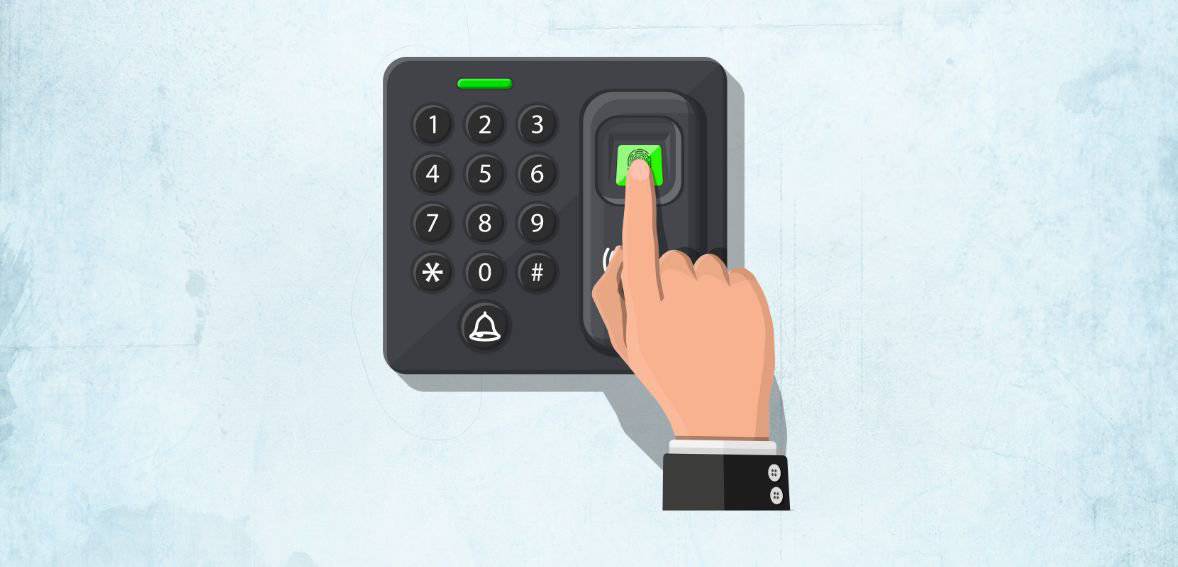
Those that chose to participate carried a payment card that had their fingerprint data stored on it and the terminal had a special add-on where the finger was inserted to be read. When customers were ready to pay they simply presented their card and inserted a finger into the reader, where either the actual fingerprint ridges or veins in the fingertip were read.

Paying With Your Fingerprint

In effect, the fingerprint data is the authentication method replacing the user entering a PIN number via a PIN pad. A recent, separate study of almost 2,200 shoppers showed that almost 50% of consumers were interested in biometric payment methods. Compared to just 30% and 23% in favor of contactless smartphone payment and text message payment methods respectively. Examples of biometric payments include fingerprint, palm, and iris scanners.

The 900 participants tallied a total of close to 5,000 transactions, which was considered to be a very good adoption rate. The average transaction amount was around €60, or about $78 USD. In a survey after the trial, 94% of the consumers who took part said they were open to the idea of paying with your fingerprint method for all in-store transactions.

It is interesting to see that the general public is open to this idea as a new form of paying for purchases. When the 24 Hour Fitness chain of fitness centers installed fingerprint readers as a way to speed up the check-in process of members, some were skeptical about whether the public would be open to this technology. Over three years later the company still utilizes the readers to speed up check-in and also increase validation of member usage.

While this one study seemed like a success, there aren’t any signs that you will be seeing in your local grocery store stateside anytime soon though. If you are a business owner looking for the latest in payment processing technology or would just simply like a free, no-strings-attached statement analysis to see if you are truly getting the best rate possible, one of our payment experts is here to help. Contact us today at 877-517-4678 or simply fill out our quick signup form and we will be in contact with you.

Paying With Your Fingerprint – Benefits of Using Fingerprint Authentication

Benefits of Using Fingerprint Authentication
  1. Enhanced Security; Fingerprint recognition is widely regarded as a form of authentication. Since each fingerprint is unique it significantly hinders individuals from gaining access to your payment information.
  2. Convenience; Opting for fingerprint-based payments often proves convenient compared to methods like entering PINs or passwords. It saves time. Requires effort on the users part.
  3. Preventing Fraud; Fingerprint authentication adds a layer of security effectively reducing the risk of fraud associated with stolen payment cards. With fingerprints being unique to each individual it becomes significantly harder for someone to misuse your payment information.
  4. User Friendly Approach; Fingerprint authentication prioritizes user friendliness, particularly benefiting individuals who may struggle with remembering passwords or PINs. It simplifies the payment process. Ensures accessibility for a range of users.
  5. Swift Transactions; The speed of fingerprint authentication enables transactions, which proves advantageous in time-sensitive scenarios such, as retail stores, public transportation, or online purchases.
  6. Reduced Reliance, on Physical Cards; Fingerprint payments offer the advantage of reducing our dependence on payment cards. This is particularly useful in situations where carrying cards may be inconvenient or pose a risk.
  7. Enhanced Security with Multi-factor Authentication; Fingerprint recognition can be combined with authentication methods creating a multi-factor authentication system that boosts overall security.
  8. ** Encryption of Biometric Data**; Fingerprint authentication systems employ secure encryption techniques to safeguard biometric data. This ensures that stored fingerprint information is not easily compromised.
  9. ** Experience**; Fingerprint payment methods can be tailored to users providing a more personalized and user-centric experience. This personalization extends beyond security encompassing preferences and settings well.
  10. Effortless Contactless Transactions; Fingerprint payments seamlessly integrate into contactless payment systems enabling users to make transactions without touching a payment terminal or card.

Drawbacks Of Fingerprint Authentication

how does fingerprint payment works

While there are advantages, to using fingerprint payment systems it’s important to consider the drawbacks;

  1. Privacy Concerns; The storage and usage of data like fingerprints raises privacy concerns. People may worry about the security of their information and how it could potentially be misused.
  2. Security Risks; Although fingerprints are unique to individuals they aren’t completely immune to being copied or forged. Sophisticated attackers might find ways to replicate fingerprints, which raises concerns about the security of this authentication method.
  3. False Positives and Negatives; Fingerprint recognition systems aren’t flawless. Can sometimes produce positives (wrongly authenticating someone) or false negatives (failing to recognize the correct person). These errors can create security issues and affect user experience.
  4. Accessibility Challenges; Certain individuals may face difficulties with fingerprint authentication due to factors like aging, injuries, or specific medical conditions that affect the quality of their fingerprints. This limitation can impact the inclusivity of fingerprint-based payment systems.
  5. Cost of Implementation; Implementing fingerprint payment systems can be expensive, for both businesses and consumers alike. It involves hardware and software requirements. Upgrading existing infrastructure can be a costly process.
  6. Reliance, on External Factors; The effectiveness of fingerprint recognition can be influenced by factors such as dirt, moisture, or finger injuries. These external elements have the potential to affect the accuracy and reliability of the authentication process.
  7. Lack of Standardization; Different fingerprint payment systems may lack uniformity in their implementation and compatibility which could pose challenges for adoption.
  8. Legal and Regulatory Challenges; Laws and regulations regarding the collection and usage of data may vary across regions and countries. Complying with these regulations can be complex for businesses operating in jurisdictions.
  9. Inherent Irreversibility; Unlike passwords or PINs that can be changed if compromised fingerprints are permanent. Cannot be easily altered. In case of a breach in a fingerprint database, the compromised biometric information cannot be “reset” like a password.
  10. Cultural and Social Factors; Acceptance of fingerprint payment methods may vary across cultures and societies due to personal reasons that make some people uncomfortable, with using their fingerprints for financial transactions.
    To overcome these limitations it is essential for companies and developers to incorporate security measures to give importance to user privacy and guarantee that fingerprint payment systems are easy to use and accessible, to a wide range of people.

Conclusion

While the advantages are noteworthy it’s crucial to consider drawbacks such as privacy concerns, the necessity for security measures to protect biometric data and the possibility of false positives or negatives in fingerprint recognition systems. Striking the balance, between convenience and security is vital when developing and adopting fingerprint payment technologies.

Article Head Image Template 2 1

CVV Codes: Why do They Exist?

CVV (Card Verification Value) codes are either three or four-digit numbers that are printed on either the front or back of credit and debit cards. This system was created to provide an extra layer of security to merchants and card-issuing banks against fraudulent transactions in card not present purchases.

Two Types of Codes

These codes come in two different forms: CVV 1 and 2. The CVV1 is integrated into the magnetic strip on the back of every card. In a retail, or other card present environment, where the card is physically swiped through a reader, the first CVV is used to verify the data on the track 2 mag strip is legitimate and matches up with the information the issuing bank has on file.

The second, and some might argue more important type, is the CVV2. Just to clarify, Visa and MasterCard use the three-digit CVV2 number printed on the back of the card next to the signature line. American Express uses a four-digit “Unique card code” that is located on the front of the card. Regardless of location or length, these both serve the same purpose: to prove that the person making the purchase has the original and real card in their possession.

man showing where CVV is located on a credit card

Skimming and Fraud

The CVV2 code is commonly requested by merchants in purchases over the Internet or in MOTO (Mail Order, Telephone Order) transactions. If a fraudulent card has been produced from a skimming device, the thief will not have the CVV2 number as it is only physically printed on the card and not stored electronically. Skimming is the practice of attaching a device over the top of a real magnetic strip reader, usually on ATMs or gas station pumps, to gather the sensitive information about the card. This information is used to make fraudulent cards and/or purchases.

If a thief attempts to make a purchase with a stolen card and does not have the CVV2 when the merchant requests it, the transaction will not be approved. The problem is that according to a recent study, only around 56% of online merchants request the CVV2 in order to complete transactions. Also, if a business does require the code, they can see around a 25% reduction in chargebacks.

The Bottom Line

It is important for consumers and merchants alike to protect sensitive information about their debit and credit cards. If a thief has your name, card number, expiry information, and CVV code they can very easily make fraudulent purchases or even create a duplicate copy of your card. For consumers it is important to ensure the business you are purchasing from is legitimate. For businesses, it is critical that proper procedures be followed when recording and storing your customers’ sensitive financial data.

SBA Rule

Upcoming SBA Rule Changes to Affect Small Businesses [2023 Update]

During the events at National Small Business Week the Small Business Administration announced upcoming changes due to take effect on July 22, 2013. These changes shift what defines how “small business” is defined. The administration is increasing the size standards in 70 industries. These standards lay out the maximum size a firm can be and still be considered a small business.

This shift in classification is noteworthy because companies that do not currently qualify for this categorization will now be eligible for special SBA loans and government contracts set aside to help smaller firms. Defining much larger businesses as “small” could have costly implications for the “little guy”.

The indicator that the SBA looks to for this classification is the average annual revenue of the company. The threshold that is increasing in about 25 industries will increase over 500 percent from the current $7 million to $35.5. That translates into around 17,000 U.S. businesses that will now be considered a small business.

NAICS Sectors and One NAICS Subsector

There are four NAICS sectors and one NAICS subsector that are revised in the new standards. They are:

  • NAICS Sector 71, Arts, Entertainment, and Recreation
  • NAICS Sector 52, Finance and Insurance
  • NAICS Sector 55, Management of Companies and Enterprises
  • NAICS Sector 11, Agriculture, Forestry, Fishing and Hunting
  • NAICS Subsector 213, Support Activities for Mining

There is already controversy surrounding the amount of contracts that are to be awarded to smaller firms, a mark that the federal government has missed over the past 11 years, according to an article by the Washington Post. A total of 23 percent of federal contracts are earmarked to be granted to companies with the designation from the SBA. Adding more players to the mix will surely increase competition in an already competitive process.

Update on Visa MasterCard Settlement

Update on Visa & MasterCard Settlement [2026Update]

The Visa MasterCard Settlement that was reached last fall in the class-action lawsuit between Visa and MasterCard and a large group of retailers is still being argued over. The latest update comes with concerns from some of the class members such as Wal-Mart, Target, and national associations representing grocers, smaller retailers, etc.

At its core, a settlement is just that: settling.  The two parties agree to terms that include both sides giving up something in an attempt to mitigate the concerns of the plaintiffs but not at the full value of the original case. The defendants must also address the initial concerns of the case but are then granted protection from future legal action and costs for addressing those concerns.

The fear that the class members have is that the “Release” that the defendants sign will be too broad and protect Visa and MasterCard from legal actions in the future. This protection leads the associations, states, and others to believe that the banks and card brands might be abusive in the future. If there are future abusive practices, these members believe that they will be powerless to seek any relief in the court system.

Visa MasterCard Settlement And Processing Fees

Visa & MasterCard Settlement

Part of what the settlement established was the right for merchants to offset their processing fees by directly surcharging customers who use credit cards. On the surface, this looks like a good concession by the card brands in favor of the merchants. But considering that some large merchants, such as Wal-Mart, have publicly stated they will not be surcharging customers it is almost a tool in the belt that can’t be used.

On the flip side, if businesses choose to surcharge on credit card transactions it puts the customer in a direct decision-making situation. Customers could very easily make a shift back to using cash instead of cards, which equals a loss for payment processors.

As far as the appeal by the plaintiffs in this case it looks unlikely that Judge Gleeson (the judge for the case last year) reconsider the appeal as he has already heard the concerns and rejected the legitimacy of them. Furthermore, a separate appeals court heard the same argument and also dismissed them. Thus, as it stands currently, it appears that the settlement will move forward barring any unforeseen complications.

About Visa

Visa Inc. Is a known financial company that facilitates electronic money transfers, around the world. Established in 1958 Visa has grown into one of the most recognizable payment technology companies. It acts as a bridge between consumers, businesses, financial institutions, and governments enabling convenient transactions like credit and debit card payments.

visa card

Visa’s primary focus is on providing payment solutions through its branded credit and debit cards. These cards are widely accepted across millions of locations worldwide making Visa an essential player in the global payments network. The company’s innovative technologies like contactless payments and mobile wallets have further improved transaction efficiency and security.

By issuing cards to individuals Visa collaborates with financial institutions to offer Visa-branded cards. This approach allows Visa to concentrate on developing and maintaining the infrastructure for secure electronic payments.

In addition to card-based transactions Visa actively explores cutting-edge technologies such as blockchain and artificial intelligence to remain at the forefront of the changing financial landscape. With a commitment to promoting inclusion and a wide range of payment solutions available Visa continues to play a role, in shaping the future of digital transactions worldwide.

About Mastercard

Mastercard Incorporated is a known financial services company that specializes in facilitating electronic payments and transactions. Established back in 1966 Mastercard has emerged as one of the players, in the payment industry offering a range of products and services.

At its core Mastercard provides payment solutions, such as credit and debit cards to individuals, businesses, and governments worldwide. The company’s recognizable logo with interlocking circles represents its commitment to connecting people and businesses through electronic transactions.

master card

Mastercard operates a network that spans across countries and currencies. This enables users to conveniently make purchases withdraw cash and carry out transactions with security. Similar to Visa Mastercard works together with institutions globally to offer products branded under the Mastercard name of directly issuing cards to consumers.

Known for its focus on innovation Mastercard consistently introduces technologies and features to enhance the payment experience. This includes advancements in payments, mobile wallets, and robust cybersecurity measures for safeguarding transactions.

With a dedication towards inclusion and a vision, for a future where cash becomes less prevalent, Mastercard continues to shape the landscape of digital payments.

The company’s dedication, to state-of-the-art technology and international collaborations, solidifies its standing as a contributor to the advancement of transactions, on a global scale.

First EMV ATMs to Go Live in the U.S.

Just a few days ago we gave a brief overview of what EMV chip card technology is. With the payment technology firmly in place in almost every other region than the U.S. the only next step is to bring it stateside. Today news was released that the very first EMV enabled ATM machines are operational in the United States. The ATMs that are currently live are located at a bank branch on Park Avenue in New York City.

The more secure technology has been long tested in Europe as it has been in service in most of the continent since the late 1990s. According to one industry source, 36 percent of all bankcards and 65 percent of terminals, ATMs and other machines globally are EMV compatible. Also, since France adopted the EMV standard (and was the first country to do so) there has been a reported 80 percent reduction in credit card fraud.

Why a U.S. Rollout is More Complex

Many consider the U.S. payment industry to be one of, if not the most, complex in the world. This is due to several factors. For one, we lack the presence of a one central authority when it comes to issuing deadlines for implementation to issuing banks. In addition to this, there are a greater number of card issuers here, which increases the “moving parts” of a national overhaul.

Host Merchant Services image breaking down how chip cards work

Much of the decision making process lies with the issuing banks and credit unions. While they understand the importance of upgrading the existing infrastructure, decisions on scope and capabilities must be made and a roadmap for rollout designed.

ATM Specific Factors to Consider

ATM owners and operators have a few things to consider when deciding to upgrade or not. Because the liability of fraud and noncompliance rest on the operators of each machine the best route would be to analyze the number and type of transactions at each location. There are then three options:

  • Upgrade or replace the machine with EMV capability
  • Don’t upgrade and risk the chance of fraud or noncompliance
  • Take the machine out of service

Obviously most operators would like to keep as many locations operating to maintain revenue but it is possible that some locations just have too low of traffic to be worth upgrading or might be located in higher risk areas.

mobile wallet

$500 million Processed Through Mobile Wallets in [2023 Update]

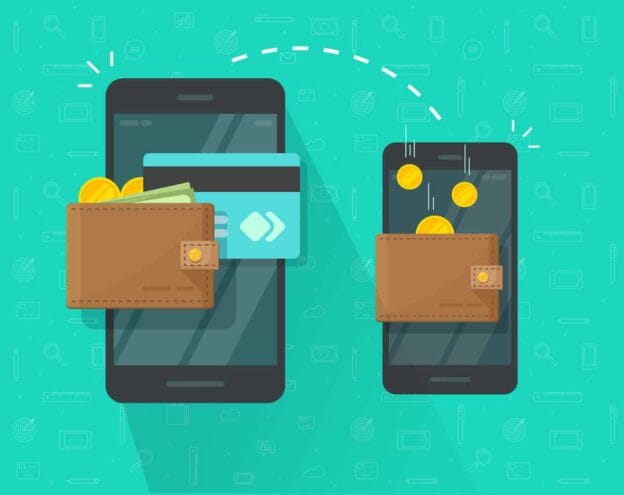
U.S. consumers spent over $500 million through mobile wallets on their smartphones last year. While this is miniscule as compared to the overall merchant services industry, where trillions of dollars that are spent annually through plastic credit and debit cards, it does signal a growing trend in the industry. Mobile wallet apps have experienced slow adoption rates in the U.S. but are projected to grow. According to Berg Insight, the industry could reach $35 billion annually by 2017.

While this figure still is just a fraction of the overall payment processing industry, it is a technology that as consumers adopt they will start to expect the infrastructure in any store they wish to spend money in. This presents a problem for small-businesses. For one, the physical machines can be expensive and require complicated installation. Some systems might not integrate into existing POS terminals at all. In addition to the implementation hurdles, policies must be formed to train staff on the procedures of actually taking a payment.

A short time ago, HMS announced a partnership with Barclays US to get the word out about the bPay mobile wallet initiative. bPay is a mobile wallet that has been initially rolled out in the Wilmington and Newark areas of Delaware. In the initial rollout, Host and bPay are looking for small and medium-sized businesses that are interested in being setup to take payments via the customer’s smartphone and a QR code that is presented on the POS system. In addition to the time savings offered, the platform also supports mobile marketing features such as SMS text and in app advertising.

Some merchants wonder why they should implement a solution like this if taking plastic cards isn’t broken. The answer is that in reality, the consumer is king. And because of stores like Starbucks, which has a mobile wallet integrated into their mobile app, paying with your smartphone is creeping into mainstream culture. As the industry continues to grow consumers will want to buy more than just coffee on their iPhone. Forward thinking merchants that want to stay ahead of the curve should look to implement a solution now as to not fall behind.

Businesses that are interested in learning more about getting setup to accept bPay transactions should give our payment experts a call at 877-517-4678 today!