Posted: July 12, 2013
| Updated: December 30, 2025 at 10:03 AM
Could the next emerging payment method be associated with your fingerprint? In a recent six-month trial, a grocery store chain in France gave their customers the choice of signing up for a voluntary program to test the technology. The pilot program ran from October 2012 through March 2013 and saw more than 900 participants. The results are encouraging and soon, you might be paying with your fingerprint.
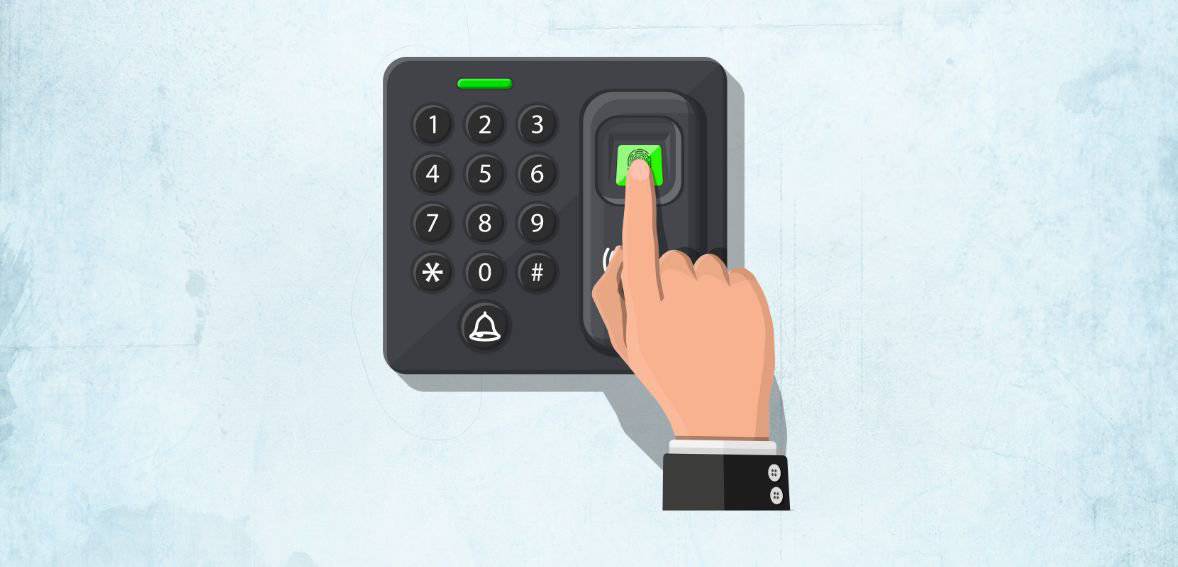
Those that chose to participate carried a payment card that had their fingerprint data stored on it and the terminal had a special add-on where the finger was inserted to be read. When customers were ready to pay they simply presented their card and inserted a finger into the reader, where either the actual fingerprint ridges or veins in the fingertip were read.
In effect, the fingerprint data is the authentication method replacing the user entering a PIN number via a PIN pad. A recent, separate study of almost 2,200 shoppers showed that almost 50% of consumers were interested in biometric payment methods. Compared to just 30% and 23% in favor of contactless smartphone payment and text message payment methods respectively. Examples of biometric payments include fingerprint, palm, and iris scanners.
The 900 participants tallied a total of close to 5,000 transactions, which was considered to be a very good adoption rate. The average transaction amount was around €60, or about $78 USD. In a survey after the trial, 94% of the consumers who took part said they were open to the idea of paying with your fingerprint method for all in-store transactions.
It is interesting to see that the general public is open to this idea as a new form of paying for purchases. When the 24 Hour Fitness chain of fitness centers installed fingerprint readers as a way to speed up the check-in process of members, some were skeptical about whether the public would be open to this technology. Over three years later the company still utilizes the readers to speed up check-in and also increase validation of member usage.
While this one study seemed like a success, there aren’t any signs that you will be seeing in your local grocery store stateside anytime soon though. If you are a business owner looking for the latest in payment processing technology or would just simply like a free, no-strings-attached statement analysis to see if you are truly getting the best rate possible, one of our payment experts is here to help. Contact us today at 877-517-4678 or simply fill out our quick signup form and we will be in contact with you.
Paying With Your Fingerprint – Benefits of Using Fingerprint Authentication
Enhanced Security; Fingerprint recognition is widely regarded as a form of authentication. Since each fingerprint is unique it significantly hinders individuals from gaining access to your payment information.
Convenience; Opting for fingerprint-based payments often proves convenient compared to methods like entering PINs or passwords. It saves time. Requires effort on the users part.
Preventing Fraud; Fingerprint authentication adds a layer of security effectively reducing the risk of fraud associated with stolen payment cards. With fingerprints being unique to each individual it becomes significantly harder for someone to misuse your payment information.
User Friendly Approach; Fingerprint authentication prioritizes user friendliness, particularly benefiting individuals who may struggle with remembering passwords or PINs. It simplifies the payment process. Ensures accessibility for a range of users.
Swift Transactions; The speed of fingerprint authentication enables transactions, which proves advantageous in time-sensitive scenarios such, as retail stores, public transportation, or online purchases.
Reduced Reliance, on Physical Cards; Fingerprint payments offer the advantage of reducing our dependence on payment cards. This is particularly useful in situations where carrying cards may be inconvenient or pose a risk.
Enhanced Security with Multi-factor Authentication; Fingerprint recognition can be combined with authentication methods creating a multi-factor authentication system that boosts overall security.
** Encryption of Biometric Data**; Fingerprint authentication systems employ secure encryption techniques to safeguard biometric data. This ensures that stored fingerprint information is not easily compromised.
** Experience**; Fingerprint payment methods can be tailored to users providing a more personalized and user-centric experience. This personalization extends beyond security encompassing preferences and settings well.
Effortless Contactless Transactions; Fingerprint payments seamlessly integrate into contactless payment systems enabling users to make transactions without touching a payment terminal or card.
Drawbacks Of Fingerprint Authentication
While there are advantages, to using fingerprint payment systems it’s important to consider the drawbacks;
Privacy Concerns; The storage and usage of data like fingerprints raises privacy concerns. People may worry about the security of their information and how it could potentially be misused.
Security Risks; Although fingerprints are unique to individuals they aren’t completely immune to being copied or forged. Sophisticated attackers might find ways to replicate fingerprints, which raises concerns about the security of this authentication method.
False Positives and Negatives; Fingerprint recognition systems aren’t flawless. Can sometimes produce positives (wrongly authenticating someone) or false negatives (failing to recognize the correct person). These errors can create security issues and affect user experience.
Accessibility Challenges; Certain individuals may face difficulties with fingerprint authentication due to factors like aging, injuries, or specific medical conditions that affect the quality of their fingerprints. This limitation can impact the inclusivity of fingerprint-based payment systems.
Cost of Implementation; Implementing fingerprint payment systems can be expensive, for both businesses and consumers alike. It involves hardware and software requirements. Upgrading existing infrastructure can be a costly process.
Reliance, on External Factors; The effectiveness of fingerprint recognition can be influenced by factors such as dirt, moisture, or finger injuries. These external elements have the potential to affect the accuracy and reliability of the authentication process.
Lack of Standardization; Different fingerprint payment systems may lack uniformity in their implementation and compatibility which could pose challenges for adoption.
Legal and Regulatory Challenges; Laws and regulations regarding the collection and usage of data may vary across regions and countries. Complying with these regulations can be complex for businesses operating in jurisdictions.
Inherent Irreversibility; Unlike passwords or PINs that can be changed if compromised fingerprints are permanent. Cannot be easily altered. In case of a breach in a fingerprint database, the compromised biometric information cannot be “reset” like a password.
Cultural and Social Factors; Acceptance of fingerprint payment methods may vary across cultures and societies due to personal reasons that make some people uncomfortable, with using their fingerprints for financial transactions. To overcome these limitations it is essential for companies and developers to incorporate security measures to give importance to user privacy and guarantee that fingerprint payment systems are easy to use and accessible, to a wide range of people.
Conclusion
While the advantages are noteworthy it’s crucial to consider drawbacks such as privacy concerns, the necessity for security measures to protect biometric data and the possibility of false positives or negatives in fingerprint recognition systems. Striking the balance, between convenience and security is vital when developing and adopting fingerprint payment technologies.
Cookie Consent
We use cookies to enhance your browsing experience, analyze site traffic, and support our marketing.You can accept all cookies, reject non-essential ones, or manage your preferences below. Learn more in our Privacy Policy.
Cookie Preferences
Manage your cookie preferences below:
Essential cookies enable basic functions and are necessary for the proper function of the website.
Name
Description
Duration
Cookie Preferences
This cookie is used to store the user's cookie consent preferences.
180 days
These cookies are needed for adding comments on this website.
Name
Description
Duration
comment_author_email
Used to track the user across multiple sessions.
Session
comment_author_url
Used to track the user across multiple sessions.
Session
comment_author
Used to track the user across multiple sessions.
Session
Google Tag Manager simplifies the management of marketing tags on your website without code changes.
Name
Description
Duration
cookiePreferences
Registers cookie preferences of a user
2 years
td
Registers statistical data on users' behaviour on the website. Used for internal analytics by the website operator.
session
These cookies are used for managing login functionality on this website.
Name
Description
Duration
wordpress_logged_in
Used to store logged-in users.
Persistent
wordpress_sec
Used to track the user across multiple sessions.
15 days
wordpress_test_cookie
Used to determine if cookies are enabled.
Session
Statistics cookies collect information anonymously. This information helps us understand how visitors use our website.
Google Analytics is a powerful tool that tracks and analyzes website traffic for informed marketing decisions.
Contains information related to marketing campaigns of the user. These are shared with Google AdWords / Google Ads when the Google Ads and Google Analytics accounts are linked together.
90 days
__utma
ID used to identify users and sessions
2 years after last activity
__utmt
Used to monitor number of Google Analytics server requests
10 minutes
__utmb
Used to distinguish new sessions and visits. This cookie is set when the GA.js javascript library is loaded and there is no existing __utmb cookie. The cookie is updated every time data is sent to the Google Analytics server.
30 minutes after last activity
__utmc
Used only with old Urchin versions of Google Analytics and not with GA.js. Was used to distinguish between new sessions and visits at the end of a session.
End of session (browser)
__utmz
Contains information about the traffic source or campaign that directed user to the website. The cookie is set when the GA.js javascript is loaded and updated when data is sent to the Google Anaytics server
6 months after last activity
__utmv
Contains custom information set by the web developer via the _setCustomVar method in Google Analytics. This cookie is updated every time new data is sent to the Google Analytics server.
2 years after last activity
__utmx
Used to determine whether a user is included in an A / B or Multivariate test.
18 months
_ga
ID used to identify users
2 years
_gali
Used by Google Analytics to determine which links on a page are being clicked
30 seconds
_ga_
ID used to identify users
2 years
_gid
ID used to identify users for 24 hours after last activity
24 hours
_gat
Used to monitor number of Google Analytics server requests when using Google Tag Manager
1 minute
Marketing cookies are used to follow visitors to websites. The intention is to show ads that are relevant and engaging to the individual user.
Facebook Pixel is a web analytics service that tracks and reports website traffic.