Resort fees: you think you’ve got a great deal on a hotel, only to find an extra charge slapped on once you get to checkout. For the most part, there’s nothing we can do about it, however Congress has just introduced an interesting new piece of legislation that could see the days of frustrating surprise resort surcharges coming to an end.
What Are Resort Fees?
You decide to book a one night stay at a hotel, and you go to their website or your favorite hotel booking site and see that it’s advertised at $100 per night. You select your room and continue on to the checkout. One you get to the checkout, however, you notice that the price has now increased by an extra $50. When you check the fine print, you discover that it’s the resort surcharge added to your rate.
If this is new to you and you don’t know what a resort surcharge is, you may be somewhat surprised. Essentially, it’s just an extra cost, typically mandatory, that covers a bundle of services that you, as a hotel guest, might come to expect during your stay. Services such as “free” Wi-Fi, pool access, morning newspapers, and more are what tend to be part of the resort fee bundle. Even if you don’t want to use any of these services, you can’t decline the surcharge.
In the year leading to July 2018, these surcharges have seen an increase of as much as 11%, with a 14% increase in the number of hotels adopting the practice. For the vast majority of these hotels, the resort surcharges are not at all optional. In some areas like Las Vegas, virtually every hotel has a resort surcharge.
What’s the Issue with Resort Surcharges?
A Consumer Reports survey that questioned over 2,000 adults taken in 2018 showed that more than one-third had experienced a hidden hotel charge within the previous two years. Many consumers are upset with the lack of transparency and what many consider to be sneaky behavior to lure customers in by making hotel rates appear cheaper than they really are.
Other studies show that people are now beginning to avoid areas notorious for their resort surcharges. Resort surcharges have become shockingly common in tourist-heavy areas with places such as Las Vegas, Walt Disney World, and Times Square, New York ranking among the worst offenders. Places like these are obviously some of the most sought after tourist attractions in the world, and many feel that they use that status to prey on unsuspecting tourists.
What’s the new Legislation?
The Hotel Advertising Transparency Act was introduced to Congress in 2019 by Republican Congressman Jeff Fortenberry of Nebraska and Democratic Congresswoman Eddie Bernice Johnson of Texas with the goal of abolishing add-on resort surcharges, and requiring that hotels are upfront and transparent about showing the full, pre=tax price of a hotel room in their advertised costs. This would include short-term rentals immediately at the time of booking without the resort fees being added at the end.
Several major hotel chains, including Hilton and Marriott, have seen lawsuits brought against them following investigations into their hotel surcharges and pricing practices. In Hilton’s case, it was indeed found that their advertisements of resort surcharges, both online and over the phone, were misleading, deceptive, and even in violation of the consumer protection statute held by the state.
In a $21.5 billion all-stock deal, Global Payments Inc., a global provider of payment processing technology and software solutions, merged with TSYS (Total System Services) to form a pure-play payments company using the name Global Payments, the largest merger of payment technology companies to date. Working with 1,300 financial institutions and 3.5 million merchant locations in more than 100 countries, facilitating credit card processing for more than 600 million cardholders, the merger positions the company to be a leader in owned software, integrated payments, and omnichannel solutions.
TSYS can leverage Global Payments 32-country global reach to access the global markets during a time when e-commerce transnational transactions are on the rise. By focusing on merchant services and payments-related business, the merged company hopes to differentiate itself from the other fintech mergers, according to TSYS CEO Troy Woods. For example, the TSYS Netspend business offers reloadable payment products while the merged company will also engage in consumer solutions and merchant acquiring.
A pure-play payments technology firm, Global Payments’ headquarters is located in Atlanta, Georgia with more than 24,000 employees around the globe, serving countries in North America, Europe, Asia Pacific, and Latin America. Offering global solutions and advanced software, Global Payments offers a technology-enabled strategy to merchant services.
Following the $35 billion FIS acquisition of Worldpay and Fiserv’s $22 billion acquisition of First Data, Global Payments’ acquisition of TSYS is another big fintech merger for 2019. TSYS shareholders will receive 0.8101 of Global Payments shares for each of their own. Global Payments investors will own 52 percent of the new company, leaving the remaining 48% percent to TSYS shareholders. Traded on the New York Stock Exchange (NYSE: GPN), Global Payments is a member of the S&P 500. Global Payments gained 1.0% in premarket trading.
TSYS holds a presence with smaller retail merchants, and Global Payments has a strong hold with restaurants with each providing point of sale (POS) solutions tailored to those industries. Combining TSYS’s strength as a U.S. payment provider with Global Payments’ strength as an international payment provider makes for a stronger whole.
Jeff Sloan will serve as CEO of the merged Global Payments company, Cameron Bready as president and chief operating officer, Paul Todd as senior executive vice president and chief financial officer, and David Green will serve as the senior executive vice president, general counsel, and corporate secretary. Josh Whipple will serve as chief strategy and risk officer while Gaylon Jowers oversees issuer solutions, and Kelly Knutson oversees NetSpend.
“We share a common value of putting people first and will leverage the best of our cultures to preserve and enhance our commitment to all of our stakeholders,” said Jeff Sloan in the press release announcing the merger.
Microsoft have just unveiled their next chapter of Dynamics Cloud Business Apps: Dynamics 365. Dynamics 365 is a new approach to cloud-based intelligent business applications, uniquely allowing brands to create product pages of their own, while having a space available for customer interactions, such as ratings and reviews. The goal of Dynamics 365 is to increase competition with Amazon in the world of e-commerce.
By delivering unique cloud solutions distinct from anything else available on the market, Microsoft Dynamics CRM also complements Microsoft’s other offerings in the e-commerce domain, enabling merchants to both keep in good contact with customers and keep a solid eye on analytics.
What Does Dynamics 365 Offer Merchants?
By delivering cloud ERP medium and smaller sized businesses, Dynamics 365 is designed to transform business processes and improve productivity and output. The service can be accessed from anywhere in the world, including via a web browser or iOS, Android, or Windows apps.
Dynamics 365 offers several benefits to brands:
As a new approach to business applications, Dynamics 365 unifies the current ERP and CRM solutions into a singular cloud service, featuring newly purpose-built apps designed to aid in sales, marketing, and finance.
In order to assist businesses in reaching their goals, Cortana Intelligence and Power BI are embedded into the software along with Azure IoT.
Featuring full offline mode support, Dynamics 365 is truly mobile and accessible at any time, from anywhere on Windows, iOS and Android platforms.
Power BI is integrated in the Dynamics 365 experience, giving insights into each area of business which can be viewed from a central dashboard page.
Dynamic 365 Part of a Growing Trend
Microsoft’s new tool is part of a growing trend of market disruption and business evolution.
Cloud solutions are being adopted across many areas of business. Cloud-based systems offer positive security aspects as well as greater convenience. Cloud-based systems have become the preferred method for running the majority of enterprises.
LoB (line of business) executives in the majority of companies have the say now when it comes to the IT budgets. It was estimated that by 2017 as much as 50% of all IT spending would be out of the control of IT and the CIO. Software vendors will be required to provide applications that address the needs of the LoB executives.
When switching tasks, the average worker loses about 40% of their productivity, costing the global economy as much as $450 billion a year. Companies are now looking to have productivity tools embedded directly within their business processes in a bid to increase productivity.
New technologies are also growing and enabling newer business models at a rate faster than any other seen before. If a company is going to be a success, they’ll need to make sure that their people are able to process and respond quickly to new market changes. If they aren’t flexible and able to change and familiarize themselves with the new directions of business, then it’s game over.
Google Pay allows Android phones, tablets or digital watches to make tap-to-pay purchases. Near field communication (NFC) allows the Android device to transfer the credit card information over to a point of sale system, making transactions fast and easy. By saving your cards to your Google Account, you’ll receive the same rewards and discounts when you use Google Pay as you would with a normal credit card. Google Pay also offers peer-to-peer and online payment services. The following are the stores, apps, sites, and transit systems that accept Google Pay:
Which Retailer In The US Accepts Google Pay In 2024?
A store that accepts Apple Pay or Samsung Pay will also accept Google Pay. You might notice the Apple Pay symbol on store entrances, but it’s often used as a general term for all mobile payments. Apple Pay and Google Pay use the same NFC technology, allowing tap-and-pay transactions.
However, it’s worth noting that not all big names in the US have adopted mobile payments. Some smaller businesses haven’t made the switch, primarily due to the costs associated with NFC terminals provided by banks, which can eat into their profits.
You can use Google Pay to buy goods or services at the following retailers:
MTA Metro-North and Long Island railroads New York metropolitan area
Portland Hop Fastpass
What Is Google Pay?
Google Pay is a digital payment service by Google that allows users to make purchases using their Android devices at physical stores and on compatible websites and apps, including the Google Play Store. In 2023, Google Pay is the most trusted mobile payment app with 25.2 million users in the US alone.
To use it, people connect their credit or debit cards to Google Pay. This linked card is then used for both in-person and online transactions. For payments at stores using Android devices, Google Pay employs NFC to communicate with payment terminals. Additionally, when users are logged into their Google account on the Chrome browser, they can use Google Pay on websites offering this payment option.
How Google Pay Works?
ApplePay, GooglePay, and other contactless payments are gaining acceptance.
To start using Google Pay, download the Google Pay app and link it with your preferred payment method, such as a credit or debit card. While many banks, credit unions, and other financial services support Google Pay, confirming if your specific card is compatible is essential.
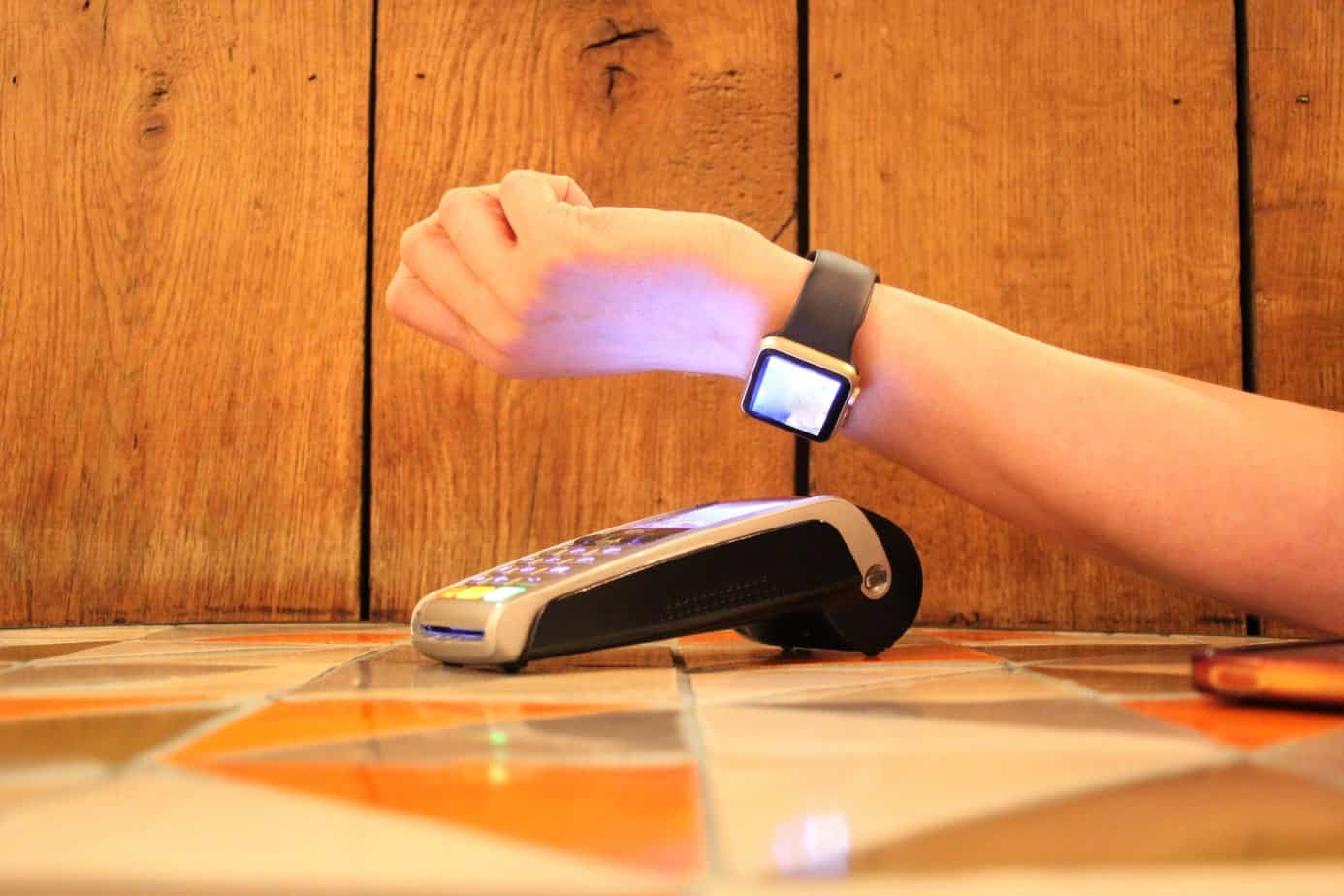
Once set up, Google Pay allows you to make online and in-store payments. For in-person transactions, tap your phone on the payment terminal, similar to a contactless card. When shopping online, choosing the Google Pay option at checkout streamlines the process by automatically filling in your payment and shipping details, eliminating the need for manual entry each time you make a purchase.
Safety Features of Google Pay
When transacting with Google Pay, it uses a special encrypted number instead of revealing your credit card details. This adds an extra layer of security.
Plus, if you ever lose your device, you can use Google’s Find My Device feature to erase any important data remotely. For added security, you also have the option to log into your Google Pay account from another device and remove any linked cards or bank accounts.
Understanding Google Pay Fees
Google itself doesn’t impose any fees when you use Google Pay for tap-and-pay or online transactions. However, it’s essential to note that your card issuer might have charges associated with your purchases.
Transaction Charges:
While Google Pay doesn’t have transaction fees, any fees applicable to your physical card usage still stand. For instance, standard interest charges and penalty fees may apply if you use a credit card via Google Pay and don’t clear your bill on time.
However, Google Pay is rolling out some additional “convenience fees” for some specific transactions. As of 2023, the stance Google has around the charges by its application is unclear. Apart from this, there are no charges currently charged by the application Google Pay.
Credit Card Linked With Google Pay:
When you link a credit card to Google Pay, remember that your credit card company might charge the merchant a fee of up to 4%.
Some merchants may then pass this fee to you, adding it to other transaction charges. This could mean you end up paying as much as 6% extra for your purchase. To avoid unexpected costs, asking merchants about fees before using Google Pay is a good idea. A linked debit card or bank account can help sidestep these higher charges.
Using Google Pay Abroad:
If you use Google Pay while traveling or making purchases in a foreign currency, be aware of potential fees from your bank or card provider.
These include foreign fees, typically around 3%, applied to non-USD transactions. Remember that these fees can vary based on the specific card you have linked to Google Pay.
Conclusion
In 2023, Google Pay emerged as a versatile digital payment solution, trusted by millions in the US. Offering convenience across various platforms—from retail giants like Costco and Macy’s to popular apps like Airbnb and Doordash—it simplifies transactions with robust safety measures.
While it generally doesn’t impose fees, users should consider potential card issuer charges and international transaction fees. Overall, Google Pay is a reliable tool for seamless and secure payments across various outlets.
Frequently Asked Questions
Q: Where can I use Google Pay for transactions?
Absolutely! You can use Google Pay or Google Wallet wherever you spot those handy contactless or Google Pay symbols. Keep an eye out for them on the payment terminal screen or cash register during checkout.
Q: Can I use Google Pay for purchases at Walmart in 2023?
Currently, Walmart doesn’t accept Google Pay as a payment method. It’s always good to check for your preferred stores’ most current payment options.
Q: How do I get started with Google Pay?
Setting up Google Pay is a breeze. Locate the app on your phone, and if it’s not already there, just grab it from Google Play. Add your card linked to your Google account by confirming a few details. You can even snap a picture to add a new card. Once everything’s set, unlock your phone, tap, and you’re ready!
Q: Is Google Pay secure?
Absolutely! Google Pay offers enhanced security compared to traditional magnetic-stripe cards. It’s not just convenient; it’s also swift. Unlike chip card transactions that may take a bit, contactless payments with Google Pay process in a flash. Plus, you get a handy payment confirmation on your phone, making it easy to spot any fishy activity. In case of loss or theft, you can lock your device using Android Device Manager, securing your info.
Q: Can Google Pay be used for payments at Target?
Yes, you sure can! Target happily accepts any contactless payment, be it contactless credit/debit cards or digital mobile wallets. Simply tap your contactless card or mobile device over the payment terminal and follow the prompts on the reader screen.
Q: Does Walgreens support Google Pay?
Absolutely! Walgreens is all in for contactless payments. Whether tap-to-pay credit cards, Apple Pay, or Google Pay, they’ve got you covered. Just wave your contactless card or mobile device over the payment terminal and follow the prompts on the reader screen.
Generation Z represents a whopping 32% of the world’s population. As the first “digital native” generation that has never lived without the internet and technology, Gen Z sets itself apart in many ways. When it comes to the world of payments, Gen Z has very different expectations than even millennials and overwhelmingly prefers cashless payments — although with much higher standards for design, convenience, and security than other generations.
How Popular Are Digital Payments?
According to a U.S. Mobile App Report from 2017, 70% of consumers in Gen Z have made app-based mobile payments in the last year, surpassing all other generations. A more recent survey by BillTrust found that 79% of Gen Z responders use a digital payment service at least once every month.
Generation Z Is Price Sensitive
Generation Z, and young millennials too, are much more concerned with price than older adults, and much less likely to show any brand loyalty. As many as 80% of participants said that price was the most important factor to them when making a purchase.
Having grown up during the Great Recession of the late 2000s and early 2010s, many Generation Zers watched their parents struggle, which has led to something of a more frugal and pragmatic attitude. This more price sensitive attitude plays into the strengths of the financial tech companies as they can offer services at a low cost.
Generation Z Cares More About Security
Surveys have also found that Generation Z cares strongly about security, with as many as 33% of respondents to one survey claiming that they would stop dealing with a company immediately were their data breached. On top of this, 67% of surveyed Gen Zers would adopt name brand products when they need to seek assurance that their standards will be met.
Gen Zers hold privacy, ethics, and security seriously and demand transparency when it comes to cashless payments.
Generation Z Isn’t Tolerant of Friction
Having grown up in a world that’s fully accepted digital technology, Generation Z is completely at home with digital and real-life experiences coexisting. Because of this, studies have found that they will expect things to run smoothly, and they will be less tolerant than others when things don’t. With the rise of mobile payments, this plays into this generation’s hands and provides them with a system they’re perhaps more comfortable with.
A clunky user experience or an overly complicated system could be enough to lose this generation as a customer. After years of technological revolution and refinement, this is a generation that expects the best.
What Generation Z Is Looking for in Credit Card Processing
It would seem that what is most important to Generation Z when it comes to payments is a seamless, frictionless experience that fits easily around their lifestyles. This means customized credit card processing and payment solutions, transparency, security, and convenience. Having instant, seamless payments is of huge importance, especially when looking to win their loyalty and trust.
The next platform that caters to Generation Z will likely combine all forms of financial services in one from digital payments and banking to investments and loans to further capture the interest of this digital generation.
Using near-field communication (NFC), a Galaxy smartphone (or even smartwatch) that supports Samsung Pay allows you to make quick and easy retail purchases. All without having to fumble around with your wallet or purse. When you launch the Samsung Pay app on your phone, you simply hold the phone above the credit card terminal and then tap-and-go.
Here’s what really puts Samsung Pay ahead of the competition. Existing card readers recognize Samsung Pay. For terminals that do not support NFC, Samsung Pay also works with MST (Magnetic Strip Technology), enabling consumers to make a contactless payment on a terminal even with the old school magnetic strip technology. The MST technology differentiates Samsung Pay from Apple Pay and Android Pay, both of which are only equipped to use NFC technology. While the other mobile wallet apps are limited to merchants who provide NFC technology, Samsung Pay can be used anywhere traditional credit and debit cards are accepted.
How to set up Samsung Pay:
Open the app on your phone
Scan your credit card
Use your fingerprint or PIN to secure the account along with an authorization code provided by the app
Once you’re ready to use Samsung Pay, swipe up from the bottom of the display
Swipe left or right to choose the card to use
Verify your fingerprint for the app or enter your PIN
Touch the back of your phone on the reader or hover your phone over the reader
Your phone will vibrate indicating payment
The following banks and services support Samsung Pay:
American Express
Mastercard
Visa
Bank of America
Chase
Citi
JP Morgan Chase
PNC
US Bank
Samsung Pay has expanded to the following countries and regions:
The world of merchant services is extremely exciting, yet it can be competitive. There are countless opportunities to make money in this industry, but throughout it all, you want to ensure that you are providing the best possible experience for your clients. Because of this, joining the best merchant services agent program is absolutely critical to finding success in this space.
In this article, you will find some of the key characteristics that you should search for when selecting a merchant services agent program. By keeping these characteristics in mind, you will increase the chances that you select the best possible merchant services ISO program.
Factors to Consider When Selecting the Best Merchant Services Agent Program
To select the best merchant services agent program, you will first want to find a program that offers stellar customer service. The worst-case scenario is hearing complaints from your clients and not being able to get in touch with your merchant services ISO program. Even if the problem at hand isn’t necessarily your fault, you will suffer the consequences if you can’t get a representative from your merchant services agent program on the phone. Before making your choice, therefore, you must ensure that your merchant services agent program has a dedicated staff that can quickly and accurately answer any questions that you may have. While it may not seem like a large issue now, ignoring this factor can put your client relationships at risk.
Next, search for a program that offers boarding options from large payment processing platforms. Having access to many of the largest payment processing platforms—like First Data and TSYS—provides you with some valuable peace of mind. It significantly minimizes the chances of your clients encountering any technological or integration issues. Instead of worrying about whether their point of sale or billing software will integrate with the platforms within your program, your client can spend more time focusing on growing their businesses. It’s a win-win for both you and your clients.
A terrific merchant services agent program also offers great cash discount opportunities. Cash discount programs allow merchants to offset their entire payment processing bill. In other words, they let merchants collect the entirety of their revenue while taking advantage of great payment processing tools. These programs work by automatically adding the cost of the transaction to that transaction, allowing merchants to skip payment processing fees. While you will want to read the fine print on these types of programs, they are a valuable added benefit that you can reference when pitching potential clients.
Finally, your merchant services agent program should be able to take on high-risk accounts. While the definition of “high-risk” may somewhat vary, high-risk accounts can include things like medical marijuana, travel agencies, non-US gaming, tobacco, and pharmacy accounts. Even though you may not be working on these accounts at the moment, having this optionality is extremely valuable as you search for additional clients. Instead of needing to find another merchant services agent program to accommodate these “high-risk” businesses, you can seamlessly work with these merchants to grow your business. This puts less stress on you as you are scaling your business.
Seizing the Opportunity
This is not an exclusive list, but we encourage you to look for the factors above when selecting your merchant services ISO program. When completing your research, we also recommend that you search for and read reviews. Doing so can help you confirm that a particular merchant services agent program provides real value for its agents.
Finally, while we may be biased, we believe that our merchant services agent program is second to none. At Host Merchant Services, we are proud of our terrific customer service and are confident that you will be happy with our white-glove service. We are proud to offer an extensive number of boarding partners. Some of our partners include TSYS and First Data, which are two of the largest payment processing platforms in the world. Finally, we offer cash discount programs and multiple high-risk bank partnerships, providing you with additional benefits and features that you can pitch to your clients.
To learn more about our independent sales agent program, click here. If you have any questions about our program, don’t hesitate to reach out.
Starting later this year, American Express is offering online shoppers a brand-new way to pay retailers directly from their bank account, in real-time, without the need to use a debit or credit card in hand.
The new service, which will be offered to bank account holders in the U.K., even those without an American Express card, is set to roll out in the fourth quarter.
Here’s how the new Pay with Bank Transfer option will work.
What Is an American Express E-Commerce Bank Transfer?
Whereas before consumers were required to enter card details, thanks to American Express, this could all soon be a thing of the past. The service offers customers the option to instead make their payment via an American Express bank transfer with real-time payments directly from their bank account, rather than via their debit card. Customers will also be able to view their bank balances prior to confirming the transaction, and, according to American Express, will be able to benefit from “bank level data security.”
To make use of the service, all customers will have to do is click on the “Pay with Bank Transfer” button upon checkout, and select their bank from which they wish to make the purchase. They will then be redirected to their bank’s website where they will sign in and authenticate themselves, and approve the payment details before continuing to finalize the purchase.
Thanks to a wider initiative known as open banking, the data that people have stored with multiple financial institutions can be collected together and shared with trusted third parties, simplifying procedures while maintaining high levels of security.
Do I Need to Be an American Express Cardholder?
Not at all. The bank transfer service is open to anyone, whether they are an American Express customer or not. All that is required of the customer is a U.K.-based bank account.
What are the Benefits of an American Express E-Commerce Bank Transfer?
Currently, bank transactions require having a physical card or card information to complete a transaction. With the Pay with Bank Transfer option, consumers have more options for paying retailers without sacrificing security.
Transactions are also much faster. The American Express service allows for instant transfers from customers to recipients, whereas paying with a credit or debit card would usually take a few days to a week to complete.
Where Can I Use the American Express E-Commerce Bank Transfer?
There will only be a handful of retailers utilizing the system at launch, however, a major rollout throughout 2020 will see the bank transfer system adopted by a wider range of online ecommerce retailers.
Some of those initially taking part in the American Express bank transfer scheme include JustGiving, Oak Furnitureland, Thai Airways, Richer Sounds, Hays Travel, and the Royal Lancaster London Hotel.
Credit card brands divide their fee structure into three groups: Level 1, Level 2, and Level 3. The higher the level, the lower the interchange fees for the merchant. While a majority of businesses may only qualify for Level 1 processing, which is the level appropriate for B2C, or business to consumer, transactions, some businesses are exclusively B2B, or business to business, merchants, which can take advantage of the Level 2 and Level 3 interchange fee discounts. In this article, you will learn the differences in the different levels of data and how to use level data to reduce your business interchange fees.
The More Data, the Higher the Level
Level 1 Data
The amount of data determines the level. The more data a merchant provides, the higher the level the transaction achieves. Level 1 is the most basic level requiring a minimal amount of data, namely the merchant name, the transaction amount, and the transaction date. As an example of Level 1 pricing, the Visa Commercial Card Present Level 1 fee is 2.50% + $0.10. If a majority of a merchant’s business is handled via consumer credit cards, that merchant only needs to provide Level 1 data.
Level 2 & Level 3 Data, B2B & B2G
Level 2 and Level 3 require significantly more data in exchange for a significant reduction in transaction fees. A merchant qualifies for Level 2 interchange fees if a majority of its business is B2B. If a merchant engages in mostly B2B or B2G, business to government, transactions, they can take advantage of the Level 3 interchange rates.
Credit card brands use these discounts to incentivize businesses to allow credit cards for use in major transactions, versus other forms of payment. Thus, the credit card brands require a minimum amount for the transaction. Or they offer a tiered discount, increasing in proportion to the size of the transaction.
Level 2 transactions require the following data in addition to all Level 1 data:
Tax ID
Merchant minority code
Merchant state code
Merchant ZIP code
Sales tax amount
Customer reference number
In exchange for this level 2 credit card processing data, credit card brands reduce the interchange rate by roughly 0.50% for the transaction.
Level 3 data includes the following in addition to both Level 1 and Level 2 data:
Invoice Number
Order Number
Ship-From Zip Code
Destination Zip Code
Freight Amount
Duty Amount
Item Extended Amount
Item Product Code
Item Commodity Code
Item Description
Item Quantity
Item Unit of Measure
In exchange for this level 3 credit card processing data, credit card brands reduce the interchange rate by up to 1.00% for the transaction.
Services that Support Merchants
Standard credit card processing terminals do not have the capacity for either inputting the data or forwarding the data to the credit card service. While Level 2 data is easy to enter, a separate credit card terminal or software can automatically populate the Level 2 data. Only certain gateways can process Level 3 data. Merchant credit card processing services can support merchants in handling Level 2 and Level 3 data through gateways and separate credit card processing terminals. Merchant support services also help businesses configure their information before sending Level 2 and Level 3 data to the payment provider.
The American Civil Liberties Union, or ACLU, has been defending individual rights and freedoms guaranteed by the Constitution, as well as by the laws of the United States of America for close to 100 years. Most recently, the ACLU turned its focus to cashless stores.
Reasons ACLU Says No to Cashless
Consistent with the ACLU’s campaign to install privacy protections in the digital age, the civil liberties nonprofit addresses the anonymity of cash, but they also recognize the impact a cashless society would have on low-income, homeless, and undocumented people. In addition, the ACLU points out that a cashless trend negatively impacts small merchants who avoid credit card processing fees by doing a cash-only business or who offer cash discounts. Not to mention, the ACLU points out that cash always works while technology often lets us down, from technology failures to privacy and security breaches.
Cashless Bans Across the Country
The ACLU’s robust statement is in response to the cashless trend, most notably Amazon’s backpedaling on only offering cashless and cashier-less convenience stores. In response to criticism, both Amazon and Sweetgreen, a salad chain, reversed their decisions to implement a cashless business. Beyond public sentiment, actual legislation outlawed cashless stores starting in 1978 when Massachusetts banned the practice. Current backlash moved New Jersey, as well as San Francisco and Philadelphia to do the same.
Private Matter
Cash prevents anyone from knowing anything about your purchases. With the convenience of credit cards comes the potential of the credit card company not only obtaining but leveraging data about you and your purchase. Cash does have its limits, specifically the limit of $10,000, which is the starting amount one must report to the government as a cash transaction.
Fully Banked
Both low-income populations and large percentages of people of color are not “fully banked,” meaning they do not have a checking or savings account, barring them from the cashless society. Specifically, the ACLU points out, 6.5% of U.S. households have no checking or savings account while only 52% of Black people and 63% of Latino people have bank accounts. Plus, more than 18% of U.S. households have a bank account but still need to check cashing and payday loans.
Cash Discount Merchant Services
Businesses can avoid backlash while simultaneously embracing cash-paying customers by adopting cash discount merchant services. With this model, merchants can offset service fees while avoiding an increase in prices by enrolling in a cash discount program. Unlike surcharging, which charges customers an extra fee for paying with a credit card, businesses can instead add a service fee to all customers while applying a discount equivalent to this service fee when customers pay by cash or check. This platform incentivizes the use of cash.
Businesses should carefully consider whether or not their customers would not appreciate a service fee added to their bill. Service-based industries, including auto shops, landscapers, and electricians are well-suited for the service fee. Ultimately, the business owner will know best if a cash discount will work for their business.
Cookie Consent
We use cookies to enhance your browsing experience, analyze site traffic, and support our marketing.You can accept all cookies, reject non-essential ones, or manage your preferences below. Learn more in our Privacy Policy.
Cookie Preferences
Manage your cookie preferences below:
Essential cookies enable basic functions and are necessary for the proper function of the website.
Name
Description
Duration
Cookie Preferences
This cookie is used to store the user's cookie consent preferences.
180 days
These cookies are needed for adding comments on this website.
Name
Description
Duration
comment_author_email
Used to track the user across multiple sessions.
Session
comment_author_url
Used to track the user across multiple sessions.
Session
comment_author
Used to track the user across multiple sessions.
Session
Google Tag Manager simplifies the management of marketing tags on your website without code changes.
Name
Description
Duration
cookiePreferences
Registers cookie preferences of a user
2 years
td
Registers statistical data on users' behaviour on the website. Used for internal analytics by the website operator.
session
These cookies are used for managing login functionality on this website.
Name
Description
Duration
wordpress_logged_in
Used to store logged-in users.
Persistent
wordpress_sec
Used to track the user across multiple sessions.
15 days
wordpress_test_cookie
Used to determine if cookies are enabled.
Session
Statistics cookies collect information anonymously. This information helps us understand how visitors use our website.
Google Analytics is a powerful tool that tracks and analyzes website traffic for informed marketing decisions.
Contains information related to marketing campaigns of the user. These are shared with Google AdWords / Google Ads when the Google Ads and Google Analytics accounts are linked together.
90 days
__utma
ID used to identify users and sessions
2 years after last activity
__utmt
Used to monitor number of Google Analytics server requests
10 minutes
__utmb
Used to distinguish new sessions and visits. This cookie is set when the GA.js javascript library is loaded and there is no existing __utmb cookie. The cookie is updated every time data is sent to the Google Analytics server.
30 minutes after last activity
__utmc
Used only with old Urchin versions of Google Analytics and not with GA.js. Was used to distinguish between new sessions and visits at the end of a session.
End of session (browser)
__utmz
Contains information about the traffic source or campaign that directed user to the website. The cookie is set when the GA.js javascript is loaded and updated when data is sent to the Google Anaytics server
6 months after last activity
__utmv
Contains custom information set by the web developer via the _setCustomVar method in Google Analytics. This cookie is updated every time new data is sent to the Google Analytics server.
2 years after last activity
__utmx
Used to determine whether a user is included in an A / B or Multivariate test.
18 months
_ga
ID used to identify users
2 years
_gali
Used by Google Analytics to determine which links on a page are being clicked
30 seconds
_ga_
ID used to identify users
2 years
_gid
ID used to identify users for 24 hours after last activity
24 hours
_gat
Used to monitor number of Google Analytics server requests when using Google Tag Manager
1 minute
Marketing cookies are used to follow visitors to websites. The intention is to show ads that are relevant and engaging to the individual user.
Facebook Pixel is a web analytics service that tracks and reports website traffic.


 If this is new to you and you don’t know what a resort surcharge is, you may be somewhat surprised. Essentially, it’s just an extra cost, typically mandatory, that covers a bundle of services that you, as a hotel guest, might come to expect during your stay. Services such as “free” Wi-Fi, pool access, morning newspapers, and more are what tend to be part of the resort fee bundle. Even if you don’t want to use any of these services, you can’t decline the surcharge.

 As a new approach to business applications, Dynamics 365 unifies the current ERP and CRM solutions into a singular cloud service, featuring newly purpose-built apps designed to aid in sales, marketing, and finance.





 A terrific merchant services agent program also offers
 To make use of the service, all customers will have to do is click on the “Pay with Bank Transfer” button upon checkout, and select their bank from which they wish to make the purchase. They will then be redirected to their bank’s website where they will sign in and authenticate themselves, and approve the payment details before continuing to finalize the purchase.


 Tax ID
 Invoice Number