
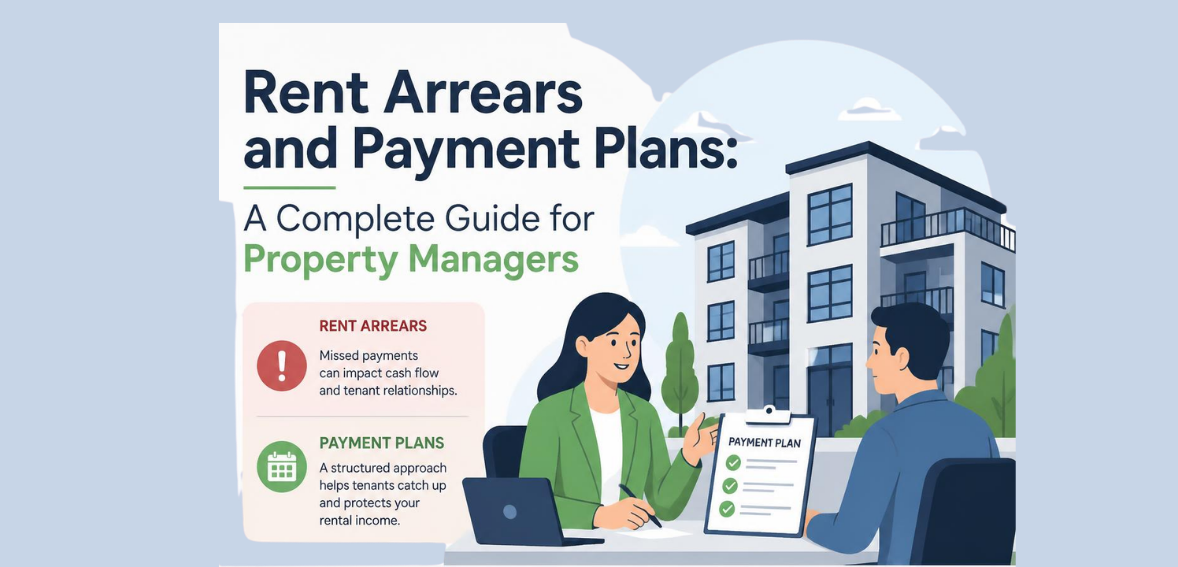
A tenant hasn’t communicated in over ten days, and you have an empty rent ledger. As a property manager, you can make the decision to either wait or open a file to address the issue. The second decision provides the optimum results in managing arrears. This makes sense: property portfolios that manage rent arrears on a case-by-case basis, rather than as an accounting rounding error, tend to recover the owed rent and have a lower tenant turnover. This guide provides instructions for the management of rent arrears and covers the full cycle from the first day a balance goes overdue, to the final day of the payment agreement, or to the last day before an account escalation occurs.
The instructions in this guide outline general processes and steps in the management of rent arrears. The legal framework for the management of rent and the law for landlord-tenant relations are region-specific, so this guide will not provide legal instructions. Property managers have to ensure that all the specific details and requirements of the processes mentioned in this guide fit within the framework of the laws of tenant-landlord relations in their region, and, if necessary, obtain the services of a local lawyer.
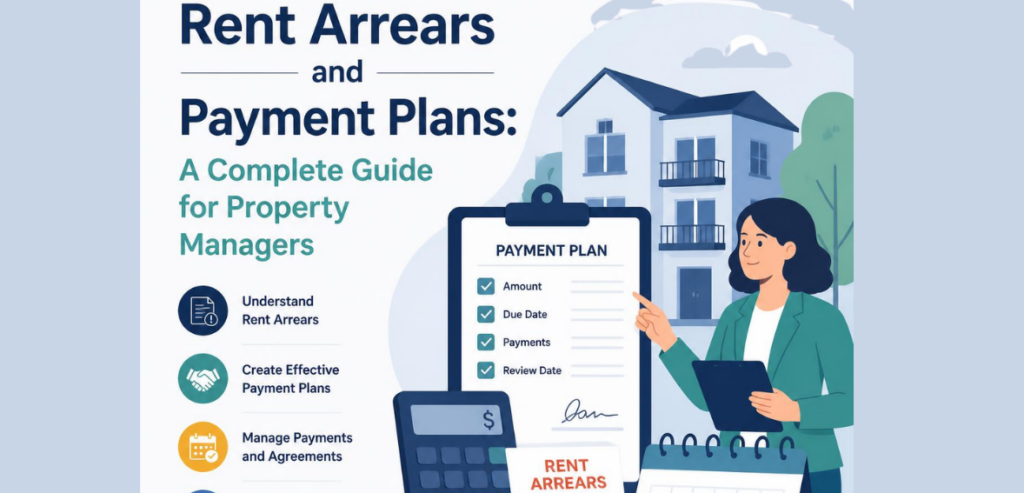
Delinquency management is not seasonal. It is part of the responsibility of every lease executed and every day a manager runs a portfolio. Circumstances that impact a tenant’s ability to pay are unpredictable. However, expenses to service the property are constant and will be incurred regardless of occupancy. A property manager who views delinquency management as a daily challenge will develop the discipline of balance checking, exception noting, and payment investigation on a daily basis.
From a finance perspective, there are compelling reasons to regard delinquency as a daily challenge. A payment that is not collected after 10 days is considerably more likely to be collected than one that is not collected after 90 days. The same is true for the tenant, who is more likely to pay the rent if repeated requests for payment are made.
From an operational perspective, there is an equally compelling reason for property managers to stay on top of delinquency, as property owners expect the management accounts for each unit to be up to date. In addition, being on constant watch for delinquency payments aids in the preservation of the client and management contract relationship.
Systems for handling rent arrears are based on balance aging. An overdue balance can be classified as one of the following: current; one to thirty days overdue; thirty-one to sixty days overdue; sixty-one to ninety days overdue; or more than ninety days overdue. This works to organize a previously disorganized late tenants list. From this, property managers can easily locate the troublesome accounts and also identify accounts that can be resolved with a simple phone call. 
Illustrative example of an aging rent balance structure. Percentages shown are illustrative only and are not drawn from any real portfolio.
Delinquency reports should be generated at regular intervals in a predictable manner rather than randomly. Issues that can reasonably be resolved will be highlighted in the weekly report, which will limit the focus to the thirty days. Most property management software will organize the aging reports after the rent is posted to the ledger.
The software will thus enable the property manager to direct outreach efforts to tenants rather than trying to track delinquency issues. The aging reports fulfill the purpose of notifying the property manager to take prompt action. It is not the purpose of a report to stagnate for 30 to 90 days without action from the property manager.
The speed at which you make contact is the most crucial element involved when managing rent arrears. Contacting a renter three days after the due date is exponentially more effective than waiting thirty days to make contact. The communication on day three is more than likely the first of several messages in a communication chain attempting to rectify this situation.
It is more than likely that the due date was missed due to a payment delay, and the renter will make the payment as soon as they are paid. At thirty days, the property manager is often only making their first contact attempt. By then, the missed payment may stem from a payroll delay, an ongoing job loss, or a simple oversight on the renter’s part.
On the first contact, remaining calm and stating the issue and solution will yield a much more positive response compared to a last-minute, hostile communication sent urgently. Most property managers find it helpful to take note of the time and date of the communication, the method of communication, and the resulting outcome of the communication. Should the issue escalate for any reason, having the documentation will be invaluable to the property manager.
A successful payment plan should consider the financial capabilities of the tenant. If a tenant’s financial realities are ignored, the plan (if we can call it that) can, and usually will, fail. Factors that should be considered when designing a payment plan include tenant income, arrears, and time constraints for plan closure. Property managers should be equipped to design payment plans that tenants will be able to comply with, especially if they consider the tenant’s ability to pay rent. No rent will be offset from a payment plan unless the property owner agrees to a temporary rental reduction. 
A typical seven-step tenant payment plan workflow, from the missed payment flag through case closure or escalation.
A viable strategy for handling tenant arrears separates historical unpaid rent from current owed rent. This strategy ensures that each rental cycle, the tenant pays two clearly defined amounts, as opposed to a blended amount that is confusing and thus untraceable. Generally, the longer the repayment plan, the less likely the tenant will comply. Repayment plans that have a goal of clearing unpaid rent in the short term (within a few rental cycles) tend to be more successful.
The longer the repayment plan, the more likely the plan will be disrupted by a change in the tenant’s social/economic condition. If a repayment plan has a clearly defined start date, a due date for repayment each rental cycle, and an end date, the tenant and landlord have the same goal.
The saying goes that an agreement is only as good as the paper it is written on. This saying applies to rent repayment agreements as well. If a repayment agreement is not written, a dispute may arise due to differing recollections of what was promised. A repayment agreement is a written document that specifies the total debt, the amount to be paid per installment, the due date of each installment, the payment method, and the consequences of a missed installment.
The repayment agreement is complete with the signatures of the tenant and the property manager or the authorized agent. The agreement is to be dated and filed in the tenant’s file together with the original lease.
Housing fairness mandates that similar cases be treated alike. This means that if one tenant is offered a repayment agreement, a repayment agreement must be offered to all other tenants in similar situations. If a repayment agreement is not offered to other tenants in similar situations, the property manager may face legal liability. The risk is significantly reduced if property managers prepare repayment agreements using the same format for all tenants and exercising the same standards for all tenants.
Since the repayment agreement format and the laws governing repayment agreements differ from one state to another, the repayment agreement format must be reviewed for compliance with the landlord-tenant laws of the state where it will be used.
Rent balances age correctly only if each installment is posted correctly. Each payment needs to be made against the specific arrears charge, and should not be made in the same line as current rent, in order to achieve a correct and true aging report at each stage of the payment plan. If a payment is posted in the same line as current rent, weeks later it will be impossible to determine if the payment plan is on track.
Most property management software allows for a charge code for arrears to be made separate from the current rent charge, and thus showing the balances for both independently. This separation is important for reporting to owners as well, because owners want to see the performance for the current collection of rent and the collection of arrears as independent figures, and not as a collection percentage that is blended and therefore conceals the collection of arrears.
A plan can certainly fall apart. Respond to the first missed installment with the same urgency you applied when the tenant first fell into arrears. Reach out to the tenant. Find out what happened. Figure out whether the disruption is temporary or if it is something worse. Some property managers include one grace period, meaning a cure period; others do not. Either way, whatever approach is taken, it goes into the agreement.
When a tenant fails to make a payment or a series of payments, it often signals that the plan was not realistically constructed. In a broader sense, it shows that the company or property manager has reached its limit in recovery via that particular channel. It is at this stage that in general practice, the recovery process moves to the next stage that is defined within the lease and local law. This includes the legal recovery process and a formal notice of default. Since the legal recovery process includes strict steps that need to be followed, along with defined recovery processes, this is the time that legal counsel needs to be brought into the picture, if not already.
The goal of the Owner Reporting on Arrears is to clearly answer the question of where the money is and what is being done to recover it. An Owner Arrears Report is most useful when it shows the balance owing by unit, how long each unit balance has remained unpaid, the status of the payment plan, if applicable, and when the tenant was last contacted. Owners do not need to know the details of each phone call. What is most useful to owners is the confidence that the report is a trustworthy, accurate, and timely snapshot of the situation.
Understanding the recovery rate and what it means helps owners better understand the situation. A balance owing that is new, or within the 30 days, is much more likely to be collected in full than a balance owing that is past 90 days old. Owner understanding is further supported by evidence of the payment plan work being done to find a payment solution, while the balance owing is moving toward an escalation process. Effective management of the relationship is further reinforced by the regular and scheduled reporting, as compared to only reporting when an owner requests information.
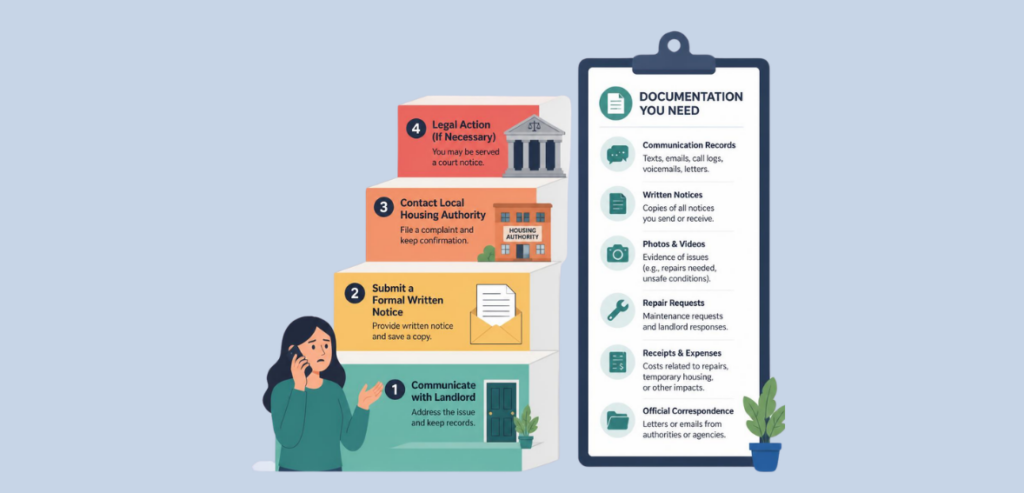
Escalation is the last option for managing rent arrears. All other options for communication and payment management must be exhausted before considering escalation. Each state has its own laws on evictions. Laws set out the necessary notices before an eviction and the minimum time an arrears tenant must be given to remedy the breach, in addition to the documented evidence that must be presented to the court. Due to the differences in state and local laws, no single guide can provide final instructions on the notices and regulatory periods.
Of utmost importance, however, is complete and accurate documentation. An attorney will need a copy of the original lease, a complete and thorough history of rent arrears, notes of all communications with the dates, a payment agreement along with documentation of the payment, or the lack of payment, and a payment management plan. This documentation will show a court the good faith of the property manager. This documentation should be the property manager’s primary focus in the rent arrears management process. Similar to the requirements for notifications, the property manager must verify with local counsel or the state housing authority the requirements for documentation in order to not lose a valid case.
Recovering unpaid rent is one part managing cash flow discipline and one part responsiveness. Timely and clear communication to tenants along with a repayment plan will increase the success of recovery initiatives when combined with the application of aging reports. Proper communication with the property owners/account holders, along with the treatment of each account as its own case, will draw focus to the circumstances of that account.
Documentation created from the repayment plan is the first of the supporting evidence and is further strengthened by the involvement of legal counsel. State and local laws govern the payment and reporting of plans and the processes to notify tenants of pending eviction. Hence, property managers must align their processes with the local landlord-tenant laws and must engage the services of a lawyer prior to legal action against a tenant.
Confirm the exact current balance. Determine an installment amount the tenant can reasonably be expected to pay, then create a short-term payment plan. Due dates for each installment must be listed in the agreement.
Accepting partial rent may help recover part of what is owed, but some states may consider partial payments an issue in regard to the right to serve the notice and/or begin the eviction process. You should always check your state laws before accepting any payments.
Maintain an executed copy of the agreement, which is signed and dated, in the tenant file with the lease along with the amounts due, installment amounts, due dates, and terms of default.
Reach out to the tenant to understand the situation. Then go ahead with the provisions of the agreement, which typically means that you send a formal notice.
Schedule and send a report with the current numbers by unit balance, aging bucket, payment plan status, and last date of contact that owners will trust.
Property Management Payment Resources covers rent arrears and payment plans alongside rent collection, deposits and reconciliation, all in one place.