
Posted: September 21, 2026 | Updated: September 21, 2026 at 11:39 AM
A customer slammed your business’s review section with a one-star Google review saying, “They charge me extra for paying by card.” Your first instinct may be to explain your policy to them and point out that the charge was clearly posted.
But the review section isn’t the right place to argue, as it can leave a negative impression of your business. Responding to card fee complaints matters, and the goal shouldn’t be to prove your point. It’s to show the customer who wrote the review and everyone else reading it that your business takes customers’ concerns seriously.
A short and calm response to a negative review can protect your reputation. On the other hand, a defensive response focused on fee calculations can make things worse. If you run a business, understanding how to handle complaint reviews is important.
A negative review can feel personal, especially when you believe the complaint is vague or unfair. This can make you feel frustrated, and you may want to respond immediately with something like, “The fee was clearly posted” or “You should’ve double-checked our policy before paying.”
Don’t react when you’re frustrated; pause before replying. Your prospects may also read it, and how you react will strongly determine whether they will visit your business or not. Your reply should show three things:
The first step in responding to a complaint is to acknowledge what the customer is saying. You don’t have to agree or admit that your business made any mistakes. Make sure the customer feels understood.
For example, “We’re sorry to hear the card fee was unexpected” is very different from “You should’ve read the sign before paying.”
The first response can satisfy the customer; the second can make them feel like they’re fighting your business over money. This approach is especially useful when you’re dealing with irate customers who have misunderstood the situation. Your goal is to make it clear that your business cares about the customer and is willing to help. Remember that potential customers are watching how your business handles criticism. A calm and respectful response can tell them much more about your business than a long explanation of payment processing ever could.
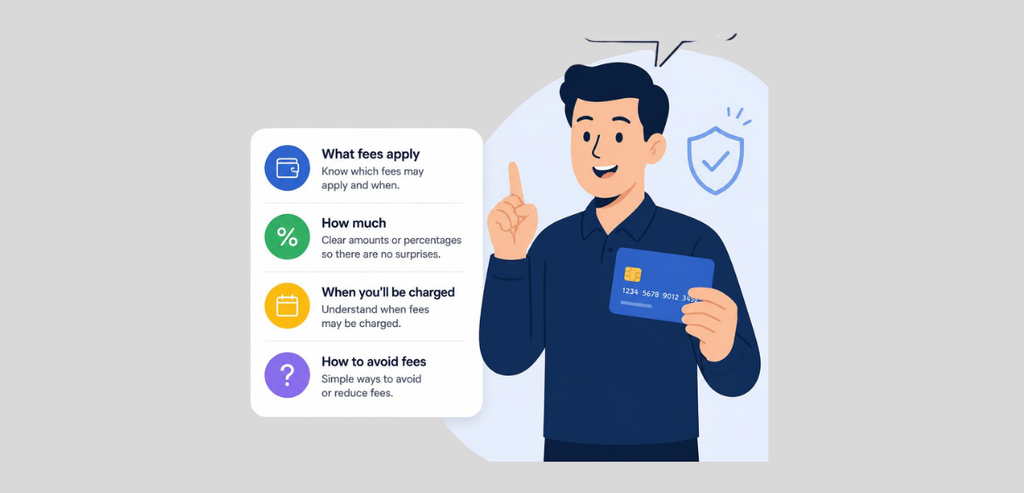
After acknowledging the concern, briefly explain your policy. If your business applies a card surcharge, there’s no need to offer a detailed breakdown of interchange fees, processor charges, network costs, or other expenses in your Google response. Those details matter to you as a business owner, but explaining the fee in public usually doesn’t help anyone understand the situation.
Instead, state the policy clearly and move on.
For example, you could say:
“Our business applies a card surcharge, which is disclosed at checkout.” That should be enough.
One easy way to turn a surcharge complaint against your business into a disaster is to turn the response into a debate about why your business charges. You might be tempted to explain that your payment processor charges a certain percentage, that credit card companies have raised their fees, or that you would have to raise prices across the board for every customer if you stopped passing some costs onto card-paying ones.
A lengthy explanation will make you sound defensive, and it’ll also give the complaining customer a reason to respond, creating an unpleasant public argument for future customers to read. Stick to facts when explaining your policy and acknowledge the customer’s problem. Offer to assist in another channel if they wish to discuss the disputed transaction in more detail.
Once you’ve put the basic facts on the table, try to contact your customer privately. This is especially important if the customer wants to know the amount charged, or says they weren’t aware of the fee, or claims that the fee was applied incorrectly.
You can handle the conversation by saying something like:
We’d love to help. Please get in touch with us at [email address] so we can look into this and provide a resolution.
This way, you can buy some time to investigate what actually happened without sharing transaction information publicly.
The customer may not have noticed the surcharge applied to the card. Maybe an employee forgot to mention it, or the signage wasn’t visible from where the customer was standing. Or perhaps the wrong fee was applied.

A negative review isn’t always something you need to take personally or get defensive about. Sometimes it points to a genuine problem in the customer experience that needs addressing. For example, many customers leave comments such as:
If you’re seeing the same complaint repeatedly, don’t simply copy and paste a routine acknowledgment response.
Look at what happens at your checkout counter.
If your business charges a card surcharge, your customers should clearly know about it before completing their purchase. Review your signage: is it easily noticeable? Is the wording easy to understand? Is it located where customers can see it before they pay? Does your checkout process make the surcharge clear? Look from the customer’s perspective rather than from the eye of a business owner. Customers hate hidden charges and appreciate if everything is posted upfront before they make a purchase or use a service. Card network rules and some state laws also set requirements for how a surcharge is disclosed, so this is worth checking for more than just reviews.
Your team members should also be aware of the card fee process. A customer may ask if there will be an additional charge for using a credit card. Employees who are uninformed may give a long-winded explanation, which may also include incorrect information. A confusing or incorrect answer may cause the customer to lose trust in your business. A brief description of the card fee may help staff members give answers that promote consumer trust. A written description of the policy can reduce staff members’ fear of communicating the message.
Occasionally, a customer will post an inaccurate Google review describing a purchase. Sometimes they will say a surcharge was passed on, when in fact, your records indicate no surcharge was added. It could be that they don’t understand other charges on the receipt and think they are surcharges. In these cases, the best course of action is to explain the situation as best you can.
For example, you could respond to the situation in this way: “We have reviewed the transaction and the surcharge was not passed on. If you would like to chat about the transaction, let us know.”
Remember that Google reviews are posted publicly. This means that everything you post about a customer can reflect poorly on your business. You may be tempted to post a customer’s private information to support your case. Don’t post things like card numbers, receipts, phone numbers, or emails. Posting any private information can reflect poorly on your business. Be sure to keep your response professional.
When dealing with customer complaints, watch your choice of words. Phrases such as, “You should have read the sign” add nothing to the conversation and may give the impression that you are unwilling to help solve the customer’s issue.
It is not appropriate to put the responsibility for the fee on the customer. If several customers have the same question about a business policy, it may mean that the policy or the language it is written in is not clear. You should not try to argue the policy in a public setting.
It is best to limit the information you provide in a public setting. If you determine that further discussion is necessary to resolve the complaint, you may want to suggest that the customer contact you directly. In such a case, thank the customer for their time and close the public discussion.
Having a few review reply templates available can make responding to similar complaints easier. You can adjust the language depending on the situation and your business’s usual tone.
Template for a Factual Card Fee Complaint
Thank you for sharing your feedback. We understand that a surcharge can be frustrating. The surcharge is disclosed at checkout. We appreciate you bringing your concerns to our attention and would be happy to discuss your transaction directly. Please get in touch with us at [phone number or email] so we can assist you further.
Template for an Inaccurate Complaint
Thank you for your feedback. We take payment charge concerns seriously. We reviewed the transaction and found that the card surcharge described in this review does not match the charge recorded for this purchase. We’d be happy to review the details with you directly. Please get in touch with us at [contact information] so we can look into it further.
One negative review doesn’t mean that your surcharge policy is creating a larger problem. However, you should address similar, frequent complaints.
Visit your business’s review section and see what customers think. Are customers repeatedly saying they didn’t know about the surcharge? Are they complaining about where the information is displayed? Are they confused about the amount? If several people give the same feedback, then it’s important to look into the issue.
For example, if five customers say they didn’t expect your card fee, you can write a polite Google response to protect your reputation in the short term, but it won’t address the underlying problem.
The better solution may be to improve your signage, update your checkout process, or train employees to explain the fee before payment.
You might see a less than flattering post about your business on Google. Don’t panic! Taking a defensive or offended tone in your response will only encourage others to post similarly critical reviews. Step one is taking some deep breaths and keeping a calm tone in your response. Then, again, without admitting wrongdoing, acknowledge your customer’s concerns, give a brief synopsis of your card fee policy, and tell the customer you would be happy to discuss the charge in question to answer any questions.
That said, if similar or the same concerns are consistently raised by customers, you may want to consider looking into your company policy. Your policy may be good for your bottom line, but at the expense of customer goodwill.