Posted: September 22, 2026 | Updated: September 23, 2026 at 11:13 AM
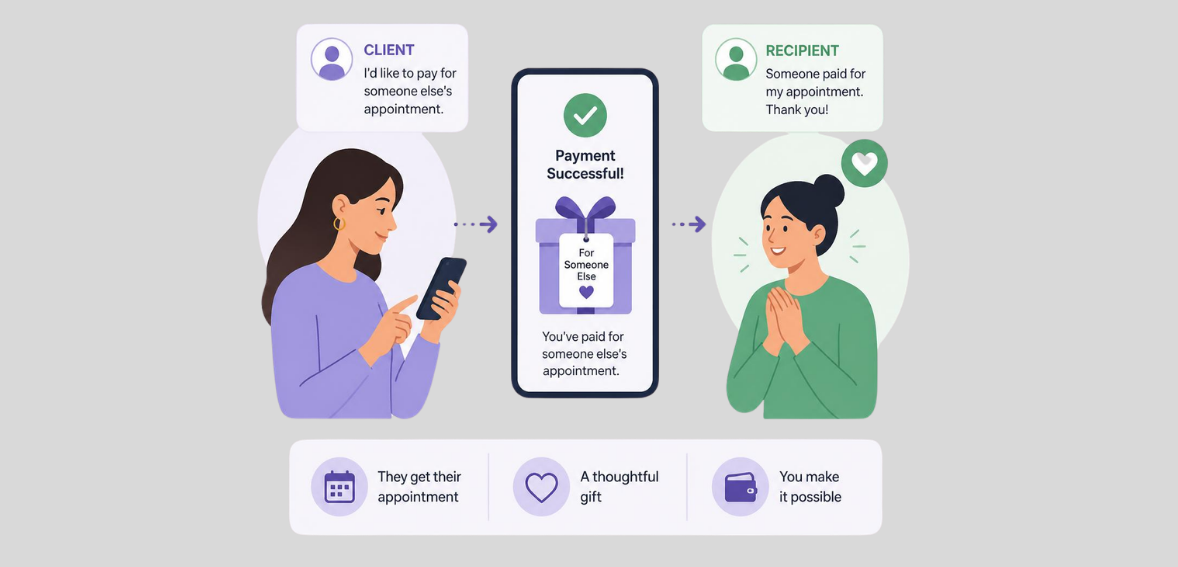
When paying for an appointment, the client shows up and takes the service; that is simple math, right? However, real chaos begins when the person booking an appointment is not the same person attending it. For example, a wife may have booked a soothing massage session for her husband, or an employer may have booked a consultation for an employee. These third-party appointments can complicate booking when the payer and attendee are not the same.
Who should receive the confirmation? Who can cancel or reschedule the appointment? Who should be charged a no-show fee if the client does not arrive? Should the money be refunded if the meeting is canceled, and who should be responsible for the charge?
These questions may not seem important when setting up an appointment scheduling system. Clear answers to these questions will help avoid misunderstandings or payment complications with customers. A well-documented process will clearly show who pays, who attends, what a payer has agreed to, and what happens if plans change.
The following guidelines will help appointment-based businesses ensure they provide excellent service by accepting third-party payments and giving both the payer and attendee a clear understanding of the booking.
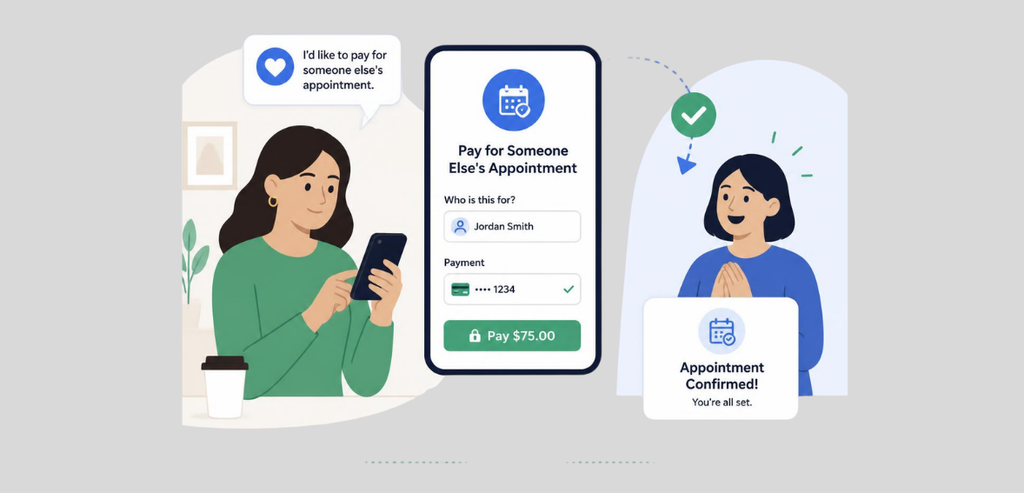
Yes, accepting a third-party appointment may seem normal, but both the payer and attendee should clearly understand the booking details and payment terms. This difference can affect the booking and payment record-keeping process when something goes wrong.
For example, imagine a husband booked a $1,500 salon appointment for his wife and paid in advance with his own credit card. However, for some reason, his wife could not show up. The salon deducted a $50 no-show fee. Who agreed to that no-show fee? Here the payer and attendee are two different people.
Here’s another scenario:
Imagine an employer pays for one of their employees’ consultations. The employee goes to the appointment, but the boss gets the receipt. Now imagine that the employee asks for a refund. Whom would you have to issue the refund to?
The billing process becomes much easier when your business keeps the record of the payer and attendee separately.
One of the best ways to manage a third-party payment appointment is to keep a record of the payer and the person receiving the service. The attendee is the person who will attend the appointment; therefore, include their name/contact details, along with the appointment booking details, so your staff knows who is attending.
The payer is the person who will pay the invoice; therefore, link their name/contact details to the invoice/payment to avoid confusion if the person booking isn’t the person paying. This difference doesn’t have to make the booking complicated. The online booking form simply needs to ask whether the person booking is the attendee, and if not, collect the attendee’s details separately.
For a business that runs with appointment-based booking, the staff and the payer must know who will be charged. For example, the customer books a $150 massage for her spouse. A confirmation notice should clearly state who booked the service (the customer) and who is attending the appointment (the spouse).
This matters for third-party appointments where cancellation or no-shows are common. Also, the booking confirmation should include the no-show or cancellation fee policy so both parties are aware of it.
The payer should know the conditions they accept when providing credit/debit card details. Never assume a client booking an appointment knows your policy. Your booking confirmation message should clearly state something like, “By making this booking, you, as a payer, agree to our no-show fee or cancellation policy,” or that your card will be charged a $50 cancellation or no-show fee if you want to cancel the appointment or do not want to take the service.
In a gift booking, a no-show fee can cause confusion and disputes if the payer or attendee does not know about it. For example, if someone books an appointment for their partner, the partner does not show up, and a no-show fee is charged to the payer’s credit card, who is responsible for it?
The best way to avoid disputes and confusion is to review your terms and policy with the payer before confirming the appointment. Confirm the booking only after the payer agrees to your policy. Additionally, your cancellation and no-show charge policy should be easy to understand. This matters because, in a gift booking, attendees may not be aware of the cancellation or no-show charge policy.
If the person who made the payment also has no clue about the charges, it may be difficult to justify why their card was charged later without their consent. Your business should also consider relevant payment, consumer protection, and local regulations when developing its policy.
A cancellation or no-show fee policy should not feel like a surprise charge. If your business charges a no-show fee or cancellation fee, disclose it before the customer confirms the booking. Your policy should include common FAQs a customer may have about your no-show and cancellation policy, such as: how much will be charged, what happens if a customer doesn’t show up for the appointment, and how to cancel the appointment without paying a fee.
Adherence to this guideline is important for a business owner and payer to avoid confusion during booking or when the charge is applied on the card. Also, make sure your booking clearly states what the payer and business agreed to. It’s better to keep the no-show fee policy visible than to bury it in a tiny paragraph at the bottom of a booking section. For more ways to reduce missed appointments and handle no-shows, see The End of No-Shows: A Salon’s Definitive Guide.
Third-party bookings also raise questions if the appointment is canceled. For example, if a customer buys a facial for someone else and pays, but that person decides to cancel the appointment. A business should have a policy for these situations.
If the person who paid for the appointment is eligible for a refund, return the funds to the original payment method according to your refund policy. Your payment provider’s refund process and your own terms should guide how these situations are handled.
Refund processing can be confusing, as the payer and attendee are different people. The simplest solution would be to mention your refund policy before setting up an appointment. Clarify whether the customer will receive a refund to the initial payment method and who can request a refund.
For example, if a father pays for the child’s appointment, their card will be charged at booking. If the payer cancels the appointment and is eligible for a refund, the company should have a clear refund policy and process to return the payer’s money.
Every customer is valuable; follow the same refund guidelines for every customer instead of making exceptions at the counter. Sharing a clear, simple refund policy avoids confusion and prevents unwanted disputes from both sides.
A gift booking is the right option when a payer knows exactly what service the recipient wants and when they want it. But that’s not the case for every customer, because sometimes a buyer wants to give someone $100 for a service without choosing a specific treatment or appointment. In such scenarios, a gift card can be the best option, allowing the recipient to choose the service, time, and date at their convenience.
It also avoids complications that can arise when a recipient wants to change the appointment. For businesses, gift cards offer an easier payment method when the buyer wants to give the recipient flexibility.

Gift cards and gift booking serve the same purpose but work in different ways. With a gift booking, the payer selects a specific service for the recipient, and possibly the session date and time. This option suits situations where the giver already knows the recipient’s preferences and availability. A gift card gives the recipient more flexibility.
Rather than purchasing a particular service or treatment, the card owner buys a certain amount, such as $50, $100, or $200, that the recipient can spend on their preferred service and appointment.
Parents usually pay for children’s appointments, which can include haircuts, tutoring, salon visits, consultations, and other personal appointments. In these cases, parents usually cover the payment, while their children are the attendees who receive the appointment.
By keeping the contact and personal information of parents and children separate, it will be easy for a business to handle their bookings. The business can send parents payment information and receipts, while sending the appointment date, time, and other details to the child or student. If the appointment is with a child or a professional service for special needs, the business may also need extra approval or information. Make sure your booking system follows the regulations specific to your industry.
Letting customers pay for someone else’s appointment can be useful for salons, spas, tutors, consultants, wellness businesses, and other appointment-based businesses. The key is to distinguish between the person paying for the appointment and the person attending it. Make sure your customers understand your cancellation and no-show policies before they pay. You should also track who paid and who attended the service, clarify refund policies for customers, and send receipts and appointment confirmations.
If the customer wants to give someone a set amount of money instead of paying for a specific service, consider giving them a gift card. The key is that if one person makes the payment and another receives the service, the booking process should be clear to both the buyer and the attendee. Otherwise, you run the risk of a disagreement between the two parties about what was actually purchased and what amount of money was paid for it.