
Posted: September 18, 2026 | Updated: September 18, 2026 at 12:27 PM
The holiday shopping season brings a common problem for retailers: the normal return policy may not work for holiday purchases. A customer bought a gift in early November, but a recipient might not open it until December 25. If the return window is 30 days, the return period could expire before Christmas. That can frustrate customers and create difficult conversations for your store team.
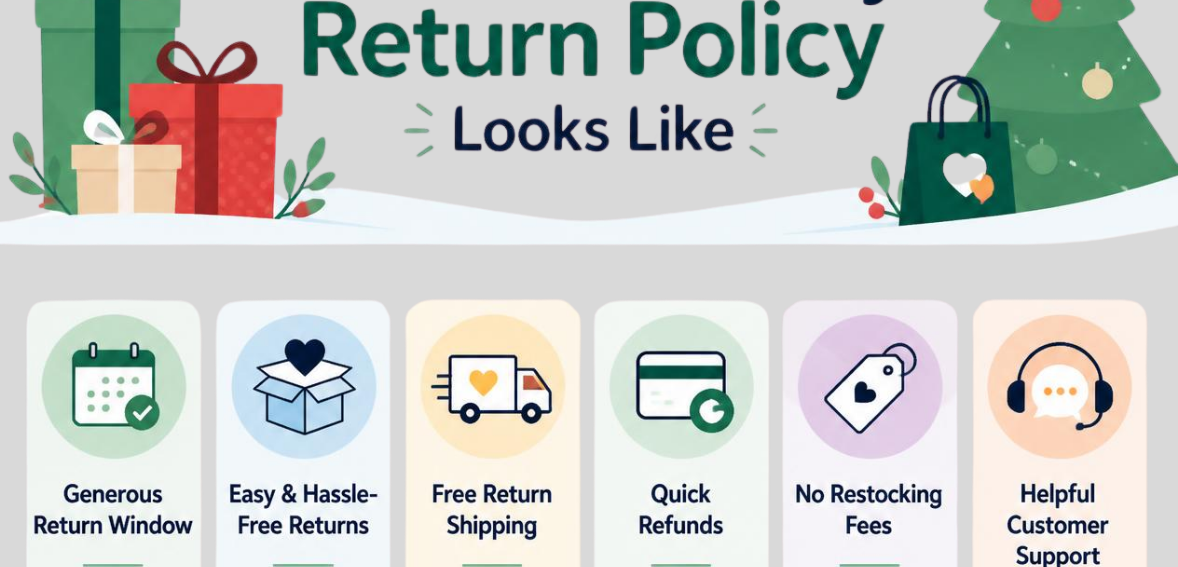
That is why a well-designed holiday return policy plays a crucial role in solving these issues. It offers shoppers sufficient time to exchange or return unwanted gifts while giving e-commerce businesses clear rules for processing gift returns, refunds, and store credit.
The key is to set these rules before the holiday rush arrives. Write, review, and publish your return policy in early fall, before Q4 sales increase. If you wait until December, employees have to make on-the-spot decisions, which can lead to more customer complaints and inconsistent treatment. Here is what a practical holiday return policy should cover.
Returns are a normal part of the holiday shopping season. According to research by Cart.com, almost 15% of holiday purchases are returned every year because of unmet customer expectations or gift exchanges. While addressing returns may seem like a shipping and financial burden, a seamless returns process can drive higher long-term profits by building customer trust. Unlike other times of the year, holiday shoppers expect more flexibility when returning an item.
A standard return policy usually assumes that the person who buys the product is also the person who will use it, but holiday shopping is different. A customer may buy a sweater, electronic device, toy, or home products weeks before Christmas Eve. The person receiving the gift may not have the original receipt or not know where it was bought. This can make the holiday return more difficult for retailers. For example, a customer buys a gift on November 6 and your return policy window ends within 30 days.
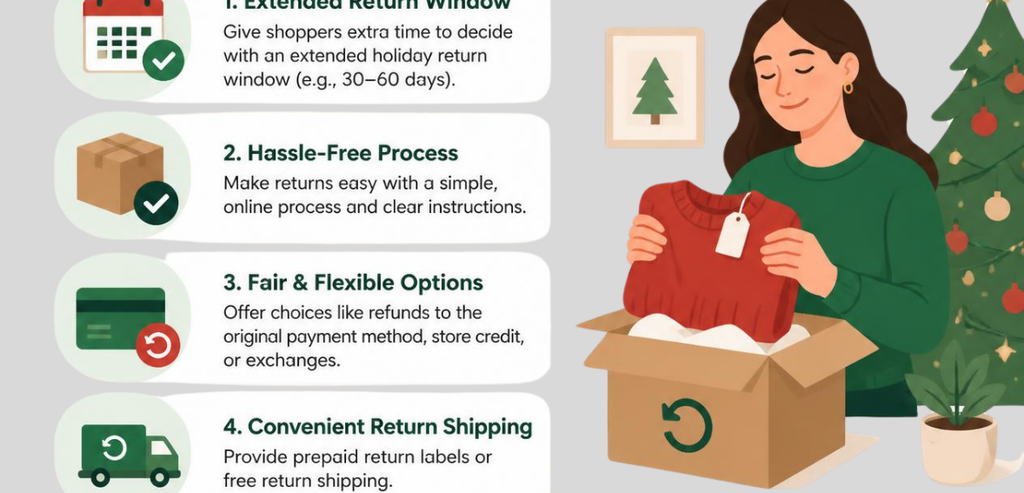
The recipient opens the gift on December 25 and finds the size is wrong and the color is not right. By then, the regular return policy window has closed. An extended holiday return policy gives gift recipients more time to exchange or return their gifts after the holidays.
During the rest of the year, you can offer 14-, 30-, 60- or 90-day returns. But for the holiday shopping season, consider extending the return window so your customers can review and return their gifts easily. Think about your customers’ shopping behavior while selecting dates for returns.
Make a baseline after reviewing your previous holiday sales data if you have it. Check when holiday orders typically pick up and when returns peak. That can help you choose an extension that fits your business instead of copying another retailer’s dates.
A common option is to give customers until January to return their purchases. This gives customers enough time to open their gifts and decide whether to keep them, return them, or exchange them if needed. Be transparent with your policy terms by avoiding vague statements, for example, “extended holiday returns available.” Your customers should be able to understand how your return policy works; include this checklist:
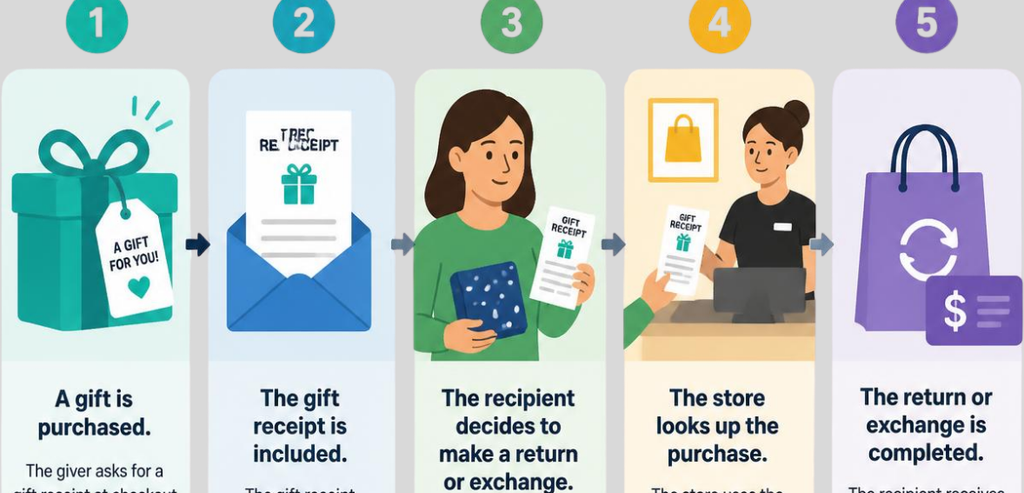
A gift receipt is another important aspect of a holiday return policy. A gift receipt shows that an item was purchased without disclosing the actual price. This makes it easier for the gift recipient to exchange or return it. Your return policy should clearly explain what happens when a customer presents a gift receipt.
For example, you may offer store credit or an exchange instead of refunding the customer to their original payment method. Your policy should also mention that customers may use either a physical gift receipt or an electronic gift receipt. Clear rules about gift receipt refunds help employees handle returns correctly and prevent confusion at the register.
One of the most important parts of the return policy is explaining where the refund goes. If someone paid with a credit card, the refund usually goes to the original payment method instead of being given as cash to the person returning the gift. This matters because the person returning the product may not be the same person who bought it. Your job is to ensure your policy clearly explains the difference between a regular return and a gift return.
Not every gift recipient will have a receipt, but that doesn’t mean you have to reject every return. Many retailers also offer store credit for gift returns. This policy is established to support customers who don’t have the original receipt. If you offer this option, make the rules clear. For example, the item may need to be unused or meet your return condition requirements. It must also be an eligible product, and the customer may need to provide another way to help identify the purchase.
The store credit option can help with gift returns because the person returning the order may not have access to the original payment method. This policy lets the gift recipient choose something they actually want based on their likes and dislikes. Customers should clearly know when they will receive a refund and when they will receive store credit. Your store credit policy should also be clear between these situations:
The holidays bring an onslaught of final-sale purchases. Something should be on product listings to indicate final sale, if that’s the case. It’s better to inform customers at the time of purchase about which products can’t be returned. Some products that usually have restrictions on returns include: clearance items, customized items, hygiene products, digital products, and personalized items. To indicate final sale or to state the return and exchange policy, the notice should be near the product listing or in the customer’s cart.
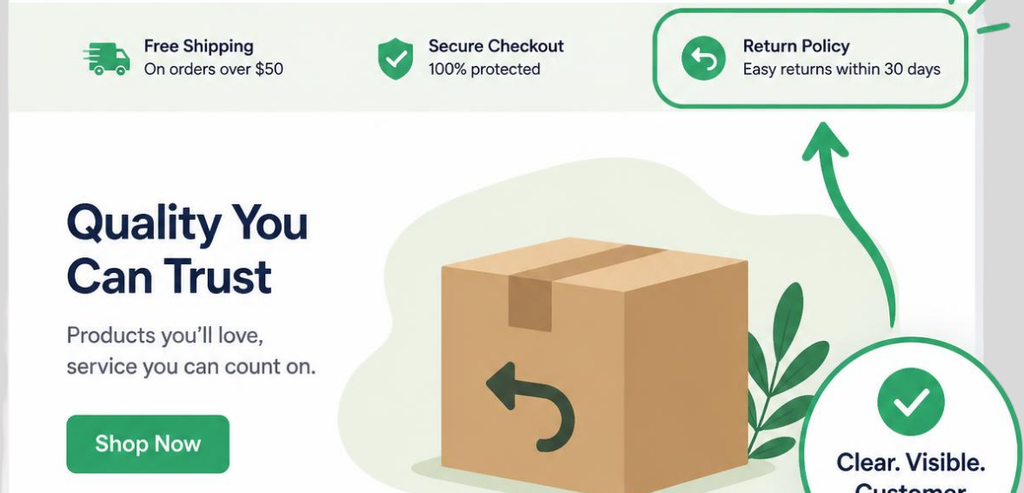
If you run the business from a physical space, post it in an obvious place. If you’re doing business over the phone, state it clearly to the customer. If you’re running it online, make sure it’s easy to find. Don’t lose business simply because your return policy isn’t obvious or easily found by the customer.
Post it in multiple places before holiday traffic begins.
Consider including it on:
While many stores wait until the holiday shopping season is in full swing to implement their return policies, you should post your policy well in advance. You’ll want to give yourself plenty of time to account for policy changes and to make any updates to your staff or your store. From an operational standpoint, you should decide on your policy, train your employees, and alter your systems well in advance to avoid issues during the holiday rush.
One situation that happens often during the holidays is that employees will make their own rules on a case-by-case basis, especially when dealing with returns. Sometimes employees will decide to accept a return after the return policy window, while others will refuse it. If you have policies and procedures in place and educate your employees on those policies, employees will be less likely to make their own rules when dealing with customers.
Return and refund policies are often impacted by local laws protecting consumers and specific product rules. Also, there may be rules requiring the disclosure of restrictions on refunds. Make sure you understand the rules for each location where you do business. This is especially important when you sell products on multiple websites or when you sell products across international borders. If your business has an attorney, you may want to have your return and refund policies reviewed by your attorney before each holiday selling season.
Help customers return purchases by extending a “reasonable” time frame. Anticipate and provide answers for customers about returning gifts. Tell customers about your policies for refunds, exchange limits, and final sales before they make a purchase. The most important thing to know about holiday policies is to make them before the holiday season.
If you don’t have time to plan your policies for the holidays, you can consult The Holiday Season Plan. This resource may also be useful to your employees because it gives information about policies for refunds and exchanges. Again, clear policies instill confidence in customers and give them the peace of mind to do their holiday shopping at your business.