

Posted: August 27, 2026 | Updated: September 22, 2026 at 3:53 PM
AI-based systems can’t enter card numbers the way a human would. They wouldn’t have a wallet or any tabs with buy-with-one-click buttons. Until recently, this was a hard limit on what could be done with autonomous systems. However, in July 2026, the x402 Foundation was established by a coalition of forty companies including Visa, Mastercard, Google, AWS, Shopify, and Coinbase. The x402 Foundation aims to solve this issue with the invention of an open payment standard.
The launch of the x402 Foundation means agent commerce has officially moved from a slide in a deck to governed business infrastructure on the internet. What is described next is a non-technical description of what the x402 Foundation and each of the card networks signing up mean for merchants, and what, if anything, merchants must do about it.
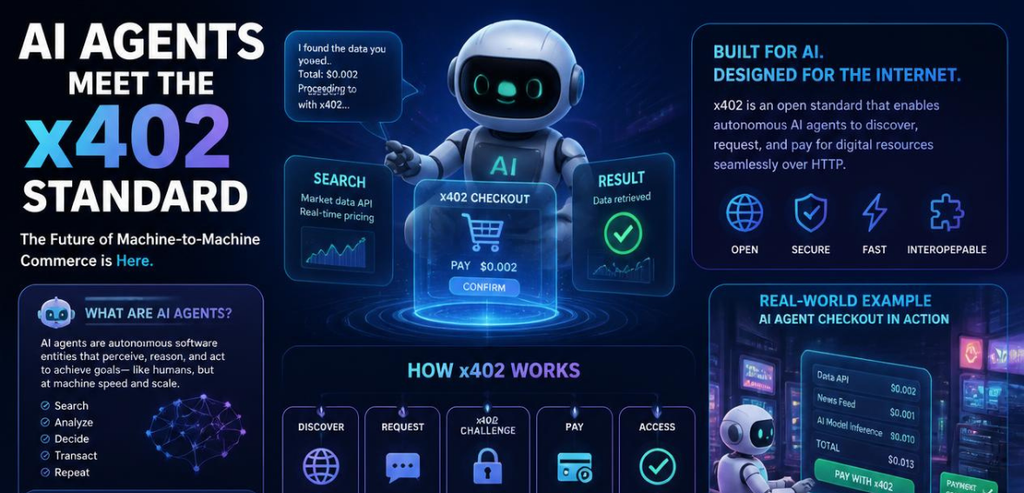
The x402 Foundation is the new governance body for x402, a protocol that allows web requests to carry payment for resources. It uses HTTP status code 402, which has been unused for over 30 years. When software, an AI agent, or an API requests access, the server responds with payment instructions, the software pays automatically, and the server fulfills the request. x402 requires no logins, no stored credit cards, and no human interaction.
In May 2025, Coinbase launched the original x402 protocol and open-sourced it. This protocol streamlines instant machine-to-machine stablecoin transactions. Coinbase also stated in September 2025, alongside Cloudflare, that it was giving control of the protocol to an independent foundation, instead of keeping it internally.
In April 2026, the Linux Foundation announced that they would host the x402 Foundation. The x402 Foundation launched with forty founding members on July 14, 2026. The founding members represented payments, cloud infrastructure, and blockchain networks. Seventeen founding organizations, including Visa, Mastercard, American Express, Google, AWS, Cloudflare, Stripe, and Shopify, committed as premier members and will have a seat on the governing board.
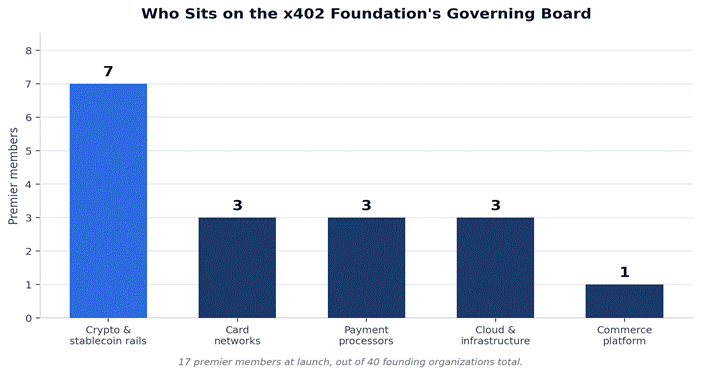
According to published materials by the x402 Foundation and the Linux Foundation (July 14, 2026), seventeen of the most recognized companies, divvied up by sector, have joined the premier members group.
Middleware services called facilitators do the work of verifying payments, submitting them to the blockchain, and negotiating settlements. Because of this, the API or service receiving payment does not have to write any logic for a blockchain. A major protocol update in late 2025 added support for reusable wallet sessions alongside the original pay-per-request model. An agent can now authenticate once and make requests multiple times without requiring individual on-chain transactions. Per-request on-chain transactions used to be too costly and too slow for frequent requests, but now one agent can make requests to an API multiple times per minute.
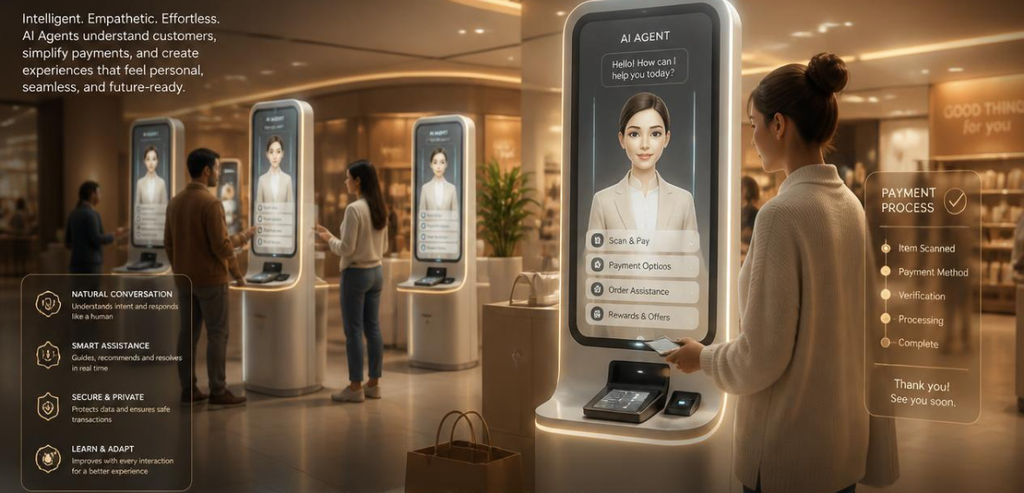
An AI agent can complete some or all of the actions required as part of an online purchase without a user going through the checkout process themselves. This can range from a shopping assistant checking prices and purchasing shoes, to an agent paying pennies to access an API. x402 is focused on the latter type of transaction: smaller, rapid transactions between software service providers, settled using USDC (a stablecoin) as opposed to payment through a card network.
Consumer-facing agentic commerce makes purchases on a shopper’s behalf using the shopper’s approved card. This commerce operates under other standards like the Agent Payments Protocol made by Google and supported by Visa and Mastercard. The two systems will likely converge, but for now, each must be considered separately when a merchant assesses how they will be exposed to each system.
Crypto exchanges creating stablecoin protocols typically spark concern from card networks. Card networks responded in both a defensive and an offensive manner. The launch of at least six agentic payment frameworks within six months is concerning for merchants and developers as they are faced with integration fatigue. All of the frameworks will be built on a single open standard for the machine-to-machine layer, thus removing the risk that one company can control the rails agents rely on.
In April 2025, Visa launched Visa Intelligent Commerce. In October 2025, Visa added Trusted Agent Protocol. Merchants can now verify that the request is coming from a legitimate AI agent and not from a malicious bot. Visa has joined as a premier or launch member of the x402 Foundation and Google’s AP2. This places Visa on both the card-rail and stablecoin sides of agentic payments.
Mastercard created Agent Pay using Agentic Tokens to link a tokenized card credential to a particular agent, merchant, and consent policy in April 2025. Mastercard has recently taken a place as a premier member in the x402 Foundation and was an early partner of Google’s AP2. Mastercard now has the ability to operate in multiple major agentic payment systems currently available in the market.
Google’s Agent Payments Protocol (AP2) had over 60 partners, most notably Mastercard, PayPal, Coinbase, and American Express, at its launch in September 2025. AP2 is payment method neutral. It uses different payment systems, such as card payments, bank transfers, and stablecoins, behind the same cryptographically signed permission records called Mandates. Google has supported the x402 Foundation separately, and its protocol sits a layer above x402, meaning it is not in competition with x402.
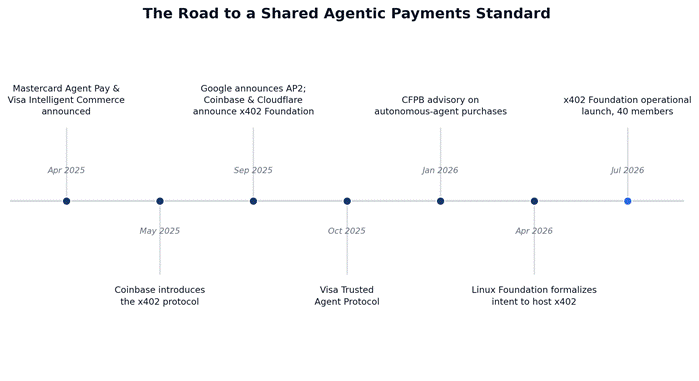
Sourced: compiled from Linux Foundation, Google Cloud, Digital Commerce 360, and PYMNTS coverage of agentic commerce standards launches, April 2025 to July 2026.

Early real-world x402 activity is found in places most merchants never see, such as agent-to-agent marketplaces where the agents pay each other with small amounts of stablecoins for access to resources or compute and data. The earliest interactions with x402 for subscription, property, fitness, nonprofit, or field-service businesses will not be with x402 directly, but with consumer-facing agent checkout flows built on top of Mastercard Agent Pay, AP2, and the Trusted Agent Protocol. Both of the card networks have said their dispute protections will extend to erroneous purchases by agents. Additionally, early indications suggest the card rail will be the first place most merchants will engage with agent-based commerce.
The most natural early engagement will be with the existing card-on-file and recurring relationships. Membership renewals, for example, are already processed with a standing authorization, which is the kind of relationship AI agents are designed to manage. One-time purchases, on the other hand, will likely require human involvement for a period of time, and as a result, full delegation to agents will remain low.
How merchants accept payments doesn’t have to change with the launch of the x402 Foundation. Currently accepted payment methods (card, ACH, digital wallets) will continue to be accepted the same as before. What has changed is that everyone is now pointed in the same direction. Every network has endorsed the same structure for payments initiated by machines, which now means that, in all likelihood, agent-initiated payments will arrive through recognized, tokenized, auditable payments as opposed to the currently unstructured group of custom connections.
HMS Pay would continue to process payments via the same merchant account and gateway connections currently in use. For transactions HMS Pay processes, it makes no difference whether the end party, the shopper, is a human or an AI assistant acting on behalf of the shopper.
As the standards for agentic checkout and tokenization, as well as the underlying networks’ rules and metrics for determining liability, become defined, instructions for how transactions will be authorized and settled will follow. This would not require merchants to do any work on their end.
Let’s call it like it is. Early coverage of the x402 Foundation’s July 2026 launch reported that hundreds of millions of dollars of transactions flow through the protocol every month. However, the same coverage noted analysts suggesting that a lot of the activity, if not all, was probably testing and speculative activity and not strong commercial demand. No government has passed a law that imposes liability on an AI agent for buying something a consumer did not intend to buy.
US regulators have said that consumer dispute rights remain even when a purchase is delegated to an agent. The networks are still working on the operational details of how issuers and merchants deal with these disputes. Agentic commerce standards have real funding and backing. They are not up and running yet and are not a checkout button that merchants can add to their websites.
A few straightforward questions help differentiate real market demand from hype. From your customer base, are shopping assistants or booking tools powered by AI already in use? Are agent-based tools still a hypothetical for your market? Is your payment processor or gateway aware of, and have they published a roadmap to support agent-verification protocols like Visa’s Trusted Agent Protocol or Mastercard’s Agentic Tokens, and if they have published a roadmap for this feature, are there timelines associated with the implementation of this roadmap?
For your current dispute and chargeback systems, do your processes collect enough context from each payment transaction, including the device and session, to support a case in which a customer claims their agent acted in a way that violates the agent’s instructions? Is your marketplace one which includes small, automatic payments that tend to be handled more easily by agents as compared to large, one-time payments? The businesses that stand to gain the most by preparing for agentic commerce are the businesses that have created a product or service that includes easy, recurring payments since this naturally creates a relationship that best suits an AI agent’s efforts and tasks.
Three things will be interesting to follow over the next year. One is whether card networks route transactions requested by agents through the x402 rail, the AP2 envelope, or if they use their own tokens. This will affect how a merchant’s processor needs to integrate. The second is if regulators such as the Consumer Financial Protection Bureau issue binding rules on agent transaction liability instead of providing advisory guidance.
This will change how chargeback resolution is done on these transactions. The third is if commercial volume, rather than testing traffic, shows up in the transaction data of the x402 Foundation and its member companies over the next two to three reporting cycles. Any of the three may make agentic commerce an important operational issue that merchants have to consider.
The launch of the x402 Foundation is an industry first: it brought Visa, Mastercard, American Express, Coinbase, AWS, Google, and others to the table to jointly govern an open payment standard. Getting this group to agree to work together on this shows that the industry is taking AI agents as economic players seriously, and this isn’t just a fad. From most merchants’ viewpoints, not much has changed.
There have been no modifications to the rules around chargebacks, no new regulations have been written to amend liability laws, and there has been no change to how the merchants accept cards. The infrastructure needed for agent payments in the future is now being built in open standards under shared governing bodies instead of being built in closed proprietary systems. Given that most merchants will not see much change, they should choose to actively watch this construction instead of finding out about the changes after the fact.
AI agent payments refer to the software that buys goods or services on behalf of the end user. This software can also make the transfer without the user having to go through the checkout process themselves.
x402 is an open payment standard aimed at creating the possibility for automated software payment for digital goods with the HTTP 402 status code. Payments are usually settled in stablecoins. The standard removes the need for accounts or manual approval.
Not yet. There is no effect on current card and ACH payments. Recurring billing merchants should monitor their processors’ roadmaps for agent-verification adoption.
The x402 Foundation opened with 40 members, which include Visa, Mastercard, and Amex, among others.
Typically, an online payment means the end user inputs their card details, while an agentic payment authorizes software to do that for the end user.