Posted: August 05, 2026
The news of a payment settled by a virtual card excited you until you saw the statement with a settlement fee higher than you expected. Without an invoice, it felt like free money. A settled card payment, easy to process, but expensive.
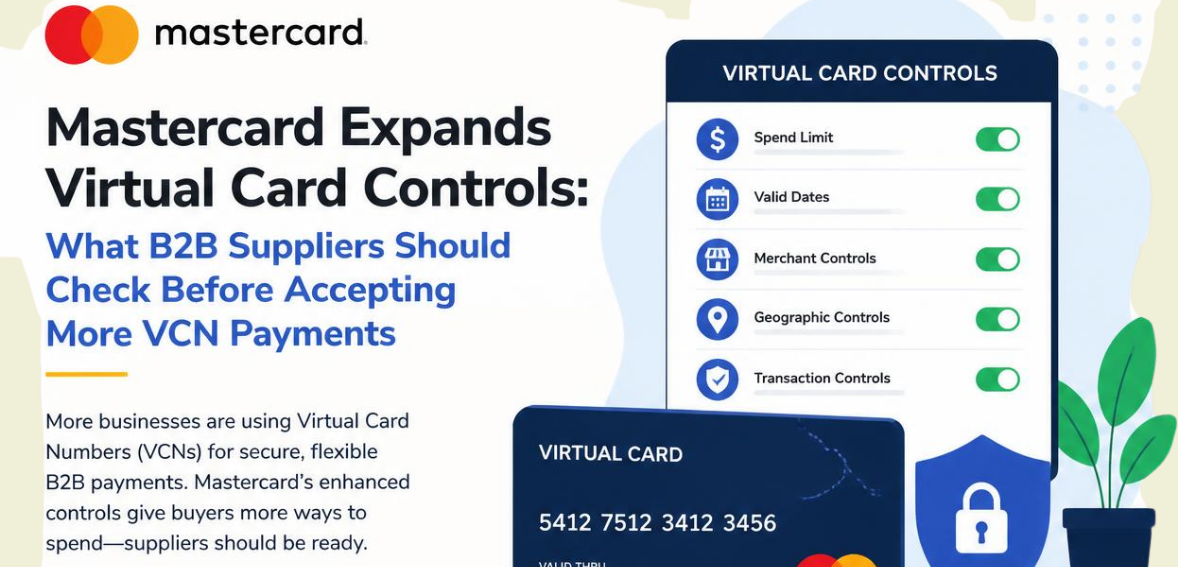
In July 2026, Mastercard made virtual cards easier to issue for buyers. This translates to increased spend pushed to virtual cards for you as a supplier. This means more card spend arriving with less friction on the buyer’s side. This document is to help you accept the card payment offer.
This document spells out the details on: what’s really different? What is a virtual card number? Why is accepting a virtual card like accepting a payment by check? Why does the right data help you get back some of your settlement fee? Why is straight-through processing a better option than manual keying? Why does reconciliation trip up suppliers? And lastly, what do you need to really verify before accepting higher volumes? Accepting a virtual card payment in B2B is a good decision. It is a bad decision only if the price was never checked.
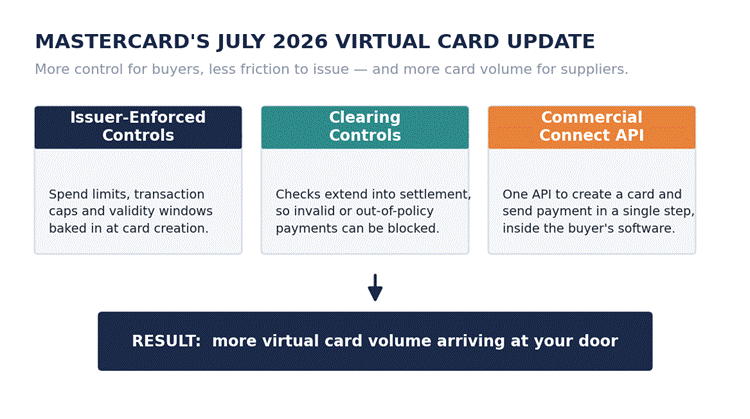
Figure 1. Mastercard’s July 2026 update tightens control and lowers friction for buyers, which means more virtual card volume heading toward suppliers.
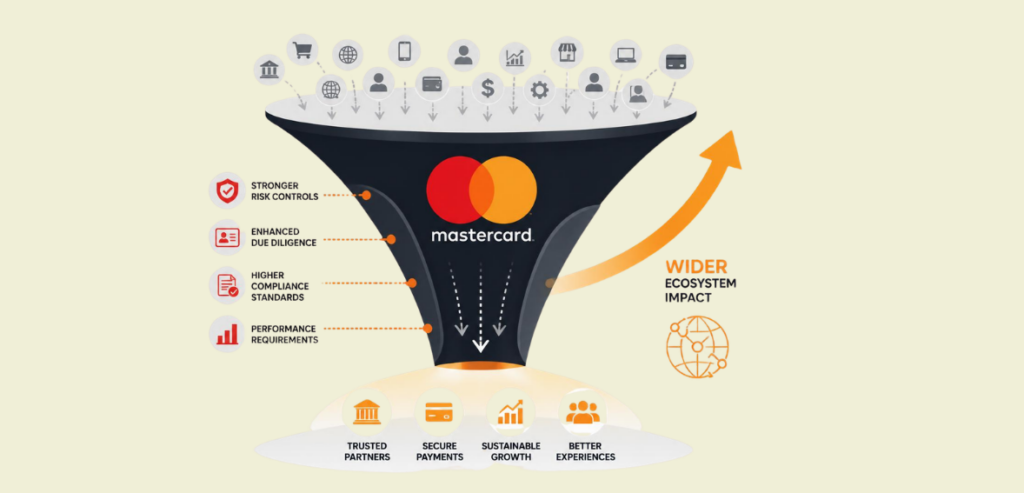
Mastercard made the announcement on July 23, 2026, with the theme “More Control, Less Friction.” Their commercial virtual card platform introduced some friction-reducing features that allow both card purchasers and card issuers to have better controls and oversight. While the friction in the process of creating and sending virtual cards to suppliers is reduced, it, unfortunately, increases the card payment flow to suppliers.
Mastercard In Control
“Mastercard In Control” provides virtual card capabilities combined with the latest updates to their platform and governs capabilities offered by Mastercard. This latest release has two primary features. The first feature is an issuer controls feature allowing banks to enforce spend limits and card expiration controls when the card is issued. The second feature is clearing controls. This feature allows checks to extend beyond the initial transaction authorization to the settlement. This means that even if the transaction is approved, the transaction can be blocked during the settlement process.
Mastercard also mentions that the fraud rate on virtual cards is significantly lower than the fraud rate on traditional cards, and these controls are meant to reduce the fraud risk even further. The practical takeaway for suppliers is that the virtual card transaction that is hitting their payment processing terminal has much stricter controls regarding the spend, use, and expiration of the virtual card.
Commercial Connect API
This section of the announcement deals with plumbing. Don’t tune out yet. At its core, half of the deal centers around the convenience of using the new API that Mastercard designed as a result of feedback from 69% of firms that struggle to integrate payment mechanisms into the myriad of operational platforms that they utilize across their businesses. They have named their APIs “Commercial Connect.”
One of the immediate benefits is that one can now generate a virtual card and drive the payment process all within a single action. Additionally, Commercial Connect integrates with a growing number of Expense, Accounts Payable, ERPs, and Travel booking solutions. As a result, they are embedding their payment capabilities into multiple layers of the corporate payments ecosystem.
Citi has the new controls and capabilities as the first bank to implement the live controls, with a global rollout planned for the remainder of 2026. Mastercard’s Commercial Connect also creates the capability to generate virtual cards within the existing customer software. As a result, expect to receive customer requests for the acceptance of virtual cards more often.
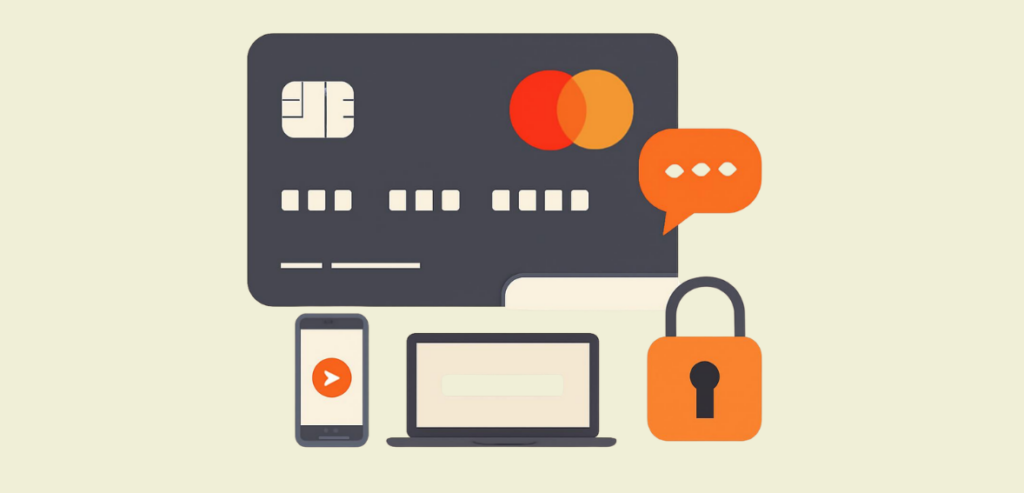
Before you assess the value of accepting a virtual card, it may help to understand what you receive in exchange for the payment. A virtual card number (VCN) is a card number that, like any physical card, is linked to a commercial card account, but is issued on-demand and for a particular purpose.
Most virtual cards are designed for one and only one purchase, are locked to a payment or a vendor, expire after a predetermined and short time, and have an amount matching the invoice loaded on them. After the purchase is made, the virtual card number becomes useless.
This design provides several distinct advantages to buyers of services or products that accept virtual cards. First, a virtual card number cannot be reused, even if it is exposed. Second, even if the card number is exposed, the number cannot be used to make a purchase that exceeds the predetermined amount.
Finally, the design of a virtual card number creates a digital record of the purchase that is tied to the invoice associated with that purchase. The latest controls from Mastercard are intended to further secure this model. From the supplier’s standpoint, accepting a virtual card means accepting a commercial card payment and provides all the economic implications associated with accepting a commercial card.
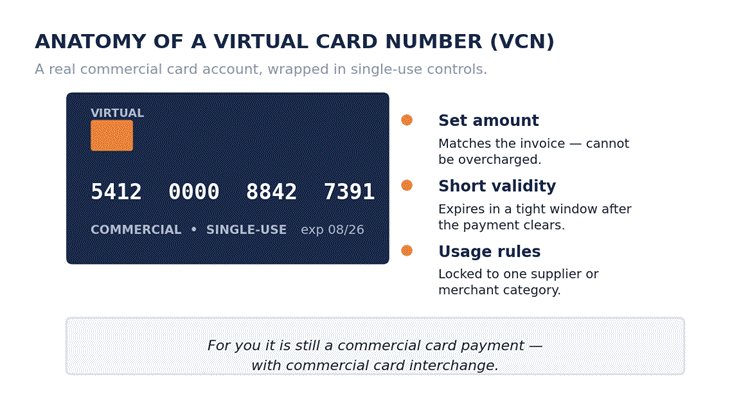
Figure 2. A virtual card number is a real commercial card account wrapped in single-use controls: a set amount, a short validity window, and rules about where it can be used.
It’s not a rare occurrence that a customer’s most costly payment method to you is a virtual payment card. This isn’t a new phenomenon due to changes with MasterCard. This is how commercial virtual cards work. Knowing how they function helps you know where the costs are and should minimize the surprises you will face.
To begin, it’s useful to know the nature of the card. Virtual payment cards are an extension of a corporate, purchasing, or business card and fall into the same high-cost commercial cards category as compared to consumer credit and debit cards that you would find at a retail cash register. Interchange fees vary widely, and for commercial cards the rate is often from 2.5 to 3% and sometimes higher, while traditional wire or ACH payments may cost a dollar or less. A payment with a virtual card may cost you several percent of a five-figure invoice in the B2B world.
The second consideration is the payment method. Virtual payment cards are often sent to suppliers via email, and the card information is manually typed into a payment terminal. This method falls into a card-not-present payment and is the highest-risk payment method, and as such, the networks assign the highest interchange to this method. It is also the most expensive method for a supplier to receive a virtual payment card.
Fortunately, you have some flexibility with regard to cost. Two factors drive cost, and both are up to you. One of those factors is the information you send along with the transaction. The other is the method used to process the payment. This document focuses on both of those factors.
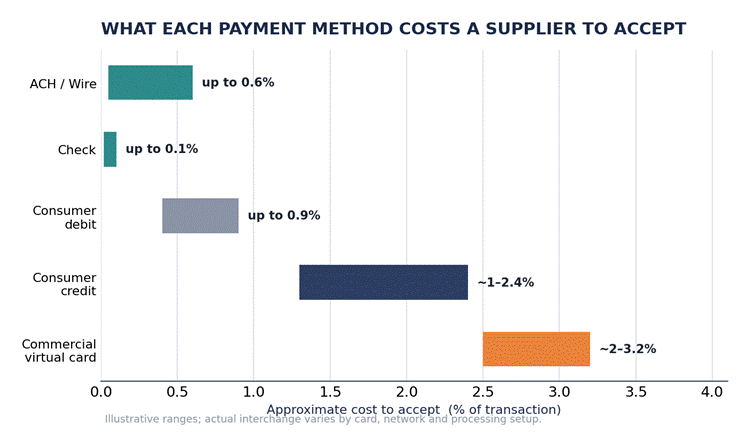
Figure 3. Acceptance cost by payment method. Commercial virtual cards sit at the top of the range, which is why the data you attach to them matters.
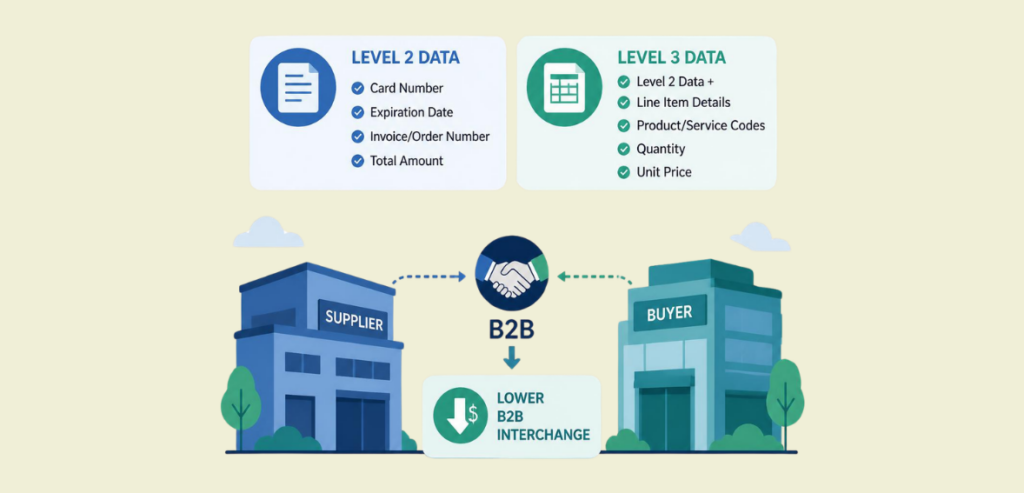
This is the lever that most suppliers don’t use. The card networks provide lower interchange rates for commercial card transactions when you supply additional data about the payment. The reasoning is that detailed and verifiable transaction data appears to be an authentic business transaction instead of a possible fraud, and lower-risk transactions merit lower rates. This improved data is typically offered in two levels, Level 2 and Level 3, and they are often the largest potential cost savings on B2B card acceptance.
Level 2 is the first enhancement to a standard transaction. A Level 1 payment provides only the merchant name, transaction date, and total amount. Level 2 payments include the total sales tax amount and either a customer code or purchase order number. The customer code or purchase order number must be provided, and the tax value often cannot be zero.
Transactions fail to qualify for Level 2 for many reasons, but this is the most common. Once you qualify for Level 2, each transaction will incur a slightly lower interchange fee of 30 to 60 basis points (0.30% to 0.60%). For Level 2 transactions, the cost of a lower interchange fee often makes the cost of the system upgrade worth it. Level 2 transactions are typically used for high-value invoices.
Level 3 goes even deeper, into full line-item detail. In addition to all the requirements of Level 2, a Level 3 transaction includes item descriptions, product or commodity codes, quantities and units of measure, unit costs, line-item totals, and freight or duty amounts. It is basically your invoice, in the format that all the card networks require, and meeting that standard can earn approximately another 50 to 100 basis points on top of the Level 2 savings. When combining the two, suppliers can save up to 1% to 1.5% of the overall cost of qualifying commercial card spend. For a $50,000 payment, that is a savings of $500 for each 1% reduction.
There are a few things that keep this honest. Only commercial cards qualify for these tiers, meaning that consumer cards and travel and entertainment cards (for example, hotels, airlines, and restaurants) are generally excluded no matter what data you provide. Also, the networks are constantly changing the rules.
For example, Visa recently revamped their enhanced-data program and eliminated their standalone Level 2 rate for Visa business cards, while Mastercard still continues to support the traditional Level 2 and Level 3 structure. Although the details are changing, the fundamental idea still applies. Richer data buys cheaper acceptance.
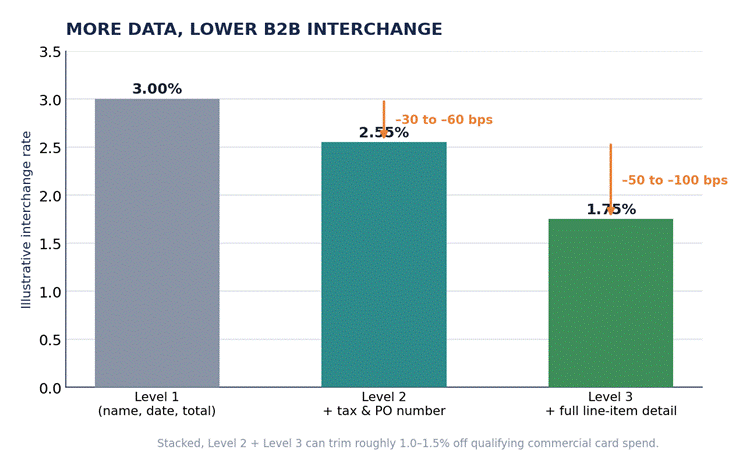
Figure 4. Each step up the data ladder unlocks a lower interchange rate. Level 3 detail can cut roughly one to one and a half percent from qualifying commercial card cost.
Data is just one part. The other part is how payment processing works, and whether or not you will ever utilize that enhanced-data discount you could potentially capture. Essentially, there are two options for how you can accept virtual cards: either you do it through manual entry, or you do it through straight-through processing (STP).
Most suppliers end up doing manual entry, whether they like it or not. When a virtual card is sent, it’s been found that one of your coworkers has to go to the email, copy the virtual card, and enter it into the payment terminal. After doing this, they have to go and match the payment with the invoice and record it into the accounting system.
While this method works, it is slow, can be done incorrectly, and ends up causing the transaction to fall into the card-not-present (CNP) tier and lose money. It’s not surprising that 42% of suppliers in the US say that the manual processing and reconciliation is the biggest obstacle to accepting virtual cards.
With straight-through processing, a lot of the manual work can be removed. With this processing, the virtual card details can be sent to the payment processor. Authorization requests can be generated independently, and payment can flow to the accounting system, signaling to match the payment with the invoice.
No one copies a card number, and no one makes a mistake entering a card number. The biggest advantage is operational, saving several hours and significantly reducing errors. For suppliers that do a lot of transactions, the savings alone is significant.
Processing also automates the addition of Level 2 and Level 3 data that qualifies for a lower processing fee. Unlike before, there is no need for manual data entry. The difference is most significant for manufacturers, distributors, and healthcare suppliers with high card transaction volumes.
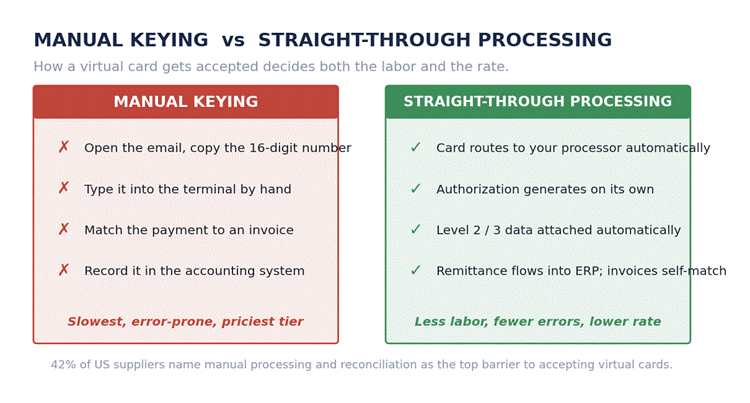
Figure 5. Manual keying is slow, error-prone, and lands in the costliest interchange tier. Straight-through processing automates entry, authorization, and reconciliation.
There is an added cost for virtual cards beyond just the interchange fee. The cost includes figuring out what each payment was for. This part of the virtual cards system slowly takes a toll on a supplier’s finance team, and it is worth paying attention to this system before accepting large volumes of virtual cards.
This is the issue with virtual card payments. When a payment is made with a virtual card, the payment often does not match a specific invoice or order. As a result, a finance team member has to determine what payment corresponded to what invoice, if the payment was for the entire invoice amount, and how to record this payment in the accounting software.
The process of matching payments to invoices is done manually, and the impact of this system is directly proportional to the card volume. The volume of virtual card payments is essentially the volume of the reconciliation work, unless there is some technology to change this. The real cost of virtual card payments for suppliers is in the reconciliation work, not in the transaction fees, which is why suppliers resist virtual cards.
The solution is to require remittance data and system integration automation from the beginning. A good payment integration system offers the payment along with the remittance data and pushes it into the accounting system to clear the invoices. The recent systems from Mastercard and their integration partners focus on connecting virtual card payments to the systems where matching will occur. Before accepting higher volumes of cards, this is the only question that needs to be answered.
Will your team recognize the purpose of the payment instantly, or will someone have to waste time looking for payment details?
A short pre-flight check can be assembled at this stage. None of this means you have to decline customers. It allows you to say yes to increased virtual card volume while still keeping your margin intact rather than eroding it while saying yes at a cost to you.
Let’s start with the effective rate. Your effective rate is the total cost of card fees (a.k.a. the total you pay in card fees) divided by your total card volume. Put another way, how much do you think acceptance costs you right now? Your effective rate is the baseline for the starting point of that answer, and it is also the starting point for that answer at any later date. Next, check to see if your current processing arrangement has Level 2 and Level 3 data, because if it does not, then you are most likely paying the highest rate on every single commercial card.
Take a look at how virtual cards are sent to you now because the most expensive and least reliable way of doing this is a batch of emailed numbers generated through a manual entry by the cardholder. Look at the payments and be honest about how many hours this reconciliation consumes.
Lastly, look at the other payment methods your customers would prefer to use because for some business relationships, an ACH or wire arrangement is a better deal for both parties than a card would ever be. The end goal is not to accept every single virtual card or to deny them, but rather to understand your numbers before the volume increases.
Most suppliers can’t answer these questions on the fly, and this is the purpose of the formal acceptance-cost review. The economics behind commercial card acceptance become more complex with matrices of interchange that stretch to hundreds of rows, and with network rules that change from year to year. A formal review simplifies this, and tells you, in monetary terms, your standing and what you need to do to improve it.
The review starts with analyzing your actual processing statements and determining your true effective rate. It analyzes how much of your processing volume qualifies for enhanced-data rates, and how much processing volume pays a premium for missing that data. It identifies your readiness and capability of passing Level 2 and Level 3 data, and models the potential fee and labor savings of STP, and the relative cost of accepting commercial cards compared to ACH or other payment methods for your specific clientele.
The result is the measurement of what you are paying for your current services and what you stand to gain with a more optimal service. With the increase of volume of commercial card transactions on the back of the new Mastercard policy, that measurement is the difference between a positive impact on your cash flow and a silent drain. If you are unclear on the costs of accepting virtual cards, a review is the quickest way to find out.
The source of the issue is not the virtual card, and it is definitely not “free money.” It’s a commercial card payment that has the highest acceptance cost of most of the ways you can be paid by a customer. Mastercard’s update in July 2026 does not change that. What does change is that virtual cards will be easier for your buyers to issue and send. That’s right, more requests are coming, and the suppliers who have prepared for them will thrive.
Preparation is very simple and easy. Just be aware that a virtual card is a commercial card and price it that way. Capture the Level 2 and Level 3 discounts, which could be a reduction of more than a full point on spend that qualifies. Eliminate the manual input of data and implement straight-through processing to avoid paying the highest rate and losing hours to data entry.
Demand remittance data so that the growing volume of data will not create a reconciliation burden. Analyze the costs before you expand, and get a true acceptance-cost review if the costs are a mystery. Accepting more virtual card payments will truly become the easiest, most convenient payment method for your customers, and the acceptance cost for you will be controlled and predictable. The easiest payment method will also be the most expensive if you don’t implement any of these suggestions.
A single-use card number is connected to a buyer’s commercial account. This number is typically restricted to a single payment for a specified amount and a limited time span.
They travel on commercial cards that have higher interchange rates, and because of manual keying, they land in the most expensive processing tier.
Sending tax, purchase order, and line-item detail qualifies commercial transactions, resulting in interchange savings of approximately one to one and a half percent.
Yes, most of the time, if you know the cost and can capture the enhanced-data rates. For some relationships, ACH or wire transfer may be best for both sides.
Activate Level 2 and Level 3 data. Change from manual entry to straight-through processing and perform an acceptance-cost review to identify your gaps.