Posted: August 31, 2026 | Updated: September 22, 2026 at 3:53 PM
For Delta, American Express is a windfall. This year, Delta expects American Express to send it nine billion dollars. CEO Ed Bastian confirmed this on Delta’s earnings call for the second quarter of 2026. It is not related to ticket purchases or baggage fees. It is what American Express pays Delta to continue to use the SkyMiles branding on their cards and to continue to process purchases with those cards. This number is probably out of reach for most small businesses.
However, the elements that influence the number (card acquisition and behavioral spending effects) matter to a five-person small business just as much as to an international airline. This article will examine the American Express Delta partnership in detail, explain the reason for the partnership’s growth, and outline opportunities for small business loyalty programs based on this partnership.
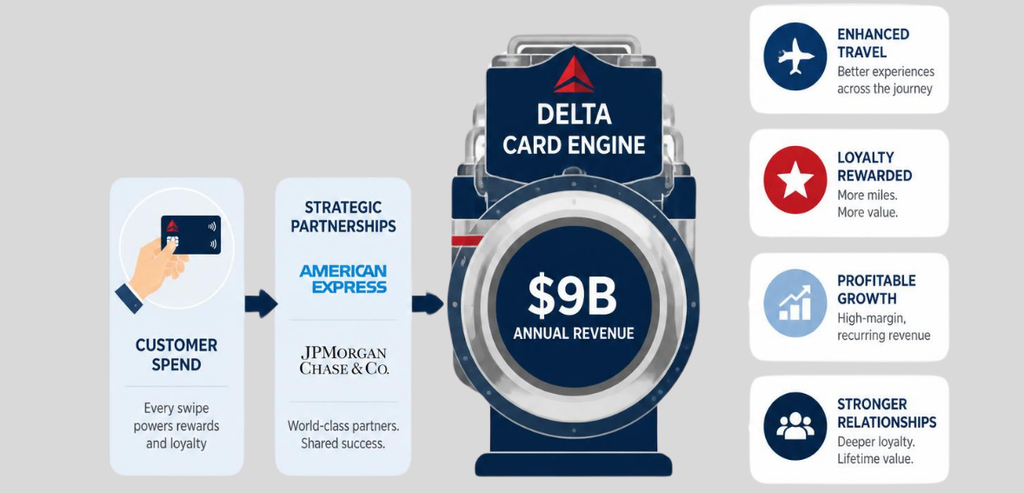
Bastian pointed out on the analyst call that Delta anticipates remuneration in the amount of nine billion dollars this year, a ten percent increase from 2025. That’s not a single strong quarter. 2026 second quarter marked the seventh consecutive quarter of double-digit spend growth on the company’s co-branded cards. Bastian singled out the high-end cards in the portfolio, explaining that premium cardholders in particular were driving the growth.
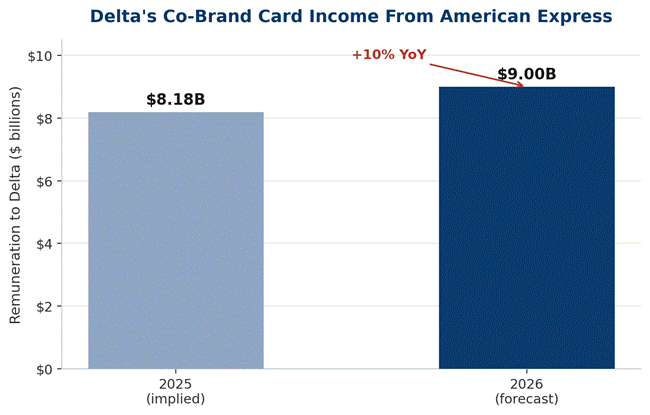
Co-brand remuneration is expected to reach $9 billion in 2026, up 10%, as stated by Delta CEO Ed Bastian on the Q2 2026 earnings call. The 2025 figure is implied from the reported growth rate.
Delta does not issue credit cards. It lends its brand, frequent flyer program, and route network. For this alliance, Amex pays Delta for the new cards it issues and for the dollars spent on them. Bastian noted that Delta is Amex’s only U.S.-based branded airline partner and vice versa. Neither is sharing focus, or economics, with a competing version of the alliance.
For American Express, this partnership is a customer acquisition channel. American Express added 3 million new card members during the second quarter of 2026. This was slightly below the 3.1 million new card members the company added during the first quarter of 2026. Amex will continue to invest in marketing in the second half of 2026. Amex will increase marketing spend by 10 percent compared to 2025 to fund additional growth of its card member base. Most executives believe that card members who have a loyalty program relationship spend significantly more regularly than other customers.
Most flights are the same, so airline loyalty programs advertise travel upgrades. Airline executives say it is more about understanding how to increase spending per customer. When an airline earns a customer’s loyalty, that customer spends more on average than customers of competitors. This is also observed in other industries. Almost 60% of customers said that they spend more money with brands where they have a loyalty membership.
Additionally, repeat customers tend to spend more with a brand where they have developed a relationship. Delta’s card business is an example of this logic. A small business does not need a billion-dollar co-branded deal to benefit from the same loyalty logic. What matters is a system, and a reason, for a customer to come back a second or third time.
This is also why the number keeps climbing rather than flattening out. A loyalty relationship compounds. A cardholder who earns a free flight with Delta this year will continue flying Delta next year to protect their status or keep racking up points to redeem for the next free flight. Compound effects occur at much smaller businesses as well.
A customer at a local salon who is just two visits away from a free service is much more likely to keep the next appointment with that salon than to go to the salon down the street. Granted, the contexts are totally different, but the underlying driver is behavior, and building a repeat-customer system is easier than hoping customers will come back on their own.
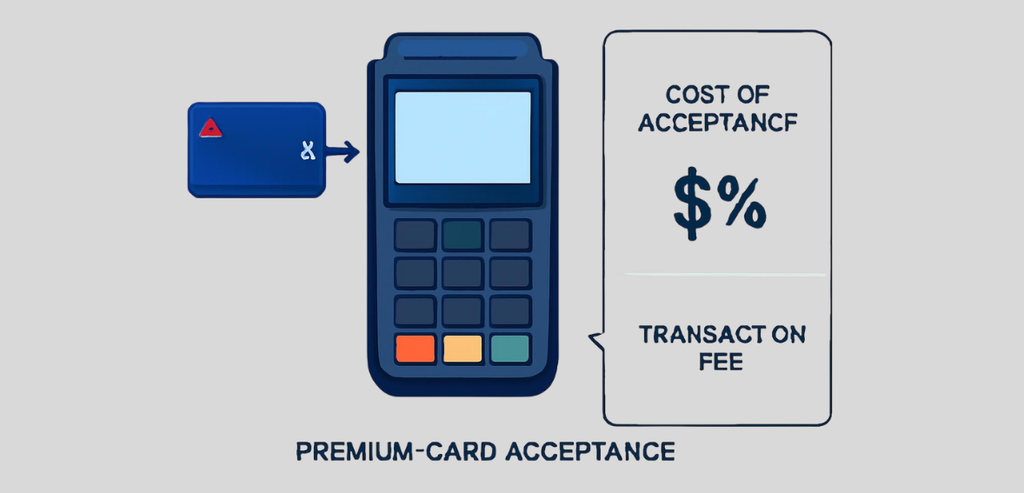
This is where Delta’s growth may not be favorable to a merchant’s bottom line. According to Bastian, growth has been dominated by holders of more expensive Delta cards. More expensive cards come with more rewards. Rewards are, in part, recovered through interchange, the fee paid by the merchant’s bank to the cardholder’s issuing bank on every sale and passed on to the merchant. Standard consumer cards in the U.S. carry interchange in the neighborhood of 1.5 percent.
A rewards card can be expected to carry a higher rate. Travel cards that Bastian was talking about fall into the premium rewards card category and command an interchange rate that is far greater than a standard rewards card, and the interchange rate escalates as competitors race to offer rewards to their high-value customers.
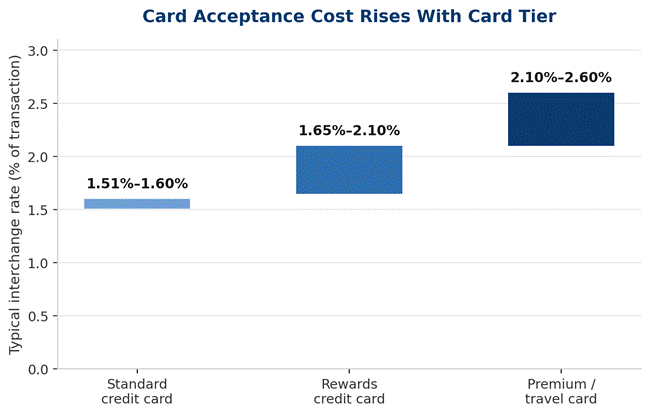
Posted interchange ranges for consumer cards, per 2026 card-present interchange schedules and industry processing-cost guides. Actual rates differ by payment network, merchant category, and transaction type.
This happens beyond Amex. Around three-quarters of consumer credit cards on the market are rewards cards and they account for over ninety percent of the total spending on consumer credit cards. In effect, a business that chooses to take any payment card is actually taking a rewards card, irrespective of the price structure a business has decided on.
A small business does not need a mileage program or a co-branded card partnership to apply these lessons. Loyalty programs can be constructed using a few low-cost ingredients. The first ingredient is finding a way to track repeat purchases. A coffee shop could simply use a punch card system, while a gym might offer a free class after a successful referral. The second ingredient is offering a meaningful reward for a low marginal cost. An ideally constructed loyalty program would offer a free coffee or a free gym class.
The final, and most important, ingredient is consistency. Once a reward system is designed, it must be consistently offered. Offering rewards for repeat purchases ensures customers return instead of shopping around. Delta’s card program is a model example of consistency, offering a reward of frequent flyer miles for every purchase. Since consistency matters more than scale, a local coffee shop can run loyalty just as effectively as a large coffee chain, and a local gym just as effectively as a large gym chain.
It’s important to distinguish between a loyalty program a business runs and rewards programs carried on cards. While they can align to some extent, a business only controls a loyalty program. When card issuers create rewards programs, they try to maximize consumer spending by setting point thresholds or bonus categories. Because of the design of credit card rewards programs, a significant portion of cardholders adjust their spending to maximize rewards.
This behavior benefits the merchant by increasing the average ticket size. This behavior is costly to the merchant due to the interchange fee on the transaction. The Delta and Amex numbers show small businesses how to appropriately think about these rewards trade-offs as a positive aspect of business, as opposed to the surprise of a large interchange fee on their processing statement at the end of the month.
This pattern does not affect all customers equally. More often than not, a relatively smaller segment of card rewards-focused customers accounts for a significant portion of total revenue, which is exactly what Bastian said about Delta’s own premium cardholders and their positive impact on business growth. For a small business,
it is not important to know which customers chase card rewards versus which stay loyal. The important thing to know is that card-related spending is having a positive impact on average ticket size, and that the merchant has no way to avoid the acceptance cost while keeping most of that revenue.
Higher acceptance costs and higher customer spending tend to come together. Businesses often have to decide whether or not to accept premium cards. This generally means giving up a portion of customers who tend to be high spenders. A more effective strategy might be to create loyalty mechanics which can be used by customers regardless of which payment card they carry.
A business should check its processing statements against the current interchange categories to make sure transactions are qualifying correctly. More importantly, none of these strategies will require a business to know which payment card customers will select. Instead, a business should prepare for which payment cards they are most likely to encounter.
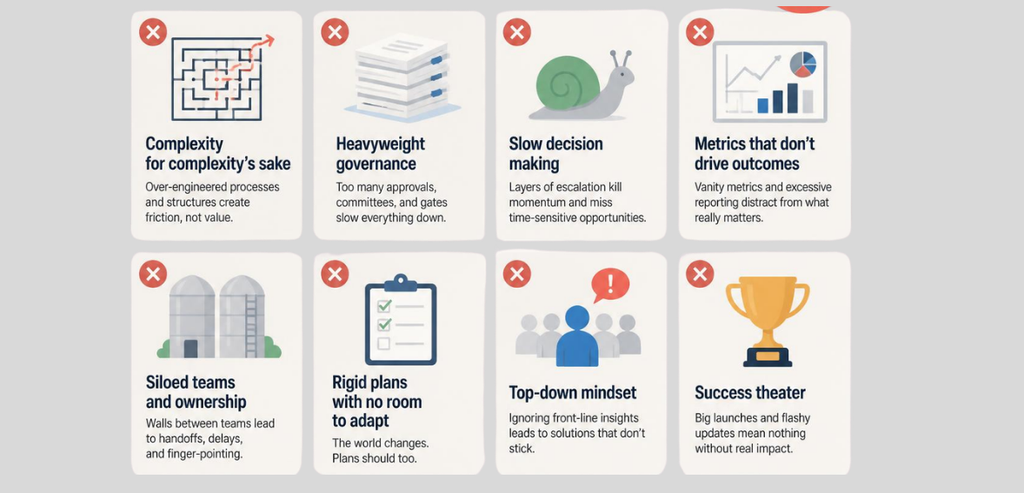
There are two common mistakes that people make when faced with the $9 billion figure. The first mistake is to think that bigger is better. The Delta and Amex relationship is built on scale that almost all businesses will never achieve: a global route network, a single dominant issuing partner, and decades of accumulated loyalty data. A small business attempting to copy that scale would lose a lot of money on the administration of the program versus how much it would make from it.
The second mistake is making rewards so generous that the business loses money on the deal faster than it makes money on repeat purchases. Delta’s rewards program and Amex’s interchange business have a good arrangement. American Express takes a hit on rewards, but Delta is able to run its program because of the split. Because most small businesses don’t have this arrangement, rewards have to be set at a level the business can support on its own.
A similar mistake is trying to make an exclusive deal just to have it. Delta and Amex are each other’s only deals, but that only works because both companies have huge, complementary scale. A small business copying the model for exclusivity without the scale will typically end up with a bad deal from a single processor. The lesson to take is the discipline of the loyalty mechanic, not the partnership frame in which Delta achieved it.
A good starting point will look pretty different from Delta’s SkyMiles program. Decide on a specific behavior that can be measured, such as a fifth visit, a successful referral, or a minimum annual spend. Keep the reward simple enough that it can be calculated without any special software. Record the behavior using whatever payment or point-of-sale system the business uses instead of adding a new loyalty platform on day one.
Review the results after three or six months to determine if the rewards actually drove repeat visits, and make updates to the rewards or the behavior goal based on the result of the experiment. It is the same discipline of experimentation that Delta and Amex use on a large scale, but condensed to fit a single-location business and without a dedicated loyalty team.
There’s not much mystery behind the logic of Delta’s estimated $9 billion card partnership. Loyal customers spend heavily, and premium cards cost more to process. That is true of any size company, not just an airline. A small business will never run an airline-level credit card partnership program, and they should not try to.
What is practical to copy is the discipline behind one: create a reason for customers to come back, understand what the true costs are to take cards given the mix a business currently has, and develop a simple and consistent loyalty program that a business can sustain. That is the real lesson of the Delta and Amex partnership, and the part a small business can actually use.
Premium and travel rewards cards have a higher interchange cost than standard cards because part of the interchange fee goes toward the rewards the cardholder earns.
Various studies show that loyalty members not only spend more money than non-members, but also repeat customers spend even more than first-time customers.
The most important thing to take from those co-branded cards, which are usually loyalty-centered, is that with fairly straightforward plans, spending reliably goes up.
It is worthwhile to create a loyalty program that delivers a consistent reward and is built around a single repeated customer action.
Yes, customers with rewards cards tend to increase their spending in order to reach the rewards. This behavior is intentionally designed by card issuers.