Posted: August 04, 2026
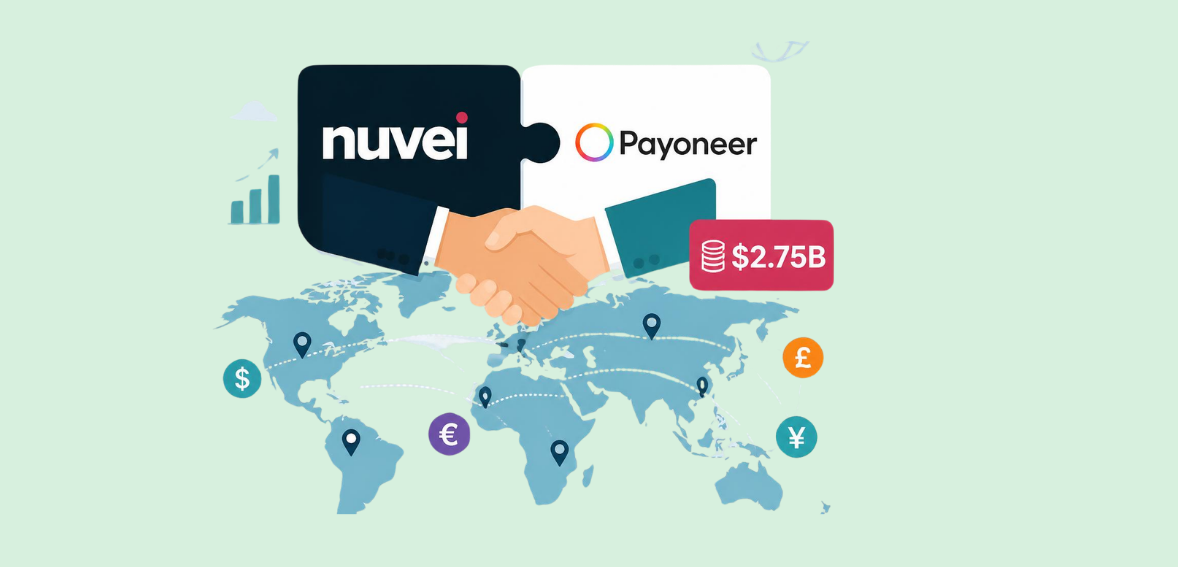
On June 15, 2026, Nuvei reached an agreement to acquire Payoneer in a $2.75 billion cash transaction, which represents one of the largest acquisitions of its kind, paying $7.40 per Payoneer share. The acquisition expresses Nuvei’s interest in cross-border payment solutions in an increasingly global economy.
As Nuvei acquires Payoneer, the reasoning behind the acquisition is straightforward. Payoneer specializes in cross-border payment solutions for transferring money, whereas Nuvei specializes in payment solutions for receiving money. The acquisition thus has the capability to offer a comprehensive solution for the sending and receiving of cross-border payments. Subject to shareholder and regulatory approvals, the transaction is expected to be closed by mid-2027.
The article explains what is purchased in the deal, why it is important, and what a small business seller should do.
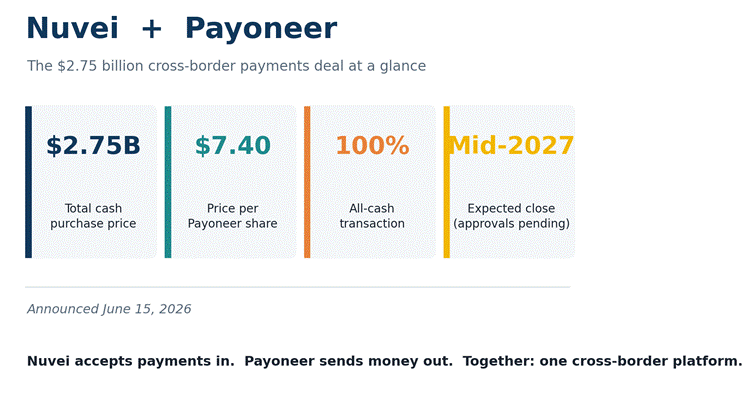
Figure 1. The Nuvei–Payoneer deal at a glance.
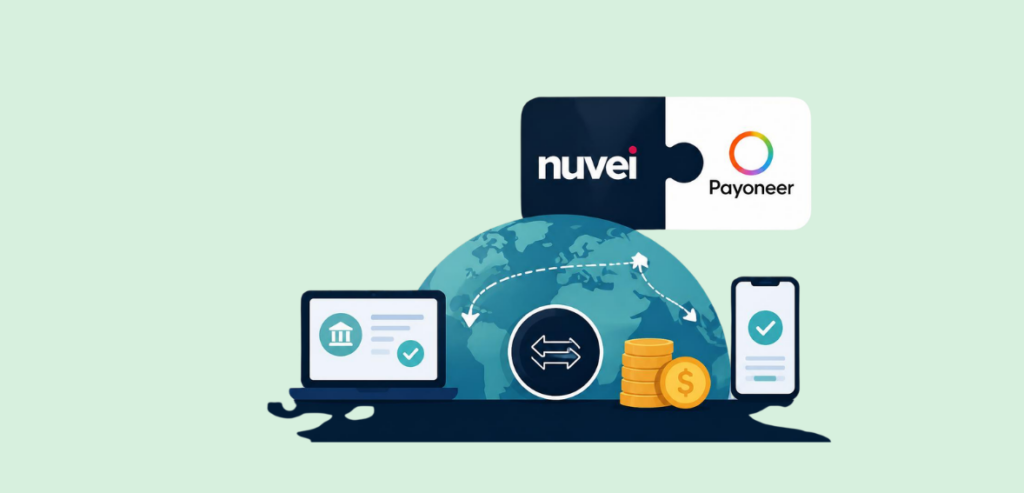
Nuvei’s acquisitions go well beyond revenue; they go after reach. Payoneer offers cross-border payouts, multi-currency accounts, and a banking network that settles in over 150 markets. Payoneer also has payment services and banking licenses in China and India. It can cost years to build these licenses. To buy them is an easier route.
The combined company would become a large company. Management estimates that the company would have $3 billion in annual revenue and $500 billion in payment volume processed. The company would have 2.4 million clients and a reach of over 190 countries and territories. The company would support 150+ currencies and 700 alternative payment methods. The primary goal of the acquisition is to gain this scale.
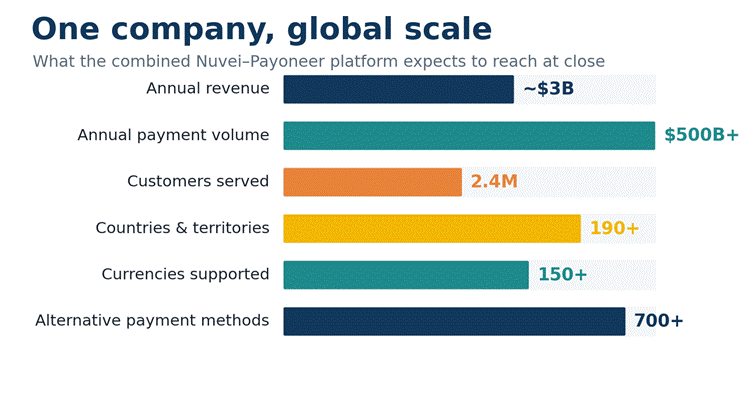
Figure 2. Expected scale of the combined platform at close.
Nuvei is a payment processing firm located in Canada. It supports merchants in accepting payments through local acquiring services in 52 markets. Nuvei has advanced fraud and risk tools. In 2024, Advent International took it private. This acquisition is Nuvei’s first major investment in cross-border and B2B payment services under Advent’s ownership. These markets offer greater growth opportunities than traditional card processing services.
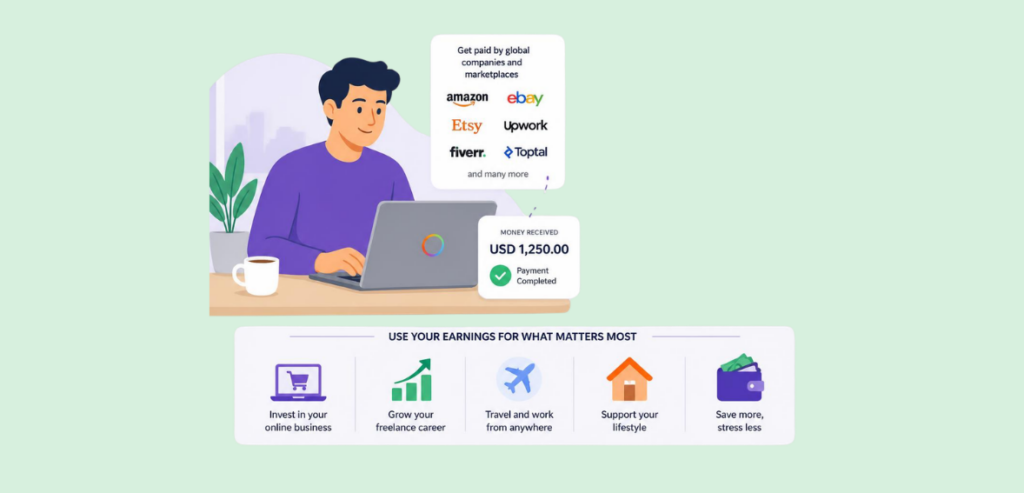
Payoneer made its reputation by serving the clientele that banks often bypass. Consider the freelancers in Manila, dropshippers in Lahore, and small businesses in Shenzhen. These sellers receive money from customers and marketplaces located in other countries. The process was slow and expensive until Payoneer alleviated that.
Payoneer is a financial service spanning borders and designed for small to medium businesses with a global reach. Normally, when a seller registers an account, the seller is provided with localized account details for multiple currencies. This allows marketplaces to pay sellers as if they were local. Payoneer allows sellers to maintain account balances, convert currencies, and cash out funds to their card or home bank. Payoneer has a few other services, as well. Payoneer has recently ventured into digital banking and stablecoins. These services can be offered in a more comprehensive way once Payoneer becomes a subsidiary of Nuvei.
There is an expected reason behind this. Growth in standard card processing is stagnating. As a result, payment companies are focusing on the sub-sectors of the payment industry that are growing the most. Cross-border and B2B payments are some of the fastest-growing sub-sectors. In this case, paying for growth is more efficient than waiting to grow by earning it.
Additionally, there are some tectonic shifts in the industry. Forrester speaks of the demand for integrated financial services platforms to serve the payment, collection, and foreign currency transaction needs, and which service embedded finance and offer a means of customer retention. It’s no longer about having five different tools. It’s about having one. Nuvei combined with Payoneer is a direct response to that demand.
This merger also follows an evident trend. Mastercard purchased BVNK. Stripe purchased Bridge. Airwallex purchased Leapfin. Companies in this segment now have one of three options. Merge with a peer. Collaborate. Or be acquired.
Figure 3. The Nuvei–Payoneer deal joins a broader consolidation wave.
Marketplace sellers are the big winners here. These are the merchants who sell cross-border on Amazon, eBay, Etsy, and Walmart. These sellers collect payments in one currency and pay their suppliers in another. Because of the thin margins, every currency conversion and every settlement delay is a loss for these sellers.
A combined Nuvei and Payoneer will enable marketplace sellers to receive their payouts faster, cheaper, and with more transparency. Because of fewer middlemen, Payoneer is more likely to absorb the cost of the payment. Fewer middlemen also means fewer reconciliation headaches for the sellers. For cross-border e-commerce, that end-to-end control is the actual value.
One of the costly trade-offs of having one provider on both sides is that it creates a lot of dependence on that one provider. This will be discussed in more detail below.
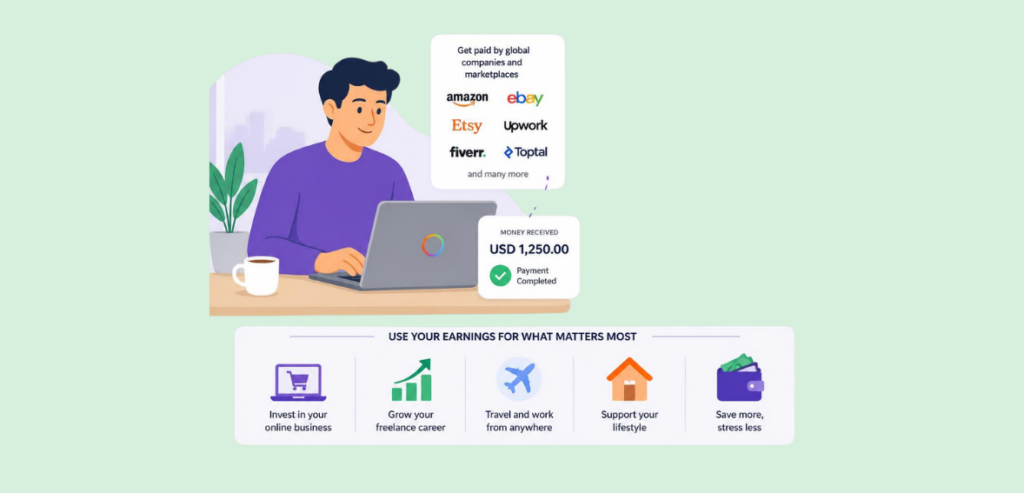
As a small seller, it’s important to know how terms like these affect you as a seller.
If you’re selling across borders, most likely you will want to set prices in your customers’ local currencies instead of forcing them to see the price in US dollars. With that, a customer in Germany is seeing a price in Euros, and a customer in Japan is seeing a price in Yen. Setting prices in local currencies increases your conversion rates because pricing is more familiar and comfortable.
The payout is the opposite of the payment. So that’s money going out to pay someone. It could be paying the person who provided you a service (a freelancer), a supplier, or a commission earner (an affiliate) who is located in a different country. Good payout services offer low-cost payouts to many different countries and many currencies.
Settlement is when the payment you’ve received officially clears and is now yours. When the settlement process is slow, your cash is tied up. Payoneer’s network offers same-day and real-time settlement for many countries. With multi-currency payments, the speed and cost are what separates the good from the bad.
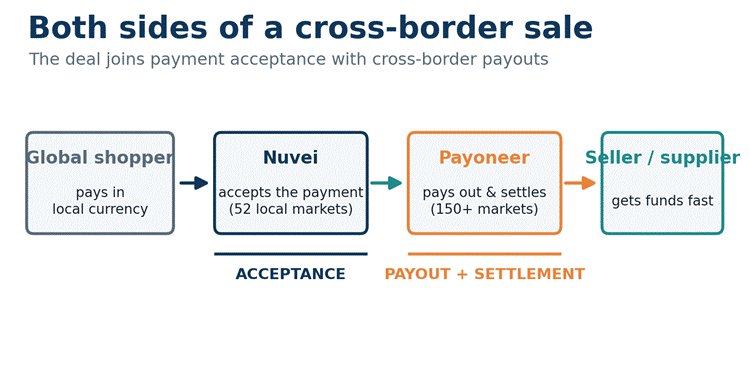
Figure 4. Acceptance and payout on both sides of a cross-border sale.
Both companies referred to things yet to come. The integrated system is designed for agentic commerce and native financial services designed for stablecoins. Currently, these are fast-emerging trends.
Agentic commerce refers to the shopping and purchasing done on behalf of a user by software agents. An example here is an AI ordering supplies by the minute. This requires a payment system that can handle the requirements, as there is no human oversight. Creating this is a wager on the future interactions of commerce.
Stablecoins are digital currencies that are pegged to something like the dollar. More practically, stablecoins are a low-cost method of transferring value internationally. Payoneer implemented stablecoins before this agreement. This can allow Nuvei to implement this work at a greater scale. For a global commerce platform, these solutions can reduce the cost of transferring value internationally.
Your needs change little in the wake of a big merger. Selecting the right provider will still be based on the same practical considerations. Start with corridor coverage. Does the provider have the right presence in the countries where you sell to and buy from? Just because a provider has a great platform in Europe doesn’t mean the provider is strong in your key Asian corridor.
Once you have corridor coverage, the next thing to look at is cost. What are the foreign exchange costs? Do you have a flat fee with a high cost of currency conversion? What is the cost of funds and settlement time? Does your cash arrive in one day or in five? Do they have the right licenses and cover the markets you need to enhance reliability?
Concentration risk is important to consider as well. Having your acceptance and payout with one provider may be really convenient, but that provider may end up locking you in. That’s why a lot of careful sellers have a backup for critical corridors. Convenience is great, but a single point of failure may not be.
Nothing changes overnight. The deal has yet to obtain shareholder backing or secure the necessary clearances from regulators in multiple nations. Cross-border transactions, by their nature, contain a variety of sensitive licenses, resulting in protracted reviews. Pay close attention to those approvals first.
Next, pay attention to the pricing. During the consolidation process, the pricing can be reduced through increased efficiency, or pricing can be increased through the reduction in competition and improved market position. Once the systems are unified, the selling parties should monitor the pricing that they are charged, and the pace at which the systems are integrated. Historically, Mergers and Acquisitions (M&As) offer the promise of a unified system, but deliver a duo of disjointed systems. The pricing that the selling parties will be charged will be the true indicator of whether the merger has resulted in a significantly improved system by the year 2028.
Finally, monitor the scheduled release of the roadmap features, particularly with regard to stablecoins and agentic commerce. The completion of these features will mean that the deal is on target. If these features are released after the target date, the deal will be considered a more typical-scale transaction.
The Nuvei Payoneer deal demonstrates the future trend of money movement. Acceptance and payout functionalities are being combined into unified systems. Providing cross-border payments for small businesses becomes a focus area instead of an afterthought. For marketplace sellers and freelancers, this has the potential of quicker payouts and reduced costs, and combines payouts into a single system.
While promising, results are what ultimately matter. The deal won’t close before mid-2027, and integration will be even longer. This is a good signal, and sellers are encouraged to review their current systems. Sellers should evaluate their payment systems, overall costs, and alternative payment solutions. The best plan is to prepare and assess the new company based on the solutions they provide rather than their announcements.
Nuvei is purchasing Payoneer for $2.75 billion in cash at $7.40 a share. The deal is set to complete in the middle of 2027.
Payoneer helps freelancers and global small businesses receive cross-border payments in over 150 countries. Payoneer offers multi-currency accounts, payment cards, and payment solutions.
Faster and more cost-effective cross-border payment solutions benefit sellers, as payments no longer eat into pricing margins. Sellers earn and spend in diverse currencies, resulting in higher costs and longer payment times.
Multi-currency settlement means the funds clear in your chosen currency, often the same day, freeing up cash sooner to restock inventory or pay your staff.
Sellers on Amazon, eBay, Etsy, and Walmart would receive quicker and cheaper payouts from one payment processor. This results in more dependency on one vendor.