Posted: August 20, 2026 | Updated: October 06, 2026 at 5:57 PM
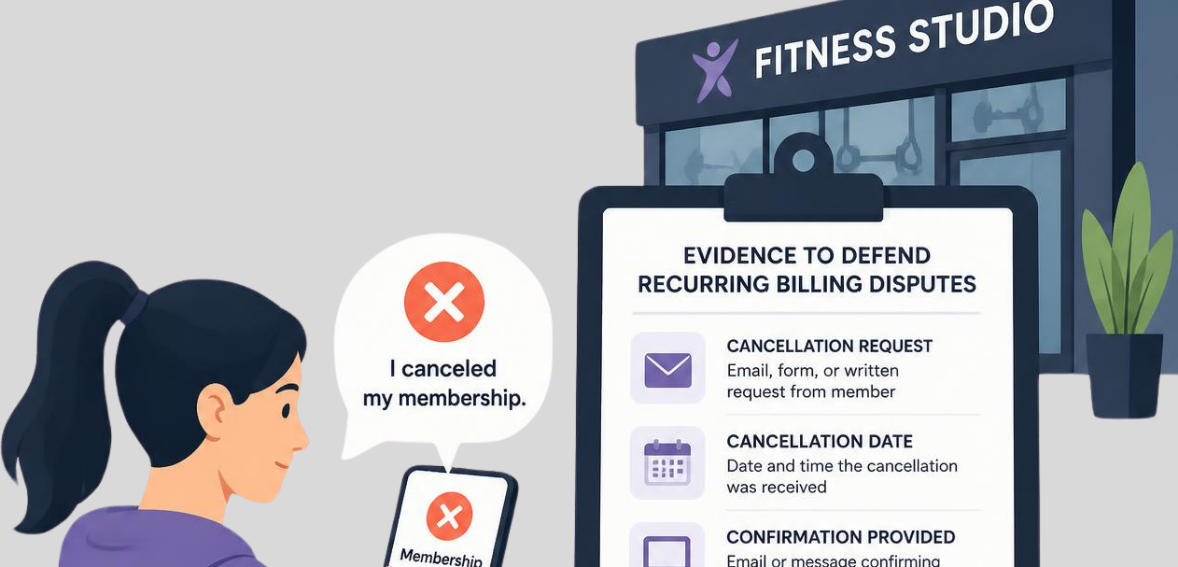
The customer crosses his arms in front of him, shows the bank statement to the manager on his phone, and says, “I cancelled this months ago.” The manager has no idea how to respond to that, and the system doesn’t have any information to answer that either. The studio will take two weeks to receive a chargeback notice. It happens a lot in gyms/studios, for which there is a nickname in the payment world: ‘member says they cancelled, billing dispute.’ It is one of the many billing disputes a studio may face, and it is rather easy to win the chargeback if the studio has the supporting documents when they receive a dispute.
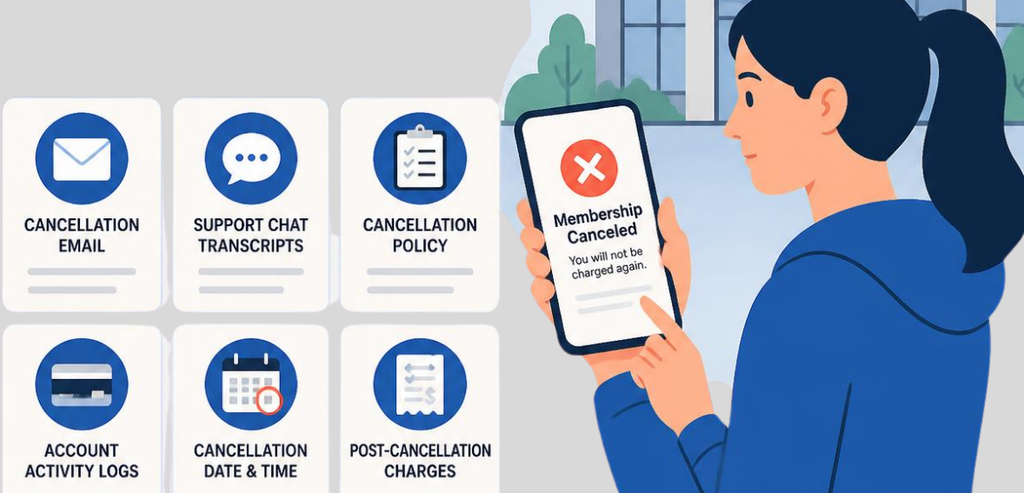
Recurring transaction cancellations can be monitored by the term “Canceled Recurring Transaction” as listed in Visa’s Reason Code 13.2. It involves claims of charging after cancellation of memberships, subscriptions, or payment plans. Mastercard uses the same reasoning in Code 4841, but later merged Code 4841 with Code 4853 (“Cardholder Dispute”). However, Acquirers continue to reference Code 4841 in most of the dispute files. Therefore, studios should be familiar with both codes.
Reason Code addresses whether or not a cancellation request was fulfilled by charging after the request. Studios usually lose cases not because the member is right, but because there is no way to determine what actually happened. Disputes are decided based on the information presented, and typically documentation is not available. A member may have an email cancellation request in a shared inbox that has not been viewed. It will be viewed as evidence of a cancellation request that the studio failed to act on. Issuing banks will always support the member who filed the claim when there is no evidence.
Across industries, there are common approaches for addressing these disputes. This is not unique to fitness. For subscription businesses in general, a large percentage of chargebacks is due to friendly fraud by customers.
The payments industry refers to friendly fraud as the scenario in which a customer files a chargeback on a legitimate purchase. Frequently, customers opt for a dispute as opposed to the formal return process to receive a refund quicker. Friendly fraud is the largest proximate cause of subscription chargebacks.
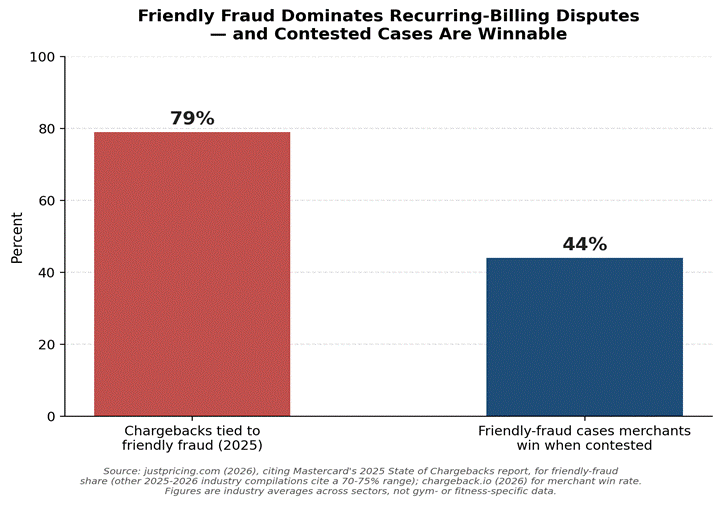
Most recurring billing disputes are caused by friendly fraud. Documents typically resolve about 50% of disputes that merchants challenge. Source: justpricing.com (2026), citing Mastercard’s 2025 State of Chargebacks report; chargeback.io (2026).
That number really matters. Merchants that challenge these disputes with documentation win a meaningful share of them. Assuming a disputed charge is simply gone leaves recoverable revenue on the table.
Every case begins with the signed membership agreement. Herein rest the details pertinent to the proper cancellation procedure and the notice necessary for cancellation. Other relevant documents exist, but because of the agreement’s specific language and terms, arguing without the agreement will be of little use.
A good agreement states the cancellation method can be a request form, an email, or a visit to the studio, with the necessary notice period before the next billing date. A good agreement helps protect the studio by retaining a record of the agreement signed and the date and IP address of the member for use in a chargeback. Most agreements are stored in searchable online systems and are linked to the member’s account and billing information. Other agreements are paper copies in a file and can take so long to produce that it is almost as if there were no agreement at all.
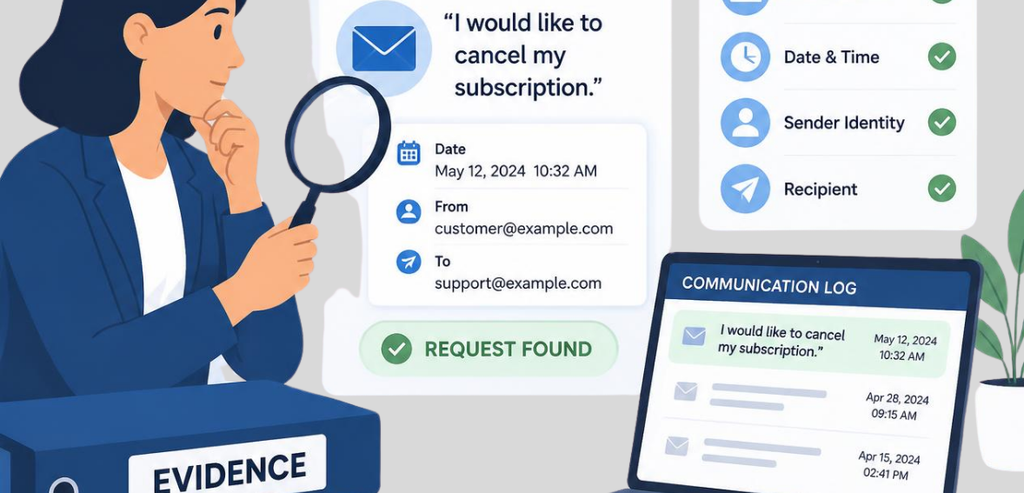
The main problem in most 13.2 or 4853 cases comes from whether or not the member requested a cancellation and the time it was requested. In these cases, details should be provided and should be time-stamped. An email cancellation request document has the date and is sent by the member. A cancellation form time-stamps the request. A phone call, if it was done, will require a call log date, the staff member who took the call, and the member’s verbal cancellation request, as a bare log entry that the member called is much less helpful than a log noting that the member verbally requested cancellation, later confirmed by the member by email.
When reviewing documents, most studios tend to find that most members have not even attempted to fulfill the cancellation steps in their signed agreements. They may have told the front desk they were cancelling, stopped attending classes, or just let their class package run out. In most agreements, none of these would be considered a cancellation. In most cases, a studio is most successful when it can show the contract’s requirements and that the member did not fulfill them.
Many agreements include a thirty-day notice period following cancellation by a member. The business requires this time to wind down scheduled services and expenses tied to the membership. If a member cancels on the 15th of the month and is charged on the 20th of the same month (or any date before the 15th of the following month), then there is no agreement violation.
Card issuers will usually take the merchant’s side on cases like these where the studio has a signed notice clause and supporting dates. A statement that says “our policy has a notice period” or other such claim is weak if there is no signed acceptance of the policy. A good defense will show the signed notice, the cancellation date, and a billing calendar to show the disputed charge occurred during the notice period. The cases that are most in favor of the defense tend to be more detailed and show more information.
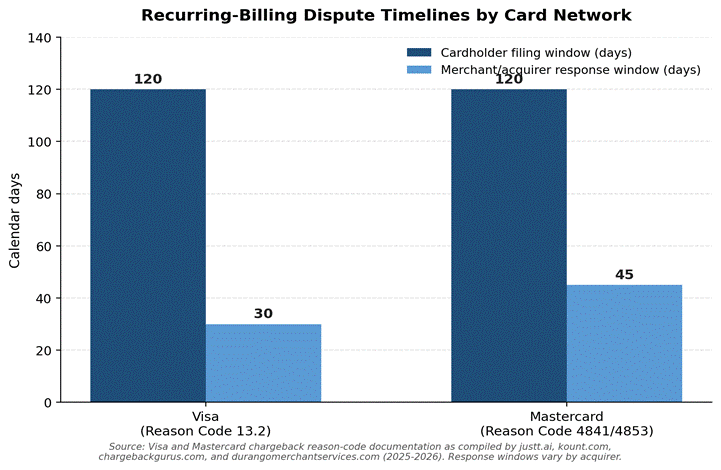
Both networks allow cardholders to file a dispute for a recurring billing charge up to 120 days after the final charge in the billing period. Studios, however, have a very short time period to respond.
Both networks grant up to 120 days to file disputes. That’s a lengthy time frame, so studios must keep excellent billing and cancellation records that go beyond what they’ll need this month. A studio that does not keep records beyond the current month will end up wasting a great deal of time and money to try and reconstruct attendance logs which would probably be around 4 months old.
When a member disputes a recurring charge, card networks accept proof of continued service, including check-ins, in a representment case. Check-ins at a gym are great examples. Imagine a situation where a member of a gym disputes a June charge and claims a May cancellation, and the gym’s app or key fob check-ins show visits within June and even into early July. In this situation, the gym would win its case. Without that proof, a bare statement from the gym would lose it.
As a studio, you should always pull the full check-in records for the period surrounding the disputed charge, not only records that fall within the dispute window. You should include the recording of class bookings. If members record attendance after the cancellation date, it is an open-and-shut case. The records are informative either way; if recorded attendance stopped on the member’s cancellation date, then a refund is justified.
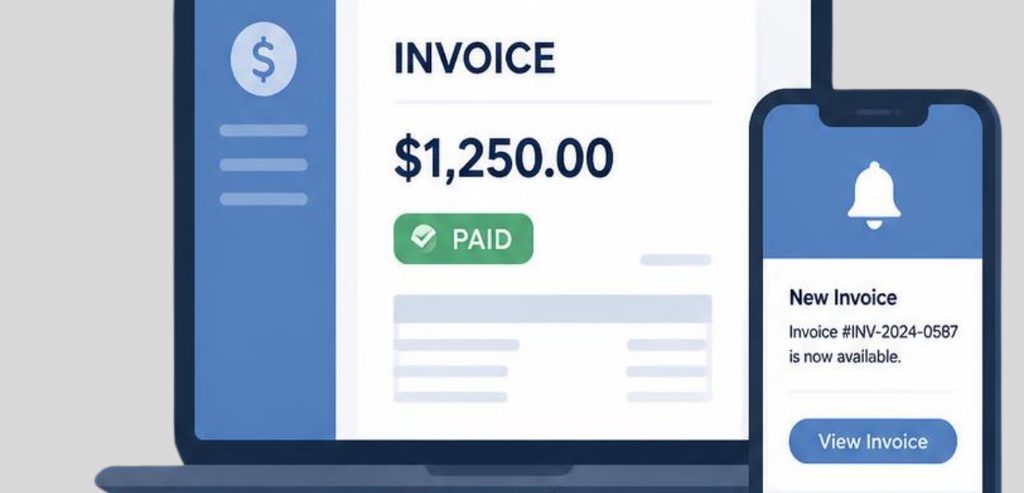
A studio record must be kept for each payment. Members should also have the option to download their record and use it as their personal receipt. This can be done by sending payment confirmation emails/texts, or sending records as app notifications. There are two reasons for this. The first is so the member contacts the studio with questions instead of going straight to a dispute. The second is to prove to the billing networks that the billing transaction was done in an open manner. It also helps when the network decides whether the charge was presented fairly. It is very common for a member to argue that they were surprised by a charge because they had forgotten about the payment.
A notification system is the most common and frequently used component of this. It protects against the related claim that a member was never notified of a renewal or price change. Many networks expect studios to notify members of upcoming charges, commonly about ten days before the charge. A studio that has added this type of protection has closed off one of the most frequently used dispute claims.
Pulling documentation from a number of separate systems makes the requirements particularly burdensome. To alleviate that burden, the HMS Pay system was designed to store the records a representment case needs, including the cancellation timestamp, billing notification log, and payment log for each member, from the moment a case is initiated. With an integrated payment system, case evidence sits in a single location rather than being reconstructed from multiple locations.
A well-assembled representment package will bring together several key documents into a single story. It would include a signed acceptance of the cancellation and notice terms. Into the package go the agreement and enrollment dates, cancellation contact dates, the date of the disputed charge, the calculations for the required notice period, and the attendance or check-in for the weeks preceding and following the disputed charge. The package would also include the notification sent for the disputed charge.
Quality beats quantity: ten pages of unrelated policy screenshots are not as compelling as a shorter package of dated documents related to the account and the disputed charge. Studios should identify specific gaps in their process. Issuers are adept at identifying gaps and will often see when a response is glossing over one rather than showing the charge was justified.
It is better not to have a conflict than to prepare for one. Many companies see less of an issue with canceled subscriptions after making it easier for their clients to cancel. For members, the ease of canceling a subscription means fewer calls or emails to their bank. Simplified subscription cancelation with an automatic confirmation email will drastically reduce the number of complaints and disputes. A confirmation email that provides the member with all of the information related to the subscription cancellation will answer any potential questions and prevent complaints.
All staff that comes in contact with a client must use the same system. There must be a cancellation ticket system that captures a timestamp for requests that are not made verbally. An attendance tracking system helps staff reach out to inactive members before a chargeback ever happens. While these systems will not eliminate chargebacks, they will reduce legitimate chargeback requests, and a chargeback that never happens cannot be lost.
When a dispute starts with “I canceled my membership,” it isn’t usually about fairness of the contract cancellation policy. More likely, the studio is unable to present sufficient dispute evidence. This may include the membership contract, cancellation logs, attendance records, and math regarding the notice period. Some studios have designed systems for gathering this evidence, and for them the dispute practically defends itself; others have not. The difference is not an imperfect policy. It is the inability to prove the policy was in effect.
For more on recurring billing disputes and other gym and studio payment questions, see Fitness and Gym Payment Resources.
Are you certain they were canceled? Members may file a dispute with their credit card company using ‘Visa Reason Code 13.2’ (or equivalent code for Mastercard and others) and request that the payment be stopped. This must be done within 120 days of the charge.
A cancellation request should be logged, dated, and confirmed by the company. That documentation, along with service usage and check-in records, is what allows the charge to be defended.
As long as the member agreed to this notice period and the challenged charge was processed within this period, this would offer protection to you. The signed notice terms, along with a billing calendar showing the charge fell within the notice period, must be included in this response.
Yes, check-ins or bookings made by the member after the claimed cancellation give a clear contradiction to the member’s claim and make a solid representation case.
Cancellation must only be done through one published channel and must be confirmed by the company in writing. Confirm a final billing date in writing so that both the member and the company agree on when charges stop.