
Posted: July 28, 2026 | Updated: July 28, 2026 at 10:41 AM
The checkout feature that lets you pay over time has shifted from fintechs to banks. Klarna, Affirm, and Afterpay reigned over that ‘pay in 4’ line. All the banks could do was sit and watch. That’s over. As of June 2026, Bank of America, along with the other big players, JPMorgan Chase, Citi, and U.S. Bank, will offer their customers the ability to pay in installments. Now, 4 out of the 5 largest banks have jumped on the opportunity to offer customers the ability to pay in installments.
For the small-to-mid-size business owner, this is less about banking news and more about you (and your customers) at the checkout line. The Bank-Backed BNPL options means your customer will likely have an option to pay in installments via the card they already use. Your customer will also expect to pay later when they check out with you. This guide clarifies what the banks have planned, the differences from Klarna and Affirm, and their new focus on debit cards that offer these plans.
It also gets practical and explains how widely available BNPL will be, what additional pay-over-time options will mean for your checkout, and how to add pay-over-time options WITHOUT having to completely overhaul your payment stack. The goal is to provide a clear answer to the question every merchant is now asking, which is whether pay-later options should be offered, how, and when.
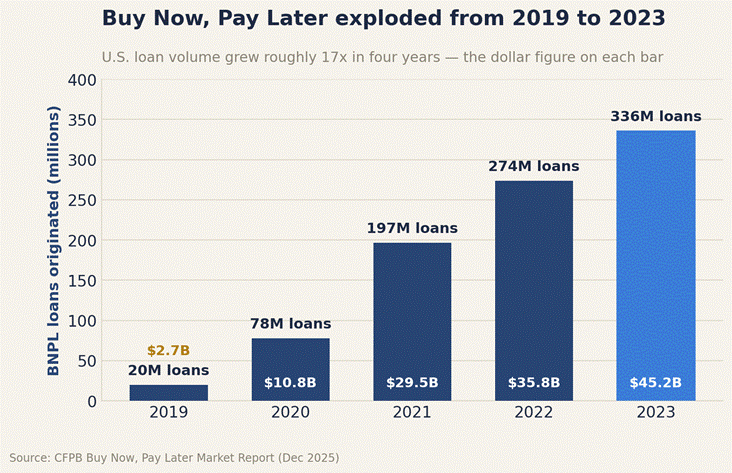
Figure 1. BNPL originations climbed from under 20 million loans in 2019 to more than 335 million in 2023, the growth curve the banks are now chasing.
It’s a simple headline. The largest U.S. banks are not going to leave a big payment market to the fintechs. Each bank built its own version, and while there are some variations in the details, the result is the same. The bank that you already hold a card with now wants to be your pay-over-time provider too. This is what each bank rolled out.
As the most recent example, Bank of America is offering a flexible-payment plan starting June 2026. With this plan, customers can make a purchase and choose to have that cost divided into equal payments over the next three to eighteen months. Unlike traditional payments that incur a cost each month with the potential of a balance remaining, Bank of America charges a preset, one-time cost that the customer pays in advance. This plan emulates the functions offered with a payment app, but Bank of America offers the function on cards already in the consumer’s possession.
JPMorgan Chase made the biggest splash in the buy now, pay later crowd with their “Pay in 4” product associated with debit purchases. For the cost of a five-dollar fee, if a payment is missed, a customer is allowed to evenly distribute purchases between the values of fifty dollars and four hundred dollars over four separate payments. Chase has been the first to market with this product and has expanded it across multiple channels. The hyperlink to the debit is important, and we will revisit this construct to highlight why it is the most disruptive factor in the entire Pay in 4 story.
Citigroup was the first to use a flexible payment model for its credit cards in 2019. However, unlike most companies, Citigroup didn’t provide a debit card equivalent. U.S. Bank entered the market with a credit card in 2025, allowing users to divide a purchase into three equal payments over three months, with a small fee (around 1.5%) for extending the payment. Other local banks like KeyBank and Old National are also introducing their own products. It’s obvious that the market is changing, and installment lending is going beyond fintech and into traditional banking.
The main difference that banks have over the fintechs is both trust and payment systems. Klarna, Affirm, or Afterpay reach their customers through a separate account and app, and they underwrite every customer at the point of sale. The banks reach their customers through an account and a card in their everyday banking. The banks are relying on a customer relationship that may be years old. It is the same convenience at checkout, but very different systems are behind it.
The fintech originals set the standard for what customers expect today and should therefore help us establish a benchmark. Affirm and Klarna essentially built their models within the merchant’s checkout and introduced customers to an instant “pay over time” option for purchases.
Customers may prefer this option over using a credit card. Both firms approve customers instantly, take the risk of nonpayment, and pay merchants the full amount. The reach of both firms is extensive and is the primary reason banks decided to enter this market, rather than forgo it. To understand one large fintech player in this market, you can check out the Afterpay, Block, and Cash App Pay analysis to see how this system functions for merchants.
Most bank installment plans are attached to a credit card. The customer has an extended credit line, and the bank offers to convert a large purchase to a series of monthly payments. While useful, this is not a novel idea. Real innovation is happening on debit.
Debit-based BNPL is a new idea, and is the reason why Chase is offering this product. Around 130 million people in the US rely on debit to make purchases. Many of these people either do not own a credit card or prefer not to use one. Traditional BNPL from the fintechs was designed to cater to these debit-first consumers, and is a large reason for their rapid growth. Now, the banks are offering these consumers the ability to make purchases directly from their checking account, and not from any line of credit.
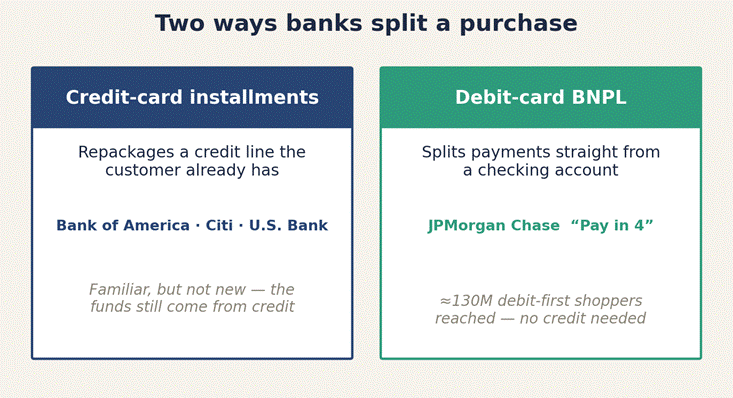
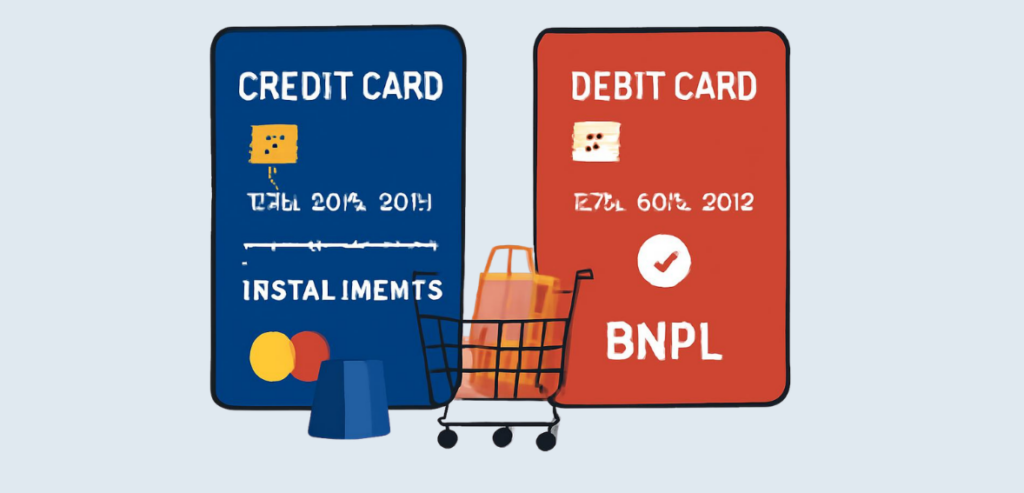
Figure 2. Credit-card installments simply repackage an existing credit line, while debit BNPL reaches the large group of shoppers who avoid credit entirely.
For merchants, it increases the chances a customer will say yes to a larger sale. A shopper who would otherwise never incur a credit balance may now buy a $200 item by using their debit card to pay $100 for each of the two installments. With the bank taking care of the details, the customer feels in control, and a sale that may have otherwise been lost now goes through. This is the quiet debit twist promise and is the feature most likely to show up at your checkout in the coming year.
It is easy to see buy now, pay later (BNPL) methods as catering to a specific type of online consumer, but the data indicates such a view is myopic. BNPL methods have quickly transitioned from a peripheral payment option to a popular and convenient method of payment, making the deliberate choice to disregard the option a legitimate threat to a business’ strategy.
Looking at the numbers from the Consumer Financial Protection Bureau, BNPL loan originations have increased from approximately 19.8 million loans in 2019 to around 335.8 million loans in 2023. In the same period, the dollar value of the loans in the market increased from approximately $2.7 billion to $45.2 billion. In 2023, there were 53.6 million BNPL users, an increase of 12 percent in a single year. These numbers reflect a payment method that has permeated the retail industry, as BNPL methods have become a popular payment choice.
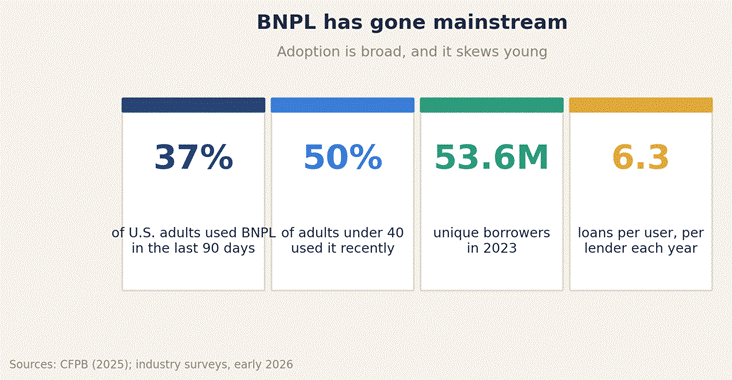
Figure 3. BNPL adoption is broad and skews young, with more than a third of adults and half of those under forty using it recently.
As the coverage of the service increases, so does its depth of use. For example– in 2023, the average BNPL user borrowed from each lender 6.3 times compared to 5.7 times in 2022. In addition, each user spent an estimated 848 dollars in the BNPL service that year. Surveys from early 2026 showed that 37 percent of adults in the United States (and about half of adults under 40) used BNPL services in the last 90 days. The typical loan that users take is around 135 dollars, meaning that this service is less likely to be used for big purchases and is likely used for small, more frequent purchases. So, if you are a merchant, then this is the service that your consumers want, whether you are offering it or not.
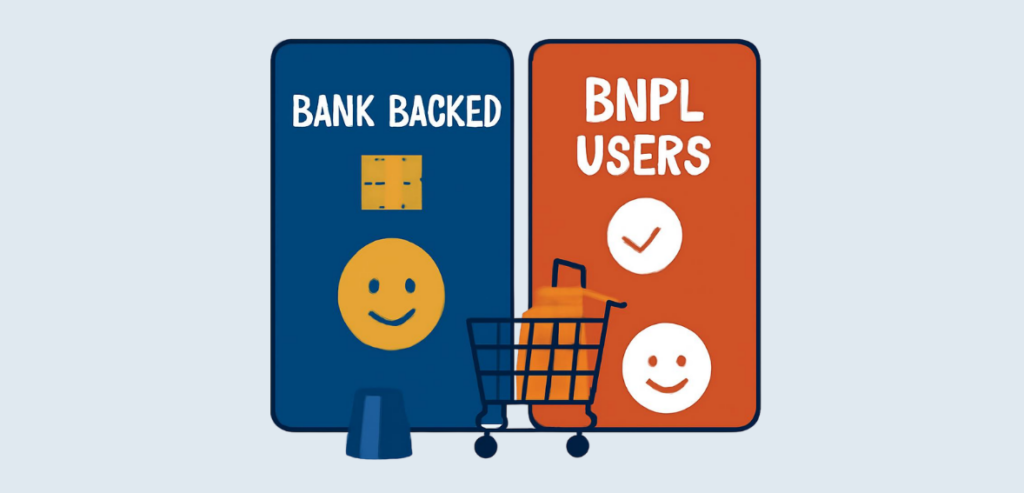
Merchants should take an interest in the following finding. According to J.D. Power, users of the Buy Now Pay Later (BNPL) service from banks reported greater satisfaction when compared to users of the service from traditional FinTech companies. This finding is especially important because understanding the greater satisfaction from bank-provided BNPL services will help merchants predict trends in the eCommerce and payments market.
The most plausible explanation for the greater satisfaction from bank-provided BNPL services is trust and seamless integration. Unlike traditional fintech-named BNPL services, if a bank offers its own BNPL service, it is offered for use within the customers’ bank account, card, and banking statements. This means that customers do not have to worry about a new app, a new brand, a new loan, or payment data. This reduces the anxiety associated with banking loans, which results in greater satisfaction.
The greater satisfaction can be explained by the confidence customers have in banks compared to fintech companies. Fintech is known for rapid and aggressive growth, and this can cause anxiety and a lack of confidence in customers. Because banks are large and financially regulated, customers have confidence in the banking system. For a merchant, the payment service system providing greater satisfaction to customers will have a lot of positive impacts. It translates to fewer payment disputes, fewer returns of purchased goods, and a positive experience of eCommerce, which diminishes the anxiety and stress associated with shopping.
The banks are onboard, the fintechs are entrenched, and customers have adapted to all of it. What changes for you? It’s time to prepare for pay-over-time to be integrated into every modern checkout system.
When pay over time was only a part of the fintech world, it was an optional service for most merchants. It is no longer an optional service. Now that the largest banks have begun to push installment services through their cards, the real ambient nature of the service is just beginning. Your customers will be exposed to the service (through their banking apps) time and time again. With each exposure, the expectation that they can pay over time with you grows. A system that only allows checkout by pay-in-full is beginning to feel antiquated. The same way that customers felt the need to go to a store that did not only accept cash.
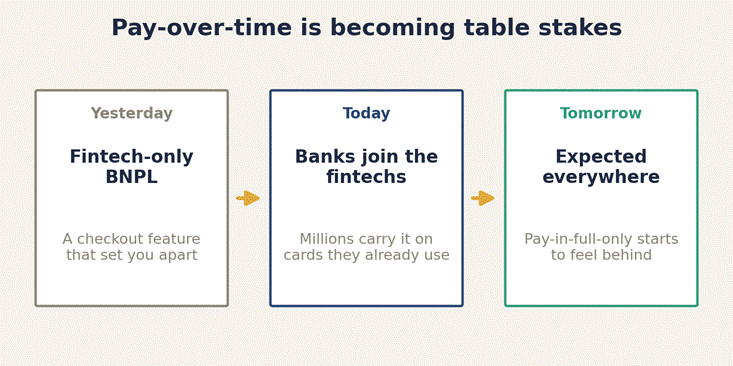
Figure 4. As bank and fintech options multiply, pay-over-time moves from a differentiator to a baseline checkout expectation.
It’s safe to say that, as with most things, competition has an upside and a downside as much for your business as for Buy Now Pay Later (BNPL) service providers. In the long term, the BNPL competition causes the service fees to decline and the offerings to increase, which benefits merchants. Greater competition among pay-over-time service providers, for example, allows merchants to implement pay-over-time features via integrated fintech solutions or through payment card networks. Today, the bigger concern is not whether a pay-over-time checkout solution is warranted, but rather what the solution’s impact will be on your business. This touchstone focuses on the long term and the willingness to invest in a pay-over-time solution that has a positive impact on your business.
This is where you find out if you should implement BNPL in your business or avoid it. There’s a cost associated with offering pay-over-time, so you have to be careful with your analysis. Weigh the boost in sales against the payment processing fees and the risk of cannibalizing potential sales—that is, paying BNPL fees on sales you would have made anyway.
Let’s start with the boost in sales, as it is significant. Research shows that implementing BNPL during the checkout process results in sales with larger average order values (AOV) and an increase in sales conversion rates. There’s an increase in sales when you offer checkouts with pay-over-time that can increase average order values (AOV) by 10-30%, and many BNPL providers state that the improvement can be even greater depending on your product offerings. Many shoppers will not purchase if the total cost is high, however, if you offer pay-over-time with a total of $400, shoppers will be much more willing to purchase the product offering.
Now for the cost. BNPL comes at a higher cost than standard card processing. A merchant should be aware. Standard card processing cost typically runs about two to three percent. BNPL cost is typically four to eight percent. Klarna typically charges about 3.3 to 6 percent plus a flat fee, Affirm charges about 6 percent, and Afterpay about 5 percent. Although it is more expensive, it buys you the sales lift and transfers the repayment risk from you to them, but it does cut into your margin and will only be worth it if the increased volume is greater than the cost.
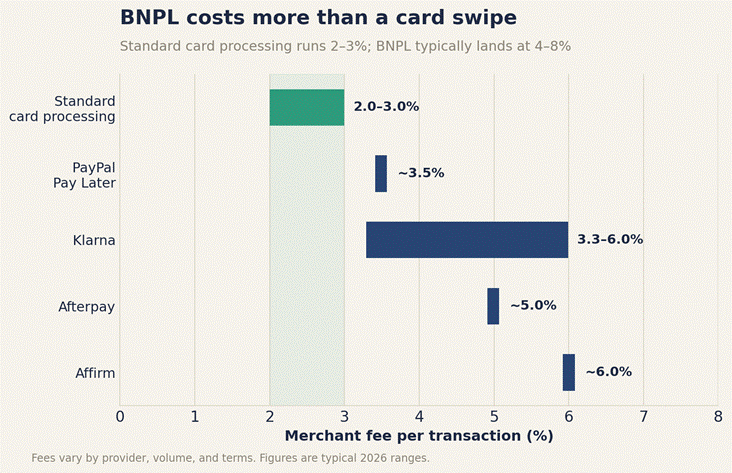
Figure 5. BNPL acceptance costs roughly two to three times standard card processing, so the sales lift has to be large enough to cover the gap.
The most insidious risk is probably cannibalization. If a customer was going to buy an item for one hundred dollars anyway and you incur a six percent BNPL fee on it, you have given away margin on a sale you had. BNPL earns its cost when it incentivizes customers to buy an item that would not have been purchased, and not when it redirects a sale to a more expensive option. The math is most precise when it is clear that when BNPL is offered, average order value and conversion rates increase. The BNPL fee is justified when it offers large orders and the fee is cost neutral. If the opposite is true, you pay customers to pay you more slowly. If your card costs are a concern, our guide to ecommerce payment processing gives you the baseline you should refer to.
The good news about providing pay-over-time options for small businesses is that it no longer requires a lot of engineering effort. The market has progressed to the point that offering pay-over-time options is a near plug-and-play process, and in most cases, you do not need to modify your core systems to enable it.
Many modern payment and e-commerce systems have buy-now-pay-later (BNPL) capabilities. Enabling it is usually as simple as selecting the right provider within your payment systems dashboard, and the pay-over-time option is added to your checkout. Because these options typically work within your current payment processor and your current e-commerce system, you avoid most of the headaches of a new system integration, new payment terminals, or a new reconciliation process. The payment provider takes the risk of approving the customer and the repayment risk, and you receive the full payment within a day or two, less the payment provider’s fee.
The smarter way to approach this offering is to view it as a settings change rather than a systems change. Look first at the current capabilities of your payment provider, and offering pay-over-time for higher-cost products is the most reasonable first step. Based on the relatively new technology in the checkout space that enables purchasing via installments, it is reasonable to assume that the purchasing landscape will change rapidly in the near future.
With BNPL, we should feel like we’re flipping a switch, not renovating the whole store.
One thing we do know is that the market is going to keep changing and not stabilize. Banks and fintechs are competing for the same checkout moment, which will continue to change what merchants have available to them. Below are trends that will be important to monitor.
Monitor the fees first. Price competition occurs, and merchants end up with better outcomes when large banks enter the markets that were originally dominated by fintechs. Also, monitor the debit expansion. Chase’s model of splitting payments is likely to be adopted by other banks, and therefore, when payments are split, shoppers will have the option to do pay over time without the use of credit. Lastly, watch and see how these financial innovations are integrated into the card networks and banking apps your customers use. The more integrated these financial innovations are, the more customers will expect these innovations.
The practical approach for a merchant is to remain flexible. Be adaptable to changes in the market. Choose a payment infrastructure that allows you to change providers as the market changes. Continue to measure your outcomes against the fees. The value of a competition between banks and fintechs is positive if you view buy now pay later as a lever to constantly adjust rather than a once-and-done decision.
JPMorgan and Bank of America’s launches of Buy Now Pay Later (BNPL) services may grab the media’s attention, but this is also proof that fintechs no longer own the ‘pay-over-time’ space. Now, it comes in the form of the cards your customers already use. Bank BNPL is familiar, will most likely improve Customer Satisfaction (CSAT), and even has a debit-based option to reach customers your offer credit couldn’t. From a merchant’s point of view, this will be a game changer. More customers will expect an installment option, and a pay-in-full-only checkout will feel like a limitation.
BNPL should not be rushed into. There is most likely an increase in sales with higher value transactions, and a greater rate of transaction, however, the costs will also increase to 2-3x the cost of a standard card transaction. Your sales should not be negatively impacted. Keep an eye on the order value and transaction conversion after launching the service. The ‘pay-over-time’ option is probably already integrated into your payment solution, so start with that and expand the service offering only when justified. The banks and fintechs will continue to compete and shift the market, so be flexible and offer different service options to justify the cost. Bank BNPL will present you with opportunities and not limitations.
It enables customers to divide a purchase into equal installment payments. Unlike Klarna, this option relies on a card and account already in the customer’s possession, requiring no additional app or account.
Usually, yes. This is the case when you sell higher-priced items and the larger shopping cart value minimally impacts the cost. Begin with the least amount, compare the increase to the cost, and only expand where the numbers justify it.
Typically, Buy Now Pay Later (BNPL) increases the average order value by 10 to 30 percent. It also enhances the checkout conversion rates, particularly with larger purchases. The benefit is only recognized when it is additional (incremental) sales, not for the sales you already made.
Expect charges around four to eight percent for each transaction compared to the standard two to three percent for typical card processing. You get the money first, and the provider carries the repayment risk, so you get charged that fee.
Yes, JPMorgan Chase has a debit-based “Pay in 4.” Debit BNPL is growing rapidly in the market and allows customers to split payments directly from checking with no credit involvement at all.