Membership may have its privileges, but American Express is finding out that members of the Millennial Generation do not consider feeling snooty as a privilege.
As a credit card and as a symbol of refinement by means of wealth, American Express has long been associated with the moneyed class and the jet set, and this association can be explained by the company’s marketing and branding efforts over the last few decades. Unfortunately, this marketing image seems to have backfired in relation to appealing to millennials.
A recent article in The New York Times illustrated the woes currently experienced by the legendary credit card company, which is trying its best to attract millennials, particularly those that have made their fortunes at an early age and would be eager to travel the world and spend at their leisure. It so happens that young and wealthy are more likely to leave home without Amex cards because they fear that they may be labeled as snobs.
The New York Times article explains that a competing credit card issuer held a focus group by inviting millennial professionals to dinner at an expensive restaurant. These are the kind of cardholders that Amex would drool over; however, there was a surprise at the end of the meal when the focus group participants were casually asked which credit they would use to pay for the meal. Right off the bat, a diner explained that flashing an American Express card was out of the question because it would seem as a blusterous act of braggadocio.
The other millennials in attendance at the dinner agreed that using Amex for payment would send an unwanted message, one that screams “look at me: I’m rich!” To drive the dagger even deeper and twist it, one of the dinner guests said that he would prefer to pay with a Chase Sapphire Reserve card, clearly a better choice among millennial cardholders.
What Chase has accomplished with its Sapphire Reserve product is exactly what Amex would like: capture the attention of young cardholders. The problem is that Amex is no longer considered cool; young consumers are not particularly interested in being lumped with the “one percent.” The Chase Sapphire, on the other hand, is heavily marketed on social media and offers benefits that speak to the Millennial Generation. In other words, Amex will likely need to change its image for the purpose of becoming cool again.
It seems that the U.S. Food and Drug Administration (FDA) is finally beginning to crack down on the growing vape and e-cig industry, after it announced last year that all e-cigarettes and other vaping products will now be regulated in the same way as cigarettes are under the 2007 Family Smoking Prevention & Tobacco Control Act. The law now applies to all electronic nicotine delivery systems (ENDS) and other vapor-producing products, meaning that all retailers and manufacturers of these products must now meet certain regulations in order to sell their products.
By extending its authority over e-cigs and vape products, the FDA is forcing both retail and online merchants to incur many additional expenses related to bringing their business in line with the new regulations. As these regulations cover the manufacturing, labeling, marketing and advertising of any e-cig related products, the expenses tend to pile up quite quickly.
Unfortunately, the new FDA regulations have also led to MasterCard changing its policy concerning online merchants. Previously, all companies who sold tobacco and tobacco-related products were required to prove their legal compliance and pay a $500 yearly registration fee in order to accept credit cards. However, the revised policy means that all vape merchants who wish to accept MasterCard payments are required to pay this yearly fee. Worse still, it seems certain that Visa and American Express will soon follow suit.
What the New Regulations Mean for Your Vape Business
One of the biggest problems associated with the FDA regulations is that they will make it much harder for merchants to continue to accept Visa and MasterCard payments. While $1,000 in total yearly registration fees will definitely have a negative impact on your company’s bottom line, there are many hoops you’ll first need to jump through before you can even get to the registration process.
In order for a merchant to register with one of the credit card companies, they’ll need to make sure that all transactions are properly age-verified. This means restricting sales to anyone under the age of 18, and, for online merchants, ensuring that all products require a signature from a legal adult upon delivery. As well, merchants also need to obtain a letter from an attorney legally verifying that the business is in compliance with all state and federal regulations.
The problem is that even paying the registration fee doesn’t actually entitle you to accept credit card payments, as you’ll then need to find a credit card processor that’s willing to underwrite your business. Despite the work you’ve put in to become complaint, the credit card processor is the one who has the burden to prove it.
Unfortunately, many credit card processors are currently unwilling to take the risk that goes along with it, meaning many online retailers may be left without a way to accept online credit card payments or will be forced to pay much higher fees in order to do so. For this reason, the FDA regulations seem certain to have a major impact on the industry, both in the short and long term.
Apple, Android, and Google have their own pay services, where people can make payments directly from their devices. Recently, Wal-Mart joined the bandwagon when it released Walmart Pay. Target is now joining the game, planning to release its own payment service, Target Pay, later this year. Although Target has not decided if the service will be part of the Cartwheel Coupon App, the main Target app, or perhaps a feature of both apps, mobile payments are definitely coming to Target.
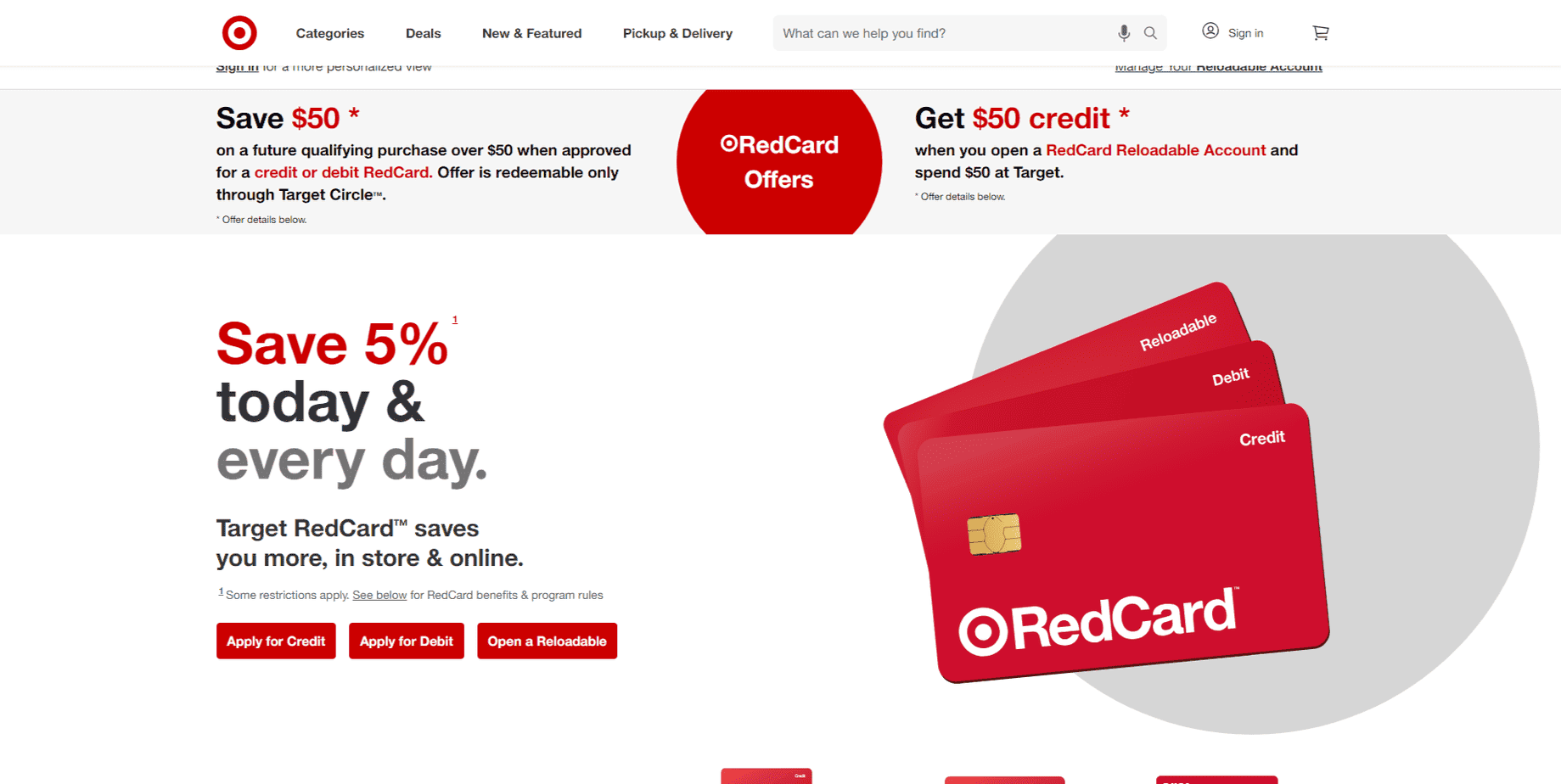
This means that customers can leave their credit cards at home. If the feature is anything like Walmart Pay, Target customers will scan a QR code with their phone to initiate payment processing. Target Pay will only be available to REDcard customers. At least, at first. This differs from retailers like Walmart and Kohl’s, which offered an option for mobile payments to all of their customers from the start. Target does say that it will allow customers to use and earn rewards as well as process payments. This is very similar to what their retail competitors are already doing.
The announcement comes after Target saw a drop in its in-store sales and a rise in its online sales over the holiday season. Overall sales have been flat year after year, which was also hurt further by sales in electronics and entertainment, which have declined. However, online transactions have increased by 30%. It is hoped that by extending a mobile payment option, Target can increase its sales. Significant growth in both numbers could easily put Target at an all-time high.
While options like Apple Pay will continue to be allowed online, users will find that they cannot use those payment services in-store. The only in-store mobile payment service that Target will accept will be its own. However, users will be able to use Target Pay online. For Target, mobile payments could mean new opportunities, and it remains to be seen how their service will stack up against their competitors.
Recent Updates – Target Pay And Target Wallet
In a recent update shared on their company blog, Target announced the integration of a Wallet feature in their app, revolutionizing the checkout process for shoppers. With Wallet, customer can easily pay with their Target REDcard and access savings through Cartwheel with just one scan of their smartphones at checkout. The initiative aims to expedite the payment process while consolidating digital discounts, Cartwheel offers, weekly ad coupons, and the 5 percent discount for REDcard holders into a single, convenient location. Target also revealed plans to enhance Wallet’s functionality by enabling the storage and use of Target gift cards.
Mike McNamara, Target’s Chief Information and Digital Officer, emphasized that Wallet in the Target app is designed to streamline the checkout experience significantly. He highlighted the added convenience for customers of having a unified platform for handling payments, discounts, coupons, and gift cards.
This development is part of Target’s broader strategy to amplify its presence in the eCommerce arena, a move that could potentially escalate its market value by 20 to 30 percent in the next two years, as per analyses by Barron’s magazine. Target’s proactive strategies to outperform Amazon have led to a noticeable increase in online sales, with eCommerce accounting for 4.4 percent of their total sales in the most recent fiscal year—a jump from 2.8 percent in fiscal 2016, outpacing growth at Walmart.
Furthermore, Target’s launch of exclusive in-house brands, like the children’s apparel line Cat & Jack, contributes to its upward trajectory. The retailer plans to introduce 12 unique brands by the end of 2018, with eight slated for release during the 2017 holiday season, spanning various categories from baby and children’s items to men’s and women’s apparel and home goods.
Benefits of Using Target Wallet
Target’s Wallet revolutionizes the checkout experience, offering shoppers benefits for smoother, safer transactions. This mobile payment option streamlines purchases by allowing a single barcode scan from your phone, directly integrating discounts and loyalty rewards into the payment process. With advanced security measures, including encryption and biometric authentication, Wallet ensures your payment details are safe. Additionally, its support for contactless payments and real-time updates enhances convenience and customer peace of mind.
How to Set Up and Use Target Wallet
Setting up and using Target’s Wallet for seamless payments is simple and quick. Follow these steps to get started easily:
1. Download the Target app: If you don’t already have it, download the Target app on your mobile device. It is available for both iOS and Android versions.
2. Create or sign in to your Target account: To use Wallet, you’ll need a Target account. If you don’t have one, create a new account by providing the required details. If you already have an account, sign in.
3. Navigate to the Wallet feature: Once you’re signed in, locate the Wallet feature within the Target app. It is usually found in the main menu or navigation bar.
4. Add your payment methods: In the Wallet section, you can add various payment methods, such as credit cards, debit cards, and even Target gift cards. Enter the necessary information for each payment method you wish to use.
5. Set a preferred payment method: If multiple payment methods are added, you can choose one. This will be automatically selected when making a purchase using “Wallet.”
6. Verify your identity: Target may require you to verify your identity for security purposes. You can do this by providing additional information or following a verification process.
7. Start using Wallet for payments: Once you’ve completed the setup process, you can start using Wallet to make payments in-store. At the checkout, open the Target app, navigate to the Wallet feature, and scan the barcode presented by the cashier.
Security Features of Target Wallet
With Target’s Wallet, you can enjoy the convenience of making contactless payments using your mobile device. It’s a secure and hassle-free way to complete your shopping transactions at Target.
Target prioritizes your security with Wallet by incorporating encryption, tokenization, biometric and multi-factor authentication, and continuous fraud monitoring. These robust security features safeguard your information, providing a trustworthy and stress-free shopping experience.
Compared to other mobile payment options like Apple Pay, Walmart Pay, CVS Pay, and Kohl’s Pay, Target’s Wallet stands out for its accessibility across all Target stores, comprehensive security features, and seamless integration of loyalty and discount programs. Unlike these competitors, Wallet is designed to enhance Target’s shopping experience, making it a uniquely convenient choice for Target customers.
Mobile payments are still a new development for most consumers. They are clearly marked on most retail payment terminals, and most banking apps offer the ability to make transfers and deposits with just a few taps. However, most people still slide their card, reluctantly slip it into the chip reader or hop on a computer to move money around. Why are customers so slow to use a technology that seems so easy and convenient? Deloitte’s 2016 Mobile Consumer Survey offers some interesting statistics about mobile payments, and it seems to suggest age plays a roll along with lifestyle.
A poll of 2,000 internet users between the ages of 18 and 75 in the United States participated, and the group most likely to take advantage of using a mobile phone for payment is the older end of the millennials spectrum. This group, ages 24 to 35, said they made purchases this way at least once a week. Older millennials are twice as likely to use mobile payments as their 18 to 23-year-old counterparts, and three times more inclined than the generation just before them. Though it should be noted that this older group, ages 35 to 44, is a growing market and actually saw a 6% increase in utilization. It is also interesting to note that there was a significant 3% drop in usage among younger millennials.
Overall, the survey shows that mobile phone payments are used to transfer money or make payments in coffee shops and fast food establishments approximately 40% of the time and to a much lesser degree at restaurants, clothing stores, and grocery stores.
Millennials are a huge segment of the buying public, and they have the ability to move the smartphone purchasing option forward, so it may become the new normal in the near future.
Chase Pay is now making it easier to feel secure when you checkout at Walmart and Sam’s Club. You can now use this payment option to pay for your purchases online and in stores with Walmart Pay, as well as the mobile app.
Mobile payments are fast becoming the way to pay for your purchases. The convenience of it makes this option of paying very appealing. With increased security breaches, however, customers are looking for the safety that Chase Pay provides by using ChaseNet, a closed-loop platform. This platform is designed to eliminate fraud risk. This added security protects both the merchant and the consumer.
Retailers are looking for mobile payment options to help speed up checkout lines. With the rise in chip credit and debit cards, checkout line times have increased. The ease of this payment option will speed up those lines and allow consumers peace of mind at the same time.
Walmart joins a list of other companies that utilize this additional payment option. Best Buy just signed a deal for use in their stores, online, and on their app.
As paying for products as quickly and safely as possible becomes more in demand for consumers, Chase Pay is leading the way to make seamless enhanced experiences at multiple retailers an easy and safe reality.
The year 2016 was not exactly a breakthrough period for commercial cards and other payment tools available to the competitive business-to-business sector. According to research recently published by the Professional Association for the Commercial Card and Payment Industry, B2B credit cards and virtual cards are gaining corporate acceptance, but they are not quite ready to completely replace checks.
The aforementioned year-to-date study was published in mid-December, and it shows that ¾ of business owners who have implemented purchasing cards in their companies are satisfied with using them. The respondents of the study feel that they do not have the same level of control as they used to with their commercial checking accounts that were tied to credit lines.
What is interesting about the current sentiment on commercial cards is that business users are not fully aware of how they work and everything they have to offer. Some purchasing managers who have previously used company credit cards for small expenses do not understand that P-cards are not necessarily credit accounts.
Purchasing cards can take many forms; for example, a virtual card can be assigned exclusively to a sole vendor for the sake of making B2B electronic payments. The terms and conditions do not have to change; in fact, some of them can be programmed to be executed automatically. If a business is used to floating invoices for 30 days, such a payment frequency can be scheduled.
Less than a third of company owners and managers using P-card solutions are interested in using SMS alerts or mobile payments. Not being familiar with the system and security concerns are the major reasons why business owners are not interested at this time.
Clearly, it is up to leaders in the payments industry to educate corporate America about the benefits of leaving their company checkbooks behind. Features such as electronic invoices and convenience checks that simulate old-fashioned payments could help in this regard.
What Are Commercial Cards?
Commercial cards refer to credit or debit cards that companies provide to their employees. These cards allow workers to make purchases on behalf of their employers. They are usually co-branded with retailers or fuel stations and restrict where the employee can use them.
Types of Commercial Cards
There are types of cards available, each designed to meet the diverse needs of businesses. Now let’s explore some variations:
Purchasing Cards (P Cards)
These cards are primarily used for making company purchases. They provide businesses with a way to manage their procurement processes.
Travel and Entertainment Cards (T&E Cards)
T&E cards are specifically intended for businesses with employees who frequently travel or entertain clients. These cards simplify expense tracking and management related to travel, accommodations, meals, and entertainment.
Corporate Cards
Corporate cards are typically issued to ranking executives within an organization. They offer flexibility and higher spending limits. Additionally, these cards come with benefits like access to concierge services, airport lounge entry, and other exclusive perks.
Fuel Cards
Tailored specifically for businesses that have fleets or frequently use vehicles, fuel cards allow for effortless monitoring of fuel-related expenses while also presenting discounts at gas stations.
Virtual Card Solutions
As the name implies, these cards do not exist physically. Virtual card solutions are an addition to the commercial card landscape and provide enhanced security by generating unique card numbers for each online transaction.
Benefits and Advantages Of Utilizing Commercial Cards
Using cards offers advantages to all types of businesses regardless of their size. One significant benefit is the ability to streamline expenses and effectively manage cash flow.
With a commercial card, employees can make company purchases without the need for reimbursement processes. Handling petty cash.
Commercial cards often come with reporting features that make it simple for business owners to track and analyze spending patterns. This can be valuable in identifying areas where costs can be reduced or optimized.
Another advantage is the increased security provided by these cards. They typically incorporate fraud protection measures, like real-time transaction monitoring and zero liability policies. This ensures that businesses are protected against charges and fraudulent activities.
Furthermore, commercial cards offer convenience by acting as a payment solution. Businesses no longer need to rely on payment methods or carry amounts of cash. Instead, they can opt for cards to cover expenses such as travel bookings, supplier payments, and office supplies.
Commercial cards often come with perks like reward programs or discounts from partner vendors. These incentives offer businesses the opportunity to save money or earn rewards based on their spending habits.
Tips for Selecting the Commercial Card for Your Business
When it comes to choosing a card for your business, there are several factors you should consider. Here are some tips to assist you in making the decision;
Evaluate your business needs: Start by assessing your company’s spending patterns and financial goals. Determine which features and benefits would be most valuable in streamlining your expenses.
Consider rewards programs: Many commercial cards offer rewards programs that can provide savings or perks such as cashback, airline miles, or discounts on office supplies. Look for a card with rewards that align with your business needs.
Review fees and interest rates: Carefully examine the fees associated with each card option, including fees, balance transfer fees, late payment penalties, etc. It is important to compare interest rates to ensure that you are obtaining a card with the lowest rates.
Look at the credit limit options and evaluate whether they align with your company’s requirements. Make sure they are neither excessive nor restrictive.
Look for services that may come bundled with commercial cards, such as expense management tools or travel insurance coverage. Determine if these offerings would be advantageous or not for your business operations.
Check the acceptance network of the card to ensure acceptance both domestically and internationally. This will allow you to use the card wherever necessary without any inconvenience.
Do proper research on the quality of customer support provided by card issuers. Look into their reputation for assistance as it can make a difference when dealing with any issues or inquiries related to the card.
Conclusion
Commercial cards offer value to businesses of all sizes by providing convenience, control and enhanced security in expense management and simplified payment processes. By utilizing these cards, businesses can enjoy benefits like improved cash flow, simplified expense tracking, advanced reporting capabilities, and exclusive rewards programs.
It is crucial for businesses to carefully consider their needs and requirements when selecting a card. Factors such as credit limits, interest rates, rewards programs, and acceptance networks should all be taken into consideration. It is recommended to compare different merchant service providers and carefully evaluate the terms and conditions before making a choice.
In today’s business landscape, where efficiency holds importance, commercial cards provide a practical solution for seamless transaction management. Whether it solves the purpose of paying suppliers or vendors, keeping track of employee expenses, or implementing spending limits across departments – commercial cards offer flexibility and control.
To sum up, commercial cards go beyond a piece of plastic. They are powerful tools that help businesses stay organized financially while reaping the many benefits they have to offer. If you’re searching for a way to handle your company’s finances while also enjoying these advantages, it might be worthwhile to consider incorporating cards into your business strategy today.
One of the biggest problems for merchants accepting credit cards is not fraudulent transactions, but rather false declines. Certainly, credit card fraud is costly, but it’s estimated that merchants lose $118 billion due to credit card declines where the transaction is genuine and the customer is not over their limit. It’s estimated that 15% of all transactions are falsely declined. It’s a problem that credit card companies like MasterCard are working on solving.
It’s easy to see just how bad the problem is. When a customer is declined, there is a good chance they won’t return. In fact, statistics show that 33% of customers who are declined falsely don’t return to the business ever again. This is due to several reasons, but likely embarrassment plays a role in this. Imagine having your transaction declined when you know you have enough money in your account or you are well below your credit limit.
False declines are a problem that the major credit card companies are aware of and are working on. MasterCard has recently begun using artificial intelligence (AI) to attack false positives. It’s an effort to ensure that customers are able to use their card when and where they want to.
Previously, MasterCard would use a very narrow band of parameters to decide if a transaction was valid or not. It was strongly biased to guard against fraud, but it didn’t take into account other data points. This is why they developed their Decision Intelligence engine and have deployed it globally.
The Decision Intelligence system looks at more than just the narrow band of variables and takes in a more complete picture of not only the customer but the retailers and even the card terminal itself. By looking at these richer data points, including customer behavior and even retailer behavior, the rate of false declines can be reduced.
MasterCard’s Decision Intelligence AI could be a winner for retailers. Instead of turning away up to 15% of their customers, they can convert these customers into repeat customers. That means more money in the pockets of retailers going forward.
Fraudsters know that some of the greatest opportunities to commit theft occur during the hustle and bustle of the holiday season. Consumers do not only have to worry about double-swiped credit cards at checkout and phone or email scams. Criminals study consumer buying habits and use those habits against them during the holidays.
Here are the top three worst habits:
Poor Attention
Shoppers are more likely to forget important safety and security habits when rushing around during the holidays. Always hold on to anything that might contain identifying information about you or property, including shopping bags, phones, wallets and purses. Additionally, pay close attention when you park your car and pump gas. Many criminals look for unlocked cars this time of year.
Cheap Attitudes
Some shoppers are so obsessed with the cheapest deals that they ignore common sense and known security risks when shopping online. They click links in emails and pick the cheapest deals even when the sources of these supposed deals are unfamiliar merchants. Fraudsters then steal their identities or banking information through phishing sites or perform payment scams where they take orders, forward the orders to known merchants and then keep the payments for themselves.
Technology Dependence
Now more than ever before, shoppers are depending on portable devices, the internet and apps to help them find great deals. Criminals use this dependence to their advantage by hacking portable devices in public places where shoppers use free WiFi to get updates about real-time deals and coupons. They also create fake shopping and merchant apps that collect personal information. To block thieves, never use portable devices through unsecured public networks, change passwords after every shopping trip and only install apps from verified merchant websites.
You do not need to become a victim. To stop fraudsters from ruining your fun over the holidays, always attempt to keep yourself aware of your environment and your actions and curb any impulsive and bad shopping and technology habits.
Although the United States is considered to be a global leader in finance and technology, the country has strangely been a laggard in the realm of digital payments. According to John Lambert, executive vice president at payments giant MasterCard, the American system of retail banking and payments is in dire need of adopting a set of standards to help it move in the right direction.
Lambert recently announced that his company is serious about the future of digital payments; to this effect, MasterCard has issued a call to action that will hopefully inspire the major tech and finance players to work together and establish a common framework for digital payments. This call to action includes four principles for establishment:
The materials and foundations to completely modernize the payments industry have been available for a few years, but the efforts to create digital wallets and major networks have failed to take hold. In the retail world, more than 90% of purchase transactions are still being settled at the point of sale via cash or with credit and debit cards. This preference extends to the online world, where transactions are rarely settled by means of digital wallets.
MasterCard believes that digital payments should follow the path of Apple Pay, the first digital wallet that was not solely dependent on being linked to credit or debit cards. The network has taken a first step with MasterPass, a digital wallet system developed with the aforementioned four principles in mind. The network is not calling on the payments industry to copy its wallet; the goal is to stimulate developers into creating similar solutions that can be easily adopted by merchants and shoppers alike.
The current landscape of digital wallets and payment solutions in the U.S. is too disjointed when compared to various Asian and European systems. The payments industry could clearly benefit from a coordinated call to action to create consistency and consolidation.
In a world where digital media and the use of mobile apps are taking over, the new Samsung Pay Rewards system is seemingly one that is built for long term success. Not only will customers be able to use the service to track their mobile payments, but use of the app also allows for current subscribers to benefit directly from simply using the system as a form of payment in their everyday purchases. This is because the new rewards program offers tiers of reward benefits based on the sheer number of transactions logged by the app.
These Samsung Rewards points are not only able to be redeemed through a simple cashback transaction, but can also be used in the acquisition of gift cards, memberships, and other forms of merchandise. This adds a whole other dimension to the relevancy of the rewards program on a global scale, as customers are now able to use their accumulated points on a variety of different potential reward benefits. While rivaling credit card rewards services which are now beginning to expand their available redemption options, the service will surely look to benefit individuals who enjoy choices.
Despite the introductory success of the Samsung Pay program, a statute of limitations is currently in effect due to the limited number of cell phones and service companies which provide the app as a platform. Without a current cellphone subscription to one of the four more high-end Samsung Galaxy phones, the mobile app is not compatible. Ultimately, as Samsung Pay continues to revolutionize mobile payment services as well as provide a credible rewards network, the company will look to expand the platform for its app in the hopes of maximizing its potential consumer pool.
Cookie Consent
We use cookies to enhance your browsing experience, analyze site traffic, and support our marketing.You can accept all cookies, reject non-essential ones, or manage your preferences below. Learn more in our Privacy Policy.
Cookie Preferences
Manage your cookie preferences below:
Essential cookies enable basic functions and are necessary for the proper function of the website.
Name
Description
Duration
Cookie Preferences
This cookie is used to store the user's cookie consent preferences.
180 days
These cookies are needed for adding comments on this website.
Name
Description
Duration
comment_author_email
Used to track the user across multiple sessions.
Session
comment_author_url
Used to track the user across multiple sessions.
Session
comment_author
Used to track the user across multiple sessions.
Session
Google Tag Manager simplifies the management of marketing tags on your website without code changes.
Name
Description
Duration
cookiePreferences
Registers cookie preferences of a user
2 years
td
Registers statistical data on users' behaviour on the website. Used for internal analytics by the website operator.
session
These cookies are used for managing login functionality on this website.
Name
Description
Duration
wordpress_logged_in
Used to store logged-in users.
Persistent
wordpress_sec
Used to track the user across multiple sessions.
15 days
wordpress_test_cookie
Used to determine if cookies are enabled.
Session
Statistics cookies collect information anonymously. This information helps us understand how visitors use our website.
Google Analytics is a powerful tool that tracks and analyzes website traffic for informed marketing decisions.
Contains information related to marketing campaigns of the user. These are shared with Google AdWords / Google Ads when the Google Ads and Google Analytics accounts are linked together.
90 days
__utma
ID used to identify users and sessions
2 years after last activity
__utmt
Used to monitor number of Google Analytics server requests
10 minutes
__utmb
Used to distinguish new sessions and visits. This cookie is set when the GA.js javascript library is loaded and there is no existing __utmb cookie. The cookie is updated every time data is sent to the Google Analytics server.
30 minutes after last activity
__utmc
Used only with old Urchin versions of Google Analytics and not with GA.js. Was used to distinguish between new sessions and visits at the end of a session.
End of session (browser)
__utmz
Contains information about the traffic source or campaign that directed user to the website. The cookie is set when the GA.js javascript is loaded and updated when data is sent to the Google Anaytics server
6 months after last activity
__utmv
Contains custom information set by the web developer via the _setCustomVar method in Google Analytics. This cookie is updated every time new data is sent to the Google Analytics server.
2 years after last activity
__utmx
Used to determine whether a user is included in an A / B or Multivariate test.
18 months
_ga
ID used to identify users
2 years
_gali
Used by Google Analytics to determine which links on a page are being clicked
30 seconds
_ga_
ID used to identify users
2 years
_gid
ID used to identify users for 24 hours after last activity
24 hours
_gat
Used to monitor number of Google Analytics server requests when using Google Tag Manager
1 minute
Marketing cookies are used to follow visitors to websites. The intention is to show ads that are relevant and engaging to the individual user.
Facebook Pixel is a web analytics service that tracks and reports website traffic.