
Author Archives: hostmerchantservices

payment gateway merchant services

What Is a Payment Gateway

If you accept credit card payments you’ll likely use a payment gateway whether you accept credit cards in a brick-and-mortar store or online. The gateway is responsible for conducting the electronic transaction, much like a standard cash register would conduct a cash transaction.

Gateways are most important for online or phone transactions, check out what you should know about them. Host Merchant Services supports a wide array of payment gateway options, including Authorize.net, Network Merchants (NMI), TSYS TransIT, First Data Payeezy, SwipeSimple, Paytrace, USAePay, and almost all other commercial options.

What a Payment Gateway Does

The payment gateway takes the payment information from the consumer to the acquirer and then back to the consumer with an approval or denial of the transaction.

The payment gateway handles all aspects of the credit card transaction from securely transmitting the data from the customer to the issuing bank, back to the merchant, and eventually the customer again.

The gateway encrypts the sensitive data including the credit card number, customer’s name, and all other identifying information that if stolen could result in identity theft. The gateway does the ‘hard work’ between all parties, communicating the necessary information to conduct the transaction.

Why is a Payment Gateway Important?

Payment gateways are used most often in online transactions, otherwise known as card-not-present transactions.

Without the physical card, the risk of credit card fraud is high. Payment gateways decrease the risk though by using proper data encryption. Without it, hackers could have easy access to a customer’s banking information, which is why it’s so important for businesses to use proper gateways and PCI compliance. Customers won’t shop at businesses that doesn’t take data encryption seriously.

How it Works

It sounds complicated, but when broken down, the process is simple.

  1. The customer makes a purchase and heads to your checkout page.
  2. The customer is sent to a hosted payment page (usually this is within your website still) but if you use PayPal or a similar gateway, customers may be redirected.
  3. Your server communicates with the payment gateway to securely transmit the information.
  4. All data should be encrypted from the moment the customer enters it.
  5. The payment gateway does a fraud check before forwarding the information to the acquiring bank.
  6. The acquiring bank does another fraud check and sends the information to the issuing bank.
  7. The issuing bank sends the approval or denial to the acquiring bank who then sends it to the payment gateway.
  8. The merchant receives the information and processes the transaction if approved or stops the transaction if it’s declined.
  9. The merchant receives the funds electronically after the payment settles.

The right payment gateway is crucial to your company’s security and profitability. Using a reputable gateway ensures secure transmission of all data and reassures customers that your company takes security seriously.

Give your gateway careful thought. Don’t choose just any company to provide the gateway for you as it literally holds your company’s reputation, profitability, and variability in the palm of their hands. Work with a company that takes PCI compliance, fraud checks, and overall customer and business security seriously for the best results.
data protection

What is Tokenization in Payments?

If you accept credit card payments, security should be your utmost concern. Amid the PCI compliance issues, tokenization is one of the primary issues/concerns all businesses should know and understand.

What is Tokenization?

It sounds complicated by tokenization is literally replacing important numbers with ‘tokens’ or a string of numbers/characters for security purposes. The numbers are placeholders for important information, such as the credit card number or account number.

Tokenization is the direct replacement of the sensitive data that if revealed could put a customer’s information at risk. The token can be safely stored and if stolen, hackers wouldn’t’ be able to do anything with it.

How Does it Work?

Tokenization is a part of the payment process. You don’t have to do anything different – a token is assigned when the customer processes his/her payment. If you store the payment information, you’ll never see the customer’s account information. Instead, you’ll see the tokens, which protect the real information.

Here’s how it works:

  • The customer enters his/her payment data
  • The system immediately replaces the account data with a string of characters
  • The tokens are sent for authorization and immediately sent back
  • You can process the payment with the provided token

Why Tokenization is Important

There’s one reason tokenization is important – fraud. It’s reaching high levels and merchants have to do everything possible to stop it, starting with tokenization.

If you store customer data, you must use tokens to replace their ‘real information.’ While there are many benefits of storing customer’s data, including starting a loyalty program, using a customer’s buying history to advertise, and recommending future products, there’s such a high risk in storing the information that tokenization is crucial.

The good news is if anyone were to get their hands on the tokens, they are virtually useless to them. Sure, the data was hacked, but they can’t connect the tokens with anyone’s information, making it impossible to steal the credit card information.

Tokenization also increases customer loyalty. There’s something reassuring about knowing you can shop at a store and not have to enter your information. Think of Amazon – most people store payment information and even use their one-click purchasing, so all they have to do is click the button and the item is purchased. It’s convenient and smart.

They benefit merchants too because it enhances purchase power, and increases the likelihood of subscription-based purchases.

Bottom Line

If you accept recurring payments, want to store customer’s payment information for convenience and customer loyalty, or you just want to provide a quick way to check out, tokenization is the key to your success.

Work with a payment processor that offers tokenization and makes it easy for the merchant to implement. Running a business is hard enough, but adding the complexities of payment processing on top of it can be a lot for a business owner. Find a payment processor you can trust and that will have your back in all things credit card security.

e commerce online shopping digital marketing and sales business technology concept 137074336 1

Retail Payments: Consumer Confidence Rises in September Despite Uncertain Outlook

As we work our way through the pandemic, it’s common to look at consumer confidence to see where consumers stand. The good news is that September saw an uptick in all areas of consumer confidence, giving retailers hope as we enter the holiday season and retail payments quickly become a hot topic.

In fact, the Conference Board’s Consumer Confidence Index went up from 86.3 to 101.8 and the Expectations Index, which measures consumers’ forecast on income and labor market conditions went from 86.6 to 104. Consumers are more confident even though no one really knows what may happen.

Why Worry about Consumer Confidence?

As we enter the holiday season, consumer confidence is more important than ever. It’s no secret that the pandemic blew all of us away. Consumers stopped spending because millions of people lost their jobs.

Now, as we work through the pandemic and enter one of the busiest times of the year, retailers want to know what consumers are thinking. Will they spend? Will they be frugal this year? How does all of this affect their retail payments?

With more and more stores closing every day, it’s a scary time for retailers, no doubt, but the rising Consumer Index provides hope.

Consumers are Confident about the Labor Market

Something that plays a big role is the consumers’ confidence in the labor market. If consumers feel good about it, they feel confident there will be plenty of jobs, which means they won’t worry about spending.

If consumers have a bad feeling about the labor market, they may not spend as much because they’ll worry about their job security.

Right now about 33% of consumers feel the labor market will steadily increase between now and March. Since unemployment rates keep falling and more jobs seem to be opening up, consumers may have good reason to feel confident.

What Should Retailers Do?

It’s a scary time for any business, that’s for sure. As we enter the holiday season, you hope for the normal hustle and bustle that the last few months of the year bring in, but not this year. If anything, you went less of the hustle and bustle and more sales are done online.

Will that help or hurt consumer confidence? Only time will tell as we quickly enter the holiday season. As a retailer, you need to keep up your retail payments by opening up a variety of channels to meet consumers’ needs no matter where they are.

Some consumers will go on with business as usual, but most will want omnichannel shopping, the ability to pay how they want, and as little contact as possible. If you want to ride the wave of the consumer confidence index, you too need to think outside the box to make the most of your sales for the rest of 2020, which is hopefully a year we can all say we survived.

b2b business company commerce technology marketing concept 110681073

B2B Payments: Pandemic Pushes Many Businesses to Automate Accounts Receivables

Chasing money from clients is probably one of the least desirable parts of owning a business. It takes away from many other tasks you could be doing – tasks that may grow your business rather than give you tedious or repetitive tasks to manage, but getting B2B payments is a part of doing business.

The pandemic has caused many companies to cut down on staff, and one of the first areas is always accounts receivable. This makes the average days of sales outstanding continually grow, and further hurts your business. Automating accounts receivable is one of the most important moves you can make.

Why is Automation Necessary

All businesses, no matter the size need automation today. It frees up the skeleton staff, enabling them to work on other tasks that keep the business running.

It’s like a double-edged sword. If you don’t automate AR, you could sit on unpaid bills for many months. Without the funds, you may not be able to continue growing or even operating because you’re low on capital. Without a full staff, though, it may seem impossible. It may have even seemed impossible when you had a full staff.

Automation takes the work out of it. When you automatically send notices, it’s not you or a staff member doing physical labor – no one has to take time out of his/her day to work on the A/R, make phone calls, leave voicemails, and send emails. Everything is done for you.

What Does Automation Look Like?

Accounts receivable automation for B2B payments will look different for every company. In general, though, expect:

  • Send notices before an invoice is due. Pick a duration, such as 2 weeks before it’s due, and send an automated reminder. The hope is that the reminder before the bill is due is enough for the company to pay the bill on time.
  • Send automated reminders at specific frequencies once a bill is past due. Whether it’s a few days, once a week, or every other week. Set up automatic reminders until they pay the bill.
  • Combine an automated process with manual processes, but not inside your company. Have the salespeople jump on board. Let your salespeople know when the bill is late and have them follow up on the notices you send. Sometimes that personal touch is all a company needs to get the bill paid.

Don’t Let Accounts Receivable Fall Behind

Accounts receivable is what makes your company stay in business. Without it, you don’t have money coming in. Because of the pandemic, many companies are purposefully behind or forced to be behind because their own sales are down.

Stay on top of your A/R by automating the processes to avoid losing business. Automating the process takes the labor off your staff and still allows you to be profitable collecting B2B payments. In today’s pandemic, every business owner needs to think outside the box, and accounts receivable is a great place to start. Get your A/R under control and the rest will fall into place.

amazon

Amazon Unveils New Technology Allowing Consumers to Pay with their Palms

Now you can turn your hand into a credit card, literally with Amazon Payments.

Amazon One allows consumers to pay with their palms, but only at select Amazon Go stores in Seattle for the time being. But they do plan to expand its use in other Amazon stores soon.

Beyond its own retail stores, Amazon plans to expand the palm payments in many other areas including other retailers, office buildings (such as medical facilities), and sports stadiums.

Why Palm Recognition?

Many people wonder, why would Amazon choose palm recognition for its new Amazon Payments rather than facial recognition, which is already widely used?

There’s one reason – privacy. Palms aren’t as readily accessible so it gives a sense of security. You can’t tell who a person is when you look at their palm, but you can tell who someone is by looking at their face. Using the palm is also intentional. Someone could accidentally (or forcefully) give their facial recognition and the payment would be used. With palm recognition, it’s more of an intentional use, which means better security.

How it Works

Amazon has scanning hardware that scans the palm and stores the information. The system encrypts the information and stores it for use. You don’t have to have an Amazon account either, but this will only come in handy once it’s available in other stores and businesses other than Amazon.

Now data is stored at the store level. Everything is encrypted and stored online. It’s mean to make the shopping experience fast and efficient.

For the time being, users may only link one credit card. You may link it to either palm or even choose to do both. In the future, Amazon hopes to expand to offer the use of multiple credit cards (one for each palm).

Right now, users scan their palm upon entering an Amazon store. Anything you take in the store is then charged to your credit card that you scanned when you entered the store. As it expands, you may be able to use the same palm (credit card) at multiple stores.

Is Amazon Payments Worth It?

Only time will tell if Amazon payments is worth it. They are slowly rolling it out to determine its effectiveness and safety. Keeping it within the walls of Amazon stores itself gives Amazon more control as they work out the kinks.

The goal is to eventually have Amazon Payments available in many more areas. The targeted areas once they go outside of Seattle, Washington are Chicago, New York, and San Francisco. You’ll likely see it at large retailers or stadiums first as the popularity grows and everyone ensures that it’s as safe as Amazon says.

Agent Merchant Services Best Program

5 Tips for Merchant Services Agents

Selling anything to anyone has the potential of being a stressful situation, especially when you’re talking merchant services. Overall, salespeople are placed under specific stereotypes by default. Then things seem to get impossible when you’re trying to explain why this merchant account is better than the one they have.

The stereotypes of sales people are so hardwired into the consumers’ subconscious, that as soon as you knock on the door of a residence or walk through the door of a business, their defenses are activated, and their mind is made up: I don’t want what you’re selling.

Nevertheless, it goes without saying that there are those select few agents make the art of selling look so easy. While you’re struggling to maintain a cordial conversation with a potential client, you know of other salespeople within your circle who are on a first name basis with their clients. Furthermore, they’re another ISO outselling you in the same payment processing industry, selling the same products.

What angle do they take? Should you take a direct value angle? “Our credit card processing will save you money, we offer affordable point of sale systems, we don’t have a term agreement or cancellation fee?” Or do you go for the quality value when selling merchant services? “When you call you will never be placed on hold or talk to a robot, you’ll get white glove service, our customer satisfaction is through the roof!”

If you’re asking these questions, then you’re looking at the situation wrong. Most of the battle is being good at sales without seeming like a salesperson. The key is changing you’re attitude and composure, along with building report with the potential customer.
Here are five tips for you merchant service agents out there looking to widen the gap between those hard to open doors, while bridging the gap between tough customers and yourself.

1. Change Your Mindset About Selling

If you want people to view you as a human being with socially responsible values and not like an insect that just crawled into their establishment, you have to change your own mindset about selling merchant accounts.

The thing is, people are very observant – more observant than you think. From the moment they set eyes on you, they’re reading you.

Believe it or not, we can change how people read us by changing how we view ourselves and what we’re doing. Think of clients as a partner rather than a target.

Clif Reichard wrote in the Harvard Business Review: “Many sales organizations do little to create an emotional connection with prospective customers and concentrate instead on hype-filled sales pitches.” This is probably the most important sales tip, not only for payment processing but for sales in general.

2. Slow Things Down a Bit

No matter what social encounter you find yourself in, there are these sets of guidelines we must follow in order to get along with people. One of the fundamental rules of engagement that seems to repeat itself in almost every social situation is taking things slow.

A good example would be going on a first, second, or even third date with someone. No one in their right mind is going to meet someone on the first few dates, sit an engagement ring on the table, and begin listing all the reasons why you’re prime spouse material. You can be sure that you’ll get pretty much the same response a lot of salespeople receive as soon as they jump into their robotic sales pitch.

3. Know Your Product as If You’re the One Who Made It

Memorizing some lines or being able to list a bunch of technical mumbo-jumbo that even you don’t fully grasp makes it pretty obvious to your prospective buyer that you wouldn’t buy what your selling.

When someone like Elon Musk gets on stage to sell his innovative products, he does so with pure conviction. Musk convinces people around the world that he created these products because the future of the world as we know it depends on them.

Rarely do you hear Musk getting all techie with his audience because he likely knows most of the people either don’t care about the tech stuff or wouldn’t understand it to begin with. He focuses on the problems the average person is concerned with and offers solutions.

4. Build Long-Lasting Relationships

Just because you finally sold some guy or gal a point of sale (POS) system doesn’t mean the sale is over – it’s far from over. More than likely, he or she belongs to a community of business owners they can refer your merchant services to in the future. But the only way that will happen is if you maintain an open dialogue with them. Make them feel like you’re their partner.

5. Stop Selling and Start Interacting

When you’re trying to sell someone something, in essence, you’re attempting to convince them they need what you’re offering. Why is your credit card processing technology better than what they have now? Is that route relevant to them?

On the other hand, when you interact with consumers, you’re teaching them how your credit card processing system was designed just for them. Not only that, but it was designed to solve their specific problem(s) or enhance their business. By taking time to teach them how working with an independent sales organization (ISO) benefits them, this will perk their interest.

Believe it or not, these five tips are straightforward to learn. It takes time to get them down and to develop your style. Selling is like anything else you have to take time to learn. The difference is, when you’re dealing with rejection and concerned with targets – not to mention personal financial responsibilities – it can seem like a long journey.

Nevertheless, if you want to succeed in the long term, you have to buckle down and apply these five tips and give them all you got. Every failure is only a lesson learned, and every lesson learned gets you closer to being a pro.

contactless card payment 74484201 1

The Impact of Touchless Payments on Retail

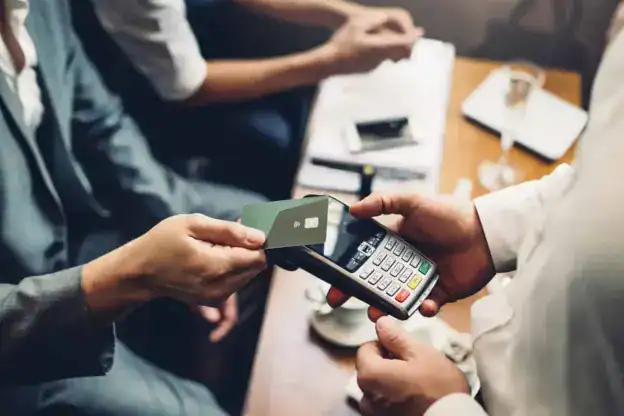
In the wake of the World Health Organization (WHO) declaration that the COVID-19 outbreak was a pandemic, U.S. consumer reaction transitioned daily activities from the physical world toward a digital existence. Turning to solutions minimizing human touch, retail merchants quickly switched to touchless payments, and no matter the outcome of the pandemic, the post-pandemic market will certainly remain digital.

Pushing contactless payments into the mainstream, COVID-19 was the catalyst to carry retailers past previous barriers toward widespread adoption. In attempts to reduce the risk for in-store customers, essential businesses increased sanitization regimens, limited the number of customers in the store, marked the floors for social distancing, and eventually introduced contactless payments – although not all merchants are there yet.

Overcoming Barriers of the Past, Touchless Payments on the Rise

Both legacy point-of-sale systems and learning curves for customers and businesses alike served as barriers accounting for the slow rate of adopting contactless payments. For customers who are looking for a quick method to get in and out of the store without exchanging cash, touching a terminal, or touching anything besides their own phone, contactless payments are the solution.

While the increased curbside pickups eliminate the need for payment exchanges, contactless payments can offer the alternative to customers who want to shop in the store but still not touch anything. According to a survey by Paysafe, a payments provider, 63 percent of Americans say they are using contactless payments more than they ever have in the past. 44 percent even find mobile wallets like Apple Pay or Google Pay are more secure than bank-issued contactless cards.

As video gaming, streaming, and e-tail are noticing an upswing in cashless transactions, according to Daniel Kornitzer, Paysafe’s chief business development officer, other merchants that rely more on in-person transactions, such as restaurants and hair salons haven’t experienced the same increase in digital payments yet. Restaurants like Burger King and Chick-Fil-A implemented contactless payments via apps.

Avoiding Cash & Point-of-Sale Terminals

Once criticized for discrimination against customers without bank accounts, fast casual restaurants like Sweetgreen and Cava quickly dropped their attempt to become cash-free restaurants. Now, consumers are avoiding cash with fears that the coronavirus can live on bills and coins. Avoiding the potential of transmitting germs at the point-of-sale systems is the driving force behind the 51 percent of U.S. consumers who said they were using some kind of contactless payment, according to a Mastercard survey.

Particularly expensive for smaller businesses, adopting new payment options such as contactless payments is cost prohibitive because they don’t enjoy the same rates as larger companies with higher volumes of transactions. It is to be determined whether government regulation or consumer demand makes touchless payments ubiquitous across merchant industries.

Host Merchant Services

During these turbulent economic times, depend on a stable and reliable payment processor to partner with your business to minimize the impact of worldwide instability. Payment processing should be the least of your concerns. Delivering personalized service and clarity, Host Merchant Services takes the time to explain your payment processing. Host Merchant Services even explains where our profit lies in the pricing structure to be fully transparent in all directions. Pricing fairness and transparency is our strategy in helping our customers find success with their businesses.

apple pay logo 121246985

Apple Pay Trends and Updates – Fall 2020

With a 15 percent market share of mobile devices, Apple/iOS possesses a massive potential for Apple Pay users. More than 50 percent of online purchases are estimated to be made from mobile devices since late-2014 when Apple Pay made its debut. Analysts estimate Apple Pay could account for 10 percent of all card transactions by 2025.

With dynamic encryption, Apple Pay is the most secure payment method available. TouchID, Apple’s fingerprint technology, and FaceID, facial recognition, provide additional protection. In response to an increasing reliance on contactless payments, payments made with Apple Pay are becoming ubiquitous. Emerging generations with cash flow are poised to place Apple Pay among the major players in the years to come.

Here are the Apple Pay trends for 2020:

  • QR Code Scanning

Apple is working on allowing users to scan a QR Code or traditional barcode with the iPhone camera to make payments via Apple Pay. Users can also use the feature vice versa where they can hold the iPhone’s Wallet app-generated QR Code in front of a scanner.

  • Near-Field Communication

Apple maintains its tight hold on near-field communication, or NFC, hardware, which enables contactless payment. European Union regulators have even contacted other payments industry companies regarding Apple’s possible anticompetitive behavior.

  • Emerging Generations

Younger generations who grew up with cell phones prefer digital payments. 73 percent of polled millennials agree they will make all of their payments with a mobile phone eventually.

  • OEM Pays Growing Percentage

Apple Pay is estimated to account for 52 percent of OEM Pays transaction values as compared to 43 percent in 2020. OEM Pays is the mobile payment application that enables users to add cards from multiple banks to the wallet application.

  • Outpacing PayPal

A long-term competitive threat to PayPal, Apple Pay continues to enjoy growing support from retailers and inside applications. Not only is Apple Pay’s new user growth outpacing PayPal, but Apple Pay transaction volume is growing four times as fast as PayPal.

  • Visa and Mastercard Partnership

For now, Apple still needs Visa and Mastercard, which are trusted and all-pervasive. Apple Pay could build up to becoming the equivalent to large card-issuing banks with which Visa and Mastercard traditionally partner. Unlikely to happen anytime soon, Apple may one day end up competing with Visa and Mastercard.

  • iOS 14 Beta Release

With small changes across the system, the second iOS 14 developer beta was released in July 2020. Scheduled to be released to the public later in 2020, iOS 14 will feature new capabilities for Apple Pay, including the QR Code scanning capability.

Does your business accept Apple Pay? Host Merchant Services makes accepting Apple Pay simple no matter how you process – in person, online, or through mobile terminals or point of sale. Most of our solutions are Apple Pay and NFC enabled as a standard feature.

Already accepting Apple Pay? Looking for something different – try our cash discount program for zero-fee credit card processing!

Cash Discount Merchant Services

Host Merchant Services offers a cash discount program to its clients. Businesses can avoid backlash while embracing cash-paying customers by adopting cash discount merchant services. With this model, merchants can offset service fees while avoiding an increase in prices by enrolling such a program. Businesses can add a service fee to all transactions instead of adding a surcharge to credit purchases and then provide a discount to cash or check-paying customers.

Discover

5 Benefits of Using Discover Card


…and Why Your Business Should Accept It!

Accepted across the country by 99 percent of merchants who accept credit cards, Discover is a lot more popular than people think. While some merchants may not display the Discover decal on their window or point-of-sale register, Discover does go by several decals, including Diners Club. Customers are encouraged to ask!

With a variety of options for competitive rewards programs, Discover offers miles or cash back, and even provides an alternative for consumers who are trying to build credit. At more than 800,000 ATM and bank branch locations across the U.S., card users can get cash with their Discover cards. And because Discover partners with retailers to deliver maximum rewards to card users, merchants can leverage the rewards programs to lure in new customers or existing customers who make regular purchases.

Your business should accept Discover to capture the customers who currently benefit from the following perks and rewards:

  1. No Annual Fees

Discover credit cards never charge an annual fee – no matter the card type, no matter the rewards type.

  1. Redeem Cash-Back Any Time for Any Amount

Discover doesn’t make you wait until you’ve accrued $100 in your cash-back account before you can cash in like some other cards do. At any amount, you can redeem your cash-back.

You can redeem your cash in a few ways:

  • Cash – Deposit your cash-back into your bank account or apply the amount to your statement as a credit
  • Gift Cards – Purchase gift cards with your cash-back rewards and receive $5 added for free. The gift cards start at $20
  • Charity – Donate to charity with your cash-back rewards
  • Amazon – Pay with your cash-back rewards when checking out at Amazon.com
  1. Customer Service

Ranked “highest in overall customer satisfaction” by J.D. Power, Discover’s customer service representatives are based in the U.S.

  1. First Year Cash-Back Match

Discover rewards cover a spectrum of cash-back benefits. At the first anniversary of opening a Discover account, Discover matches your cash-back rewards, doubling the amount for the first year.

  1. Cash-Back for NHL Fans + Cash-Back for Students

For NHL fans, Discover not only offers your team’s logo on your card, but the credit card company also provides a 10% discount at NHL.com in addition to the traditional Discover rewards. And for students, Discover offers 5% cash-back on quarterly rotating categories, as well as a $20 statement credit each year the student’s GPA is 3.0 or higher.

Host Merchant Services

Host Merchant Services goes out of our way to educate our customers to ensure they fully understand Discover merchant fees, as well as our pricing model in general. Having this knowledge is important to ensure you aren’t overpaying. If your business wants to explore accepting Discover cards, HMS can help you make a decision regarding Discover or any other aspect of merchant service. We’ll explain everything to help you make an informed decision! After we explain everything, the pricing will be so transparent that you’ll even know exactly what we make as a profit.

…and Why Your Business Should Accept It!

Accepted across the country by 99 percent of merchants who accept credit cards, Discover is a lot more popular than people think. While some merchants may not display the Discover decal on their window or point-of-sale register, Discover does go by several decals, including Diners Club. Customers are encouraged to ask!

With a variety of options for competitive rewards programs, Discover offers miles or cash back, and even provides an alternative for consumers who are trying to build credit. At more than 800,000 ATM and bank branch locations across the U.S., card users can get cash with their Discover cards. And because Discover partners with retailers to deliver maximum rewards to card users, merchants can leverage the rewards programs to lure in new customers or existing customers who make regular purchases.

Your business should accept Discover to capture the customers who currently benefit from the following perks and rewards:

  1. No Annual Fees

Discover credit cards never charge an annual fee – no matter the card type, no matter the rewards type.

  1. Redeem Cash-Back Any Time for Any Amount

Discover doesn’t make you wait until you’ve accrued $100 in your cash-back account before you can cash in like some other cards do. At any amount, you can redeem your cash-back.

You can redeem your cash in a few ways:

  • Cash – Deposit your cash-back into your bank account or apply the amount to your statement as a credit
  • Gift Cards – Purchase gift cards with your cash-back rewards and receive $5 added for free. The gift cards start at $20
  • Charity – Donate to charity with your cash-back rewards
  • Amazon – Pay with your cash-back rewards when checking out at Amazon.com
  1. Customer Service

Ranked “highest in overall customer satisfaction” by J.D. Power, Discover’s customer service representatives are based in the U.S.

  1. First Year Cash-Back Match

Discover rewards cover a spectrum of cash-back benefits. At the first anniversary of opening a Discover account, Discover matches your cash-back rewards, doubling the amount for the first year.

  1. Cash-Back for NHL Fans + Cash-Back for Students

For NHL fans, Discover not only offers your team’s logo on your card, but the credit card company also provides a 10% discount at NHL.com in addition to the traditional Discover rewards. And for students, Discover offers 5% cash-back on quarterly rotating categories, as well as a $20 statement credit each year the student’s GPA is 3.0 or higher.

Host Merchant Services

Host Merchant Services goes out of our way to educate our customers to ensure they fully understand Discover merchant fees, as well as our pricing model in general. Having this knowledge is important to ensure you aren’t overpaying. If your business wants to explore accepting Discover cards, HMS can help you make a decision regarding Discover or any other aspect of merchant service. We’ll explain everything to help you make an informed decision! After we explain everything, the pricing will be so transparent that you’ll even know exactly what we make as a profit.

paxa920

The Benefits of the PAX A920 Terminal

The mobile and smart point of sale terminal, PAX A920 offers an all in one retailcloud solution. While it looks like a smartphone, the A920 combines the features of an Android tablet with all the bells and whistles of a robust POS terminal. With a stylish and compact design, the A920 offers mobility, high speed via 4G or Wi-Fi, secure payment, dual cameras, and a host of other benefits to merchants:

  • Sleek & Modern-Looking

With a five-inch color touch screen and integrated TMS platform, the A920 terminal’s elegant design is simple and intuitive for users. Downloading software applications is easy, enabling businesses to customize the terminal to fit their needs. With an integrated printer and high speed barcode scanner, the terminal can also include an optional dock.

  • Flexibility

Both portable and mobile, the A920 is the POS solution for merchants who are not tied to a location when completing transactions. Even without a Wi-Fi signal, the PAX A920 switches to a sim connection enabling merchants to use it via a cell phone provider. Its high capacity rechargeable battery allows for continuous operation all day.

  • High-Speed

Using 4G and Wi-Fi, the PAX A920 terminal can connect to multiple networks, allowing for fast transaction speeds. Quickly transitioning between different services, the multipurpose terminal ensures efficient customer service.

  • Secure Payment

Accepting all secure payment technologies, including EMV, MSR, and Tap and Pay, the A920 ensures security for your customers.

  • Cloud-Based PAXSTORE

Working in unison with PAXSTORE, the A920 allows businesses to upload existing software onto the terminal. The cloud-based PAXSTORE provides a secure and safe operation. With customer engagement and cloud access, the A920’s retailcloud’s software lets you print detailed reports within the device, or you can access the reports through the cloud portal. The PAXSTORE supplies numerous marketing and analytics apps.

  • Cash Discounts & Surcharges

As part of the retailcloud terminal software, merchants can add a surcharge or fee or provide a cash discount, all of which will show up on the receipt.

  • Inventory Management

Automatically managing merchants’ inventory as they sell products, the A920 can track inventory for a single location or for multiple locations with retailcloud.

  • Dual Cameras

For fast scanning and mobile and QR code payments, the A920 has dual cameras on both the front and rear of the terminal

  • Thermal Printer

The fast thermal printer is built in to the terminal.

Host Merchant Services and PAX A920

Host Merchant Services can customize your A920 Point of Sale System to fit your business’s requirements. Whether your business needs to upload its existing software via PAXSTORE or you need to start from scratch with the A920, Host Merchant Services offers these solutions and everything in between. With a variety of PAXSTORE apps, the PAX A920 offers the flexibility your business wants, including inventory management and the ability to provide cash discounts. Offering complimentary express service, Host Merchant Services provides free quotes. Our payment specialists can provide A920 POS pricing that fits your business.