
Rent payments are digitally processed and made available on the first of each month. Twenty-two days later, the payment disappears from the landlord’s account. The tenant’s bank statement notes the payment as a rent dispute. The landlord describes the payment as a shock. This is an illustrative example of a rent payment chargeback. As more landlords and property managers opt for a digital rent collection method rather than a check, this all-too-common and rapidly expanding problem is presenting itself.
A reversed payment may affect a landlord’s business ledger and delay their mortgage. A reversed payment necessitates a landlord’s time-consuming effort to prove the charge. The following guide will attempt to explain the differences between chargebacks, ACH returns, refunds, and rebates. This will also explain the charge dispute reason for a rent payment from a tenant’s perspective, along with providing the necessary information to help dispute a charge for rent.
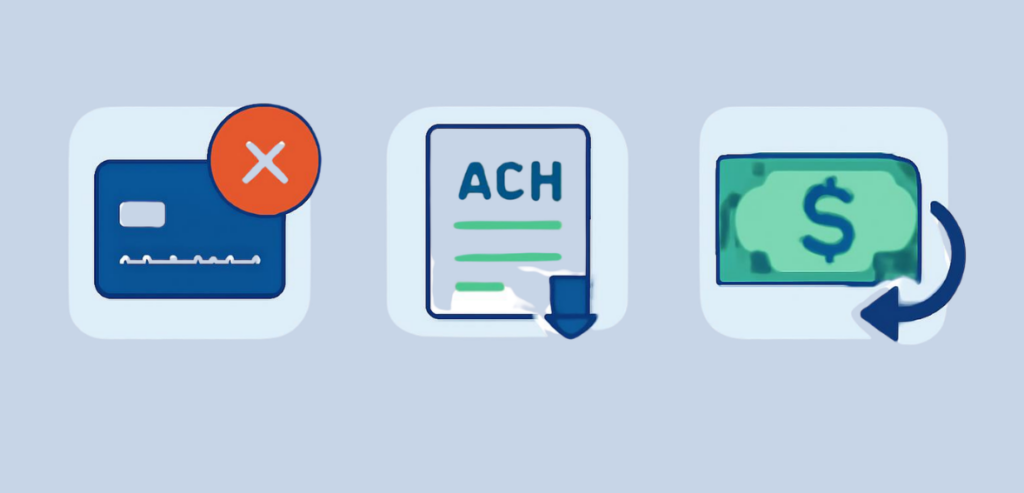
Refunds are optional, and chargebacks happen when the tenant’s bank decides to initiate one. An ACH return operates differently, as it will run through the banking system as opposed to the card network. The first and main mistake property managers make regarding payment reversals is confusing these systems.
A card chargeback is the result of a tenant calling their bank, not the property manager. The bank will review the case and assign a reason code. While the investigation is pending, the bank will remove the money from the property manager’s account. The property manager can get the money back if they respond to the bank before the representment deadline. Refunds, in contrast to chargebacks, are voluntary and initiated by the property manager. An ACH return, similar to chargebacks, is forced, but chargebacks operate under card network rules, while ACH returns operate under banking system rules. Also, chargebacks allow for representment, while ACH returns do not.
Most card-based rent payment systems use Visa or Mastercard. Any dispute with either of the networks would fall under the categories of fraud, authorization issues, processing issues, or customer disputes. A reason code is assigned within the dispute category. This reason code determines the evidence the landlord must provide to address the dispute. The evidence for a reason code that pertains to a charge for a canceled subscription is going to be different from the evidence for a reason code that pertains to a charge for a transaction that the person does not recognize.
Landlords of rental property that deal with multiple payment platforms should expect to see both networks’ codes in their statements, as payment would be made using the card that is the least difficult for the tenant to access.
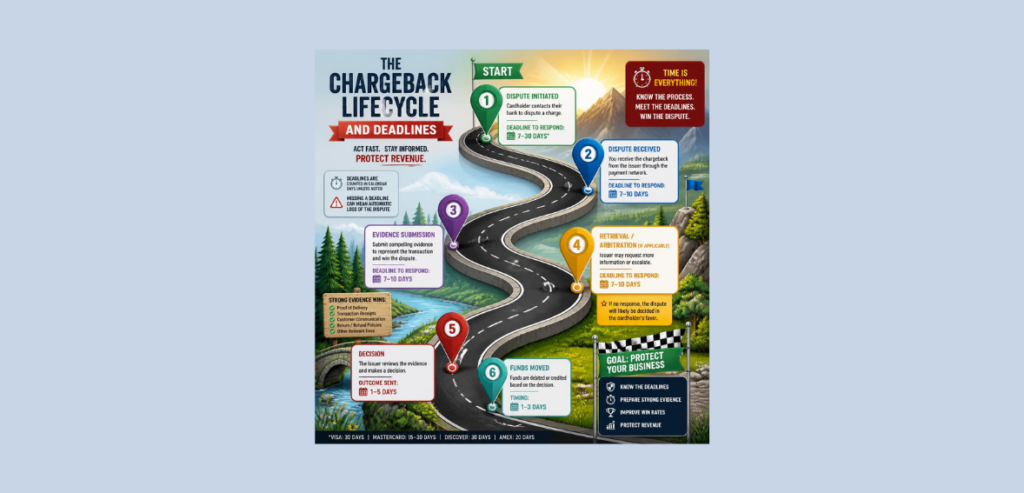
Each card network follows a similar process for every card dispute, but the time taken for each step is different by network. The first step of the process is always the same for every card dispute: the tenant raises the dispute with their bank, not the landlord. The bank assigns a reason code and debits the landlord’s account in the next step of the process. The landlord must collect all the supporting evidence and submit it to the bank in the time provided by the bank to defend the charge.
Representment is the process through which a landlord submits the evidence to the bank. If the landlord fails to defend the charge, the reason code and charge are deemed final by the card network and cannot be appealed. If the landlord does represent the charge, the bank renders its decision and the complaint can be escalated to the next step in the dispute process, pre-arbitration.
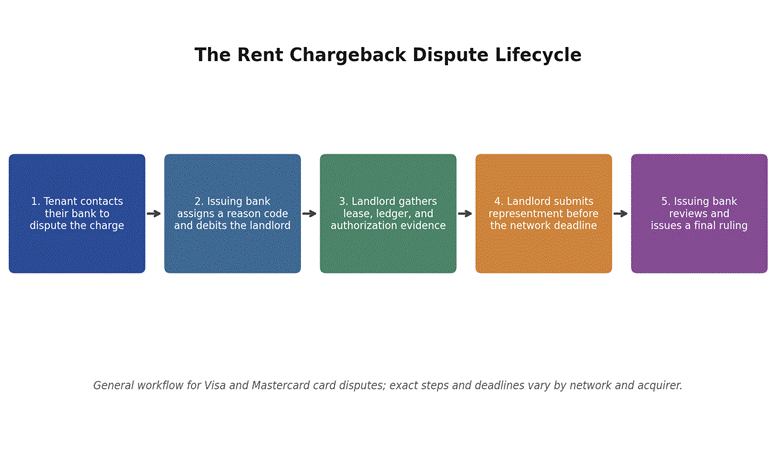
The typical process of a dispute from the initiation of the claim to the final determination.
Network time constraints can vary, and this impacts landlords being able to collect payments. For example, Visa alerts merchants that a chargeback is being processed and provides a very tight window of about 30 days to submit a representment. In contrast, Mastercard provides about 45 days during comparable process stages. As smaller networks, American Express and Discover usually have a much tighter window, about 20 days.
Compared to the roughly four months (120 days maximum) a cardholder has to file a dispute, the window of time networks have to complete the representment process is very short. Even if a landlord considers a charge long settled, a tenant could still file a dispute on the charge several months after the payment was made.
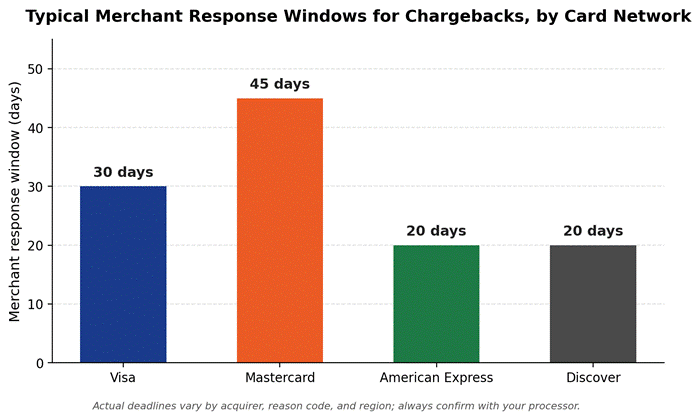
Merchant response deadlines vary meaningfully by card network.
Many owners are disadvantaged by the difference between the cardholder’s 120-day filing window and the 20- to 45-day response window for landlords. Even if the charge is mostly forgotten by the owner, the countdown for the landlord to respond begins as soon as the acquirer receives the dispute, not when the landlord receives the notice.
Chargeback disputes related to rent payments usually fall under one of two scenarios. The first is the ‘unknown charge’ dispute. Here, a tenant sees the name of a payment processor on their bank statement and fails to make the necessary connections. Payment processor names are generic and do not identify the charge to the tenant, and they assume the name will either be the property name or the manager name.
The second is the ‘cancelled service’ dispute. This is created when a tenant moves out and requests the leasing office to cancel autopay. The charge continues to process because the office fails to process the request. Both situations are avoidable and are due to a lack of communication, not chargeback fraud.
Disputes related to rental payments also tend to be higher with partial payments, split payments, and payments made with a co-signer’s credit card with no prior knowledge or consent from the co-signer. A co-signer, in most instances, may give general consent for a rent payment and may dispute the payment if a late fee or utility payment is included, citing that the payment was not approved.
To succeed with a rent chargeback, you must meticulously document everything in chronological order ahead of the deadline. The signed lease showing the agreed rent and due date must be coupled with the specific authorization and/or a screenshot from the portal showing the tenant in autopay, or approving the card on file. This also includes the account ledger, which must be a complete and unbroken record of all charges, payments and adjustments.
Any breaks in the ledger will be considered a negative. Emails and text messages sent to the tenant at the time a charge is made also help, as they provide the date, the charge amount, and a description that corresponds with the lease terms. Timestamped logins and payments from the property management software, and the device or IP address used to approve the charge also assist in showing that the tenant approved the charge and that it was not an unauthorized use of their card.
Any form of communication from the tenant that acknowledges the charge, including a maintenance request relating to the month’s rent or a message to the landlord requesting to change the due date, helps demonstrate that the charge was expected by the tenant. There should be no reason for the bank to rule against the landlord if a thoroughly documented and date-ordered packet is submitted with a cover explaining the contents.
Authorization is the most important document in a rent chargeback case. While other components of the package do need to be submitted, an authorization is the only document that shows the tenant’s affirmative agreement. Card networks and banking policies do not recognize a meeting of the minds or a handshake agreement. The tenant payment portal should use an e-signed, written authorization. The document should specify (1) the payment amount and method, (2) the payment date, and (3) the cancellation right.
The document should also state that the authorization is for a recurring charge. Otherwise, the authorization would only permit a one-time charge, and a one-time authorization would be for one payment only. A verbal authorization without a digital record of the charge agreement would not provide landlords with adequate protection. Without that record, chargeback or not, the landlord will lose the case. A landlord is protected if they have a charge record along with a timestamped authorization, even if the property management vendor’s records do not reflect the same.
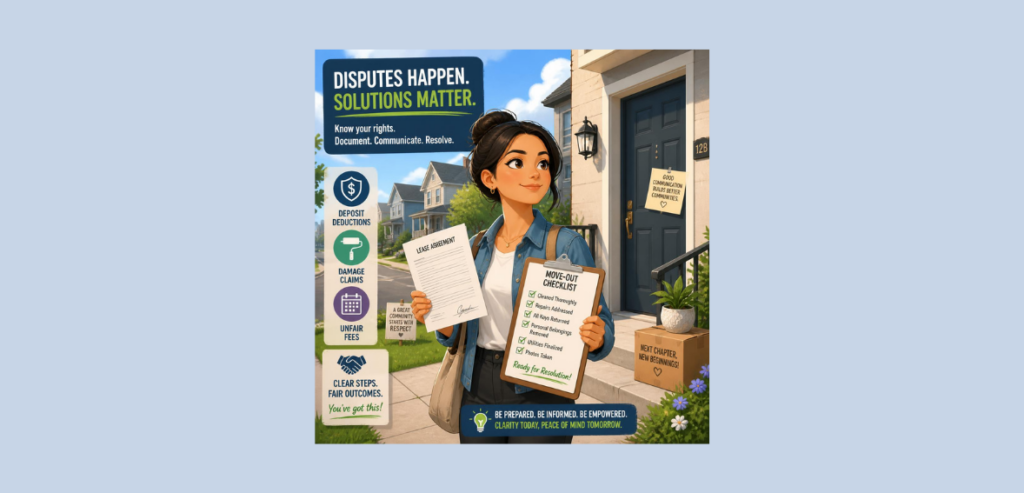
Security deposit disputes usually unfold differently than rent disputes due to the respective hierarchy of card network rules and state landlord-tenant law. In both the charge of security deposit card payment at move-in and the deductions made from the security deposit after move-out, the tenants have the right to dispute the charge. The disputes regarding the charge for card payments to top up the security deposit and the charge for post-move-out damage billing are accompanied by the same set of evidence: the move-in condition report, photo evidence with date stamps, an itemized list of deductions, and repair receipts.
As for the money that the landlord held and failed to return, the dispute is most likely to be resolved by state law and not a chargeback for the card network as no new charge was made to the card for the dispute.
Timing is the main reason for the bulk of security deposit disputes. Many state laws dictate that an itemized list of deductions must be provided within a certain time period after the tenant vacates the premises, and even if the tenant escalates the dispute, the landlord is negatively impacted for failing to comply. Landlords who do send the itemized list of deductions in the required time frame and include supporting evidence do not incur a loss from a security deposit-related chargeback.
A reversed ACH rent payment falls outside the playbook for landlords dealing with card network/agency systems. Unlike payments made via a card, which are governed by Visa or Mastercard rules, payments made via ACH fall under the rules set by Nacha. There is no equivalent of representment in the Nacha system. Bank return codes are usually the end of the line for the landlord, and the money is gone. The only recourse is to reach out to the tenant to negotiate payment.
NACHA assigns codes to returns associated with transactions in the ACH network and offers a description for each returned transaction. A return for ‘Authorization Revoked’ means the tenant authorized the debit and later canceled that authorization, while ‘No Authorization’ means the tenant’s bank accepted the claim of no authorization, and it’s likely the tenant will have to provide a sworn statement. Returns also have rate-capping ceilings that Nacha puts in place for originators (including property management systems) to help sustain a functional ACH network.
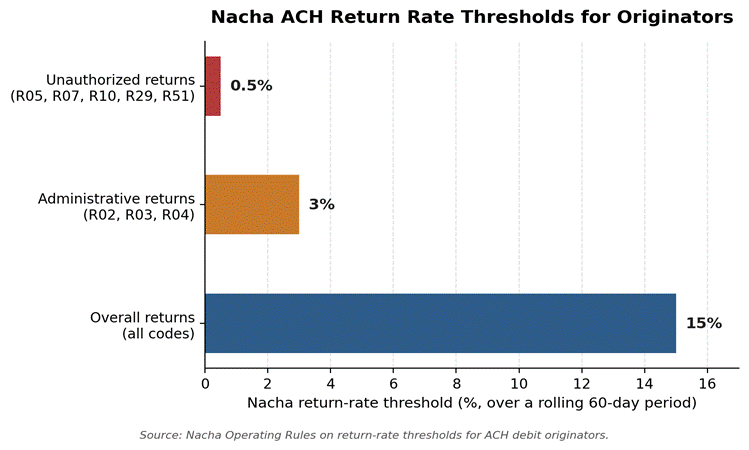
NACHA return-rate ceilings for ACH debit originators, measured over 60 days.
NACHA caps all types of returns at 15 percent. Administrative returns attributed to incorrect account numbers are capped at 3 percent. Returns due to challenged authorizations are capped at 0.5 percent. All caps are to be measured over a rolling 60-day period. A landlord or a platform that breaches the unauthorized returns threshold will likely be unable to process ACH transactions. Therefore, maintaining proper authorization records is critical for ACH transactions, as it is for card transactions.
Representment refers to the process of a landlord reversing a chargeback, and the main differentiator of success over failure is organization, not volume. The optimal cover letter provides a brief synopsis of the business’s reason to dispute the charge and the summary of the business’s leasing relationship. The cover letter then provides an explanation for the organization of the documents pertaining to each part of the chargeback request. The documents include the business lease, the letter of authorization, the account ledger, and the communications from the tenant, in that order. Submitting through the required channel of the payment processor or acquirer, as opposed to emailing the bank, ensures that the request is not ignored or lost in the system.
The order of the documents is important, but on the whole, the order of the documents is secondary to the timing of the submission. If a submission is done well in advance of the deadline, the request will be reviewed in time, but if a submission is done close to the deadline, it may not be reviewed in time and can be rejected by default. Property managers with multiple units should have a standard set of documents with a cover letter to avoid the need to rush at the last moment for the documents.
When a problem with their rent arises, the first move for most tenants is to try to get a rent charge to be reversed (charged back) through their bank. There are a number of things a property or management company can do to lessen the chances of a chargeback. The first option is to get rid of the billing descriptor, which is the processor’s name, and replace it with the name of the property or management company. This resolves the most significant source of charge dispute recognition issues.
Stripe and similar companies give merchants the ability to set the statement descriptor. Property managers that take advantage of the customizable statement descriptors report significantly lower rates of chargeback disputes due to unrecognizable transactions. This logic can be extended to the other payment processors. No matter which service is used to collect rents, reviewing and changing the statement descriptor is a quick way to reduce future chargeback disputes.
The gaps in communication and documentation can be lessened in a number of ways. Sending a payment confirmation email immediately after a charge, having a signed form of authorization in advance of each charge, and confirming in writing the cancellation of autopay at the time of the tenant’s move-out all address gaps in communication. There is virtually no cost to having this documentation, and it serves as great proof for a landlord to defend against a chargeback dispute that may be filed months down the road.
Chargebacks and ACH returns are permanent fixtures of digital rent collection. They don’t have to be the end of the world. Rather, they can be handled proactively instead of reactively. The first thing to understand is that chargebacks, ACH returns, and refunds work differently. When faced with a dispute, a bit of good record keeping and a clear ledger turn the dispute into nothing more than another paperwork task. Those landlords and property managers who establish good record keeping and clear ledgers before a dispute will continue to receive their rental income when the tenant’s bank comes calling.
Yes, a tenant can contest a card or bank transfer rental payment with their bank during the network’s filing window.
Chargebacks will follow card network regulations and will have a formal appeals process. An ACH return will follow Nacha regulations and will have little to no appeals process.
The best defense will consist of a signed lease, an authorization record, a full ledger and communication from the tenant supporting the charge.
Deadlines can vary across card networks. Visa tends to have a 30-day deadline while Mastercard has a 45-day deadline. Amex and Discover have a 20-day deadline. Acquirers have the ability to change the deadlines.
A deposit charged to a card can be disputed just like any other card charge. However, returned deposit money that was held is usually governed by state landlord-tenant law.
With rent chargebacks and disputes on your list, the property management resources hub has the related guides.