

Every business will need additional funding at some point. Machinery wears out. Payroll is an ongoing expense, even during slow periods. New competition creates the need for an immediate change. The businesses that thrive during these occasions are not the ones rushing to apply for funding.
These businesses are normally the ones that borrowed months, or even years, in advance of the immediate need. A business loan is a contract where a lender funds the loan and the business pays the lender back the principal and interest. When this contract is created in advance of an immediate need, the loan is a tool for business growth, rather than a funding solution of last resort.
The same idea applies to planning for the need to borrow. This idea of planning creates options for your business, and the options available will be more favorable. The following sections will explain the advantages of applying early for financing and how this idea of planning early for a need extends to every operation of your business.

When you wait until it’s necessary to take out a loan for your business, it puts you in a terrible position to negotiate. It’s easier for lenders to offer you unfavorable terms when you have an urgent, last-minute request. On the other hand, when a lender sees a financially stable business walk into their office with no urgent request, they know they are negotiating with a business that has the upper hand.
The other advantage to borrowing ahead of time is that it buys you time. The approval process for a loan can take considerable time due to the underwriting process, documentation, and disbursement. If you walk into a lender’s office to borrow for your business with no time left to spare, your situation is considerably urgent and that pressure is transferred to the lender. But borrowing well ahead of time will completely remove that pressure.
Businesses need a good repayment record and time to build credit. Repayment cycles build credit and give businesses a competitive advantage the faster they start.
Applying for a loan before a business actually needs it can help establish good credit. When the time comes for the business to apply for a loan that is actually needed, a good credit history will help the lender approve the loan. One of the practical reasons is that the business has demonstrated that it can be responsible with debt.
Developing a positive credit profile is crucial and takes time. Companies with an established and strong credit profile are viewed as lower risk businesses by lenders. As a result, those companies receive larger loans with more favorable terms and lower interest rates. Building that profile early will benefit companies down the road as the positive credit profile takes time to develop.
Companies that borrow early establish credit and later positive relationships with lenders. Over time, lenders learn what companies need and companies learn what lenders need. That mutual understanding builds a positive relationship and often means better terms, faster loan approvals, and other loans like a line of credit.
Responsibly using credit means an early borrower often has a higher credit limit. That high limit is useful when larger business opportunities arise like mergers and acquisitions or major business expansions. Having a high credit limit means that a business can seize the opportunities without a long wait for approval.
Growth often doesn’t occur at an opportune time. A business that has already secured financing can capitalize on the first chance they get to grow their business.

Securing financing first means that a business is able to upgrade their aging technology, equipment, and facilities when they choose to. When a business has to wait to make critical updates, it gives competitors the chance to pull ahead, and it may mean that the business has to wait until their equipment fails.
Customer expectations and market demand shift. A business that has financing at the ready will be able to respond faster to these changes and innovate, while their competition will still be stuck planning.
Every physical expansion requires a significant amount of capital. A business that has secured financing does not have to wait on a long loan approvals process to stake a claim on a new location.
Every type of growth requires the business to expand the workforce. A business that has planned for growth and the accompanying financing will be able to hire, develop, and retain the best talent.
For constant growth, the business has to be visible. Digital, branding and advertising initiatives all need sustained investment. When funding is secured ahead of time, the business is able to run a good, complete campaign instead of an incomplete, rushed campaign due to funding shortages.
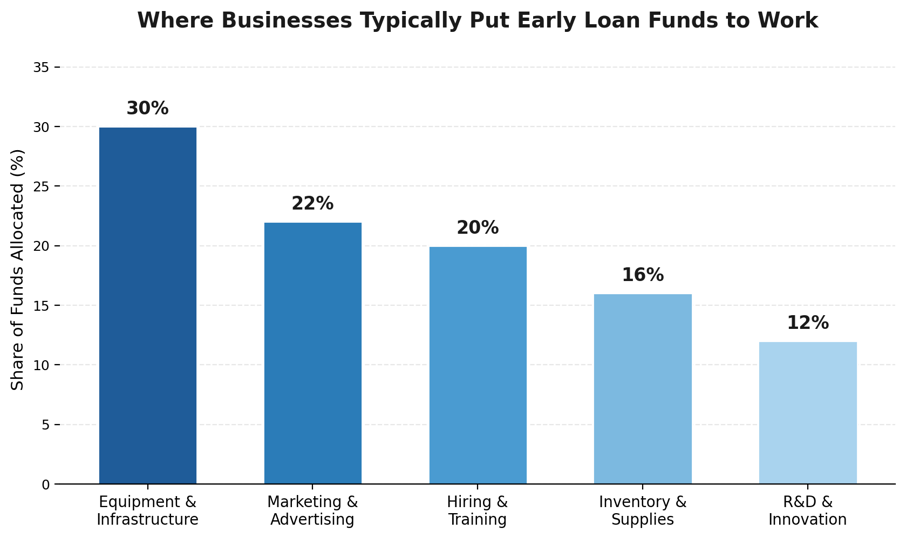
Figure 1: A Typical Allocation of Early Business Loan Funds
Some opportunities will not wait for you. Without funding, a business has to watch these opportunities go by.
Mergers, acquisitions, and partnerships are an instant way to grow market share, and offer new technology and talent to a business. These deals typically require swift actions, so businesses without ready cash find it difficult to compete.
Demand and pricing do not stay beneficial for an extended period of time. Once it happens, a business with cash at hand can stimulate demand by increasing production or by implementing a marketing initiative in a timely manner.
There are many unforeseen circumstances that can negatively affect a business. Supply disruptions or equipment failures do not stay convenient for a business. Having funding implemented in advance allows a business the opportunity to respond to these new challenges quickly.
Progressing and remaining competitive implies keeping the business close to the cutting edge. Pre-arranged financing means a business has the opportunity to fund new ideas and the research for them ahead of the competition.
A cash flow problem can be the reason behind the failure of many small businesses, despite the fact that the business as a whole can be successful. An example of how cash flow problems can cripple a successful business is the highly common problem of the seasonal nature of cash flow in many businesses. A loan secured in advance serves as a buffer against the cash flow problems that are a part of the regular cycle of doing business.
It is common for many businesses to experience a seasonal fluctuation in cash flow. Additional cash flow during slower business activity helps maintain a business’s ongoing expenses. Whether cash flow is used to maintain payroll or for other business expenses, having cash flow keeps a business from having to make painful operating cuts.
There is a strong business case for advance supply purchases. Both inventory and supply costs are predictable when inventory and supplies are purchased in advance. With funding available, a business can stock up when it makes strategic sense.
Every business experiences slow periods. This funding helps to mitigate those issues so every obligation can be covered, even during slower business periods, and prevents interruptions.
Once the up-front cost of automation is covered and cash flow barriers are removed, a business can improve cash flow through automation and accuracy of systems.
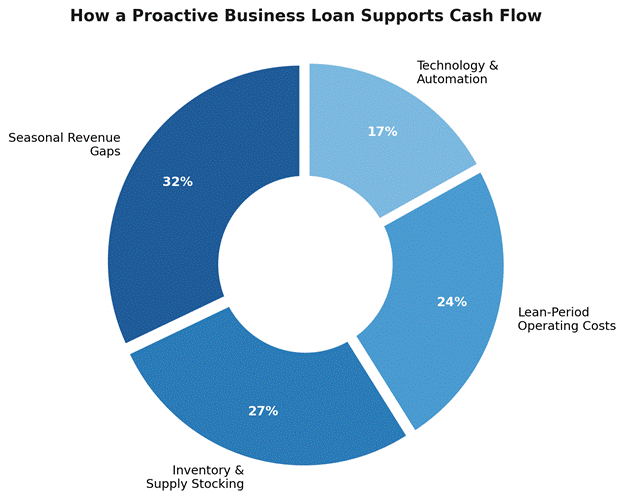
Figure 2: Common uses of a proactively secured business loan in managing day-to-day cash flow.
A business with a plan for financing is better prepared for both positive and negative outcomes.
One way to create financial backup is by developing reserves. Unexpected costs and inconveniences are bound to happen. Building a reserve allows a business to prevent disruption during the unexpected.
You can’t tell when certain economic downturns and industry recessions will occur, but there is a way to prepare for them. Financing certain measures before a downturn allows a business to continue funding growth initiatives and protect the business while competitors are forced into defensive measures.
Several factors can cause financial disruptions, including unexpected interruptions in the flow of cash, volatility of markets, and shifts that are beyond your control. One of the best financial measures is to secure contingent financing that allows a business the flexibility to withstand disruptions without adversely affecting the business or finances.
The financial stability of a business impacts everything from investors to partners to customers. A business with secure financing exhibits strength and financial stability, both of which are confidence-inspiring.
When capital is available, a business is able to create and innovate instead of merely imitating competitor strategies.
If a business is able to fund research and development early, it is able to lead the market and improve its products while its competitors are still striving to catch up.
The use of modern technology can make business operations faster and less expensive. A business that funds these technology updates early gains a competitive advantage that its competitors (who wait) will not get until the old technology fails.
Customer interest and growth are sustained when a business innovates. Use of early capital is needed for a business to be the first to develop new products and services.
When two businesses are similar, the experience offered to each business’s customers is what brings loyalty. Improving business support, faster transactions and better, personalized contact with customers makes a business’s loyal customers hard to win away for competitors.
When to borrow is just as important as how much to borrow. Companies generally secure better offers when applying for financing before the situation gets critical.
Changes in interest rates and competition among lenders mean that businesses that borrow funds during favorable periods do so under better terms than those that have to borrow when the need arises.
The financial strength of a business is a critical factor. Strong businesses that borrow when they need to the least can negotiate lower borrowing costs.
The combination of financial strength and timing gives a business leverage. That leverage means the business can negotiate more favorable terms of the borrowing such as flexibility in the repayment schedule, length of the repayment period, and even the method of repayment.
The greatest advantage of borrowing when the business is not in a critical situation is that it creates flexibility. Businesses that are in a critical cash situation have to accept whatever terms are offered, and generally do not have the time to negotiate. Borrowing when things are not critical means that the business retains control.
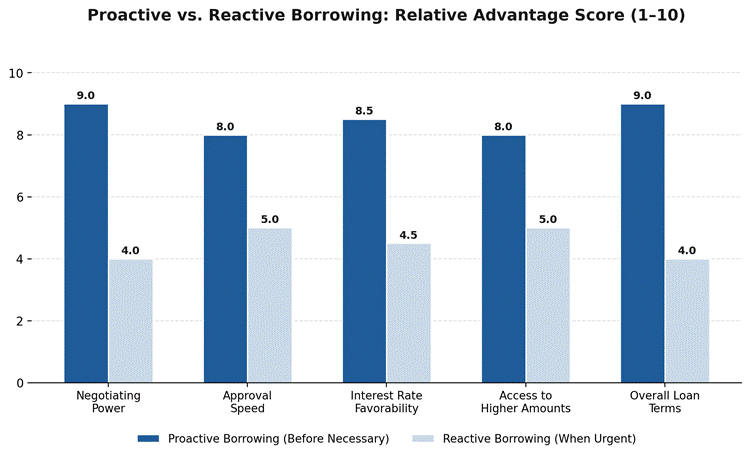
Figure 3: Illustrative comparison of borrowing outcomes when financing is secured proactively versus reactively.
One of the overlooked methods of financing a small business is to take out a business loan before you need to. Securing a business loan before there is an emergency builds your business’s credit, strengthens your relationship with lenders, and allows your business to expand, hire, and market your business on your own schedule rather than on someone else’s.
Financing protects your business against the unpredictable. The seasonal and economic slowdowns that create unexpected emergencies are easier to deal with once you have financing rather than when you have an application for a loan still waiting in the lender’s queue. The interest rates, fees, and loan terms are all better for the proactive borrower simply because that borrower is negotiating from a position of power.
This also does not mean that every business should borrow the moment it can. This means that the decision should be made with the same thought the business uses when it plans. Evaluating financing options in advance and learning which lenders have which offerings can make the loan that you need a tool to grow your business, rather than a loan that you need to fill the gap. Businesses that are proactive about financing are the ones that are still running and growing in tough economic times.
An early application for financing generates a credit record for the business. A company is more likely to find a lender willing to help when that business demonstrates an existing credit record. Other financing options will become available to that business with more favorable terms. An early application for financing shows a business’s willingness to pursue an opportunity for growth. This financing will help the business address especially difficult situations, such as unforeseen events and temporary problems with cash flow.
A loan that a bank offers to a business with a promise from the business to pay the loan back provides a business with a cushion to deal with the slower seasons, lower revenues, or gaps in income. It allows a business to pay for the advancements in technology or systems that will speed up cash flow improvements in the future.
Yes. Initial funding enables a company to invest in R&D, emerging technologies, innovation of new products, and enhancement of customer experience. All of these allow the business to build a brand and a customer base while its competitors are inactive.
For the most part, that’s true. Lenders reward financially stable businesses that aren’t applying for loans out of necessity with better lending terms. To avoid the disadvantage of the last-minute application, businesses that apply early have the opportunity to negotiate more favorable lending terms.