Posted: August 17, 2026 | Updated: August 18, 2026 at 3:46 PM
The lease is signed. The keys are on the hook. The tenant is now in another state. And then a notification comes in that the last payment has been disputed. As a property manager, that has to be the most jarring thing to happen at this particular point during the payment process. The money has been reconciled. The unit has already been listed for rental. A card network wants proof the charge should have been made, and there is a ticking clock.
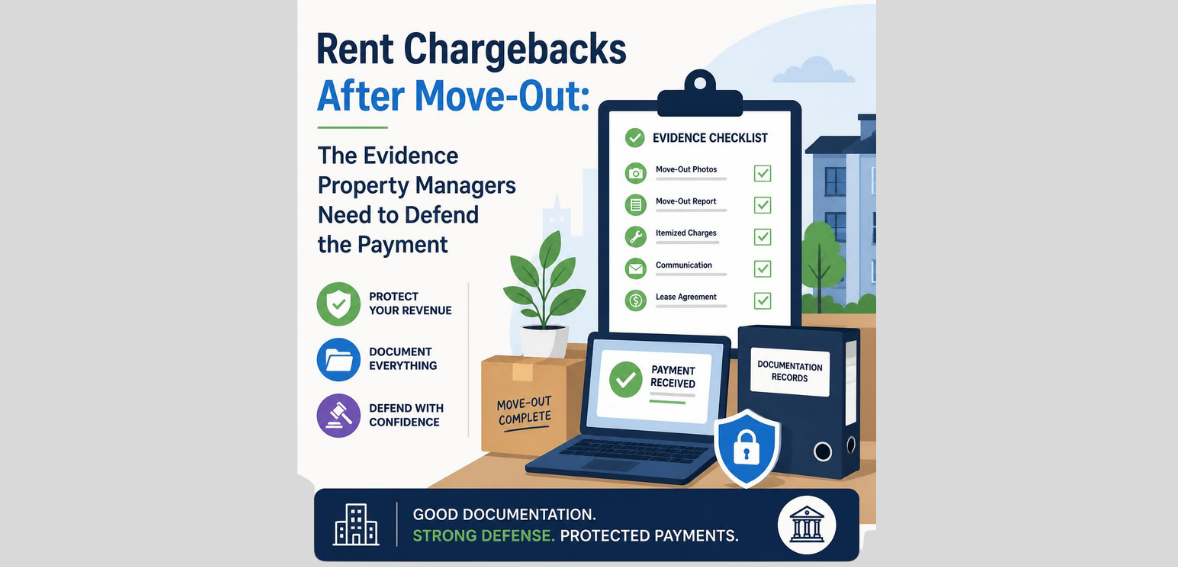
That dispute is unlikely to be the result of criminal fraud. Most disputes arise from the tenant’s belief that more should have been disclosed to them, that they should not have owed what they did, or that they did not agree to the terms. It has very little to do with what is morally right and everything to do with how well that particular case was documented. This guide provides property managers with a rent chargebacks checklist of what is most important to keep on file in case they need to defend themselves. It also provides tips on how all of this should be organized in order to prepare a case to meet the ticking clock.
Move-out is an especially difficult time for tenants. Some tenants encounter an unexpected cost, whereas others see a charge they feel was not justified, and their banking app makes disputing it easy. Tenants reason that a chargeback is much quicker and is free, so it is worth a try.
Card issuers encourage this behavior. Tenants typically have 120 days (sometimes more for disputes related to fraud) from the transaction to file a chargeback with their bank. A move out in March allows tenants the option to dispute a charge in June or July. The property manager is notified after the unit was already rented. At this point, the move-out staff has likely worked at other locations, and by the time the staff is able to finish the move-out, the staff will have to be assigned to other units. Therefore, it is important to capture evidence during the actual transaction, as it cannot be done later on.
Researchers in the industry document a large volume of friendly fraud. It is believed that 44% of all chargebacks are friendly fraud, and most analysts would agree that this is likely much higher as merchants do not report friendly fraud. Rental payments have the same patterns and issues. Tenants think (and often act) as if they can dispute an incorrect charge on the assumption that the property owner will have to wait and defend the charge. Rather than contacting the property manager, tenants choose to go through the faster option of doing a bank chargeback.
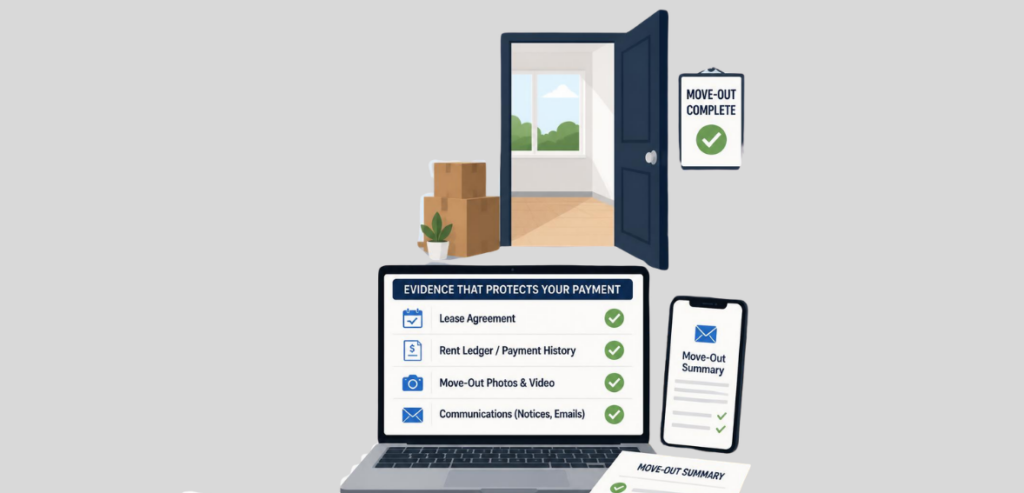
A response to a chargeback request is called a representment. When a tenant initiates a chargeback, the card network wants to see a file with supporting documentation to show that the charge was authorized, disclosed, and corresponds to what the tenant agreed to in the lease. In order to be successful with a chargeback for rent, one or more core documents must be included in the representment, along with the lease and payment ledger. The lease is useful because it has payment terms highlighted, and the payment ledger helps show the tenant’s charges and the credits for that tenancy.
A copy of the authorization on file for the disputed transaction must also be included. Relevant inspection reports must also be included with the representment, along with any notice that was sent to the tenant regarding an unpaid balance, including a photocopy of a balance deduction notice. A short cover letter must be included, which should provide a narrative summary of the documentation in the packet.
A well-organized packet tells a step-by-step account of the facts and ensures the transaction was properly disclosed to the tenant. The reviewers at a bank that acts as an issuer of a card will never see the property or meet the tenant; they render an opinion based only on the documentation within the packet.
Every representment response must include a copy of the lease, which should show the amount of rent due, the due date, the language regarding any late fees, and the addendum(s) covering security deposit deductions. If the amount to be charged is a result of a lease addendum, e.g. a pet fee or a utility pass-through, then the addendum, signed by the tenant, must be included with the lease.
This information is recorded in the ledger. An accurate ledger includes the opening balance, all rent charges, receipts, late fees, and final balance upon move-out. Ledger gaps or other adjustments that are unaccounted for are problematic because they tip the case in the cardholder’s favor. Property managers who reconcile their ledgers at least monthly are better suited to prepare more strategic and defendable evidence compared to managing a ledger and waiting to face a dispute to reconstruct their ledger.
Users of HMS Pay no longer have to piece together bank statement lines and spreadsheets to obtain the complete transaction and authorization histories that support their chargeback disputes. A ledger export that corresponds to the payment processor’s record of transactions overcomes one of the most common obstacles in a rent dispute response.
Leases create obligations, and authorization records indicate that a tenant agreed to the charge. For a recurring rent charge, authorization records will capture the agreement and the payment method, amount, and payment term. For a one-time charge like a move-out charge, authorization records will show the tenant provided their payment information through a form or phone call or signed a document.
IP addresses, timestamps, and device information related to an online authorization provide evidence and support to refute tenants who claim they did not provide payment information. It shows that records and evidence of the lease signer authorizing the charge were not created later. They were captured automatically at the time.
Security deposit chargebacks constitute a majority of post-move-out chargebacks primarily because deductions perceived as unfair cause the greatest disputes among tenants when moving out. The most important part of the defense is a complete, dated move-in inspection report with dated, sequential photographs or video, countered by a complete, dated move-out inspection report. If there is no move-in documentation, it is extremely difficult for a landlord to describe how a tenant caused damage during occupancy.
The time in which the defense is prepared is almost as important as the defense itself. Many states have very strict time frames in which a landlord can return the security deposit and an itemized list of the security deposit deductions. Many property managers reference the security deposit return time frame in California, in which an itemized list must be sent within 21 days after the tenant moves out.
Complying with that law produces a dated, itemized statement within the 21 days, and that statement doubles as dispute evidence. This information is general and not legal advice, and therefore, property managers should confirm the time frame for return of a security deposit and preparation of the itemized list in their state before establishing a policy.
A tenant is more likely to dispute a charge they didn’t see coming. That’s why charges the tenant saw coming are easier to defend. Referencing the particular charge, the amount, and the reason for the charge in email notifications, portal messages, and text confirmations strengthens the property manager’s eventual representment. Habitual documenting leads to a wealth of information at the time documentation is needed to dispute, such as sending a notice each time a fee or charge is posted.
Portal records showing the tenant viewed a statement or confirmed a balance will prove valuable in a dispute, especially if the tenant had access to the information the property manager is using to justify the charges. Having documents organized by tenant and by lease term will make it easy to retrieve a response to a short notice, especially if the information is more organized than in the general email inbox.
Each card network has its own clock and doesn’t wait for a property manager to collect documents. Of the major networks, Mastercard is the most merchant friendly, giving merchants a 45 day window to respond with evidence to support representment, the longest of the networks. Visa has a 30 day window, Amex and Discover, 20 days. The working time is often shorter than the headline number implies as the deadlines start from the date that the acquirer or processor initiates the dispute. That is, the deadlines are not from the date the property manager finally opens the notification.
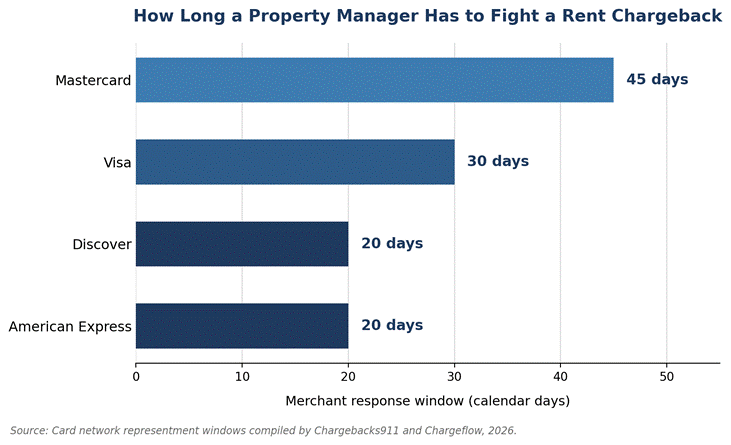
Figure 1. Timeframes Merchants Are Allotted to Present Evidence for Representments, by Card Network. Sources: Chargebacks911 and Chargeflow, 2026.
Missing deadlines automatically means a loss, even for the strongest of cases. Evidence must be collected on a continuous basis. Evidence must never be collected after receiving the Notice of Dispute. Property management teams who have leases, ledgers and inspection photos for each tenant can prepare a representment packet in less than a day. Teams who start from scratch will easily waste the majority of the response time finding the needed documents.
Payment by bank transfer allows a longer time frame for the tenant to file a dispute. In accordance with Nacha’s Operating Rules, consumers have a right to dispute a bank transfer that was unauthorized for a period of 60 days from the settlement date of the bank transfer, and most banks do not process a return of the funds until a Written Statement of Unauthorized Debit is submitted. The 60-day deadline is longer than most of the card network deadlines; however, it only applies to unauthorized ACH transfers.
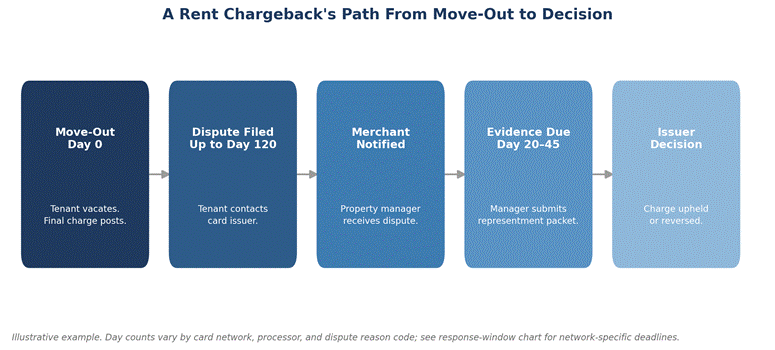
Figure 2. Illustrative example of a rent chargeback’s path from move-out to issuer decision. Day counts vary by network, processor, and reason code.
The best way to avoid paying a rent chargeback is to make it unnecessary. The most efficient way to do that is to provide move-out statements that are clear, itemized, and delivered promptly. This minimizes the instances of tenants being blindsided to the point of disputing instead of calling the office.
Using the same exact payment authorization method for every tenant is even more crucial, as it means there is no hassle of reconstructing evidence at a later date. Taking photographs of the inspection of the housing unit during both the move in and move out eliminates the biggest gap in most deposit-deduction disputes.
Developing a habit of doing these at a portfolio level rather than leaving it up to individual property managers to their own discretion changes taking a necessary response to a chargeback from being a fire drill to being a check in the box. Teams that develop a sense of urgency of the documentation during the move out process instead of waiting for the chargeback notification spend less time on a dispute and win a greater percentage of the disputes.
Rent chargeback disputes after a move-out are rarely about the fairness of the charge. They are about the property manager justifying the charge. A lease creates the tenant’s obligation. A ledger shows the transaction, an authorization record associates the charge with the tenant, and inspection and communication records provide the remaining narrative. Preparing each piece of the narrative does not require much time for the property manager.
The challenge is preparing everything before the notification, because the property manager does not have time to search for the documentation once the clock starts. A standard move-out documentation workflow turns a chargeback response from a scramble into a routine task. The majority of the time, the difference between a chargeback that is successfully defended and one that is lost is preparation.
Yes. Tenants generally have a lot of time to file a claim, and most of the time, it’s up to 120 days. So, cardholders may file a dispute regarding the rent payment, even if they have already moved out and the unit has already been re-rented.
You will need to have the signed lease, the ledger showing the full payment history, the charge authorization, the move-in and move-out inspection reports, as well as any charge notifications sent to the tenant.
Yes, security deposit chargebacks happen frequently. Documented inspections, detailed statements, and a lawful delivery of the deposit all help defend the chargeback.
The card networks set the windows: 30 days for a Visa dispute, 45 days for Mastercard, and 20 days for American Express or Discover.
As soon as a tenant moves out, send a move-out statement with details. Do a photo inspection, keep a copy of the charge authorization, and have the inspection on file.